


Country House Bureau
A country house bureau brings understated utility and rich timber grain to a room, offering a private writing slope alongside deep drawer storage.
Country House Bureau
A country house bureau sits among the most adaptable writing furniture of the Georgian and nineteenth-century periods, combining a sloping fall-front desk with functional chest storage below. These pieces emerge from domestic English settings, balancing working practicality with regional cabinet-making traditions.
The versions most frequently met on this page span the eighteenth and nineteenth centuries, taking the form of fall-front desks and larger bureau bookcases. Their proportions are robust, designed for estate rooms and studies rather than formal London salons.
Makers working within these styles utilise both substantial timber construction and simpler painted finishes, creating a diverse group of desks and chests that share a distinct domestic pedigree.
How they were made
Cabinet-makers relied on primary timbers such as mahogany, elm, yew wood, and oak, selecting each board for its strength and natural grain figure. Secondary woods like pine often appear in drawer linings and interior partitions.
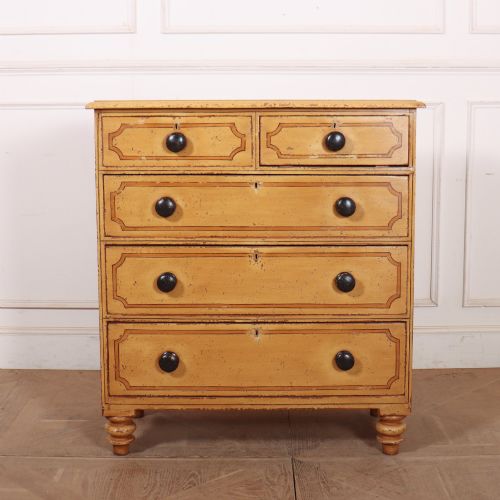
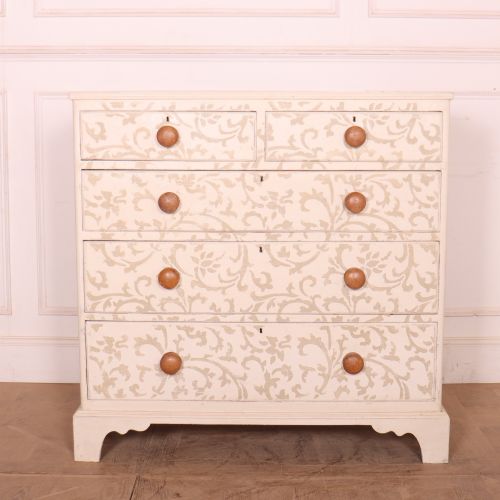
Surface treatment varied between polished timber and painted finishes, while brass hardware such as handles and escutcheons secured the fall-fronts and drawers. Construction methods focused on durability, joining structural panels to withstand decades of daily estate administration.
Secret compartments hidden behind pigeonholes rewarded curious writers with miniature spaces for stashing private notes.
What varies in quality
Quality rests in the selection of timber and the precision of the interior cabinet work, where fitted pigeonholes and small drawers demonstrate the maker's skill. Pieces featuring dense yew wood or well-figured mahogany stand apart from simpler painted or pine examples.
The integrity of the structural joinery and the survival of original brass hardware dictate the standing of a desk. Superior examples maintain crisp mouldings and harmonious proportions across both the bureau section and the chest base.
The Country House Bureau Glossary
- Bureau
- A desk featuring a sloping hinged writing flap that opens to reveal internal compartments and drawers. This form provides both a concealed workspace and substantial storage beneath.
- Bureau Bookcase
- A tall piece combining a bureau base with an upper glazed or panelled cabinet for books and papers. It represents a more substantial piece of estate furniture.
- Fall-front
- The hinged writing flap of a bureau that lowers to a horizontal position for writing. When closed, it conceals the inner stationery compartments.
- Escutcheon
- A protective plate surrounding a keyhole, usually cast in brass. It prevents the wood around the lock from splitting during daily use.
Country House Bureau: Frequently Asked Questions
What is a country house bureau?
A country house bureau is a traditional writing desk featuring a sloping fall-front that conceals small drawers and pigeonholes, set above a chest of drawers.
These pieces were constructed in England during the eighteenth and nineteenth centuries, serving practical administrative roles in large homes and estate offices.
How were these desks used?
They functioned as private spaces for correspondence, household accounts, and estate management. The drop-down flap provided a stable writing surface that could be locked shut when not in use.
Lower drawers held papers, ledgers, and personal items, keeping the room tidy while centralising domestic paperwork.
How do I date a bureau?
Dating relies on timber choices, construction methods, and stylistic details such as bracket feet or cornice moulding. Georgian pieces often display finer cabinet work and timbers like mahogany or yew.
Nineteenth-century examples frequently utilise simpler pine, elm, or painted finishes, reflecting changing domestic tastes and regional workshop practices.
Are bureau bookcases practical?
Bureau bookcases offer substantial dual-purpose storage, combining upper shelving for books with a lower writing desk. They require adequate wall space and ceiling height due to their tall proportions.
The upper cabinet allows for the display of collections, while the lower desk retains all the writing facilities of a standalone bureau.