



18th Century Looking Glass
An 18th century looking glass brings depth, candlelight reflection and historic presence to a room through carved timber and gilded gesso.
18th Century Looking Glass
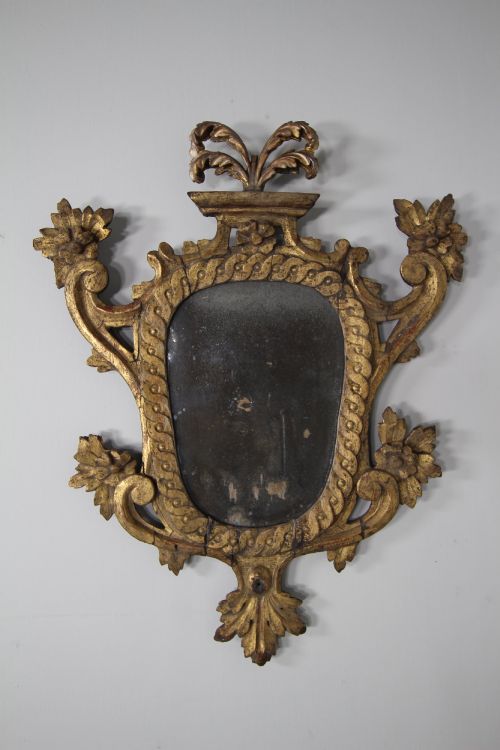
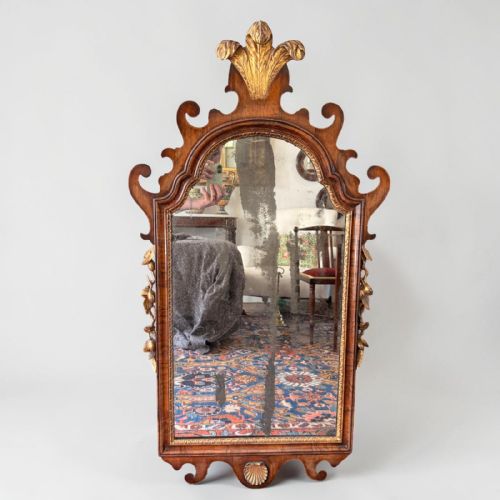
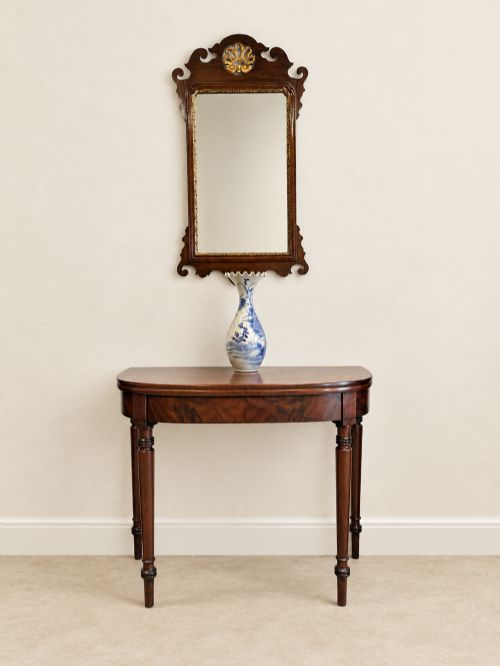
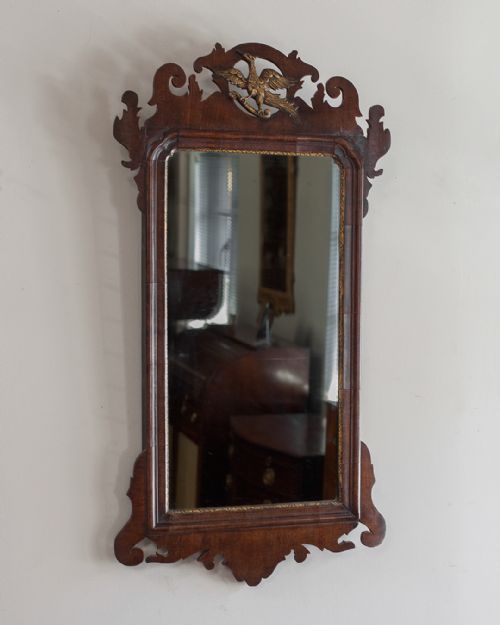
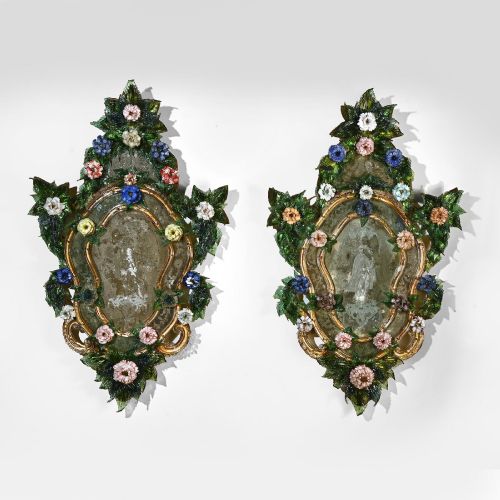
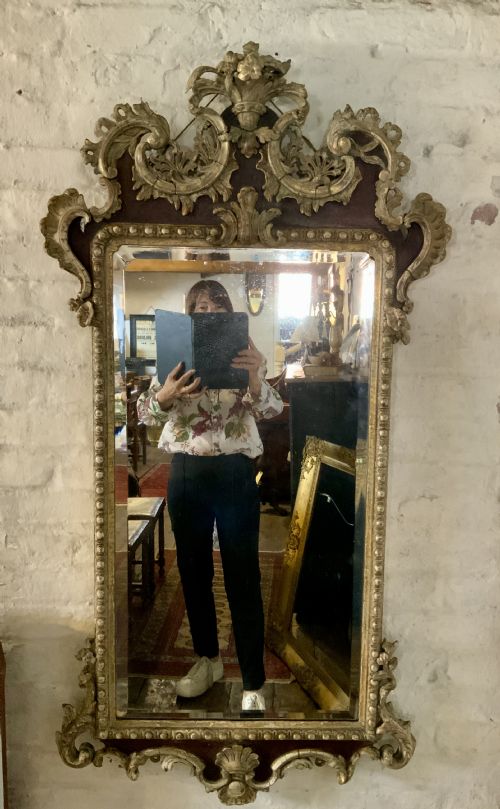
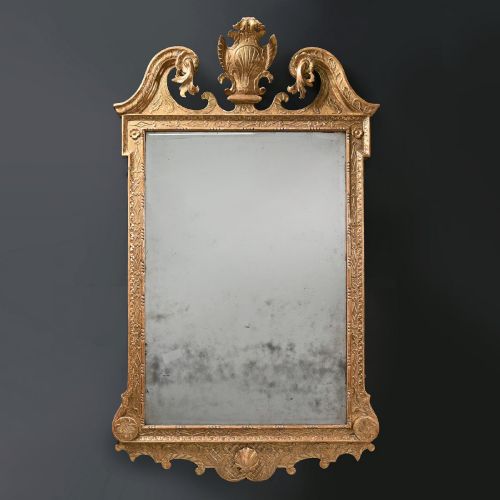
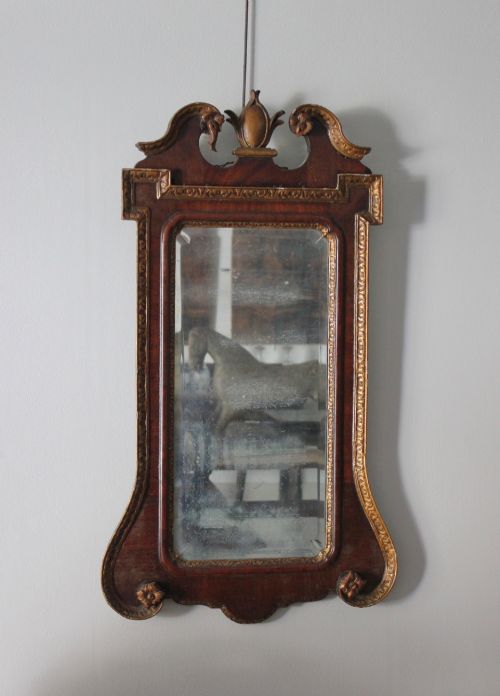
The materials and styles span English mahogany and walnut designs to Venetian Murano glass and Italian rococo or neoclassical creations. Walnut and mahogany predominate in the earlier decades, while giltwood and gesso emerge strongly in George II and George III periods.
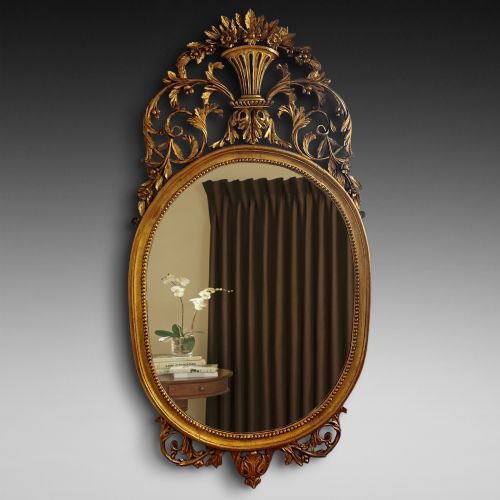
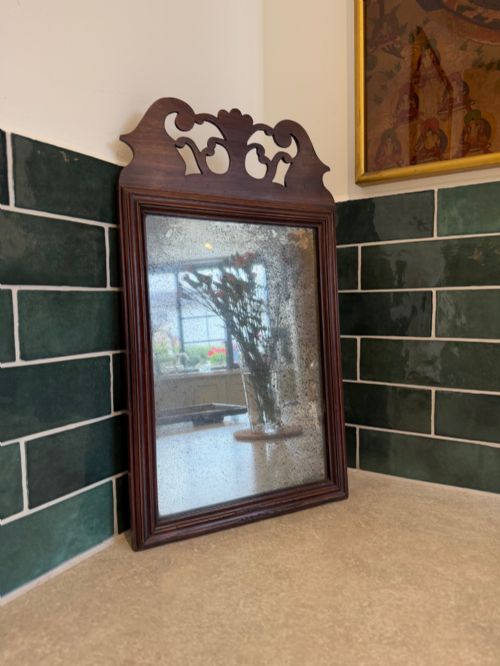
Wall mirrors and oval gilt frames form the core of the selection on this page, alongside pairs of Venetian mirrors and sycamore fretwork examples. These pieces trace the evolution of domestic interior decoration across the eighteenth century.
Materials and construction
Makers constructed these frames using solid timbers such as mahogany, walnut, sycamore and oak, often applying gold leaf and gesso over carved wood. Parcel gilt accents frequently highlight the grain of walnut and mahogany mouldings.
Mirrored plates included specialised production methods, seen in examples like Vauxhall mirror plates and engraved Venetian glass. Carved giltwood frames utilised intricate gesso work applied to a wooden base before gilding.
Venetian glassmakers occasionally added tiny imperfections to mirrors so that fair maidens could admire their reflections without spotting single blemishes.
Distinctions in craftsmanship
Quality rests in the crispness of the wood carving, the depth of the gesso relief and the handling of the original gilding. Finer pieces display refined proportions and delicate fretwork scroll margins rather than heavy, blunt execution.
The integrity of the mirror plate itself distinguishes examples, particularly where original engraved glass or period Vauxhall plates remain intact within the frame.
Benjamin Goodison
The 18th Century Looking Glass Glossary
- Giltwood
- Wood that has been coated with gold leaf over a prepared ground. This finish defines many formal Georgian wall mirrors.
- Gesso
- A plaster mixture applied to carved wooden frames to create a smooth surface for gilding. It allows for sharp, intricate ornamental detail.
- Fretwork
- Openwork patterns cut from thin wood panels using a fret saw. This technique characterises many mahogany and sycamore mirror frames.
- Vauxhall plate
- Mirror glass produced at the Vauxhall glasshouse in London. These plates often display a slight bevel and characteristic age characteristics.
- Parcel gilt
- A decorative treatment where only specific parts of a wooden frame are gilded, leaving the underlying walnut or mahogany grain visible.
- Gilt slip
- A narrow inner moulding finished in gold leaf that sits between the main frame and the mirror plate.
18th Century Looking Glass: Frequently Asked Questions
What defines an 18th century looking glass?
An 18th century looking glass is a period wall mirror housed in a frame of carved wood, giltwood, walnut or mahogany, produced during the Georgian era.
These pieces served as functional optical devices and decorative centerpieces in period interiors, utilising candlelight to brighten rooms.
How do I distinguish walnut from mahogany pieces?
Walnut frames typically date from the earlier part of the century, including Queen Anne and early Georgian periods, displaying rich brown tones and sometimes burr veneers.
Mahogany becomes more prominent in the mid-to-late 18th century, particularly within Chippendale and George III fretwork and wall mirror designs.
Where should I hang a wall mirror?
These mirrors suit principal reception rooms, hallways or above mantelpieces where they historically functioned to amplify natural light and reflect interior furnishings.
Ensure wall fixings adequately support the weight of solid timber and carved gesso frames.