
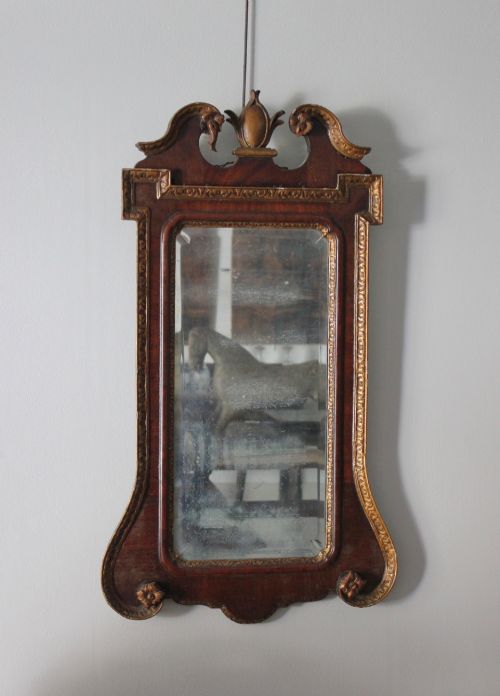


18th Century Fretwork Mirror
An 18th century fretwork mirror brings lightness and intricate wooden silhouettes to a room through pierced scrolls and figured timbers.
18th Century Fretwork Mirror
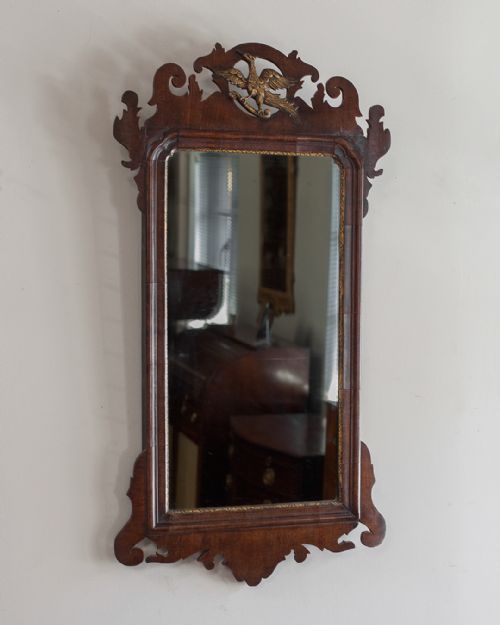
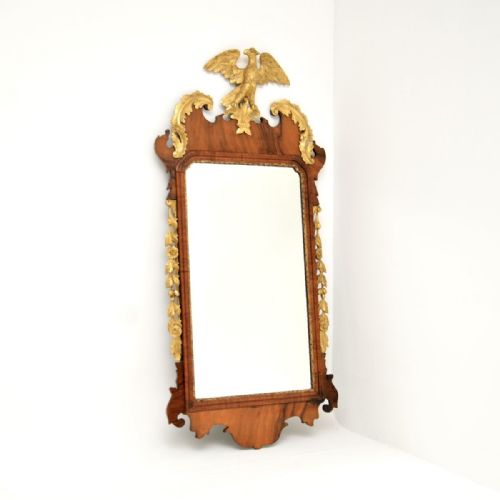
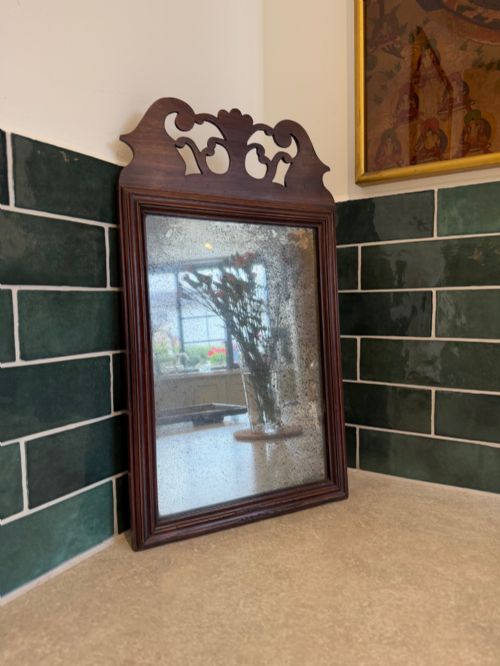
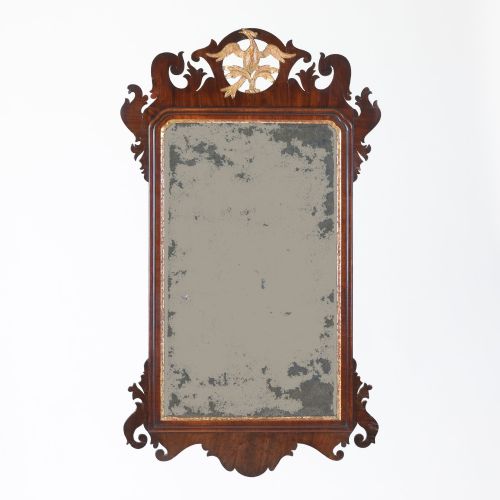
An 18th century fretwork mirror is a wall or toilet hanging defined by cut-out wooden frames shaped with scrolls, ears, and occasionally carved birds.
The versions most common on this page date from the Georgian era, spanning the reigns of George II and George III, with walnut and mahogany being the primary timbers.
Makers produced these mirrors as wall ornaments for parlours and chambers, employing symmetrical or asymmetrical pierced silhouettes inspired by contemporary pattern books.
How They Were Made
Cabinetmakers constructed the frames using solid mahogany, walnut, or sycamore, often applying veneers and parcel-gilt details alongside gesso preparation.
The intricate fret patterns were marked onto the timber and cut out by hand using a fretsaw, creating delicate scrollwork borders.
Mirrors incorporated glass plates, sometimes held by a gilt slip, and were finished with carved elements such as the distinctive Ho-ho bird at the crest.
Object forms on this page include wall mirrors, pier mirrors, and smaller toilet mirrors designed for tabletops.
What Varies in Quality
The crispness of the hand-cut fretwork determines the visual distinction of the frame, where sharper, deeper profiles reflect superior craftsmanship.
The choice and figure of the timber, whether richly grained walnut or dense mahogany, influence the overall presence of the piece.
The preservation of original surfaces, parcel-gilt decoration, and early mirror glass distinguishes exemplary survivals from later interpretations.
The 18th Century Fretwork Mirror Glossary
- Fretwork
- woodwork pierced with ornamental patterns using a saw. This technique creates the characteristic silhouette frames of the period.
- Vauxhall
- a term used to describe antique mirror glass with specific bevels and qualities. It refers historically to the famous London glasshouse district.
- Pier mirror
- a tall glass designed to hang on the wall between windows. These pieces often feature elaborate fret-cut crests and proportions suited to narrow spaces.
18th Century Fretwork Mirror: Frequently Asked Questions
How do I hang a fretwork mirror?
These mirrors hang from a sturdy wall hook secured into a stud or masonry fixing. The weight rests on the upper frame construction.
Ensure the hanging cord or original brass ring on the reverse is secure before mounting the mirror at eye level.
Are these mirrors made of mahogany or walnut?
The evidence shows examples constructed from both mahogany and walnut timbers. Walnut pieces frequently date towards the earlier George II period.
Mahogany frames appear prominently across the George III era, often featuring rich red-brown tones and fine grain patterns.
What is a Ho-ho bird mirror?
A Ho-ho bird mirror incorporates a carved mythical Chinese bird at the crest of the fretwork frame. This decorative motif was popular during the mid-18th century.
The bird typically perches above the scrolling ears at the top of the mahogany or walnut border.
How do I tell an 18th century mirror from a later copy?
Examination of the timber construction, backboards, and secondary woods reveals the age of the frame. Older pieces show tool marks and appropriate oxidation.
Original glass plates often display slight imperfections, foxing, or bevels consistent with Georgian manufacturing techniques.