



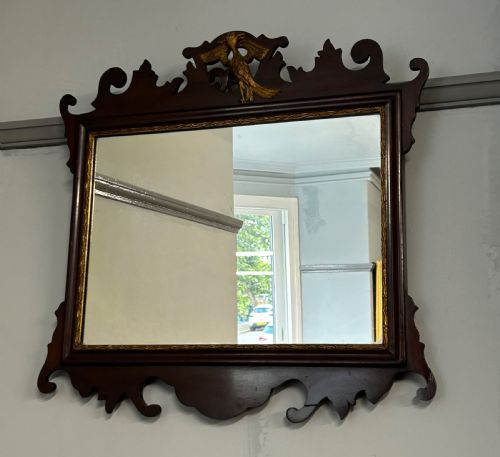

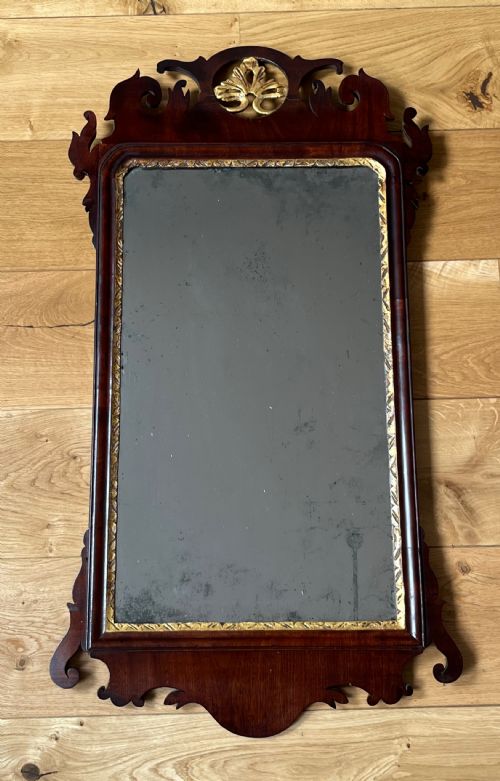


Gilt Mahogany Hanging Mirror
A gilt mahogany hanging mirror combines deep red timber with bright carved detail, bringing warmth and light to a room.
Gilt Mahogany Hanging Mirror
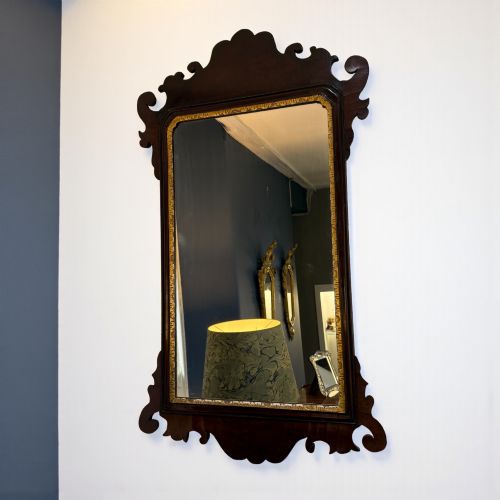
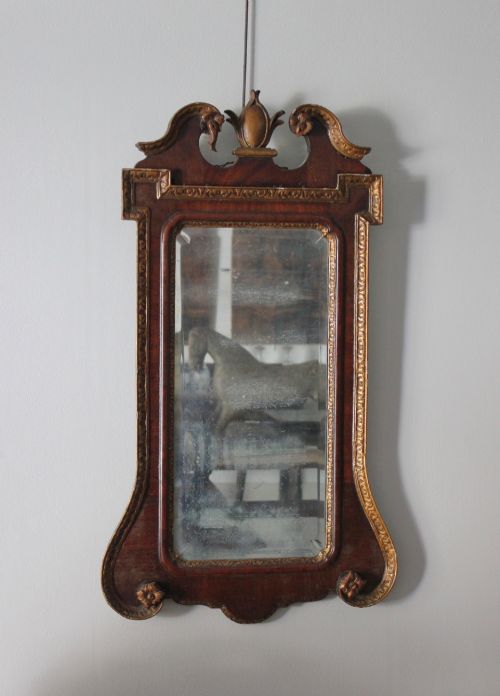
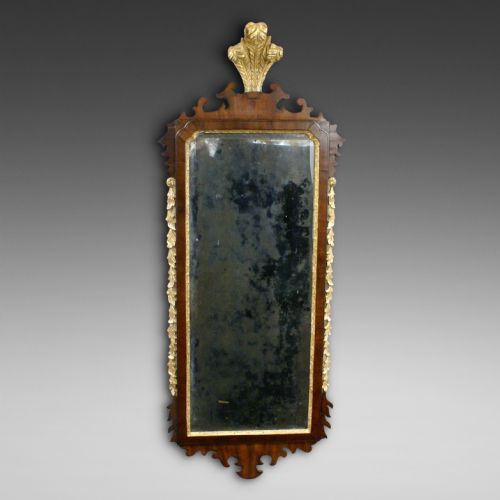
When you search for a gilt mahogany hanging mirror, you encounter wall mirrors spanning the Georgian, Regency, Victorian, and Edwardian periods. These pieces combine rich mahogany timbers with giltwood or parcel gilt details, predominantly taking the form of fretwork wall mirrors, pier mirrors, and overmantel mirrors.
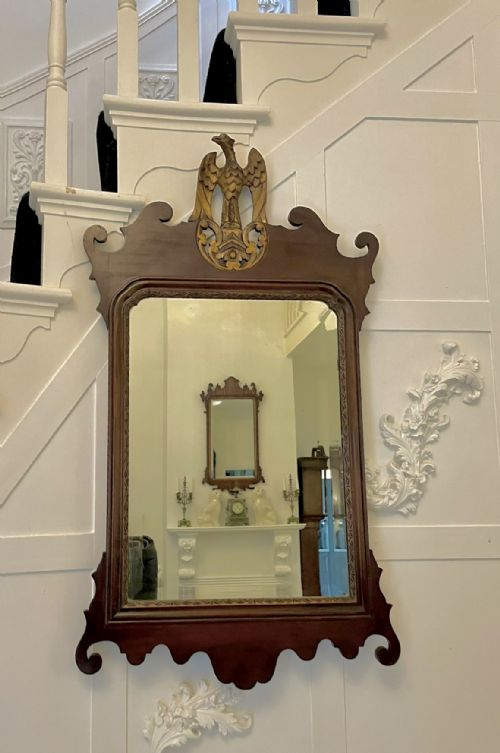
The version you are most likely to meet on this page is the Georgian fretwork wall mirror, often associated with the Chippendale style. These examples feature scrolled crests, pierced outlines, and gilded slip frames that contrast sharply with the dark, polished grain of the mahogany body.
Alongside 18th-century originals, the selection includes later interpretations from the 19th century, the Victorian era, and 1900. These later pieces adopt the classic George III forms while employing the darker patinas and specific glass plates characteristic of their respective decades of manufacture.
How they were made
Cabinetmakers constructed these frames using solid mahogany boards, often shaping the intricate outlines of the fretwork by hand with a fretsaw. The timber was carefully planed and polished to a deep finish before any gilded elements were applied.
Gilding was executed using thin sheets of gold leaf laid over a prepared surface of gesso applied directly to the wood or carved ornaments. Parcel gilt examples reserve this bright metallic finish strictly for highlights such as inner bezels, gilded birds, or carved foliage, allowing the dark mahogany grain to dominate the wider frame.
The glass plates were historically silvered using traditional methods and set within the timber rebates behind protective backboards. In many surviving examples, these original mirror glass plates display subtle age spots and imperfections that distinguish them from modern replacements.
Gilt Mahogany Hanging Mirror Retail Price Guide 2026
Typical asking prices for gilt mahogany hanging mirror among the pieces listed under this phrase on Sellingantiques today, from the lower quarter to the upper quarter. They describe what is for sale here now, not the wider market.
Many a bird perched atop a Georgian fretwork crest has watched centuries pass with unblinking wooden dignity.
What varies in quality
The distinction between ordinary and exceptional examples rests primarily on the crispness of the hand-carved fretwork and the depth of the scrollwork. Finer mirrors exhibit sharp, well-defined internal pierced cuts and balanced proportions, whereas simpler versions show softer edges and heavier outlines.
The quality of the gilding and the preservation of the original wood finish also dictate value. Superior pieces retain their original gold leaf highlights and unblemished mahogany patination, while lesser or heavily restored items may present flat modern paint or stripped timber that lacks historical depth.
The Gilt Mahogany Hanging Mirror Glossary
- Fretwork
- Thin panels of wood pierced with decorative patterns using a saw. This technique defines the silhouette of many 18th-century wall mirrors.
- Parcel Gilt
- Partially gilded, where only specific carved elements or mouldings receive gold leaf while the surrounding wood remains exposed. This creates a striking contrast between the bright metallic finish and the dark mahogany.
- Gesso
- A plaster-like mixture applied to wood surfaces as a preparation for gilding. It provides a smooth base that allows fine details to be carved before the gold leaf is laid.
- Pier Mirror
- A tall mirror designed to hang on the wall between windows, often placed above a pier table. These vertical forms are common among Georgian and Victorian examples.
- Chippendale Style
- A decorative style derived from the designs of Thomas Chippendale, characterised by fretwork, rococo scrolls, and classical motifs. It remains a dominant aesthetic in this category.
Gilt Mahogany Hanging Mirror: Frequently Asked Questions
Are the mirror plates original?
Many surviving examples retain their early or original mirror glass, which often exhibits characteristic foxing, light oxidation, and subtle distortions. These traits confirm the age of the piece and add to its visual character.
Replacements occur frequently because fragile old glass was easily broken or degraded over centuries. Examining the reflection and the backing boards helps determine whether the glass dates to the period of the frame.
How should I clean the frame?
Maintenance requires dry dusting with a soft, clean brush to remove accumulated particles from the intricate fretwork and carved details. Moisture and modern chemical polishes can damage fragile gold leaf and soften old wood finishes.
Glass panels can be cleaned sparingly using a cloth slightly dampened with water or mild glass cleaner, taking care not to let liquid seep behind the rebate into the backing timber.
What is the difference between George III and Edwardian versions?
George III pieces date from the 18th century, showcasing hand-cut mahogany fretwork, period gilding techniques, and often genuine antique mirror plates. The timber patination reflects centuries of exposure and care.
Edwardian reproductions and interpretations from around 1900 adopt similar Chippendale motifs but typically utilise machine assistance for finer fret cuts and brighter, more uniform surface finishes.