


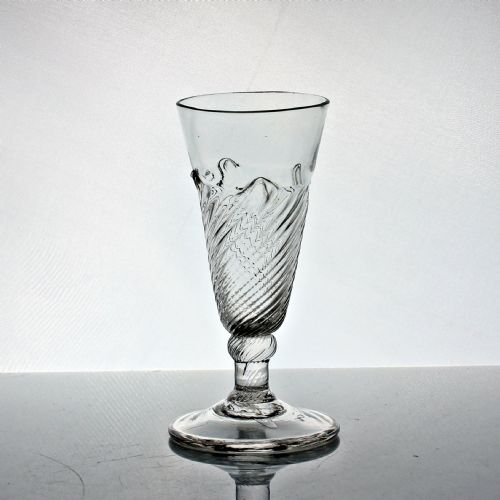


18th Century Drinking Flute
These 18th century drinking flute pieces are tall Georgian vessels designed for ales and sparkling wines, offering tactile history for your table.
18th Century Drinking Flute
When you search for an 18th century drinking flute, you encounter tall vessels primarily recorded as ale glasses, champagne flutes, ratafia glasses, and wine glasses. These pieces span the 18th century, the Georgian period, and around 1800.
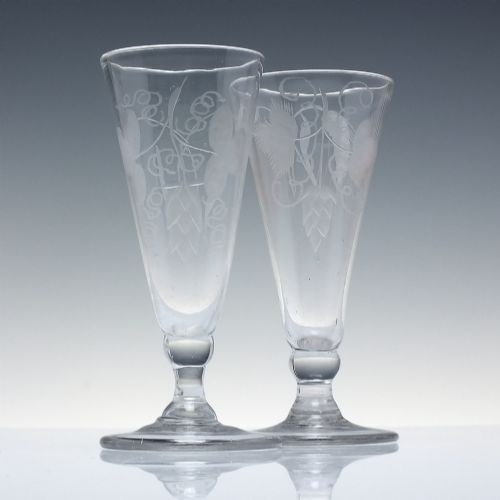
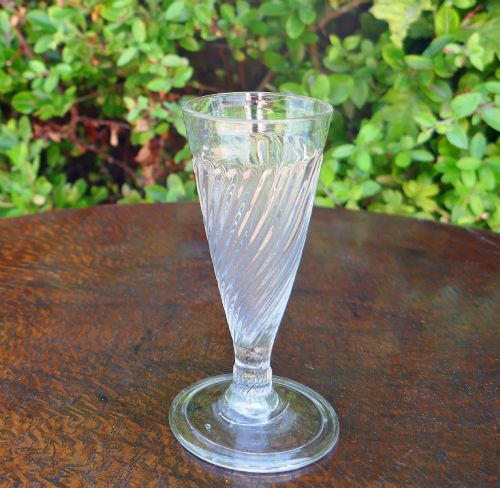
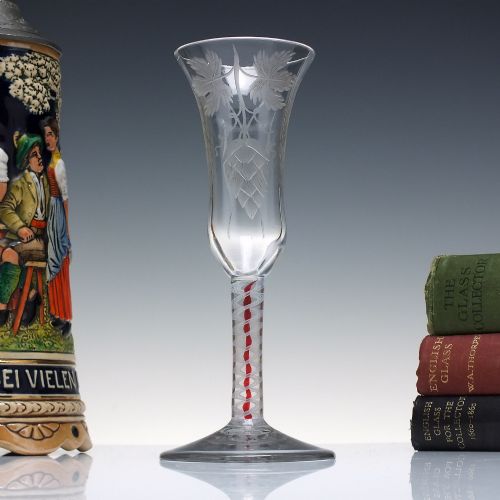
The forms you are most likely to meet on this page include slender flute-moulded ogee bowls, dwarf ale glasses, and tall flutes with engraved hop and barley motifs or flammiform designs. They stand as enduring examples of Georgian table glassware.
How they were made
These objects are shaped from lead glass, lead crystal, flint glass, and clear glass using hand-blown glass techniques. Molten metal is gathered, blown, and manipulated to form bowls and stems.
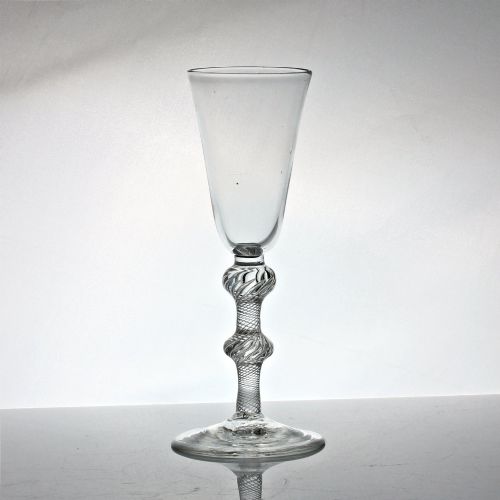
Makers incorporate internal optical effects such as air twists, opaque twists, mixed twists, and multi-spiral air twists within the stems. Surface decoration includes wheel engraving, white enamel, and facet cutting.
Some dwarf ale glasses were deliberately made short and stout so they would not easily topple during boisterous Georgian tavern toasts.
What varies in quality
Quality rests in the precision of the internal stem formations, where clean, regular air bubbles or dense opaque white twist threads demonstrate superior glasshouse skill. The crispness of wheel engraving, such as detailed hop and barley stalks, also separates standard vessels from finer examples.
Proportion and structural integrity define the higher tier, observed in balanced heights, well-formed folded feet, and clear metal free from heavy clouding or excessive inclusions.
The 18th Century Drinking Flute Glossary
- Air twist
- A stem decoration formed by elongated internal air bubbles drawn into spiral threads during pulling. This technique creates a shimmering optical effect inside clear glass.
- Opaque twist
- A stem feature containing threads of white enamel glass twisted within the transparent metal. It produces a dense, milky white pattern.
- Folded foot
- A base edge turned under and pressed flat while hot to form a reinforced rim. This adds weight and stability to the bottom of the glass.
- Flute-moulded
- A bowl decorated with vertical convex flutes or ribs blown into a dip mould. This texture catches light across the lower body of the vessel.
- Facet cut
- Geometric planes ground and polished onto the stem or bowl to create multiple flat reflective surfaces. This finish is typical of later Georgian pieces.
18th Century Drinking Flute: Frequently Asked Questions
What is an 18th century drinking flute used for?
These tall vessels served specific drinks like ale, champagne, ratafia, and light wines during Georgian dining. Their narrow bowls preserved carbonation and concentrated aromas for the drinker.
Today, collectors use them to display period craftsmanship or for occasional careful toasts. They bring authentic Georgian atmosphere to a dining setting.
How do I tell an air twist from an opaque twist?
An air twist contains clear, elongated bubbles that catch the light from within the transparent stem of the glass. You see through the stem while tracing the internal spiral.
An opaque twist uses solid white enamel glass threads embedded in the metal. The white lines appear stark and solid against the surrounding clear glass.
What does folded foot mean on these glasses?
A folded foot means the hot glass edge at the very bottom was turned back underneath and pressed flat against the base. This created a thicker, stronger rim.
It protected the fragile base from chipping on rough wooden tables. Finding a folded foot often points to an earlier manufacture date.