


Georgian Facet Cut Glass
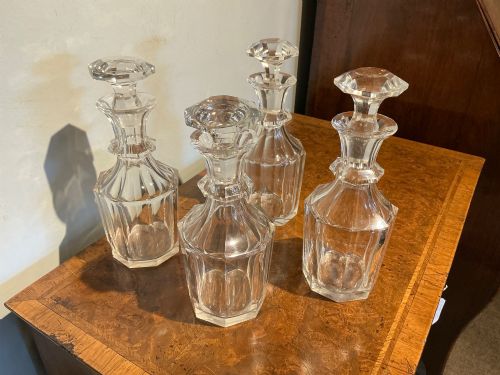
Georgian facet cut glass brings together lead crystal drinking vessels and decanters shaped by polished geometric planes that catch the light.
Georgian Facet Cut Glass
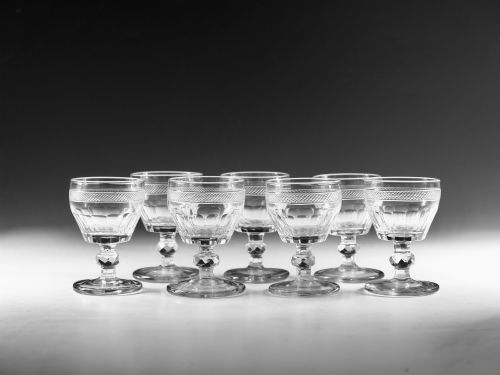
When you search for georgian facet cut glass, you find drinking vessels and serving pieces created primarily during the eighteenth and nineteenth centuries. The objects range from wine glasses, ale flutes, and dram glasses to decanters, sweetmeats, and chandeliers.
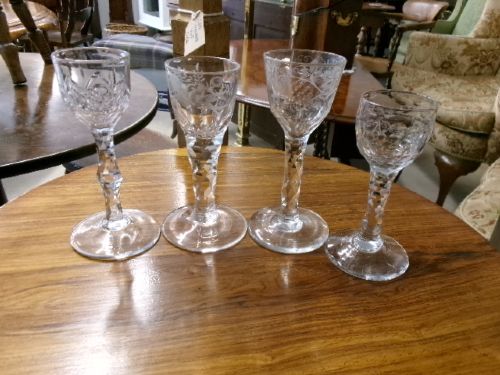
The version you meet most often on this page is the eighteenth-century wine glass or ale glass featuring a faceted stem. These drinking vessels often display engraved bowls showing hop and barley, Jacobite symbols, or gilding applied by independent decorators.
Decanters and larger goblets also appear alongside smaller cordials and jelly glasses. English manufacture dominates the evidence, with periods stretching from the Georgian era through the Regency and Victorian periods into the Edwardian age.
Materials and technique
Maker's hands formed these objects using lead crystal and clear lead glass. The high lead content provided the weight and clarity necessary for sharp, polished facets.
Cuts were ground onto stems, bowls, and feet using wheels, then polished to a smooth finish. Engraving, gilding, and the inclusion of air tears occasionally complemented the geometric cutting.
Listings feature lead crystal and clear lead glass shaped into eighteenth-century wine glasses, nineteenth-century decanters, and chandeliers.
Assessing quality and execution
Quality rests in the crispness of the facet edges and the balance of the vessel. Superior pieces display sharply defined geometric planes that catch light evenly without softening at the borders.
The clarity of the lead glass and the integration of the cut stem with the bowl and foot determine the execution. Pieces carrying specialist decoration, such as gilding or detailed floral and symbolic engraving, sit higher in the range.
James Giles
The Georgian Facet Cut Glass Glossary
- Facet cut
- A surface decorated with flat polished planes ground into the glass. This technique refracts light and provides grip on stems and decanters.
- Firing glass
- A heavy-footed drinking glass designed with a thick base. The sturdy foot absorbed the impact of being thumped onto a wooden table during toasts.
- Air tear
- An elongated bubble intentionally trapped inside the stem of a glass during manufacture. Makers used this method to decorate lead crystal before heavy cutting became popular.
- Sweetmeat
- A small pedestal bowl or dish used for serving wet or dry confections. These pieces frequently match the faceted stems of contemporary drinking glasses.
- Knopped stem
- A stem featuring one or more prominent rounded or faceted bulges. The knop provides a tactile grip and breaks the vertical line of the glass.
Georgian Facet Cut Glass: Frequently Asked Questions
What is georgian facet cut glass?
Georgian facet cut glass comprises drinking vessels, decanters, and lighting components shaped with polished geometric planes. These items date primarily from the eighteenth and nineteenth centuries.
The glass utilised lead crystal to achieve clarity and weight, allowing craftsmen to grind sharp angles onto stems, bowls, and stoppers.
How do I date these glasses?
Dating relies on stylistic shifts in bowl shapes, foot diameters, and the specific arrangement of facets on the stem. Eighteenth-century pieces often feature straight-sided bowls paired with diamond or hexagonal stem cutting.
Later nineteenth-century examples introduce broader decanter forms, heavier handles, and alternative engraving styles that distinguish them from earlier Georgian work.
Were these vessels used daily?
Many of these pieces served dining and social functions, holding wine, ale, liqueurs, or cordials during formal meals and gatherings. Sturdier forms like firing glasses endured heavier use during toasts.
More delicate sweetmeat dishes and gilded wine glasses likely belonged to wealthy households where servants handled them with greater care.
How should I display them?
Displaying lead crystal benefits from placement near natural light sources that pass through the polished facets. Cabinets with glass shelves allow illumination to reach the stems and feet.
Keeping them away from direct heat sources protects the material, while soft lighting accentuates the geometric cutting of the period.