


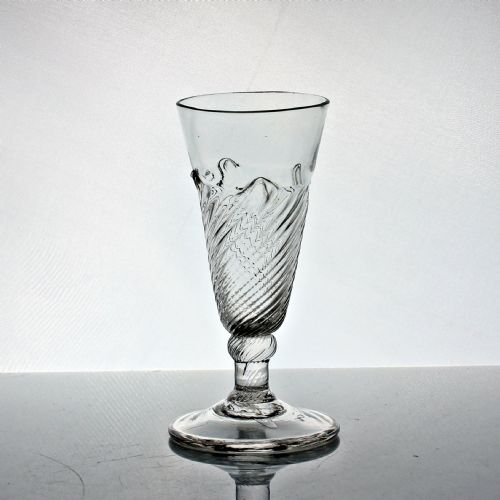


Lead Glass Ale Glass
These lead glass ale glass pieces bring the drinking habits of the Georgian period straight to your table.
Lead Glass Ale Glass
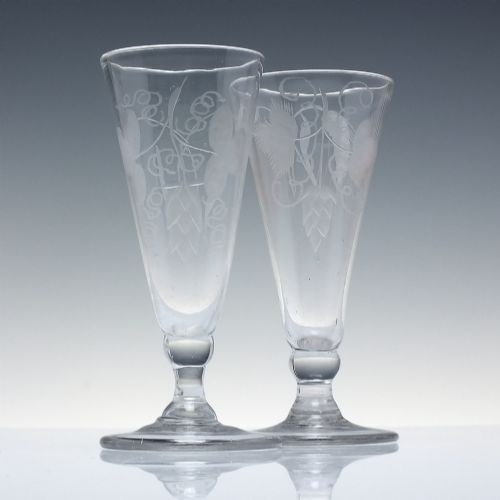
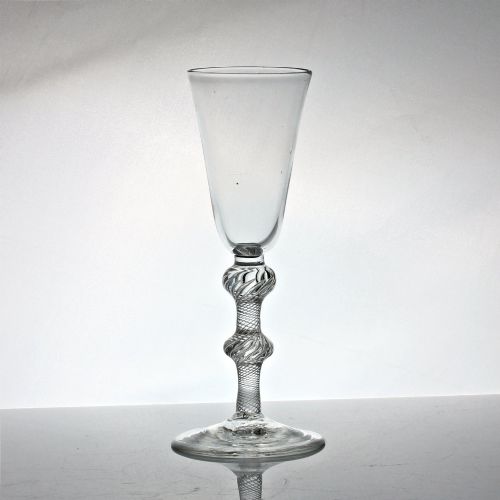
The pieces on this page heavily feature Georgian styling, often decorated with engraved hops and barley motifs that indicate their original purpose. You find variants with air twists, opaque twists, and facet cut stems alongside simpler blown forms.
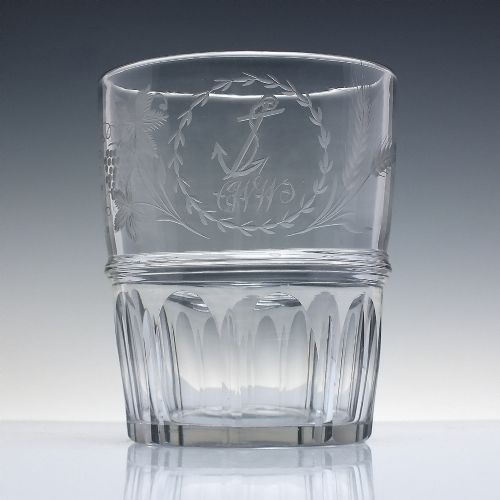
Forms range from slender flutes and flammiform dwarf glasses to larger serving rummers and heavy flip glass tumblers. The smaller stemware pieces dominate the selection, offering a direct tactile connection to Georgian tavern and dining table culture.
Materials and manufacture
These vessels are produced using lead glass, lead crystal, flint glass, and clear glass, shaped through hand-blowing techniques. Artisans also applied white enamel decoration on specific examples, particularly when creating twist stems and surface patterns.
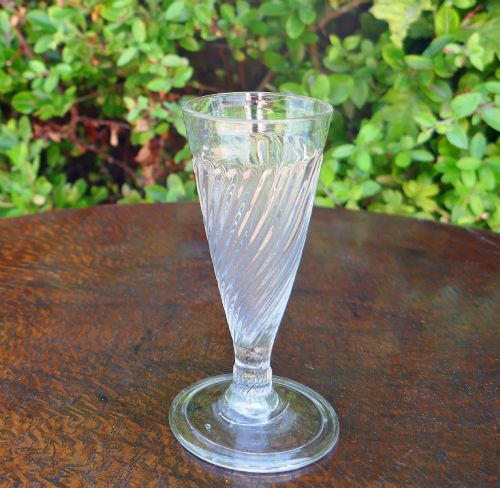
Makers utilised specialised tooling to form wrythen bodies, folded feet, and intricate multi spiral air twist or double series opaque twist stems. Surface ornamentation involved wheel engraving, creating detailed hops and barley imagery as well as flammiform panels.
The listings here combine eighteenth-century and Regency pieces, utilising lead glass, clear glass, and white enamel decoration across diverse stemware forms.
Distinguishing quality
Quality rests in the optical clarity of the metal, the balance of the stem against the bowl, and the crispness of the wheel engraving. A well-executed air twist or opaque twist demonstrates genuine skill in the manipulation of the molten material.
Proportion and foot formation dictate visual success, particularly on dwarf ale glasses and tall flutes where stability and grace must align. The depth and precision of hop and barley motifs further separate standard production from superior examples.
The Lead Glass Ale Glass Glossary
- Air twist
- A stem formation containing internal threads of trapped air, created by drawing out bubbles within the molten metal before twisting.
- Opaque twist
- A stem decorated with internal threads of white enamel glass, sometimes combined with clear glass elements.
- Wrythen
- A decorative spiral pattern moulded into the body or bowl of the glass during the blowing process.
- Folded foot
- A base edge turned underneath to create a thickened rim, providing extra strength and stability to early drinking vessels.
- Rummer
- A large, heavy drinking glass popular in the late eighteenth and early nineteenth centuries, often used for ale or rum.
Lead Glass Ale Glass: Frequently Asked Questions
What were ale glasses used for?
These vessels served for consuming malt beverages like ale and beer during social gatherings and meals. Their capacities and forms varied to accommodate different strengths and styles of drink.
Taller flutes maintained carbonation in narrower volumes, while larger rummers allowed for heartier toasts and communal drinking.
How do you date an eighteenth century ale glass?
Dating relies on observing stem formations, manufacturing techniques, and decorative motifs characteristic of specific decades. Folded feet and simple air twists typically point toward the mid-eighteenth century.
Facet cutting and heavier proportions generally indicate the later Georgian and Regency periods around eighteen-twenty to eighteen-thirty.
Why do many glasses feature hops and barley?
Hops and barley served as the primary agricultural ingredients used in brewing traditional British ales. Engraving these motifs onto the glass surface directly identified the intended contents of the vessel.
This imagery was applied by wheel engravers who celebrated the agricultural source of the drink on the exterior of the bowl.
How should I care for antique lead glass?
Antique lead glass requires gentle hand washing in lukewarm water using mild detergent. Avoid sudden temperature changes to prevent thermal shock and cracking in the historic material.
Store the pieces securely on stable surfaces, keeping stemware separated to protect delicate lead crystal components from chipping.