

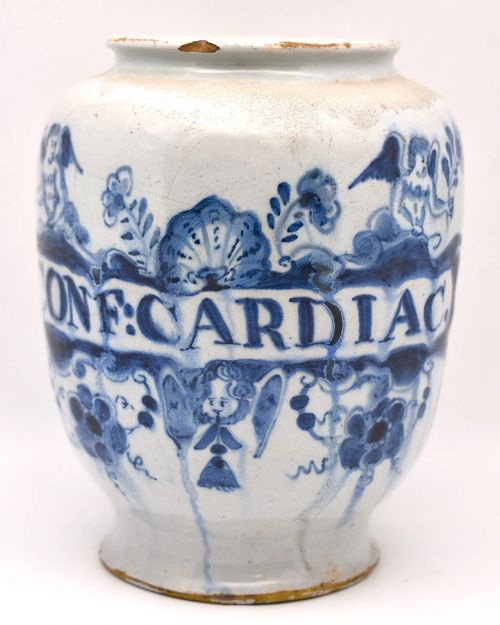
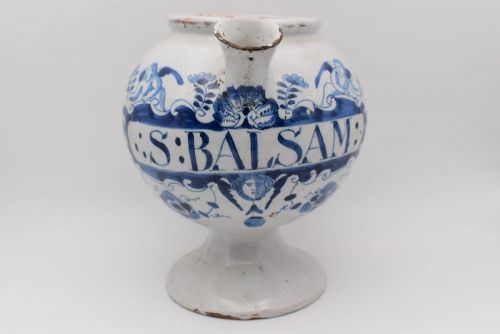


18th Century Delftware Jar
An 18th century delftware jar brings tin-glazed earthenware and cobalt pigment straight from apothecary shelves into a room.
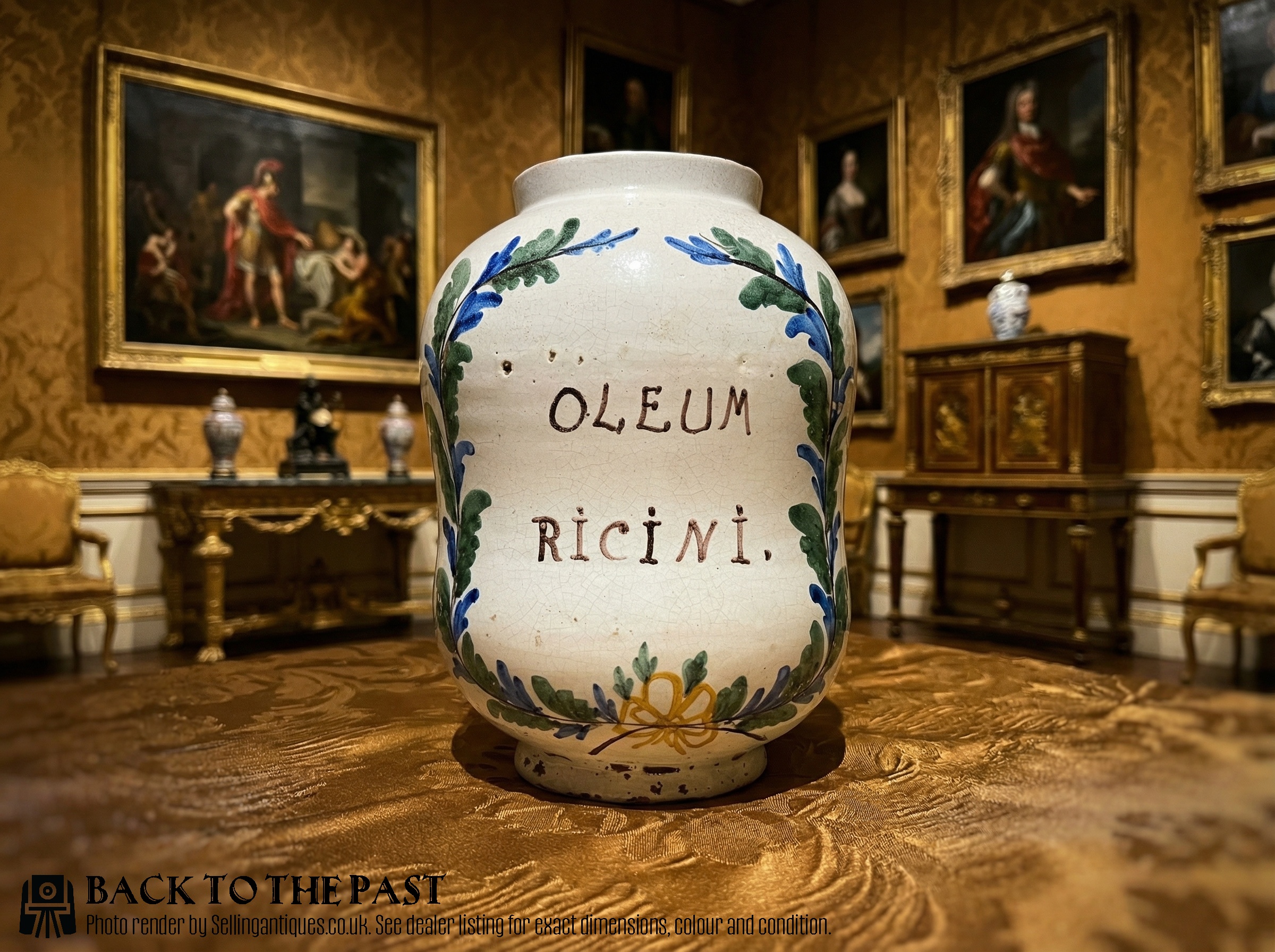
18th Century Delftware Jar
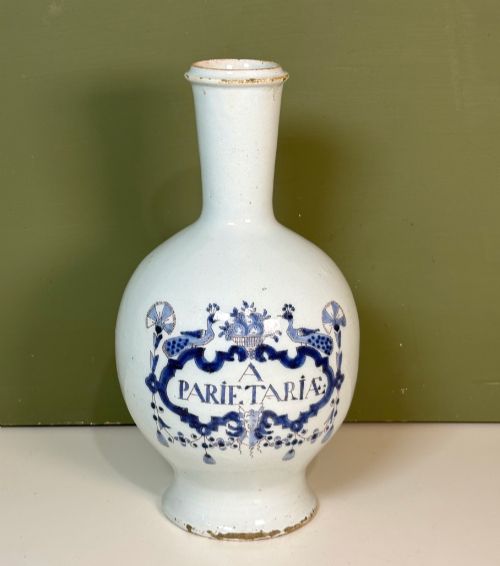
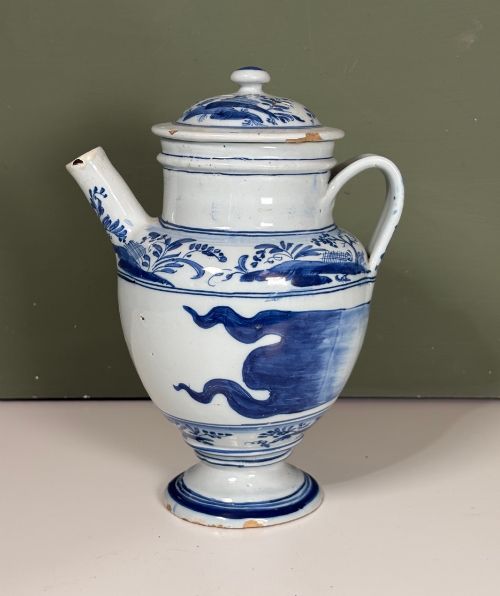
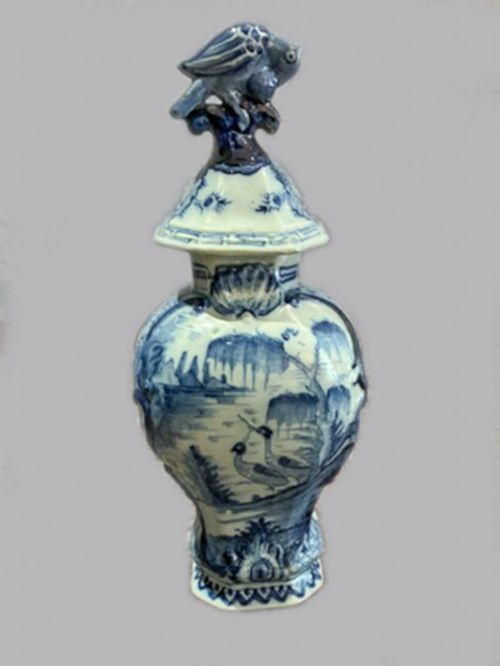
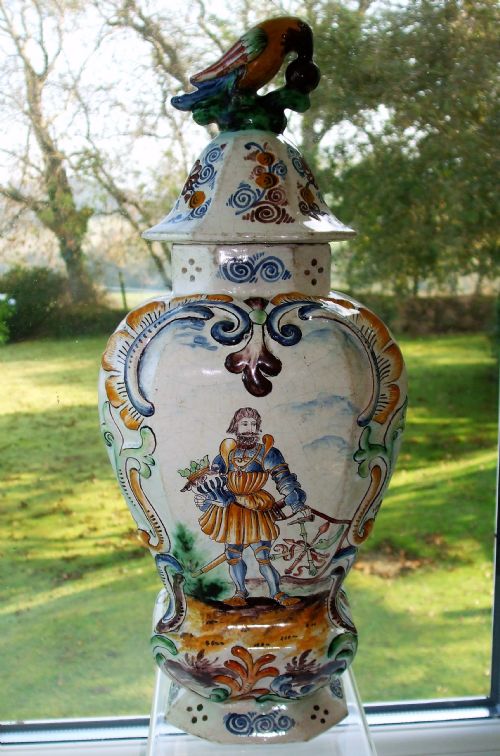
The 18th century delftware jar category gathers apothecary vessels, wet drug jars, tobacco jars, and lidded vases. Buyers seeking an 18th century delftware jar will find forms designed for chemist shops alongside decorative baluster vases.
Most examples originate from Dutch or English kilns, featuring tin-glazed earthenware painted in cobalt blue or polychrome palettes. These pieces range from simple storage jars to elaborate urns with handles and matching covers.
Apothecary items often display Latin inscriptions or specific drug names such as cardiac or balsam alongside cherub and shell motifs. Other pieces present pure blue and white designs or floral patterns spanning the eighteenth and nineteenth centuries.
Materials and manufacture
Potters shaped earthenware bodies on the wheel, coating them in an opaque white tin glaze that provided a smooth surface for painting. Artisans then applied cobalt pigment and other metallic oxides directly onto the porous unfired glaze.
Firing fused the pigments into the white glaze, creating the characteristic glossy finish seen across continental faience and English delft. Certain lids and vessels incorporated brass elements or handles to complete the functional design.
18th Century Delftware Jar Retail Price Guide 2026
Typical asking prices for 18th century delftware jar among the pieces listed under this phrase on Sellingantiques today, from the lower quarter to the upper quarter. They describe what is for sale here now, not the wider market.
Current listings demonstrate a concentration of 18th century pieces alongside select 19th century items, utilising tin-glazed earthenware, brass, and cobalt pigment.
Assessing quality
Quality depends on the crispness of the cobalt painting, the purity of the white tin glaze, and the preservation of the earthenware body. Stronger jars exhibit confident brushwork on inscriptions and pictorial details like cherub and shell cartouches.
The presence of an original matching lid distinguishes exceptional survival rates from altered or married pieces. Heavier potting and balanced proportions in large baluster vases or urns mark superior workshop output.
The 18th Century Delftware Jar Glossary
- Albarello
- A tall cylindrical drug jar used in pharmacies, curving inwards at the centre for a secure grip. This shape originated in the Middle East and became popular across Italian, Dutch, and English kilns.
- Tin glaze
- An opaque white earthenware glaze made by adding tin oxide to a lead glaze base. It creates the characteristic canvas for painting blue and polychrome designs.
- Baluster vase
- A vessel featuring a curved outline that swells outwards near the base and tapers toward the top. This silhouette appears frequently among lidded jars and decorative urns.
- Wet drug jar
- An apothecary vessel designed to hold liquids or syrups, usually featuring a spout and a loop handle opposite. These jars often bear painted labels denoting specific medical ingredients.
- Faience
- Tin-glazed earthenware produced in continental Europe, particularly in France and Italy. It shares technical roots with Dutch and English delftware production.
18th Century Delftware Jar: Frequently Asked Questions
How were apothecary jars used?
Apothecaries and chemists utilised these jars to store dried herbs, powders, and medicinal liquids on apothecary shelves. Each jar was clearly labelled so practitioners could quickly identify the contents during daily compounding.
Over time, many of these utilitarian vessels transitioned from working shops into domestic decorative displays. Their distinctive forms and hand-painted inscriptions made them appealing cabinets of curiosity pieces.
How do I spot a reproduction?
Examine the glaze texture and pigment behaviour under magnification to understand the age of the piece. Authentic tin glaze shows fine crazing and subtle surface variations from historic kiln firings.
Modern copies often lack the depth of cobalt pigment sinking into the porous white glaze. Genuine pieces carry the weight and minor imperfections expected from eighteenth-century hand-thrown earthenware.
Can I use them for storage?
Historic tin-glazed earthenware possesses a porous ceramic body and delicate glazes that can absorb moisture or sustain damage. It is wiser to display these pieces dry rather than exposing them to active food storage or liquids.
Gentle cleaning with a soft dry cloth preserves the fragile glaze surface. Avoid harsh detergents and submersion in water to protect the historic fabric.
What is the difference between English and Dutch delft?
Dutch delftware often reflects high-volume workshop production inspired by Chinese porcelain imports, featuring crisp blue and white floral or landscape scenes. English delft frequently displays robust local character with distinct apothecary lettering and cheerful naive motifs.
Both traditions rely on the same fundamental tin-glazed earthenware technique. Subtle differences in clay bodies and regional painting styles help specialists separate the two origins.