



18th Century Corner Unit
An 18th century corner unit is a clever piece of historical joinery designed to utilise awkward room intersections.
18th Century Corner Unit
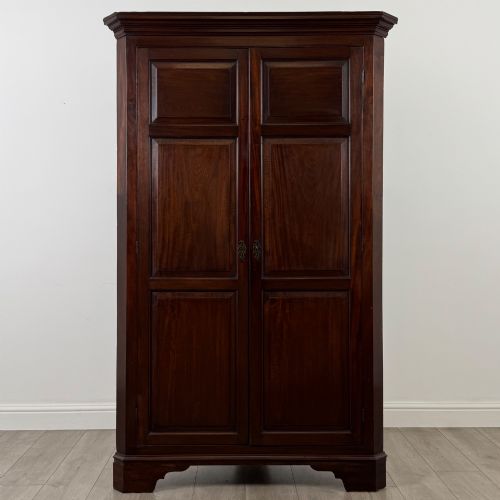
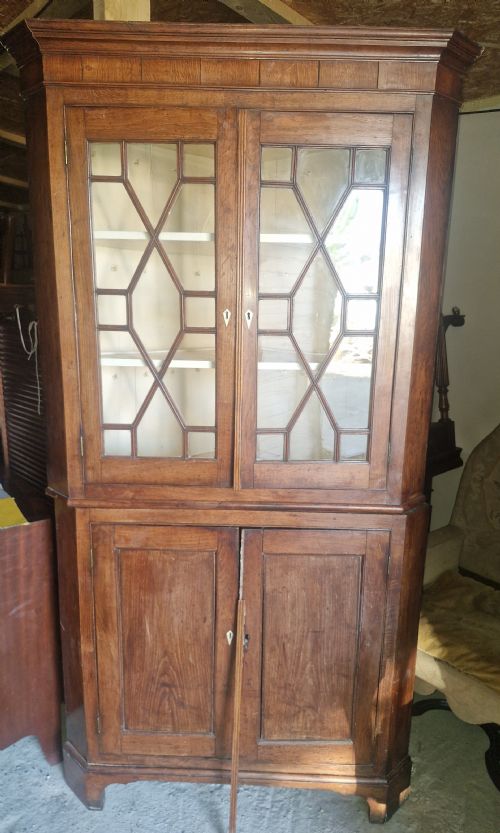
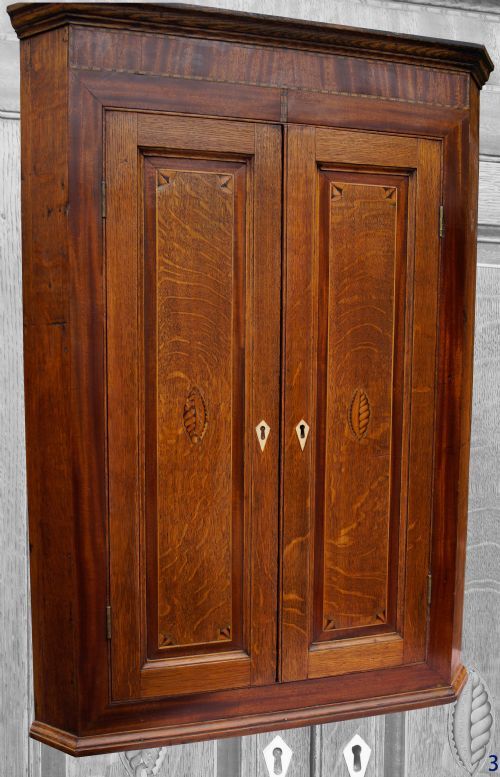
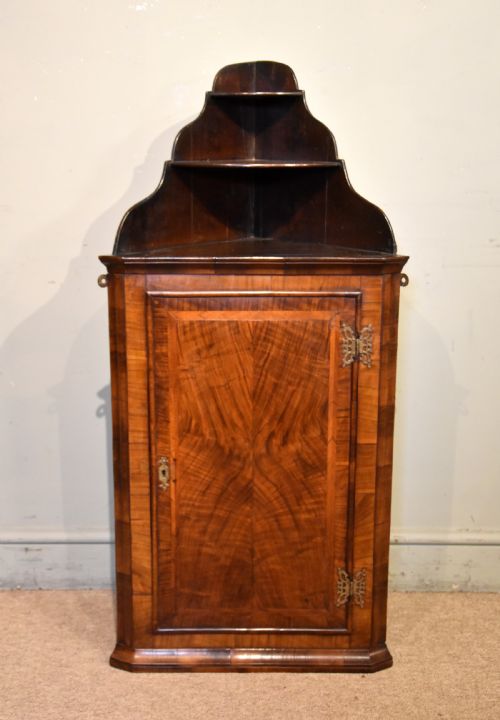
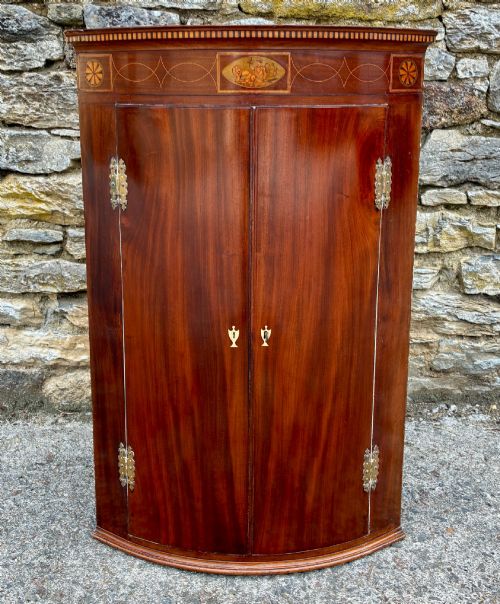
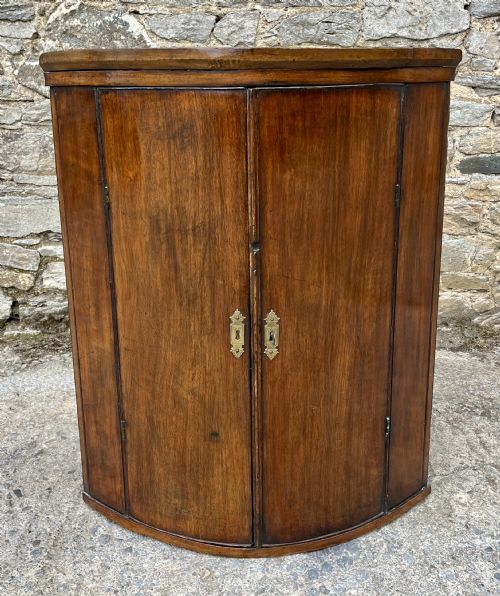
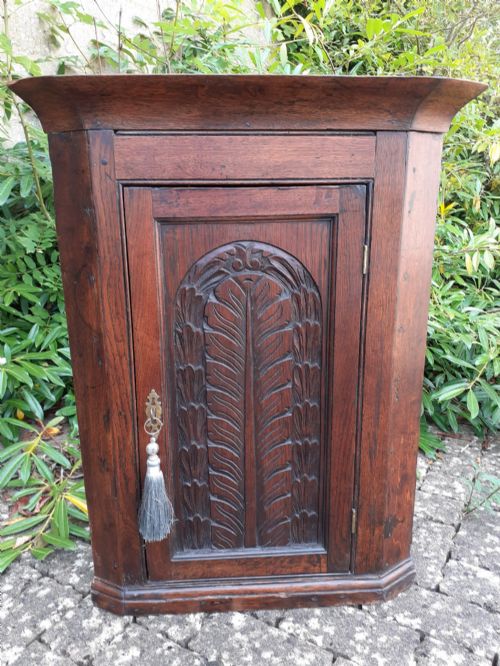
An 18th century corner unit serves to maximise floor space by fitting neatly into room angles. The pieces available here span Georgian, Queen Anne, Regency, and Edwardian periods, taking the form of hanging cupboards, two-part floor-standing cabinets, and wall shelves.
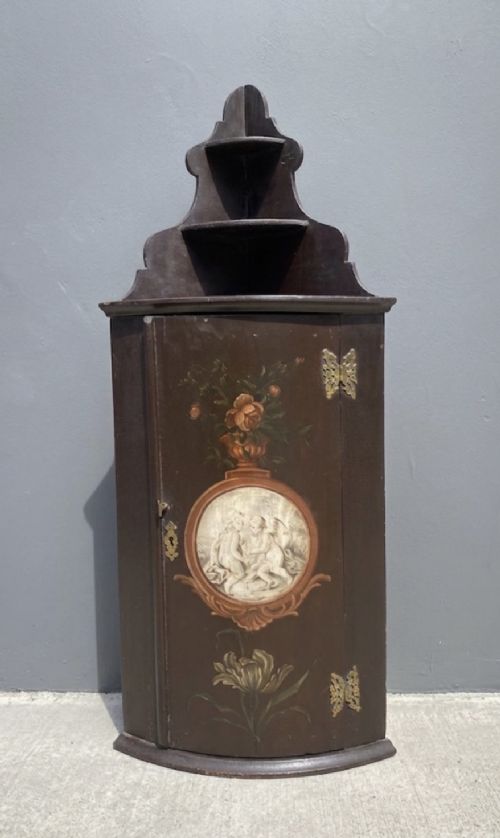
Oak and mahogany dominate the timber choices, frequently seen in both country vernacular and formal urban cabinet-making. Certain examples feature painted surfaces, boxwood inlay, or glass panels to display contents within domestic interiors.
How they were made
Cabinet-makers constructed these units primarily using solid oak, mahogany, and walnut, often pairing timber with brass hardware and boxwood stringing. Hanging and standing variants rely on pegged mortise and tenon joinery to maintain structural integrity.
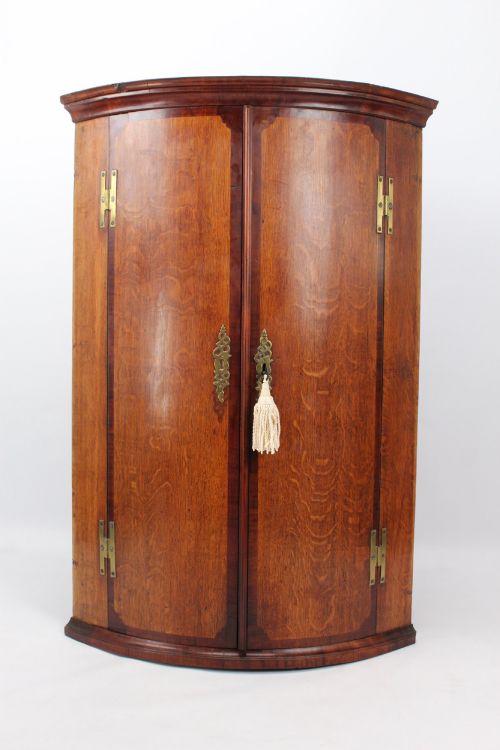
Surface finishes include traditional paint applications, Chinoiserie decoration, and polished timber grains. Glazed doors utilise wooden glazing bars, whilst bowed fronts require carefully shaped framing timber.
Listings feature woods like oak, mahogany, walnut, and pine, alongside painted finishes and boxwood inlay.
What varies in quality
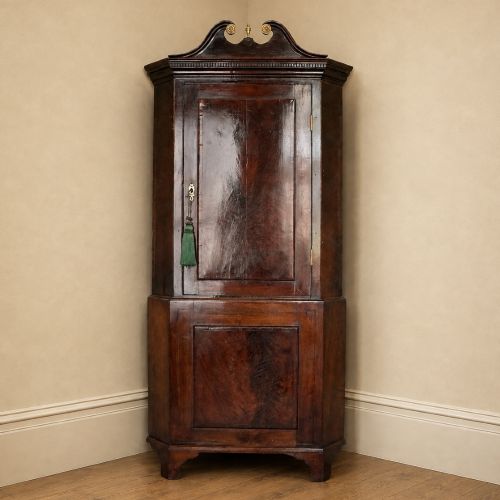
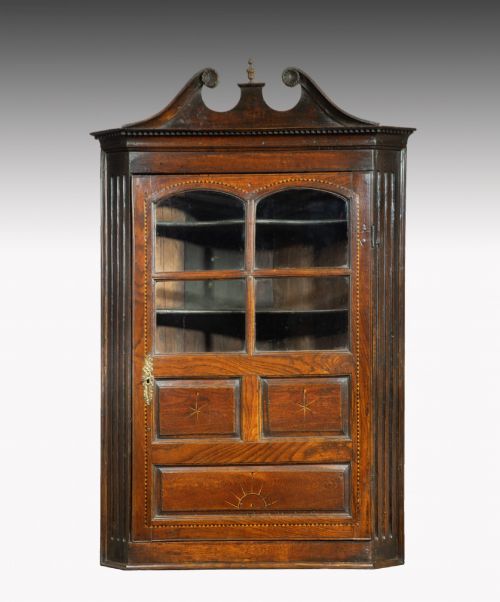
The distinction between standard utility and finer craftsmanship lies in timber selection, such as figured mahogany or burr walnut. Superior pieces incorporate architectural elements like broken arch pediments and meticulous inlay work.
Construction nuance dictates overall merit, including the handling of curved bow fronts and the finesse of panelled door construction. Finer examples display harmonious proportions and original brass hinges.
The 18th Century Corner Unit Glossary
- Bow front
- A convex, outwardly curved cabinet face. This curved profile requires specialised shaping of both doors and framing.
- Pediment
- A decorative architectural crown positioned above the main body of a standing cabinet. Examples include broken arch designs.
- Astral glazed
- A glass door divided into smaller panes by wooden framework strips known as astragals. This technique allows for decorative light openings.
- Chinoiserie
- European decorative art imitating traditional Chinese styles. Pieces often feature painted motifs on a coloured background.
- Two part
- A large cabinet constructed in separate upper and lower sections for easier transport and placement. These stack to form a single tall unit.
18th Century Corner Unit: Frequently Asked Questions
What is an 18th century corner unit?
These pieces are specialist storage cabinets built specifically to fit into the ninety-degree angle of a room. They make efficient use of otherwise wasted spatial intersections.
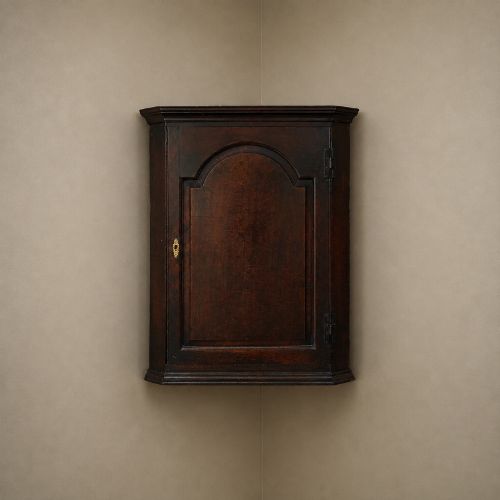
They appear as single hanging wall cupboards or substantial two-part floor-standing furniture, providing enclosed shelving for household goods.
Were they used for display?
Many variants feature wooden doors to keep contents hidden, whilst others utilise glass panels or open top shelves. Glazed versions allowed owners to exhibit porcelain and glassware.
Cupboards with solid timber panels prioritised secure, dust-free storage over visual exhibition.
How do I tell oak from mahogany pieces?
Oak items generally display a prominent, coarse grain pattern and date frequently to country vernacular workshops or early Georgian periods. They possess a robust, heavy physical presence.
Mahogany exhibits a smoother, reddish-brown grain that became prevalent in formal urban cabinet-making as the century progressed.
How do hanging and standing cupboards differ?
Hanging versions attach directly to wall studs via internal fixing points, remaining suspended above the floor. They suit smaller rooms where floor area is limited.
Standing units rest upon a base or plinth directly on the floor, often split into two stacked sections to reach greater ceiling heights.