



Georgian Chinoiserie Cabinet
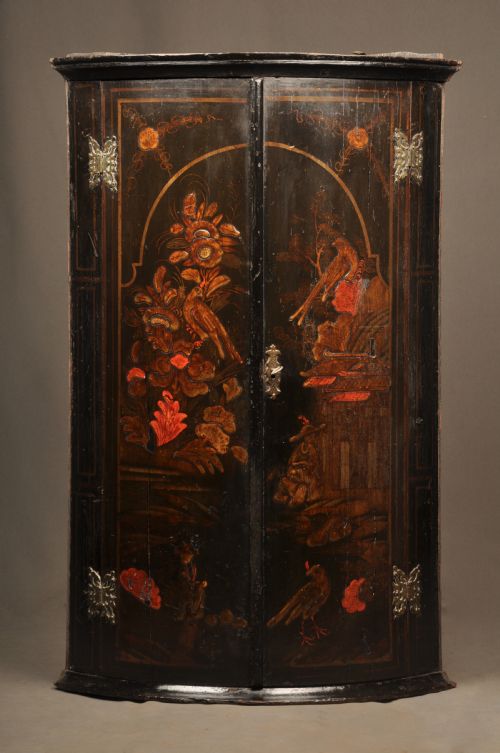
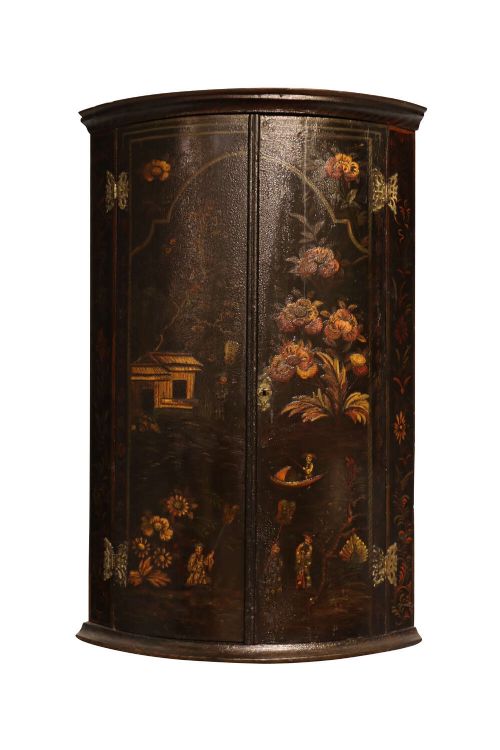
A georgian chinoiserie cabinet brings together European cabinet-making and decorative lacquer work inspired by East Asian art.
Georgian Chinoiserie Cabinet
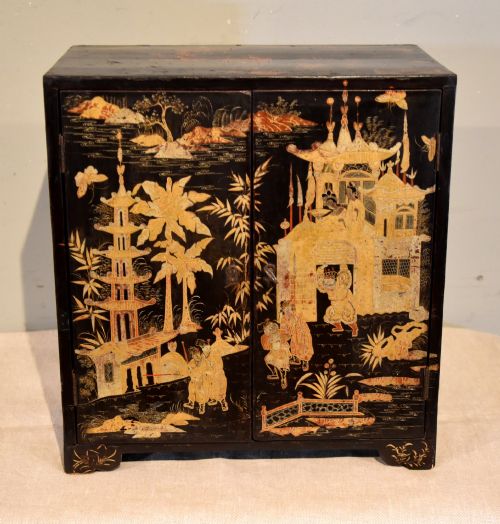
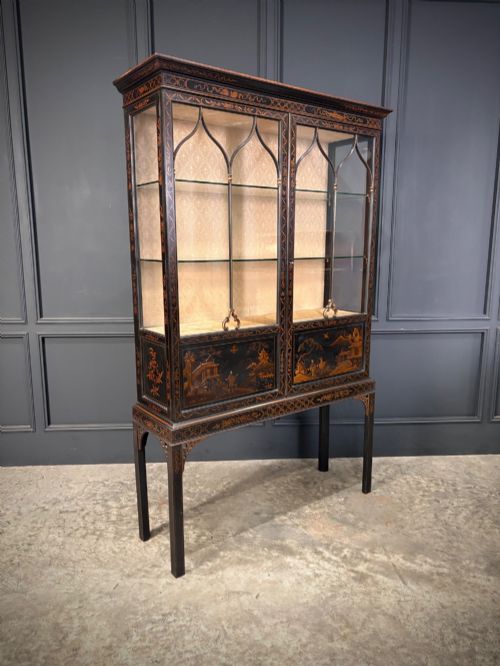
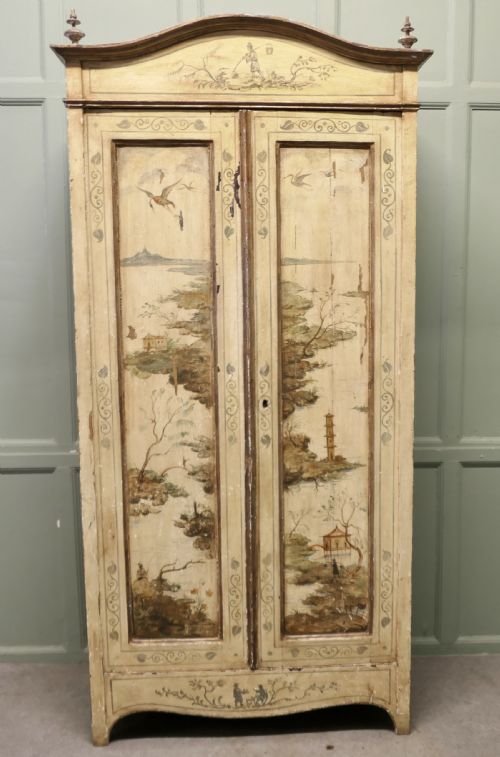
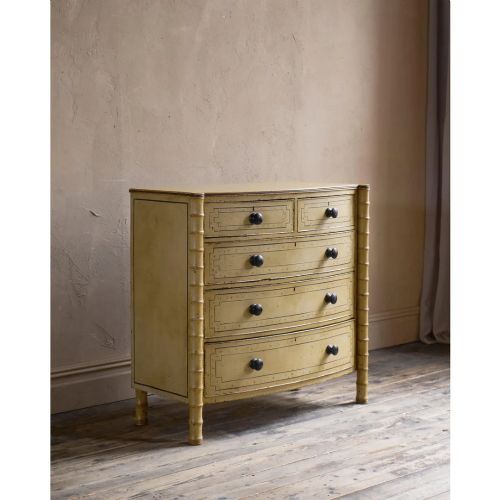
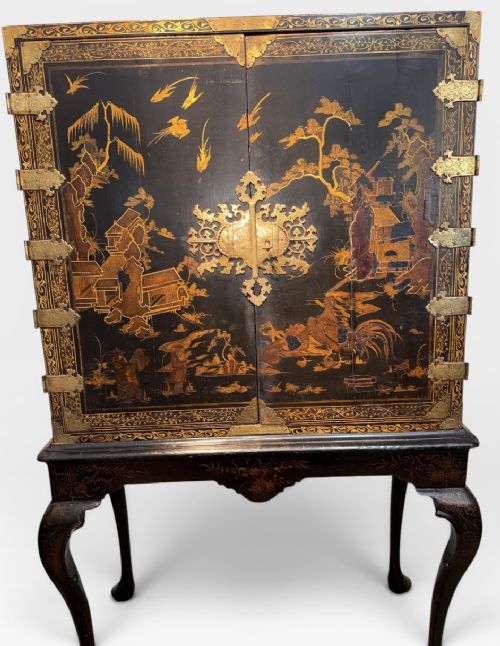
When you examine a georgian chinoiserie cabinet, you encounter forms ranging from corner cupboards and bureau bookcases to cabinets on stands, originating across the eighteenth century and subsequent revival periods.
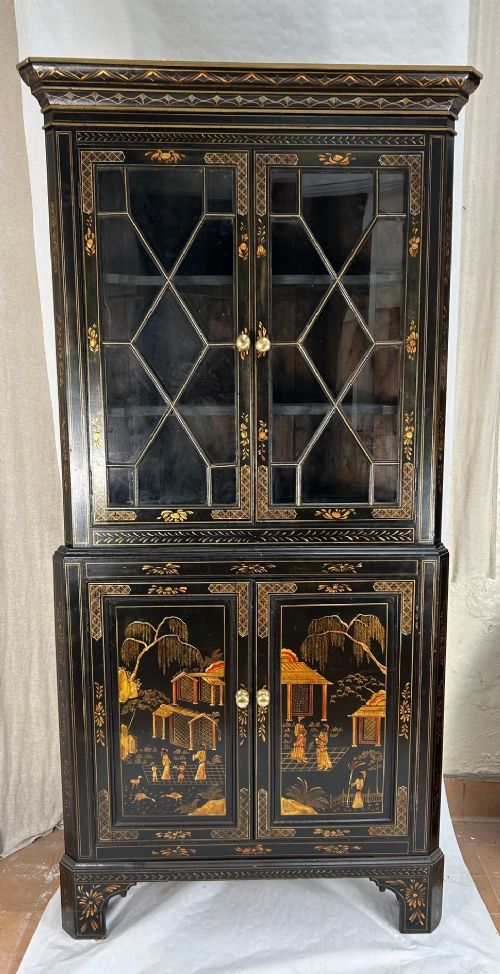
The version you are most likely to meet on this page is the corner cupboard, finished in black, red, or yellow lacquer with outdoor scenes and decorative motifs.
These pieces served to store and display precious items while introducing figurative scenes and decorative landscapes into domestic interiors.
How they were made
Maker's workshops built these pieces using wood such as pine, applying layers of lacquer to form a smooth ground for decoration.
Artists added gilt, gold leaf, and brass hardware, creating raised figures, pavilions, and outdoor scenes across doors and panels.
Several pieces feature painted figures enjoying quiet outdoor scenes on doors that once hid mundane household ledgers.
What varies in quality
The refinement of the painted and gilt decoration separates simpler vernacular pieces from finer examples, particularly in the detail given to figures and outdoor scenes.
The quality of the underlying cabinet-making, from the choice of wood to the execution of brass hinges and mounts, determines the standing of the piece.
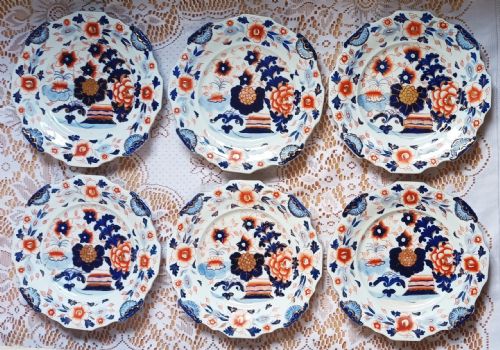
Worcester Barr Flight And Barr·Worcester Flight Barr And Barr
The Georgian Chinoiserie Cabinet Glossary
- Chinoiserie
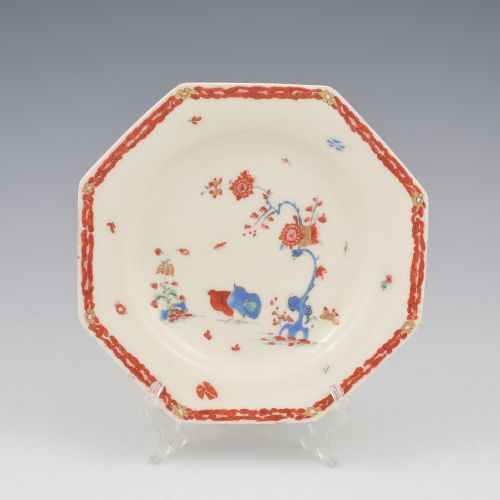
- European artistic style reflecting Chinese motifs and decorative techniques. It appears frequently on lacquer furniture and porcelain plates.
- Japanned
- European work mimicking East Asian lacquer using layers of varnish and metallic dust. This finish is applied to cabinets, chests, and corner cupboards.
- Lacquer
- Resin finish built up in multiple coats to create a hard, glossy surface. It forms the protective and decorative skin of these cabinets.
- Bureau bookcase
- Writing desk with shelving above enclosed by doors. Examples in this style feature decorative lacquer surfaces.
- Corner cupboard
- Cabinet designed to fit neatly into the corner of a room. This is the most common form found among these listings.
Georgian Chinoiserie Cabinet: Frequently Asked Questions
What is a georgian chinoiserie cabinet?
A georgian chinoiserie cabinet is a storage piece finished with European lacquer work and decorative scenes inspired by East Asian art.
These pieces include bureau bookcases, corner cupboards, and cabinets on stands produced during the eighteenth century and later revival periods.
How were these cabinets used?
They functioned as practical storage for books, documents, or tableware while serving as decorative focal points in formal rooms.
Corner cupboards utilised awkward wall spaces, whereas bureau bookcases provided a dedicated writing surface alongside display shelving.
What materials are used in these pieces?
Makers constructed the carcases from wood, including pine, before applying layers of lacquer to create a smooth decorative surface.
Brass fittings, gilt highlights, and gold leaf were added to emphasise figures, foliage, and architectural motifs.
How do I distinguish eighteenth century pieces from later revivals?
Eighteenth-century examples display the construction methods, wear patterns, and specific lacquer formulations characteristic of the period.
Later pieces from the Victorian, Edwardian, and early twentieth-century periods often reflect revival tastes while retaining the characteristic painted scenes.