



Regency Chinoiserie Chest
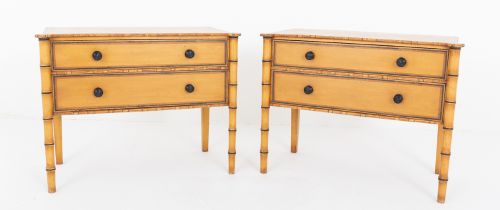
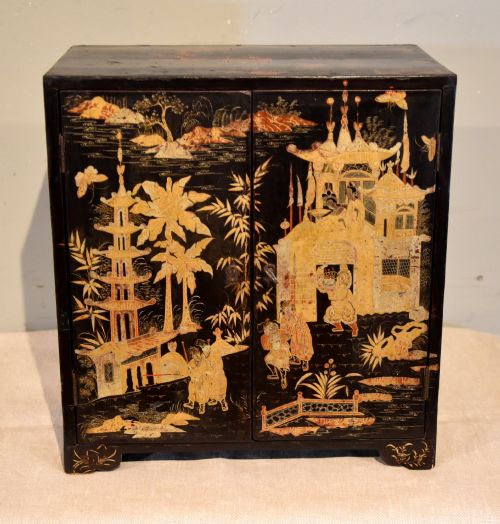
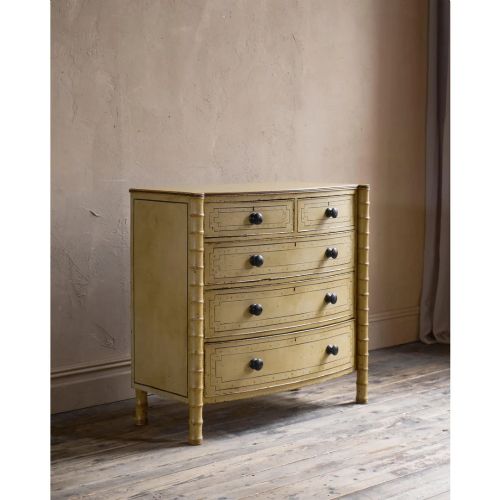
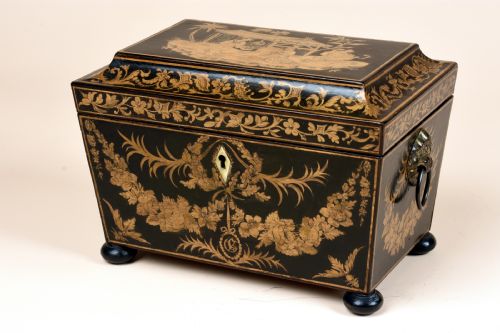
These regency chinoiserie chest pieces bring exotic hand-painted scenes and intricate penwork straight into a room.
Regency Chinoiserie Chest
A regency chinoiserie chest brings together the bold forms of the early nineteenth century with whimsical, Eastern-inspired motifs. These pieces span small table cabinets, cabinets on stands, and larger chests of drawers, all finished with distinctive decorative surfaces.
The buyer meets a fascinating mix of objects on this page, including specialised tea caddies, workboxes, and jewellery boxes alongside larger storage furniture. Most examples date from the Regency and Georgian periods or the wider nineteenth century, capturing a distinct appetite for Japanned and penwork decoration.
Wood serves as the core structure across these items, often transformed by elaborate surface treatments such as gold leaf, gilt, ink, and painted softwood. Whether small enough for a tabletop or standing tall as a cabinet, each piece showcases the period's fascination with fantasy landscapes and delicate figures.
How they were made
Makers built these pieces using wood and softwood as a foundation, applying meticulous techniques to achieve their striking finishes. Lacquer and Japanning created glossy, durable surfaces that could mimic Asian export goods.
Penwork played a major role in decorating these surfaces, using fine ink lines to build up intricate pavilions, figures, and foliage with the detail of an etching. Artisans then highlighted these monochrome or coloured designs with gold leaf and gilt to catch the light.
Regency Chinoiserie Chest Retail Price Guide 2026
Typical asking prices for regency chinoiserie chest among the pieces listed under this phrase on Sellingantiques today, from the lower quarter to the upper quarter. They describe what is for sale here now, not the wider market.
Some of these tiny penwork tea caddies required artists to paint microscopic Chinese tea pickers entirely in ink.
What varies in quality
Quality rests heavily on the crispness of the penwork and the depth of the decorative scheme across the wooden carcase. Stronger examples display microscopic detail in the ink drawings of figures and pavilions, whereas lesser pieces look hurried and flat.
The choice of secondary materials also separates standard items from finer works, particularly the use of genuine gold leaf, bone accents, and well-cast brass fittings. Surface preservation matters deeply, as intact lacquer and undisturbed japanning maintain the intended visual impact.
The Regency Chinoiserie Chest Glossary
- Japanning
- A European imitation of East Asian lacquerwork, created by applying layers of varnish and heat-drying them before adding painted motifs. This finish is common on nineteenth-century workboxes and cabinets.
- Penwork
- A decorative technique using fine ink lines drawn directly onto a prepared wooden surface to simulate carved ivory or elaborate inlay. It allows for astonishingly detailed architectural and figural scenes.
- Table cabinet
- A small, portable storage piece designed to sit on a desk or table rather than the floor. These items often feature internal drawers for valuables or writing materials.
- Tea caddy
- A small box built to store dry tea leaves securely, often fitted with internal compartments and a lock. During the Regency period, these were frequently decorated with penwork and chinoiserie motifs.
Regency Chinoiserie Chest: Frequently Asked Questions
What is a regency chinoiserie chest?
A regency chinoiserie chest is a piece of furniture or decorative storage from the early nineteenth century adorned with European interpretations of East Asian art. These items range from small tabletop cabinets to larger storage pieces finished with lacquer, penwork, or painted details.
They reflect a strong historical taste for exotic scenery, featuring pavilions, figures, and landscapes rendered in ink, gilt, and gold leaf.
How were these decorative surfaces created?
Artisans used a variety of specialised techniques, including Japanning and penwork, to achieve the distinctive pictorial look on wooden carcases. Penwork involved drawing fine ink details by hand, which created intricate monochrome patterns resembling engraving.
Surfaces were often built up with multiple layers of lacquer and highlighted with gold leaf or gilt. This required immense patience and steady hands from skilled craftspeople.
Where should I place a table cabinet?
These small cabinets and caddies suit tabletops, sideboards, or dedicated display surfaces where their detailed decoration can be appreciated up close. Because many were designed to hold small valuables, tea, or writing equipment, they work well in studies and living rooms.
Keeping them away from direct sunlight protects the delicate inkwork, paint, and gold leaf from fading over time.
How do I spot penwork decoration?
Penwork appears as fine, ink-drawn lines on a light or dark background, often mimicking the appearance of engraved prints or scrimshaw. If you look closely, you can see the individual pen strokes forming tiny figures, trees, and architectural elements.
This technique differs from standard painting because of its graphic, linear precision and reliance on ink rather than heavy pigments.