

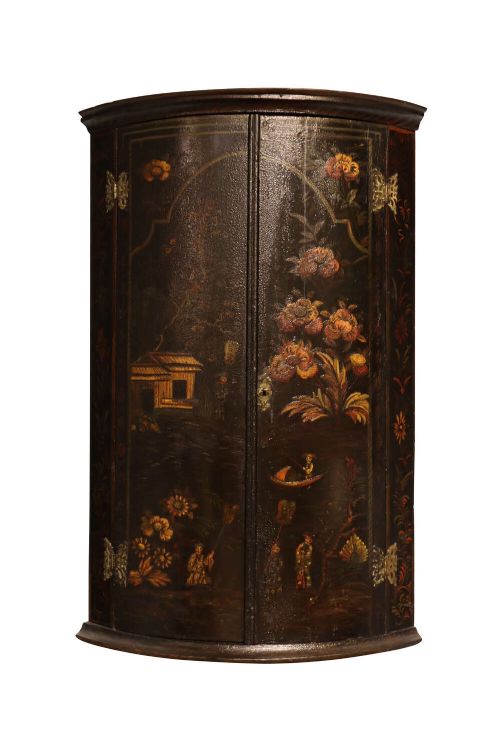


Chinoiserie Wall Cabinet
A chinoiserie wall cabinet brings painted lacquer and exotic scenes into a room, offering both display space and traditional storage.
Chinoiserie Wall Cabinet
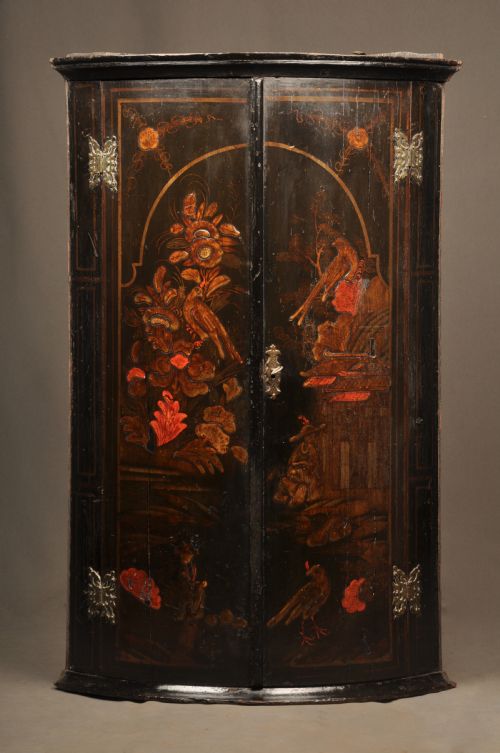
When you search for a chinoiserie wall cabinet, you are looking at corner cupboards and corner cabinets designed to fit into room junctions while displaying surface decoration.
The pieces you are most likely to meet on this page span the 18th century, 19th century, and Edwardian periods, frequently taking the form of corner cupboards.
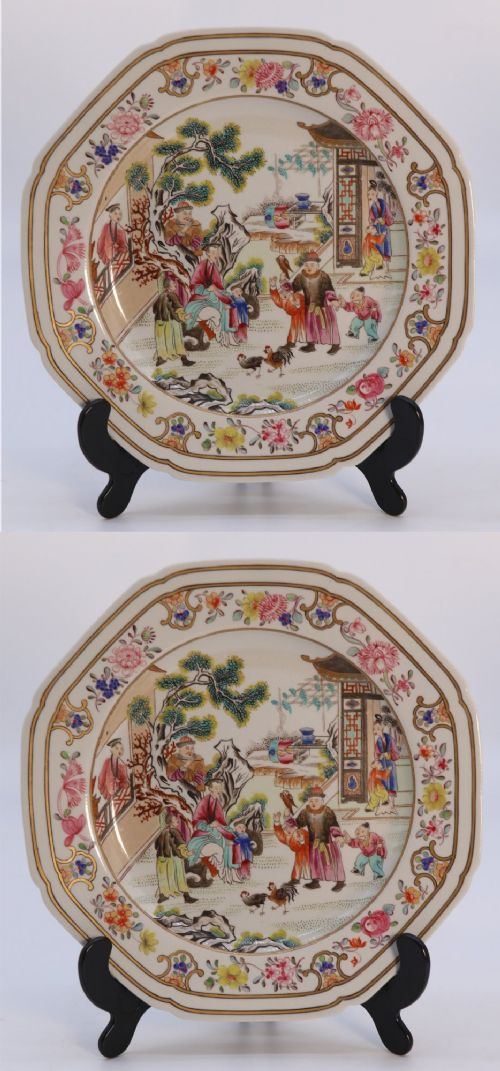
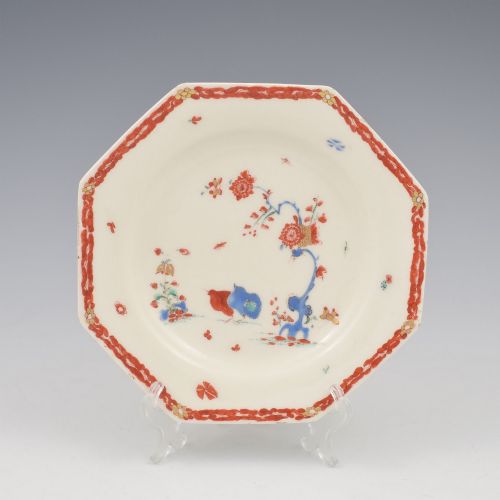
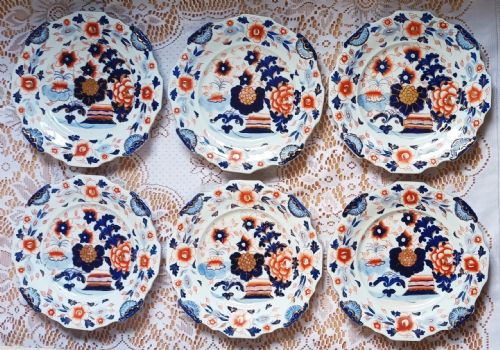
Cabinet forms appear alongside decorative plates and ironstone china, reflecting the broader scope of domestic display pieces grouped within these categories.
Materials and Construction
Makers built these cabinets using wood, applying black lacquer and gold leaf to create the characteristic glossy painted surfaces.
Brass fittings such as hinges and escutcheons appear alongside the woodwork to secure and accent the doors.
Chinoiserie Wall Cabinet Retail Price Guide 2026
Typical asking prices for chinoiserie wall cabinet among the pieces listed under this phrase on Sellingantiques today, from the lower quarter to the upper quarter. They describe what is for sale here now, not the wider market.
Several plates featuring exotic birds and two quail patterns share space with the cabinetry on this page.
Quality Variations
The depth of detail in the painted lacquer and the crispness of the gold leaf application separate standard examples from finer works.
The construction of the timber carcase and the preservation of the original surface finish determine the standing of each piece.
Bow Porcelain·Spode Stone China·Worcester Flight Barr And Barr·John Ridgway·C.J. Mason
The Chinoiserie Wall Cabinet Glossary
- Japanned
- European imitation of East Asian lacquerwork, created by applying layers of varnish and metallic decoration to a wooden base. This technique produced the dark, glossy surfaces seen on many period cabinets.
- Corner Cupboard
- A storage piece built with an angled back to fit directly into the corner of a room. These forms maximise floor space while providing eye-level display.
- Ironstone
- A heavy, durable type of ceramic patented in the 19th century to imitate porcelain. It frequently carries transfer-printed or hand-painted patterns.
- Lacquer
- A durable resin finish applied in multiple coats to wood and polished to a smooth sheen. It forms the foundation for raised and painted decorative scenes.
Chinoiserie Wall Cabinet: Frequently Asked Questions
What is a chinoiserie wall cabinet?
A chinoiserie wall cabinet is a storage piece decorated with European interpretations of Chinese art, typically featuring lacquer and gold leaf.
These items are usually formed as corner cupboards to make efficient use of room space.
How old are these cabinets?
The pieces available span multiple centuries, with examples originating from the 18th century, 19th century, and Edwardian eras.
Construction methods and surface wear help indicate the age of each individual cabinet.
Where were they placed?
Corner cupboards were designed to sit neatly into the internal angles of traditional rooms, utilising space that often remained empty.
They served both a practical storage function and a decorative role at eye level.
What materials are used?
Cabinets typically use a wooden carcase finished with black lacquer, gold leaf, and protective varnishes.
Brass hardware is commonly attached for hinges, locks, and keyhole surrounds.