


18th Century Carved Oak
When you handle 18th century carved oak, you hold domestic furniture built to endure centuries of daily use.
18th Century Carved Oak
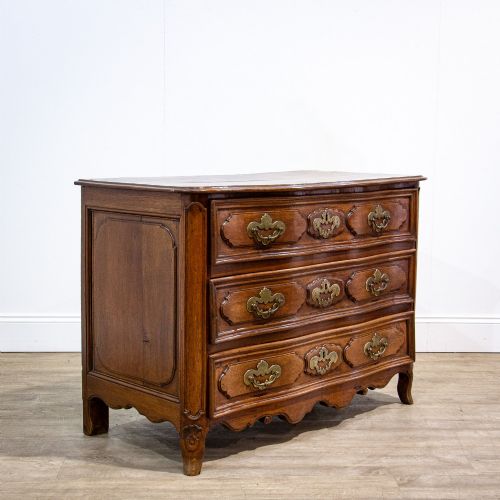
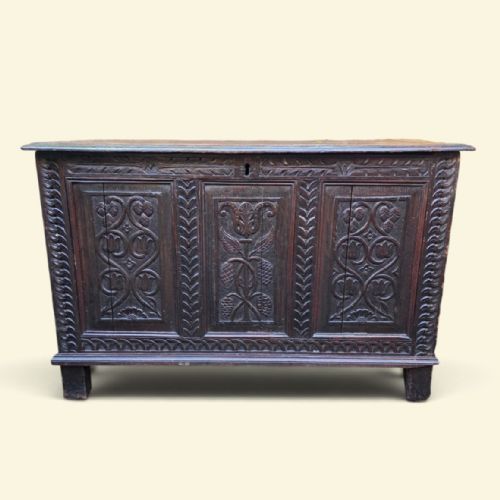
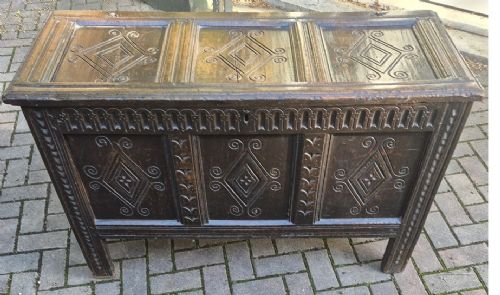
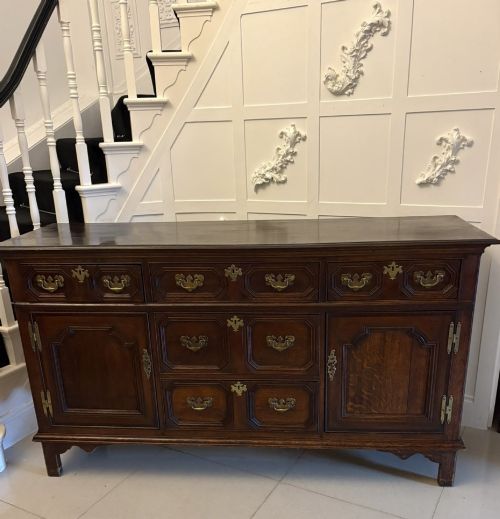
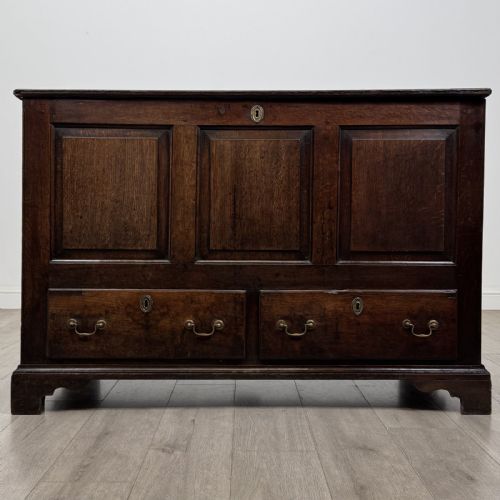
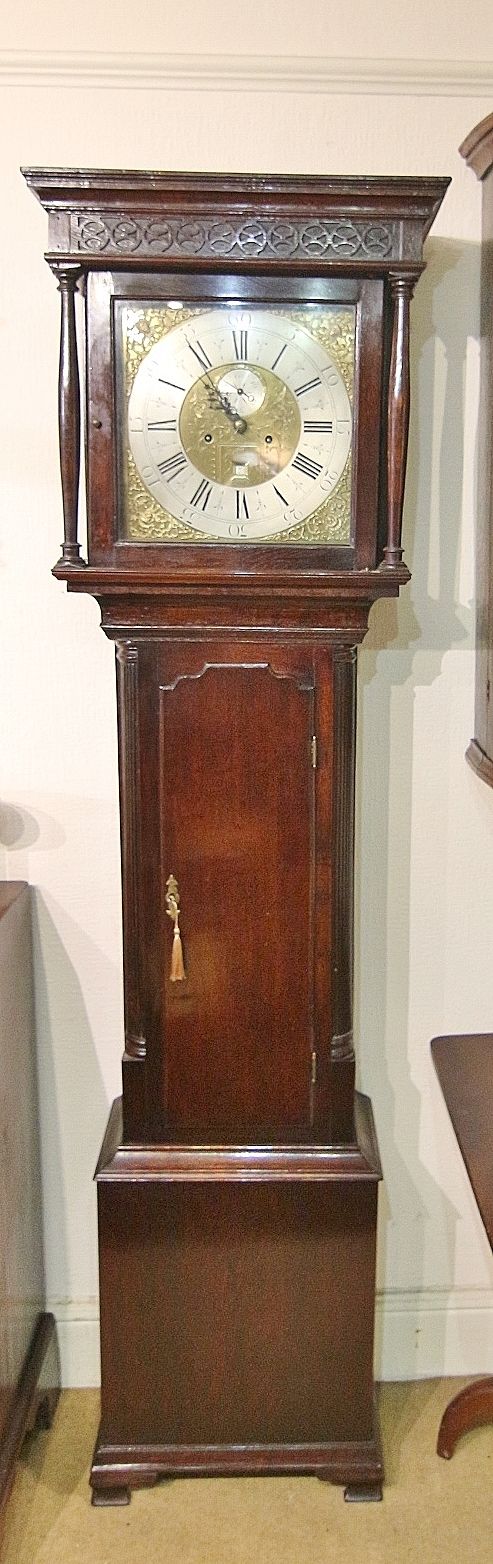
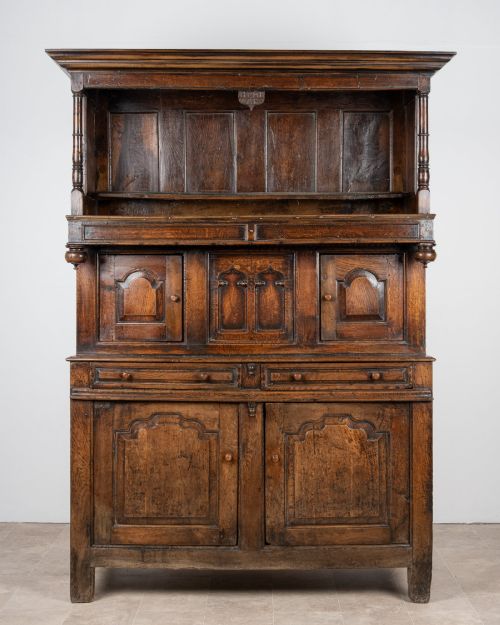
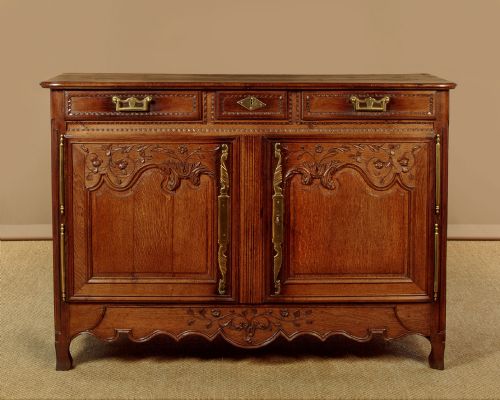
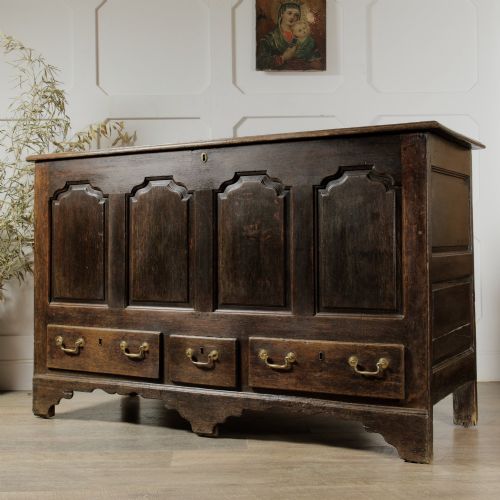
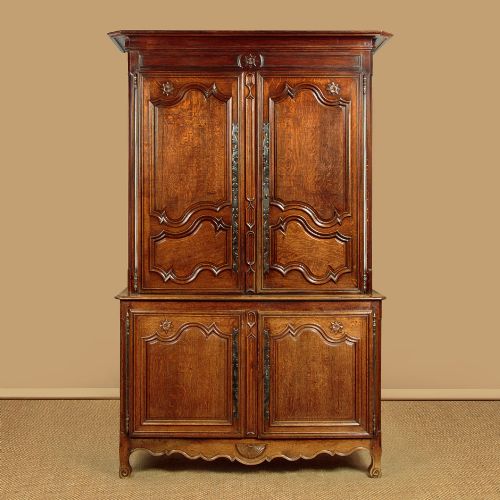
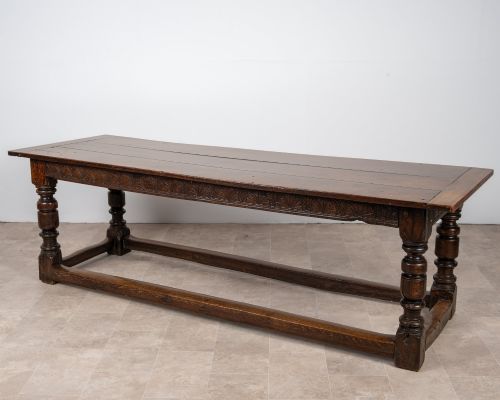
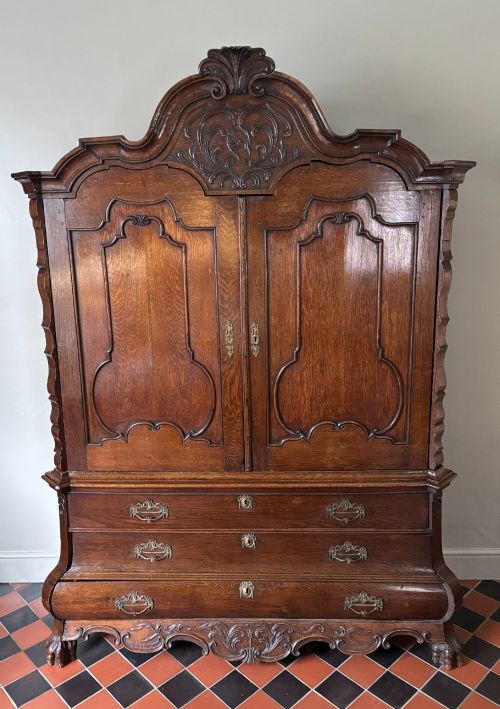
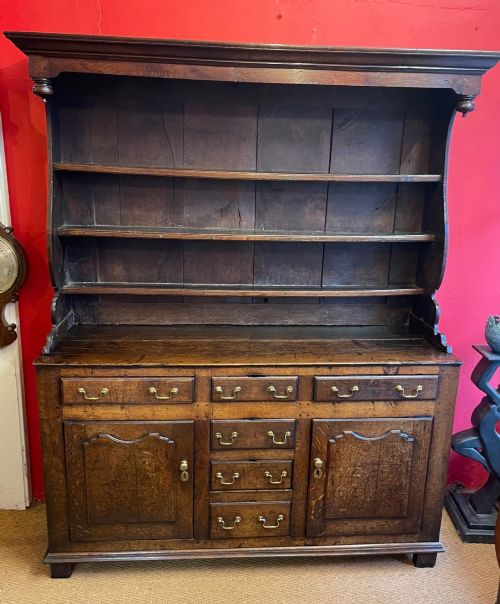
The phrase 18th century carved oak covers a diverse array of domestic and architectural items built primarily from native timber. Coffers, chests, dressers, longcase clocks, and seating form the core of the items encountered.
Most surviving pieces reflect regional English, Welsh, French, and Continental workshop traditions. Chests and cupboards dominate the domestic forms, whilst smaller items include document boxes and foot warmers.
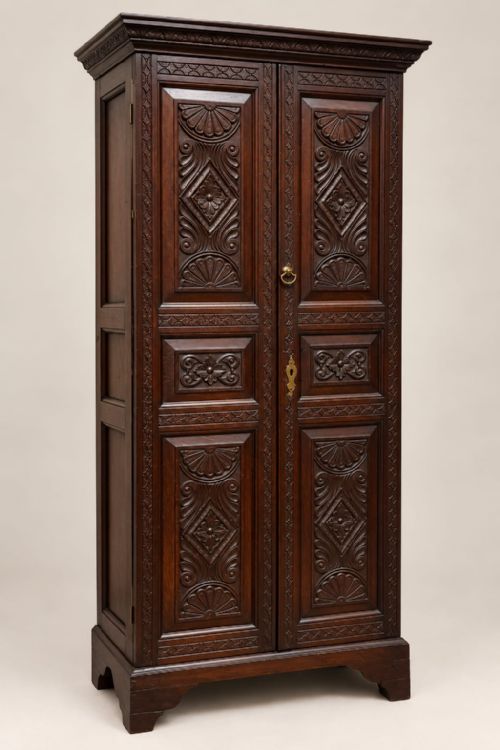
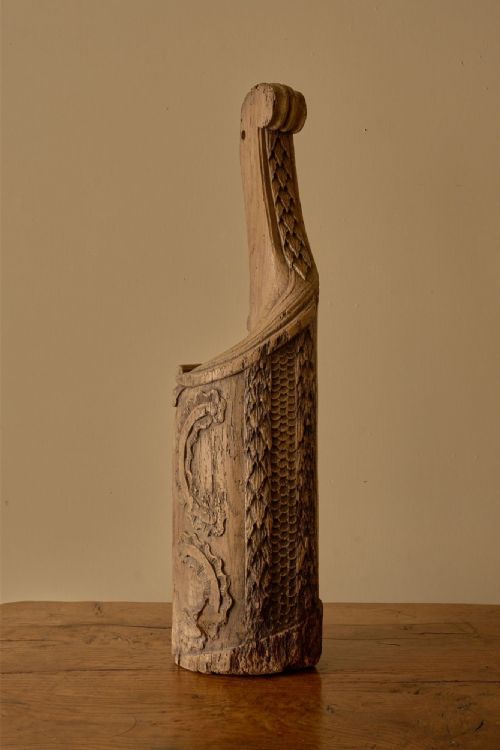
Detailing often incorporates geometric chip carving, floral motifs, and architectural paneling. These surfaces display the varied tool work of period artisans operating across rural and urban centres.
Materials and construction methods
Timbers were typically quarter-sawn to reveal dense medullary rays, providing both stability and visual depth. Joinery relied heavily on mortise and tenon joints secured with wooden pegs rather than metal fasteners.
Carving was executed directly into the solid wood using gouges, chisels, and V-tools. Secondary woods such as walnut or applied brass and iron elements appear selectively for hardware and dials.
18th Century Carved Oak Retail Price Guide 2026
Typical asking prices for 18th century carved oak among the pieces listed under this phrase on Sellingantiques today, from the lower quarter to the upper quarter. They describe what is for sale here now, not the wider market.
Several items carry apotropaic and witches' marks intended to ward off malevolent spirits from the household.
Distinctions in quality
Quality rests upon the crispness of the carving and the proportional balance of the form. Crisp, deep relief work indicates a confident hand, whereas shallow or hurried incision suggests provincial mass production.
Surface patination and the survival of original structural timber define the upper tier. Pieces retaining authentic board thickness without excessive replacement components command greater regard.
Jn° Smith Macclesfd·Richard Corless Stockport·James Hendrie Falkirk
The 18th Century Carved Oak Glossary
- Coffer
- A large wooden chest used for storage, frequently fitted with a hinged lid and robust stile feet. These domestic containers were essential for holding textiles and valuables.
- Court cupboard
- An enclosed piece of tiered cabinetry used for displaying plate and storing household provisions. They often feature carved friezes and heavy supporting columns.
- Lowboy
- A small side table featuring one or more rows of drawers set beneath a flat top, typically raised on cabriole or straight legs. They served versatile functions in domestic chambers.
- Wainscot armchair
- A heavy wooden chair constructed with paneled backs and solid armrests, originating from an era when seating indicated status. They rely entirely on framed joinery.
- Ceiling boss
- A decorative architectural projection placed at the intersection of ceiling ribs, often carved with floral or gothic motifs. These elements derive from interior woodwork.
18th Century Carved Oak: Frequently Asked Questions
How do I care for 18th century oak?
Maintain stable relative humidity and protect the timber from direct sunlight and heat sources. Apply traditional wax sparingly to nourish the dry wood surface.
Avoid modern liquid polishes containing silicone, which degrade the historic patina over time. A soft, dry cloth is sufficient for routine dusting.
Were these pieces painted originally?
Many items retained exposed waxed timber, but paint finishes did occur on specific regional pieces. Pigments were bound with natural mediums to protect the grain.
Surviving traces of early paint provide valuable evidence of original interior schemes. Most examples encountered today display bare wood resulting from later stripping.
How do I distinguish regional styles?
Regional variations manifest in the specific motifs and wood selection utilised by local joiners. Welsh cupboards often display distinct proportions compared to English dressers.
Familiarity with local vernacular traditions helps isolate the geographic origin of a given form. Carving styles frequently mirror prevailing rural tastes of the district.
What defines a marriage piece?
A marriage piece combines authentic older components with later timber or secondary elements assembled together. This practice occurred frequently during historic repairs and restorations.
Careful inspection of joinery methods reveals inconsistencies between upper and lower sections. Unified wear patterns across the surfaces help confirm original construction integrity.