



Ornate Carved Oak Mirror
An ornate carved oak mirror brings rich texture and historic presence to a room, drawing the eye with deep relief work and warm timber grain.
Ornate Carved Oak Mirror
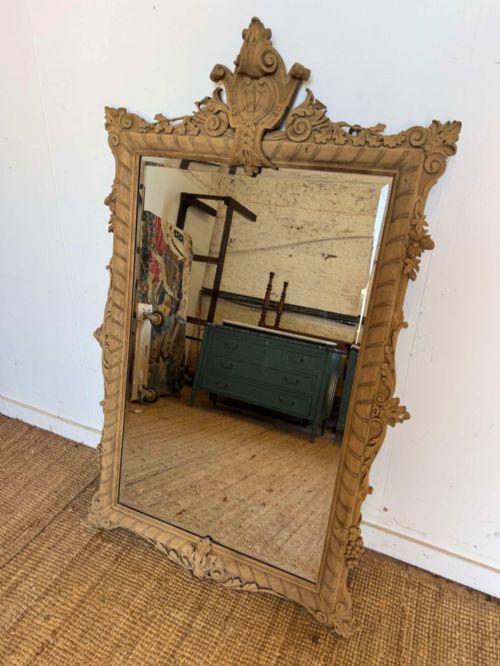
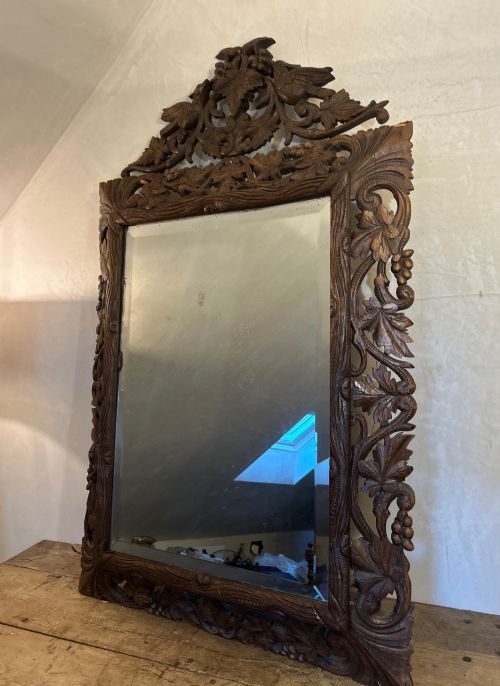
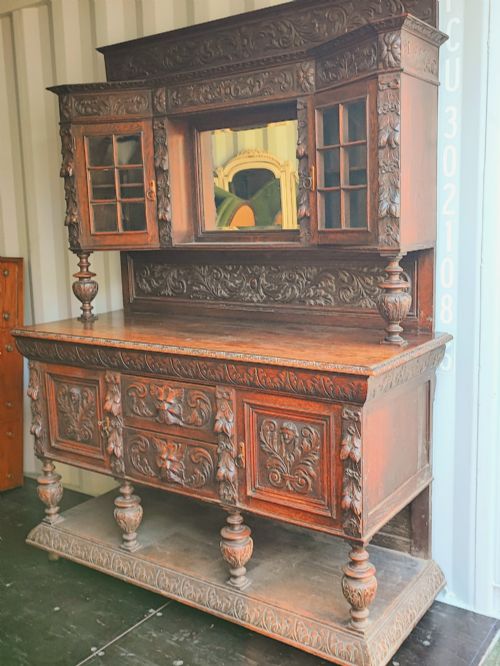
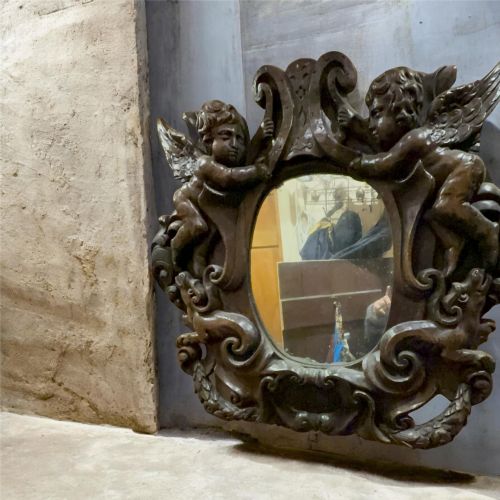
When you search for an ornate carved oak mirror, you look at heavy wooden frames shaped by hand during periods such as the eighteenth century and the Victorian era. These pieces combine substantial timber with reflective glass, appearing frequently as wall mirrors, overmantels, and components of larger hall stands.
The versions you meet most often on this page date from the nineteenth century, including revival styles that draw heavily on French Renaissance, Baroque, and Rococo motifs. They range from compact wall-hung ovals to large, impressive frames designed to dominate a chimney breast or hallway.
How they were made
Craftsmen built these frames using solid oak, often applying gesso and gold leaf or paint to highlight specific details within the carved decoration. The timber is shaped by hand, creating deep relief patterns that reflect historical revivals from Jacobean to Carolean styles.
Many incorporate bevel-edged glass and occasional brass fittings, fixed securely into heavy woodenrebates behind the intricate framing. The combination of carved wood, applied gesso, and original glass defines the physical structure of these pieces.
Ornate Carved Oak Mirror Retail Price Guide 2026
Typical asking prices for ornate carved oak mirror among the pieces listed under this phrase on Sellingantiques today, from the lower quarter to the upper quarter. They describe what is for sale here now, not the wider market.
Listings feature periods spanning from the eighteenth century through the Victorian era up to the nineteen-twenties, incorporating brass and gold leaf alongside oak.
What varies in quality
The depth and crispness of the carving separate standard workshop pieces from the finest examples, where every scroll and leaf shows confident, sharp tool work. Superior frames maintain harmony between the scale of the oak mouldings and the proportions of the central glass plate.
The integrity of the surface finish also dictates the standing of a piece, whether through the warm patination of bare timber or the careful preservation of original gesso and gilding. Later additions or clumsy repairs diminish the overall impact of the frame.
The Ornate Carved Oak Mirror Glossary
- Gesso
- A plaster-like mixture applied to wood surfaces to create a smooth base for gilding or painting. It is frequently moulded into relief details on revival frames.
- Overmantel mirror
- A large horizontal looking glass designed specifically to hang on the wall directly above a fireplace mantelpiece. These often feature elaborate carved crestings.
- Bevel edge
- A sloping angle cut around the perimeter of the mirror glass to catch the light and add depth. This detail often indicates superior quality in older frames.
- Revival style
- A design movement that borrows decorative motifs from earlier historic eras such as the Renaissance or Baroque periods. Makers utilised these themes extensively during the nineteenth century.
- Carolean style
- A seventeenth-century English aesthetic characterised by rich carving, scrolls, and crown motifs. Later Victorian makers revived these flamboyant elements for domestic wall furniture.
Ornate Carved Oak Mirror: Frequently Asked Questions
How do I clean an antique oak frame?
Dust the carved wooden surfaces gently with a dry, soft bristle brush to remove debris from the recesses without disturbing the grain or any applied finish.
Avoid using modern liquid polishes or harsh detergents on antique oak and gesso, as moisture can lift old finishes and damage the timber.
Where should I hang a heavy oak mirror?
Mount these substantial frames directly into wall studs or use appropriate masonry fixings to bear the considerable weight of the solid timber and glass.
Ensure the hanging wire or integrated brackets at the back are secure and capable of supporting the piece before releasing it onto the wall.
How do I date an antique oak mirror?
Examine the backboards, fixings, and the character of the wood grain for clues regarding the period of manufacture and assembly techniques used.
Stylistic cues such as French Rococo revival motifs or Arts and Crafts simplicity also help narrow down the decade of production alongside the glass type.
Is the mirror glass usually original?
Many older frames retain their original glass, which often displays subtle foxing, minor speckling, and gentle distortions characteristic of older manufacturing methods.
Replacement glass is sometimes fitted later if the original broke, so inspecting the silvering and edges provides a clear indication of its age.