





Hand Carved Wooden Mirror
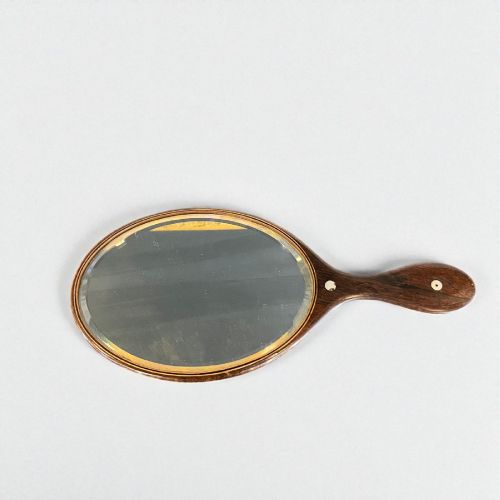
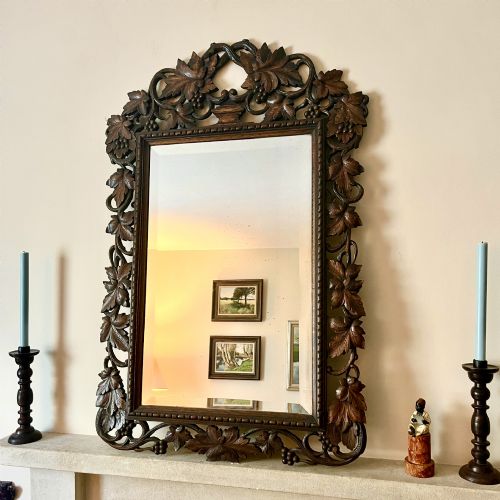
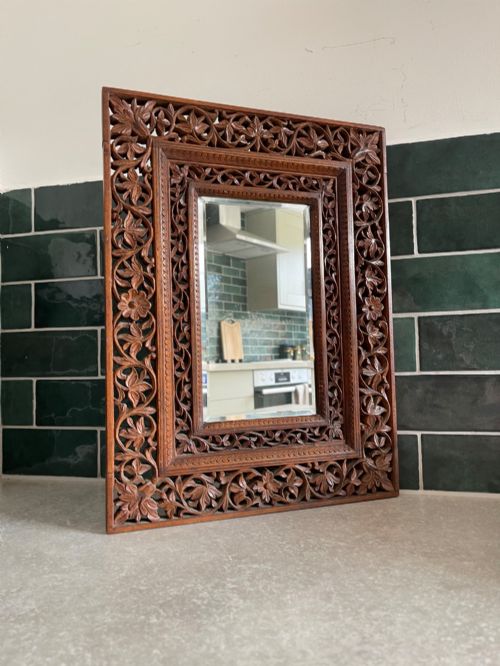
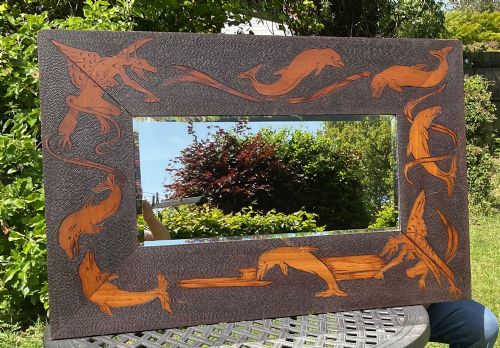
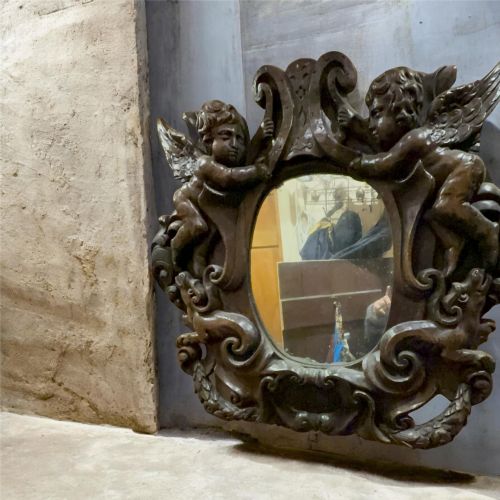
These hand carved wooden mirror pieces range from oak to teak, shaped by Black Forest, Italian, and Anglo-Indian hands to catch the light in any hallway.
Hand Carved Wooden Mirror
A hand carved wooden mirror combines utility with deep relief woodwork, spanning wall mirrors, pier glasses, and sconces. When buyers search for a hand carved wooden mirror, they encounter forms originating from the eighteenth, nineteenth, and early twentieth centuries.
The selections here showcase distinct regional traditions, from dense European oak frames to intricate Syrian and North Indian pieces. Styles shift across the nineteenth century through Victorian, Arts and Crafts, Baroque, and Continental Rococo aesthetics.
Most examples function as wall hangings, utilising silvered mirror glass set within carved timber surrounds. Whether depicting birds of prey in Black Forest pine or gilded foliage in Italian limewood, each piece serves as a primary decorative focal point.
How they were made
Woodcarvers utilised native and exotic timbers including oak, walnut, teak, and limewood, cutting and chiselling directly into the grain to achieve deep relief. Artisans then applied finishes such as gold leaf, paint, or polish to highlight the carved motifs.
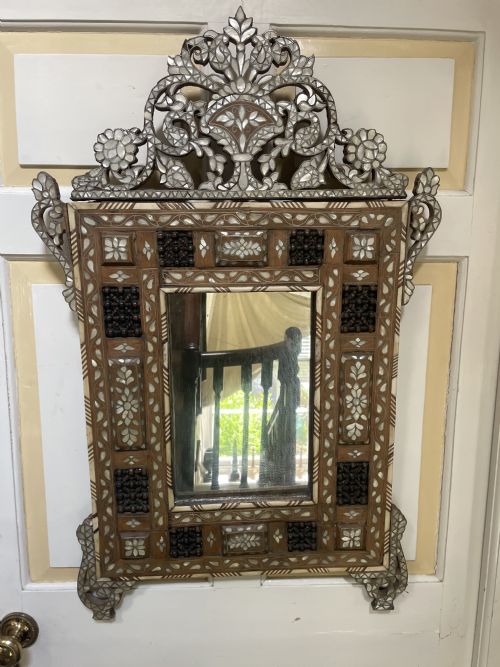
Inlaid elements, particularly mother of pearl, appear in Syrian Damascus pieces, requiring meticulous hand-fitting into recessed channels. Mirror glass was individually silvered and secured behind frames using traditional joinery and backing boards.
Hand Carved Wooden Mirror Retail Price Guide 2026
Typical asking prices for hand carved wooden mirror among the pieces listed under this phrase on Sellingantiques today, from the lower quarter to the upper quarter. They describe what is for sale here now, not the wider market.
Periods represented span from the eighteenth century through the Victorian era into the early twentieth century.
What varies in quality
Depth and crispness of the carving distinguish standard production from exceptional artistry, particularly in Black Forest animal studies and Italian limewood foliage. Undercutting and refined tool marks show the hand of a master carver rather than mechanical replication.
The integrity of the timber and the preservation of original gilding, paint, or surface treatments dictate desirability. Substantial timber frames like oak and teak maintain structural stability over centuries, while surviving mirror glass adds authenticity.
The Hand Carved Wooden Mirror Glossary
- Giltwood
- Wood that has been coated with a thin layer of gold leaf. This technique provides a luminous finish frequently seen on nineteenth-century Continental frames.
- Limewood
- A fine-grained European timber favoured by carvers for its uniform texture. It allows for intricate, splinter-free detail work in decorative wall mirrors.
- Pier glass
- A tall mirror designed to hang on the wall between windows. These pieces often feature decorative painted or carved frames.
- Overmantle mirror
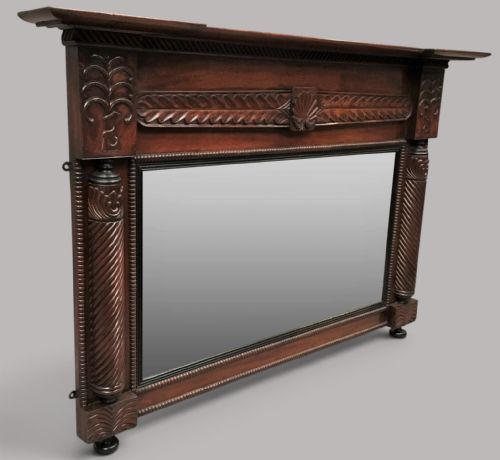
- A wide mirror designed to sit directly above a fireplace mantel. They utilise horizontal proportions to reflect light across a room.
Hand Carved Wooden Mirror: Frequently Asked Questions
How do I hang a heavy wooden mirror safely?
Heavy frames require sturdy wall anchors and brackets rated to support the specific weight of timber and glass. Securing the piece directly into wall studs prevents shifting.
Professional mirror hangers utilise split-lath systems or heavy-duty D-rings screwed securely into the original wooden backing frame.
What is Black Forest wood carving?
Black Forest carving refers to highly detailed wooden ornaments and furniture produced in the Swiss and German border regions during the nineteenth century. These pieces frequently depict local wildlife.
Mirrors from this tradition often feature carved birds of prey, bears, and natural foliage rendered in deep relief.
How should I clean an antique wooden frame?
Dust frames gently with a soft, dry brush to remove particles without disturbing delicate carved edges or flaking gilding. Avoid commercial liquid cleaners on the wood.
Use standard glass cleaner applied to a cloth rather than the mirror itself, ensuring no moisture seeps behind the wooden rebate.
How do I identify a Victorian oak mirror?
Victorian oak mirrors typically feature dark patinated timber with robust proportions and Gothic, Renaissance Revival, or Arts and Crafts motifs. The grain pattern and dense weight are characteristic of the period.
Examining the backboards, fixings, and bevelled or flat edge of the mirror glass helps confirm the nineteenth-century manufacture date.