


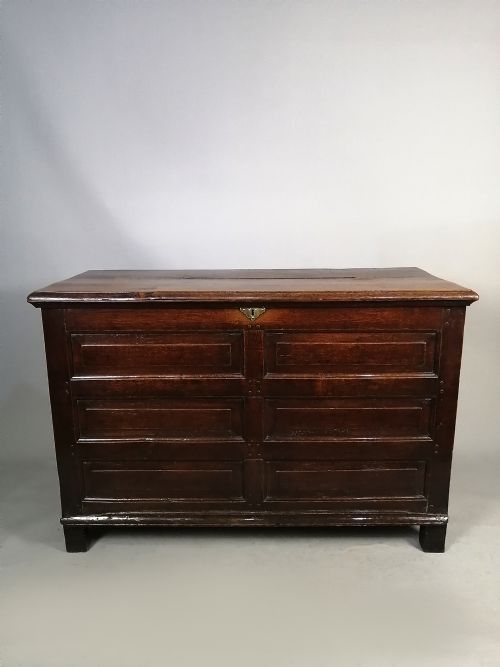
17th Century Storage Trunk
A 17th century storage trunk offers sturdy vernacular utility and centuries of timber character, bringing solid oak and iron hardware into daily rooms.
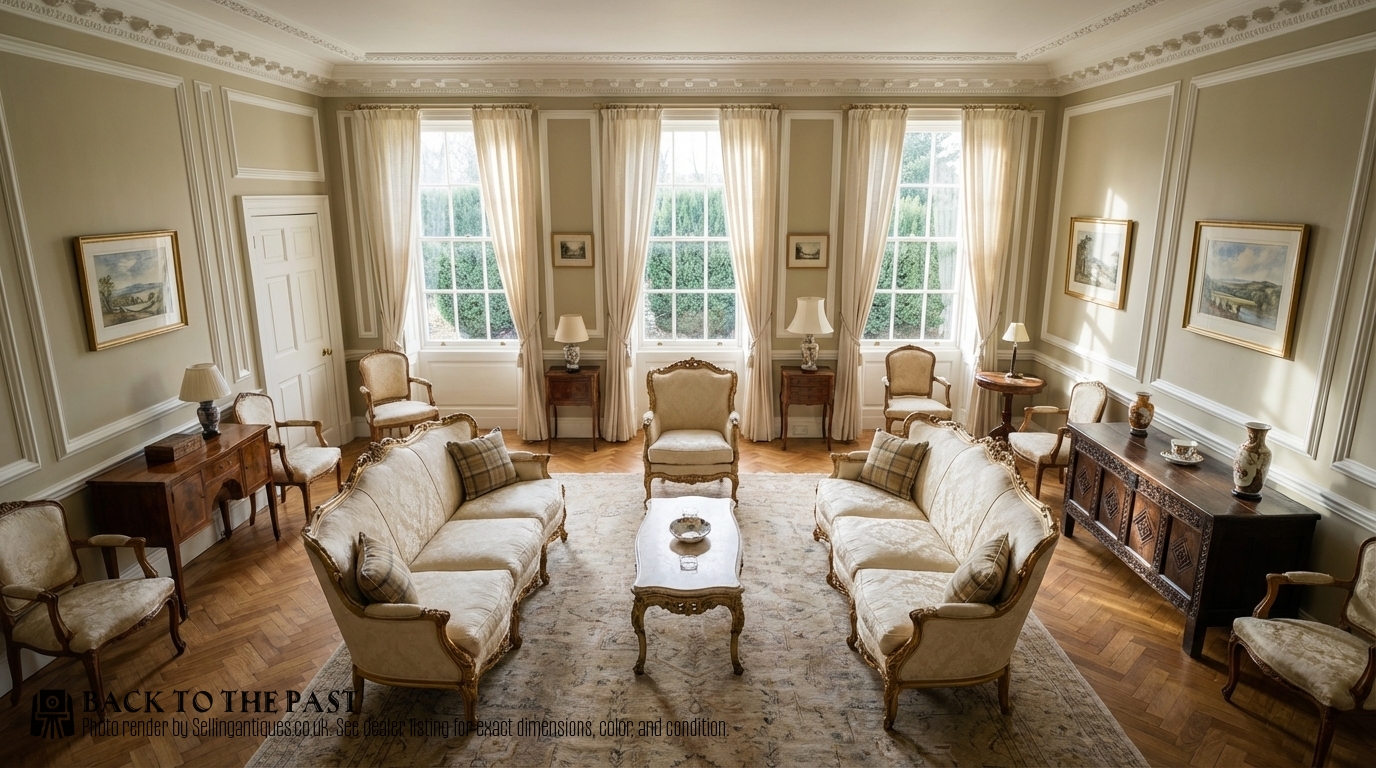
17th Century Storage Trunk
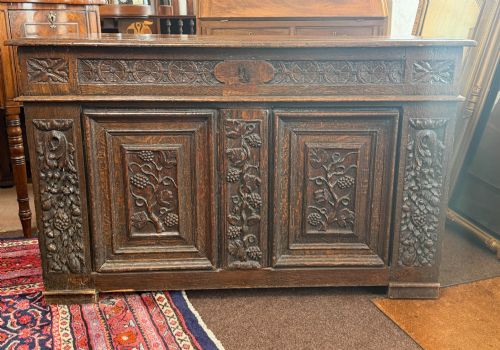
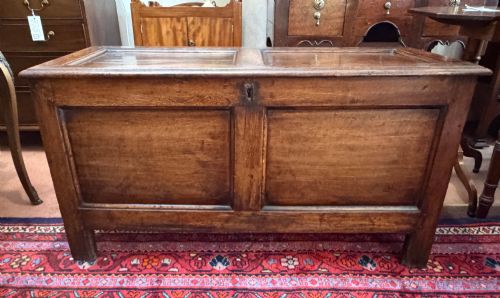
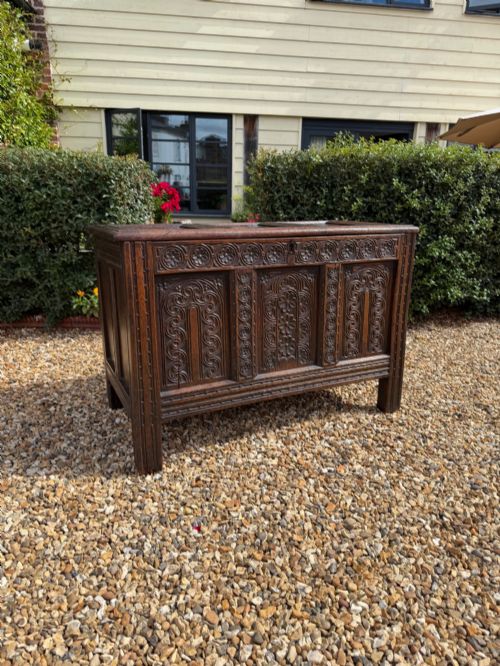
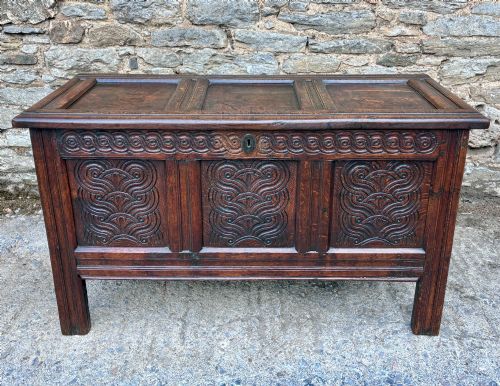
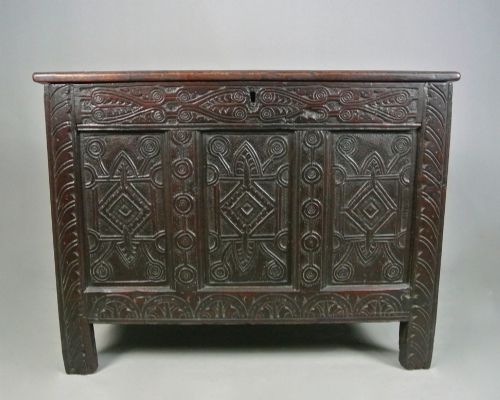
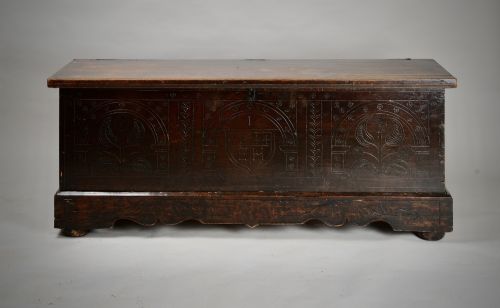
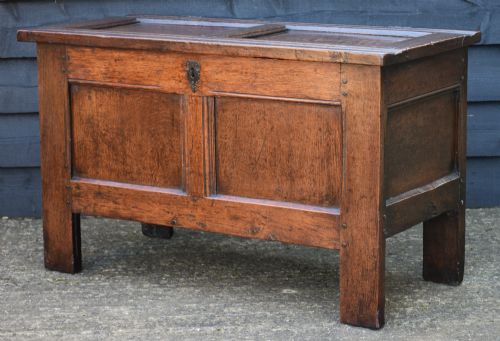
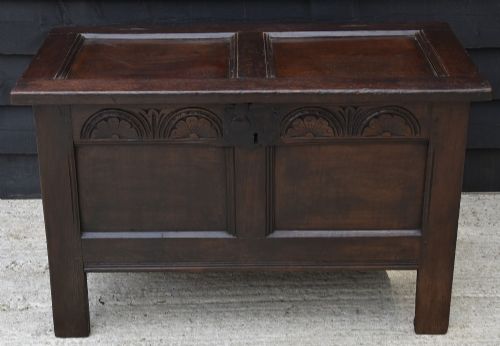
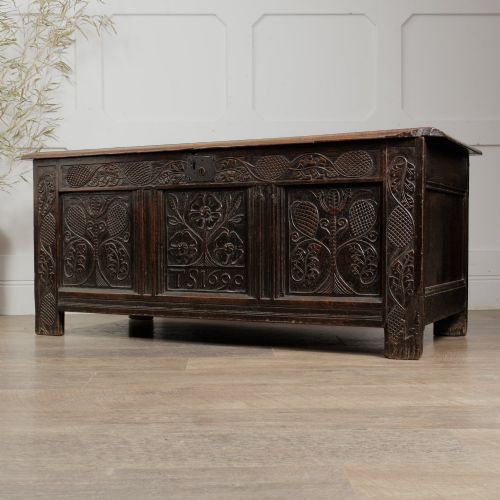
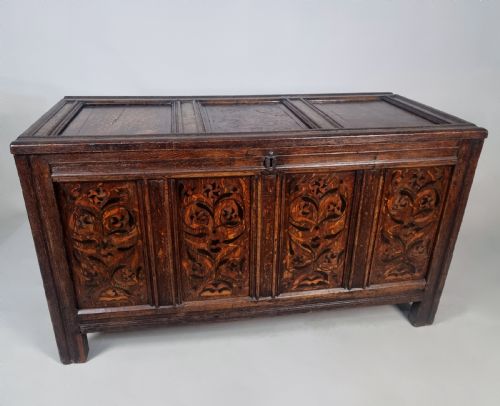
A 17th century storage trunk typically appears as an oak coffer, blanket chest or joined box built for household security and linen storage. The selection runs from utilitarian six-plank elm formats to intricately panelled English and Welsh pieces carrying carved decoration.
How they were made
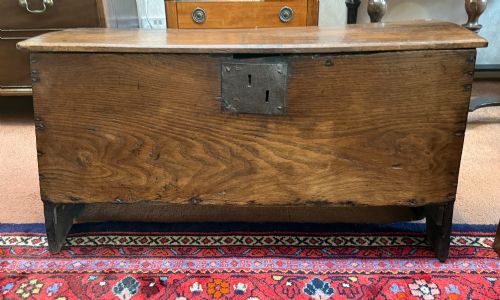
Makers constructed these trunks primarily from solid oak and elm, utilising heavy timber boards joined by pegging, framing, and basic plank construction. Iron hinges, locks, and brackets provided essential structural reinforcement and security.
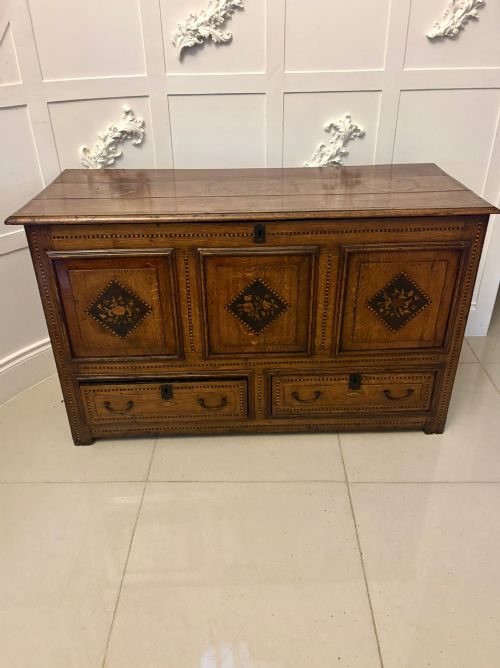
Surface enrichment relied on gouge carving, panel moulding, and occasional marquetry inlay using mixed woods to articulate geometric or floral patterns. Leather coverings secured with brass nails appeared on specific travelling formats.
Listings span centuries of production, recording solid oak, elm, leather, brass, and marquetry inlay across vernacular and formal styles.
What varies in quality
Quality differentiates itself through the crispness of timber carving, the integrity of original joined framing, and the depth of surface patina developed over generations. Heavy, solid construction and unaltered structural timber elevate an example above later revival pieces or heavily restored boxes.
The sophistication of regional joinery also marks distinction, from simple domestic six-plank constructions to complex panelled coffers featuring detailed inlay and regional Welsh or English stylistic signatures.
The 17th Century Storage Trunk Glossary
- Coffer
- A heavy wooden chest traditionally used for storing valuables, documents, or garments. These sturdy receptacles form the core of early storage furniture.
- Joined oak
- Timber construction utilising mortise and tenon joints secured with wooden pegs rather than simple nails. This technique defines seventeenth-century cabinet making.
- Mule chest
- A storage chest featuring one or more drawers beneath the main internal compartment. They bridge the gap between simple coffers and full drawer chests.
- Six-plank coffer
- A primitive chest constructed from six individual boards joined directly at the edges. This vernacular method represents an early and direct approach to trunk building.
- Patina
- The surface sheen and colour acquired by wood through age, handling, and light exposure. Good examples retain an unblemished, deep historical glow.
17th Century Storage Trunk: Frequently Asked Questions
How were these used originally?
These trunks served primarily to secure household valuables, heavy textiles, and family linen away from damp floors and pests.
In many households, they also functioned as impromptu seating or tables within communal rooms.
Can I use one as a coffee table?
Their flat lids and robust wooden construction make them suitable for use as low tables in living spaces.
Care should be taken to protect the historic timber surface from moisture and heat marks.
How do I spot a later revival piece?
Revival trunks often display machine-cut timber marks, lighter weight, and standardised modern fixings instead of hand-forged iron.
Inspect the interior boards and joints for signs of consistent historical wear rather than artificial distress.
What is the difference between a coffer and a chest?
The terms overlap frequently, though a coffer traditionally denotes a more heavily framed and panelled receptacle.
Chests may encompass simpler plank-built constructions or later forms incorporating external drawers.