




French Oak Coffer
A french oak coffer is a sturdy storage chest of provincial utility, sought after for its honest timber and deep utility.
French Oak Coffer
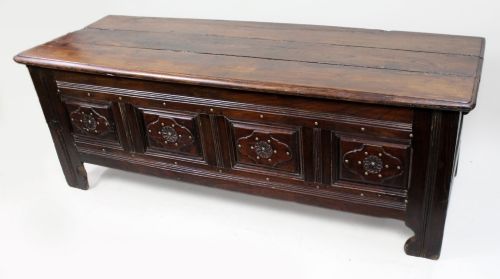
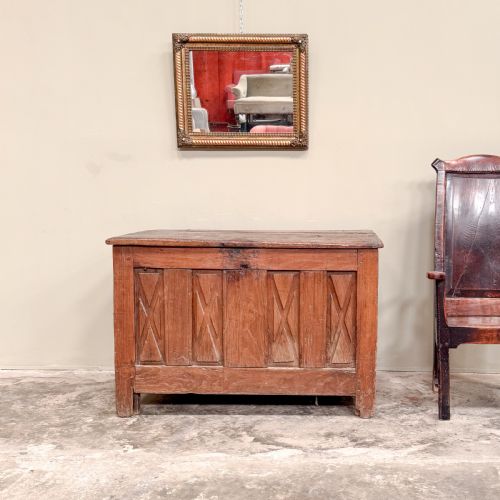
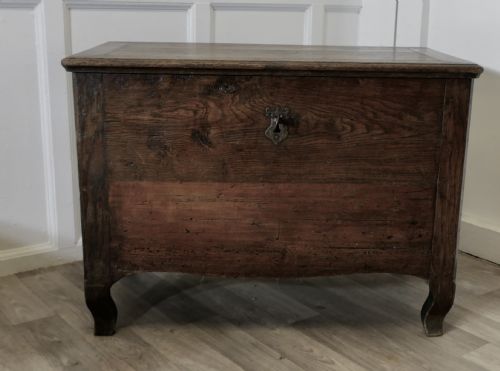
A french oak coffer is primarily a heavy storage chest built for domestic utility in provincial regions, appearing across the seventeenth, eighteenth and nineteenth centuries. These pieces function as blanket boxes, deed trunks, or simple benches, often showing styles from French provincial to rustic farmhouse.
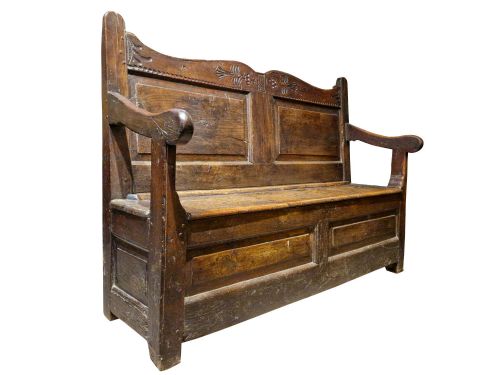
The versions most commonly met on this page span the seventeenth to the nineteenth centuries, typically constructed with panelled bodies and heavy lids. Alongside standard coffers, buyers encounter related forms such as box-seated settles, commodes with lift tops, and deed boxes.
What varies in quality
Quality rests heavily on the integrity of the timber and the crispness of the original construction rather than decorative excess. Finer examples display carefully selected quarter-sawn oak with rich patination, tight joints, and original hand-forged ironwork that has survived centuries of domestic use.
The depth and execution of any carved ornamentation also distinguish better pieces, as does the retention of original lids, feet, and internal till boxes. Later alterations to hinges, locks, or bases naturally shift a piece away from its original provincial standard.
Some seventeenth-century coffers retain primitive internal locking tills where owners hid their most stubborn livestock receipts.
The French Oak Coffer Glossary
- Settle
- A wooden bench with high back and solid arms, often featuring a box seat that opens for storage underneath. These combine seating with domestic utility.
- Dower chest
- A specialised storage trunk intended to hold a bride's household linen and personal property. They frequently display inlaid details or carved initials.
- Frieze
- The horizontal band running beneath the top edge of a coffer front. Makers often decorated this area with carved motifs or geometric patterns.
- Till box
- A small internal compartment built inside a coffer to keep smaller items separate from the main storage cavity.
French Oak Coffer: Frequently Asked Questions
What is a french oak coffer used for?
These pieces served historically as secure storage for household textiles, blankets, and legal documents in provincial homes. Their robust construction also allowed them to function occasionally as benches or window seats.
Today, they adapt easily to modern living rooms and bedrooms as practical blanket chests or coffee tables with internal storage.
How do I tell an 17th century coffer apart from an 18th century one?
Seventeenth-century examples generally feature heavier framing, deeper hand-cut mouldings, and starker geometric or architectural panel carving. The ironwork tends to be heavier and more utilitarian.
Eighteenth-century pieces often display lighter proportions, more flowing provincial carving styles, and occasionally subtle inlay or fruitwood secondary timbers.
Are all coffers made entirely of oak?
While oak remains the primary timber across the majority of these pieces, makers frequently utilised local secondary woods. Elm, chestnut, walnut, and fruitwood appear within panels, framing, or internal compartments.
This regional variation reflects the timber available to provincial workshops at the time of construction.
How should I care for a antique oak coffer?
Keep the timber away from direct heat sources and sudden humidity changes to prevent the heavy oak panels from splitting. Feed the wood occasionally with a traditional beeswax to maintain the dry, honest lustre of the surface.
Avoid modern liquid polishes that can build up a synthetic film over the historic patination.