





French Provincial Coffer
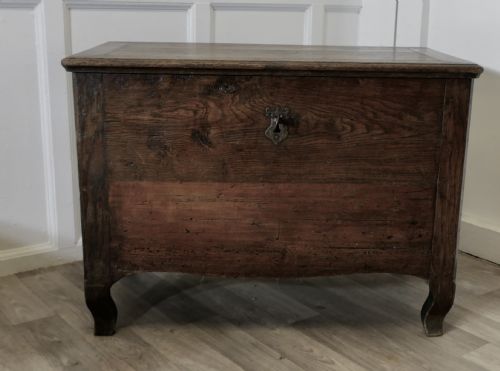
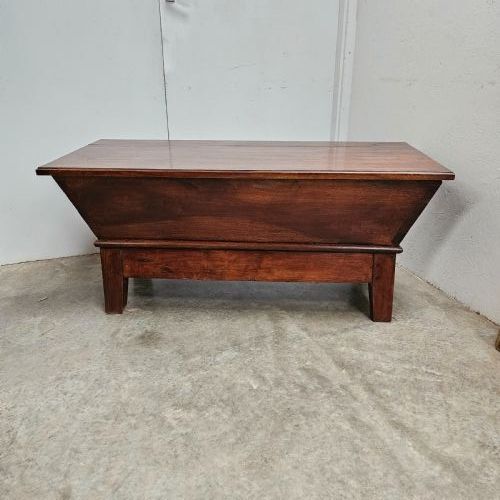
These french provincial coffer examples are honest country storage pieces in oak and walnut, built for everyday utility in rural homes.
French Provincial Coffer
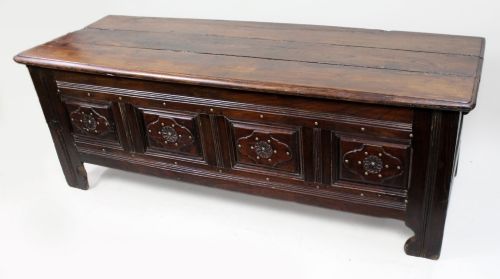
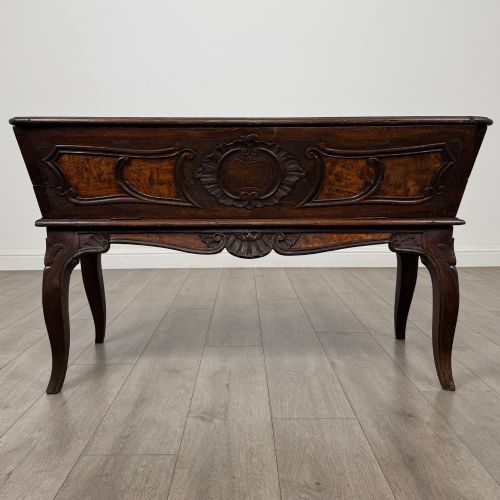
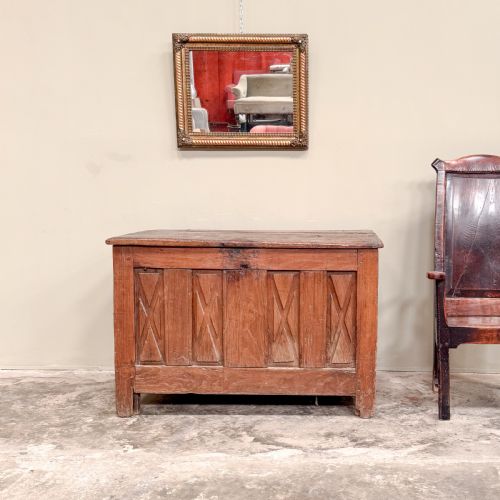
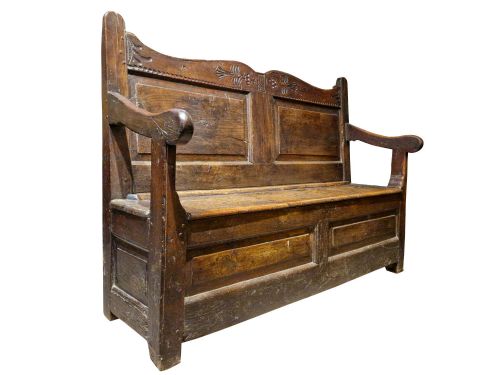
A french provincial coffer serves as a sturdy timber chest built in regional European workshops during the seventeenth, eighteenth, and nineteenth centuries. Buyers searching for a french provincial coffer encounter heavy storage chests, dough bins, blanket boxes, and box-seated settles fashioned from regional hardwoods.
The versions most commonly met on this page date from the eighteenth and nineteenth centuries, constructed predominantly in oak, walnut, and cherrywood. These utilitarian chests range from simple planked blanket boxes to carved oak coffers and dough proving boxes with lift tops.
How they were made
Local artisans constructed each french provincial coffer using solid hardwoods such as oak, walnut, and cherrywood, supplemented by pine for internal elements. Panels were joined to allow for seasonal wood movement in unheated rural dwellings.
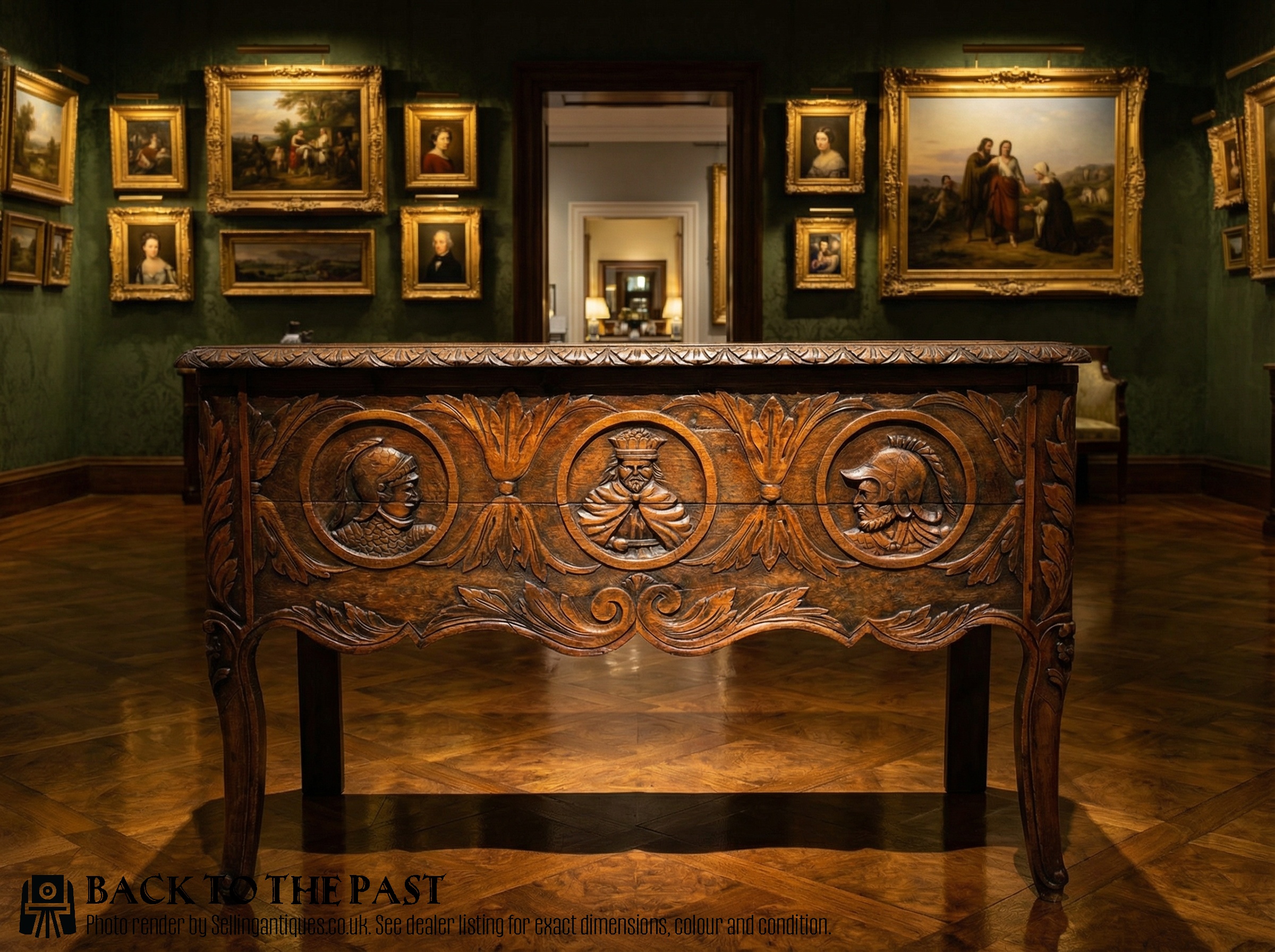
Forged iron and brass hardware, including strap hinges, latches, and carrying handles, reinforced the timber structures for heavy daily use. Hand carving and simple panel moulding appeared on select examples, while other pieces relied entirely on the natural grain of the wood.
French Provincial Coffer Retail Price Guide 2026
Typical asking prices for french provincial coffer among the pieces listed under this phrase on Sellingantiques today, from the lower quarter to the upper quarter. They describe what is for sale here now, not the wider market.
Listings feature pieces spanning from the seventeenth century through to Victorian production, constructed primarily in oak, walnut, cherrywood, and pine.
What varies in quality
The distinction between standard domestic chests and finer examples lies in the selection of timber and the integration of structural joinery. Heavier oak and walnut builds with substantial thickness demonstrate greater longevity than lighter pine alternatives.
The presence of period wrought iron hinges and thoughtful hand-carved detailing elevates specific coffers above plain utility items. Original surface patination acquired through decades of domestic handling distinguishes untouched regional pieces from heavily restored examples.
The French Provincial Coffer Glossary
- Coffer
- A large wooden chest traditionally used for storing valuables, linens, or dry goods. These heavy storage boxes form the primary category of regional French rural furniture.
- Dough bin
- A specialised timber trough or box utilised for preparing and proving bread dough. Many feature lift tops or enclosed cupboard bases beneath the work surface.
- Settle
- A wooden bench featuring a high back and solid armrests, often incorporating a box seat for storage beneath. This dual-purpose form provided seating and capacity in modest farmhouses.
- Commode
- A low chest of drawers or cabinet piece. Certain regional variants incorporate a lift top alongside traditional drawer configurations.
French Provincial Coffer: Frequently Asked Questions
What is a french provincial coffer used for?
These robust chests served rural households as secure storage for household linens, dry foods, and personal valuables.
Today, buyers utilise them in living spaces and bedrooms as functional storage trunks that double as coffee tables or benches.
How do I date a wooden coffer?
Dating relies upon examining construction methods, tool marks, and timber species used in the assembly. Hand-split boards and hand-forged iron hardware generally indicate earlier seventeenth or eighteenth-century origin.
Later nineteenth-century pieces often display more uniform machine sawing and standardised joinery techniques.
Are dough bins different from coffers?
Dough bins were specifically built with sloped or flat lids to accommodate bread making and proving in rural kitchens.
Standard coffers feature deeper rectangular storage cavities designed strictly for general household possessions rather than food preparation.
How do I care for antique timber?
Keep wooden chests away from direct heat sources and drastic humidity changes to prevent the timber from splitting. Regular application of suitable wax maintains the surface sheen and nourishes the dry grain.