


Two Panel Oak Chest
These two panel oak chest examples offer robust storage rooted in centuries of vernacular tradition, built for daily utility and enduring presence.
Two Panel Oak Chest
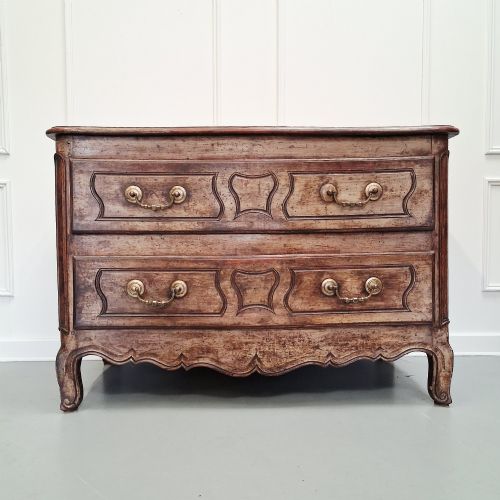
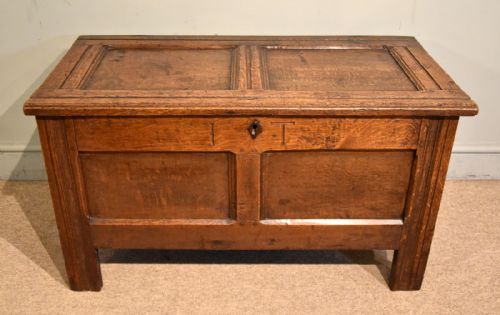
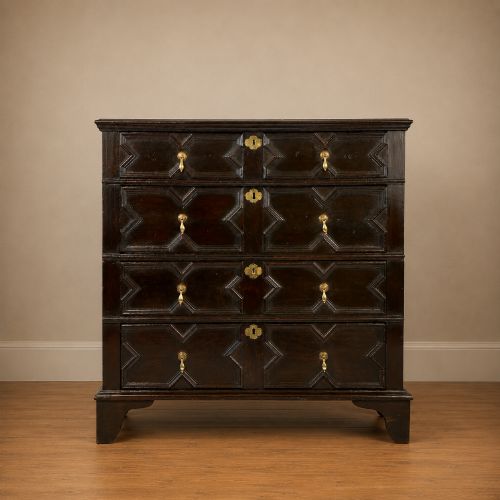
When searching for a two panel oak chest, you encounter sturdy timber boxes and drawer units constructed across the seventeenth and eighteenth centuries. These pieces function as repositories for household textiles, linens, and domestic provisions.
The versions most frequently met on this page combine structural panels with traditional joinery, originating from English and continental workshops. Their proportions suit modern living spaces while retaining their original domestic purpose.
How they were made
Joiners built these pieces using solid oak boards fitted into grooved frames to accommodate seasonal wood movement. Iron and wrought iron hardware, such as hinges and escutcheons, secure the lids and doors.
Secondary materials like brass appear on later drawer pulls and keyhole surrounds, complementing the warm tones of the primary timber.
The site listings span the seventeenth century, the eighteenth century, and the year 1900, constructed predominantly from oak with iron and brass hardware.
What varies in quality
Quality rests in the crispness of the panel mouldings and the integrity of the original framing timbers. Pieces that retain their unblemished board thickness and original ironwork command greater appreciation.
The refinement of the surface patination and the restraint of decorative carving distinguish standard utility furniture from finer domestic commissions.
Whytock And Reid Of Edinburgh
The Two Panel Oak Chest Glossary
- Panelling
- A method of framing thin boards within grooved stiles and rails to allow timber to expand and contract safely. This technique prevents the wood from warping significantly over decades of use.
- Coffer
- A large wooden chest traditionally used for storing valuables or household goods. Many examples feature hinged lids and sturdy boarded construction.
- Mule chest
- A storage chest fitted with one or more drawers beneath the main compartment. This form bridges the evolution between simple coffers and full chests of drawers.
- Patina
- The surface sheen and colour developed by wood through age, handling, and light exposure. A rich patina indicates decades of careful maintenance.
Two Panel Oak Chest: Frequently Asked Questions
How do I date a two panel oak chest?
Dating relies on observing construction methods, tool marks, and hardware types used by the joiner. Seventeenth-century examples often display pegged mortise and tenon joints with hand- cleft boards.
Later pieces incorporate more regular sawn timber and refined mouldings that reflect the stylistic shifts of the Georgian period.
Were these chests used for linen storage?
Households utilised these timber boxes to protect household textiles, garments, and valuable linens from dampness and pests. The natural tannin in oak helped preserve stored fabrics over long periods.
As domestic interiors evolved, many designs incorporated lower drawers to improve organisation.
How should I care for historic oak furniture?
Maintain stable indoor humidity levels and keep the timber away from direct heat sources to prevent shrinkage. Occasional application of quality beeswax feeds the dry wood and preserves the surface sheen.
Avoid synthetic polishes that can build up and dull the natural appearance of the grain.