

17th Century Oak Mule Chest
A 17th century oak mule chest brings centuries of practical history into a room, offering deep storage beneath a hinged lid.
17th Century Oak Mule Chest
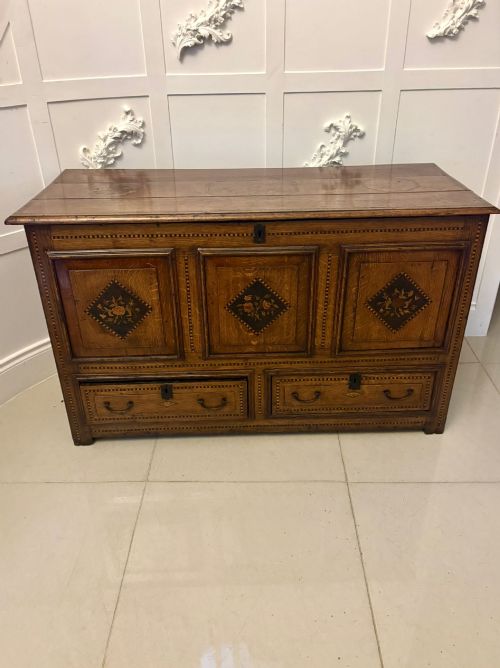
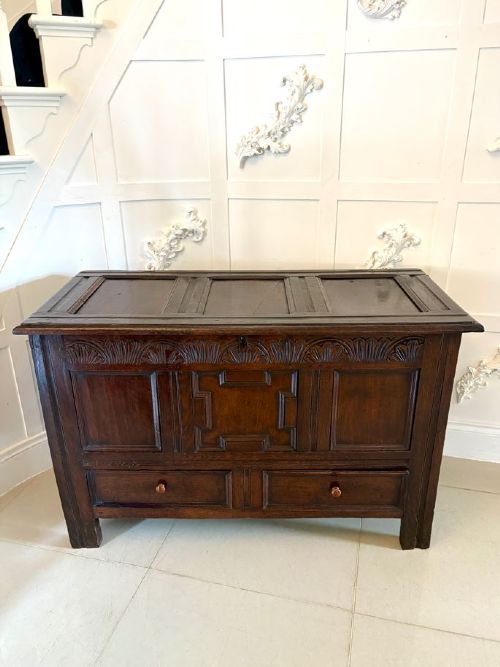
A 17th century oak mule chest combines the deep storage of a traditional coffer with a lower drawer or drawers for smaller items. These pieces emerge from periods spanning the Jacobean era through to the William III reign, reflecting domestic utility of early modern households.
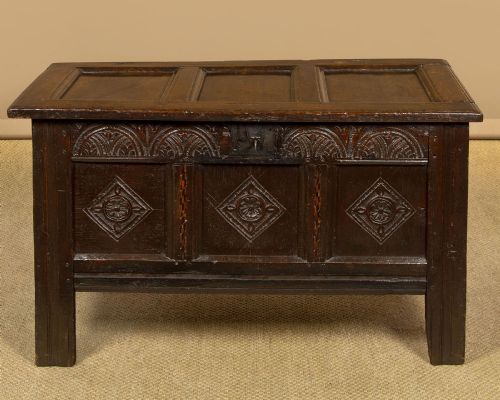
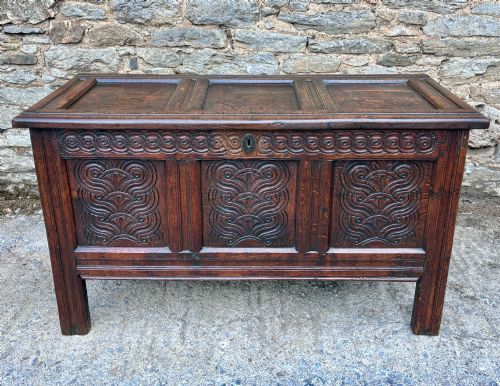
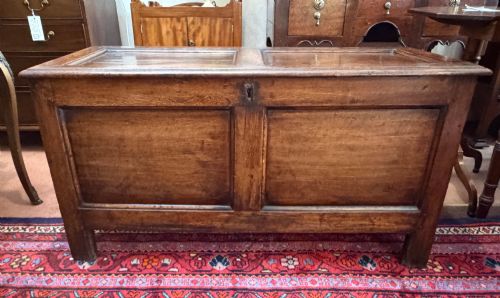
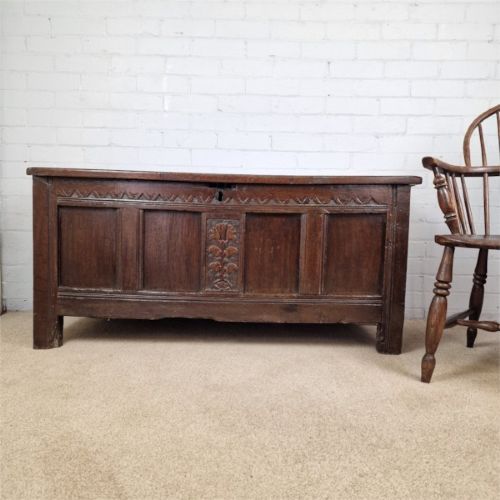
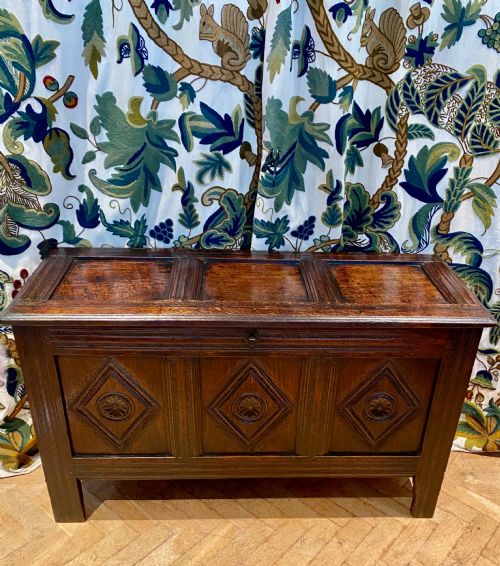
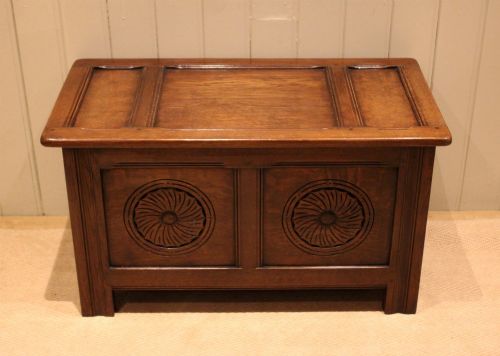
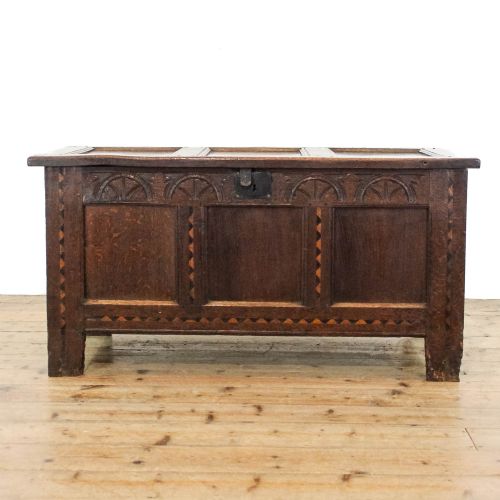
The version most commonly met on this page is constructed from solid oak, frequently displaying panelled fronts and regional characteristics from areas such as Wales, Lancashire, or Cheshire. They serve equally as blanket boxes, window seats, or focal storage units in traditional interiors.
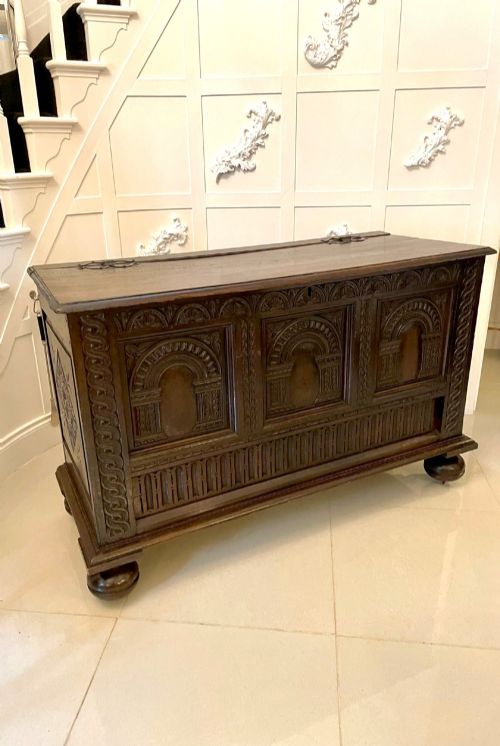
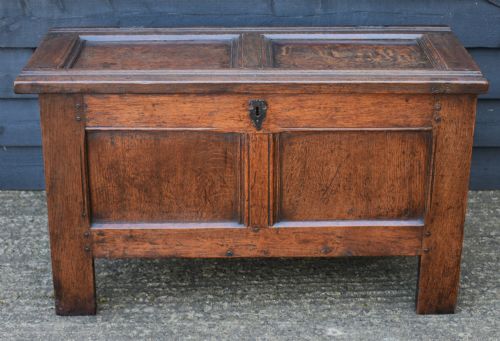
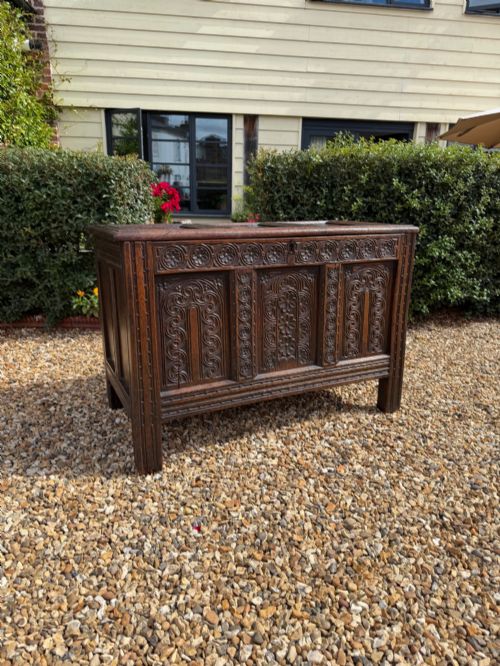
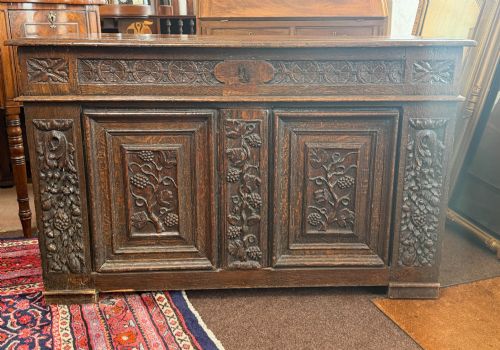
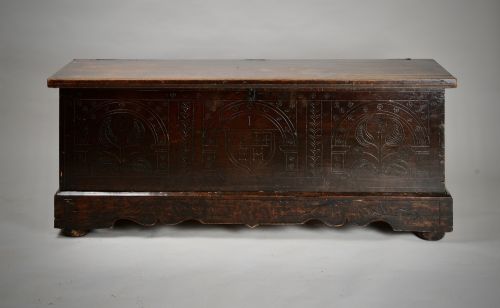
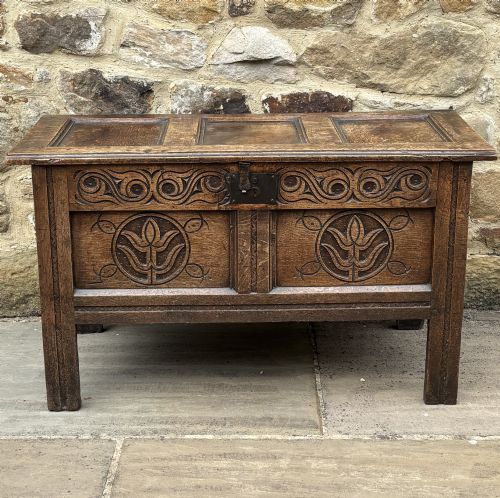
Surviving examples range from plain boarded constructions to heavily carved or inlaid formats bearing dates and initials. Their forms bridge the gap between simple blanket chests and sophisticated drawer-base furniture.
How They Were Made
Joinery forms the backbone of these pieces, utilising frame and panel construction to allow the solid timber to expand and contract with seasonal humidity changes. Pegs and traditional mortise and tenon joints hold the heavy structure together without relying on modern hardware.
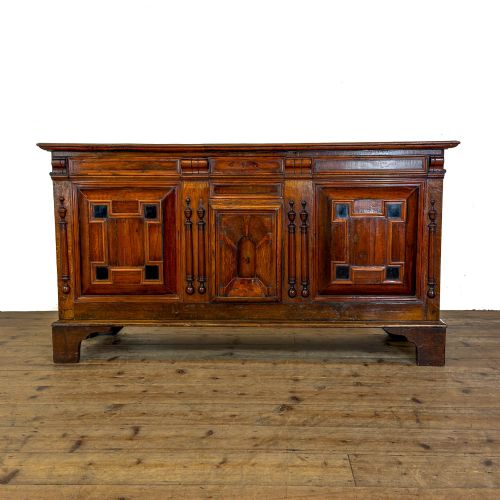
Surface ornamentation relies on hand carving, geometric mouldings, and occasional marquetry or wood inlay using fruitwood and contrasting timbers. Iron hinges and brass escutcheons secure the lids and drawers while adding functional detail.
17th Century Oak Mule Chest Retail Price Guide 2026
Typical asking prices for 17th century oak mule chest among the pieces listed under this phrase on Sellingantiques today, from the lower quarter to the upper quarter. They describe what is for sale here now, not the wider market.
Several chests preserve ancient initials and carved dates punched directly into the oak by seventeenth-century hands.
What Varies in Quality
The distinction between standard examples and top-tier pieces rests on the crispness of the hand carving and the originality of the timber surface. Superior specimens retain their original bases, drawer configurations, and untouched patina developed over centuries of handling.
Proportion and regional design integrity also separate ordinary chests from exceptional ones. Pieces displaying sophisticated geometric panelling, precise marquetry inlay, or documented regional traits command greater attention from collectors.
The 17th Century Oak Mule Chest Glossary
- Mule chest
- A storage chest fitted with one or more drawers beneath the main coffer compartment. This form developed during the late seventeenth century as a hybrid of the traditional trunk and the chest of drawers.
- Coffer
- A heavy wooden box with a hinged lid used primarily for storing valuables, textiles, or documents. Many early examples feature boarded or panelled construction.
- Marquetry inlay
- The art of applying pieces of veneer to a structure to form decorative patterns or pictures. Craftsmen utilised various woods like fruitwood to create contrasting visual designs.
- Jacobean
- The period of English architecture and furniture design spanning the reign of James I and extending into the mid-seventeenth century. Pieces from this era often display robust proportions and deep geometric carving.
- Linen fold
- A carved panel motif resembling folded cloth that became popular in Gothic and early Tudor panelling. It persists as a decorative element in pieces carrying into later traditions.
17th Century Oak Mule Chest: Frequently Asked Questions
How do I use a mule chest today?
These chests work well at the foot of a bed for storing blankets and extra linens, or placed in a hallway as a functional seat.
Their sturdy tops and deep lower drawers also make them practical coffee table alternatives or living room storage units.
What is the difference between a coffer and a mule chest?
A standard coffer consists solely of an upper compartment accessed strictly through the top lid.
A mule chest incorporates one or more drawers built into the base beneath the main storage well.
How can I tell the period of an oak chest?
Dating relies on examining construction methods, tool marks, joinery techniques, and stylistic motifs such as geometric mouldings or carved dates.
Regional variations and the presence of original hardware also help narrow down the decade of manufacture.
Are these chests made of solid oak?
Most surviving pieces utilise solid native oak for their primary structural frames, panels, and tops.
Secondary woods or contrasting timbers occasionally appear within internal framing or decorative marquetry details.