

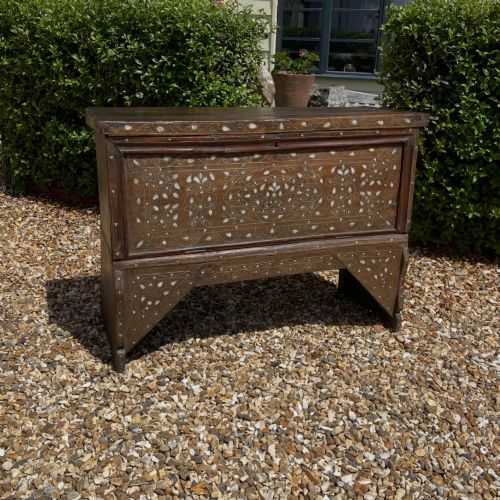


Marquetry Inlaid Coffer
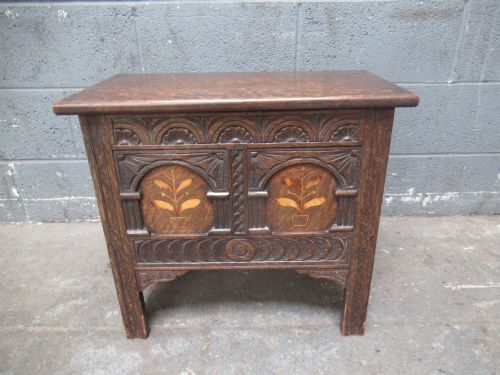
These marquetry inlaid coffer examples combine centuries-old storage function with intricate patterned woodwork.
Marquetry Inlaid Coffer
A marquetry inlaid coffer serves as a sturdy box or chest designed primarily for secure storage, frequently featuring hinged lids and deep interiors. Buyers searching this phrase meet heavy timber vessels built to hold household valuables, linens, or documents.
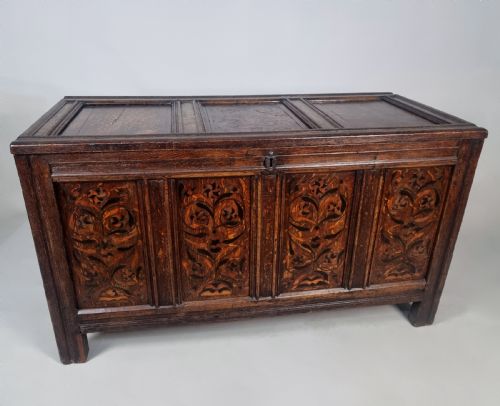
The pieces appearing here span multiple centuries, ranging from sixteenth-century examples to nineteenth-century revivals. Oak and walnut form the structural core for most traditional English and continental specimens.
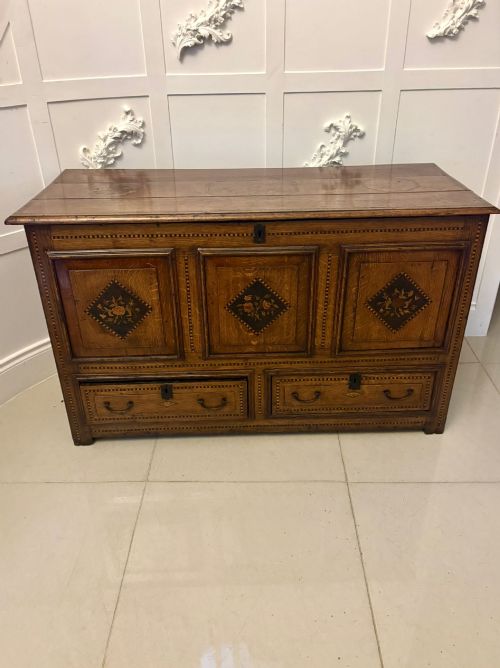
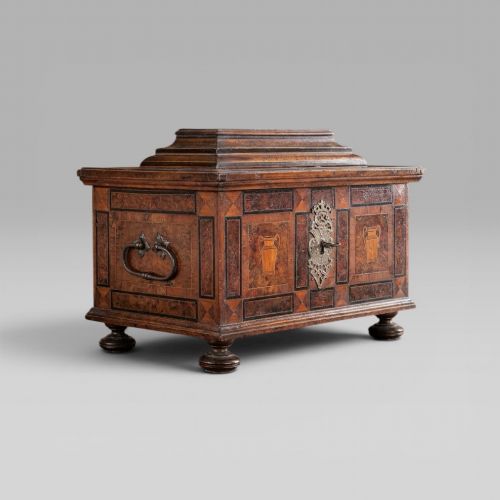
Mule chests with lower drawers sit alongside simpler trunk forms and dome-topped caskets within the selection. Regional variations bring Syrian, Ottoman, and Dutch stylistic influences directly into the available inventory.
What varies in quality
The precision and depth of the veneer work distinguish standard utility boxes from high-status items. Pieces displaying intricate botanical or architectural motifs using diverse fruitwoods and bone demand closer attention.
The integrity of the original timber carcase and the retention of period hinges, locks, and brackets influence the overall standard. Greater skill is evident where the inlay flows seamlessly across structural joins without lifting or misalignment.
Marquetry Inlaid Coffer Retail Price Guide 2026
Typical asking prices for marquetry inlaid coffer among the pieces listed under this phrase on Sellingantiques today, from the lower quarter to the upper quarter. They describe what is for sale here now, not the wider market.
Listings here feature materials including oak, walnut, burr walnut, fruitwood, bone, iron, and brass across several centuries.
Whytock & Reid
The Marquetry Inlaid Coffer Glossary
- Marquetry
- The art of applying decorative veneer pieces to a structural carcase to form geometric or pictorial designs. This technique relies on contrasting wood colours and natural grains to create visual depth.
- Coffer
- A large wooden box or chest used for storing valuables, plate, or documents. Heavy timber construction and strong iron fastenings typically characterise these storage pieces.
- Mule chest
- A traditional storage chest featuring one or more drawers built beneath the main compartment. This form bridges the evolution between simple blanket boxes and modern chests of drawers.
- Burr walnut
- A prized timber harvested from walnut tree growths that produces swirling, highly decorative grain patterns. Cabinet makers utilised thin slices of this wood for prominent decorative surfaces.
- Casket
- A smaller ornamental box or chest designed for precious items, often fitted with intricate locks and internal compartments. These miniature containers frequently showcase advanced metalwork and bone inlay.
Marquetry Inlaid Coffer: Frequently Asked Questions
What were coffers originally used for?
These heavy chests stored valuable textiles, family silver, and important documents securely within domestic and institutional settings.
Because banking systems were rudimentary, portable timber boxes kept wealth protected and ready to move during emergencies.
How do I date an antique coffer?
Examining the construction joints, timber species, and tool marks provides the clearest indication of age. Seventeenth-century examples often feature boarded or framed oak construction with hand-split panels.
Later nineteenth-century revival pieces utilise machine-sawn timbers and different secondary woods behind the decorative veneers.
Where should I place a coffer at home?
A coffer functions well as a blanket box at the foot of a bed or as a coffee table in a living room. The flat top provides a stable surface while the interior conceals everyday clutter.
Keep wooden chests away from direct heat sources and strong sunlight to prevent the inlaid veneers from drying and lifting.
What is the difference between a coffer and a chest?
The terms overlap frequently, though a coffer traditionally implies a heavily constructed storage box with a flat lid used for valuables. Chests often encompass a broader range of domestic storage furniture including drawer units.
In historical listings, older vernacular pieces are frequently catalogued interchangeably as coffers, trunks, or blanket boxes.