


17th Century Moulded Chest
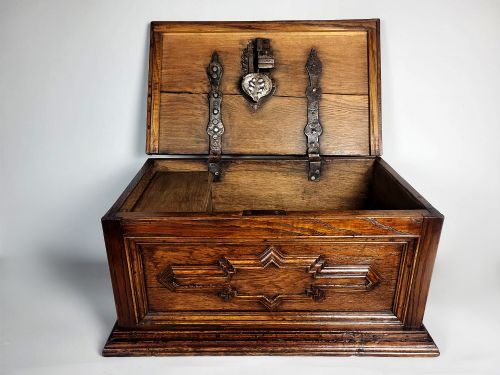
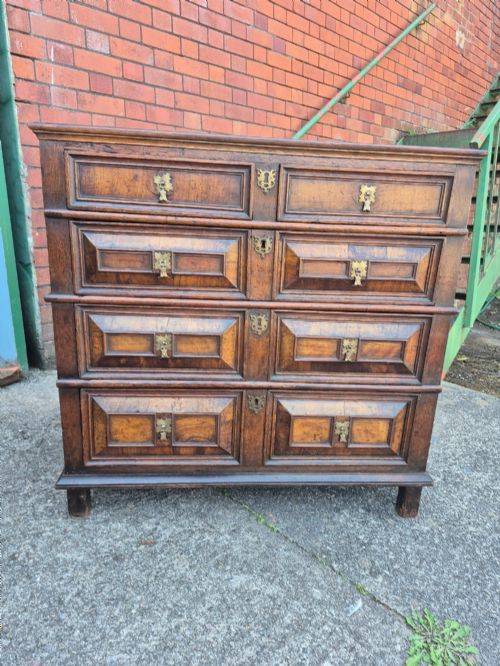
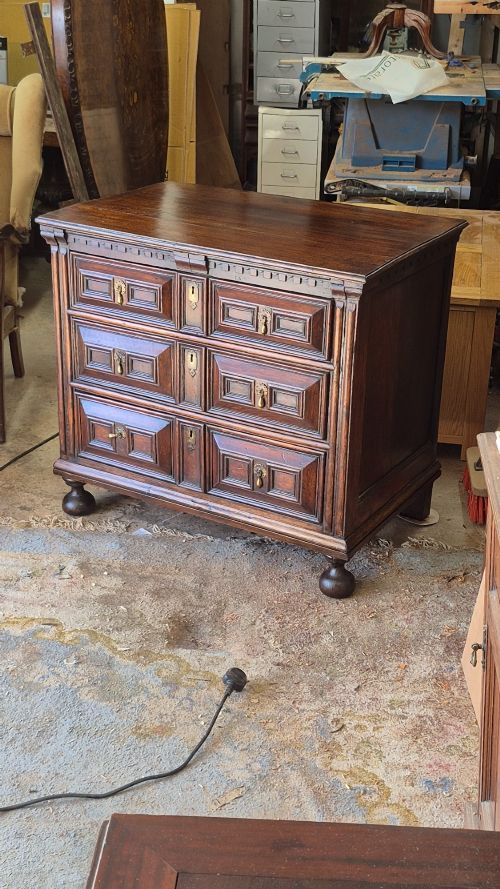
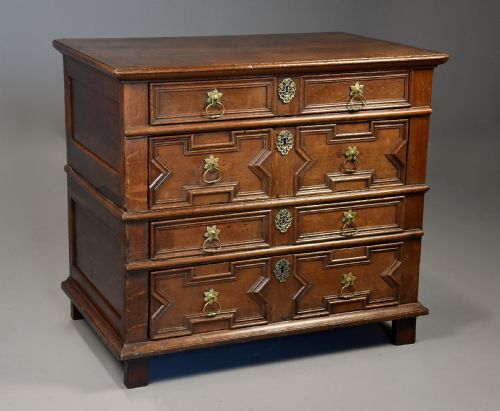
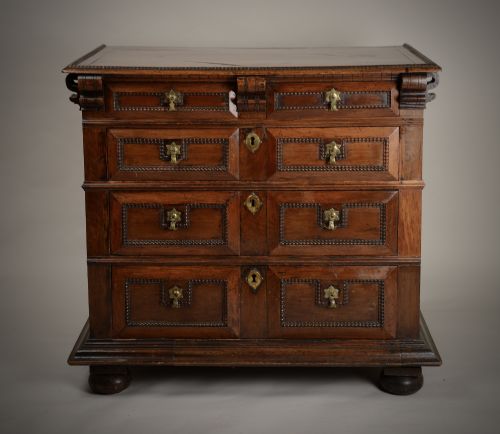
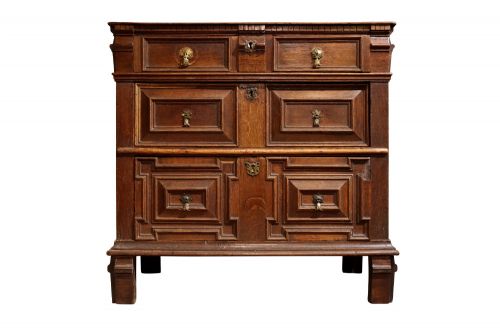
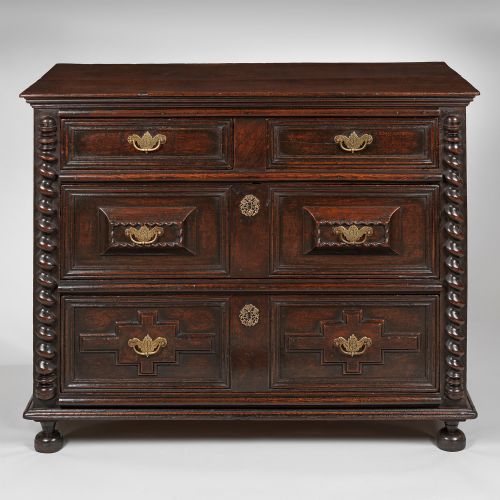
A 17th century moulded chest brings tangible history into a room through its striking geometric drawer fronts and dense timber construction.
17th Century Moulded Chest
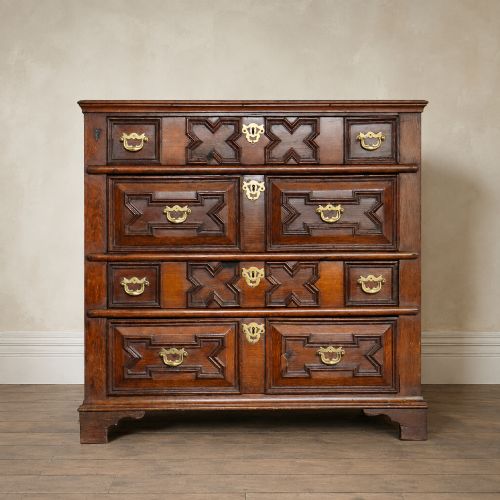
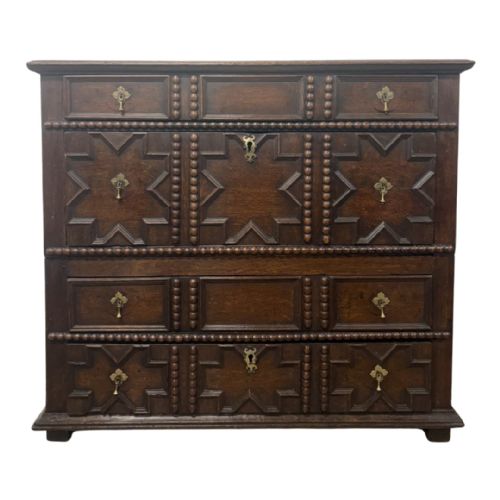
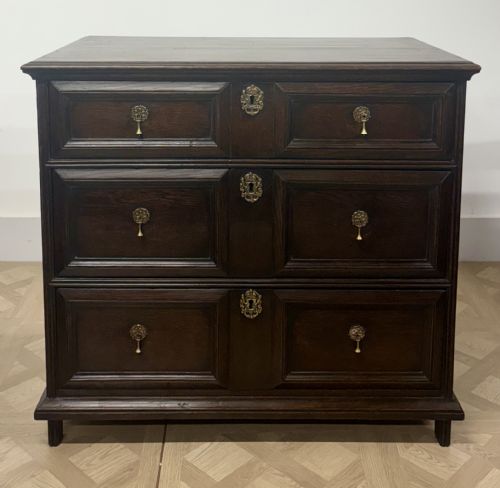
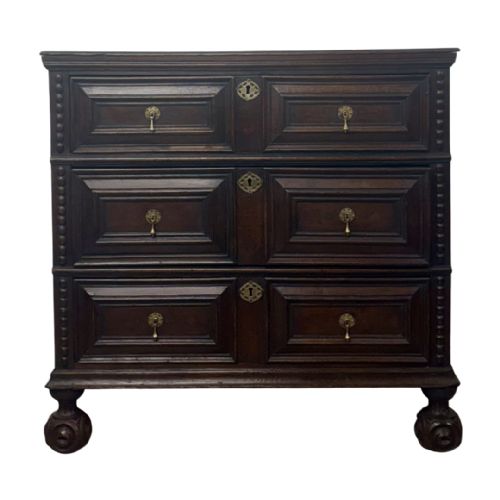
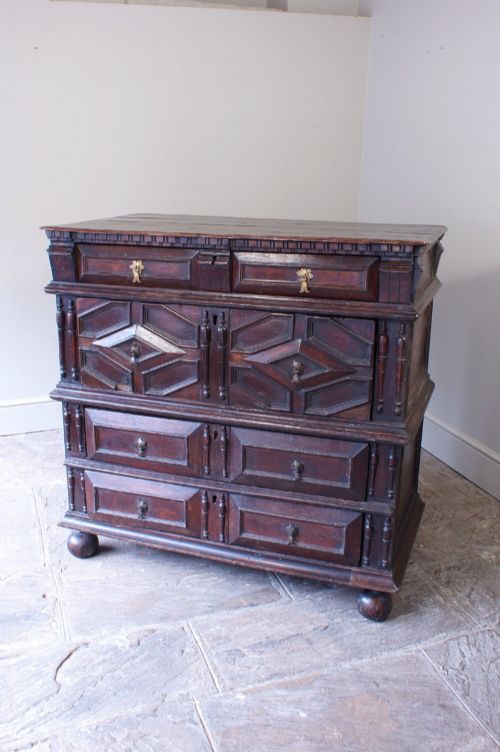
A 17th century moulded chest typically presents as a sturdy chest of drawers featuring applied geometric mouldings across the drawer fronts, often constructed in two distinct sections.
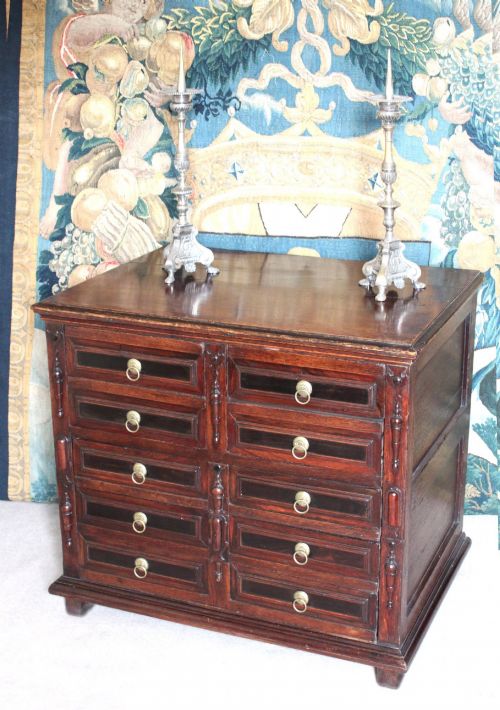
The pieces appearing on this page span the 17th century and early 18th century, encompassing Jacobean, Charles II, and William and Mary styles.
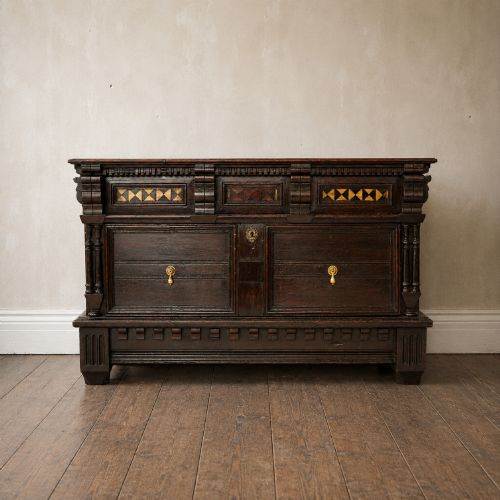
Most examples rely on native oak as the primary carcass material, frequently embellished with contrasting woods like walnut, fruitwood, and decorative inlays.
How they were made
Cabinet makers utilised solid oak to build the robust framework, employing pegged joints and panelled construction to ensure structural stability.
The characteristic geometric patterns on the drawer fronts were created by shaping small pieces of wood and applying them individually to the flat surfaces.
Advanced finishing techniques incorporated oyster veneering, using circular cross-sections of branches to form intricate patterns across the timber.
Listings feature oak, walnut, fruitwood, and steel, spanning the Jacobean, Charles II, and William and Mary periods.
What varies in quality
Quality differences emerge in the complexity of the geometric moulding arrangements and the precision with which the applied decorative elements align.
The selection of secondary timbers, such as the use of walnut, fruitwood, or snakewood alongside oak, alters the visual depth and status of the piece.
Surviving original brass handles, escutcheons, and complex steel locks significantly elevate the historical integrity of an individual chest.
The 17th Century Moulded Chest Glossary
- Geometric moulding
- Raised wooden strips applied in repeating geometric patterns across drawer fronts. This technique defined much of the ornamentation during the later Stuart period.
- Oyster veneer
- Thin circular slices of wood cut across the branch, arranged to resemble oyster shells. This decorative surface treatment appears on select walnut and fruitwood examples.
- Escutcheon
- A protective plate surrounding a keyhole, usually made of brass. These small hardware details help date the furniture by their shape and metal composition.
- Cushion moulding
- Rounded, protruding drawer fronts that resemble stuffed cushions. This particular profile creates strong shadows across the face of the cabinet.
17th Century Moulded Chest: Frequently Asked Questions
How do I care for a historic timber chest?
Keep the wood away from direct heat sources and sudden temperature shifts to prevent the timber from splitting or warping.
Apply traditional beeswax occasionally to nourish the surface and maintain the natural sheen of the aged oak and walnut.
Were these chests always made of oak?
Oak served as the primary structural timber for the vast majority of these pieces due to its local availability and durability.
Cabinet makers frequently introduced walnut, fruitwood, and specialised veneers for decorative drawer fronts and specialised surface inlay.
What is a two-part chest?
A two-part chest consists of an upper and a lower cabinet section stacked together to form a single tall chest of drawers.
This method of construction aided movement within larger homes during the Stuart period and created distinct proportions.
How can I tell a Charles II chest from later pieces?
Charles II and Jacobean pieces typically display specific geometric mouldings, frame-and-panel construction, and pegged joinery native to the seventeenth century.
Later transitions into the William and Mary period introduced softer walnut surfaces, oyster veneers, and altered drawer configurations.