
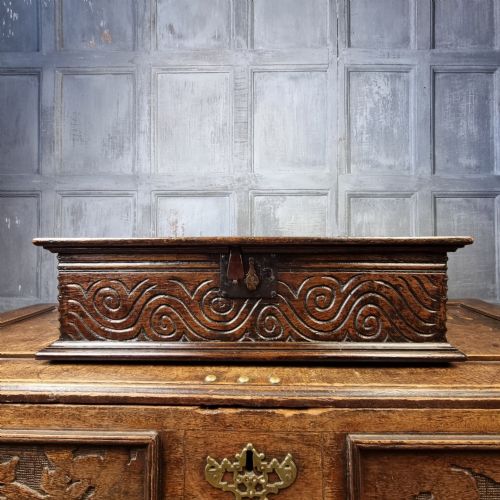

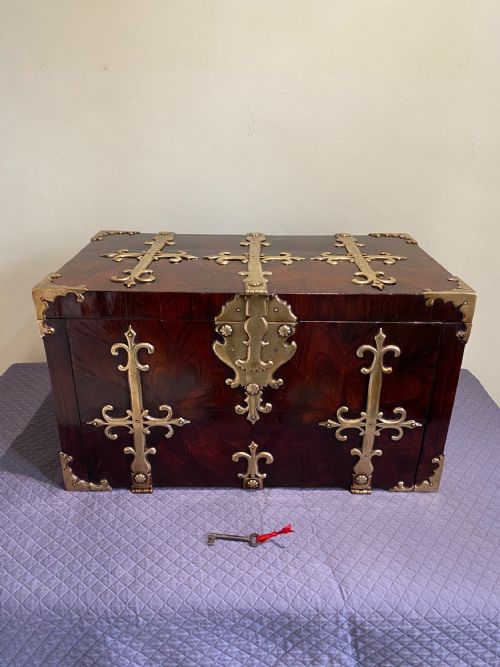


17th Century Document Box
A 17th century document box is a sturdy wooden repository built for secure storage of papers and valuables, offering tactile history to collector interiors.

17th Century Document Box
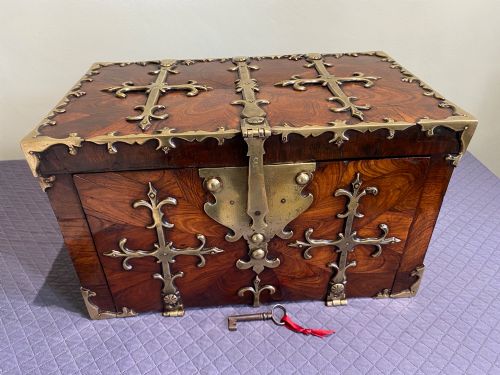
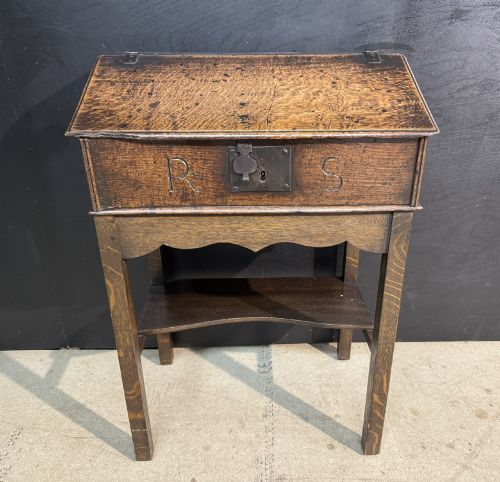
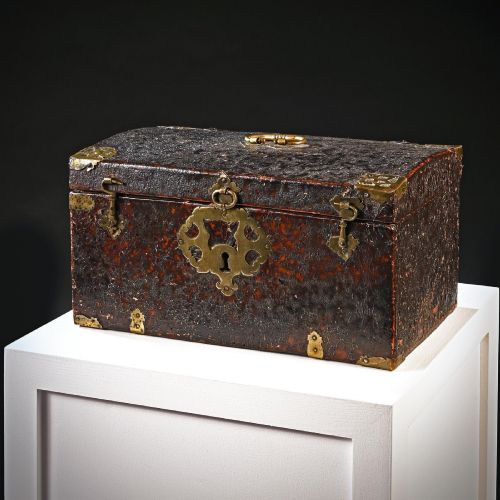
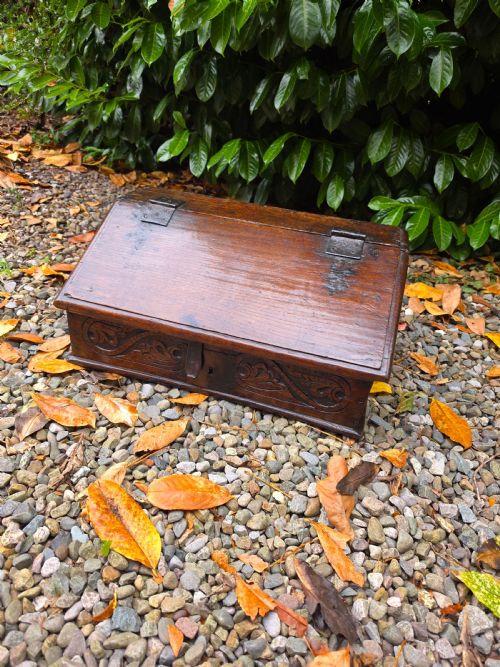
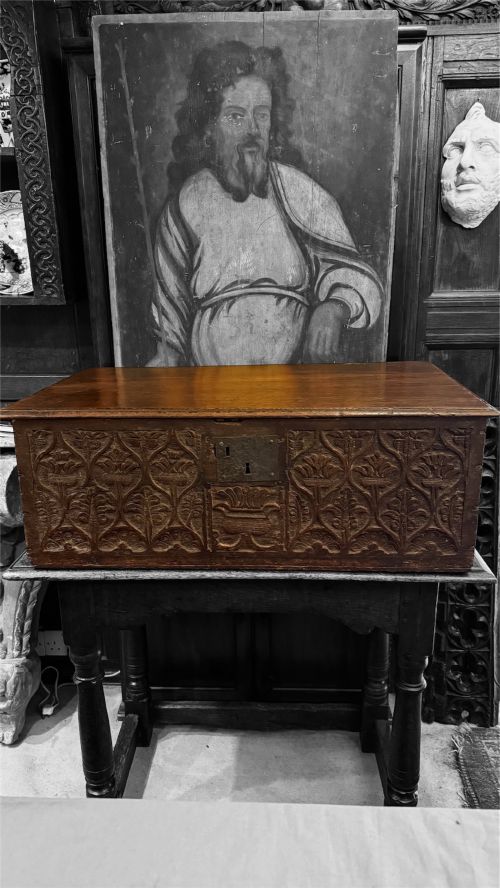
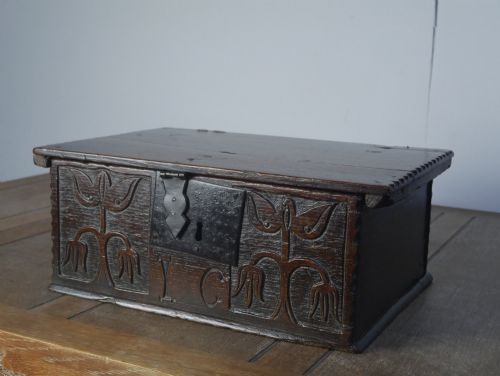
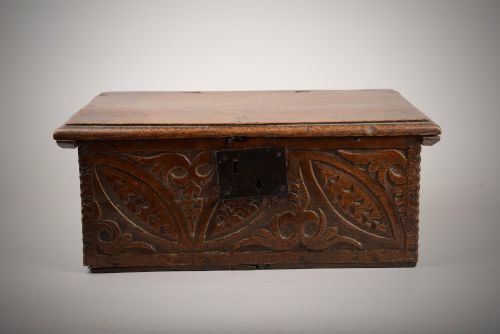
A 17th century document box encompasses forms such as bible boxes, writing desks, slant front boxes, deed boxes, and travelling strong boxes. These pieces appear primarily in oak, alongside walnut, chestnut, kingwood, olive wood, and leather-covered variants.
English, Welsh, German, Flemish, and French workshops produced these items during the 17th century, with occasional examples spanning into the 16th and 18th centuries under Jacobean, William and Mary, and Charles II styles.
Gradations in Quality
The sophistication of the internal fittings, such as secret drawers and writing slopes, separates standard utility boxes from superior examples. Elaborate locking mechanisms and original complex steel lock assemblies elevate the standing of a piece.
Carved decoration and surface embellishments range from simple chip carving to intricate floral marquetry and architectural moulding, reflecting the original workshop's skill and patronage.
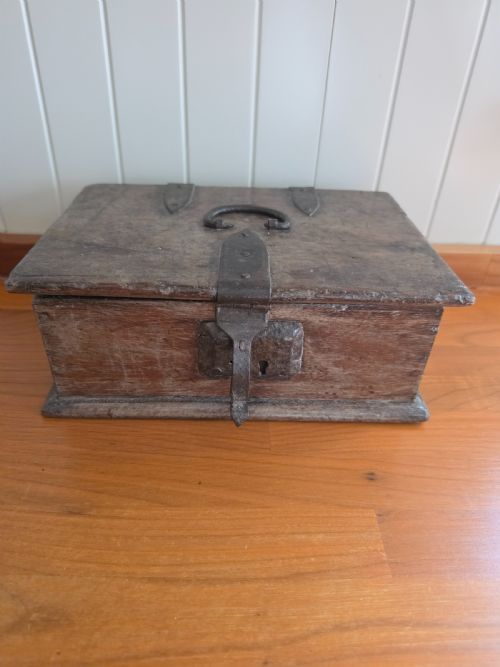
Object forms range from simple deed and bible boxes to complex marquetry table cabinets and iron-strapped travelling strong boxes.
The 17th Century Document Box Glossary
- Bible box
- A sloped or flat-topped desk box originally utilised for holding holy scriptures and writing materials. These compact containers often rested on tables for domestic reading and writing.
- Coffre forte
- A French term denoting a strong box or safe, typically heavily iron-strapped and fitted with intricate internal locking mechanisms. They provided secure storage for currency and vital documents.
- Chip carving
- A primitive decorative technique where small chips are chipped away from a wooden surface to create geometric patterns. This style frequently decorates regional Welsh and English oak boxes.
- Marquetry
- The art of applying thin pieces of wood veneer to form decorative patterns and floral motifs. Flemish and German cabinets frequently display this intricate craftsmanship.
- Slant front
- An angled top lid designed to facilitate writing when closed or open. This feature marks the transition from simple storage boxes to functional writing desks.
17th Century Document Box: Frequently Asked Questions
What is a 17th century document box?
A 17th century document box is a small wooden chest designed to secure legal papers, letters, and valuables. Carpenters built these containers with robust lids and fitted them with iron or brass locks.
They served as portable or table-standing repositories before dedicated bureaus became common in domestic interiors.
How were these boxes used?
Owners used them for storing deeds, correspondence, money, and occasionally bibles in households and during travel. The inclusion of internal drawers and writing slopes accommodated ink, quills, and important papers.
Their sturdy construction protected contents from dampness and theft in both English and continental settings.
How do I identify the period?
Dating relies on timber species, construction methods, hardware, and decorative styles such as Jacobean carving or William and Mary veneering. Oak is predominant in English examples from the 17th century, while continental pieces frequently utilise exotic woods.
Original iron locks and hinges provide further physical evidence for verifying the era of manufacture.
Where were document boxes made?
The surviving evidence shows production across English, Welsh, German, Flemish, and French workshops. Regional preferences dictated the choice of materials, from local Welsh oak to continental ebony and kingwood.
Travelling strong boxes and domestic deed boxes alike reflect the distinct craftsmanship of these varied European regions.
How should I live with one?
These boxes function well as desktop storage, bedside chests, or decorative display pieces on larger furniture. Their compact dimensions allow them to integrate easily into modern living spaces while holding everyday items.
Placing them away from direct heat sources preserves the antique wood, ironwork, and delicate veneer surfaces.