
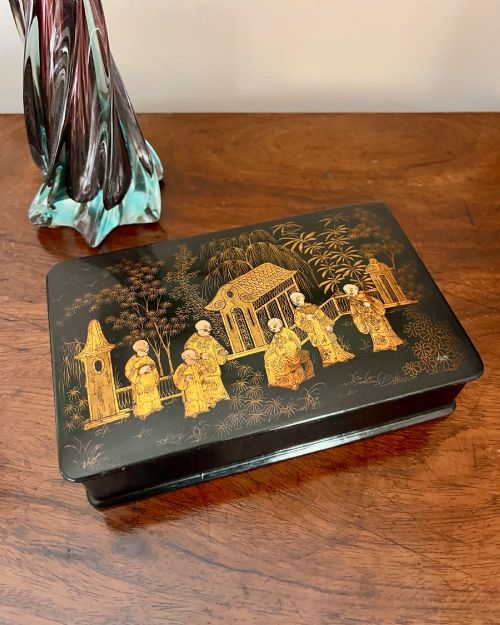


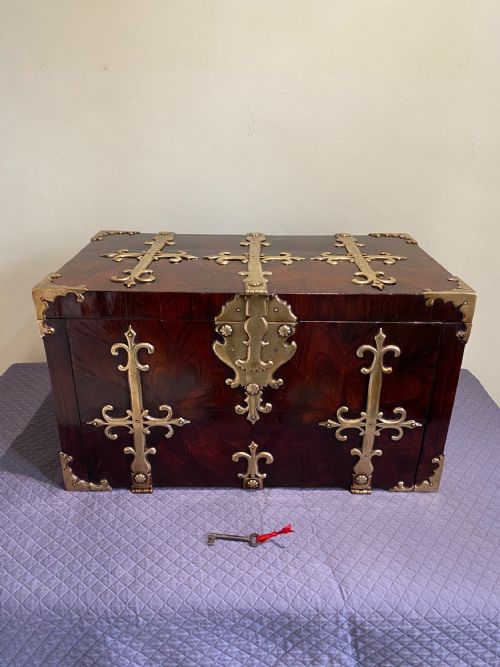


Antique Wooden Document Casket
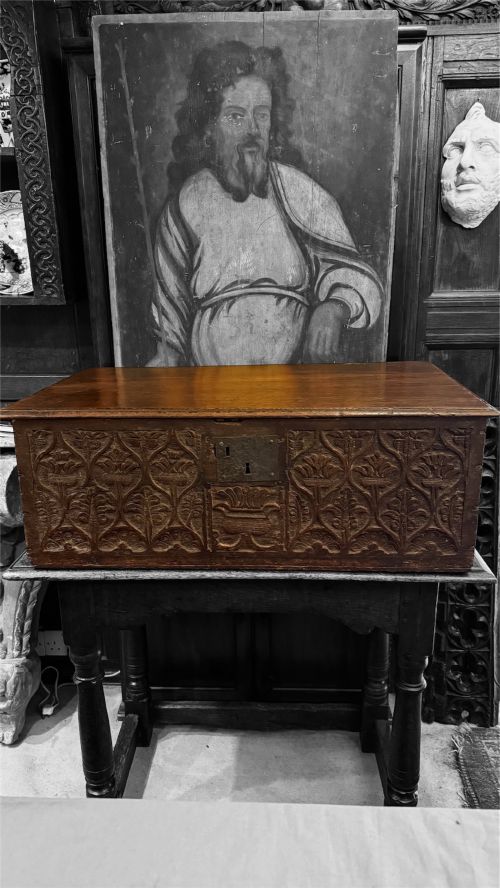
An antique wooden document casket is a secure receptacle designed to safeguard valuable papers, arriving in forms ranging from early oak Bible boxes to inlaid Victorian stationery chests.

Antique Wooden Document Casket
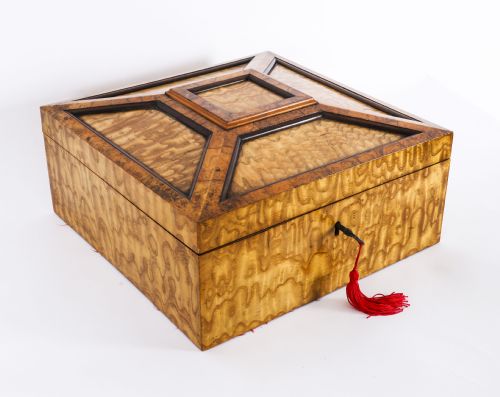
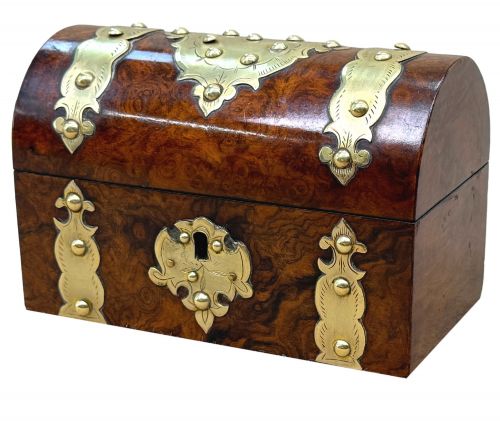
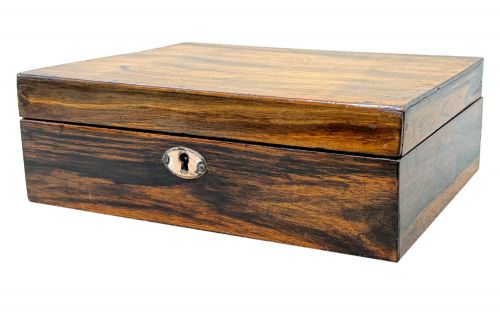
An antique wooden document casket serves as a personal repository for legal papers, correspondence, and valuables, appearing across this page in diverse regional interpretations. The selection spans robust seventeenth-century oak and walnut strongboxes fitted with complex iron locks alongside refined nineteenth-century rosewood, coromandel, and burr walnut stationery chests.
Buyers encounter forms that bridge utilitarian security and domestic display, including brass-bound Regency document boxes and heavily carved continental table cabinets. These containers reflect the domestic and administrative needs of their respective eras, utilising native timbers like oak and pine alongside exotic veneers such as ebony, kingwood, and camphor.
Distinctions in Quality
Quality rests upon the integrity of the timber selection, the sophistication of the veneer work, and the original condition of the internal fittings. Pieces featuring densely figured burr timbers or intricate geometric parquetry demonstrate higher levels of cabinetmaking skill than plain utilitarian storage.
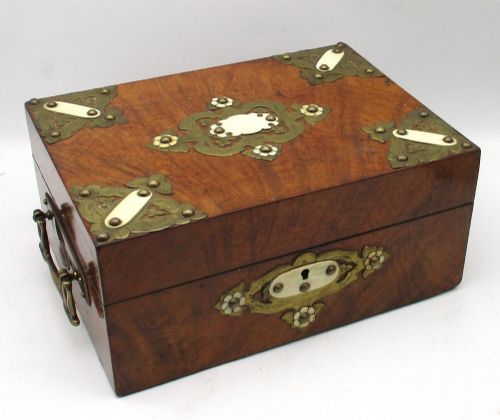
The complexity and originality of the hardware significantly influence standard, particularly where complex internal locking mechanisms, original steel keys, and heavy brass carrying handles remain intact. Fine detailing, such as precise dovetailing and undamaged decorative inlay, separates standard production from exceptional examples.
The listings demonstrate a wide chronological span from sixteenth-century Nuremberg caskets to early twentieth-century pieces, utilising materials including iron, bone, and camphor.
The Antique Wooden Document Casket Glossary
- Bible box
- A small desk box or receptacle originally constructed to hold a family Bible and important household documents. These pieces typically feature sloping lids and date from the seventeenth century.
- Coffre forte
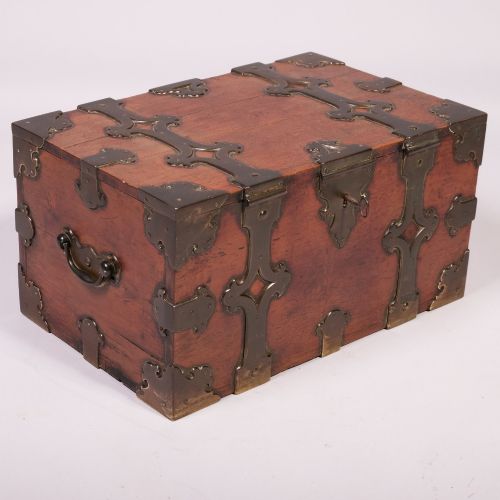
- A French term denoting a strongbox or secure chest designed for money and valuable documents. These objects frequently incorporate heavy iron straps and intricate locking systems.
- Parquetry
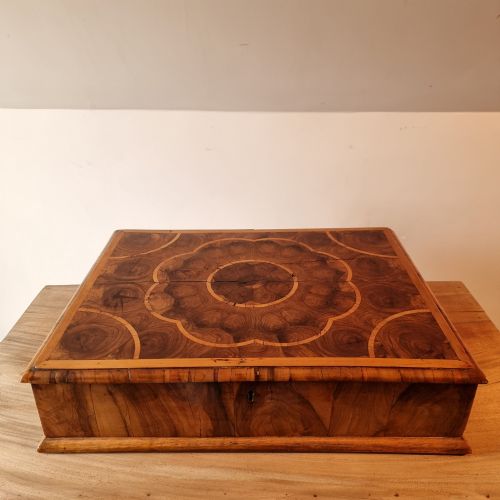
- A geometric mosaic of wood pieces used for decorative veneer on box lids and panels. This technique employs contrasting timbers to create repeating patterns.
- Tunbridge Ware
- A form of British decorative woodwork characterised by mosaic patterns made from tiny wood blocks of various natural colours. It frequently decorates small nineteenth-century trinket and stationery boxes.
- Oyster veneer
- Slices cut transversely from small branches or roots to produce circular or oval patterns resembling oyster shells. This decorative method appears on seventeenth- and eighteenth-century furniture and boxes.
Antique Wooden Document Casket: Frequently Asked Questions
What was an antique wooden document casket used for?
These caskets were utilised to store and protect legal documents, land deeds, correspondence, and valuable personal items in households and offices.
Because security was paramount, many were fitted with heavy iron locks, straps, and internal compartments to keep sensitive papers away from prying eyes.
How do I date an antique wooden document casket?
Dating relies on observing the primary timber used, the construction methods like dovetailing, and the style of any decorative brass or iron hardware. Early pieces often employ solid oak with simple iron mounts, whereas nineteenth-century examples frequently feature exotic veneers and complex lock mechanisms.
Examining the secondary woods inside the box and the type of hinges also provides reliable clues to the period of manufacture.
Where should I place a document casket in my home?
These boxes function well placed upon desks, sideboards, or console tables where their timber grain and decorative mounts can be appreciated at close range. Their internal compartments also make them practical for organising modern letters, photographs, or small keepsakes.
Direct sunlight and extreme temperature fluctuations should be avoided to protect delicate wood veneers and historic finishes.
What is the difference between a document box and a strongbox?
A document box generally emphasises refined exterior presentation, utilising fine veneers like rosewood or coromandel and fitted velvet interiors suitable for a desk or drawing room. A strongbox prioritizes physical security, constructed with heavy iron banding, thick timber walls, and complex locking mechanisms designed to resist forced entry.
Both served administrative functions, but strongboxes were built with a primary focus on defence against theft.