
Carved English Oak Box
When you search for a carved english oak box, you encounter centuries of durable joinery designed to hold documents, textiles, or valuables.
Carved English Oak Box
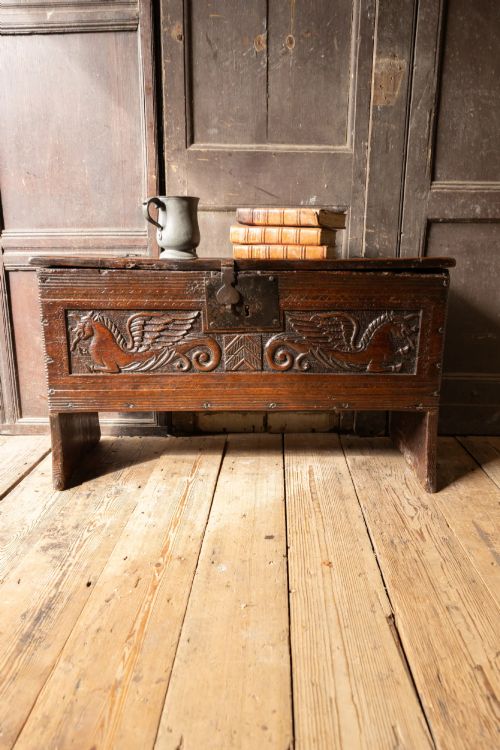
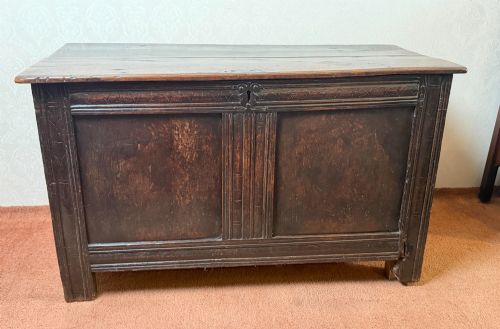
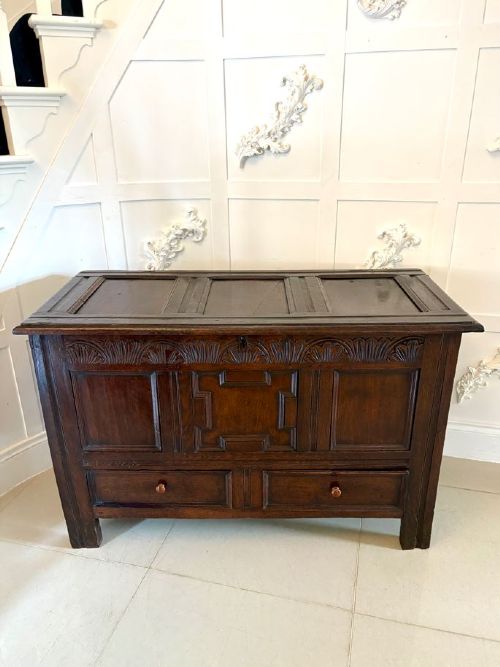
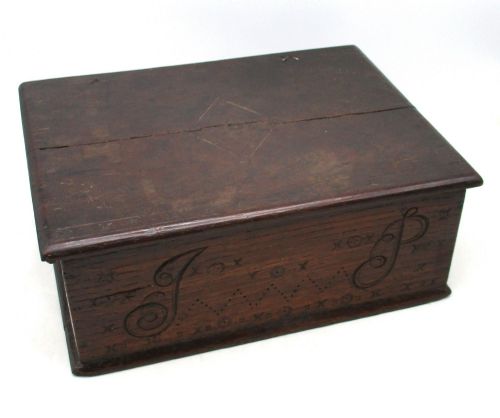
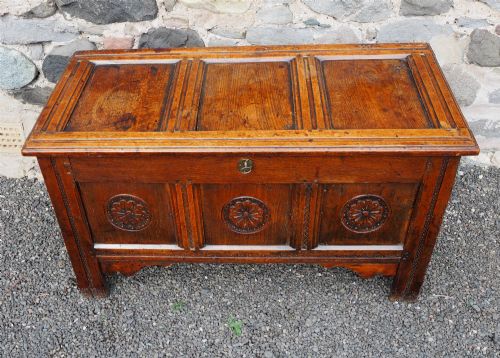
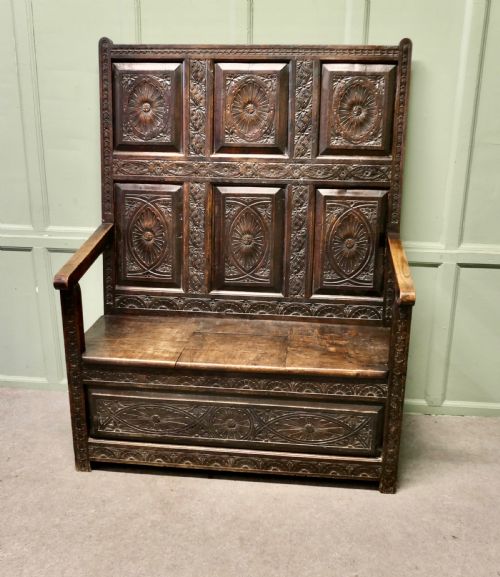
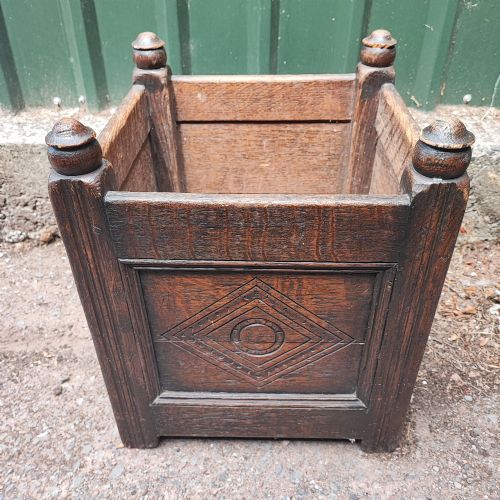
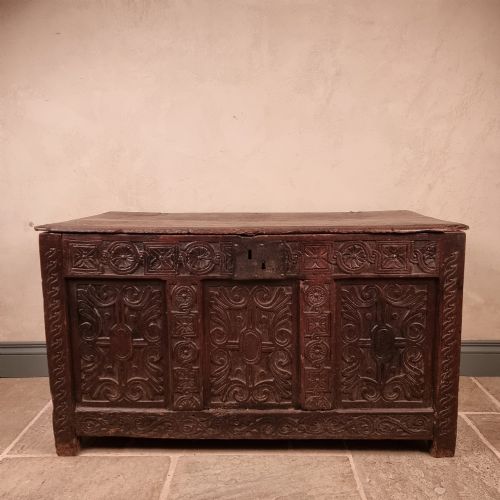
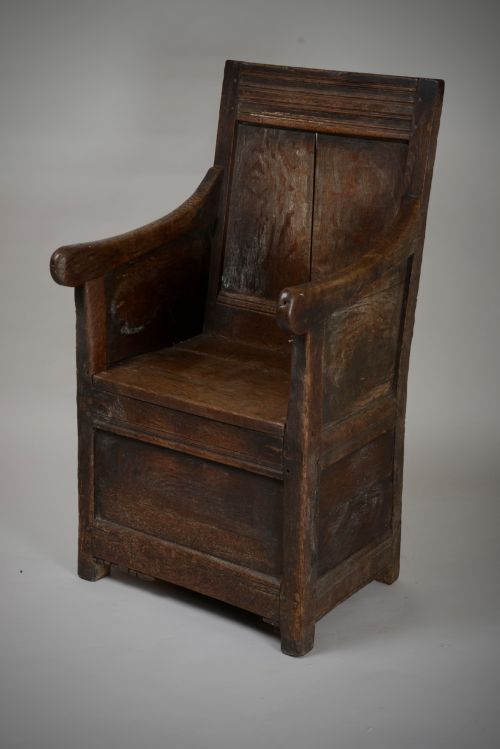
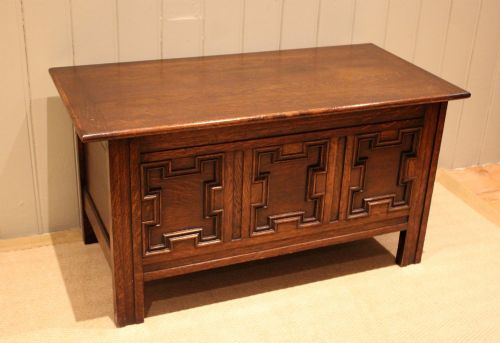
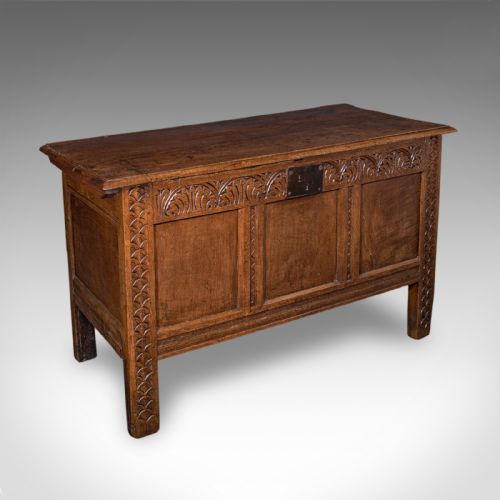
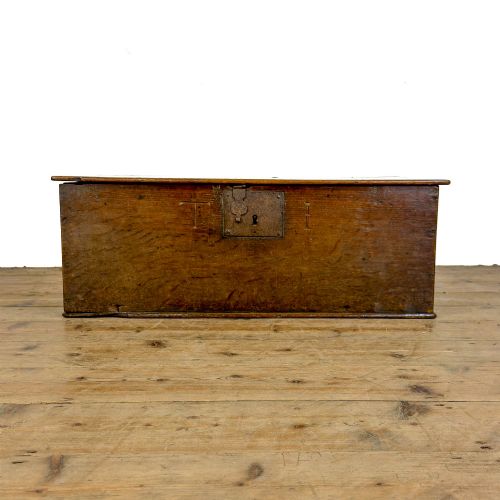
A carved english oak box spans compact table-top bible and document cases from the sixteenth and seventeenth centuries, alongside larger coffers, blanket chests, and box settles.
The pieces on this page originate predominantly from the seventeenth and eighteenth centuries, with occasional Victorian interpretations and later revivals.
Smaller examples serve as desk-top storage for letters or folios, whilst larger trunk forms function as seating or heavy blanket storage in domestic interiors.
Materials and Construction
Constructed from solid timber boards joined by pegging and hand-cut joints, incorporating brass or iron hardware such as hinges and locks.
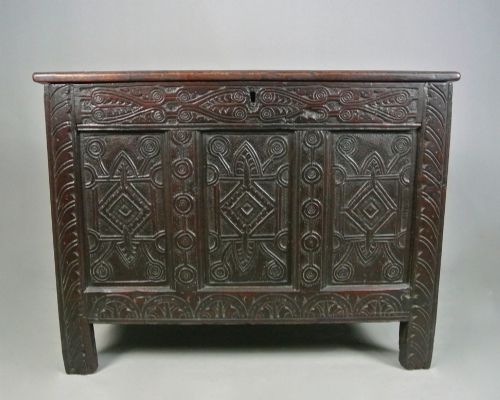
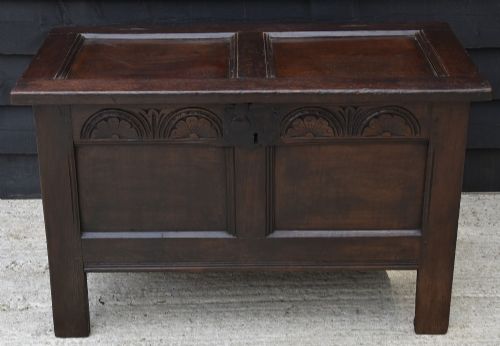
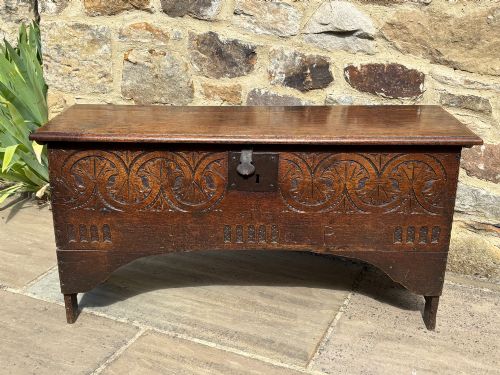
Surface decoration relies on chip-carved geometric patterns, arcading, and panel moulding executed directly into the dense grain of the wood.
Listings span from the 16th century through the Edwardian era, predominantly utilising oak accompanied by iron, brass, and silver plate.
Quality and Execution
Depth and sharpness of the hand-carved ornamentation distinguish master joinery from simpler village carpentry.
Survival of original timber lids, floor boards, and structural ironwork separates untouched examples from heavily restored pieces.
Halstaff and Hannaford
The Carved English Oak Box Glossary
- Coffer
- A heavy wooden chest traditionally used for storing valuables, linens, or documents. These pieces often feature robust panelled construction and hinged lids.
- Bible Box
- A small desk-top storage chest designed to hold religious texts or personal documents. They frequently exhibit sloping lids intended for reading or writing.
- Arcaded
- A decorative architectural motif carved into wood panels to resemble a succession of arches supported by columns. It appears frequently on seventeenth-century English joinery.
- Boarded Box
- A simple chest constructed from single planks joined directly at the edges rather than fitted into a framed skeleton. This method represents early utilitarian trunk making.
Carved English Oak Box: Frequently Asked Questions
What did they store inside?
These containers held precious household goods, family bibles, legal deeds, and personal linens securely away from damp stone floors.
Smaller desk-top versions kept writing equipment and letters orderly in domestic or institutional settings.
How do I date the carving?
Stylistic motifs provide the primary clue, moving from sixteenth-century strapwork to seventeenth-century geometric arcading and later eighteenth-century fielded panels.
Tool marks and the method of joint assembly corroborate the visual period characteristics.
Where should I place one?
Larger chest and coffer variants function naturally at the foot of a bed or beneath a window as extra seating.
Smaller document boxes sit comfortably upon side tables, desks, or chest tops to provide concealed tabletop storage.
Are original hinges common?
Iron strap hinges and snipe hinges endure on many pieces, though replacement hardware frequently occurs due to centuries of daily use.
Original ironwork with hand-hammered pins adds substantial authenticity to early examples.