




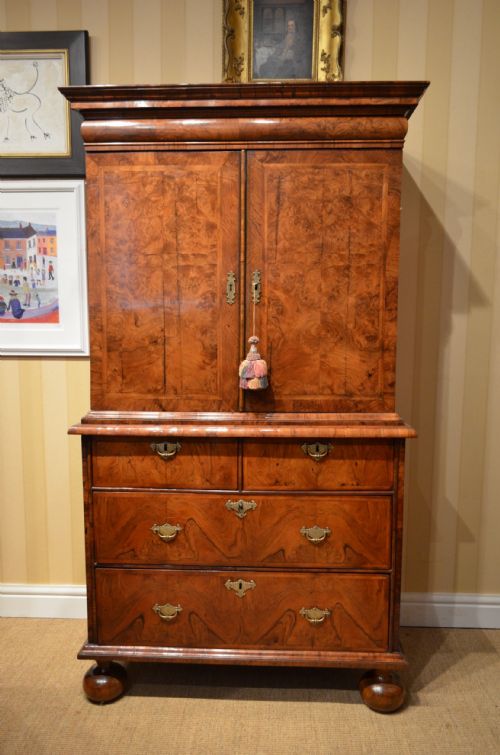


17th Century Cushion
These historic 17th century cushion pieces bring rich Flemish tapestry and deep walnut moulding into modern rooms for texture and age.
17th Century Cushion
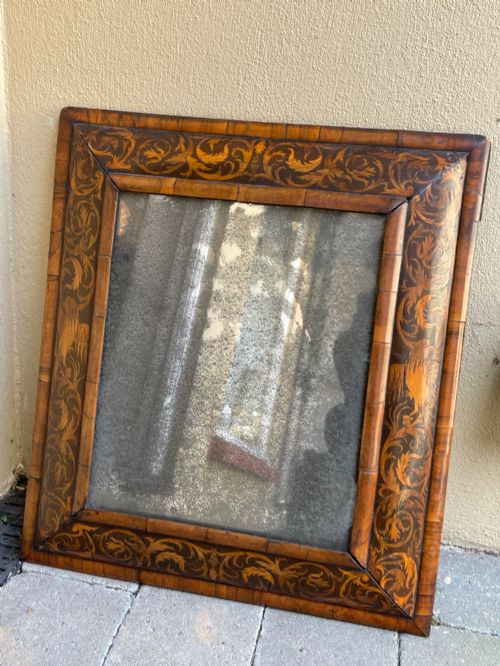
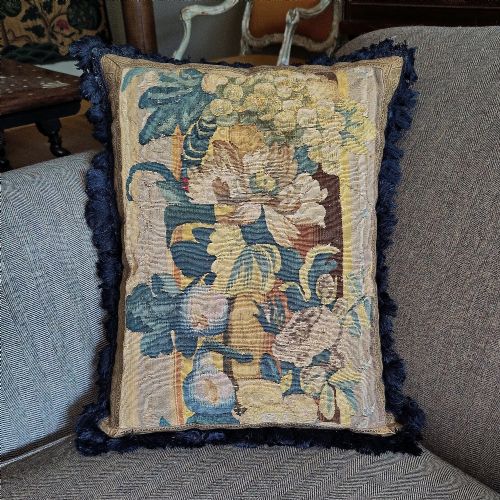
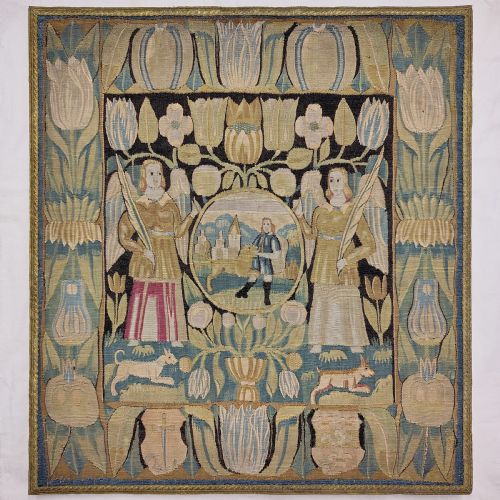
A 17th century cushion encompasses textile works such as tapestry cushion covers and fragments alongside moulded architectural furniture forms. Buyers seeking this phrase regularly encounter Flemish tapestry fragments, needlework panels, and cushion framed mirrors framed in walnut or oak.
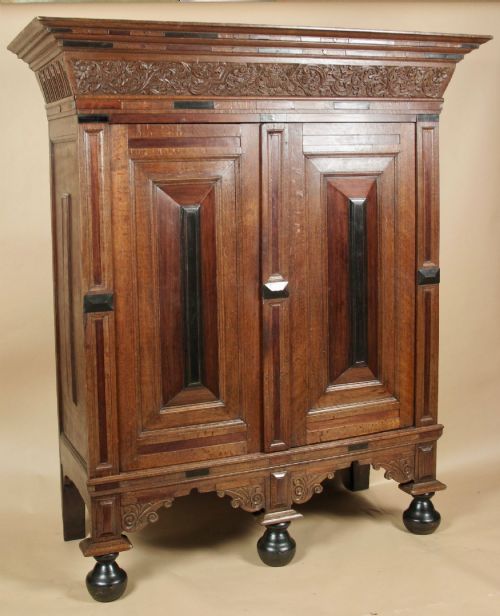
The material output divides clearly between soft textiles and heavy case furniture that utilises deep mouldings. Wall mirrors, cushion front chests of drawers, and armoires dominate the forms alongside textile art and wall hangings.
Origins span Dutch, Flemish, and German workshops alongside English William and Mary pieces. The aesthetic draws heavily from Baroque and Jacobean design vocabularies, pairing rich wool and silk with dense native and exotic timbers.
How they were made
Makers utilised dense timbers including oak, walnut, burr walnut, rosewood, and ebony for rigid case furniture and mirror frames. Oyster veneers and marquetry inlay added complex patterning to wooden surfaces, whilst glass provided the reflective panels for mirrors.
Textile works relied on wool and silk woven into intricate tapestries and needlework. Fragments were often repurposed into cushion covers or wall hangings, preserving historic handwork through careful mounting and framing.
Some historic cushions started life as grand Flemish wall art before being trimmed down to sit comfortably on a chair.
What varies in quality
Quality rests on the depth of the timber moulding and the crispness of the grain in oyster veneered and marquetry pieces. Walnut and burr walnut surfaces demonstrate superior craftsmanship through balanced figuring and precise inlay placement.
In textile works, the integrity of the wool and silk weave determines the standard. Surviving Flemish tapestry cushion covers and fragments vary according to the density of the thread count and the preservation of the original polychrome palette.
The 17th Century Cushion Glossary
- Cushion moulding
- A convex, rounded architectural moulding profile projecting from furniture frames and mirror surrounds. This bold profile defines much of the cabinetwork and mirror design from the period.
- Oyster veneer
- Thin circular slices of branch wood arranged in patterns resembling oyster shells. This technique creates rhythmic, repeating grain patterns across mirror frames and drawer fronts.
- Marquetry
- Inlaid patterns of contrasting wood veneers assembled to form decorative motifs. Artisans utilised this technique on mirrors and cabinets during the William and Mary period.
- Flemish tapestry
- Woven textile art produced in Flanders featuring pictorial or floral designs. Surviving panels frequently form the basis for historic cushion covers and wall hangings.
- Kast
- A large Dutch or German architectural wardrobe or cabinet. These heavy storage pieces often incorporate moulded panels and exotic timbers like rosewood and ebony.
17th Century Cushion: Frequently Asked Questions
How do I care for a tapestry cushion?
Keep textile pieces away from direct sunlight to prevent wool and silk fibres from fading and weakening over time.
Gentle surface dusting with a soft brush helps maintain the weave without causing abrasion to old threads.
Where should I hang a cushion mirror?
Mount these heavy frames on solid walls using appropriate fixings to support the dense walnut and oak construction safely.
Position the glass away from damp environments to protect the underlying wooden structure and historic silvering.
How are walnut and oak pieces different?
Walnut furniture often displays finer grain patterns, oyster veneers, and marquetry inlay suited to fashionable Baroque interiors.
Oak provides a heavier, more utilitarian structure frequently seen in moulded chests of drawers and early regional kasts.
Are tapestry fragments meant for daily use?
Historic fragments serve primarily as decorative textile art or display cushion covers rather than casual seating accessories.
Limiting physical handling preserves the fragile wool and silk structure of the original sixteenth and seventeenth-century weave.