
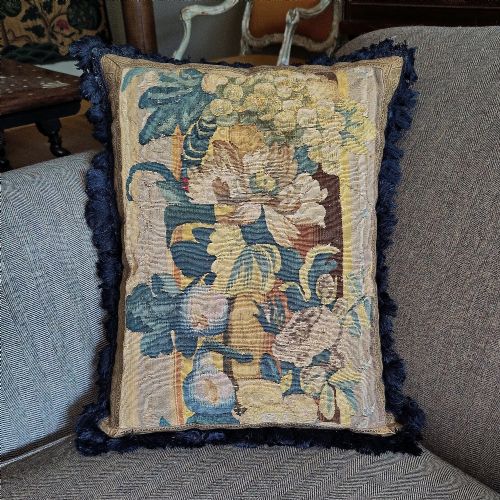


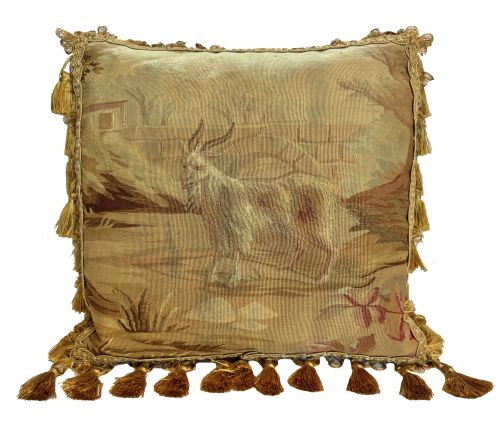
Tapestry Throw Pillow
A tapestry throw pillow brings textile history directly onto a sofa, offering genuine period character.
Tapestry Throw Pillow
A tapestry throw pillow transforms antique textile fragments into functional home furnishings. When exploring a tapestry throw pillow, buyers encounter cushions and cushion covers drawn from varied historical periods including the seventeenth century alongside the nineteenth century.
The selections span distinct stylistic traditions such as seventeenth-century Flemish work, French Chateau, French Rococo, and Anatolian tribal designs. Many pieces repurpose historic Aubusson fragments or traditional kilim flatweaves into manageable decorative scales.
Judging the quality
Quality rests primarily upon the age and integrity of the textile fragment utilised in the cushion cover. Pieces originating from seventeenth-century Flemish or nineteenth-century Aubusson workshops demonstrate superior pictorial depth compared to simpler tribal variations.
The handling of supportive materials, such as the inclusion of traditional passementerie trim, distinguishes a standard assembly from a more considered adaptation of historic fabric.
Current listings feature materials including wool, silk, cotton, linen, and passementerie across diverse nineteenth and seventeenth-century forms.
The Tapestry Throw Pillow Glossary
- Aubusson
- A style of tapestry originating from the French town of Aubusson, known for floral and pictorial scenes. These woven panels frequently appear on nineteenth-century cushion covers.
- Kilim
- A flatwoven carpet or rug tradition from Anatolia, utilised here as durable cushion material. This technique produces geometric patterns without a pile.
- Passementerie
- Elaborate trimmings, edgings, or tassels woven from silk, wool, or cotton threads. This finish decorates the perimeter of many textile cushions.
- Flemish
- Pertaining to the historic region of Flanders, famous for seventeenth-century woven tapestries. Such fragments provide heavy wool and silk surfaces for decorative pillows.
Tapestry Throw Pillow: Frequently Asked Questions
Are these cushions made from old textiles?
Yes, the inventory relies on historic woven fragments. Many examples incorporate authentic nineteenth-century Aubusson panels or older seventeenth-century Flemish borders.
Makers repurpose these surviving textiles into functional cushion covers while retaining their original material composition of wool, silk, and linen.
How do I care for a tapestry cushion?
These textiles require gentle handling due to their age and delicate fibre content. Professional cleaning is advisable to preserve the wool and silk threads.
Protecting the cushion from direct sunlight prevents the natural dyes from fading over time.
What styles of tapestry pillows exist?
The selection includes several distinct design traditions, ranging from French Chateau and Rococo aesthetics to Anatolian tribal flatweaves.
Flemish seventeenth-century styles contrast with nineteenth-century French floral patterns and Anatolian traditional kilims.
Where were these textiles originally woven?
Production centres include historic workshops in France, Flanders, and Anatolia. French examples often feature classical floral motifs characteristic of Aubusson.
Anatolian pieces bring geometric tribal patterns into the selection through traditional kilim flatweaves.