


A 2026 Guide by Sellingantiques
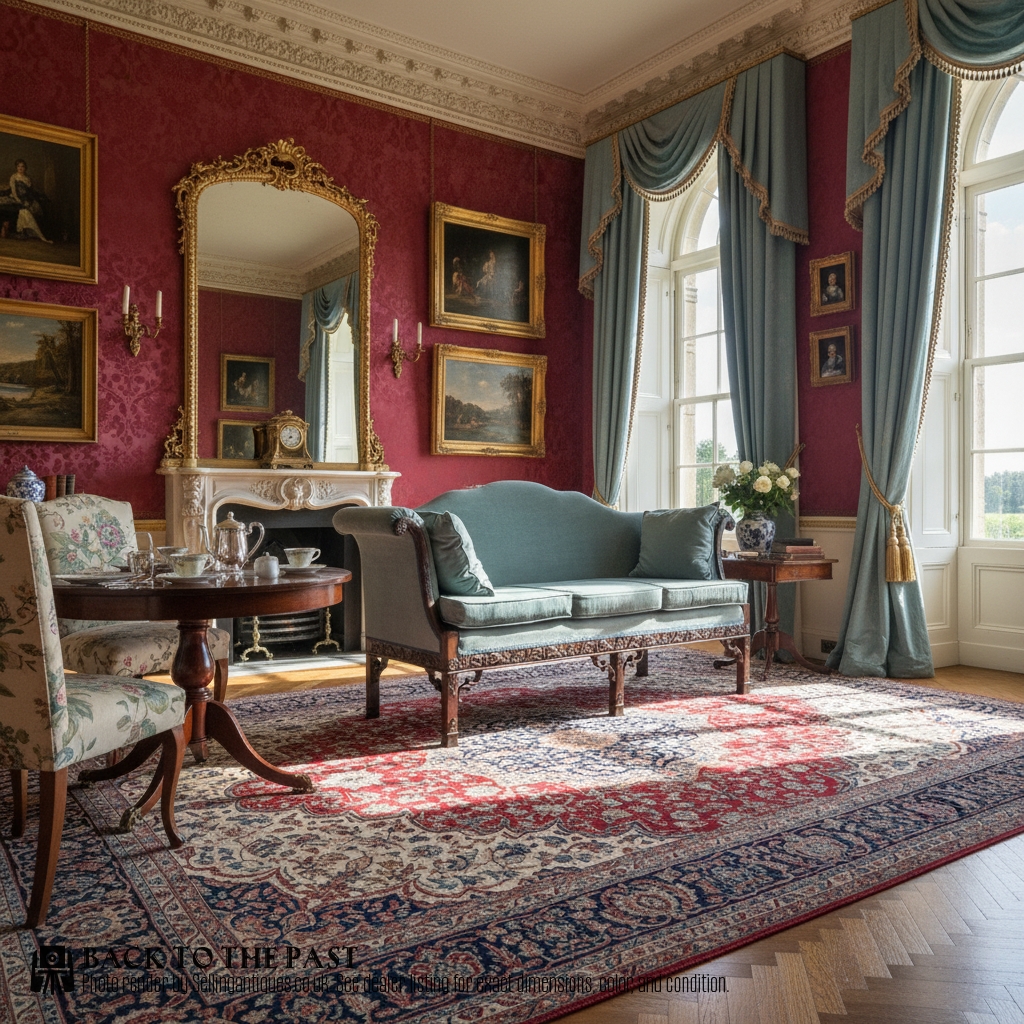
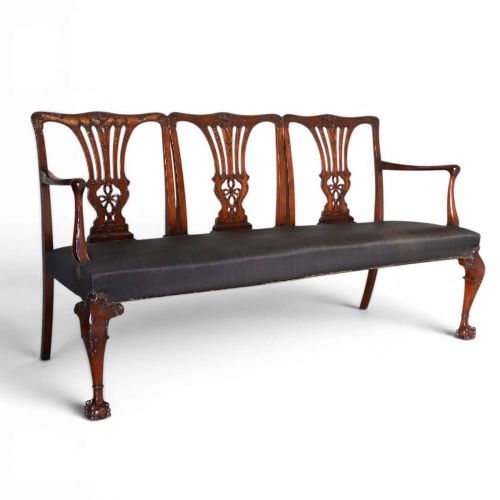
Early 20th C. Mahogany Chinese Chippendale Style Camelback Sofa, Edwardian
Priced at £3,150 from M Cross Antiques
Long seating evolved from simple benches and settles during the eighteenth century.
Wealthy households demanded formal seating for receiving visitors in the principal rooms.
Expect to see antique mahogany sofas from the Georgian and Regency periods right through to late Victorian times.
Forms shifted from strict straight lines towards heavy curves as comfort overtook rigid posture.
Look at how early examples sit flush against a wall, while later ones often float in the room.
Thomas Chippendale supplied carved frames to grand houses during the mid eighteenth century.
Gillows of Lancaster produced hundreds of these seats with reeded legs from the 1790s onwards.
Provincial makers built countless undocumented pieces following published pattern books of the day.

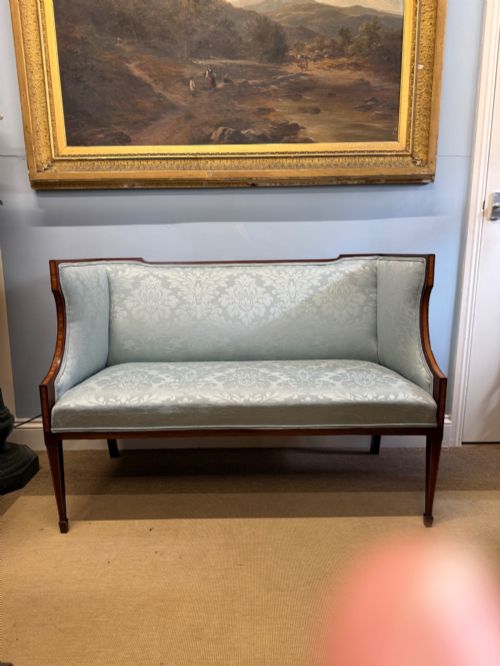
A Late 19th Century Inlaid Mahogany Salon Sofa, 1870
Priced at £995 from W.J. Gravener Antiques Ltd.
The 2026 retail price guide for Antique Mahogany Sofas is drawn from a proprietary archive of over 1.1 million retail prices indexed by Sellingantiques since 2003. This guide relies exclusively on their own internal data; no external sources or auction records are used.
Analysing nearly 25 years of UK antique market history alongside current retail values, the data indicates that typical UK retail prices for Antique Mahogany Sofas range between £700 and £3,800. Entry-level prices generally fall under £700 and premium examples upwards of £3,800.
Exposed show-wood frames outline the back and arms of most antique mahogany sofas.
Turned or square tapered legs often terminate in brass cup castors.
Look for reeded detailing along the front seat rail and down the arm supports.
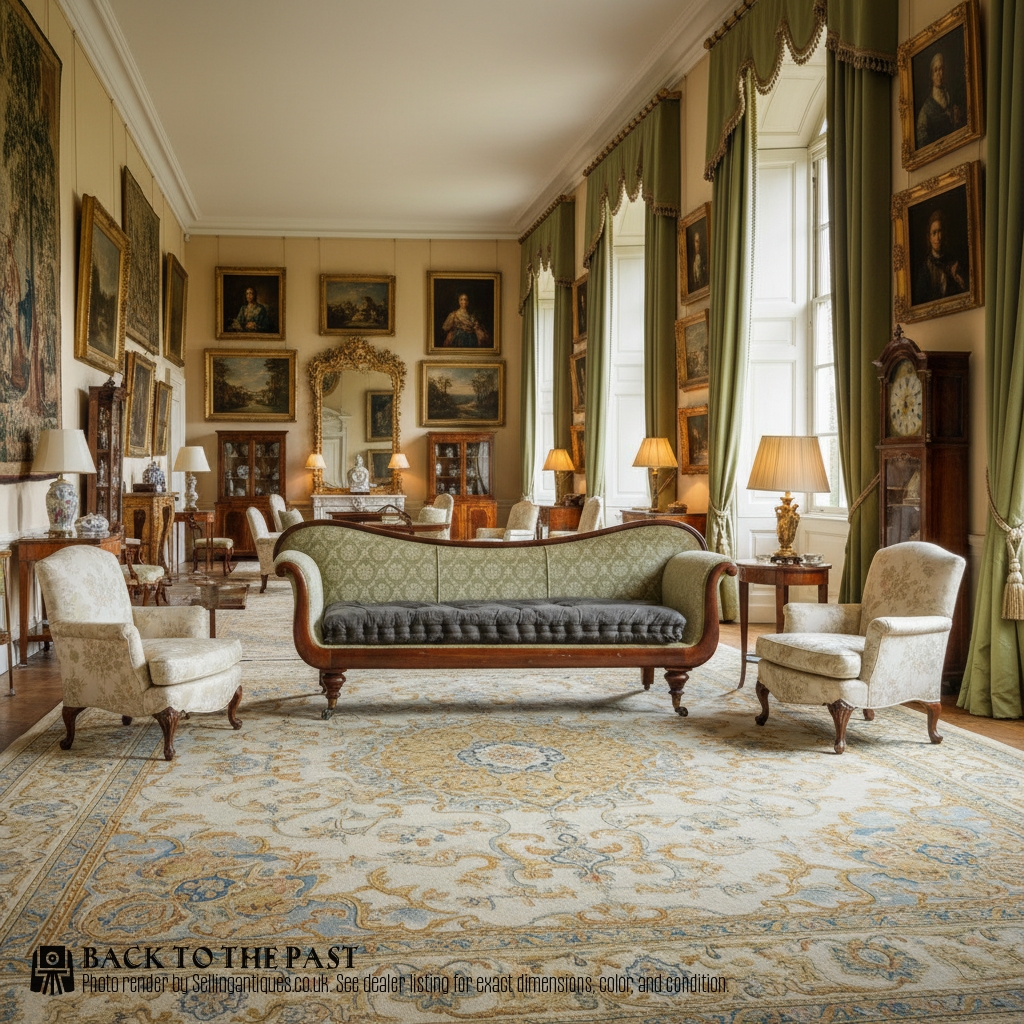
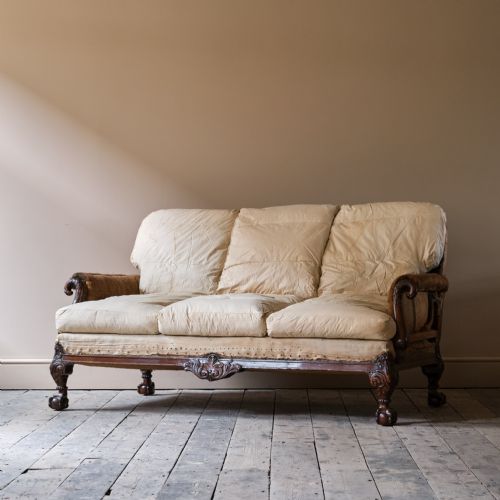
Large 19th Century Country House Sofa C1840, 19th Century
Priced at £3,800 from Desired Effect Antiques Ltd
Mortise and tenon joints hold the heavy carcase together under the strain of multiple sitters.
Hand carving shapes the visible timber, turning heavy square blocks into fluid scrolls and swept legs.
Examine the back rail connections. Heavy iron brackets often reinforce the internal corners on later nineteenth-century examples.
"Some early examples retain their original brass bolting mechanisms to dismantle the frame for easy transport."
"High sweeping ends feature on many Regency examples. These tall sides create an enclosed seating space distinct from open armchairs."
"Notice the depth of the seat. Many were built deep enough to double as a daybed."
Based on almost 25 years of Sellingantiques UK antique market data, Antique Mahogany Sofas appeared 3832 times (out of 1,100,000 antiques) which gives it a rarity score of 46/100.
This score measures scarcity within the Sellingantiques archive only and is not a survey of the entire antiques market, so these statistics may not be indicative of the general availability of Antique Mahogany Sofas elsewhere.
Traditional horsehair lasts decades if it stays dry. Damp environments cause the natural fibres to break down and lose their bounce.
Upholsterers only remove it when the underlying springs fail. They often wash and tease the original hair to reuse it in the same seat.
Most original brass castors are pegged into the timber legs. Removing them risks splitting the wood.
A restorer can fit protective cups beneath the wheels. This saves the floor and keeps the frame intact.
Sofas with flat unpolished backs were built to stand against the wall. The rear framework consists of plain pine or beech rather than expensive show-wood.
Pieces intended for the centre of a room have show-wood running all the way around. The back panel will be fully upholstered or feature polished mahogany.
Check the rear legs. If they rake backwards sharply, the seat needs the wall space to prevent it tipping.
Stripping antique mahogany ruins the patina built up over generations. The rich colour comes from years of wax and light exposure rather than modern stains.
Stripped frames often reveal uneven timber colours. Makers frequently joined different cuts of wood beneath the dark polished finish.
Clean the surface with a mild wax reviver instead. This lifts surface grime without destroying the character of the piece.
Please note: This Antique Mahogany Sofas guide and its associated pricing data are provided for general informational purposes only. It does not constitute formal financial, investment, or appraisal advice and should not be relied upon as the sole basis for any commercial activity, purchasing, or sales decisions. Sellingantiques.co.uk accepts no liability for any actions taken in reliance on this information. Always consult with a qualified professional or independent appraiser.
