



Antique Fireplace Inserts
The metal firebox and grate that sits inside a fireplace opening, made to hold a coal or log fire and framed by a separate surround.

Antique Fireplace Inserts
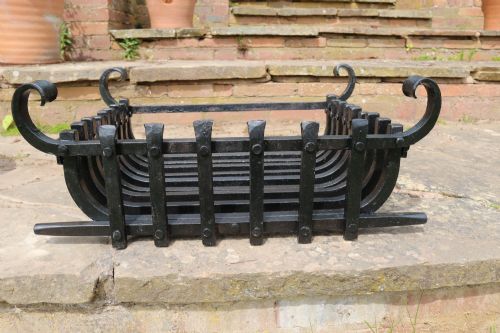
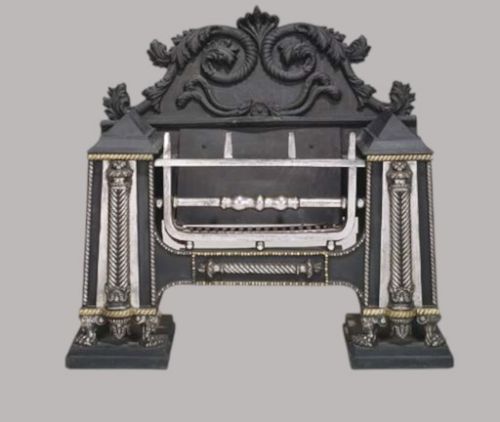
The heading is used broadly. It covers cast iron register grates and combination fireplaces, embossed copper fronts, free-standing fire baskets and hob grates, and complete surround-plus-insert pairings in marble, oak, mahogany or painted pine. The word "fire" appears in around two thirds of titles, while "insert" itself is far from universal.
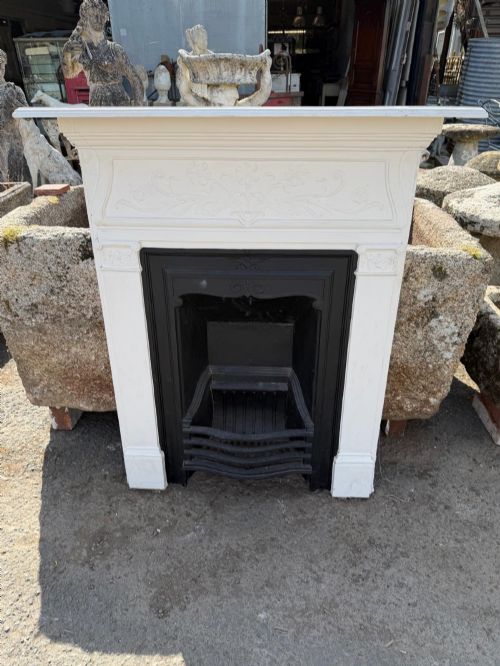
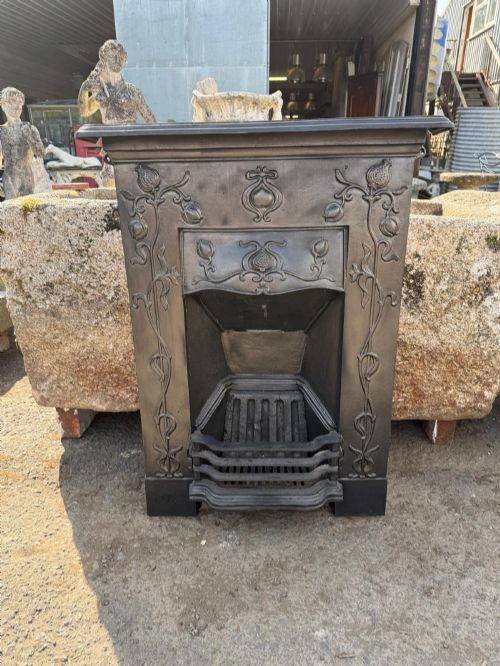
Cast iron dominates. "Cast" and "iron" run through the titles, and the Victorian cast iron insert or grate is the version you're most likely to meet: combination fireplaces, register grates, tiled inserts. The commonest single pattern in the samples is a cast iron insert paired with a marble fire surround.
Iron grates and baskets were made to hold a fire within a masonry opening. From the later 18th century founders produced complete metal units, grate and fireback and frame in one, that dropped into an opening. Coal burning and the narrower flue pushed the enclosed register type through the 19th century.
Dating is mostly by period rather than by year. "19th Century" is the largest single entry, with Victorian and Edwardian behind it, and only eight listings carry a clean year, those running 1880 to 1930. Single 18th Century, Georgian and Regency entries exist, so anything pre-Victorian is unusual. About four come to market a year on Sellingantiques, and 18 different dealers have listed one, so almost nobody carries them in quantity.
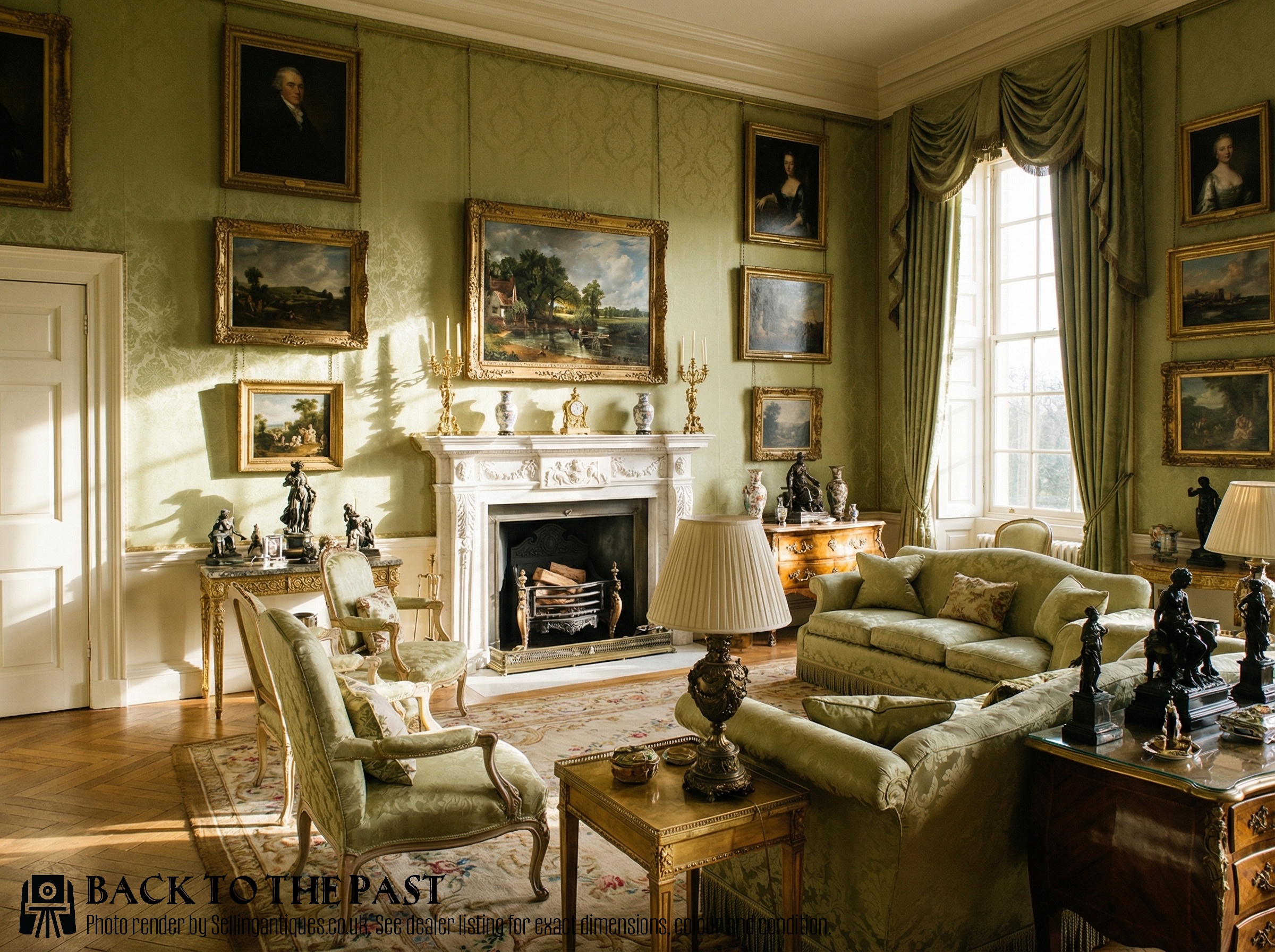
Top Of The Range
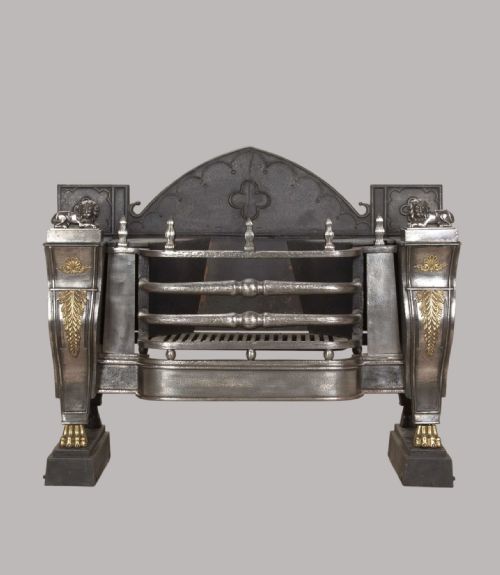
Free-standing classical grates sit above fitted inserts. The two highest sampled titles are both cast-and-wrought-iron "hob" fire grates of classical design, the word set in quotation marks both times, and a neoclassical brass-and-iron firegrate sits near them. A plain cast iron insert, on its own, sits a long way below.
Completeness lifts a piece. An insert listed with its marble fireplace, or a surround still holding its insert, carries more than a bare firebox, and a pair of Adam style surrounds with their inserts is the rarest configuration in the archive. Pre-Victorian attributions, few as they are, all sit in the upper part of the range.
Metal and scale do the rest. Worked copper and mixed metals climb: an embossed copper front reaches well up, while plain copper inserts stay lower, and ormolu and bronze each appear once. Size is flagged only in words, with "Small Proportions" near the bottom and "Large" on a fire basket and a firegrate much higher.
Antique Fireplace Inserts Retail Price Guide 2026
Typical UK retail prices for fireplace inserts, calculated from the Sellingantiques database of over a million retail prices indexed since 2003. This retail price guide relies exclusively on Sellingantiques data; no external sources or auction records are used, so the figures do not describe the wider market.
The earliest attribution in the Sellingantiques archive for this category is a single 18th Century piece. Anything pre-Victorian is a rarity.

The Antique Fireplace Inserts Glossary
- Insert or inset
- The metal unit that fits inside the fireplace opening, as distinct from the surround framing it. Dealers here also reach for grate, basket, front and combination.
- Surround
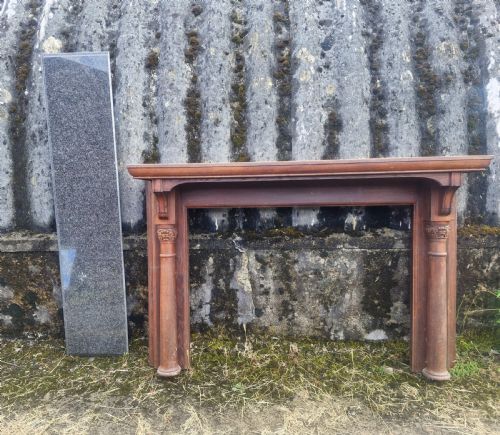
- The decorative frame of the opening, listed in marble, oak, mahogany, painted pine and mirror. It is sold with the insert as often as not.
- Register grate
- An enclosed insert with a plate or damper controlling the flue. One sampled title uses the term outright, and the type runs through the 19th century.
- Combination fireplace
- Insert and surround cast as one piece, so no separate frame is needed. Two sampled titles carry the term.
- Hob grate
- A grate with flat side platforms for warming. It turns up twice in the samples, both times on cast-and-wrought-iron grates at the top of the range.
- Andirons
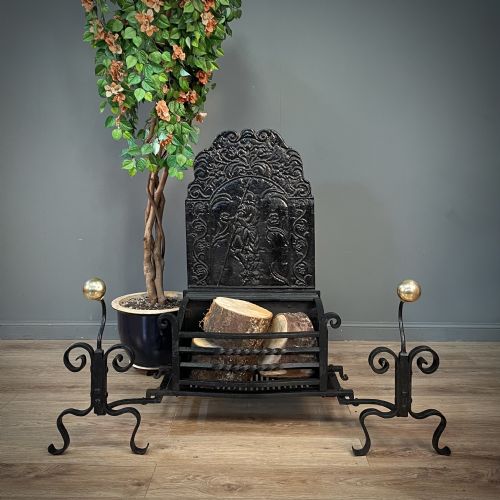
- The paired supports for logs, listed as part of hearth sets alongside a fire basket.
Antique Fireplace Inserts: Frequently Asked Questions
What does insert mean in these listings?
It's the metal unit that sits inside the fireplace opening, as opposed to the surround that frames it. On Sellingantiques the heading stretches wider than that, taking in grates, baskets, fronts and complete fireplaces.
Dealers often don't use the word at all. Grate, basket, inset, front, surround and combination all appear in titles instead.
Which type turns up most often?
Cast iron. "Cast" and "iron" run through the titles, and the Victorian cast iron insert or grate is the recurring form, whether register, combination or tiled.
The commonest single pattern in the samples is a cast iron insert paired with a marble fire surround, listed as a set.
Are copper fireplace pieces unusual?
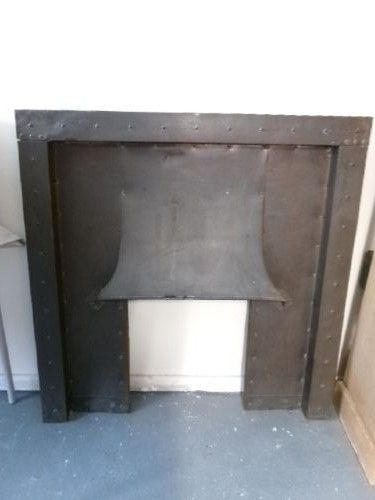
Copper turns up more often than you'd guess for a fireplace metal. Four sampled titles are copper, two of them dated 1910, including an embossed insert and an Arts and Crafts fire front with a hood canopy.
Worked copper sits higher than plain. An embossed copper insert reaches well up the range.
How old are most of these?
Dating is broad. "19th Century" is the largest single entry, with Victorian and Edwardian behind it, so those read as period attributions rather than years.
Only eight listings carry a clean year, and those fall between 1880 and 1930. Decade labels cluster at the 1910s, with the 1880s and 1920s behind.
Georgian, Regency and 18th Century entries each appear once.
Does the surround come with the insert?
Sometimes. Around a quarter of sampled titles pair the two, in marble, oak, mahogany or painted pine, and one 1930s surround is a mirror.
A pair of surrounds sold with their inserts is the rarest configuration in the archive, appearing once.
Why do so few of these come up?
It's a small and slow category. About four come to market a year on Sellingantiques.
Eighteen different dealers have listed one, close to a single piece apiece, so it isn't a field anyone stocks in depth.