


A 2026 Guide by Sellingantiques

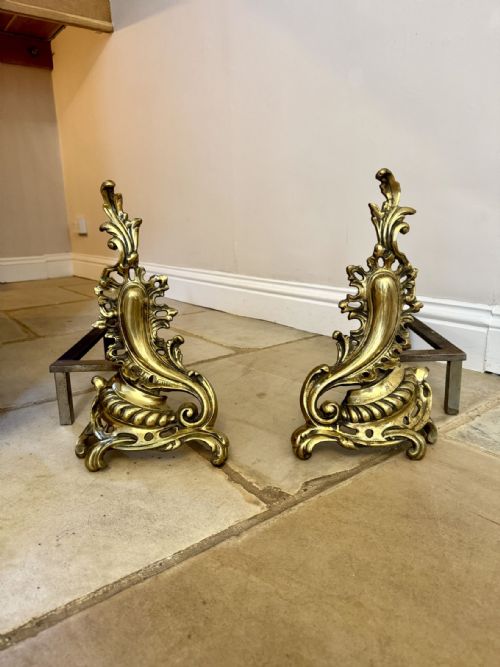
Pair of Hand-forged Antique Fire Dogs (Andirons), Circa 1900, 1900
Priced at £420 from Surrey Antiques by Gary J Hall
People have used metal firedogs since the Iron Age to manage open fires in great halls.
Antique andirons evolved into prominent decorative features. Fireplaces slowly became focal points in smaller domestic rooms.
Look at the shift from central hearths to wall chimneys in the sixteenth century.
Tall uprights served a dual purpose in earlier centuries. They held a spit in front of the flames for roasting meat.
Identifying specific makers isn't easy. Most antique andirons were made by anonymous local blacksmiths or regional foundries.
Cast examples from the nineteenth century sometimes bear foundry marks on the reverse of the uprights.
Look out for the Coalbrookdale foundry in Shropshire. They occasionally marked their heavy cast iron hearth equipment during the Victorian period.
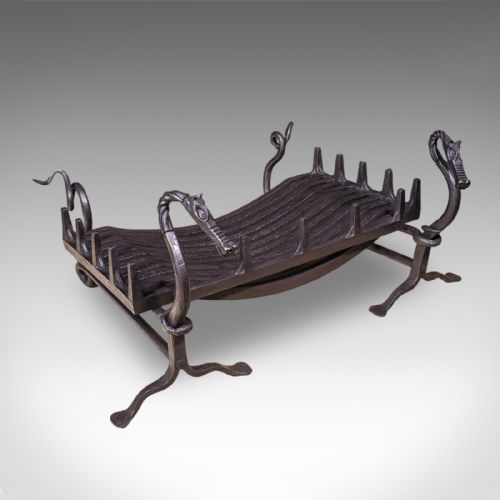
Large Pair of Unusual Andirons / Planters, 1900
Priced at £750 from Athey Antiques
The 2026 retail price guide for Antique Andirons is drawn from a proprietary archive of over 1.1 million retail prices indexed by Sellingantiques since 2003. This guide relies exclusively on their own internal data; no external sources or auction records are used.
Analysing nearly 25 years of UK antique market history alongside current retail values, the data indicates that typical UK retail prices for Antique Andirons range between £300 and £1,500. Entry-level prices generally fall under £300 and premium examples upwards of £1,500.
A sturdy horizontal billet bar reaches back into the fireplace to carry the burning wood.
Inspect the front uprights. These act as a stop to prevent logs rolling out onto the hearth floor.
Decorative finials sit on top of the front pillars. Often shaped like urns, spheres or animal heads.
Blacksmiths originally forged and hammered lengths of raw iron together while white-hot.
Sand casting meant liquid metal could be poured into prepared wooden patterns, producing identical halves.
Turn an eighteenth-century brass front over. They were often hollow-cast and bolted onto rougher iron billet bars to save expensive materials.
"Some large estate examples feature small cup-like indentations on top for warming a drink before bedtime."
"The term firedog comes from the earliest crude shapes. They crouched low on four legs resembling a resting animal."
"Proper placement improves chimney draught. It draws cool air underneath the fire bed to feed the flames."
Based on almost 25 years of Sellingantiques UK antique market data, Antique Andirons appeared 570 times (out of 1,100,000 antiques) which gives it a rarity score of 89/100.
This score measures scarcity within the Sellingantiques archive only and is not a survey of the entire antiques market, so these statistics may not be indicative of the general availability of Antique Andirons elsewhere.
Start by wiping off loose soot with a dry cotton cloth. You'll want to avoid using harsh modern chemicals on old brass fronts.
Use a mild metal polish sparingly on the decorative finials if they look dull. Leave the heavy iron billet bars alone, as the fire will just burn off anything you apply.
Measure the depth of your firebox first. The rear billet bars need to sit comfortably inside without hitting the back wall.
The front uprights should stand proud of the fire itself but remain fully on the hearthstone.
Using multiple pairs across one hearth was standard historical practice in large estate fireplaces. It supports longer logs evenly across a wider span.
You just line them up parallel to each other. The air still flows underneath without any issue. This setup fills a wide inglenook visually while remaining highly functional.
A competent blacksmith can easily weld new iron stock onto the back of an original upright. It is a standard repair for antique hearth equipment.
The repair sits hidden under the logs and ash anyway. It saves the decorative fronts from being thrown away.
Please note: This Antique Andirons guide and its associated pricing data are provided for general informational purposes only. It does not constitute formal financial, investment, or appraisal advice and should not be relied upon as the sole basis for any commercial activity, purchasing, or sales decisions. Sellingantiques.co.uk accepts no liability for any actions taken in reliance on this information. Always consult with a qualified professional or independent appraiser.
