


A 2026 Guide by Sellingantiques

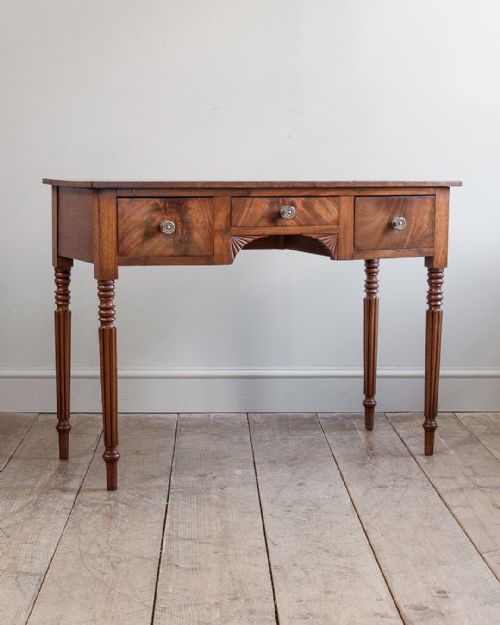
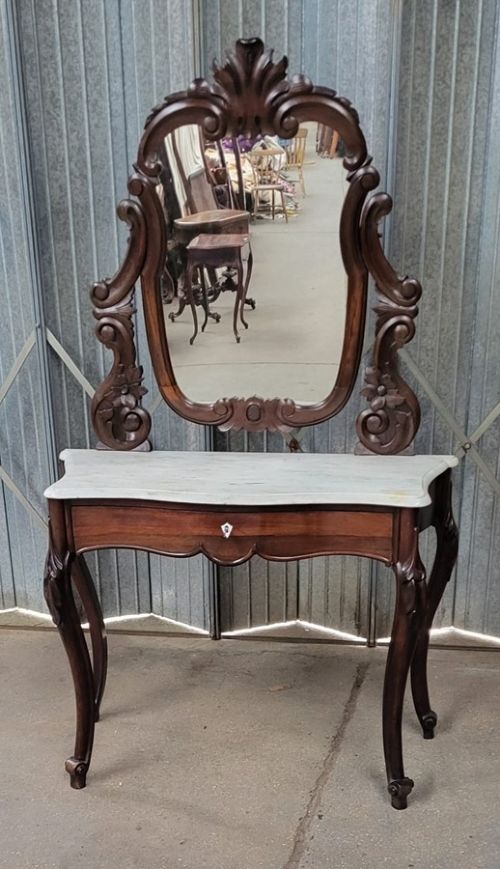
Quality Victorian Antique Carved Mahogany Dressing Table, 1860
Priced at £1,885 from London City Antiques
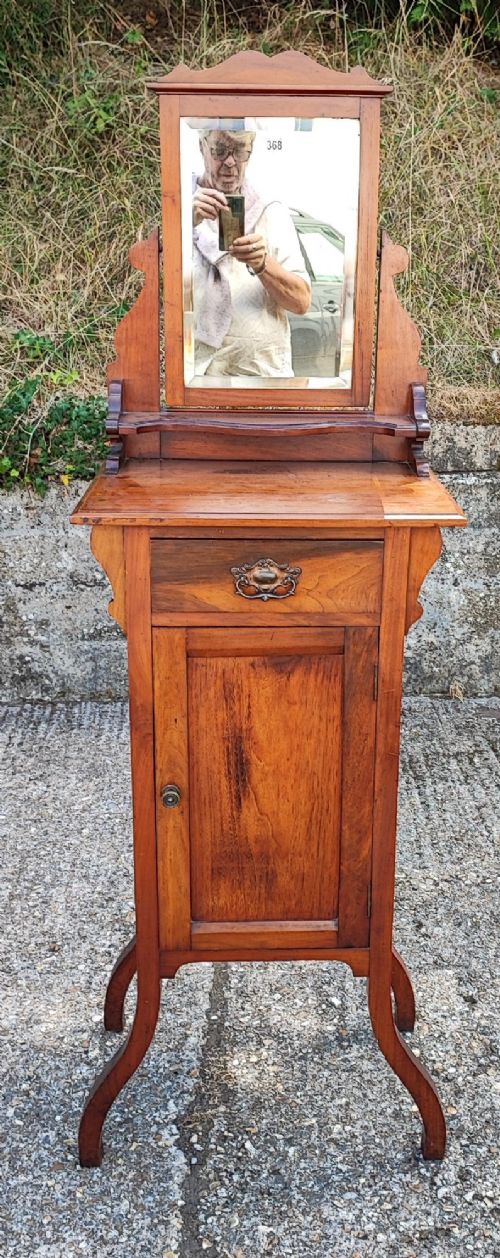
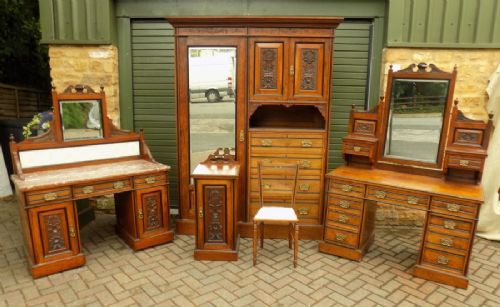
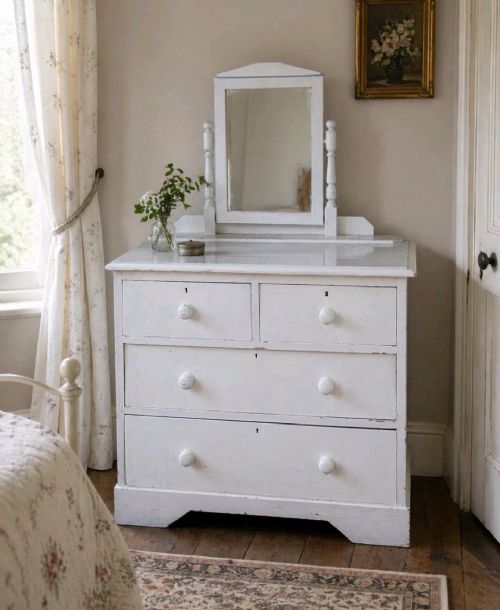
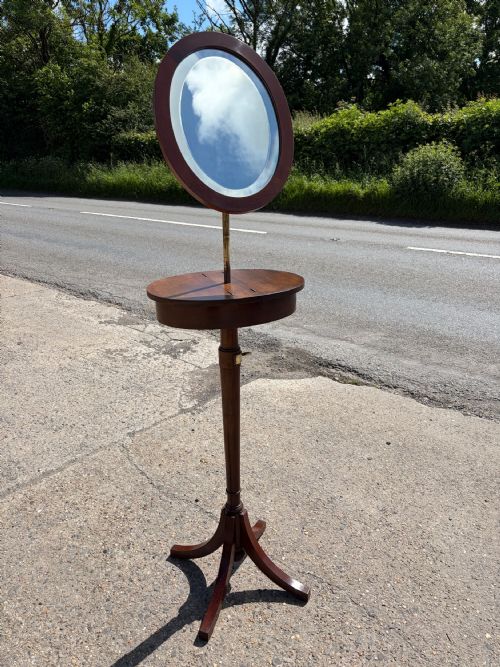
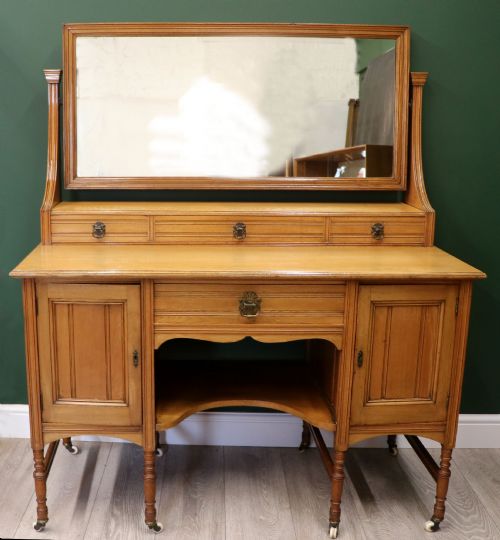
Notice the shift from small portable toilet glasses to large integrated suites.
Earlier examples often stood in the window for light, rather than against a wall.
Look at the evolution over the era. The form expanded from delicate stands into substantial architectural statements reflecting the growth of middle-class homes.
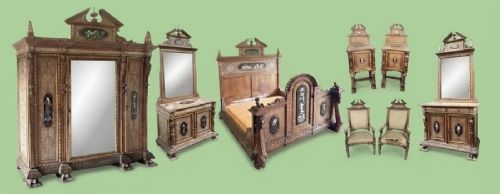
Late Victorian dressing tables matched whole bedroom suites, standardising domestic habits.
Gillows of Lancaster and London supplied many high-quality Victorian dressing tables. Their stamped pieces often feature good timber selection and precise cabinetwork.
Holland & Sons operated throughout the nineteenth century. They provided solid, well-proportioned bedroom suites to government buildings and private clients alike.
Maple & Co expanded rapidly in the later period. They retailed large numbers of these tables, sometimes applying their trade label to the drawer edges.
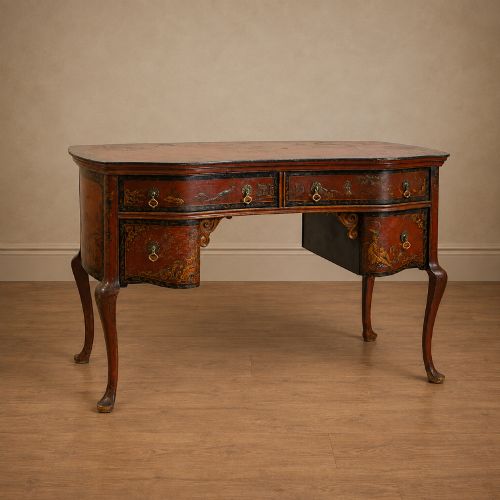
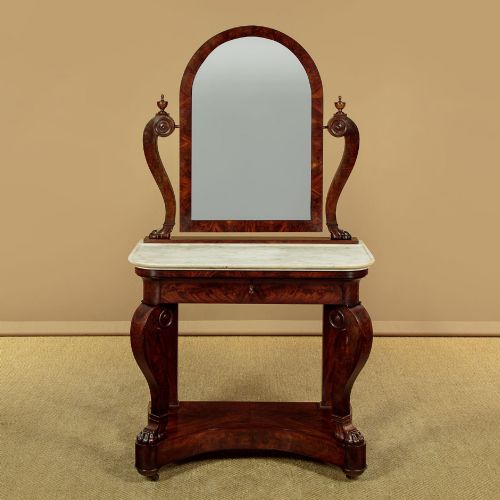
Mahogany Duchess Dressing Table, 19th Century
Priced at £1,475 from Shackladys Antiques
The 2026 retail price guide for Victorian Dressing Tables is drawn from a proprietary archive of over 1.1 million retail prices indexed by Sellingantiques since 2003. This guide relies exclusively on their own internal data; no external sources or auction records are used.
Analysing nearly 25 years of UK antique market history alongside current retail values, the data indicates that typical UK retail prices for Victorian Dressing Tables range between £300 and £1,800. Entry-level prices generally fall under £300 and premium examples upwards of £1,800.
Central pivoting mirrors hung between wooden uprights. Some tilt on friction hinges, others rely on brass tension screws.
Small raised banks of jewel drawers sit directly on the top surface, flanking the main glass.
A recessed central kneehole gives space to pull up a chair. Large pedestals flank this gap to hold bulkier garments.
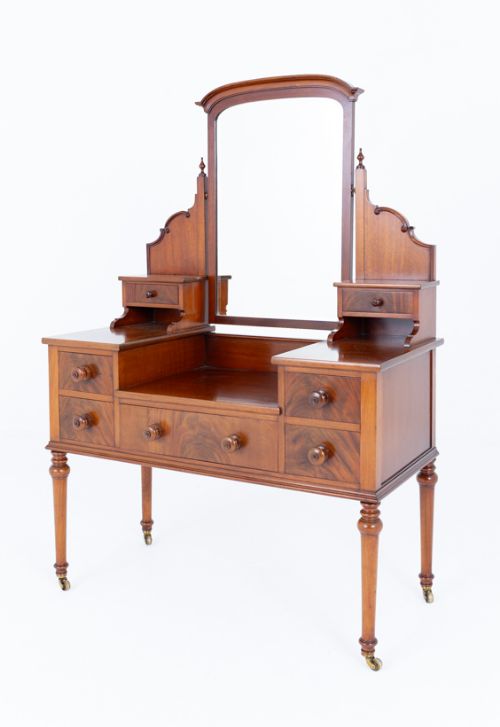
19th Century Mahogany Dressing Table, 19th Century
Priced at £1,195 from Shackladys Antiques
Early Victorian dressing tables rely on hand-sawn veneers laid over pine carcases using hot animal glue.
Steam-powered machinery changed the trade. Circular saws allowed thicker, more uniform cuts of timber for solid tops and shaped bracket feet.
Observe the drawer construction. Later nineteenth-century examples often feature machine-cut dovetails, leaving a slightly different pattern on the timber ends.
"Some hidden compartments exist. Small false bottoms occasionally sit under the upper jewel drawers to secure rings or sovereigns."
"You can often detach the mirror uprights. Turn the wooden finials at the top to reveal long iron screws holding the assembly together."
"Casters are common under the heavy bases. These allowed maids to pull the furniture away from the wall for daily sweeping."
Based on almost 25 years of Sellingantiques UK antique market data, Victorian Dressing Tables appeared 2435 times (out of 1,100,000 antiques) which gives it a rarity score of 61/100.
This score measures scarcity within the Sellingantiques archive only and is not a survey of the entire antiques market, so these statistics may not be indicative of the general availability of Victorian Dressing Tables elsewhere.
Use a soft damp cloth for the glass. Avoid spraying modern window cleaners directly onto the mirror. The liquid can pool at the bottom edge and seep behind the glass, damaging the old silvering.
Dry it immediately with a separate cloth. The wooden frame needs to stay dry to prevent the veneer lifting.
Sitting close to the mirror was less important when these were built. People often sat slightly back, or perched on a low stool rather than a standard chair.
The deep frieze drawer takes up the space where your knees naturally go. Some later Victorian pieces dropped the central drawer entirely to create a taller empty arch for seating.
You can ask a glazier to fit new glass. They remove the wooden back panel and drop a fresh piece into the rebate.
Many people prefer keeping the original plate. The grey spotting is part of the character. Modern glass can look glaringly bright against old wood.
Friction wears down the wooden runners over the decades. The drawer drops slightly and starts scraping against the frame, creating that wood dust.
Rubbing a candle stub along the running edges helps ease minor sticking.
If the wood is heavily worn, a cabinetmaker will need to glue thin strips of new timber along the runners to build the height back up.
Please note: This Victorian Dressing Tables guide and its associated pricing data are provided for general informational purposes only. It does not constitute formal financial, investment, or appraisal advice and should not be relied upon as the sole basis for any commercial activity, purchasing, or sales decisions. Sellingantiques.co.uk accepts no liability for any actions taken in reliance on this information. Always consult with a qualified professional or independent appraiser.
