


A 2026 Guide by Sellingantiques
King Edward VII reigned for just nine years. Furniture from this short period bridges heavy Victorian tastes and the lighter styles that followed.
Smaller proportions fitted the new suburban houses built around major cities. The antique Edwardian dresser shifted towards modern domestic convenience.
A strong market reaction against the dark mahogany of previous decades. Lighter woods and painted finishes gained traction among middle-class buyers.
Regional factories produced these in large numbers using steam-powered machinery.
Heal & Son operated out of Tottenham Court Road during this period. They supplied simplified oak dressers to progressive buyers.
Unvarnished oak pieces with heart-shaped cutouts shown in Liberty catalogues. They championed the Arts and Crafts influence.
Assume most examples carry no maker marks at all. Anonymous wholesale catalogues fed local department stores across the country.
The 2026 retail price guide for Antique Edwardian Dressers is drawn from a proprietary archive of over 1.1 million retail prices indexed by Sellingantiques since 2003. This guide relies exclusively on their own internal data; no external sources or auction records are used.
Analysing nearly 25 years of UK antique market history alongside current retail values, the data indicates that typical UK retail prices for Antique Edwardian Dressers range between £500 and £2,000. Entry-level prices generally fall under £500 and premium examples upwards of £2,000.
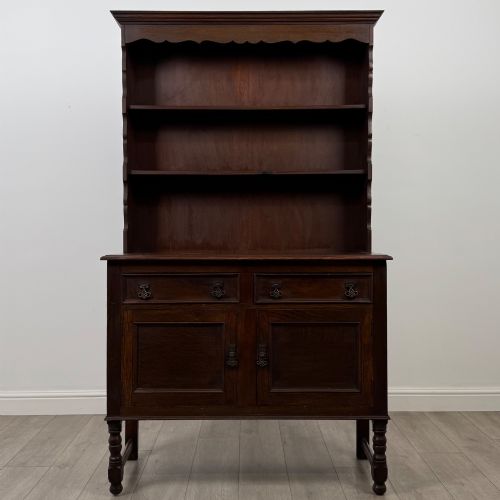
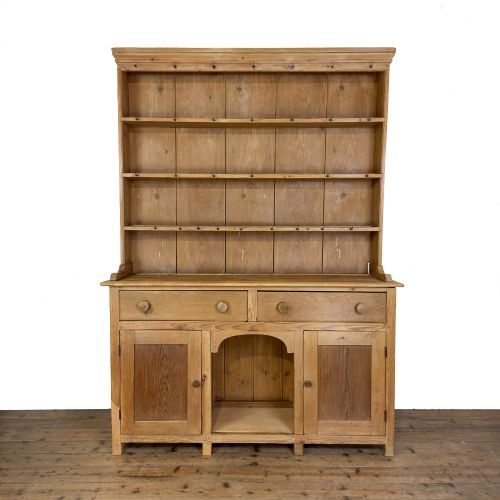
Open upper plate racks with shallow grooves routed into the shelf boards. Plates stand upright securely against the back.
Base sections of an antique Edwardian dresser often split into two cupboards flanking a central bank of graduated drawers.
Inspect the cornice profile. You will see simple stepped mouldings rather than the heavy carved pediments of earlier decades.
Machine-cut dovetails became standard on drawer boxes. Even smaller workshops adopted mechanical routers to speed up assembly.
Turn the drawer upside down. Factory pieces use thin applied wooden runners rather than solid grooved sides.
Stable flat surfaces for drawer bottoms. Plywood started appearing in the late Edwardian years for blind panels.
"Green baize lining in the shallow top drawers. This soft fabric prevented silver cutlery from rattling and scratching."
"Small iron hooks dotting the upper rack face were originally screwed in to hang ceramic teacups by their handles."
"Examine unpainted oak versions for a rich dark tone. Fuming with ammonia reacted with natural tannins in the wood."
Based on almost 25 years of Sellingantiques UK antique market data, Antique Edwardian Dressers appeared 583 times (out of 1,100,000 antiques) which gives it a rarity score of 89/100.
This score measures scarcity within the Sellingantiques archive only and is not a survey of the entire antiques market, so these statistics may not be indicative of the general availability of Antique Edwardian Dressers elsewhere.
Oak is a dense timber, making these substantial pieces quite difficult to move. A standard base unit alone can weigh upwards of eighty kilograms.
Always remove the drawers and the top rack before attempting to lift one. The top section usually lifts away from the base without needing tools.
Stripping paint off early furniture carries risks. The chemicals required can raise the wood grain and leave a rough surface that needs extensive sanding.
Edwardian pine examples were sometimes painted from new to suit hygienic kitchen trends. If the paint is original, removing it takes away a layer of domestic history.
Bare pine underneath often looks patchy. Modern sealants rarely replicate the warm tone of century-old wax.
The shelves on these are fixed into the side supports. Builders housed them into routed joints and nailed them securely from the outside.
You cannot adjust the heights to fit taller jugs or modern plates.
Uneven floors pose a real problem for rigid wooden furniture. The carcase will twist slightly if all four feet do not sit flat, which stops the cupboard doors from closing squarely.
You need to pack the gaps under the feet with wooden shims. Once the base sits level and firm, the top rack will follow suit.
Many old dressers show wear on the back legs from sitting on damp solid floors. Check that the feet have not rotted before levelling the base.
Please note: This Antique Edwardian Dressers guide and its associated pricing data are provided for general informational purposes only. It does not constitute formal financial, investment, or appraisal advice and should not be relied upon as the sole basis for any commercial activity, purchasing, or sales decisions. Sellingantiques.co.uk accepts no liability for any actions taken in reliance on this information. Always consult with a qualified professional or independent appraiser.
