


A 2026 Guide by Sellingantiques
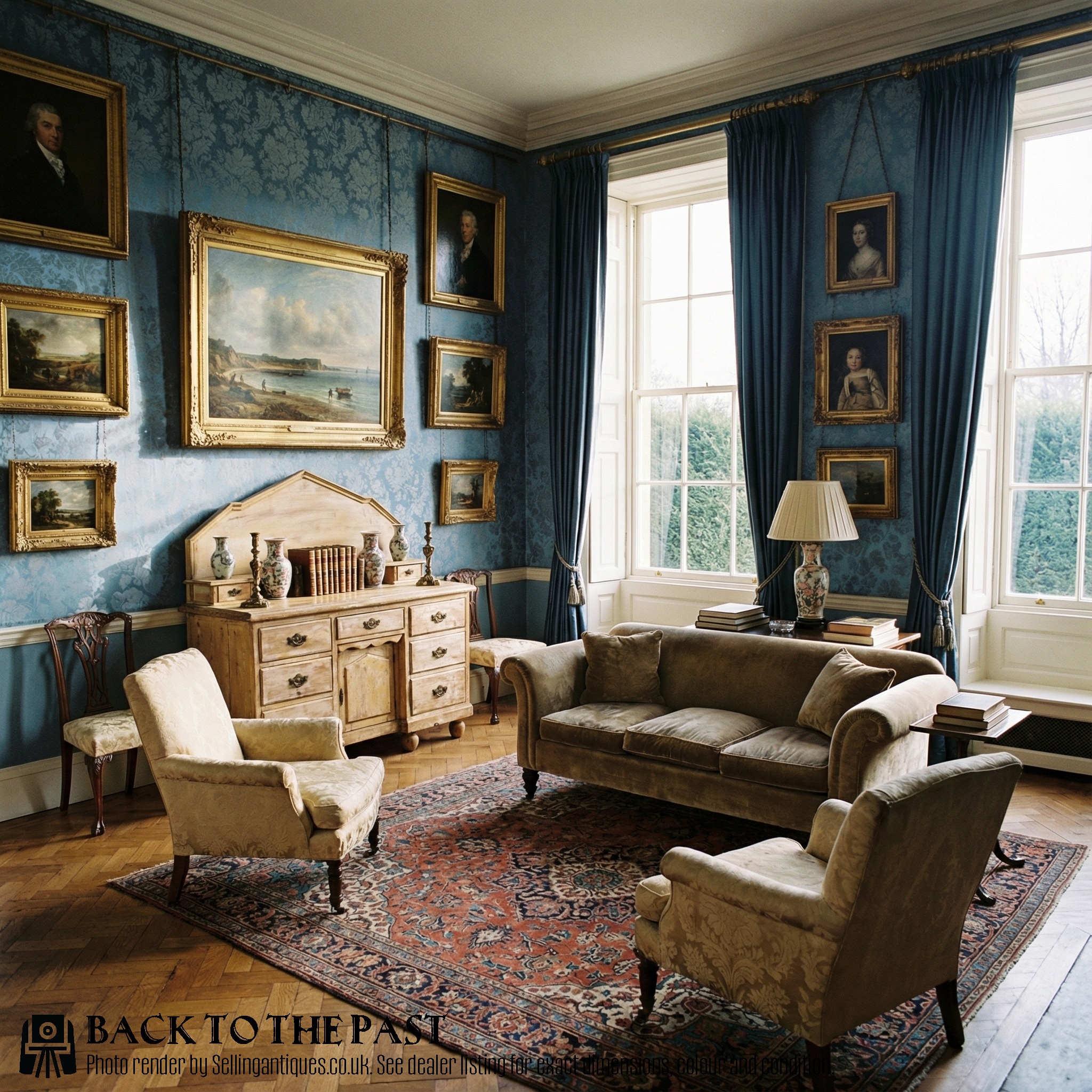
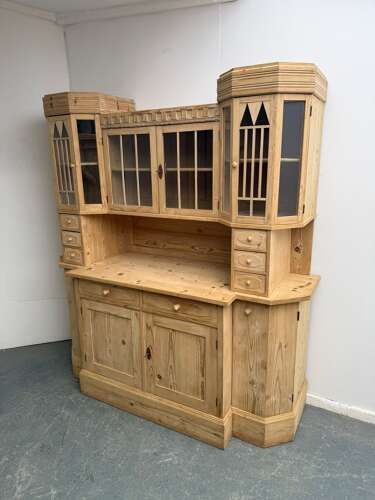
Victorian Painted Pine Dresser, Victorian
Priced at £1,275 from The Old Yard
Born in the farmhouses and estate kitchens of rural Europe.
Look at how the form shifted over the eighteenth century from simple work surfaces to grander display pieces.
Antique painted dressers gave working homes a practical way to store food and show off pewter or earthenware.
Wealthier households sometimes relegated these painted pieces to the servants' hall when mahogany became fashionable.
Documented makers rarely signed rural domestic furniture, meaning most pieces are attributed to geographical regions rather than specific names.
You will find distinct stylistic traits pointing to Montgomeryshire, the Yorkshire Dales or the West Country instead of a known workshop.
Estate carpenters produced many antique painted dressers for tied cottages using standard templates passed down through apprenticeships.

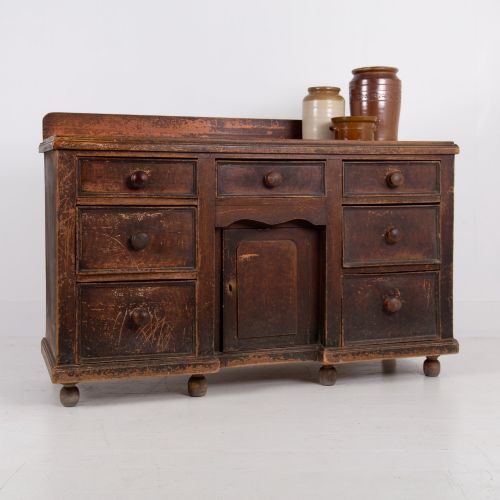
Early 20th Century Painted Pine Dresser & Rack, 1930
Priced at £875 from Brookside Antiques
The 2026 retail price guide for Antique Painted Dressers is drawn from a proprietary archive of over 1.1 million retail prices indexed by Sellingantiques since 2003. This guide relies exclusively on their own internal data; no external sources or auction records are used.
Analysing nearly 25 years of UK antique market history alongside current retail values, the data indicates that typical UK retail prices for Antique Painted Dressers range between £800 and £3,900. Entry-level prices generally fall under £800 and premium examples upwards of £3,900.
Plate racks sit directly on the base or rise above a shallow back piece, designed to hold plates upright against the wall.
Notice the pot board on some Welsh examples, offering an open lower shelf instead of closed cupboards.
A row of spice drawers frequently lines the bottom of the rack to catch small items.
Base sections rely on pegged mortise and tenon joints to withstand heavy daily use in busy working kitchens.
Drawers feature large hand-cut dovetails, often with thick sides and thick bottoms nailed directly to the back piece.
Examine the back of the plate rack where wrought iron rosehead nails usually hold the horizontal boards to the uprights.
"Traces of the original vibrant blue or green paint often survive inside the cupboards where sunlight never reached."
"The grooved shelves were carefully angled to tip the plates backwards, stopping them rattling when heavy carts passed outside."
"Cupboard doors were often painted in contrasting colours to the main carcase to brighten dark winter rooms."
Based on almost 25 years of Sellingantiques UK antique market data, Antique Painted Dressers appeared 1308 times (out of 1,100,000 antiques) which gives it a rarity score of 77/100.
This score measures scarcity within the Sellingantiques archive only and is not a survey of the entire antiques market, so these statistics may not be indicative of the general availability of Antique Painted Dressers elsewhere.
Most dealers advise leaving the surface as it is found. The accumulated layers form a historic record that gives the piece its character.
Stripping often reveals a patchwork of mismatched secondary woods underneath. The original makers didn't intend this timber to be seen bare.
The base sections were built to hold heavy iron cooking pots and stacks of dense earthenware. Their solid timber carcases and thick shelf boards are more robust than modern units.
You'll want to check the shelf supports inside the cupboards anyway. If woodworm has weakened the interior cleats, a carpenter can easily add new internal battens without altering the outward appearance.
The rack usually rests directly on top of the base. It slots securely into wooden shoes that are nailed or pegged into the back edge of the top board.
Some regional variations feature racks built as a single continuous unit with the base. Others simply screw straight into the wall behind, meaning they're not structurally tied to the bottom section at all.
Dry, flaking paint needs careful handling to prevent further loss. Keep stiff brushes away. Use a soft artist's brush and a low-suction vacuum cleaner to lift loose dust without pulling at the unstable edges.
Conservation wax can help consolidate a powdery surface. You'll find a very thin coat applied over the flaking areas stops the historic pigments from lifting further.
Please note: This Antique Painted Dressers guide and its associated pricing data are provided for general informational purposes only. It does not constitute formal financial, investment, or appraisal advice and should not be relied upon as the sole basis for any commercial activity, purchasing, or sales decisions. Sellingantiques.co.uk accepts no liability for any actions taken in reliance on this information. Always consult with a qualified professional or independent appraiser.
