



Antique Painted Desks
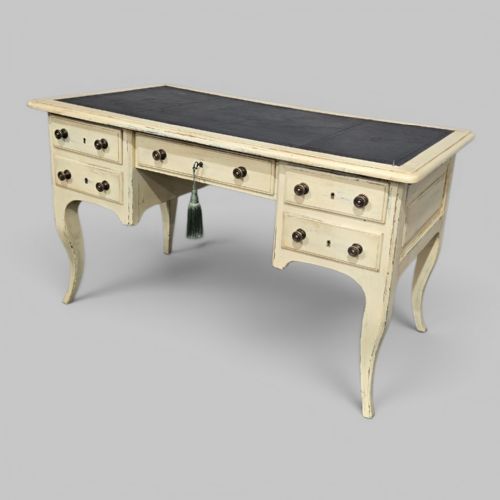
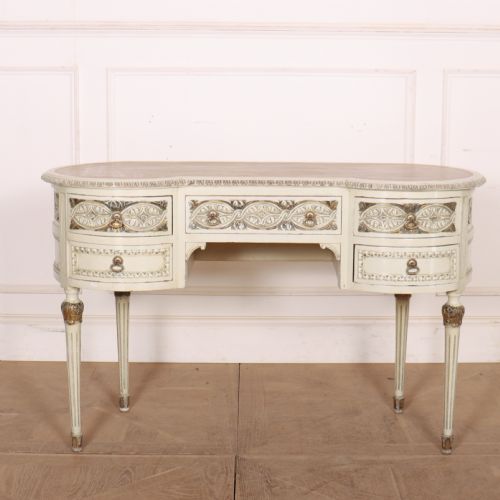
A desk whose decoration is paint rather than veneer or polish, whether a plain softwood carcass in its working colour or a pale hardwood desk given hand-painted ornament as its finish.

Antique Painted Desks
Painted decoration on desks ran on two tracks. Utilitarian softwood furniture was painted from the eighteenth century onwards, to disguise cheap timber and protect it. Fashionable cabinetmakers, from the later eighteenth century, applied hand-painted neoclassical ornament to pale hardwoods as a finish in its own right. Both traditions came back strongly in the Edwardian period.
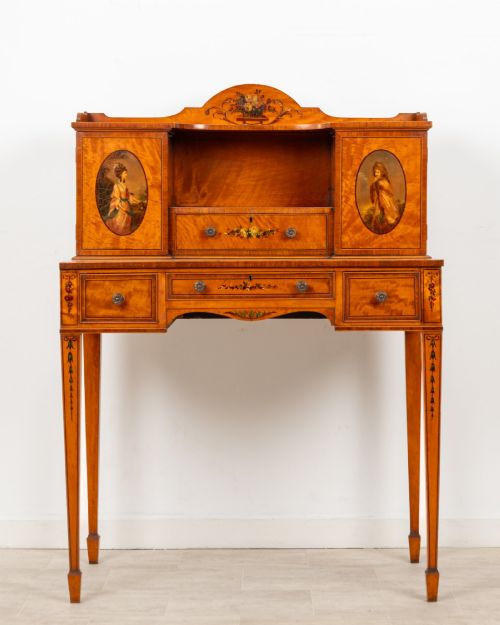
That split shows up plainly in the archive on Sellingantiques. Satinwood appears in eighteen of sixty-eight titles and pine in sixteen, almost equally common, so the heading really covers two traditions of painting sharing one name. The satinwood desks carry swags, floral sprays and neoclassical ornament; the pine ones are described as being in original paint.
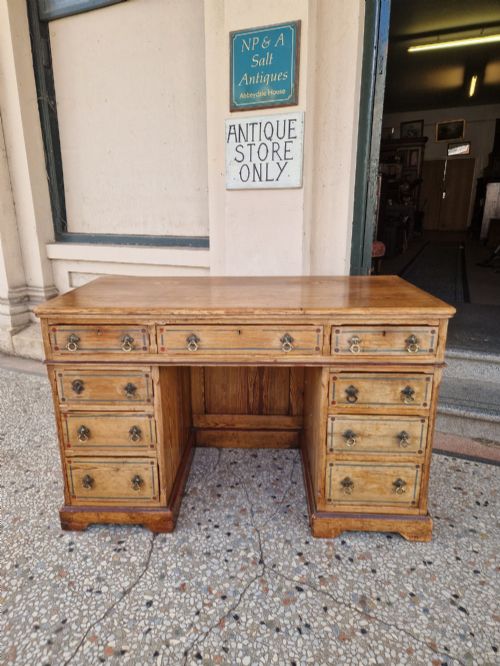
The desk you are most likely to meet is a painted kneehole or pedestal desk of the later nineteenth or early twentieth century. Kneehole appears in ten titles, and pedestal desks recur alongside it. England leads as a stated origin, ahead of France, with French kneehole desks, a bureau plat, Louis XV style pieces and mahogany cylinder bureaux. Sweden appears once.
Dating is often approximate. Twenty-eight listings carry a clean year, spanning 1860 to 1950, but "19th Century" alone accounts for eighteen listings, more than any single decade. Where decades are given they gather on the 1880s, 1890s and 1900s. Georgian and Regency labels are few, and one of them describes painted decoration applied later to an older desk, so early dates read as the dealer's own attribution.
Range And Ranking
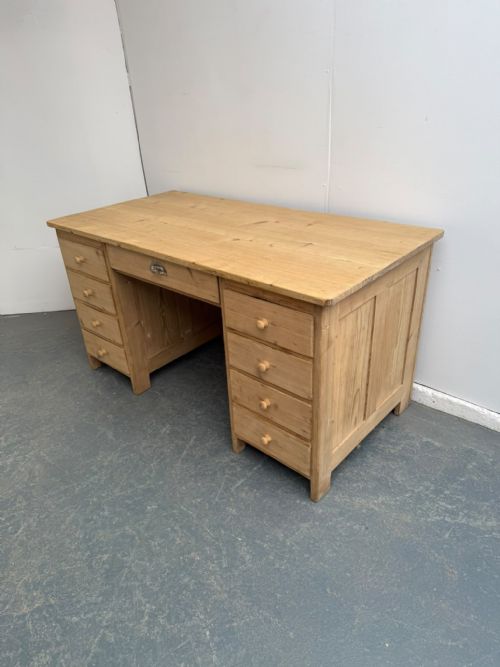
Timber sets the order. Every listing above the upper-middle of the range names satinwood; the pine desks sit at the bottom, two of them offered as large desks still awaiting finish, advertised "to Paint / Wax", a form of listing peculiar to that end. Form reinforces it: the six Carlton House desks, all satinwood and all painted, hold the very top, while the four clerks' desks hold the very bottom.
Then the painting itself. Titles that name the subject sit well above the plain "painted desk" listings, whether that is swags and musical trophies, floral work, chinoiserie or parcel gilding. Within the pine group the ranking works differently, and the phrase that lifts a desk is original paint rather than a later scheme.
Scale and finish play a part too. Large turns up on several of the higher listings, and two satinwood desks are described as freestanding, which implies the decoration was carried round onto the back rather than stopping where a wall would hide it.
Antique Painted Desks Retail Price Guide 2026
Typical UK retail prices for painted desks, calculated from the Sellingantiques database of over a million retail prices indexed since 2003. This retail price guide relies exclusively on Sellingantiques data; no external sources or auction records are used, so the figures do not describe the wider market.
One-offs from the archive: a painted host stand catalogued with the desks, a clerks' desk sold with its matching stool, and a parcel-gilt Victorian desk.

The Antique Painted Desks Glossary
- Kneehole desk
- A freestanding desk with a recessed central opening for the sitter's legs between two banks of drawers. It appears in ten titles here.
- Pedestal desk
- A flat-topped desk resting on two drawer-fitted pedestals, and a form that recurs alongside the kneehole desks.
- Original paint
- The paint surface the piece was given when made, rather than a later scheme. The phrase is used repeatedly of the pine desks.
- Satinwood
- A pale golden close-grained hardwood, the usual ground for painted decoration at the upper end of this category.
- Carlton House desk
- A writing desk with a D-shaped superstructure of small drawers curving round the back and sides of the top. Six turn up in the archive, all satinwood.
- Bureau plat
- A French flat writing table with drawers in the frieze and no superstructure.
Antique Painted Desks: Frequently Asked Questions
Which timbers turn up most in this category?
Satinwood and pine, in near-equal numbers across the sixty-eight listings. Satinwood carries the hand-painted floral and neoclassical work; pine carries the country and clerks' desks described as being in original paint.
Mahogany appears in the French cylinder bureaux, and one French desk is carved oak.
What is a Carlton House desk?
A writing desk with a D-shaped tier of small drawers curving round the back and sides of the top, leaving the writing area open in the middle.
Six turn up in the archive, always in satinwood and always painted, clustered around 1900. They sit at the top of the range.
How old are painted desks usually?
The dated field runs from 1860 to 1950, and twenty-eight of the listings carry a clean year. The earliest is a single desk of circa 1860; the latest is a French kneehole desk dated 1950.
Much of the profile is looser than that. "19th Century" is the largest single label, with Victorian, Edwardian, Georgian and Regency used as periods rather than years. Where decades are given they gather on the 1880s, 1890s and 1900s.
Are painted desks English or French?
England leads as a stated origin with fifteen titles, ahead of France with twelve. Sweden appears exactly once, the rarest origin in the archive.
The French group covers kneehole desks, a bureau plat, Louis XV style pieces and mahogany cylinder bureaux.
Do the desks name a maker?
No. Across all sixty-eight listings no cabinetmaker, decorator or retailer is named, so the descriptions rest on form, timber and the painted decoration instead.
That makes the wording of a title carry the weight: satinwood or pine, kneehole or Carlton House, floral or chinoiserie.
What unusual painted desks have appeared?
A painted host stand catalogued among the desks, a clerks' desk sold with its matching stool, and a parcel-gilt Victorian desk.
Also a Georgian desk painted later in a bamboo design, and a French Louis XV style cylinder escritoire. About nine painted desks come to market on Sellingantiques in a year, listed by thirty different dealers.