



Antique Campaign Desks
A campaign desk is a writing desk built to travel with its owner on military service or a long voyage, taking apart, folding, or armoured with brass at the corners.
Antique Campaign Desks
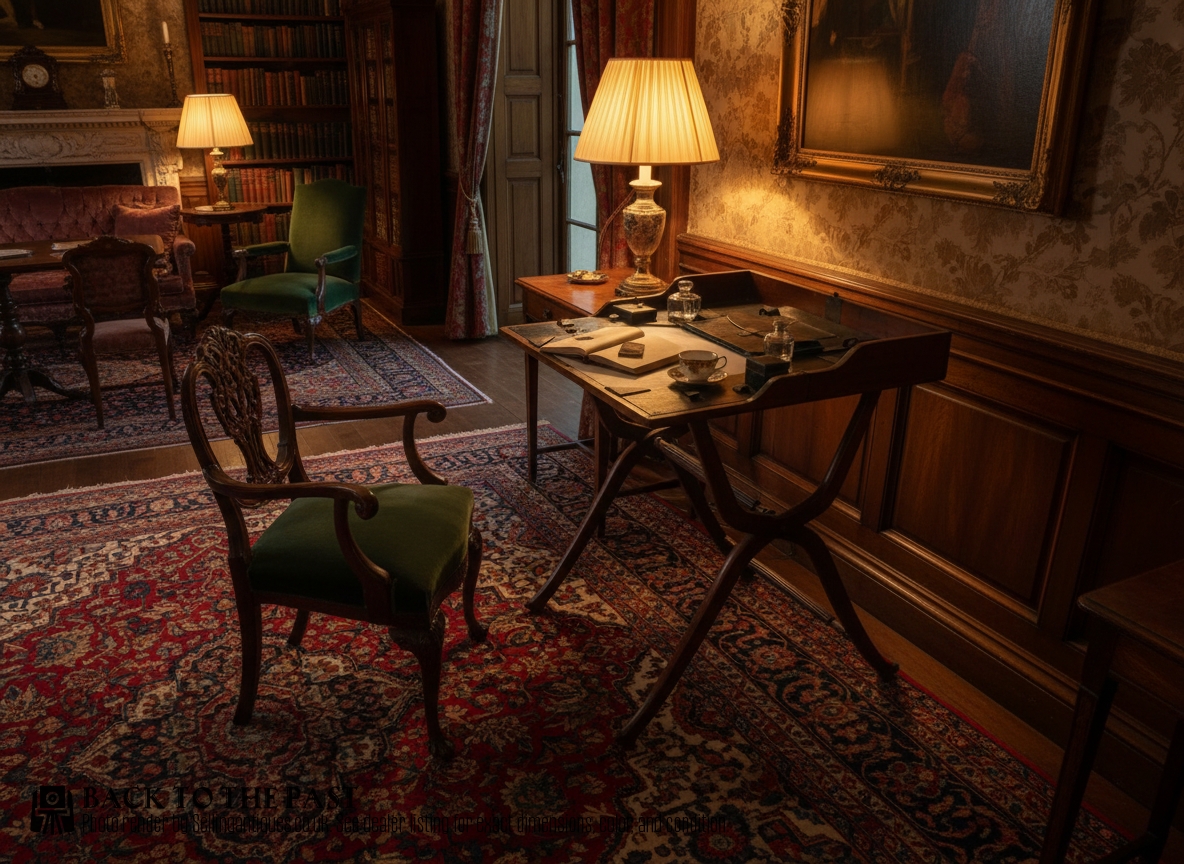
Campaign furniture was made to be carried. It came apart into sections, folded down, or took sunken handles and brass corners so it survived being loaded and unloaded. The desk form travelled with British colonial and naval service through the nineteenth century, and went on being made in the same manner long after the practical need had gone.
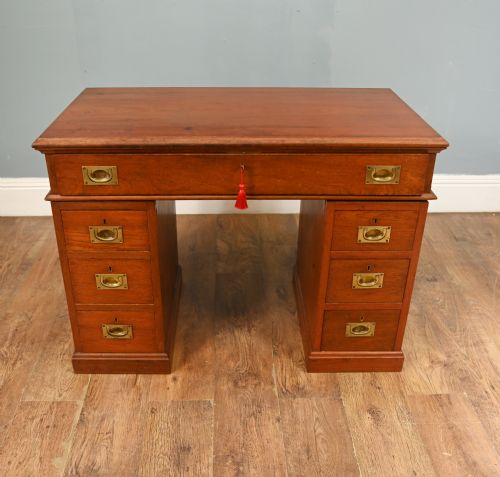
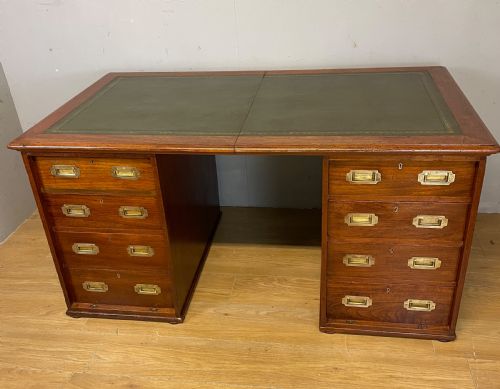
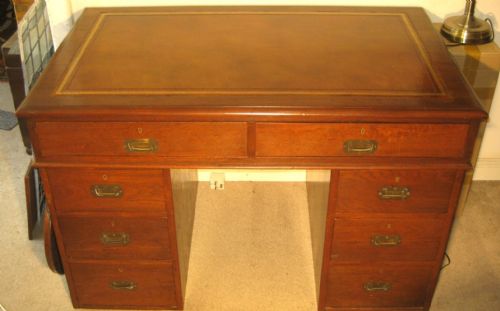
The desk you are most likely to meet under this heading is a mahogany pedestal desk with military-style fittings and often a leather-inset writing surface. Mahogany is named in just over half of all titles on Sellingantiques, military in a good number of them, and pedestal in around a quarter. Victorian and nineteenth-century dating covers most of the period entries.
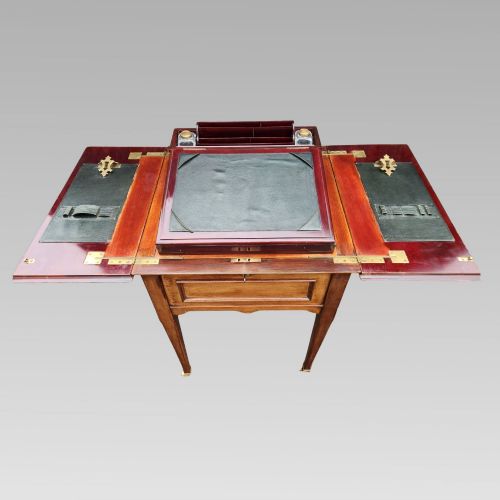
A smaller group genuinely travels: folding writing tables, desks on stands, three-part construction and the odd metamorphic piece. Folding appears in about one title in eight. Alongside these sit desks described as "campaign style" or "campaign type", made in the idiom rather than for service, and clustered in the 1900s to 1930s dates.
Beyond the mahogany default, teak is the second timber, with rosewood, walnut, oak, ebonised, amboyna and padouk examples turning up too. Naval wording surfaces occasionally: a ship's naval desk, two naval pedestal desks, a ship's purser's desk. About fourteen campaign desks come to market in a year, listed by a wide spread of dealers rather than a few specialists.
Where The Range Splits
Whether the desk actually travels is the strongest divide. Metamorphic, three-part, folding and desk-on-stand construction runs high in the range. Titles that say "campaign style handles", "in the campaign style" or "campaign type" sit lower: the look without the joinery behind it.
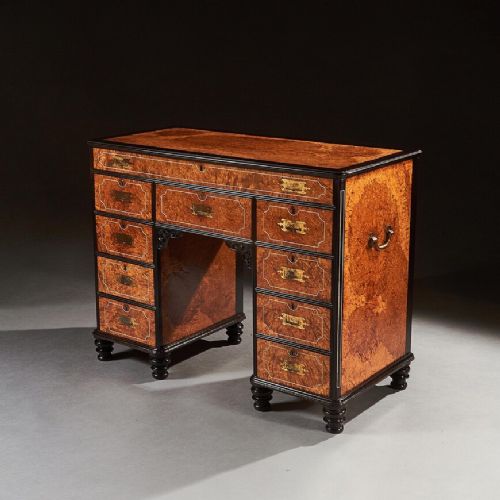
Timber does the next most work. Amboyna, padouk, rosewood, ebony and Chinese elm cluster in the upper part of the range, and the two Anglo-Indian pieces and one Chinese Export desk in amboyna and ebony are the scarcest origins in the archive, the export desk sitting well above everything else. Plain oak and undescribed mahogany occupy the lower end, along with small brass-bound writing desks on stands.
Date and association both push upward. Regency, William IV, George IV and 1800-dated desks stand above the 1920s and 1930s campaign-style group on comparable descriptions, and the pre-Victorian end is thin. So does a named or stamped attachment, as with a major's desk or a stamped sea commanders' and fleet surgeon's desk.
Antique Campaign Desks Retail Price Guide 2026
Typical UK retail prices for campaign desks, calculated from the Sellingantiques database of over a million retail prices indexed since 2003. This retail price guide relies exclusively on Sellingantiques data; no external sources or auction records are used, so the figures do not describe the wider market.
The most expensive campaign desk ever sold on Sellingantiques was a rare metamorphic campaign military knee-hole desk, in May 2017.

The Antique Campaign Desks Glossary
- Pedestal desk
- A desk with a bank of drawers under each end. The commonest body in this category, and "twin pedestal" means both banks are present, as in a twin pedestal nine drawer desk.
- Kneehole
- The open recess between the pedestals, where you sit. Written both as one word and as knee-hole.
- Brass bound
- Brass strapping or corner pieces applied to protect the edges of a piece in transit. One of the marks of the genuine travelling article.
- Campaign style / campaign type
- Title wording for a desk made in the manner rather than for actual service. It signals appearance rather than dismantling construction.
- Desk on stand
- A writing box or top section sitting on a separate base, usually detachable so the two parts carry apart.
- Metamorphic
- A piece that opens out or converts to another use. Two titles use the word, and one folding desk doubles as a games table.
Antique Campaign Desks: Frequently Asked Questions
What wood are campaign desks usually made from?
Mahogany is named in just over half of all titles, so it is the default expectation before anything else is known about a piece.
Teak is the notable second timber, in seven titles. Rosewood, walnut, oak, ebonised examples, amboyna, padouk and a single Chinese elm make up the rest.
Does a campaign desk actually come apart?
Some do. Folding examples account for about one title in eight, and the archive also holds desks on stands, three-part construction and metamorphic pieces.
Many others are pedestal desks with military-style fittings, brass binding and countersunk handles, built in the idiom without breaking down. The title wording is where that difference usually shows.
How old are the desks listed under this heading?
The dated field runs from 1800 to 1930, with 49 of 108 listings carrying a clean year. The rest rest on looser labels, "19th Century" being the largest single entry, followed by Victorian.
The twentieth century is well represented. The 1920s and 1930s together account for twenty listings, and with the 1900s, Edwardian and 1910s entries they outnumber the pre-1840 group.
Are there any naval campaign desks?
Naval wording surfaces occasionally rather than regularly. A ship's naval campaign desk, two naval pedestal desks and a ship's purser's desk each appear.
One stamped desk is described as a sea commanders' and fleet surgeon's desk. Named or stamped associations of that sort sit in the upper part of the range.
What does campaign style mean in a title?
It means the desk was made in the manner of campaign furniture rather than for service. Brass mounts, countersunk handles and military lines, without the dismantling construction.
These titles concentrate in the 1900s to 1930s dates and sit lower in the range than genuinely collapsible pieces.
Which campaign desks sit at the top of the range?
Export and colonial timbers do best. The two Anglo-Indian desks in amboyna and padouk, and a Chinese Export desk in amboyna and ebony, are the scarcest origins in the archive, with the export piece several times above anything else.
Early dates and named-officer associations also lift a desk. The bottom of the range is small brass-bound writing desks on stands and plain oak folding examples.