
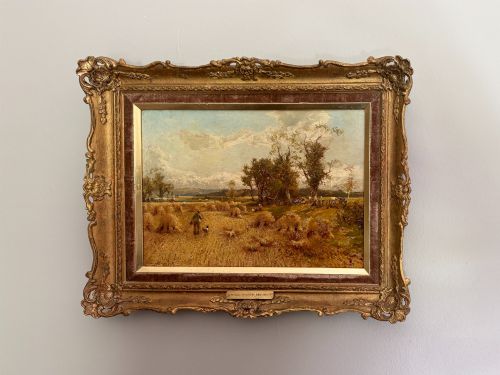
Antique Landscape Paintings
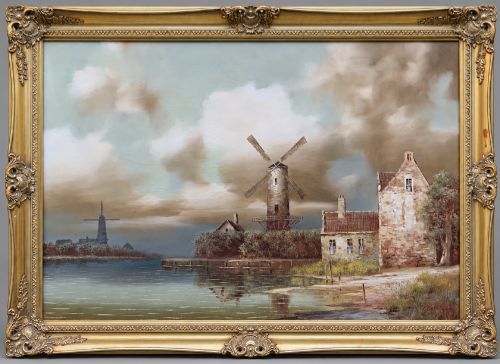
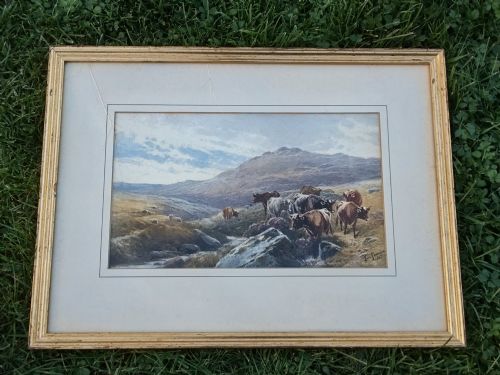
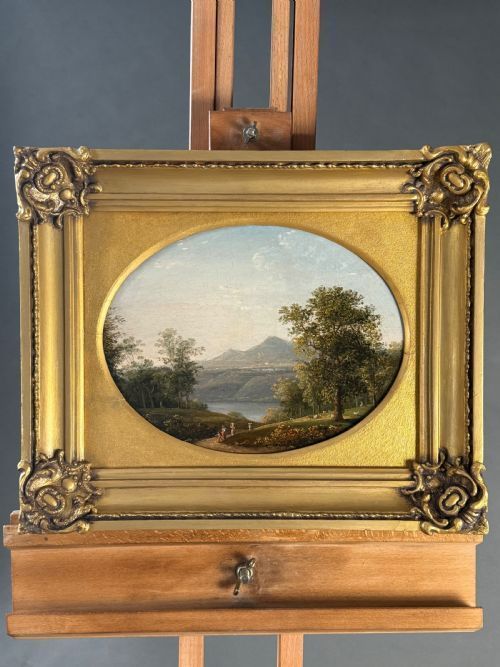
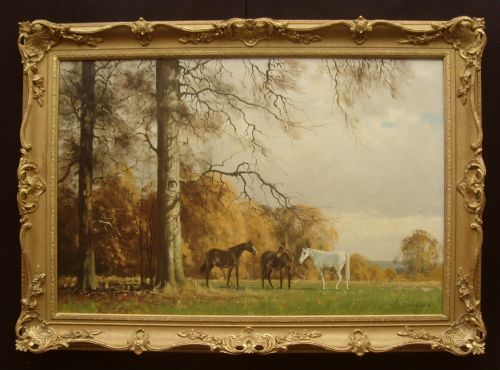
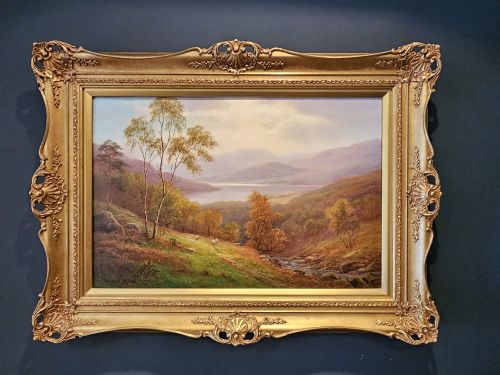
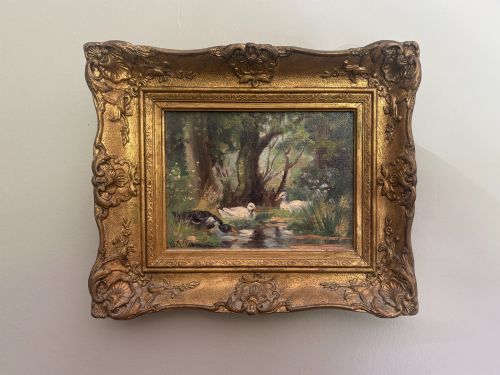
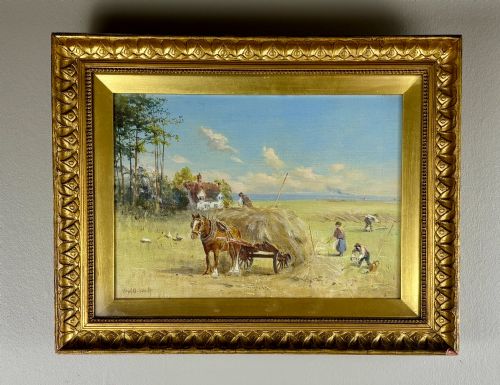
A framed picture of a place, painted in oil or watercolour, made to hang at home for people who wanted a view of somewhere they knew or an idealised piece of countryside.
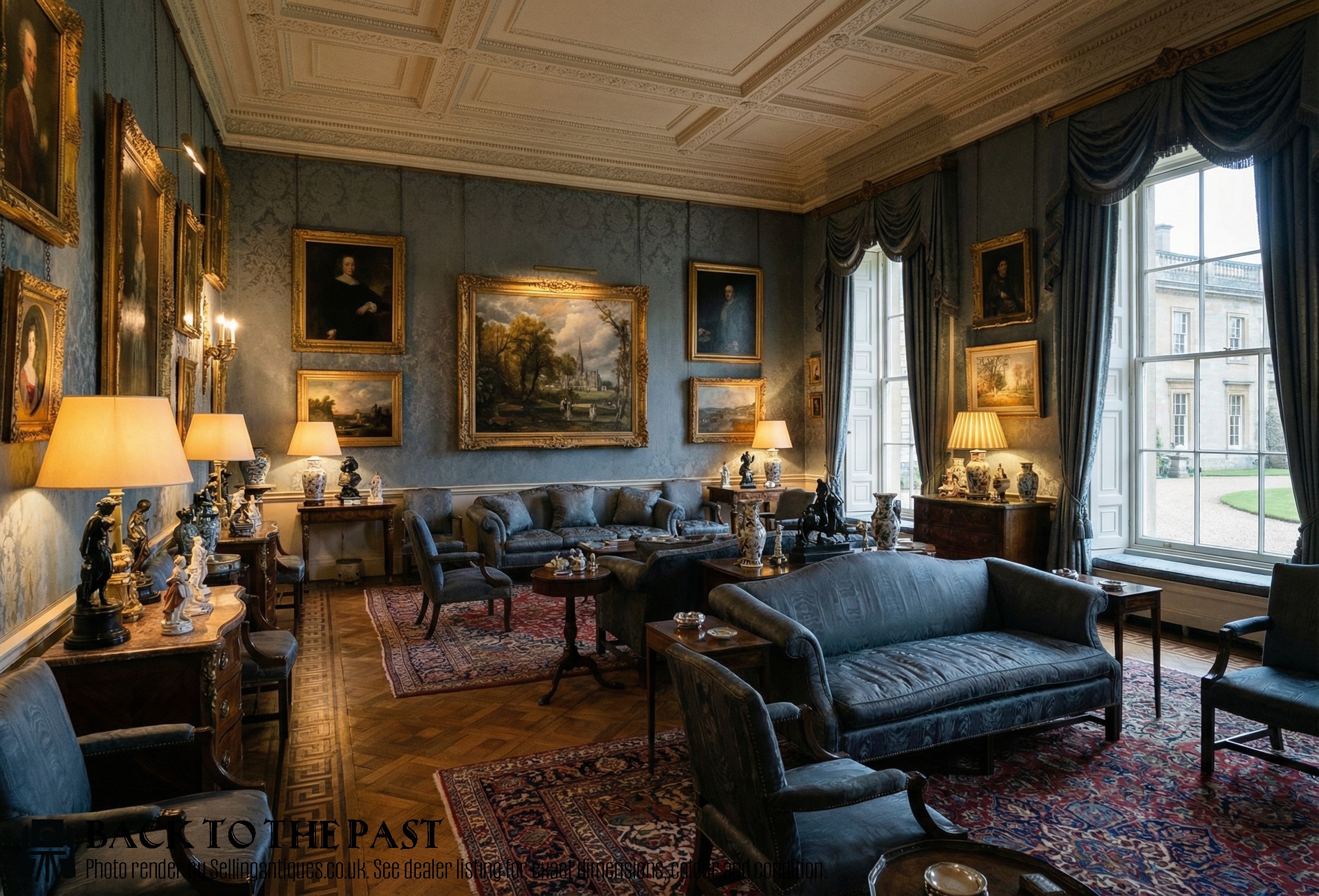
Antique Landscape Paintings
Landscape became a subject worth a picture in its own right in seventeenth-century Europe, and a mainstream commercial genre in Britain from the later eighteenth. Watercolour grew up alongside it as the portable medium for topographical and sketching work. What reaches the market now is the domestic end of that trade: one-off pictures, framed, by named or part-named hands.
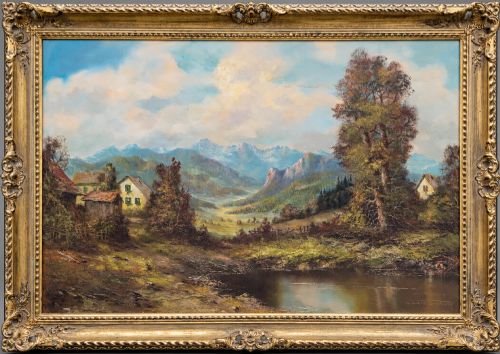
Oil leads the field, in well over half of titles, usually with the support spelled out as canvas, board, panel or wood panel. Watercolour follows in about a third, generally smaller and glazed. Gouache, pastel and mixed media turn up occasionally. Around 583 land pictures are listed on Sellingantiques in a year, handled by 207 dealers, one of the broadest dealer bases of any single category.
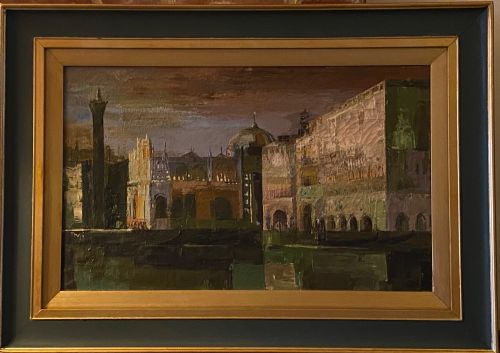
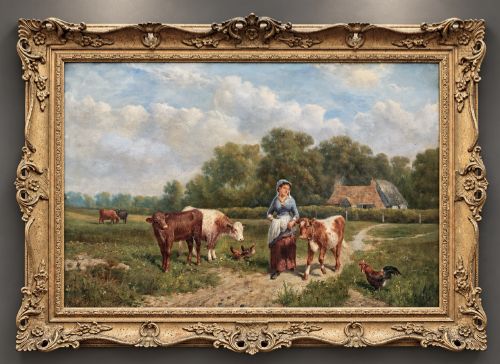
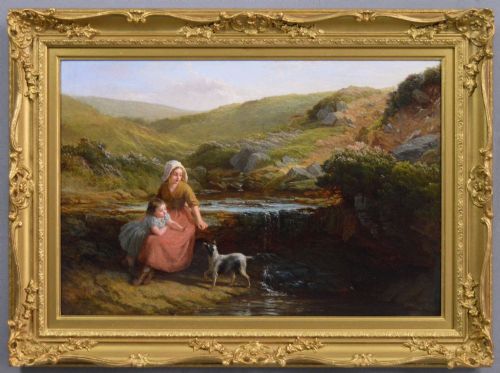
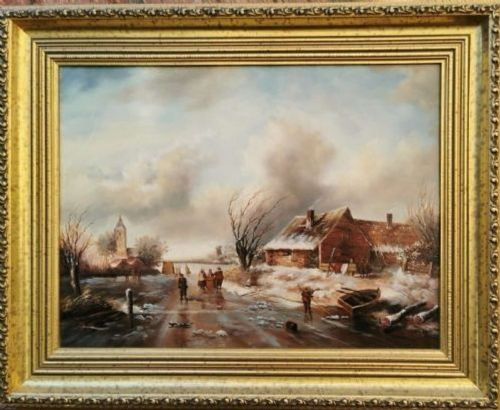
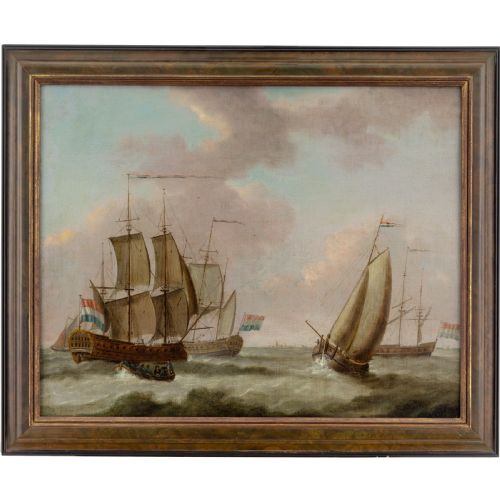
The picture you're most likely to meet is a signed nineteenth- or early twentieth-century British view of an identified place. Water runs through the titles more than anything else: river in 474, lake in 157, bridge in 101, ahead of castle and cottage. Yorkshire is the most named county by a distance. Pastoral subjects with cattle, sheep or figures make up roughly a fifth, and coastal and harbour views a substantial minority.
Dates spread from 1700 to 1960, but much of the dating is coarse. The largest single bucket is an undifferentiated "19th Century" label, and "Victorian" gets used as a date in its own right. Decade buckets from the 1880s to the 1960s are broad and fairly even, so twentieth-century and modernist work sits alongside the Victorian material, with French, Dutch, Italian and Scandinavian subjects as a steady minority.

What Separates Them
Authorship does most of the work. Signed appears in 979 titles and the upper samples almost all carry a full artist name; the other end is "English School", initials, or nothing. Between the two runs a ladder of hedged wording, from Style of and Manner of through Follower of and Circle of to Attributed to, and a plain signature beats every rung of it.
Then the place. Titles at the upper end name a specific topography, a named loch, abbey, bay or river, while the cheapest read as generic rural countryside scenes. Scale and format pull the same way: large turns up in 154 titles and pair in 131, with the samples reaching for Panoramic and Monumental at the top and Miniature at the bottom.
Medium sorts the range too. Oil on canvas dominates the upper band, while watercolour clusters through the lower and middle, with card and paper grounds at the cheapest end. Recorded history adds to a picture: estate or studio sale provenance, exhibition references, wax stamps and inscriptions on the reverse all push a listing upward.
Antique Landscape Paintings Retail Price Guide 2026
Typical UK retail prices for landscape paintings, calculated from the Sellingantiques database of over a million retail prices indexed since 2003. This retail price guide relies exclusively on Sellingantiques data; no external sources or auction records are used, so the figures do not describe the wider market.
Landscapes have been listed on Sellingantiques since 2008, with over 2,100 recorded since then.

Alfred Oliver·William Langley·Thomas Sidney Cooper·Robert Cleminson·George Morland
The Antique Landscape Paintings Glossary
- Oil on canvas
- Paint in an oil binder on stretched fabric. The commonest support named in these titles, at 483.
- Oil on board or panel
- Oil on a rigid ground of card, millboard or wood. Board appears in 235 titles, panel in 165, with wood panel specified in 77.
- Watercolour
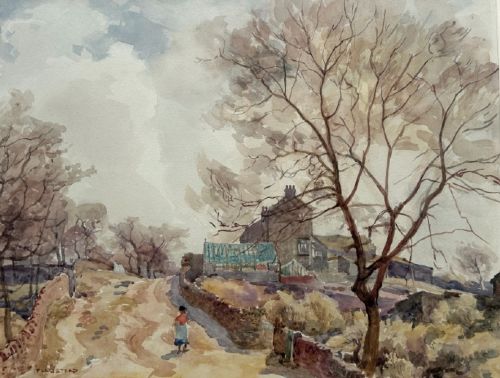
- Transparent water-based paint on paper, in about a third of titles, often smaller and framed under glass.
- Attributed to
- The dealer's considered judgement on authorship without certainty. Eighty titles use it, and the softer rungs below it are Circle of, Follower of, Manner of, Style of and After.
- English School
- An anonymous picture placed by national tradition rather than by name. English school runs to 78 titles and school to 258.
- Verso
- The back of the picture, where signatures, titles, labels and sketches are often found.
- Grisaille
- A landscape painted wholly in greys or monochrome wash. It surfaces repeatedly among the watercolours and nowhere among the oils in the samples.
Antique Landscape Paintings: Frequently Asked Questions
Are landscape oils more common than watercolours?
Yes. Oil outnumbers watercolour roughly two to one across the titles, so works on paper are the smaller half of the field.
Gouache, pastel and mixed media appear occasionally alongside them.
Which places turn up most often in the titles?
Yorkshire is far and away the most named county, in 328 titles, ahead of "british" at 177 and "scottish" at 162. Villages, dales and rivers get named individually: Wharfedale, Betws-y-Coed, Patterdale, Whitby.
Water is the steady motif. River appears in 474 titles, lake in 157 and bridge in 101, comfortably outnumbering castle and cottage.
How old are most of these paintings?
The dated field runs from 1700 to 1960, with 2,690 listings carrying a clean year. The single largest bucket is a broad "19th Century" label rather than a specific date.
Decades from the 1880s through to the 1960s are represented fairly evenly. Eighteenth-century and earlier pictures appear, but only occasionally.
Do landscape paintings come in pairs?
Pairs are a genuine sub-habit: 131 titles say pair, and sets turn up too.
The samples include a set of four Neapolitan gouaches, a set of six river landscapes and a portfolio of nine watercolours sold together.
What does "circle of" mean on a landscape listing?
It means the picture is by an unidentified hand working close to, or under the influence of, a named artist. It is not a claim that the named artist painted it.
It sits on a ladder of attribution wording. Style of and Manner of are the loosest, then Follower of and Circle of, then Attributed to, with a plain signed name at the top.
Are all these views British?
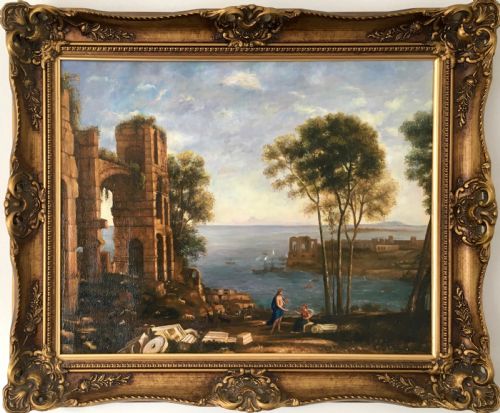
No. British topography is the clear majority, but a steady minority looks abroad, with french in 150 titles and dutch in 79.
Italian, Venetian, Danish, German, Belgian, Norwegian, Spanish and Swiss subjects all appear in the samples. At the very top of the range the subjects leave Britain altogether.