Cheshire Antiques Consultant Ltd has dated this 19th Century Oil Painting to the 19th Century.
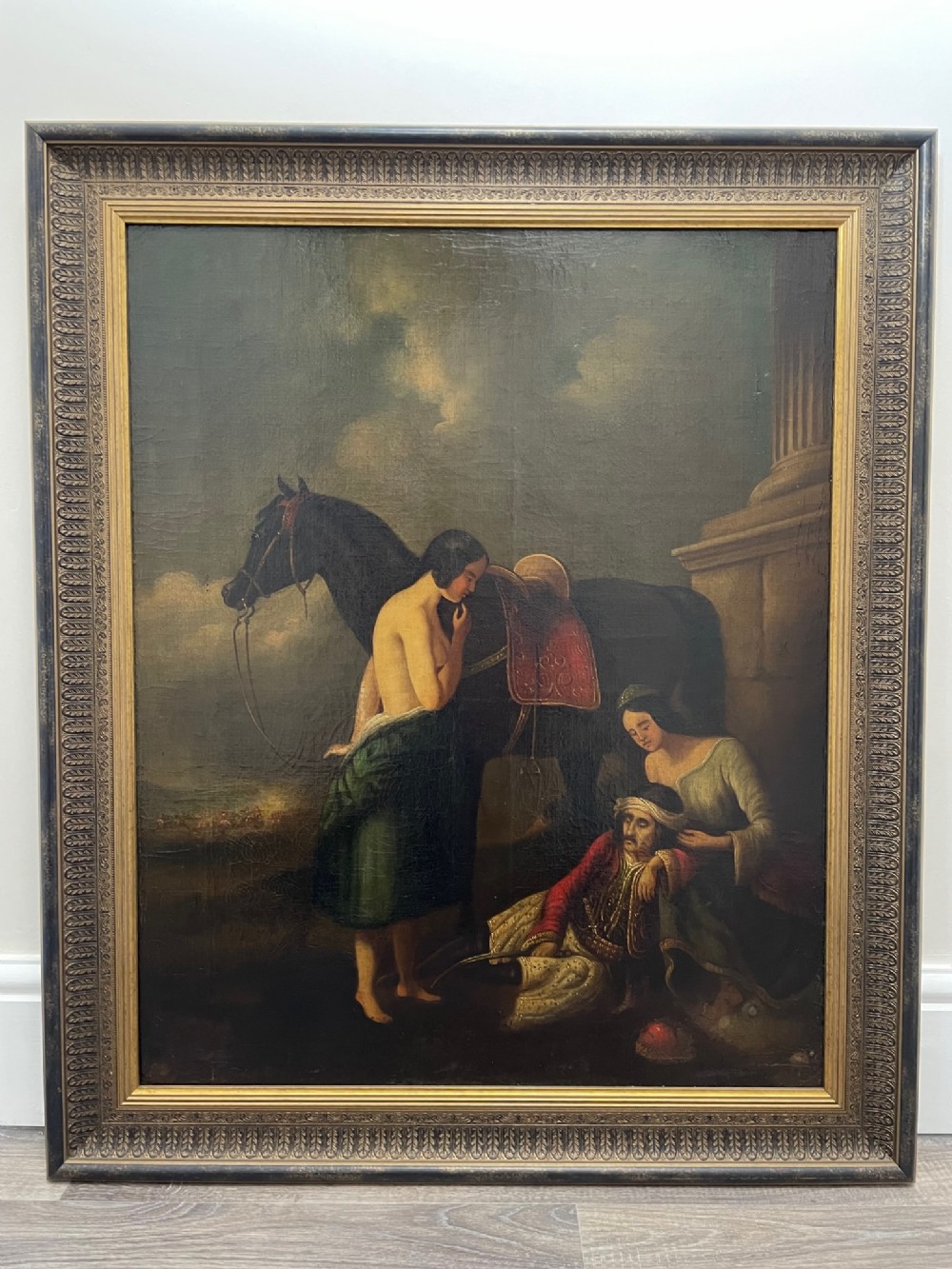
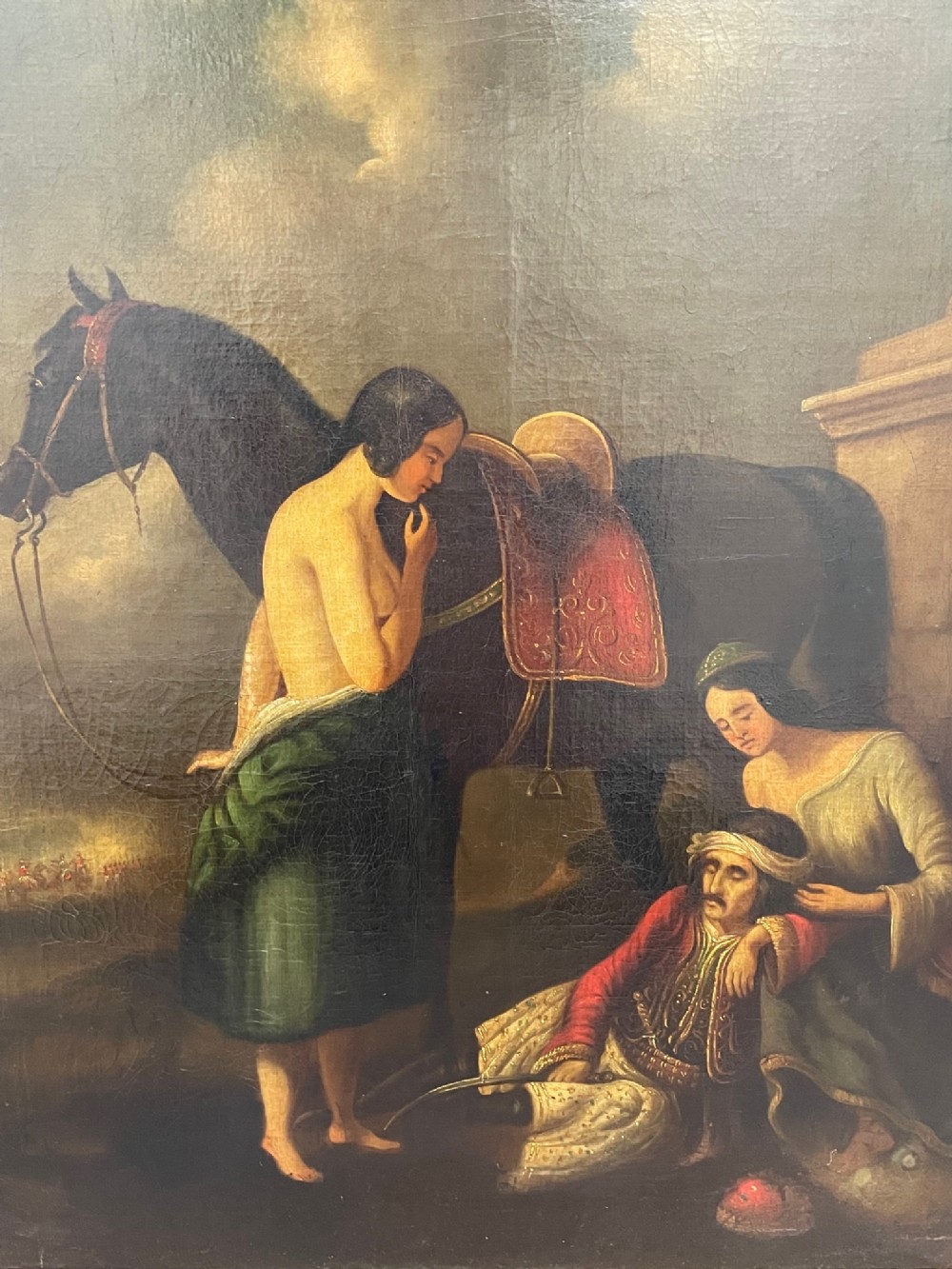
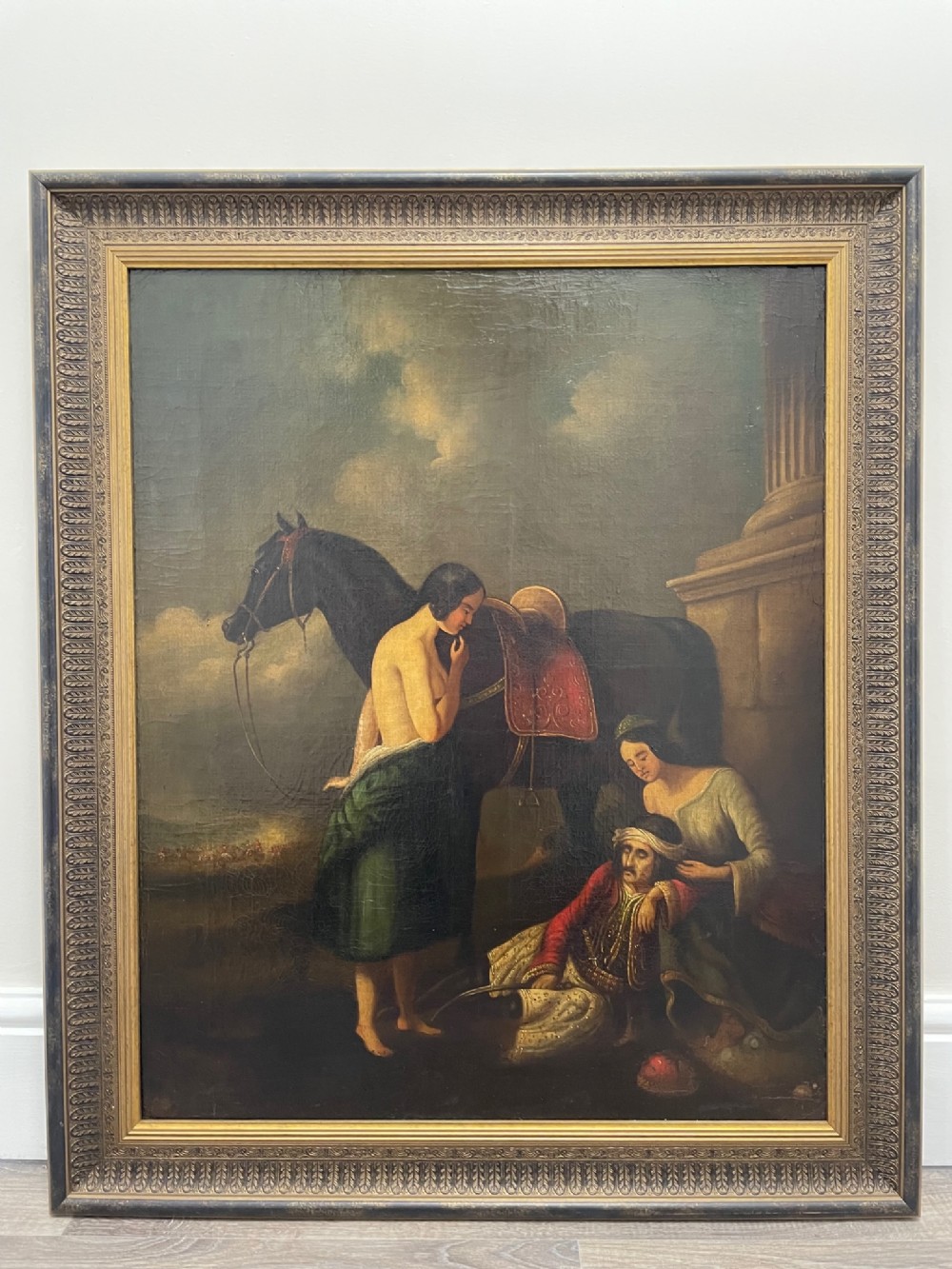
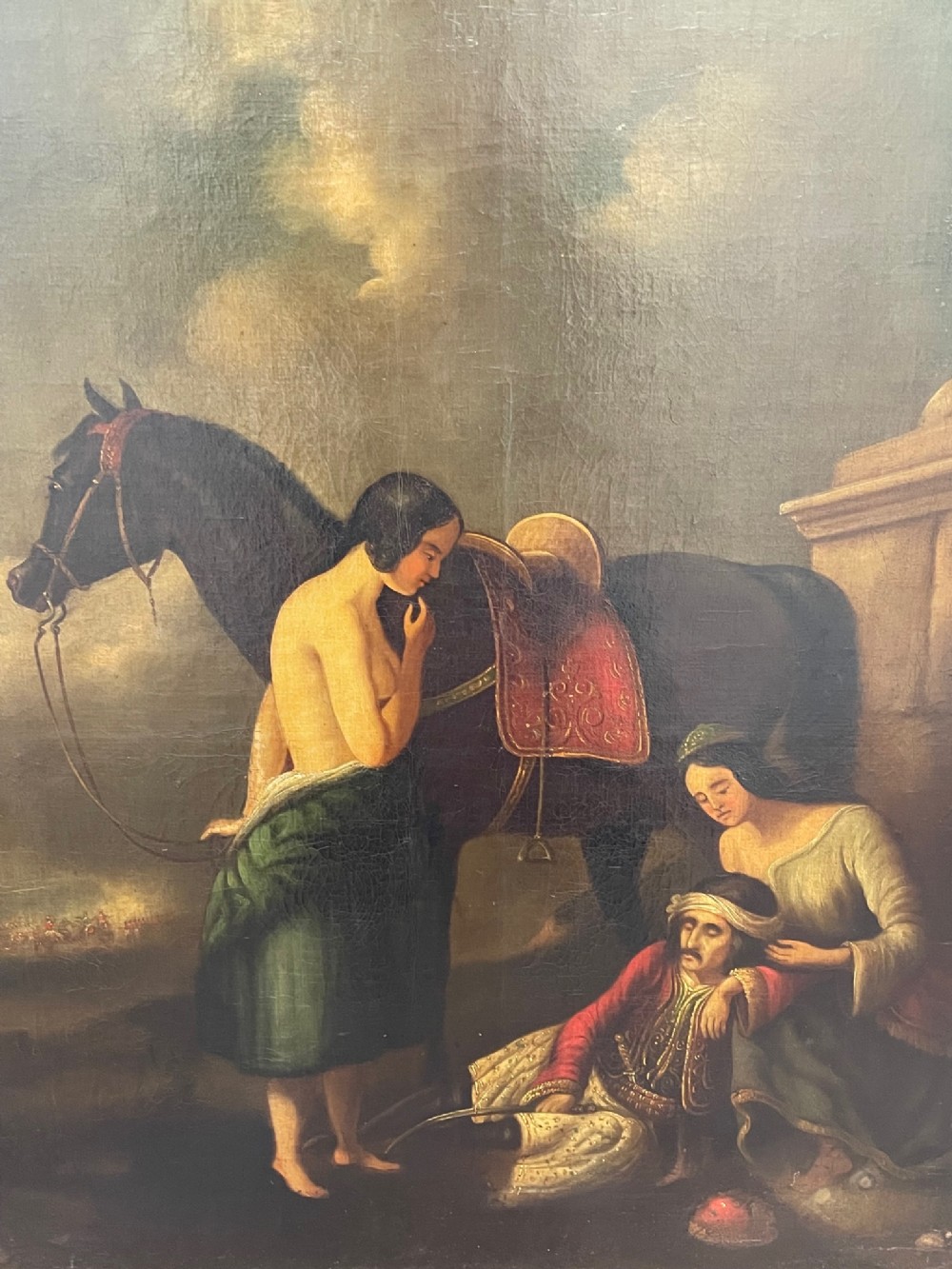
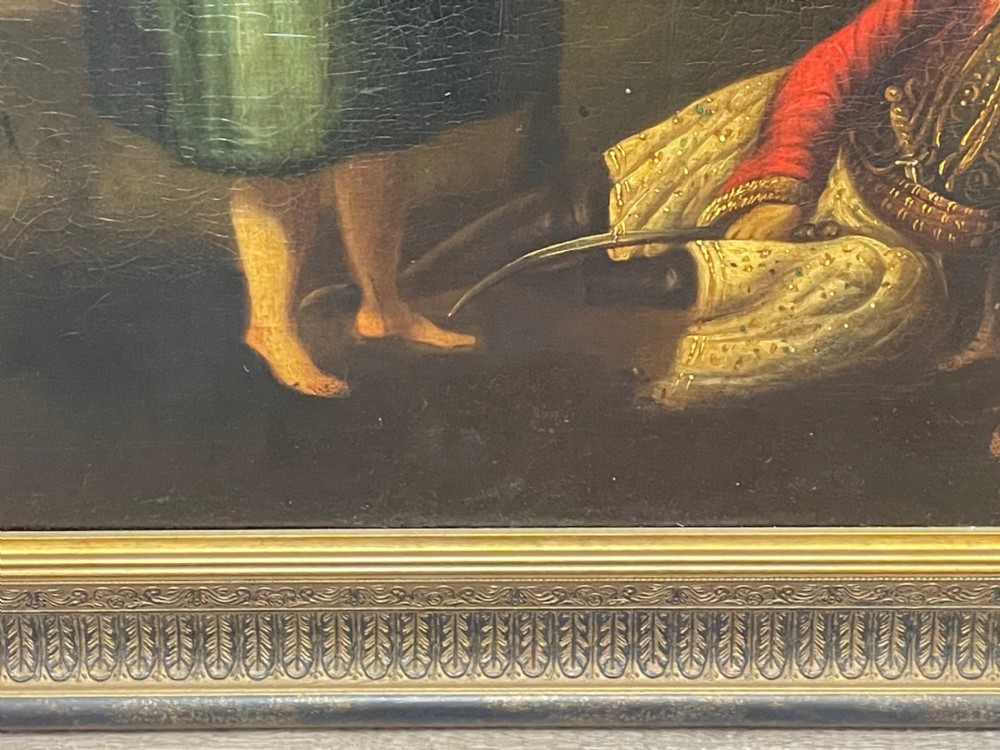
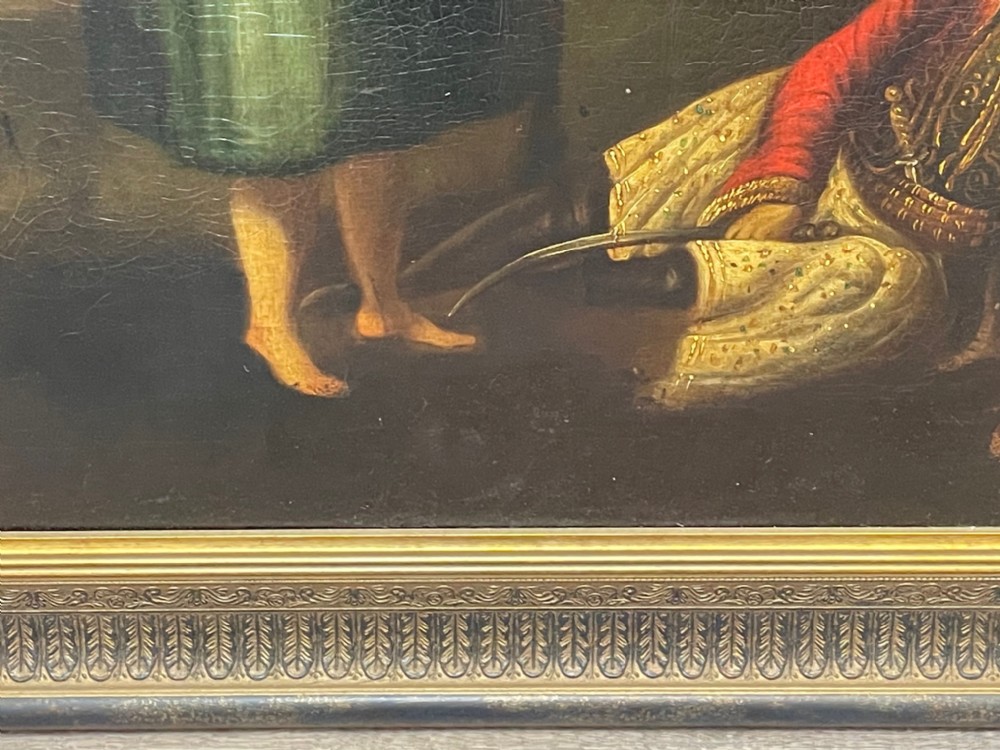
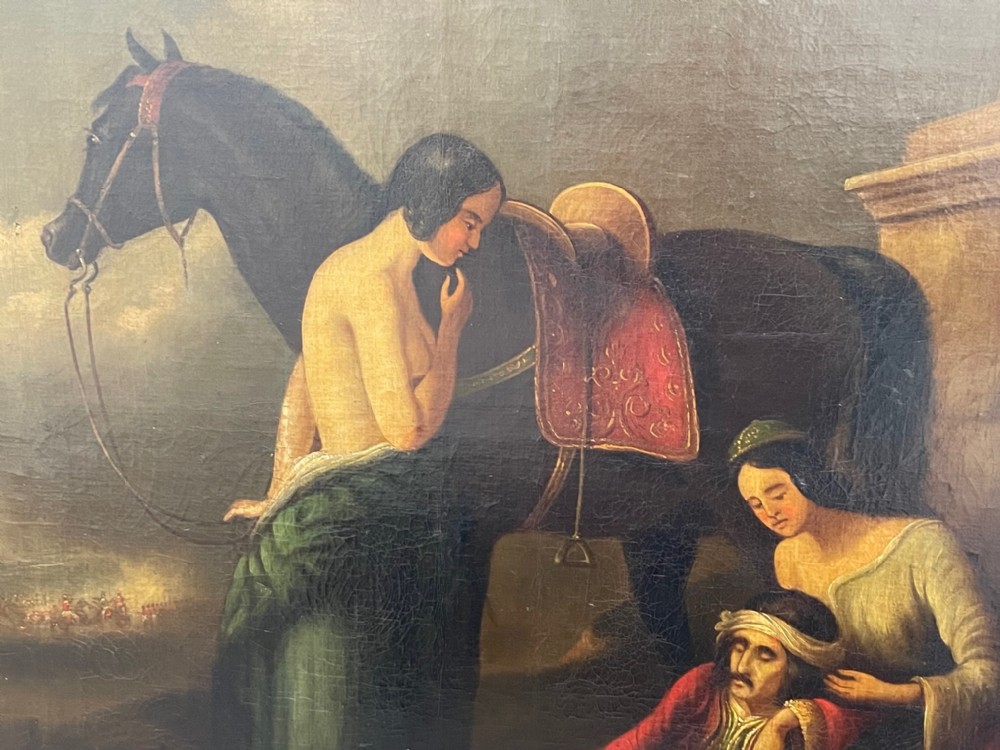
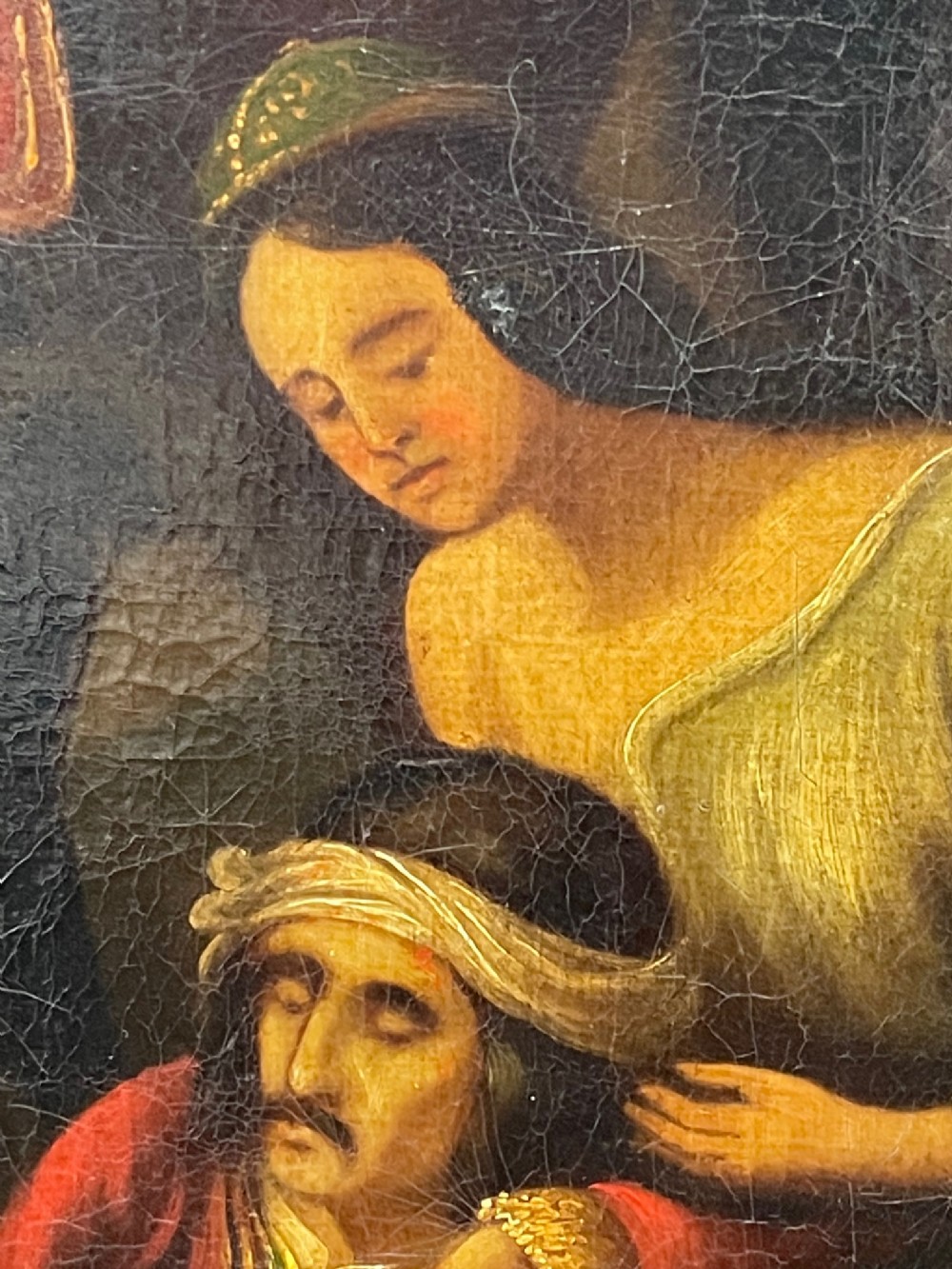
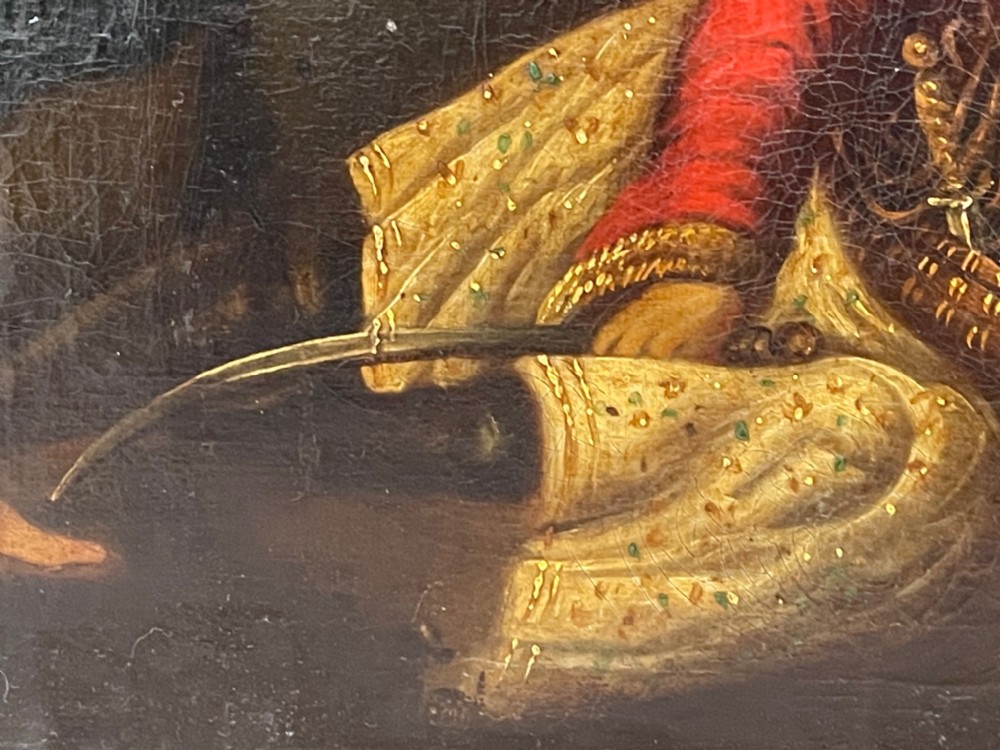
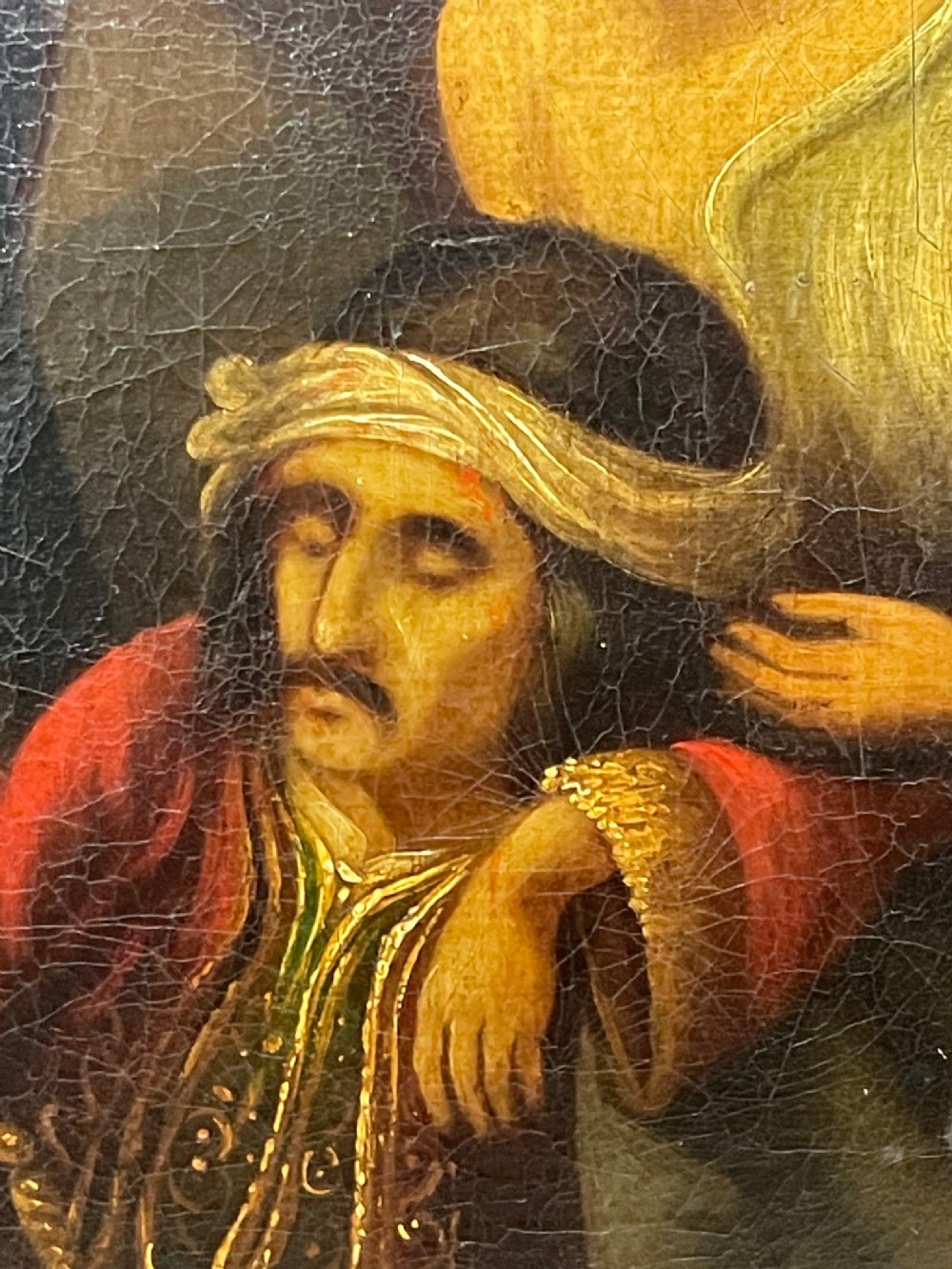
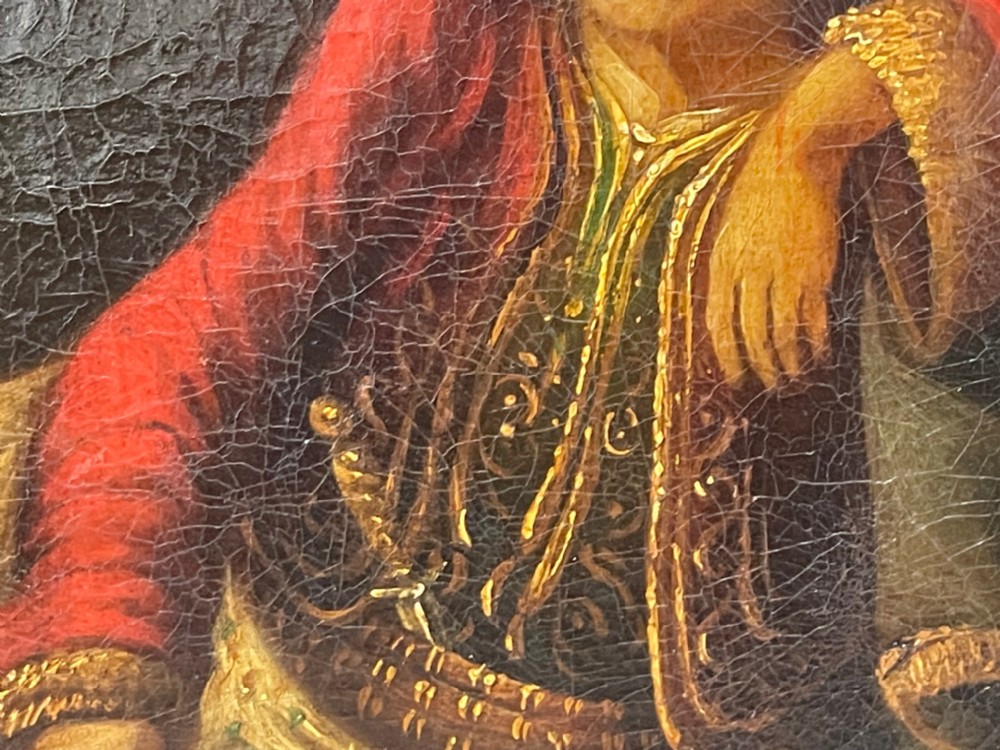
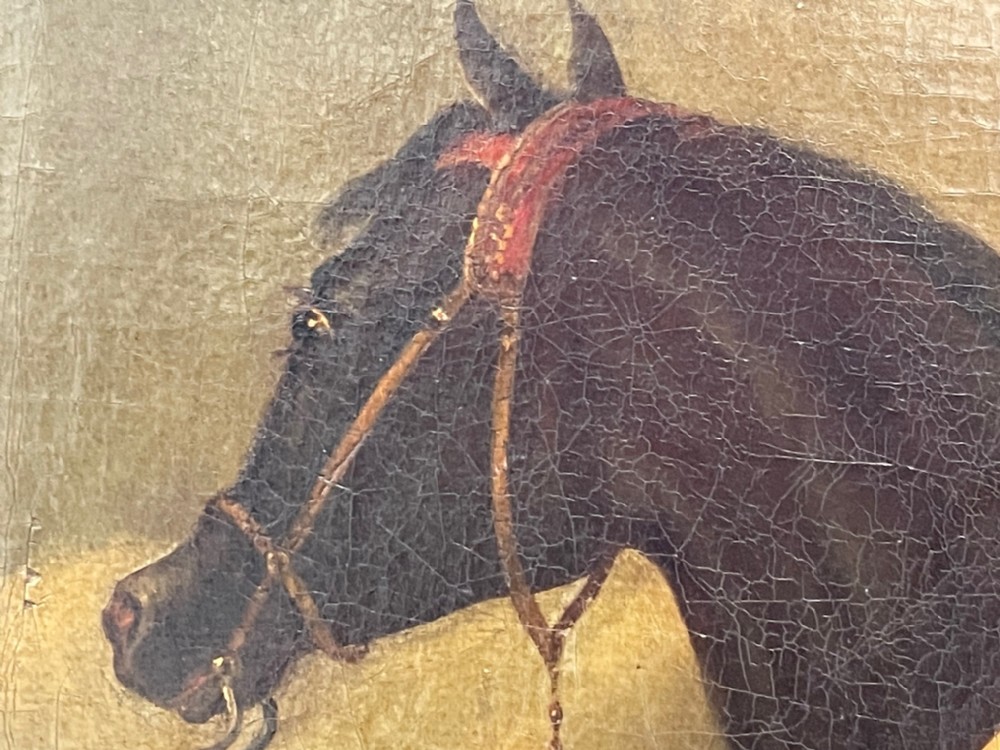
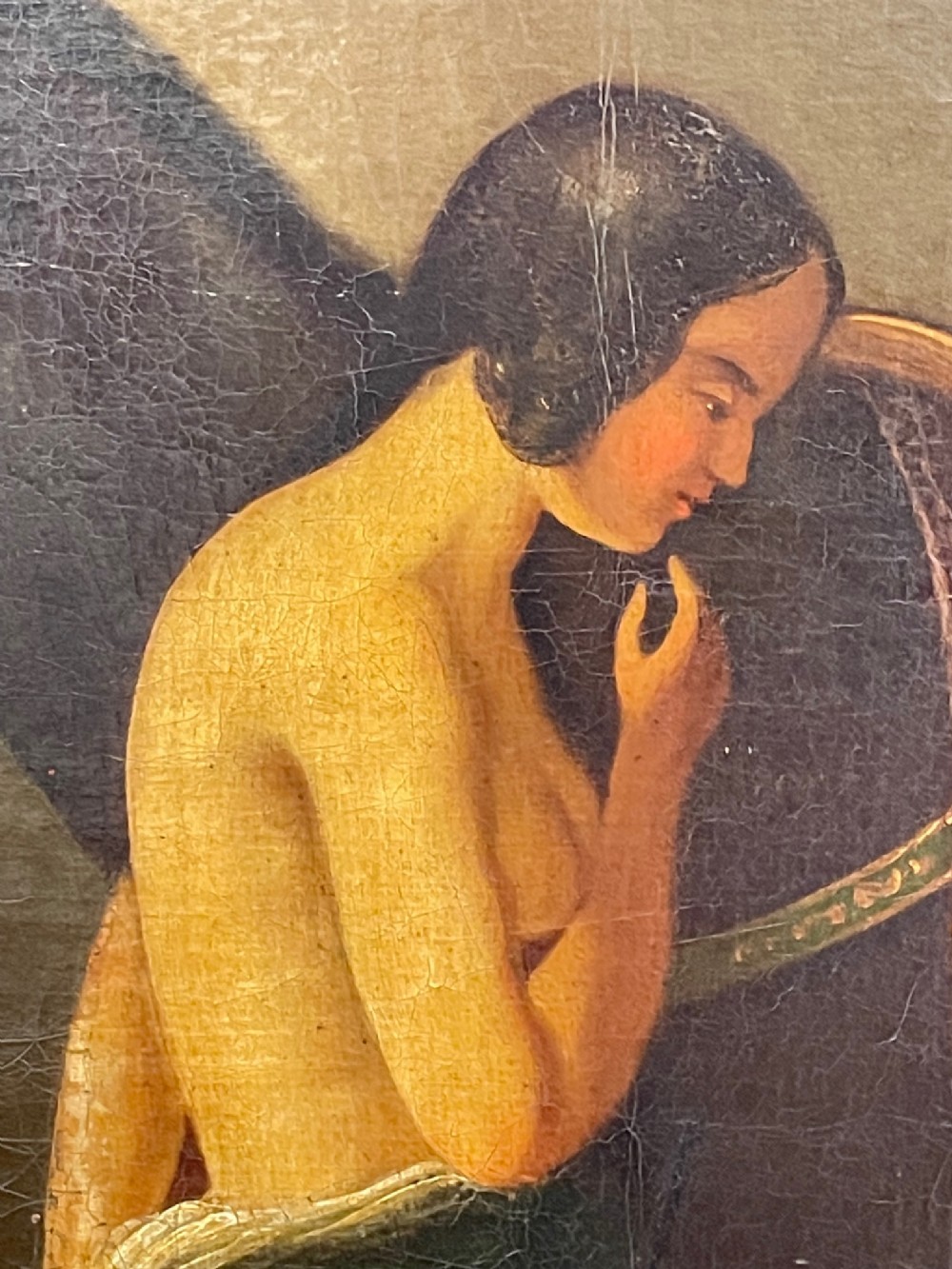
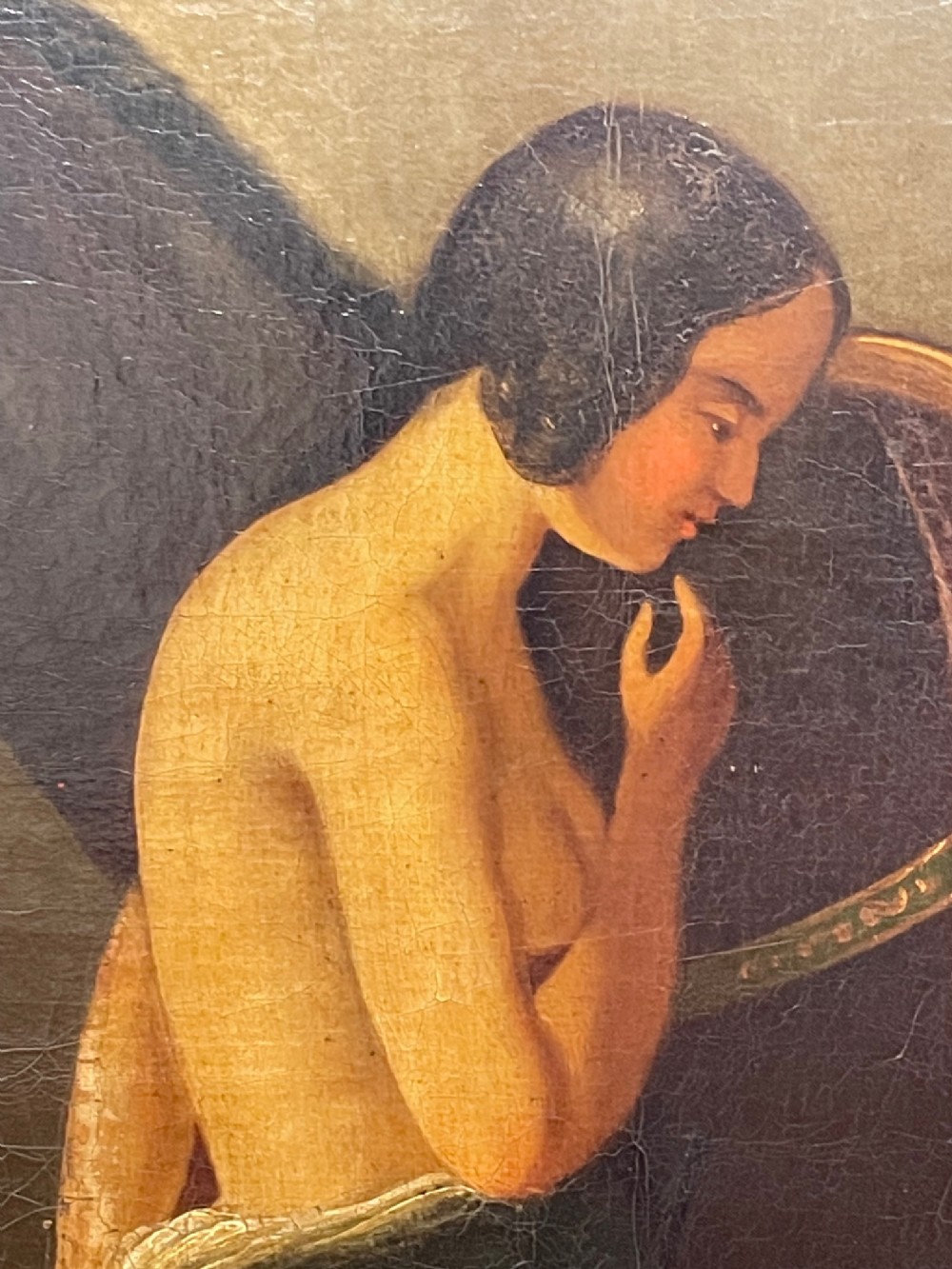
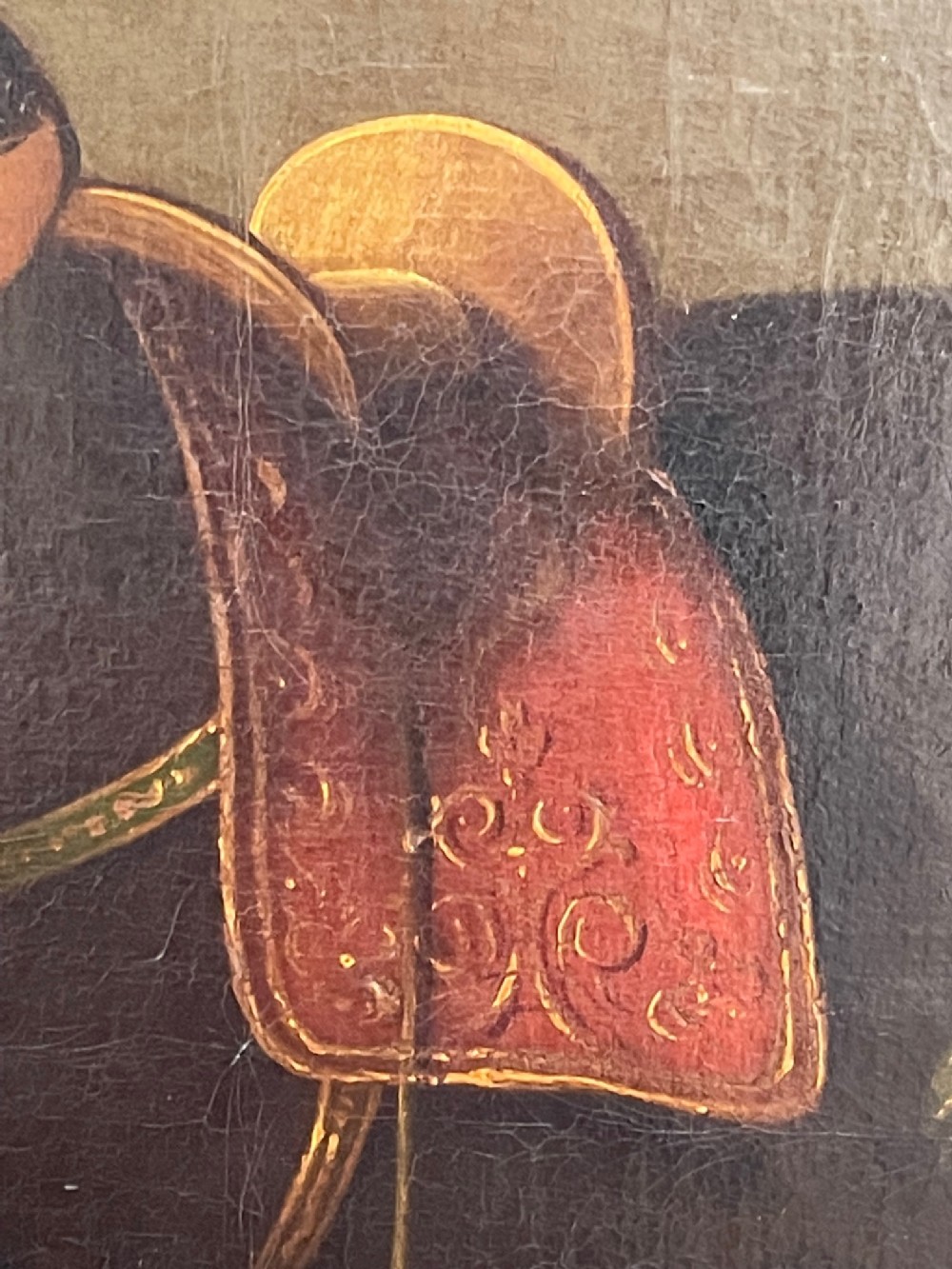
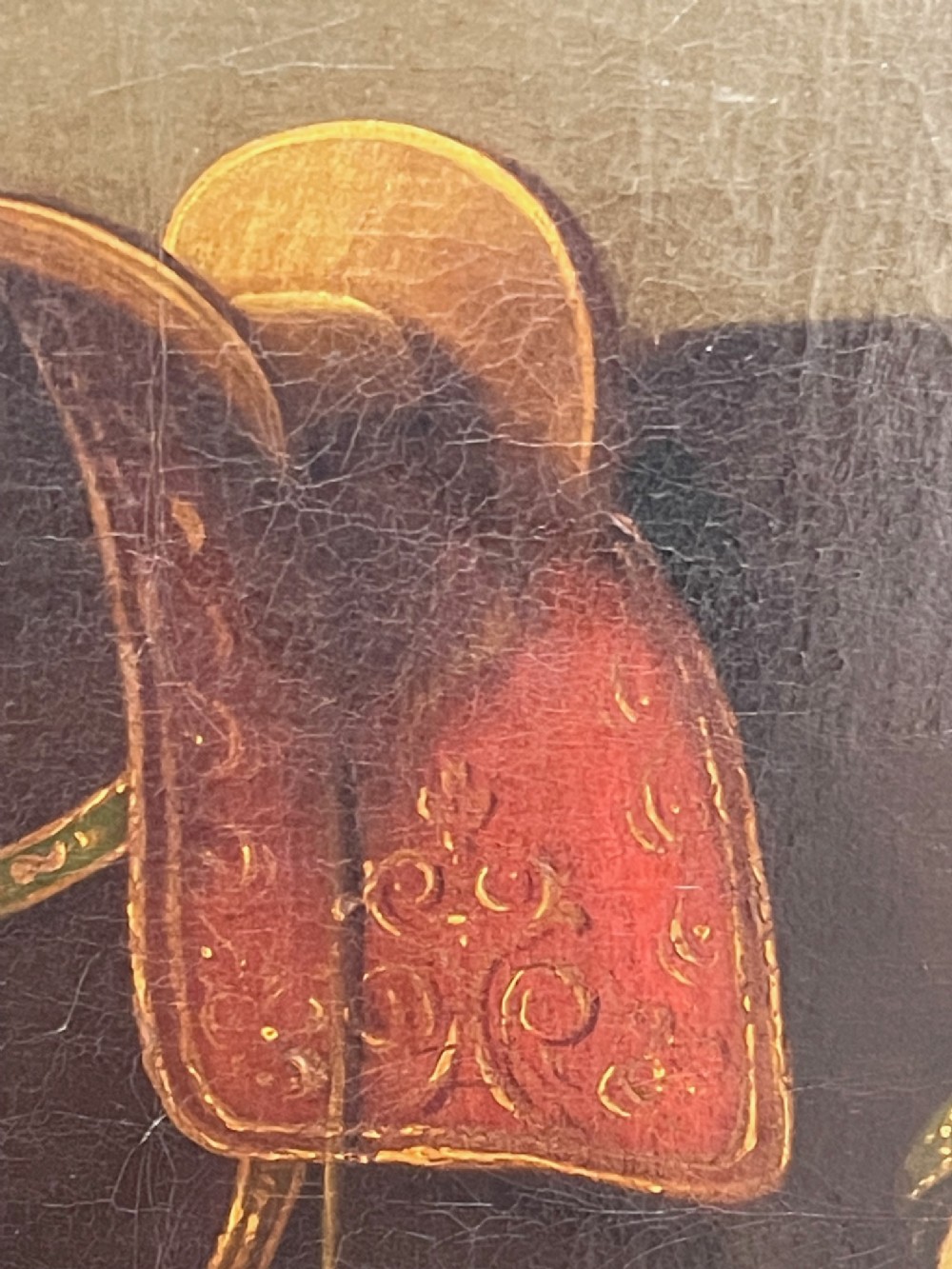
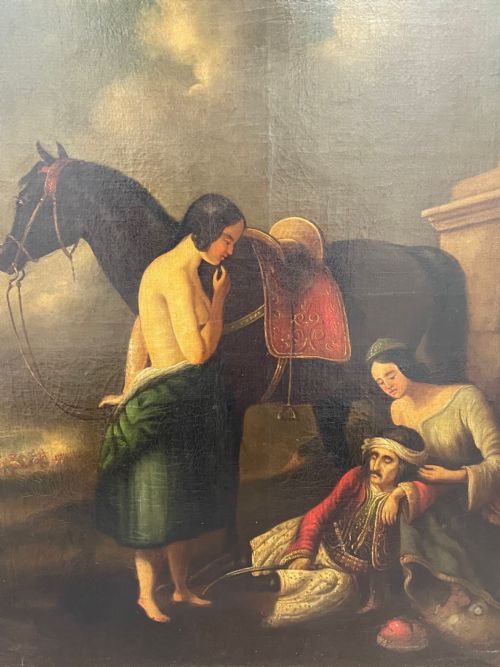
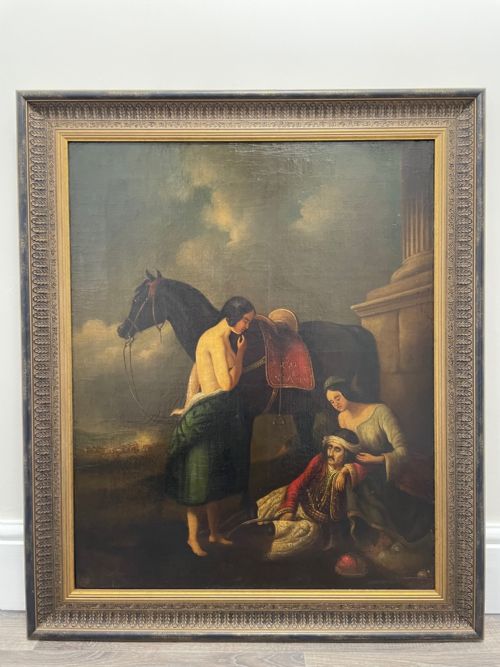
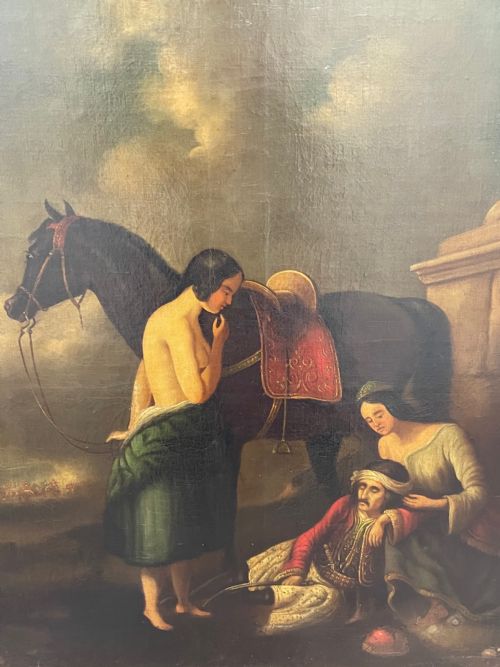
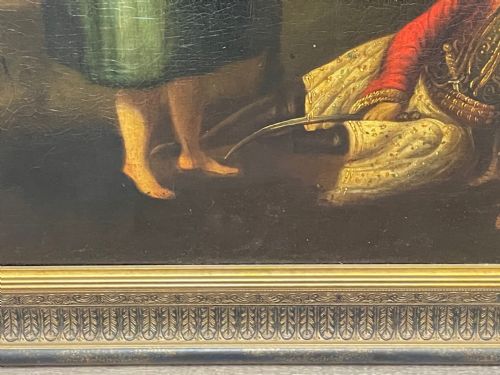
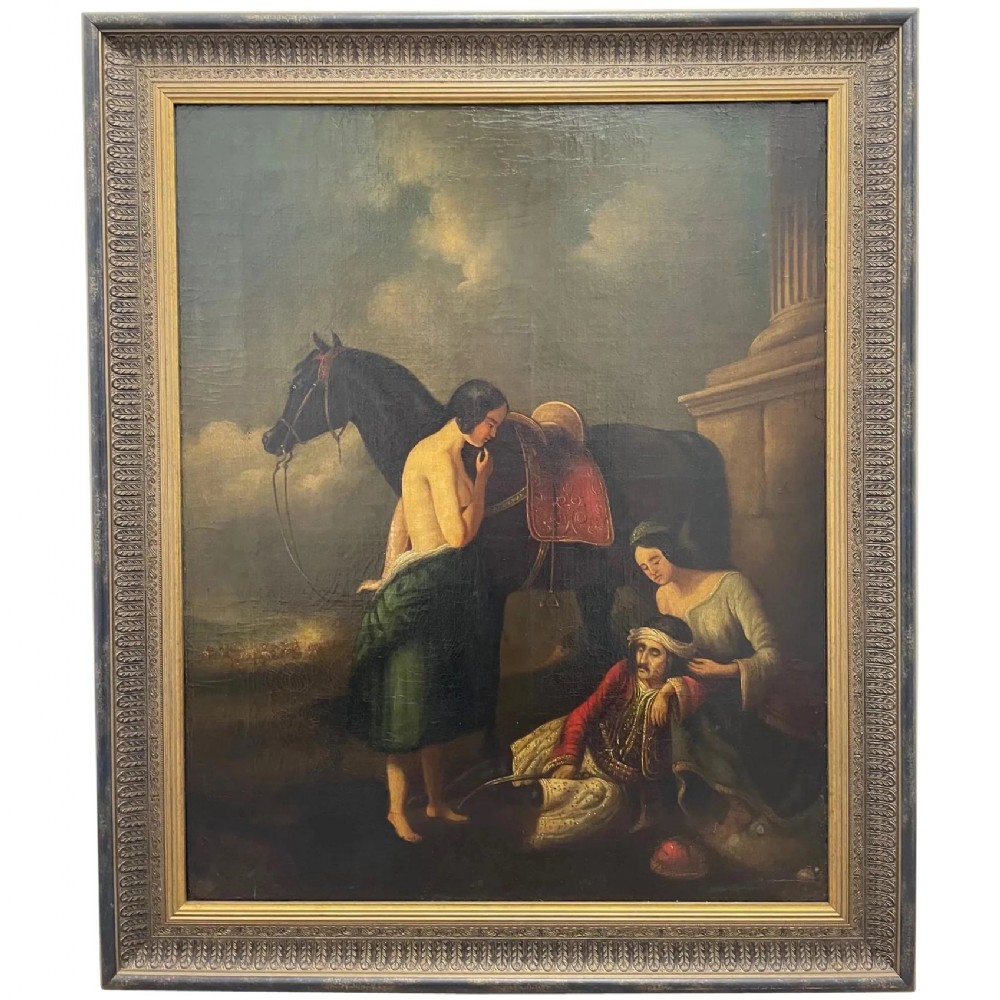
Subject portrait of a fallen greek soldier after an intense battle with 2 women who are looking over him and tending the injured man, one kneeling at right supporting his head and the other standing to the left holding the reins of the horse behind, as he lays on the floor holding his curved sword in his right hand, his hat is laying next to him on the floor.
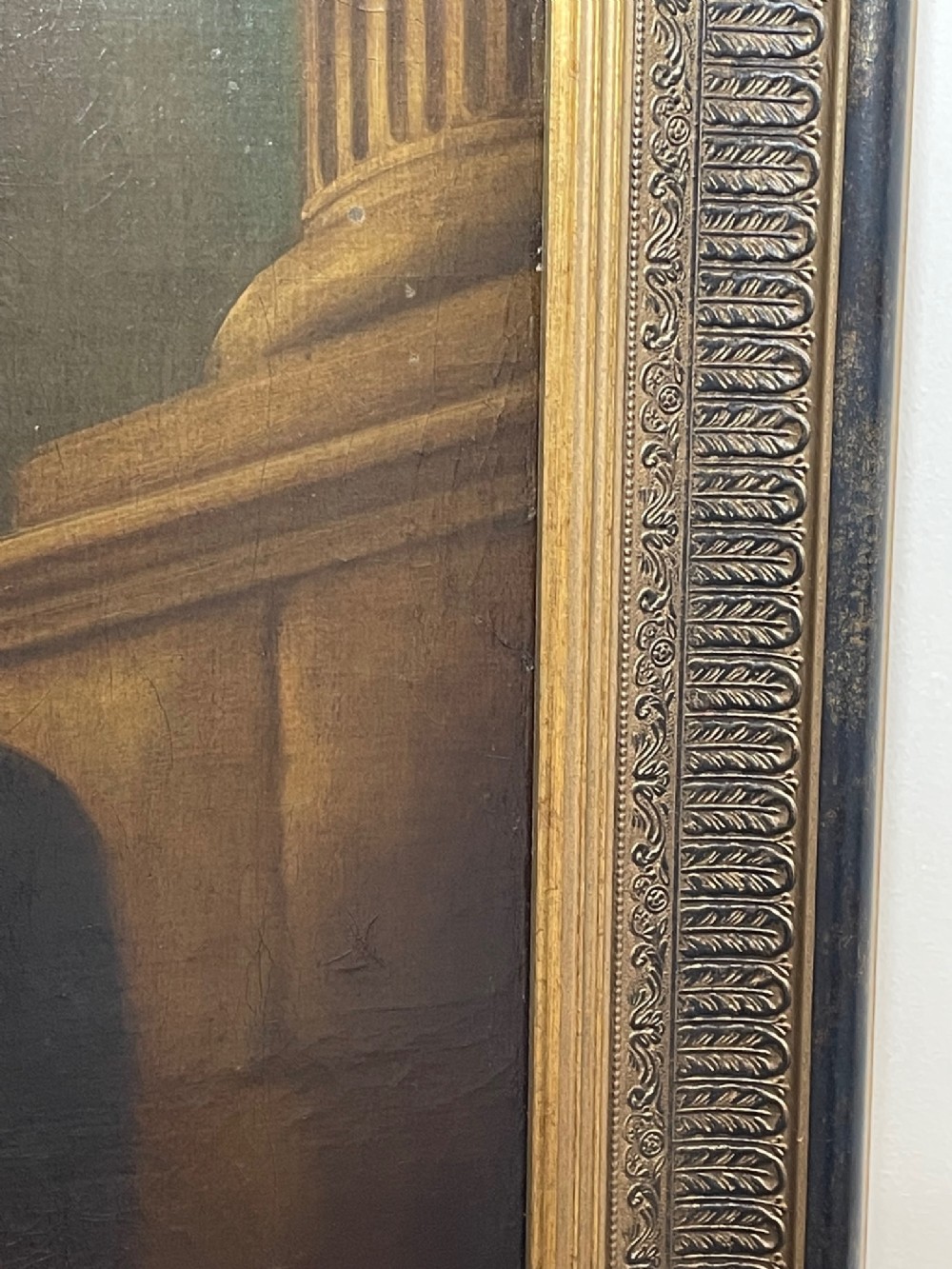
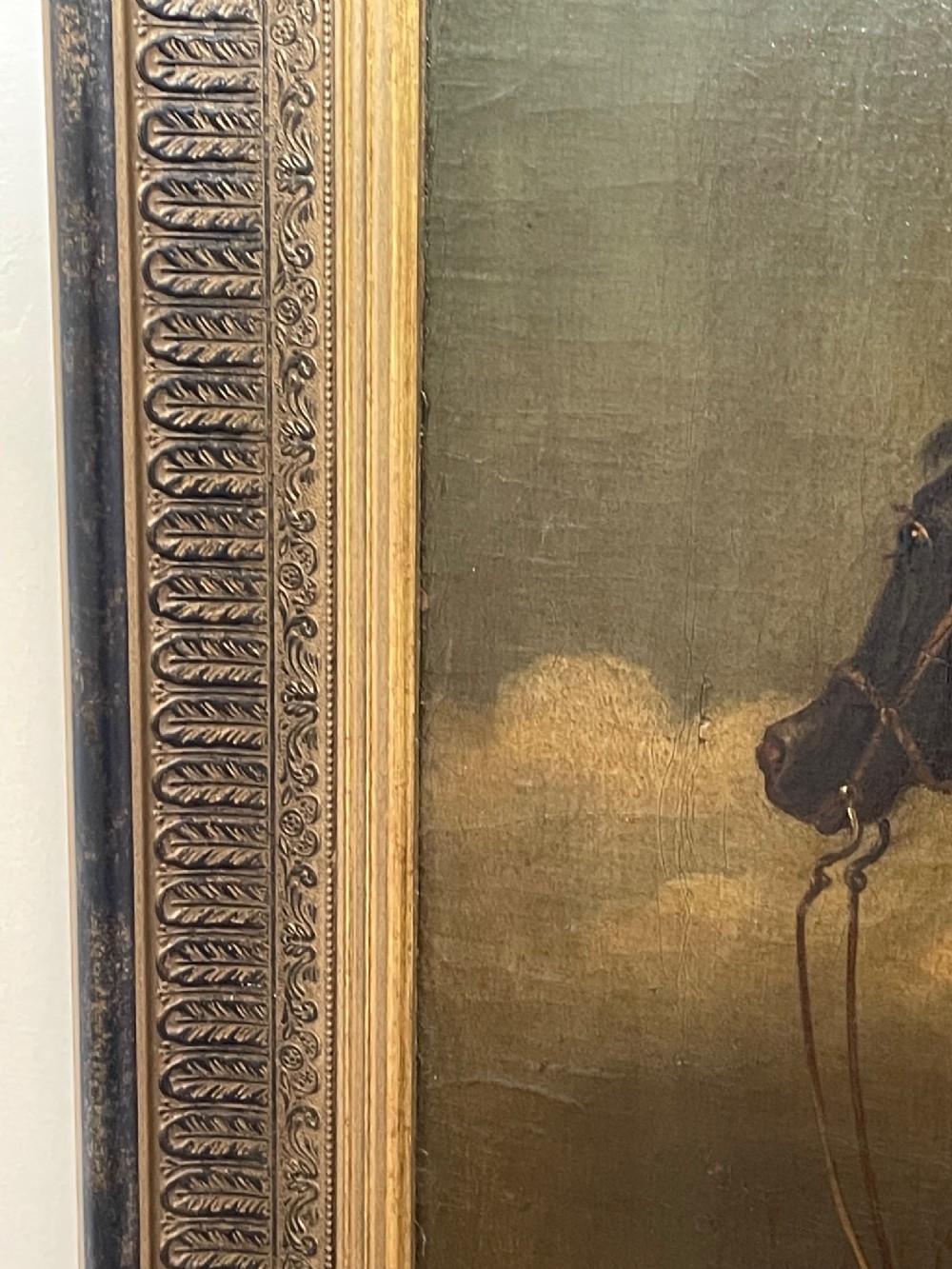
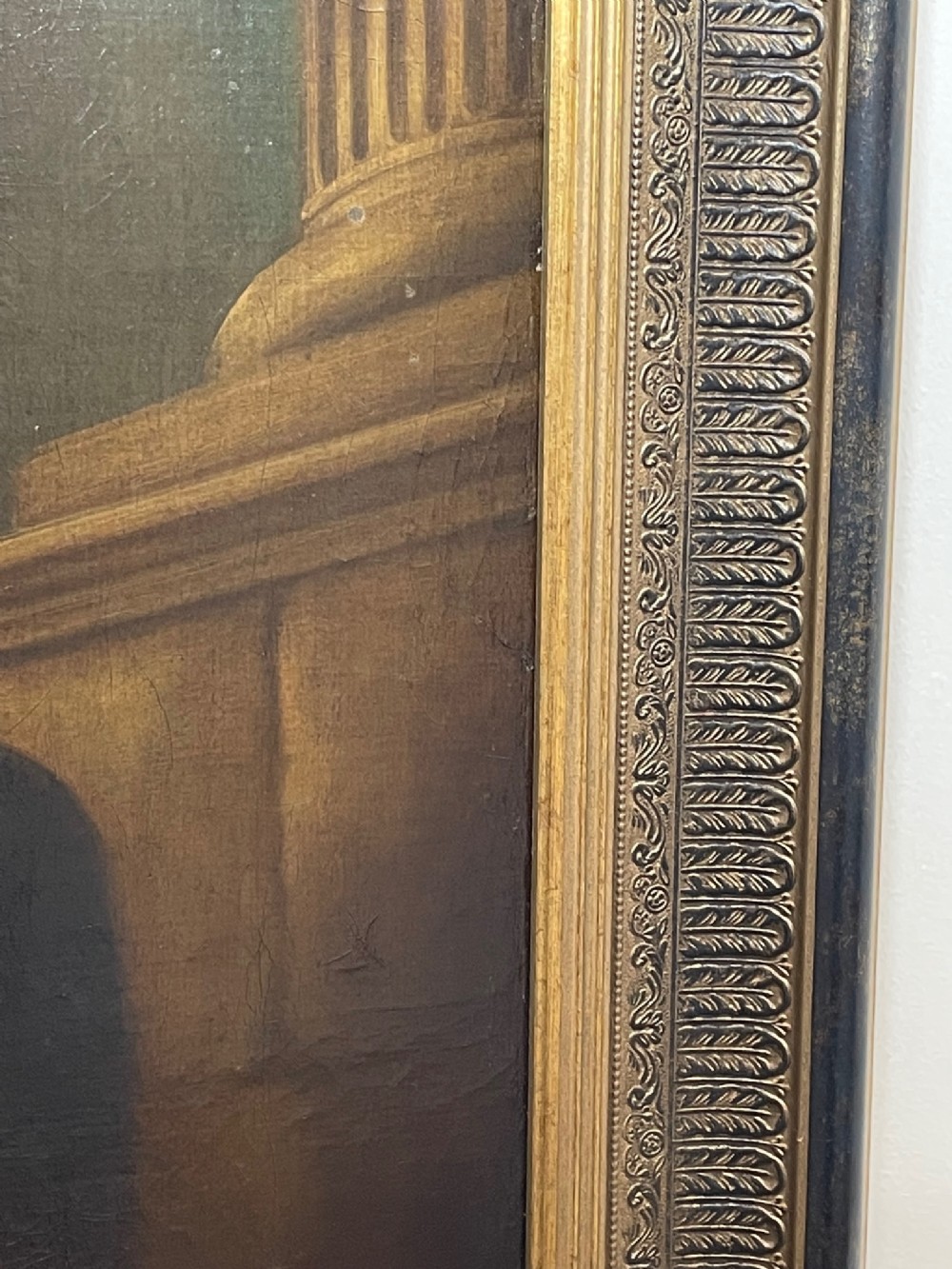
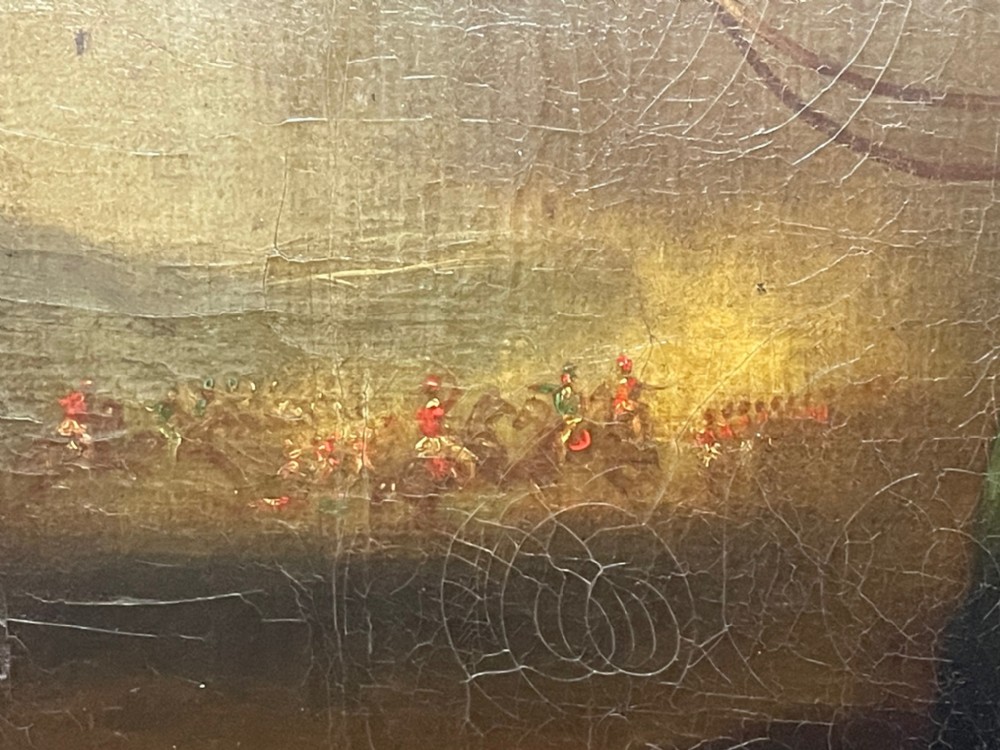
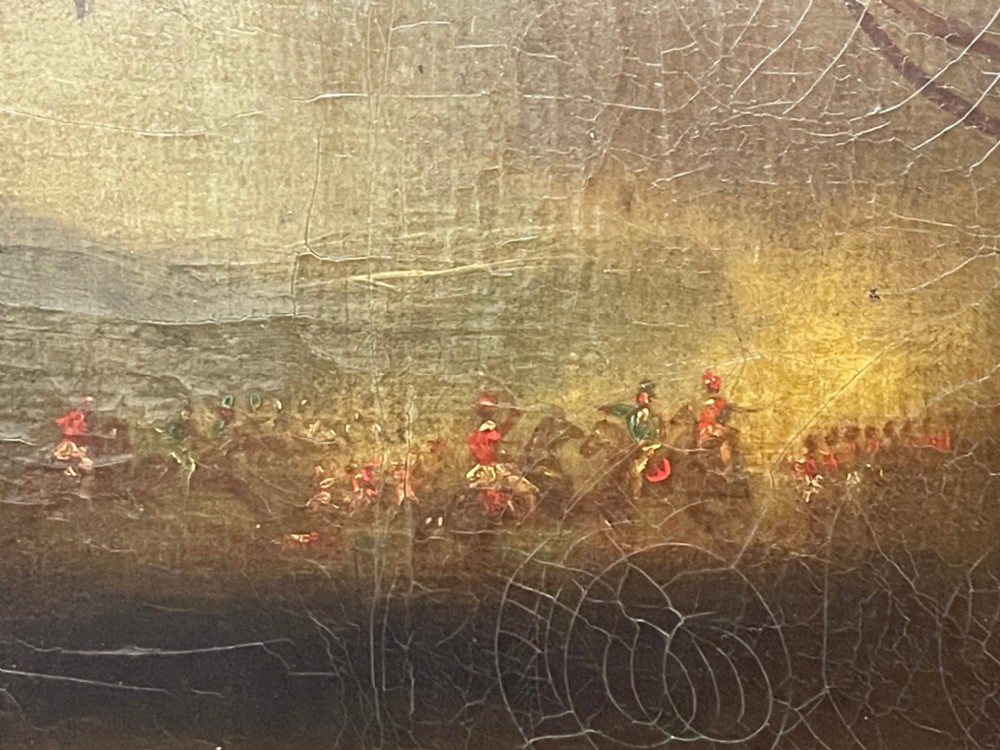
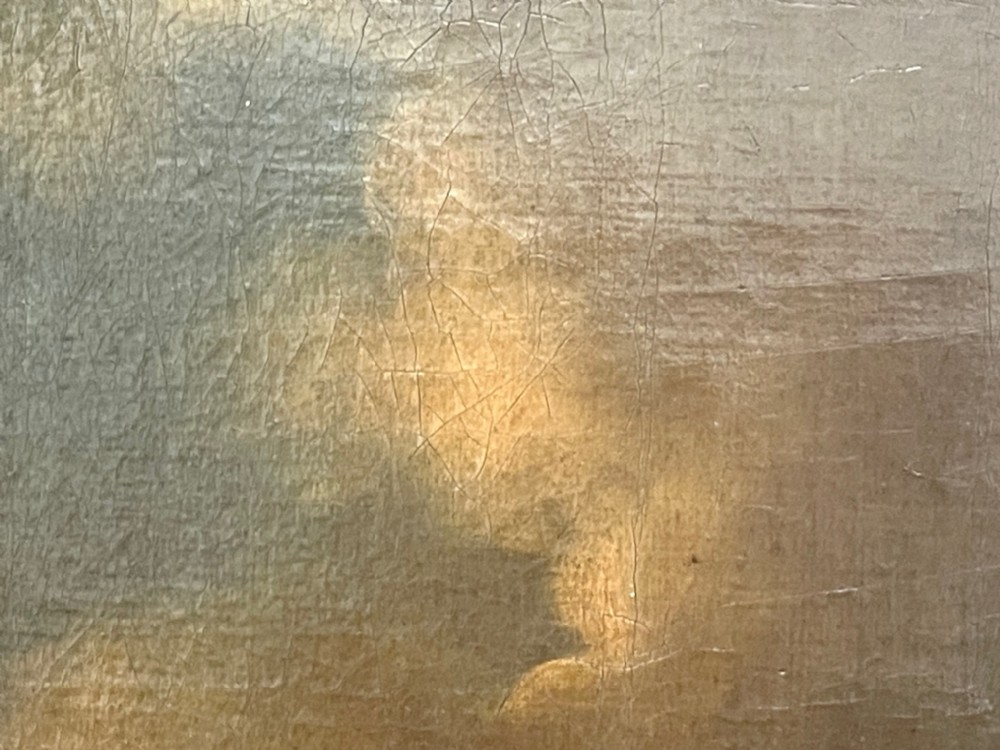
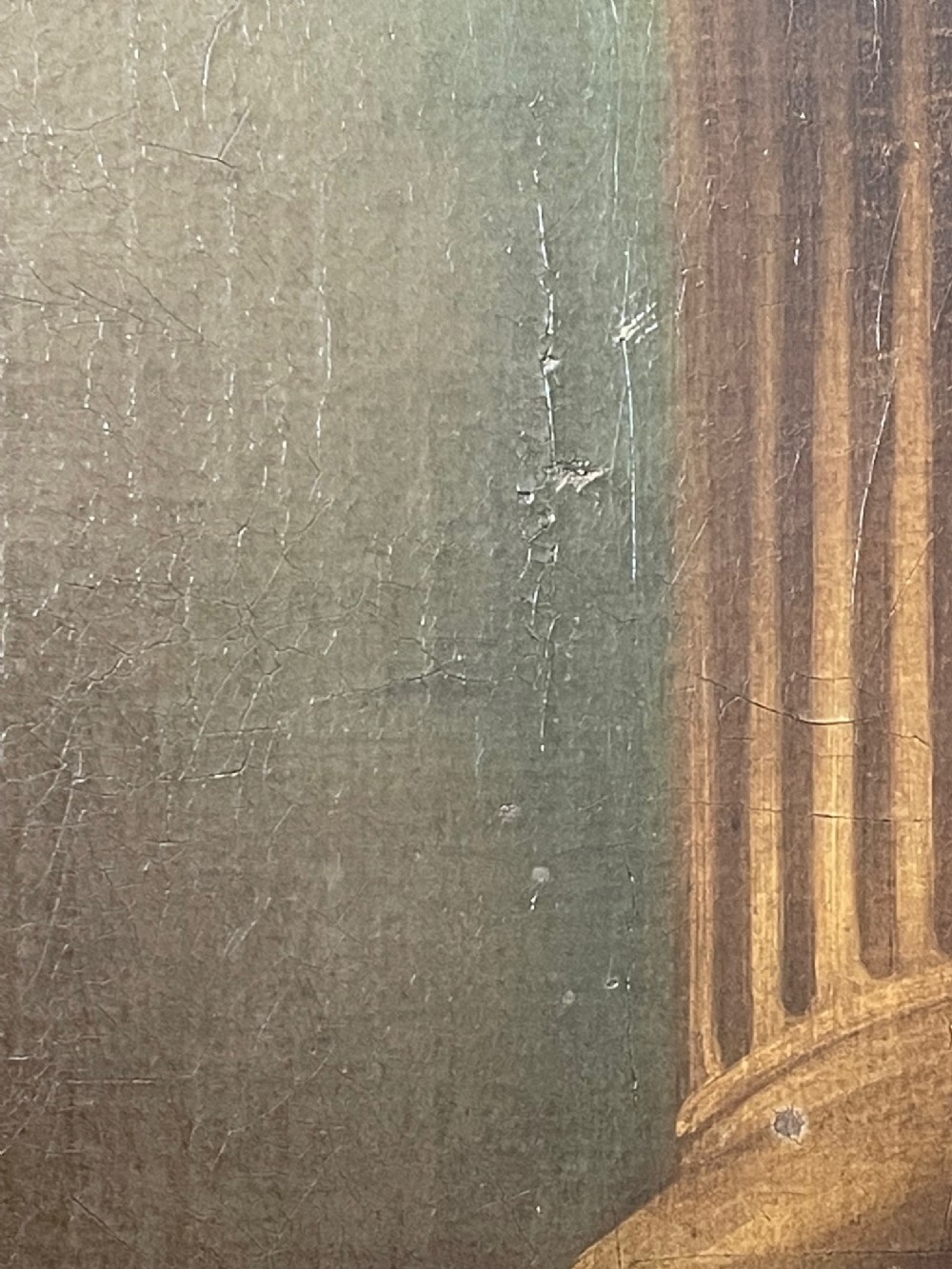
To the right you can view part of an ancient marble temple building. In the distant background to the left you can see clouds of dust from running horses and other warrior figures, with grey sky overhead.
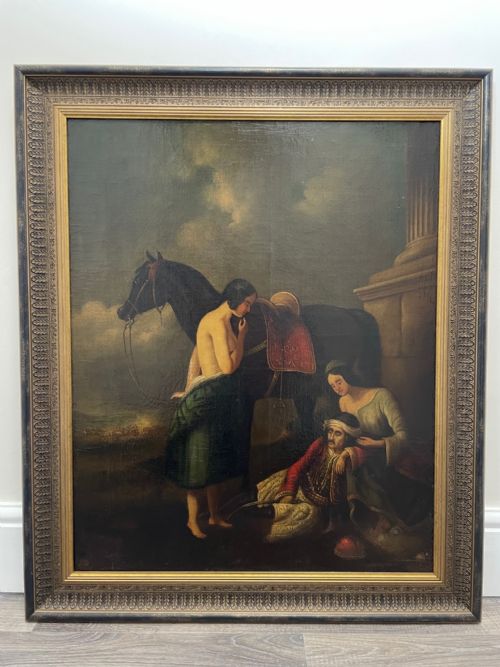
Oil on canvas.
Title "The Wounded Greek".
Unsigned.
Attributed to the British artist Abraham Cooper RA (1787–1868) was a British animal and battle painter.
The son of a tobacconist, he was born in Greenwich, London on the 8th September 1787.At the age of thirteen he became an employee at Astley's Amphitheatre, and was afterwards a groom in the service of Henry Meux, a brewer and later the first of the Meux baronets.
When he was twenty-two, wishing to possess a portrait of a favorite horse under his care, he bought a manual of painting, learned something of the use of oil-colours, and painted the picture on a canvas hung against the stable wall. His master bought it and encouraged him to continue in his efforts.
He accordingly began to copy prints of horses, and was introduced to Benjamin Marshall, the animal painter, who took him into his studio, and seems to have introduced him to the Sporting Magazine, an illustrated periodical to which he was himself a contributor.
In 1814 he exhibited his Tam O'Shanter, and in 1816 he won a prize for his Battle of Ligny. In 1817 he exhibited his Battle of Marston Moor and was made associate of the Royal Academy, and in 1820 he was elected Academician. Cooper, although ill-educated, was a clever and conscientious artist; his colouring was somewhat flat and dead, but he was a master of equine portraiture and anatomy, and had some antiquarian knowledge. He had a special fondness for Cavalier and Roundhead pictures. He died on the 24th December 1868 and is buried at the top of the western side of Highgate Cemetery (plot no.830), against the north wall.
Reference source, British Museum the 'Illustrated London News', 26 May 1849, p.348. 1849.
An exceptional artwork.
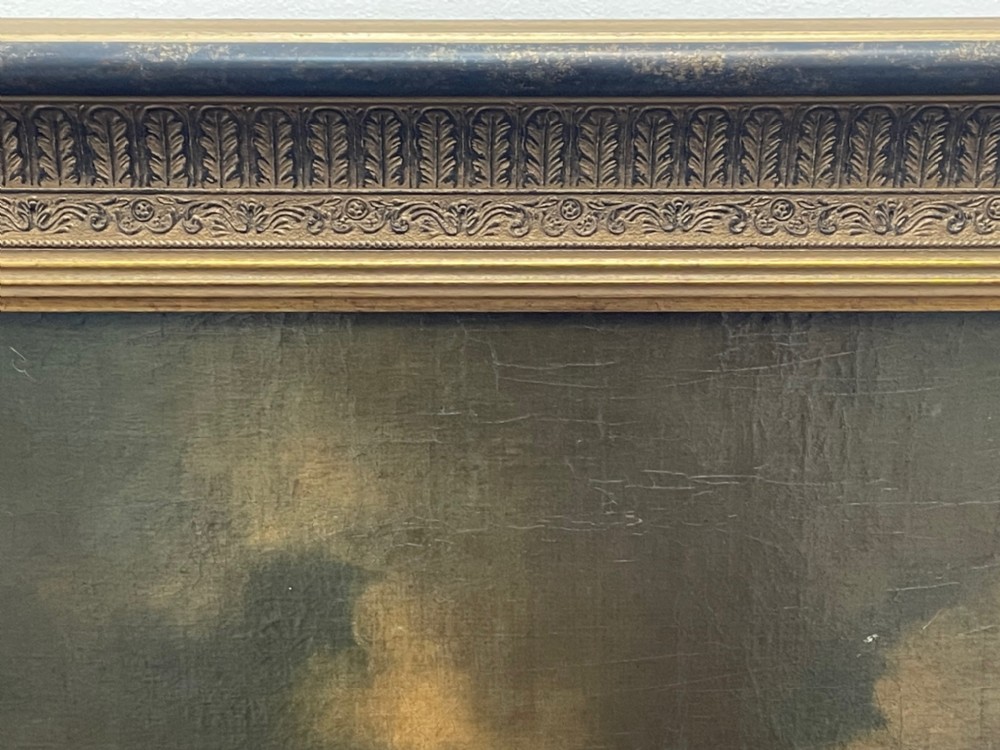
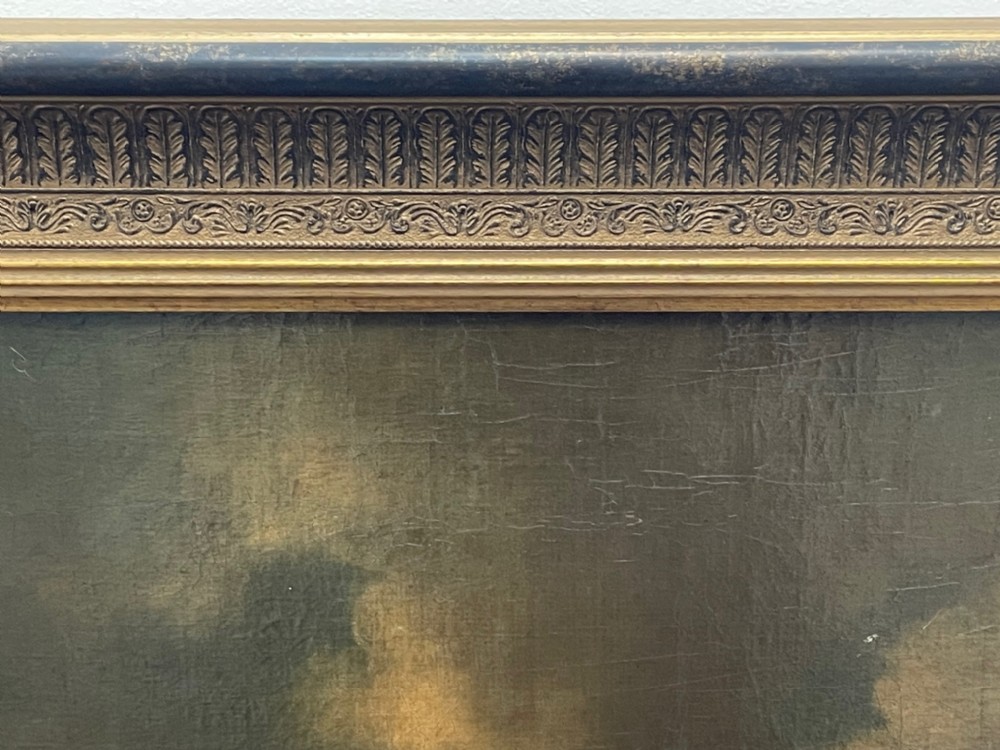
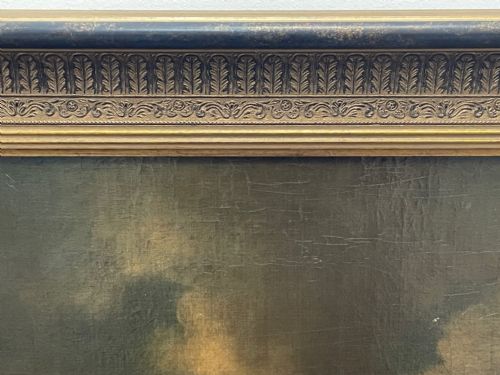
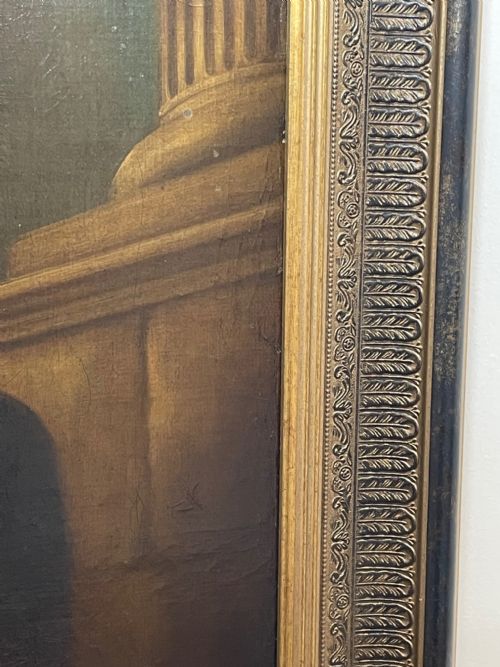
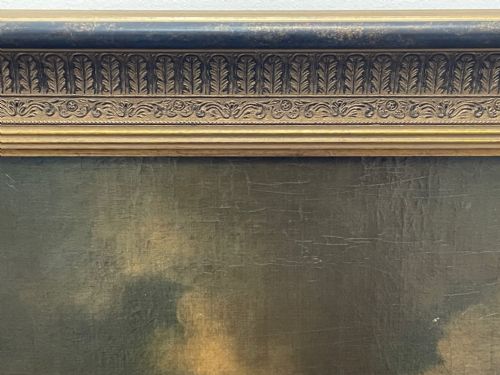
Set in a later ornate gilt frame.
Circa mid 19th century 1849.
Such an impressive imposing scene to the eye.
Highly sought after due to the collectible nature of the subject matter.
With hanging thread on the back ready for immediate home wall display.
Incredible conversation piece for your guests.
We only select & sell paintings based upon subject, quality & significance.
We provide our clients with friendly professional customer service.
Condition report.
Offered in fine used condition.
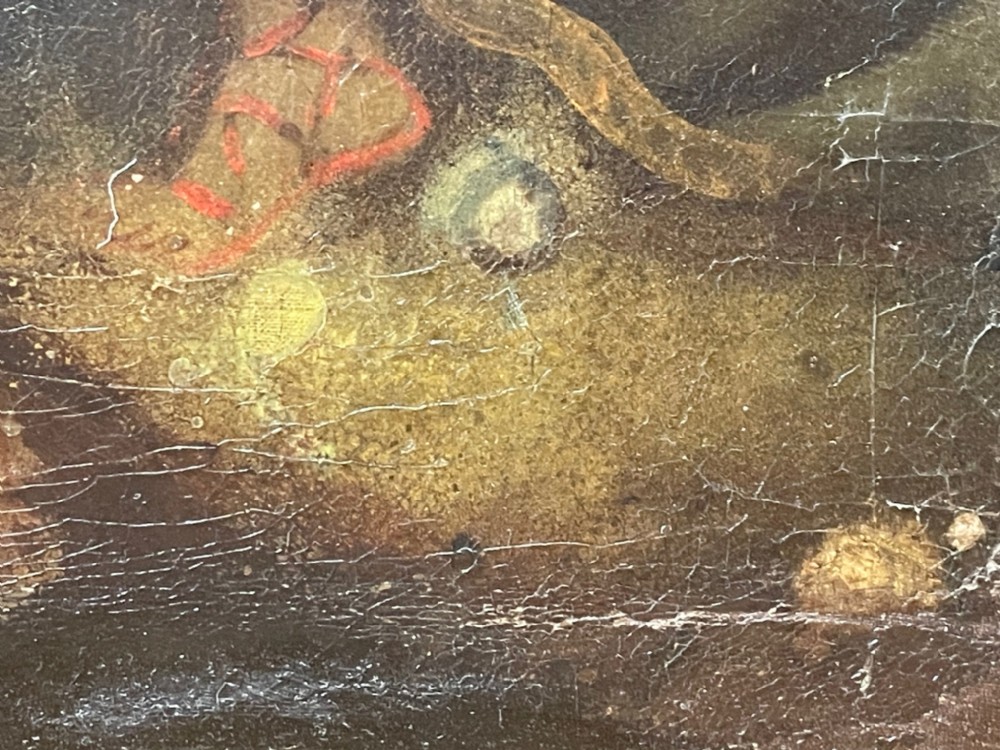
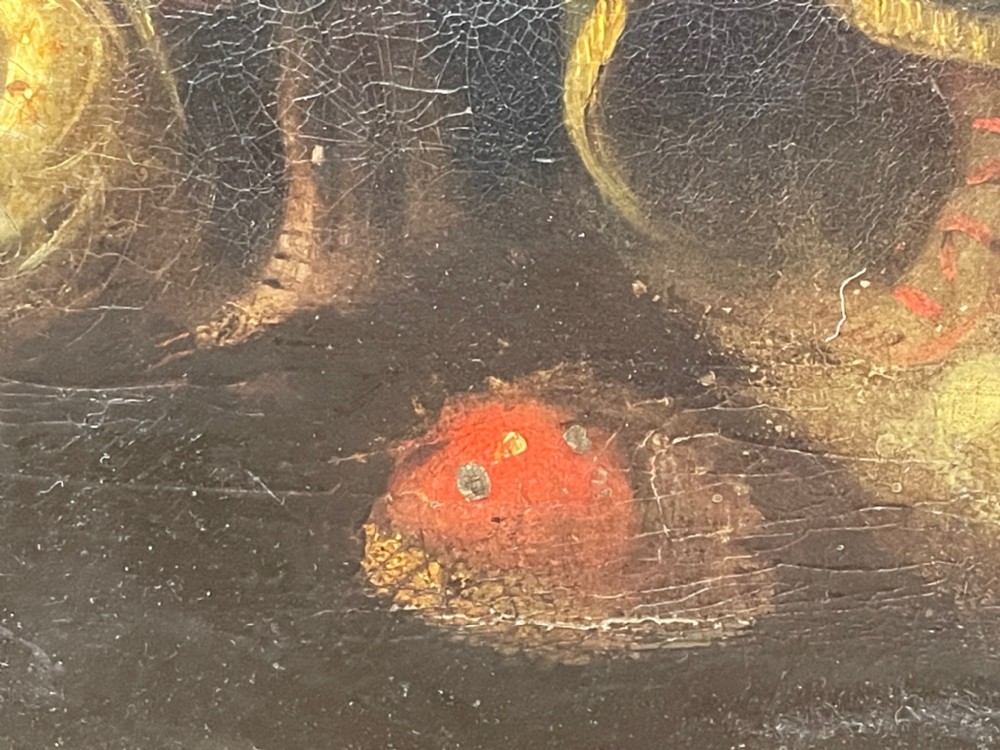
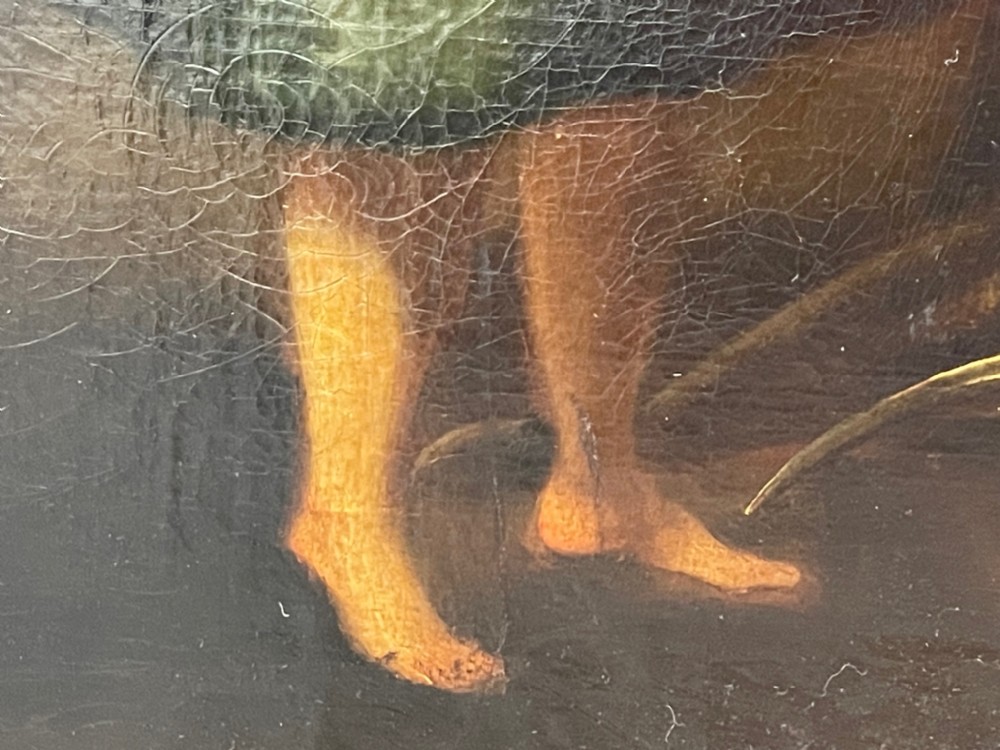
Front painting surface has various signs of craquelure, scuffs & some paint loss in places. Various foxing to the back of the canvas. Set in a later gilt frame which has general wear and in good overall order commensurate with usage & age.
International buyers worldwide shipping is available please ask for a quote.
Viewings are welcome by appointment only for customer support please send a message thankyou.
Checkout our exciting other available collections in our shop gallery, happy shopping.
Dimensions in inches & centimetres of the frame approximate
High (97cm)
Wide (81cm)
Depth thickness o
Cheshire Antiques Consultant Ltd has dated this 19th Century Oil Painting to the 19th Century.
Source the historic in 17th, 18th, 19th & 20th century fine arts, painting, sculptures & collectibles
You can view the stock and full dealer information on the Cheshire Antiques Consultant Ltd Profile Page
19th Century Oil Painting the Wounded Greek Attrib Abraham Cooper Ra