6,897  PAGES BROWSED TODAY PAGES TODAY 0  ANTIQUES UPLOADED TODAY NEW ARRIVALS
ID #SA1204393
FOR SALE
£12,500
Email
Save
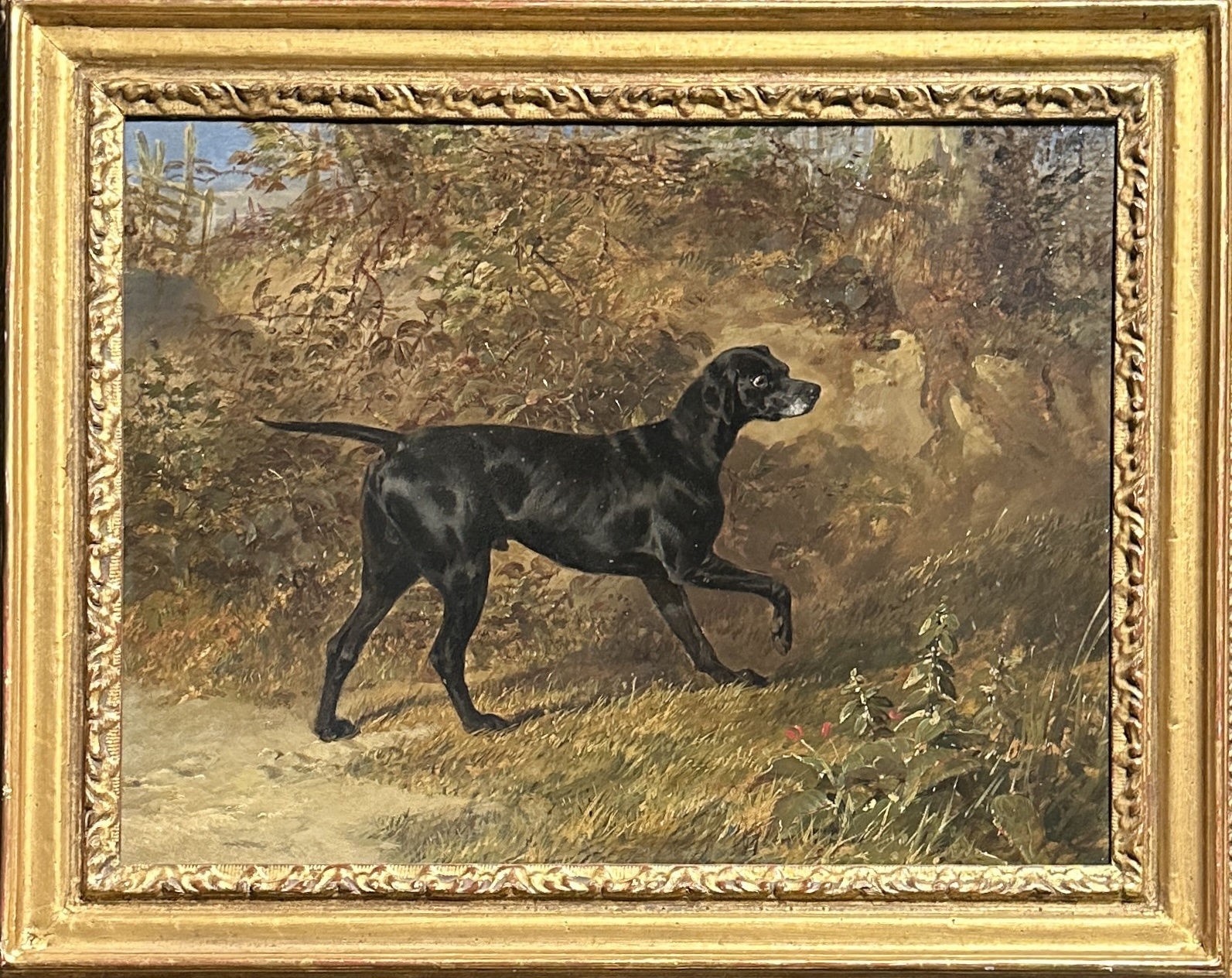
19th Century Portrait Oil Painting of a Black Pointer Dog in a Landscape by John Frederick Herring Senior
Isherwood Fine Art
for sale €14,625     $15,875
£12,500
Isherwood Fine Art

Isherwood Fine Art

Sellingantiques Verified Since Oct 2023
View Dealers Stock Page
  • About Us
    16th to 19th century old master, british and european paintings and sculpture, specialising in period portraiture. Member BADA, LAPADA.
  • Trade Associations
    Isherwood Fine Art is a registered member of LAPADA  BADA 
Id #SA1204393
PDF SHARE
SAVE

19th Century Portrait Oil Painting of a Black Pointer Dog in a Landscape by John Frederick Herring Senior

19th century
Description

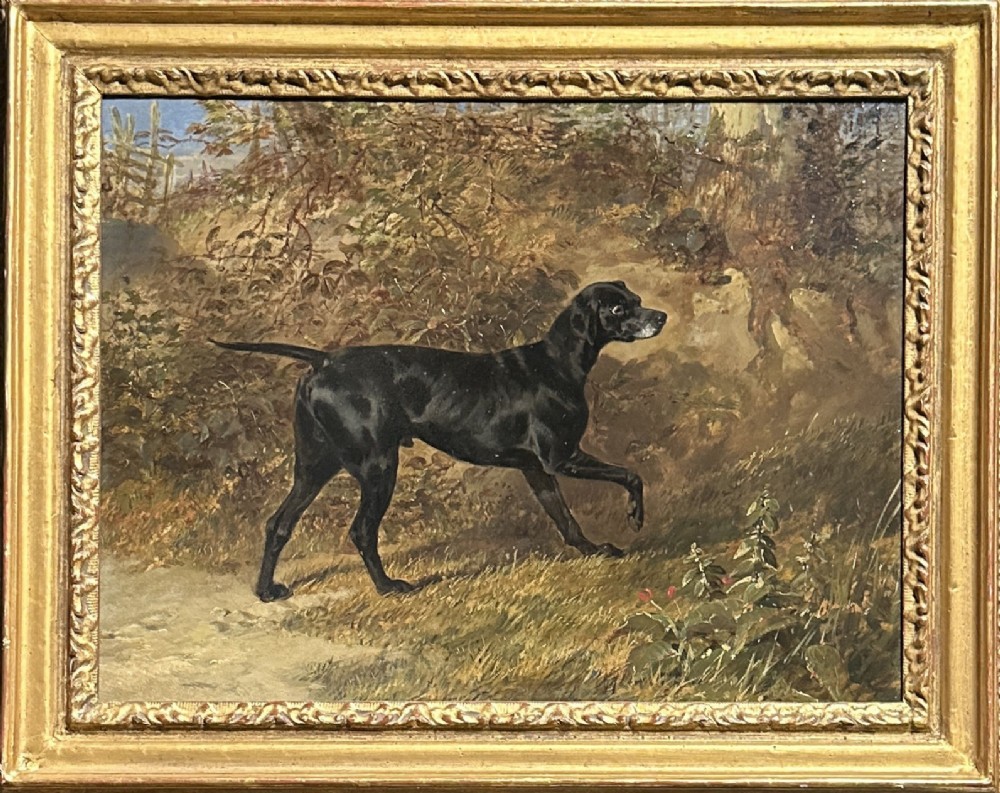
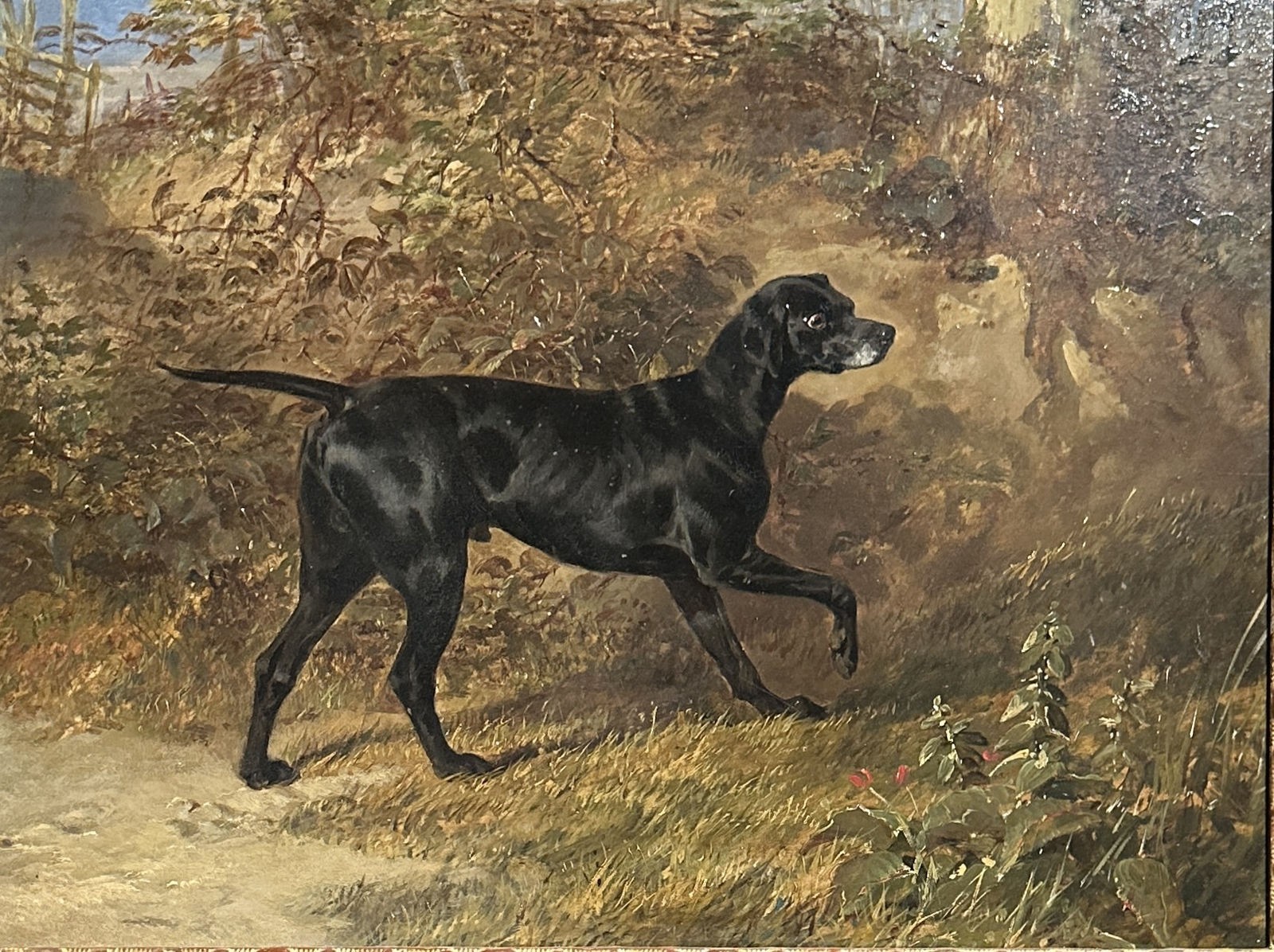
A black pointer in a woodland landscape by John Frederick Herring Senior, circa 1830. Oil on canvas in a giltwood frame.

Provenance:

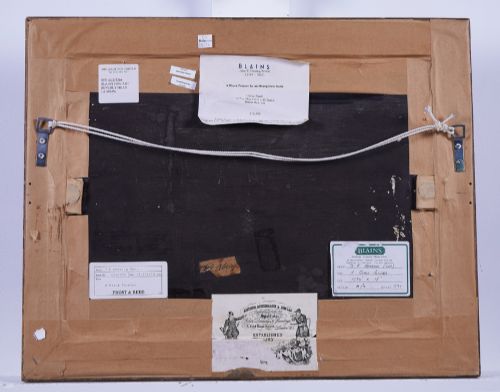
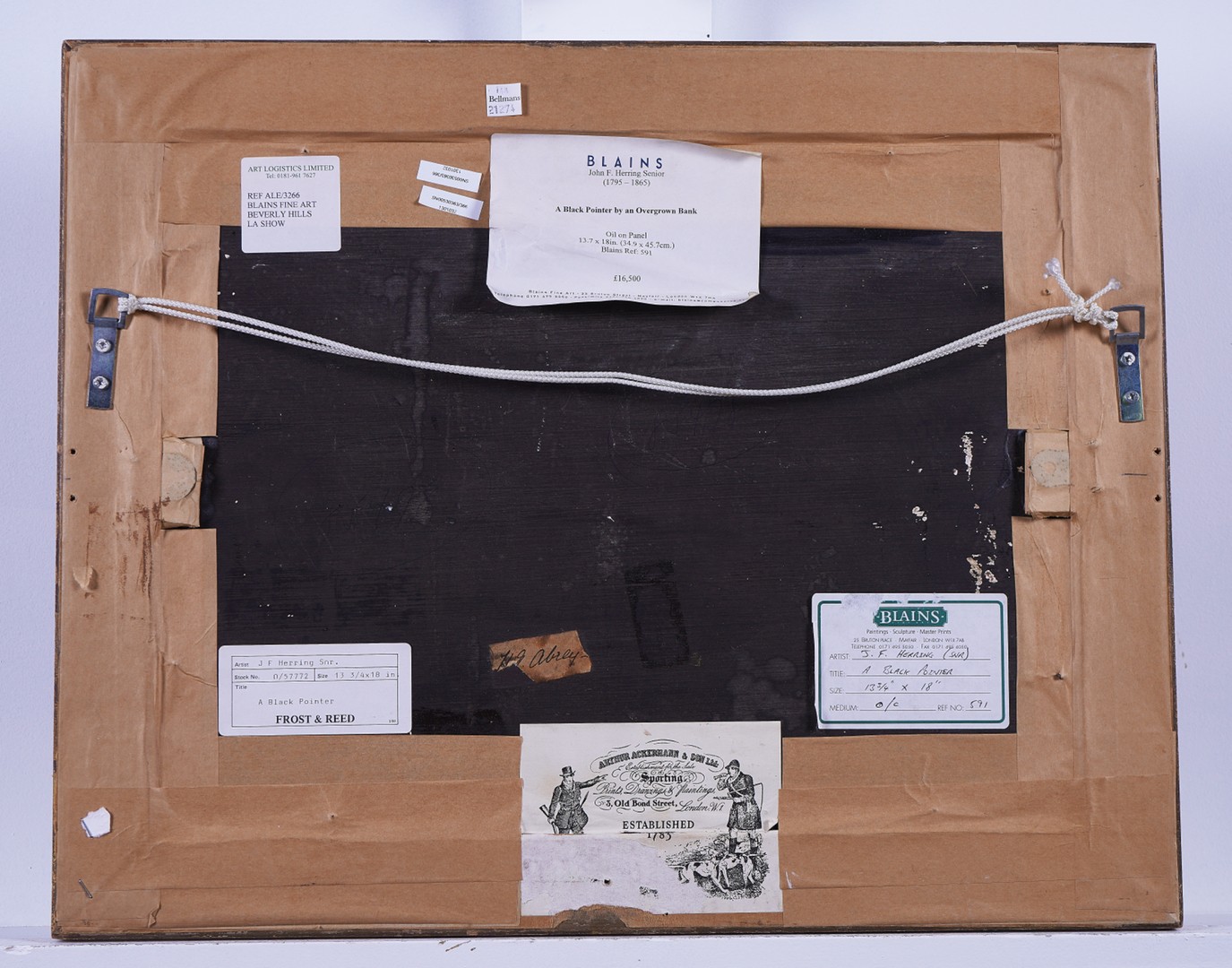
Arthur Ackerman and Son

Frost and Reed

Blains, Bruton Place, London

John Frederick Herring, born in London in 1795, was the son of a London merchant of Dutch parentage, who had been born overseas in America. The first eighteen years of Herring's life were spent in London, where his greatest interests were drawing and horses. In 1814, at the age of 18, he moved to Doncaster in the north of England, and by 1815, had married Ann Harris. His sons John Frederick Herring Jr., Charles Herring, and Benjamin Herring were all to become artists, while his two daughters, Ann and Emma, both married painters.
In Doncaster, England, Herring was employed as a painter of inn signs and coach insignia on the sides of coaches, and his later contact with a firm owned by a Mr. Wood led to Herring's subsequent employment as a night coach driver. Herring spent his spare time painting portraits of horses for inns, and he became known as the "artist coachman". Herring's talent was recognized by wealthy customers, and he began painting hunters and racehorses for the gentry.
In 1830, he left Doncaster for Newmarket, England, where he spent three years before moving to London, England. During this time, Herring might have received tuition from equestrian artist Abraham Cooper. In London, Herring experienced financial difficulties and was given financial assistance by W. T. Copeland, who commissioned many paintings, including some designs used for the Copeland Spode bone china. In 1840-1841, Herring visited Paris, painting several pictures, on the invitation of the Duc d’Orleans, the son of the French King Louis-Phillipe.

In 1845, Herring was appointed Animal Painter to the Duchess of Kent, followed by a subsequent commission from the ruling Queen Victoria, who remained a patron for the rest of his life. In 1853, Herring moved to rural Kent in the southeast of England and stopped painting horse portraits. He spent the last 12 years of his life at Meopham Park near Tonbridge, where he lived as a country squire. He then broadened his subject matter by painting agricultural scenes and narrative pictures, as well as his better-known sporting works of hunting, racing and shooting.

A highly successful and prolific artist, Herring ranks along with Sir Edwin Landseer as one of the more eminent animal painters of mid-nineteenth century Europe. The equestrian paintings of Herring were very popular, and many were engraved, including 33 winners of the St. Leger and 21 winners of the Derby. Herring exhibited at the Royal Academy from 1818–1865, at the British Institution from 1830–1865, and at the Society of British Artists in 1836-1852, where Herring became Vice-President in 1842.

Physical Dimensions
Height
35cm (13.78")
Width
46cm (18.11")
Declaration

Isherwood Fine Art has dated this Victorian Dog Oil Painting to the 19th Century.

Reference Numbers
Sellingantiques Reference
SA1204393
Dealers Notes

Isherwood fine art

Description
A black pointer in a woodland landscape by John Frederick Herring Senior, circa 1830. Oil on canvas in a giltwood frame.

Provenance:

Arthur Ackerman and Son

Frost and Reed

Blains, Bruton Place, London

John Frederick Herring, born in London in 1795, was the son of a London merchant of Dutch parentage, who had been born overseas in America.
Isherwood Fine Art

The first eighteen years of Herring's life were spent in London, where his greatest interests were drawing and horses. In 1814, at the age of 18, he moved to Doncaster in the north of England, and by 1815, had married Ann Harris. His sons John Frederick Herring Jr., Charles Herring, and Benjamin Herring were all to become artists, while his two daughters, Ann and Emma, both married painters.

fig 1. A 19th-century oil painting depicting a black pointer dog in profile against a landscape, set within a carved gilt wood frame.
fig 1. 19th Century Portrait Oil Painting of a Black Pointer Dog in a Landscape by John Frederick Herring Senior

In Doncaster, England, Herring was employed as a painter of inn signs and coach insignia on the sides of coaches, and his later contact with a firm owned by a Mr. Wood led to Herring's subsequent employment as a night coach driver. Herring spent his spare time painting portraits of horses for inns, and he became known as the "artist coachman". Herring's talent was recognized by wealthy customers, and he began painting hunters and racehorses for the gentry.

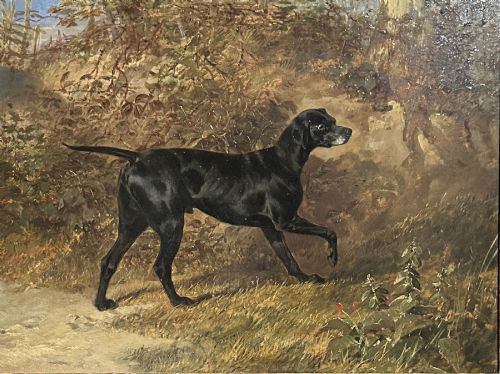
fig 2. A 19th-century oil painting depicting a black pointer dog in profile against a landscape, set within a carved gilt wood frame.
fig 2. 19th Century Portrait Oil Painting of a Black Pointer Dog in a Landscape by John Frederick Herring Senior

In 1830, he left Doncaster for Newmarket, England, where he spent three years before moving to London, England. During this time, Herring might have received tuition from equestrian artist Abraham Cooper. In London, Herring experienced financial difficulties and was given financial assistance by W. T. Copeland, who commissioned many paintings, including some designs used for the Copeland Spode bone china. In 1840-1841, Herring visited Paris, painting several pictures, on the invitation of the Duc d’Orleans, the son of the French King Louis-Phillipe.

In 1845, Herring was appointed Animal Painter to the Duchess of Kent, followed by a subsequent commission from the ruling Queen Victoria, who remained a patron for the rest of his life. In 1853, Herring moved to rural Kent in the southeast of England and stopped painting horse portraits. He spent the last 12 years of his life at Meopham Park near Tonbridge, where he lived as a country squire. He then broadened his subject matter by painting agricultural scenes and narrative pictures, as well as his better-known sporting works of hunting, racing and shooting.

A highly successful and prolific artist, Herring ranks along with Sir Edwin Landseer as one of the more eminent animal painters of mid-nineteenth century Europe. The equestrian paintings of Herring were very popular, and many were engraved, including 33 winners of the St. Leger and 21 winners of the Derby. Herring exhibited at the Royal Academy from 1818–1865, at the British Institution from 1830–1865, and at the Society of British Artists in 1836-1852, where Herring became Vice-President in 1842.

Height
35cm (13.78")
Width
46cm (18.11")
Date of Manufacture

Isherwood Fine Art has dated this Victorian Dog Oil Painting to the 19th Century.

Reference Numbers
Sellingantiques Ref
SA1204393
Isherwood Fine Art
Isherwood Fine Art
Sellingantiques verified Since Oct 2023

16th to 19th century old master, british and european paintings and sculpture, specialising in period portraiture. Member BADA, LAPADA.

Dealer Profile

You can view the stock and full dealer information on the Isherwood Fine Art Profile Page

Trade Associations

Isherwood Fine Art is a registered member of LAPADA  BADA 
PDF SHARE
SAVE
A 19th-century oil painting depicting a black pointer dog in profile against a landscape, set within a carved gilt wood frame.
1 / 3
Archive I A 19th-century oil painting depicting a black pointer dog in profile against a landscape, set within a carved gilt wood frame.

19th Century Portrait Oil Painting of a Black Pointer Dog in a Landscape by John Frederick Herring Senior
Archive II A 19th-century oil painting depicting a black pointer dog in profile against a landscape, set within a carved gilt wood frame. View II
Archive III A 19th-century oil painting depicting a black pointer dog in profile against a landscape, set within a carved gilt wood frame. View III
FURTHER BROWSING

Visitors also looked at these ⇣

Enlarged Archival View
Telephone 07984 699799
Location
Bath and London
United Kingdom

By appointment only.
Verified Since Oct 2023
Items For Sale 43
Items Sold 32
Isherwood Fine Art
Isherwood Fine Art
Verified Since Oct 2023
View Dealer Info
Location: Bath and London, United Kingdom, , By appointment only.
Verified
Oct 2023
For Sale
43
Sold
32
A 19th-century oil painting depicting a black pointer dog in profile against a landscape, set within a carved gilt wood frame.
19th century portrait oil painting of a black pointer dog in a landscape by John Frederick Herring Senior
Ref: SA1204393
A 19th-century oil painting depicting a black pointer dog in profile against a landscape, set within a carved gilt wood frame.
Detail View 1
Detail View 2
Archival Detail
Every single antique dealer on our platform is individually approved by our internal team. We verify their professional trade history, ethical standards, and photographic quality to ensure a secure, high-standard buying environment. Upon joining, every dealer agrees to a strict 9-point code of conduct. While issues can occasionally arise, our dealers typically resolve them swiftly and directly with the buyer. In fact, since our founding in 2002, Sellingantiques has only had to step in to help resolve an issue on roughly five occasions—a true testament to the quality of our dealers and their dedication to your happiness.
Our dealers are highly experienced in packing and shipping fragile, high-value antiques. Because you are in direct contact with the dealer, you will be able to easily go through all available shipping and insurance options together to ensure your item arrives safely.
Antiques are the ultimate green purchase. By choosing historical pieces over newly manufactured goods, you completely eliminate the carbon footprint of modern mass production while preserving exceptional, timeless craftsmanship.

British sporting art from the 19th century focuses on field sports, working dogs, horses, and rural country pursuits. These paintings typically feature naturalistic outdoor settings, detailed anatomical accuracy, and a muted, earthy colour palette.

Artists during this era painted with oil pigments applied to stretched linen canvas or timber panels. Frames were predominantly constructed from carved wood with water gilding or oil-gilded leaf application.

Authentic period paintings show natural craquelure across the paint surface, age-appropriate darkening or oxidation on the reverse of the canvas, and hand-carved joinery on original wooden stretchers and frames.

Hang the artwork as a focal point above a timber sideboard, console table, or as part of a gallery wall paired with modern black-and-white photography to create visual contrast.

Keep the artwork away from direct sunlight, moisture, and fluctuating temperatures. Clean the frame with a soft, dry feather duster, and avoid chemical solvents on the paint surface.
items
Add keywords to the filter
Price
£100
£250000
Era
Movements
Material
Origin
Stock Location
Freshness
Online Payments
Categories