29,590  PAGES BROWSED TODAY PAGES TODAY • 122 ANTIQUES UPLOADED TODAYNEW ARRIVALS
GIFTS
122 ITEMS ADDED TODAY
Sort Order
Items Per Page
Antiques dealer?
Join as a Seller
Browse Categories
Sort order
Items per page
sold SA766280
Sorry, but this item has been sold.
Regent Antiques

Regent Antiques

Sellingantiques Verified Since Sep 2016
Browse dealers 639 items
  • About Us
    We specialise in english and continental furniture, silver, porcelain and decorative items.
  • Trade Associations
    Regent Antiques is a registered member of LAPADA  CINOA
Id #SA766280
SHARE
SAVE

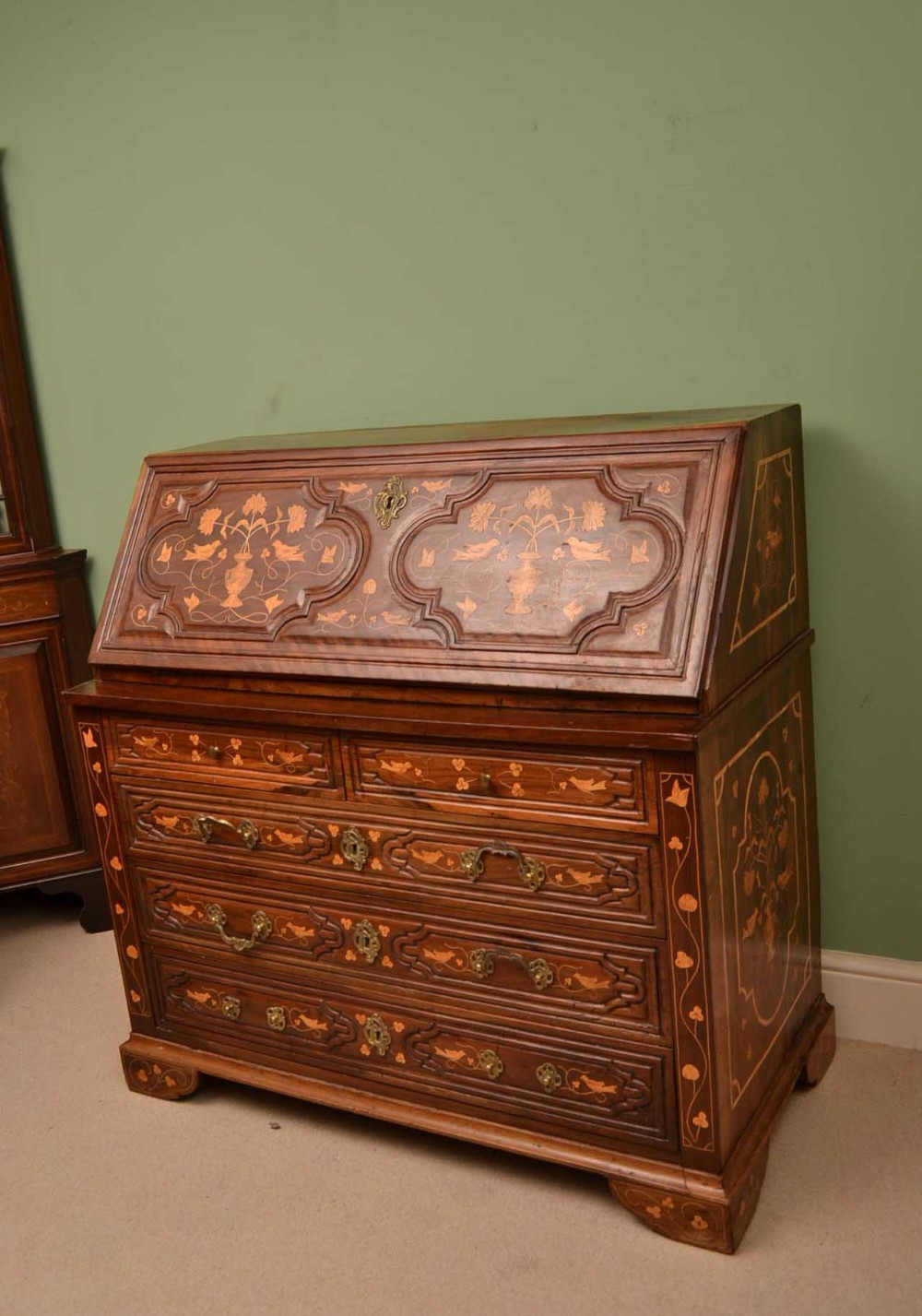
Antique Spanish Walnut Marquetry Bureau C.1780

18th century
Sold 12 February 2021 · Regent Antiques
This “Antique Spanish Walnut Marquetry Bureau C.1780 ” found a buyer.

It was listed by Regent Antiques. Sold pieces stay on Sellingantiques as a record of what has passed through, and the next one is rarely far away.

Description

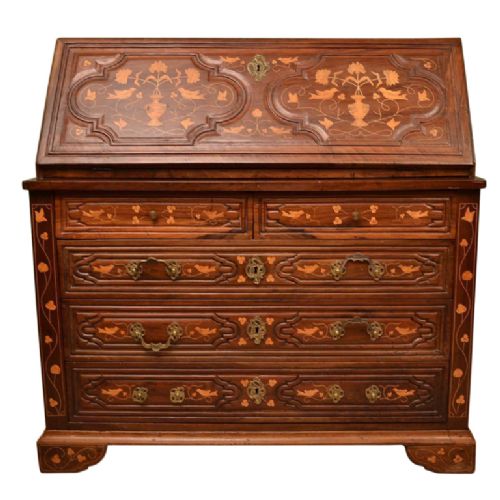
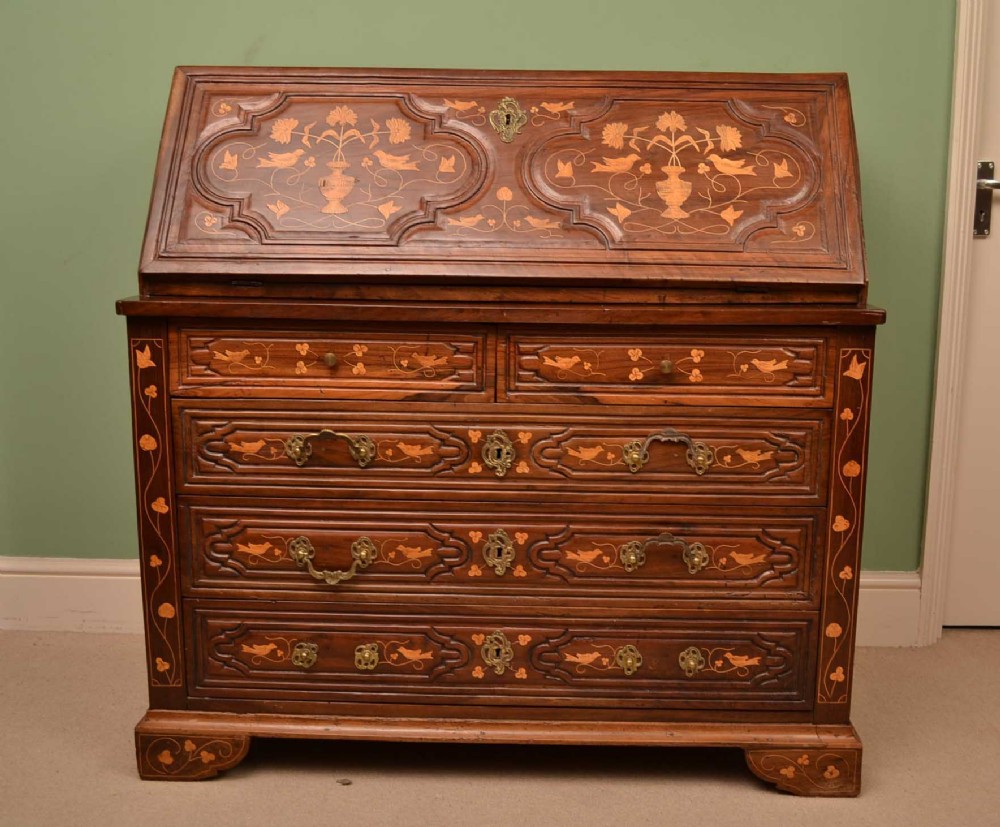
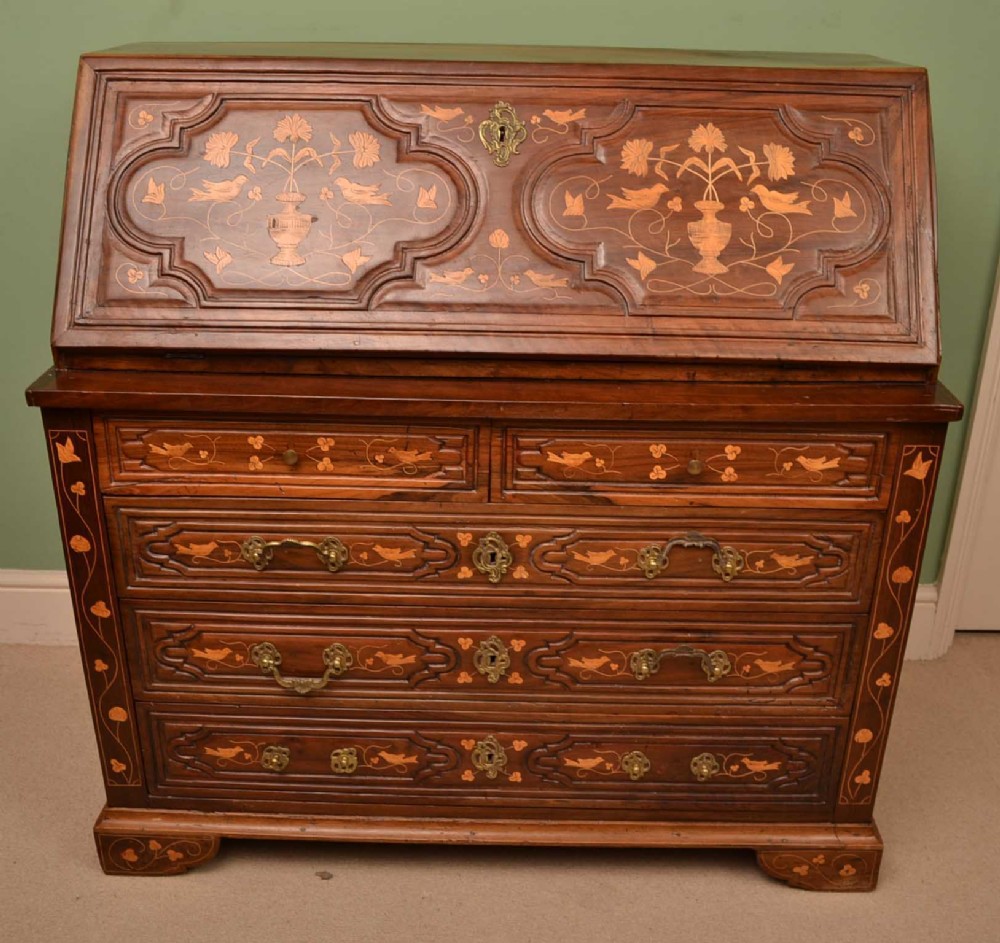
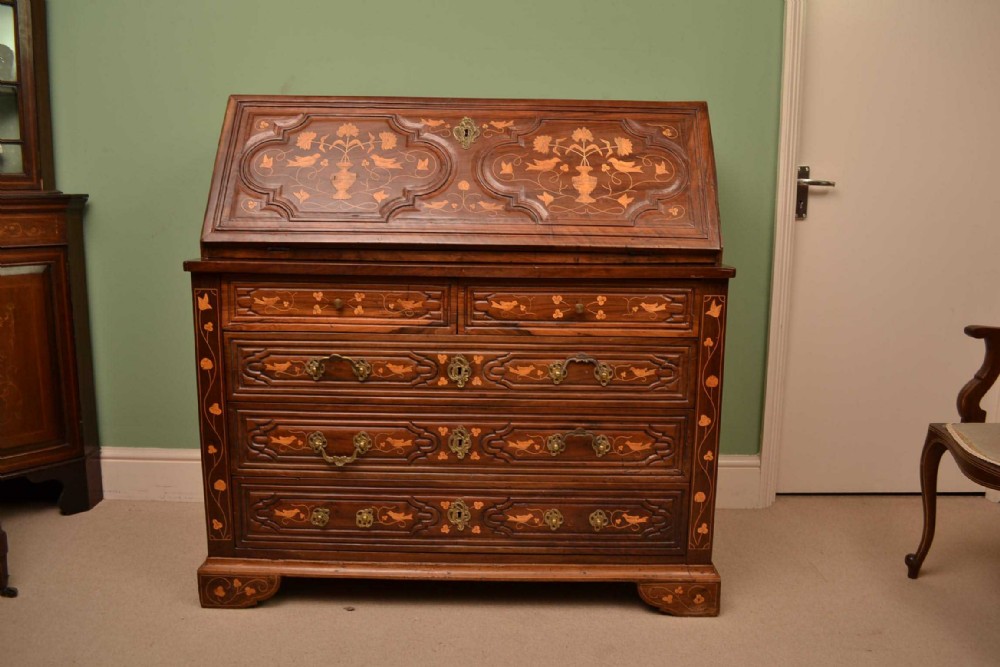
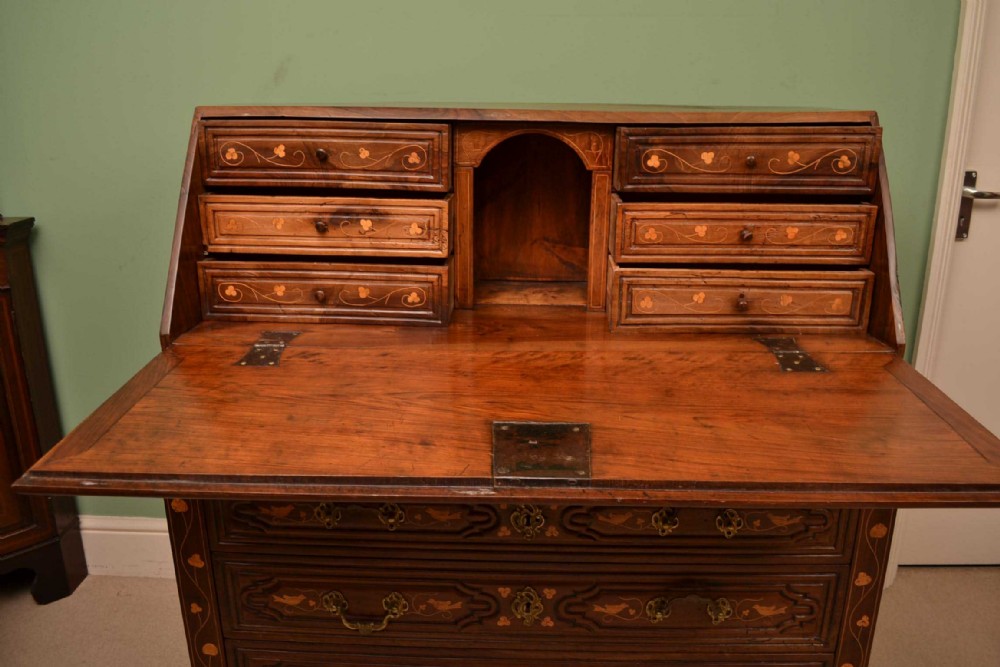
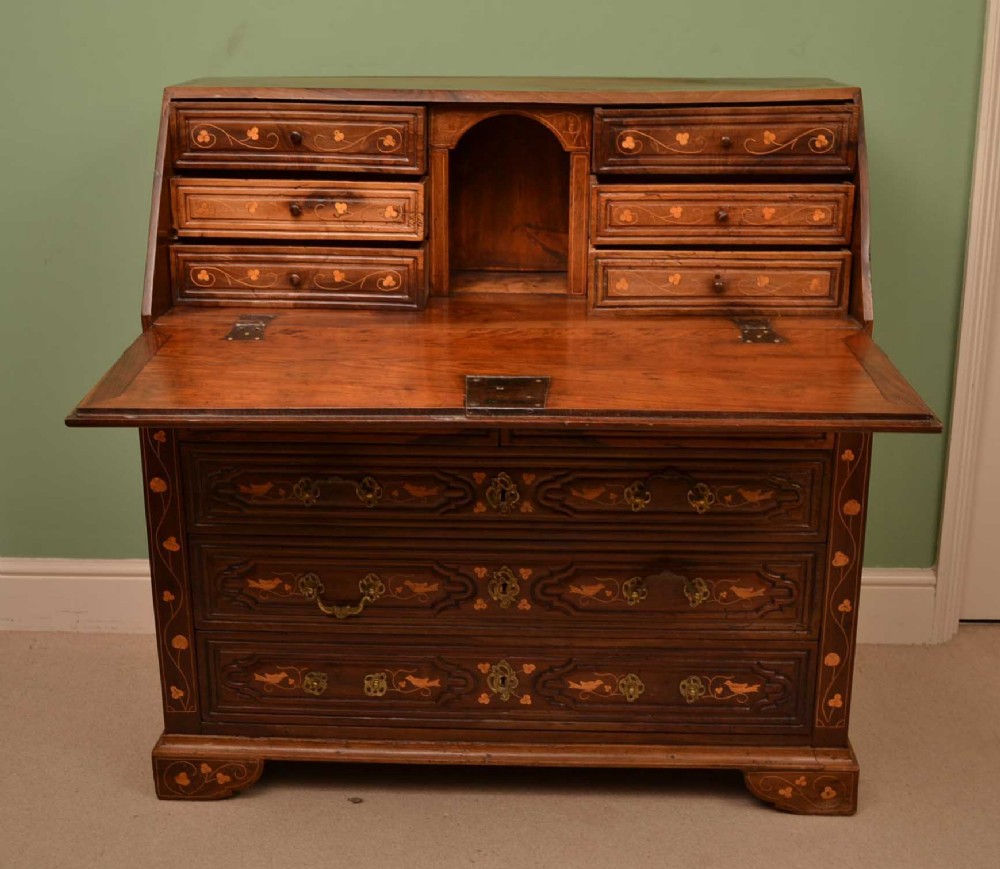
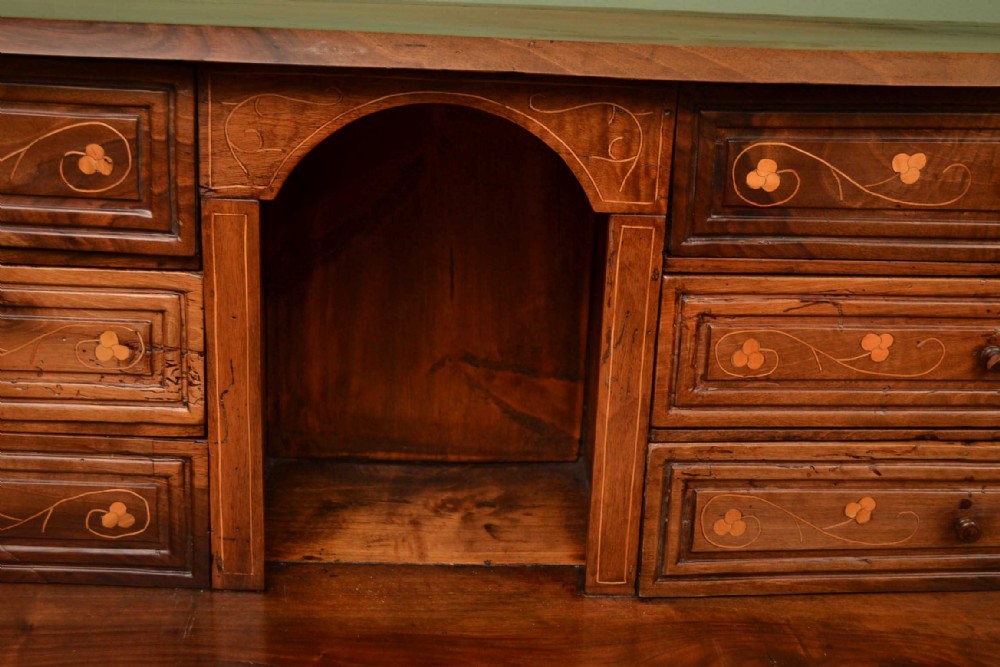
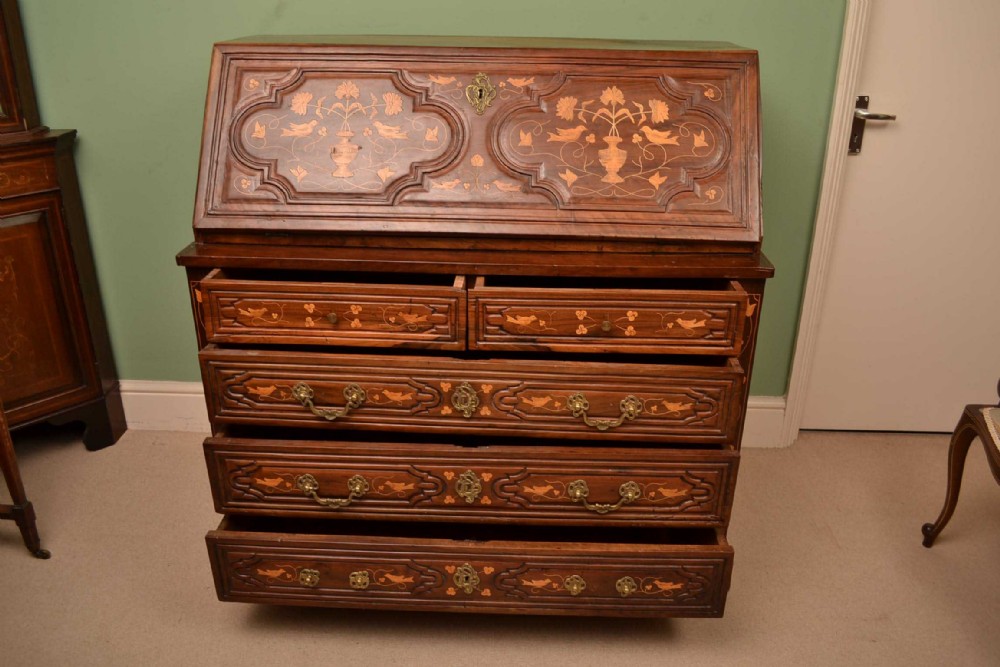
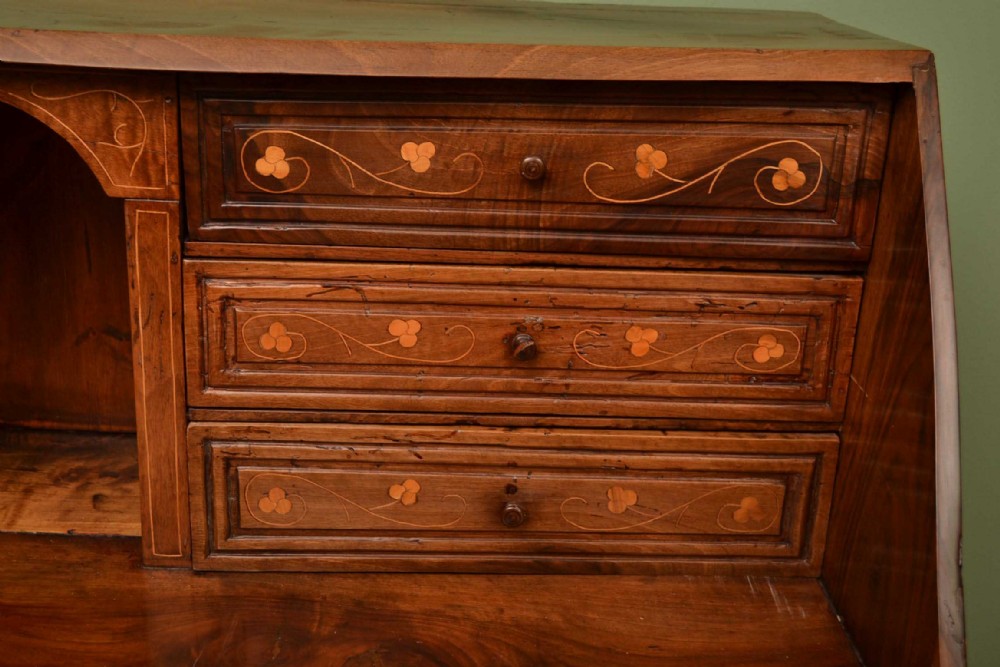
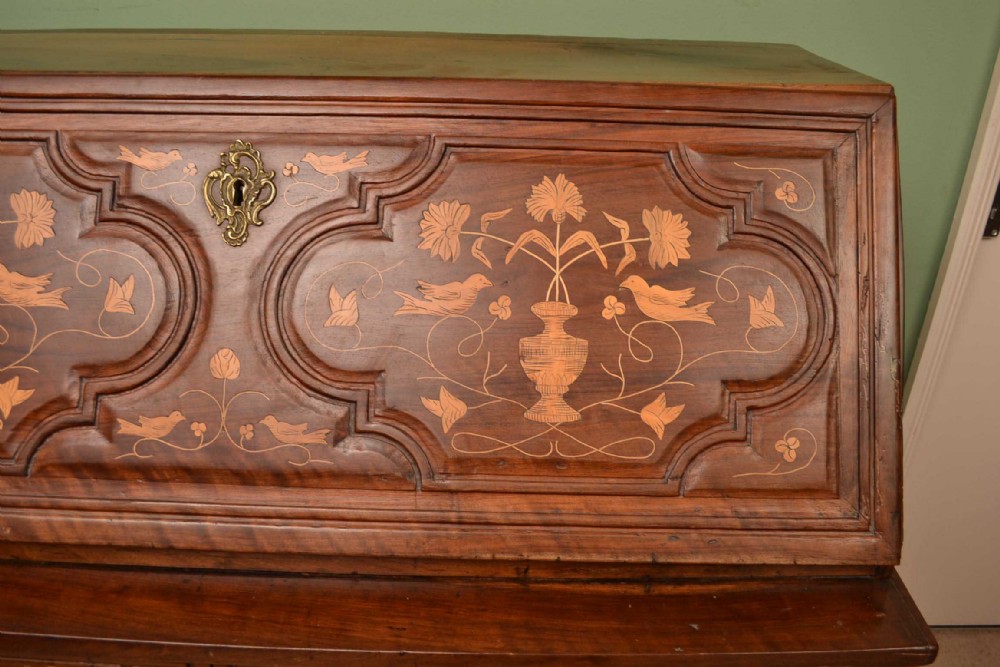
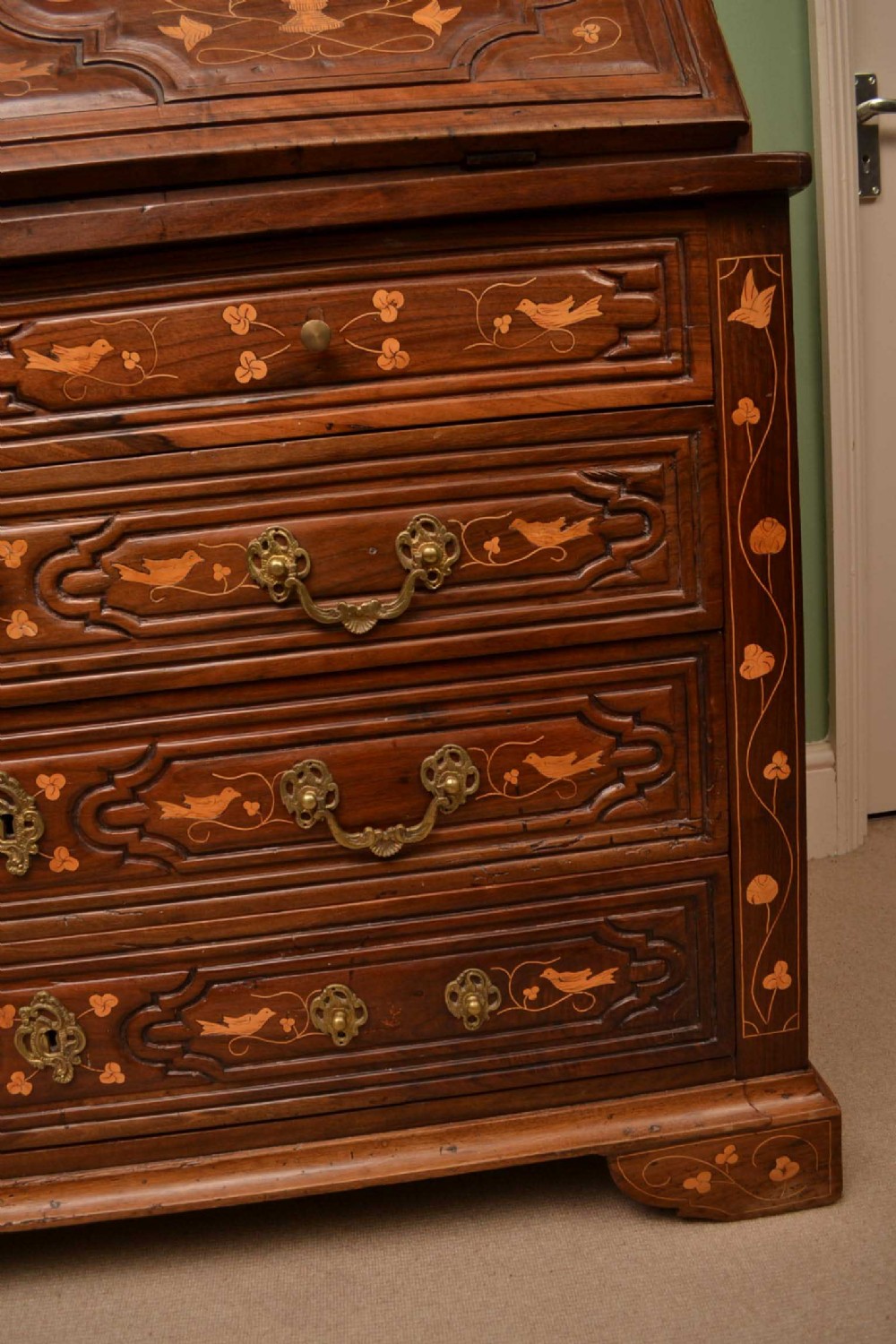
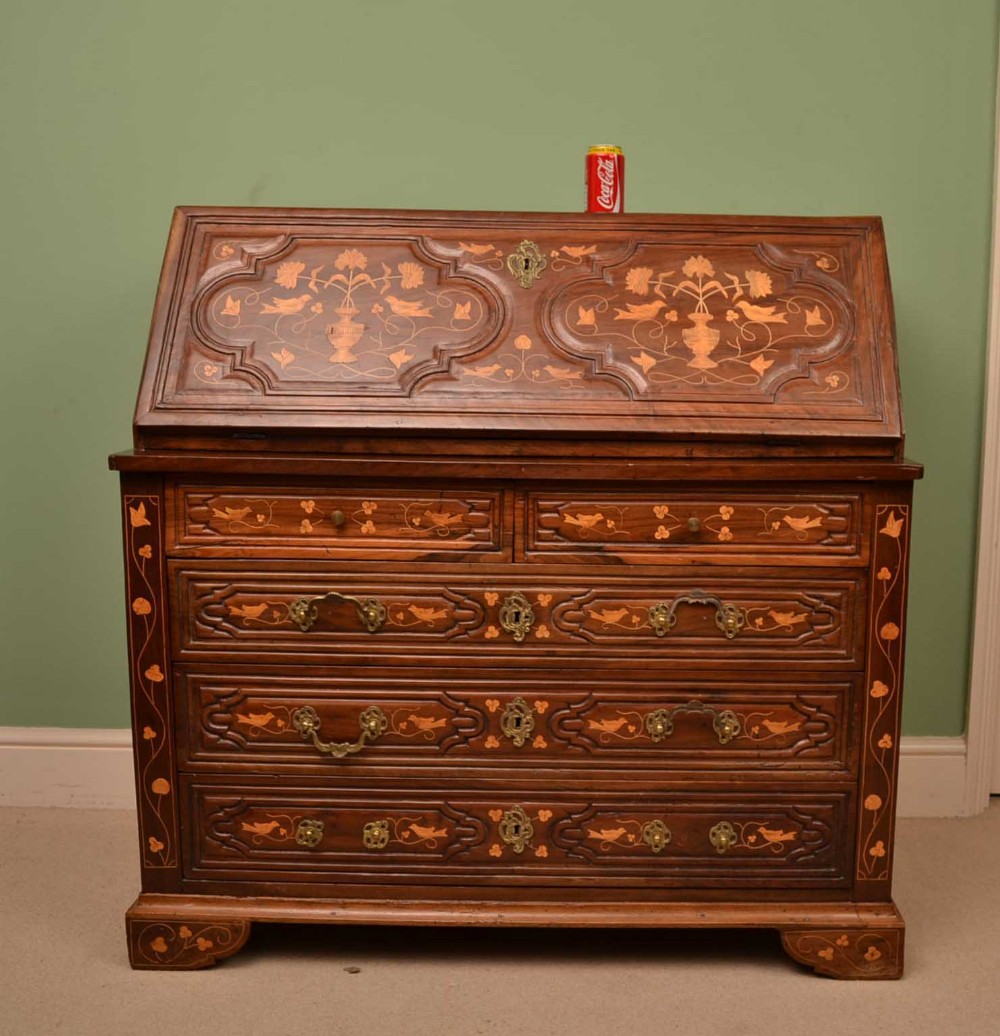
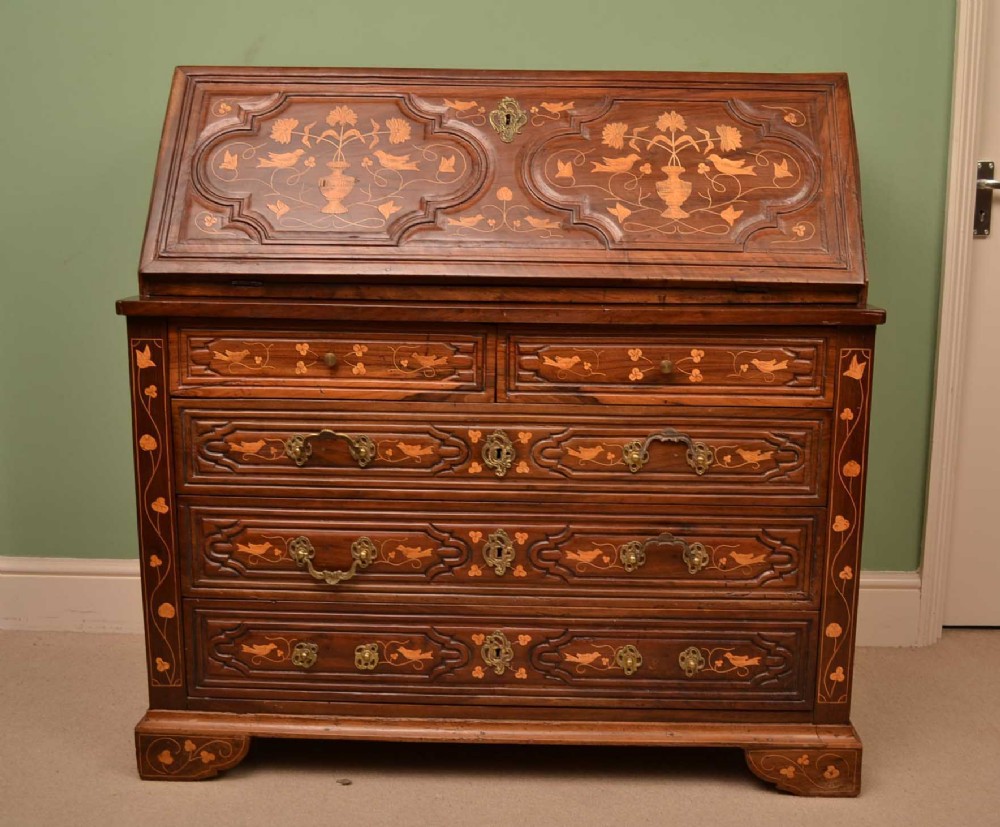
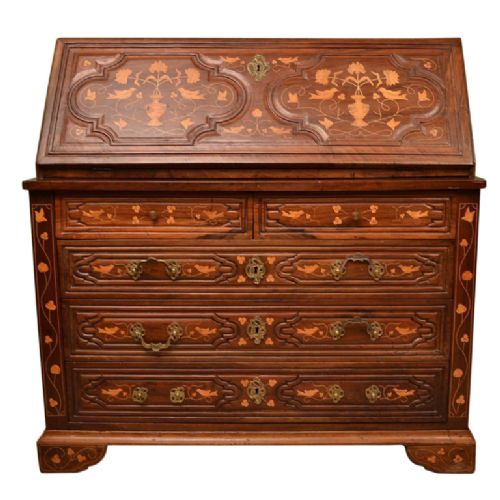
The bureau is beautifully crafted from solid walnut and has beautiful marquetry decoration, of birds and flowers. The writing fall drops down to reveal an elegant interior with six small drawers and a cupboard.

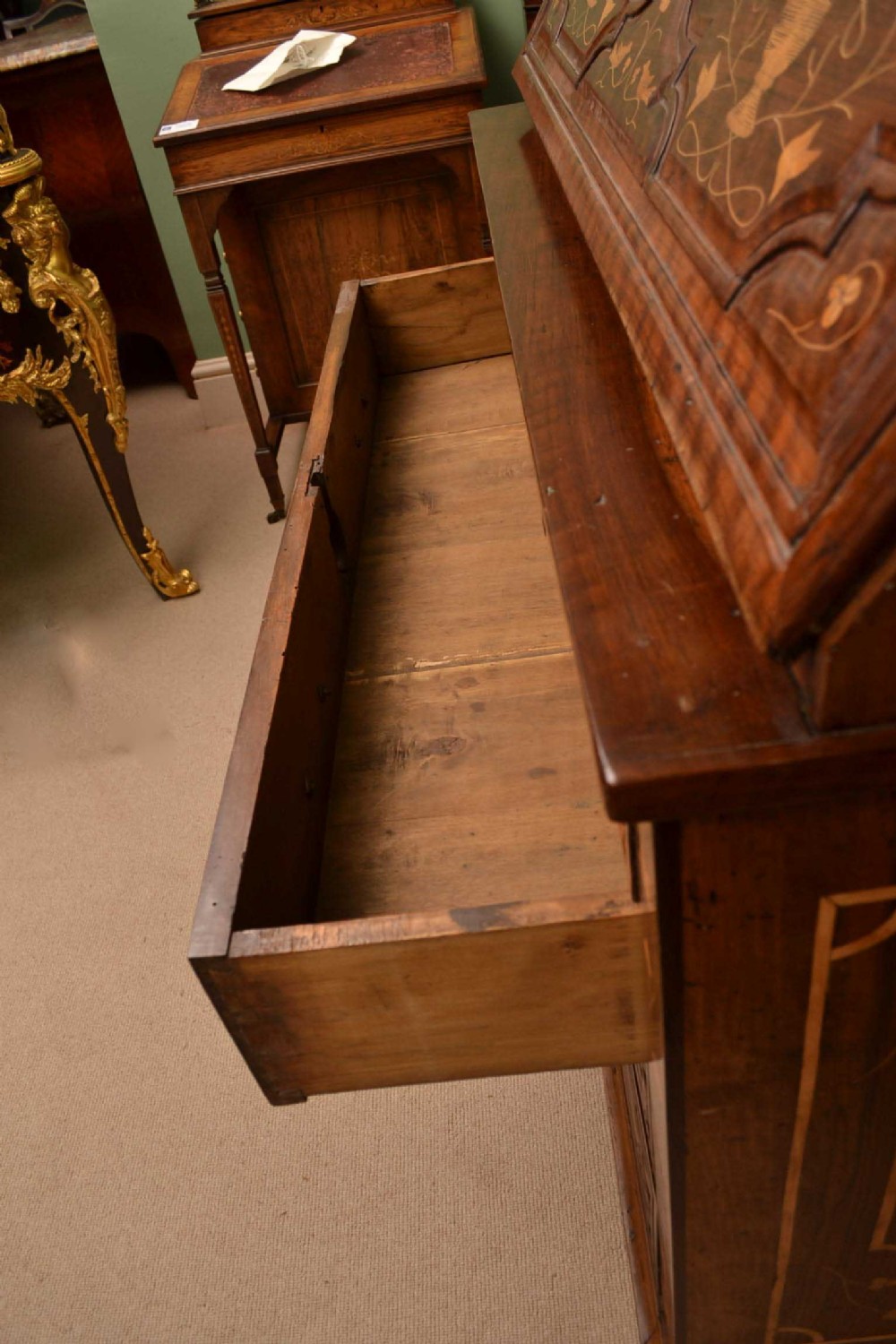
Below there are two half width drawers and three full width. The bureau has original brass locks and handles.

There is no mistaking the sophisticated quality and design of this bureau and it is sure to receive the maximum amount of attention wherever it is placed in your home.

Condition

You are viewing this item in original condition as we have not yet had time to restore it. Any restoration that is required will be done before delivery and is included in the price.

Dimensions in cm:

Height 117 x Width 116 x Depth 59

Dimensions in inches:

Height 46.1 x Width 45.7 x Depth 23.2

Walnut

The Walnut woods are probably the most recognisable and popular of all the exotic woods, having been used in furniture making for many centuries. Walnut veneer was highly priced and the cost would reflect the ‘fanciness’ of the veneer – the more decorative, then the more expensive and desirable.

Figured Walnut and Burr Walnut (often referred to as Burl Walnut) were considered as the most attractive varieties of Walnut. Burr Walnut veneer was taken from the specific part of the tree where ‘growths’ sprouting smaller branches and/ or roots would occur. As these ‘growth’ areas were limited in both occurrence and size, larger veneers were hard to source and often on bigger furniture (tables, desks, bureaus, cabinets etc), these veneers would have to be carefully joined by matching up the pieces or blending them together.

Marquetry

is decorative artistry where pieces of material (such as wood, mother of pearl, pewter, brass silver or shell) of different colours are inserted into surface wood veneer to form intricate patterns such as scrolls or flowers.

The technique of veneered marquetry had its inspiration in 16th century Florence. Marquetry elaborated upon Florentine techniques of inlaying solid marble slabs with designs formed of fitted marbles, jaspers and semi-precious stones. This work, called opere di commessi, has medieval parallels in Central Italian "Cosmati"-work of inlaid marble floors, altars and columns. The technique is known in English as pietra dura, for the "hardstones" used: onyx, jasper, cornelian, lapis lazuli and colored marbles. In Florence, the Chapel of the Medici at San Lorenzo is completely covered in a colored marble facing using this demanding jig-sawn technique.

Techniques of wood marquetry were developed in Antwerp and other Flemish centers of luxury cabinet-making during the early 16th century. The craft was imported full-blown to France after the mid-seventeenth century, to create furniture of unprecedented luxury being made at the royal manufactory of the Gobelins, charged with providing furnishings to decorate Versailles and the other royal residences of Louis XIV. Early masters of French marquetry were the Fleming Pierre Golle and his son-in-law, André-Charles Boulle, who founded a dynasty of royal and Parisian cabinet-makers (ébénistes) and gave his name to a technique of marquetry employing tortoiseshell and brass with pewter in arabesque or intricately foliate designs.

Our reference: 03768

Date of Manufacture

Regent Antiques has dated this piece to the 18th Century.

Physical Dimensions
Height
117cm (46.06")
Width
116cm (45.67")
Depth
59cm (23.23")
Reference Numbers
Sellingantiques Reference
SA766280
Dealers Internal Reference
03768
Antique Spanish Walnut Marquetry Bureau c.1780
Detail view 1Detail view 2Detail view 3Detail view 4Detail view 5Detail view 6Detail view 7Detail view 8Detail view 9Detail view 10Detail view 11Detail view 12Detail view 13Detail view 14Detail view 15
SOLD6+ MONTHS AGO
1 / 16
18th Century · SA766280
Antique Spanish Walnut Marquetry Bureau C.1780
Sorry, but this item has been sold.
Description
The bureau is beautifully crafted from solid walnut and has beautiful marquetry decoration, of birds and flowers. The writing fall drops down to reveal an elegant interior with six small drawers and a cupboard.

Below there are two half width drawers and three full width. The bureau has original brass locks and handles.

There is no mistaking the sophisticated quality and design of this bureau and it is sure to receive the maximum amount of attention wherever it is placed in your home.

Condition

You are viewing this item in original condition as we have not yet had time to restore it. Any restoration that is required will be done before delivery and is included in the price.

Dimensions in cm:

Height 117 x Width 116 x Depth 59

Dimensions in inches:

Height 46.1 x Width 45.7 x Depth 23.2

Walnut

The Walnut woods are probably the most recognisable and popular of all the exotic woods, having been used in furniture making for many centuries. Walnut veneer was highly priced and the cost would reflect the ‘fanciness’ of the veneer – the more decorative, then the more expensive and desirable.

Figured Walnut and Burr Walnut (often referred to as Burl Walnut) were considered as the most attractive varieties of Walnut. Burr Walnut veneer was taken from the specific part of the tree where ‘growths’ sprouting smaller branches and/ or roots would occur. As these ‘growth’ areas were limited in both occurrence and size, larger veneers were hard to source and often on bigger furniture (tables, desks, bureaus, cabinets etc), these veneers would have to be carefully joined by matching up the pieces or blending them together.

Marquetry

is decorative artistry where pieces of material (such as wood, mother of pearl, pewter, brass silver or shell) of different colours are inserted into surface wood veneer to form intricate patterns such as scrolls or flowers.

The technique of veneered marquetry had its inspiration in 16th century Florence. Marquetry elaborated upon Florentine techniques of inlaying solid marble slabs with designs formed of fitted marbles, jaspers and semi-precious stones. This work, called opere di commessi, has medieval parallels in Central Italian "Cosmati"-work of inlaid marble floors, altars and columns. The technique is known in English as pietra dura, for the "hardstones" used: onyx, jasper, cornelian, lapis lazuli and colored marbles. In Florence, the Chapel of the Medici at San Lorenzo is completely covered in a colored marble facing using this demanding jig-sawn technique.

Techniques of wood marquetry were developed in Antwerp and other Flemish centers of luxury cabinet-making during the early 16th century. The craft was imported full-blown to France after the mid-seventeenth century, to create furniture of unprecedented luxury being made at the royal manufactory of the Gobelins, charged with providing furnishings to decorate Versailles and the other royal residences of Louis XIV. Early masters of French marquetry were the Fleming Pierre Golle and his son-in-law, André-Charles Boulle, who founded a dynasty of royal and Parisian cabinet-makers (ébénistes) and gave his name to a technique of marquetry employing tortoiseshell and brass with pewter in arabesque or intricately foliate designs.

Our reference: 03768
Date18th Century
Height117cm (46.06")
Width116cm (45.67")
Depth59cm (23.23")
ReferenceSA766280
Dealer's reference03768
Regent Antiques
Regent AntiquesSellingantiques verified since Sep 2016

We specialise in english and continental furniture, silver, porcelain and decorative items.

Member of LAPADA CINOA

SHARE
SAVE
Archive I Antique Spanish Walnut Marquetry Bureau c.1780
SOLD6+ MONTHS AGO

Antique Spanish Walnut Marquetry Bureau C.1780

Archive II Antique Spanish Walnut Marquetry Bureau c.1780
 View II
Archive III Antique Spanish Walnut Marquetry Bureau c.1780
 View III
Archive IV Antique Spanish Walnut Marquetry Bureau c.1780
 View IV
Archive V Antique Spanish Walnut Marquetry Bureau c.1780
 View V
Archive VI Antique Spanish Walnut Marquetry Bureau c.1780
 View VI
Archive VII Antique Spanish Walnut Marquetry Bureau c.1780
 View VII
Archive VIII Antique Spanish Walnut Marquetry Bureau c.1780
 View VIII
Archive IX Antique Spanish Walnut Marquetry Bureau c.1780
 View IX
Archive X Antique Spanish Walnut Marquetry Bureau c.1780
 View X
Archive XI Antique Spanish Walnut Marquetry Bureau c.1780
 View XI
Archive XII Antique Spanish Walnut Marquetry Bureau c.1780
 View XII
Archive XIII Antique Spanish Walnut Marquetry Bureau c.1780
 View XIII
Archive XIV Antique Spanish Walnut Marquetry Bureau c.1780
 View XIV
Archive XV Antique Spanish Walnut Marquetry Bureau c.1780
 View XV
Archive XVI Antique Spanish Walnut Marquetry Bureau c.1780
 View XVI
Enlarged Archival View
Location
Manor Warehouse
318 Green Lanes
London
N4 1BX
United Kingdom
Verified Since Sep 2016
Items For Sale 639
Items Sold 2,756
Regent Antiques
Regent Antiques
Verified Since Sep 2016
View Dealer Info
Location: Manor Warehouse, 318 Green Lanes, London, N4 1BX, United Kingdom
Verified
Sep 2016
For Sale
639
Sold
2,756
Antique Spanish Walnut Marquetry Bureau c.1780
Ref: SA766280
Antique Spanish Walnut Marquetry Bureau c.1780
Detail View 1
Detail View 2
Detail View 3
Detail View 4
Detail View 5
Detail View 6
Detail View 7
Detail View 8
Detail View 9
Detail View 10
Detail View 11
Detail View 12
Detail View 13
Detail View 14
Detail View 15
Archival Detail
Every single antique dealer on our platform is individually approved by our internal team. We verify their professional trade history, ethical standards, and photographic quality to ensure a secure, high-standard buying environment. Upon joining, every dealer agrees to a strict 9-point code of conduct. While issues can occasionally arise, our dealers typically resolve them swiftly and directly with the buyer. In fact, since our founding in 2002, Sellingantiques has only had to step in to help resolve an issue on roughly five occasions—a true testament to the quality of our dealers and their dedication to your happiness.
Our dealers are highly experienced in packing and shipping fragile, high-value antiques. Because you are in direct contact with the dealer, you will be able to easily go through all available shipping and insurance options together to ensure your item arrives safely.
Antiques are the ultimate green purchase. By choosing historical pieces over newly manufactured goods, you completely eliminate the carbon footprint of modern mass production while preserving exceptional, timeless craftsmanship.
Written by Sellingantiques from the dealer’s photographs and listing
  • Period18th century
  • SizeH 117 cm (46 in) x W 116 cm (46 in) x D 59 cm (23 in)
items
Add keywords to the filter
Price
£100
£250000
Era
Period
Style
Material
Origin
Stock Location
Recently Added
Online Payments
Categories