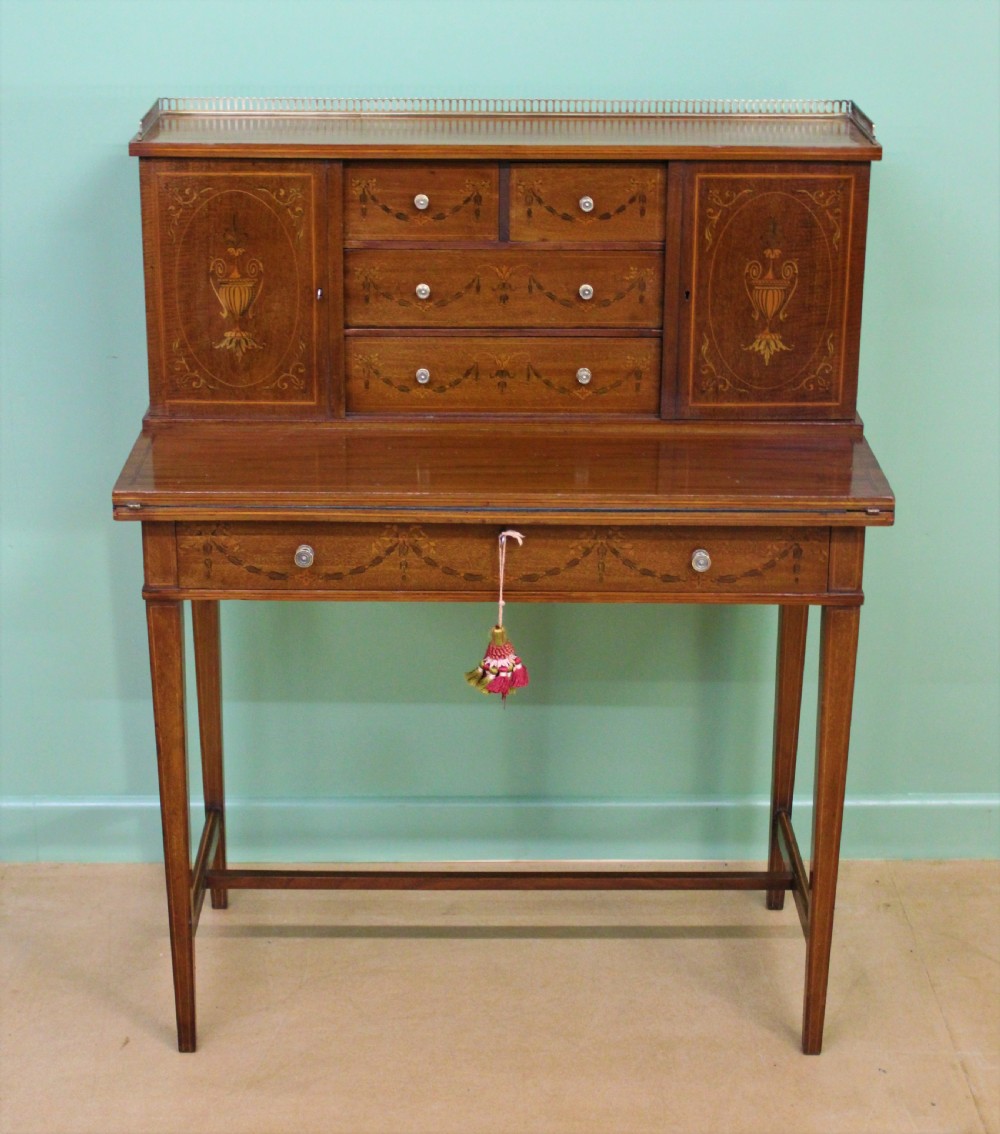
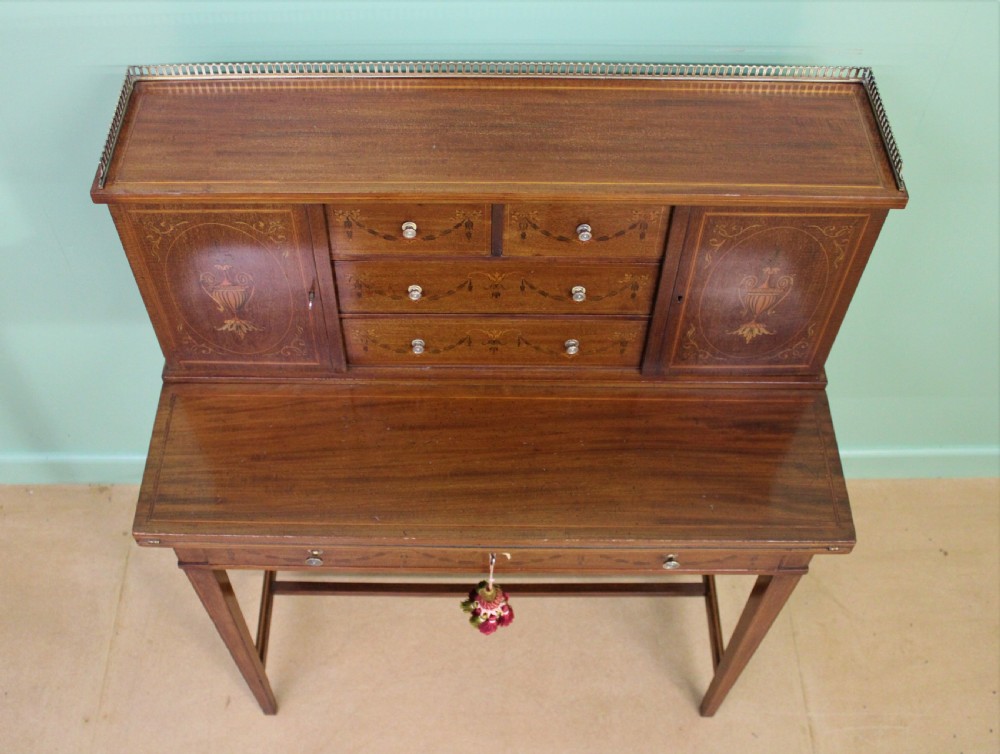
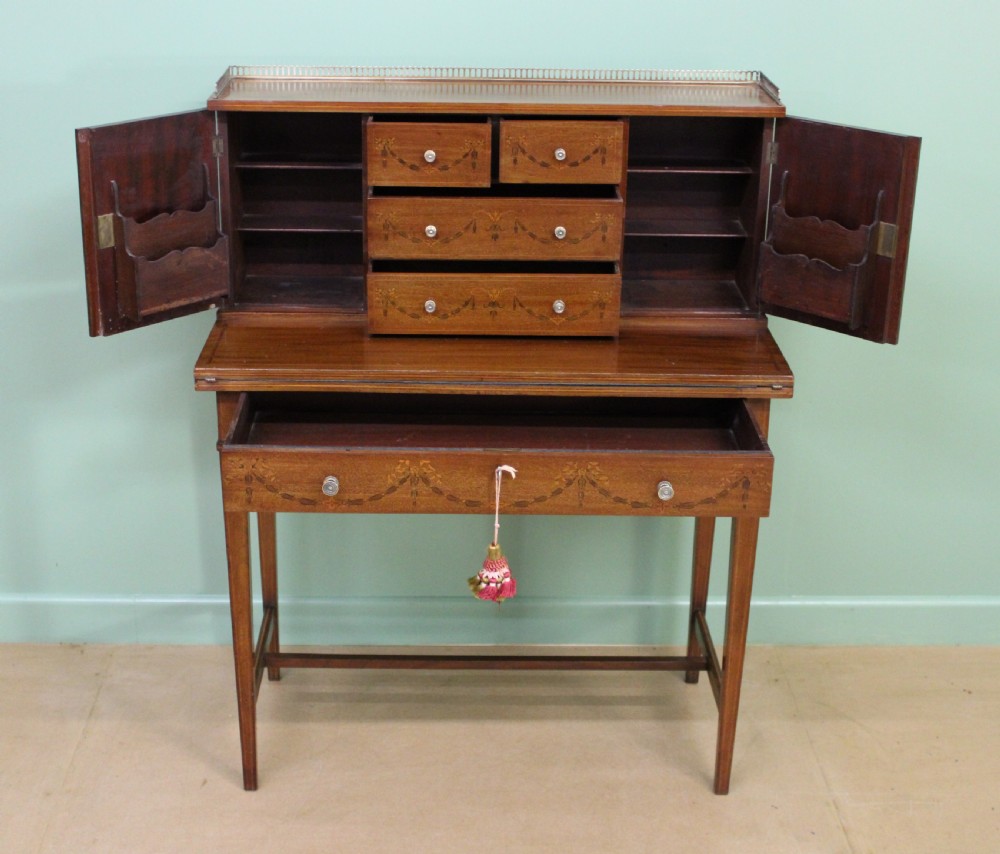
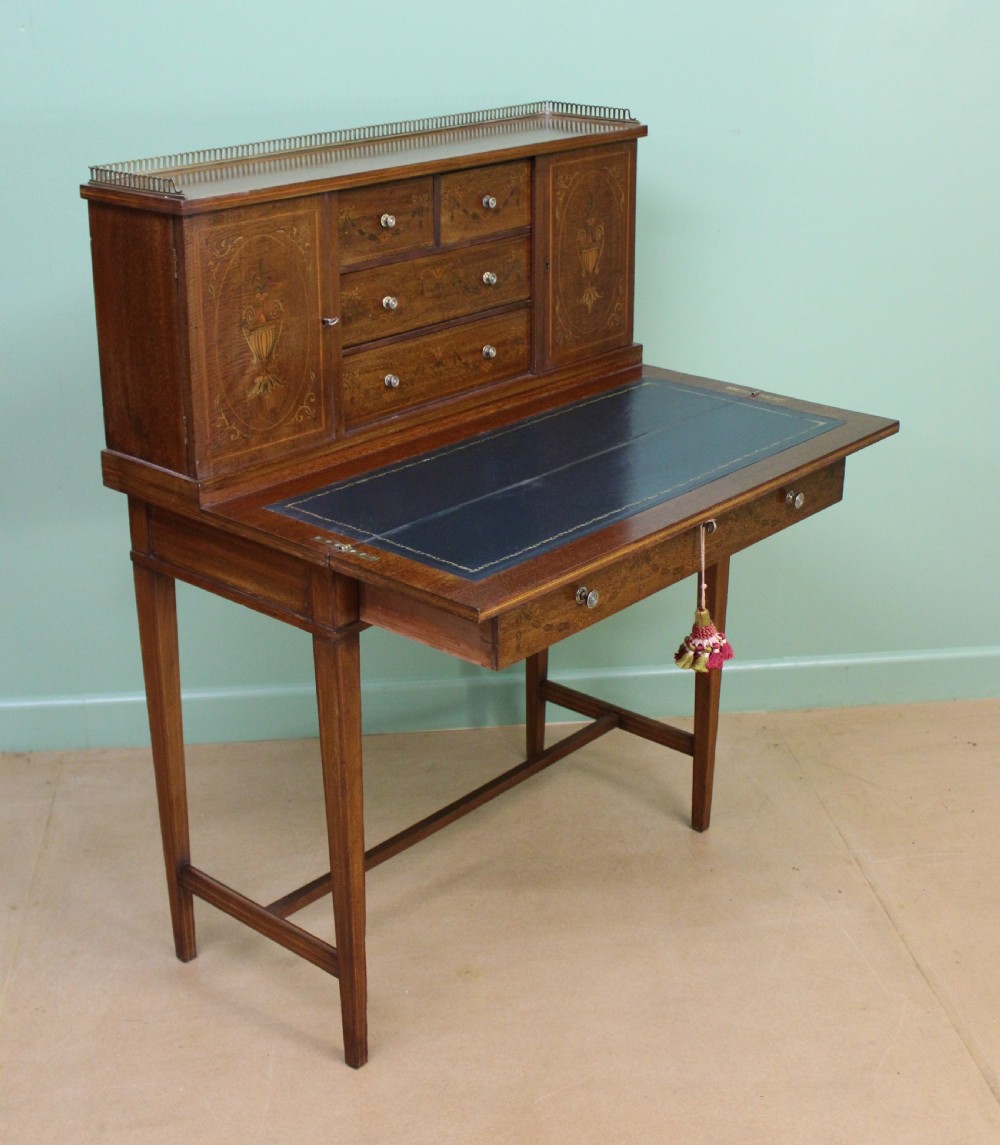
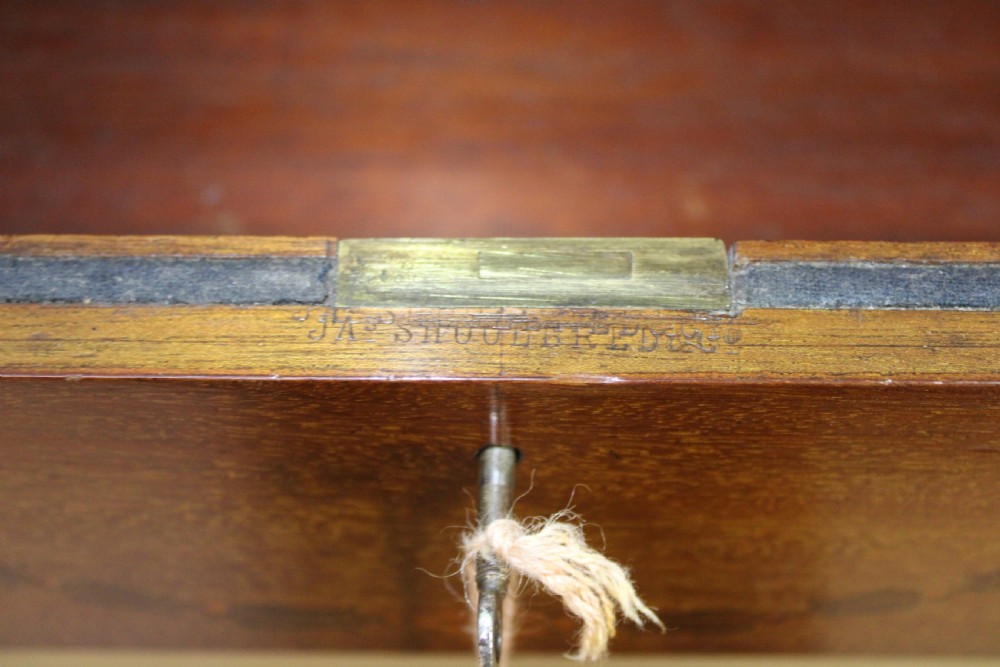
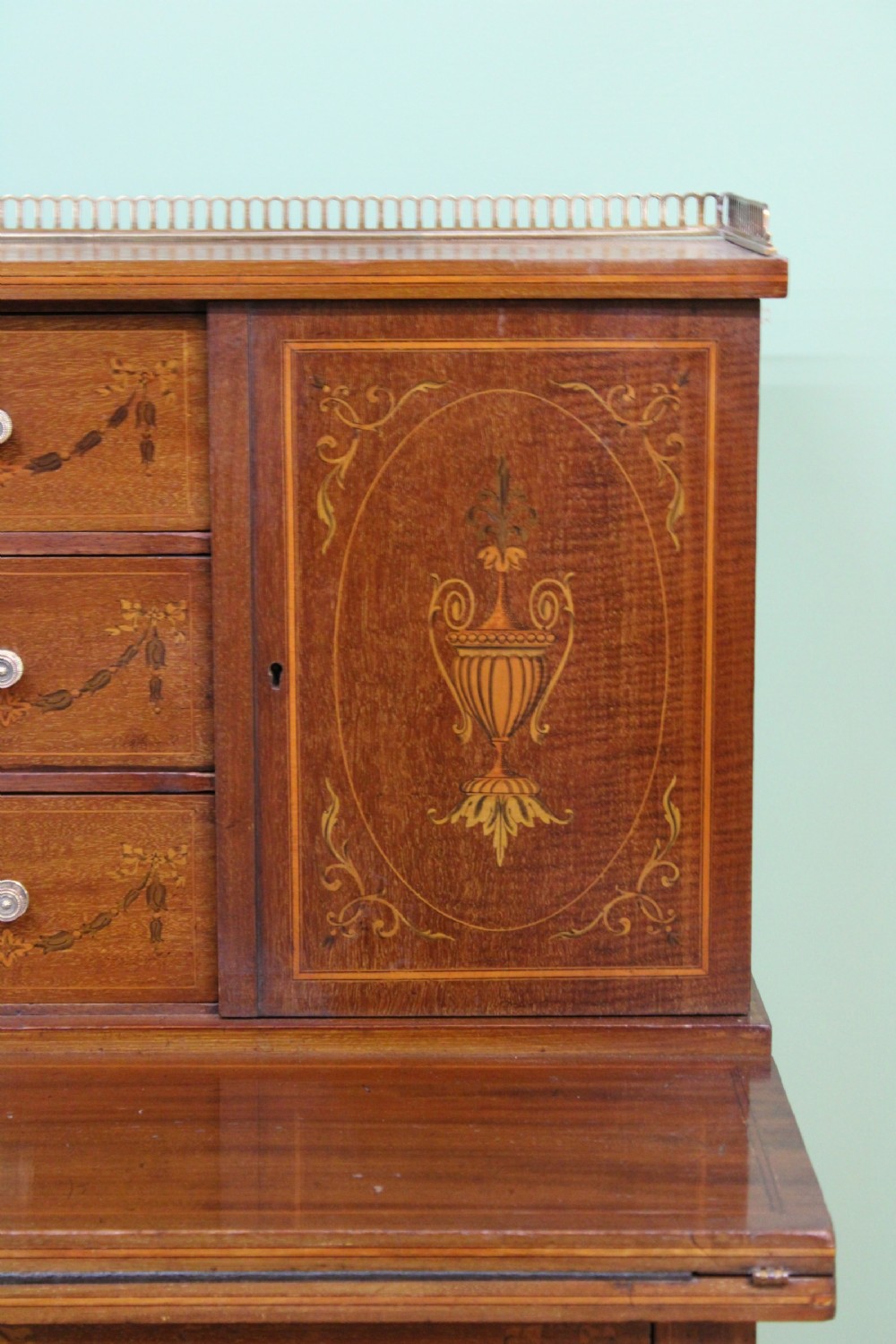
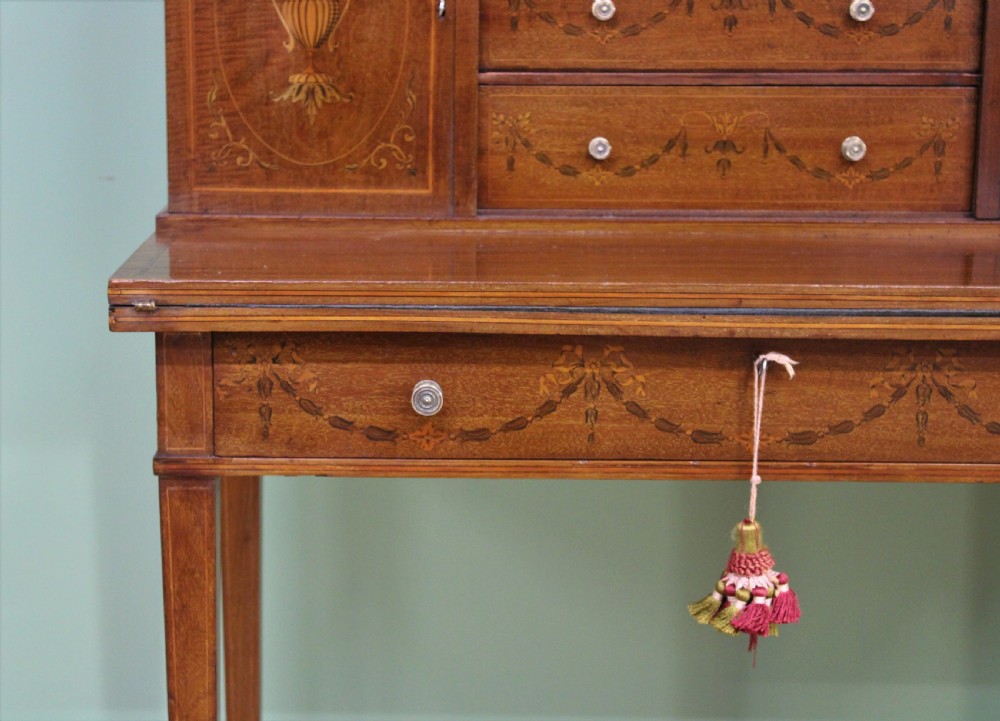
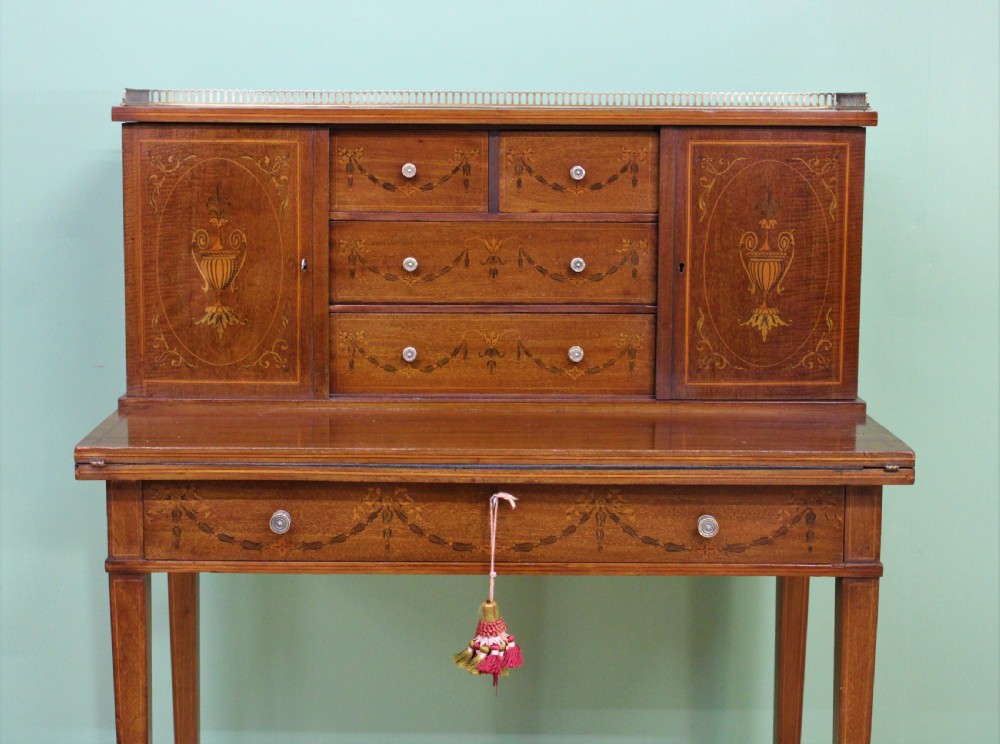
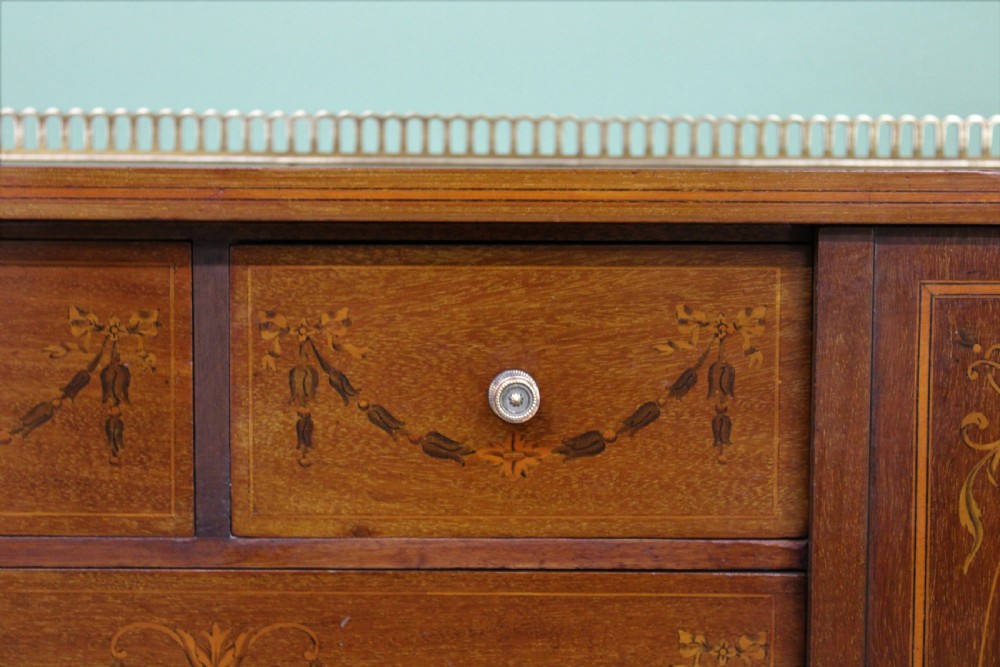
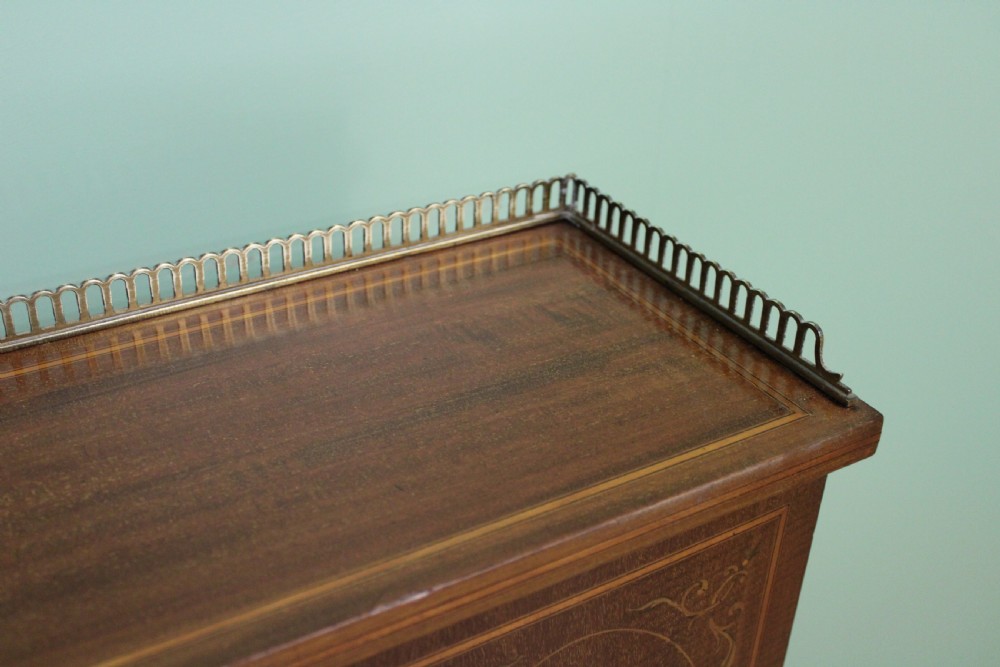
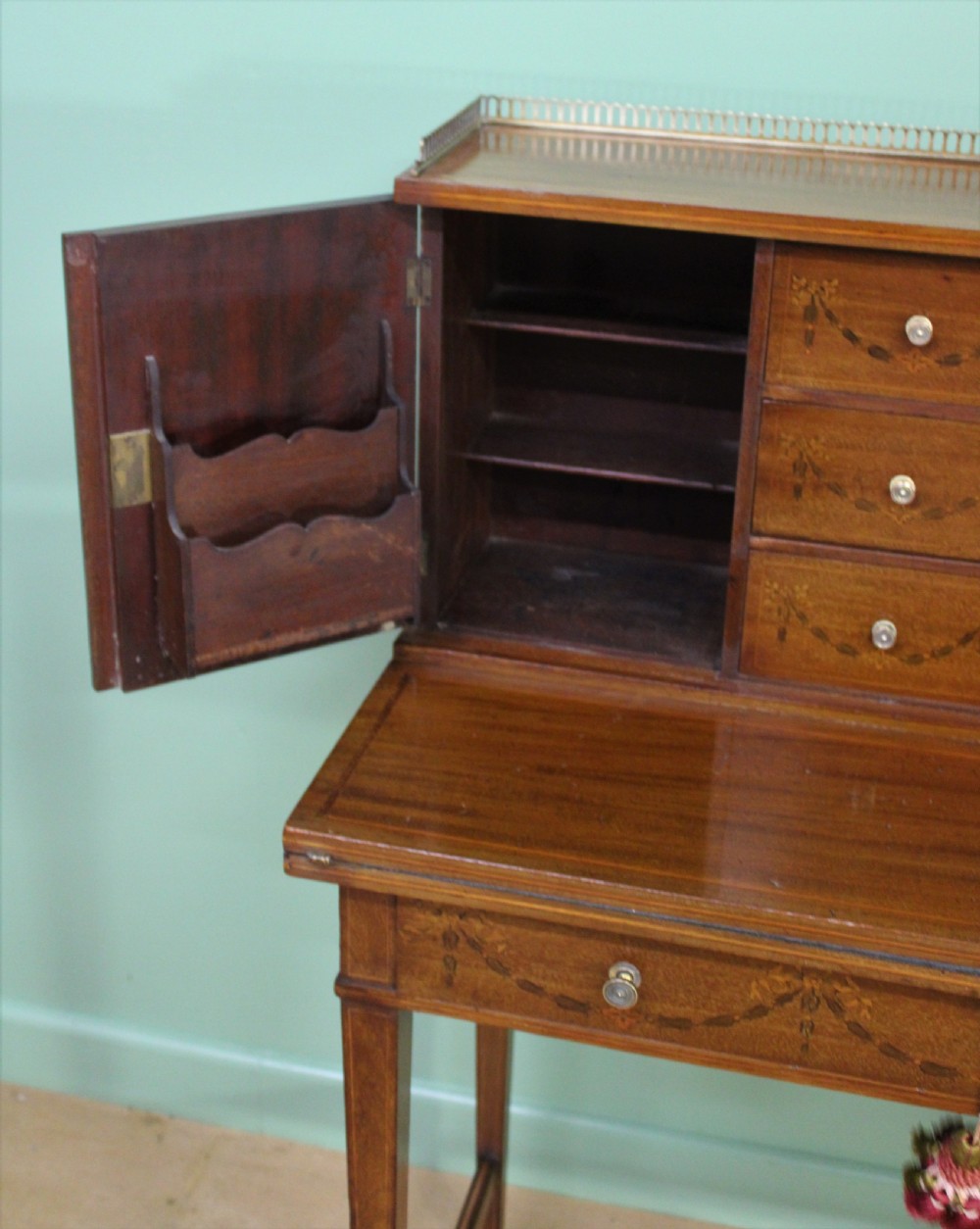
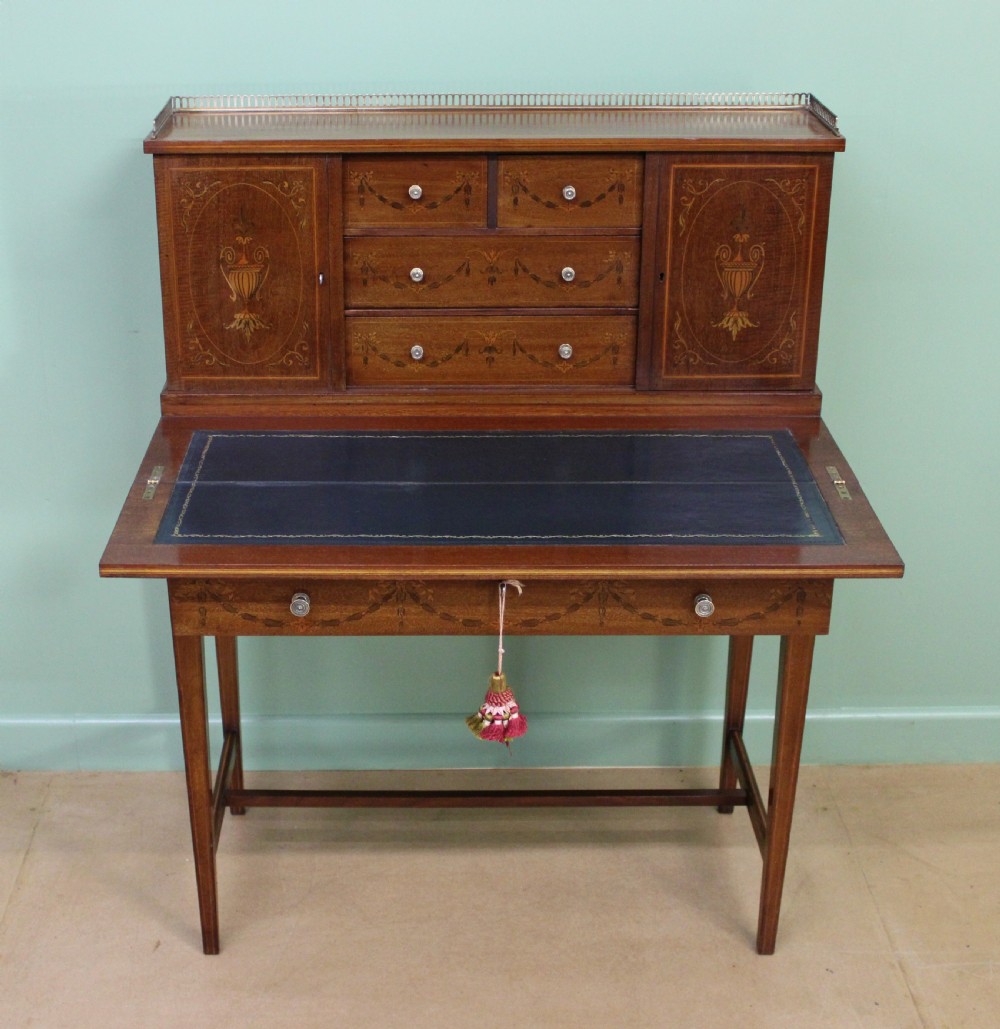
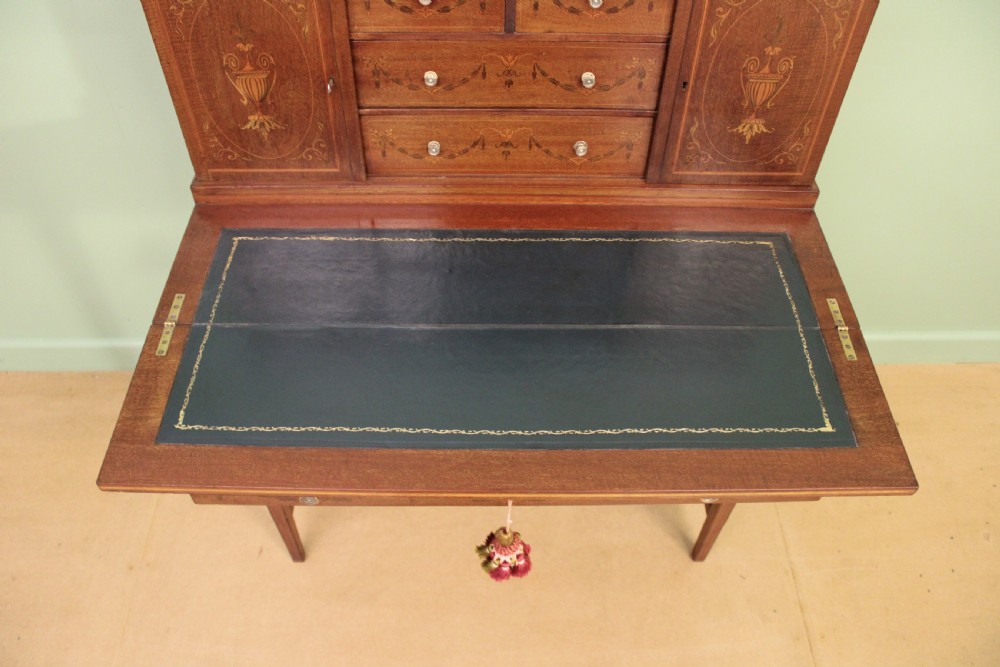
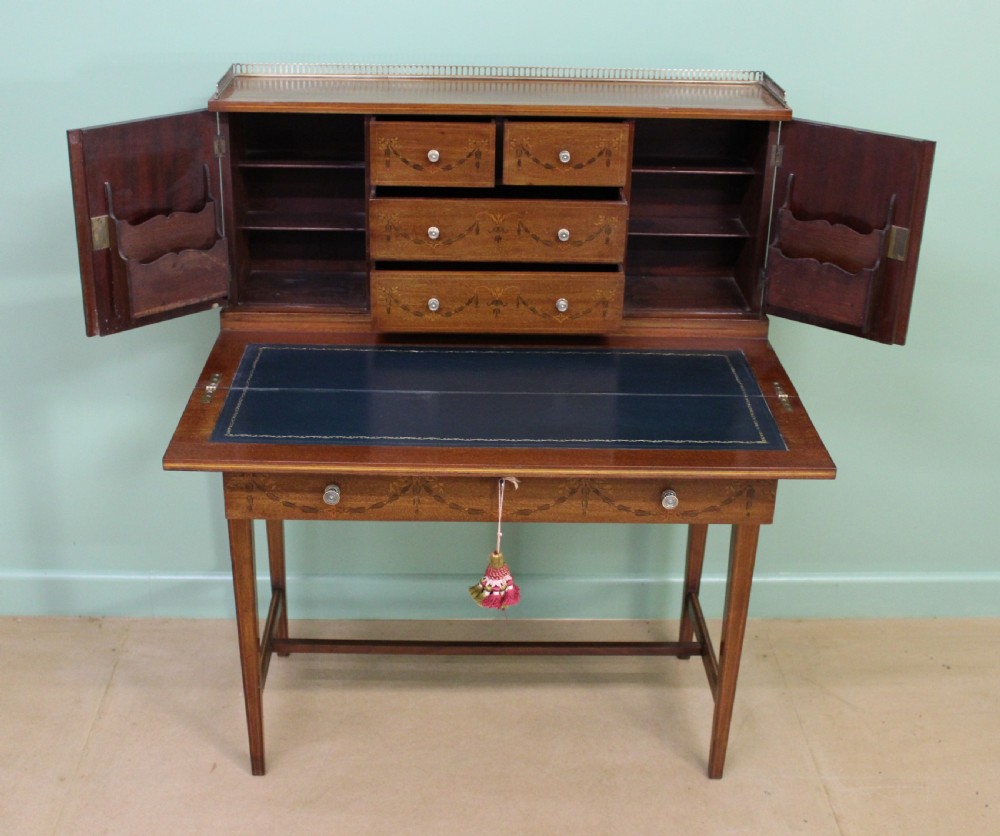
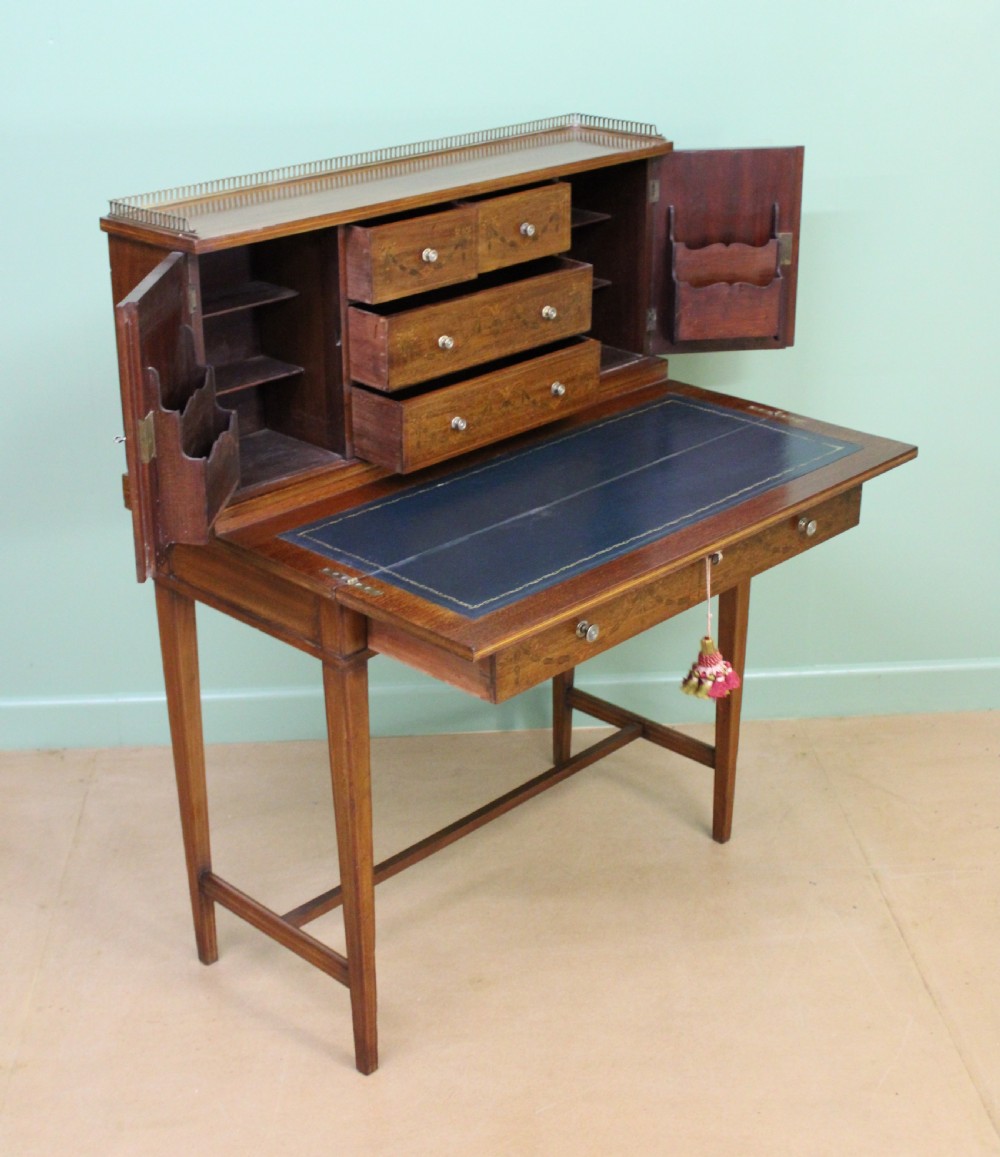
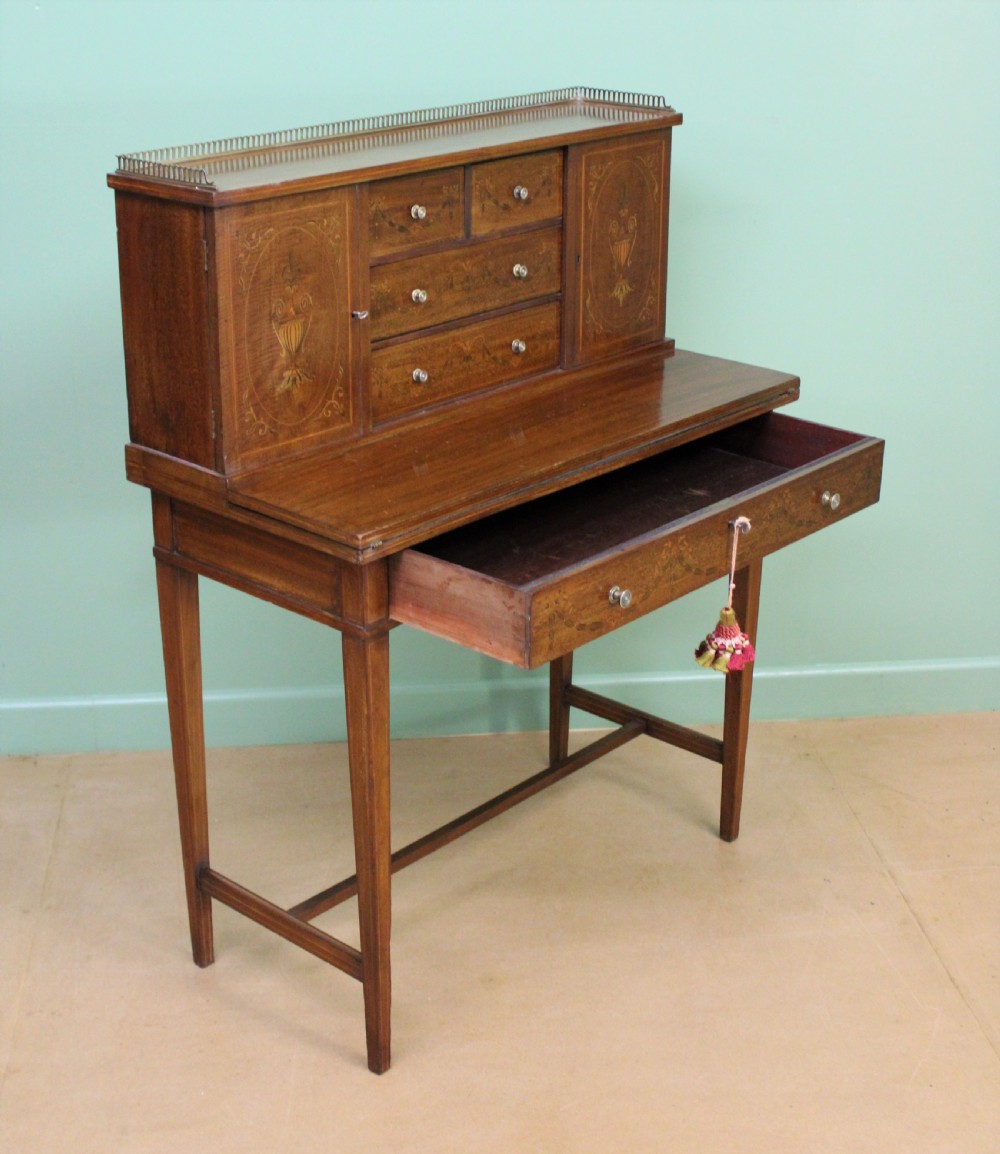
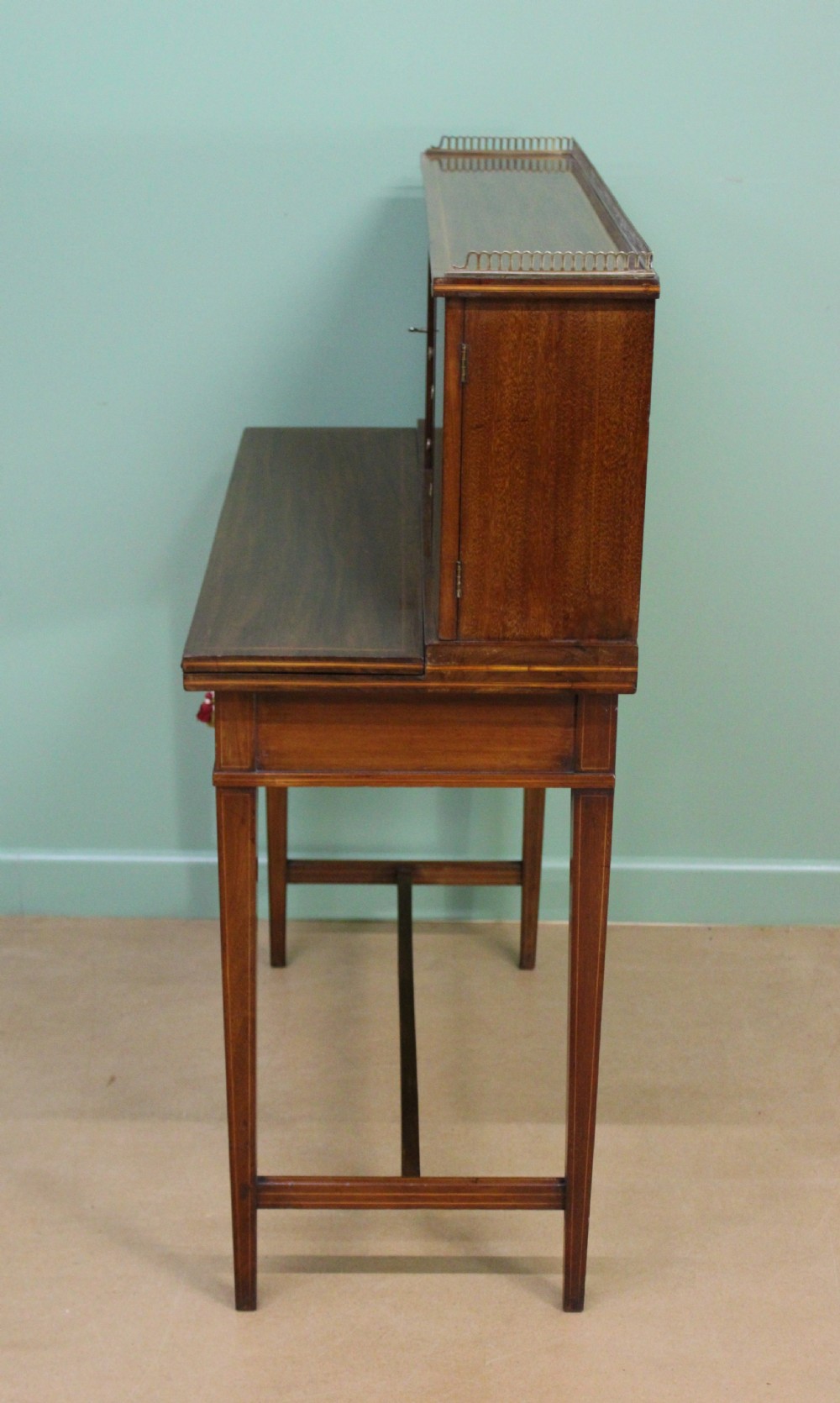
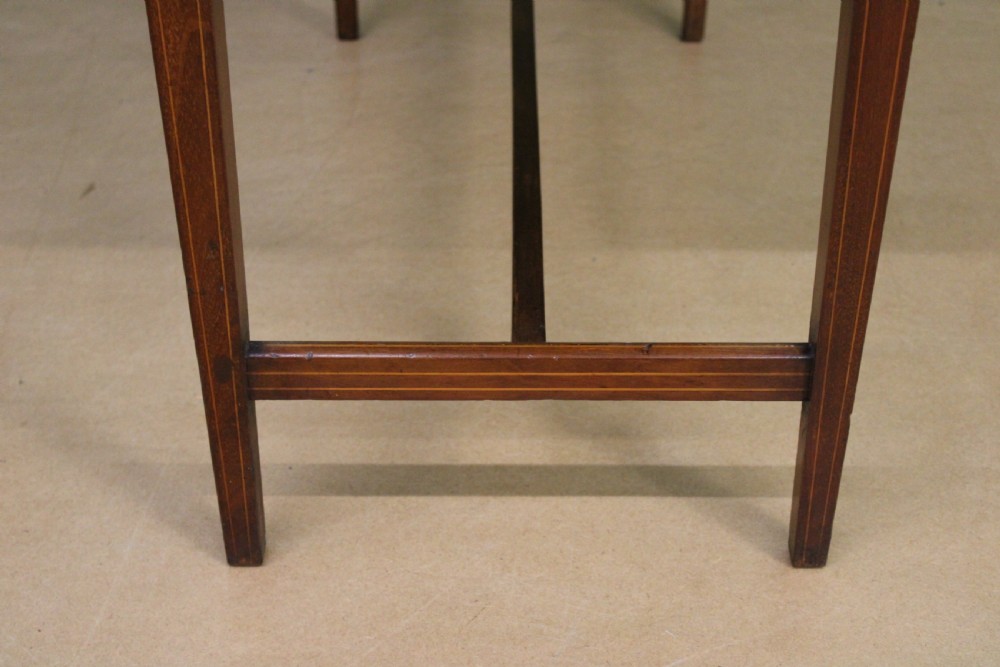
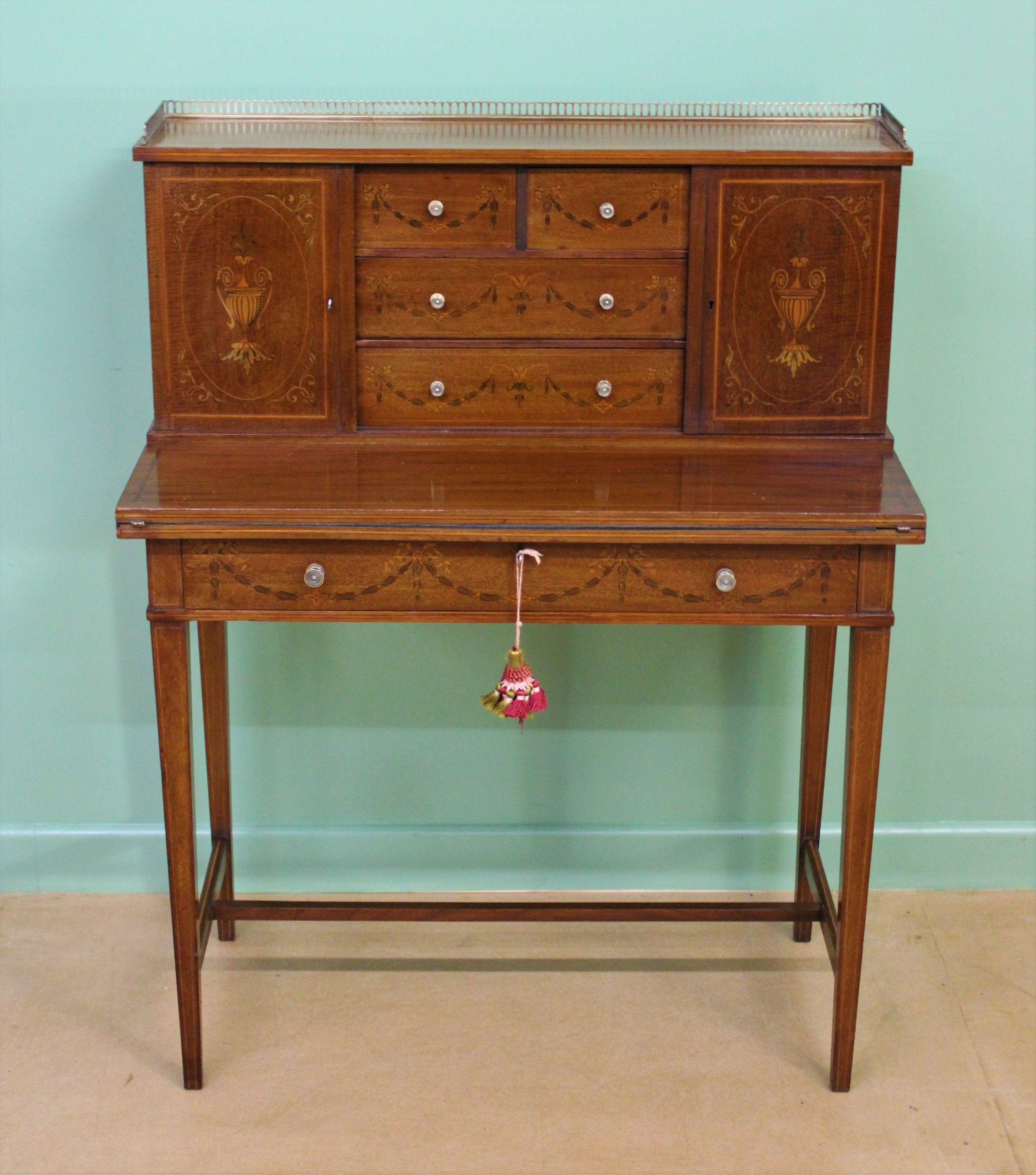
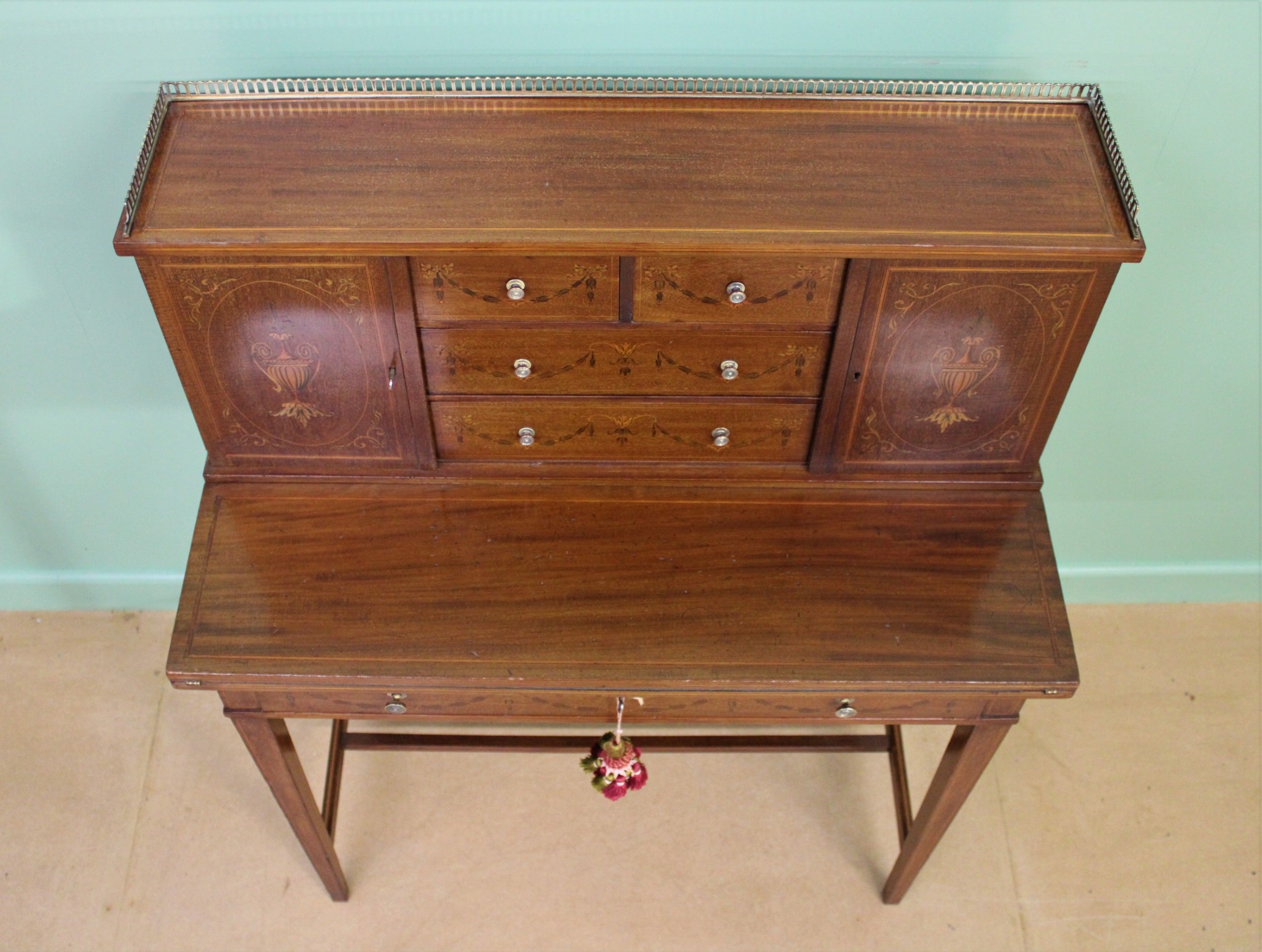
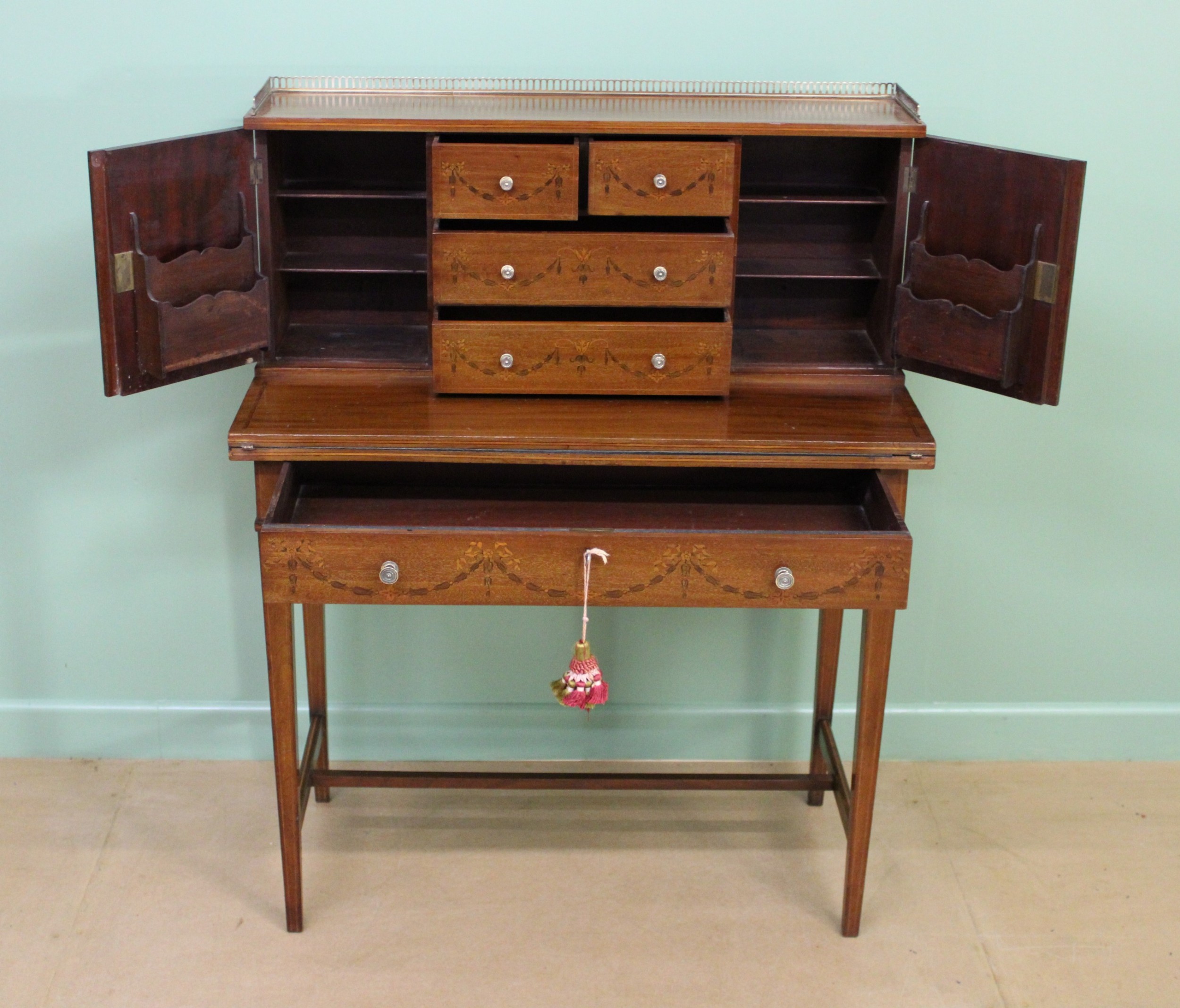
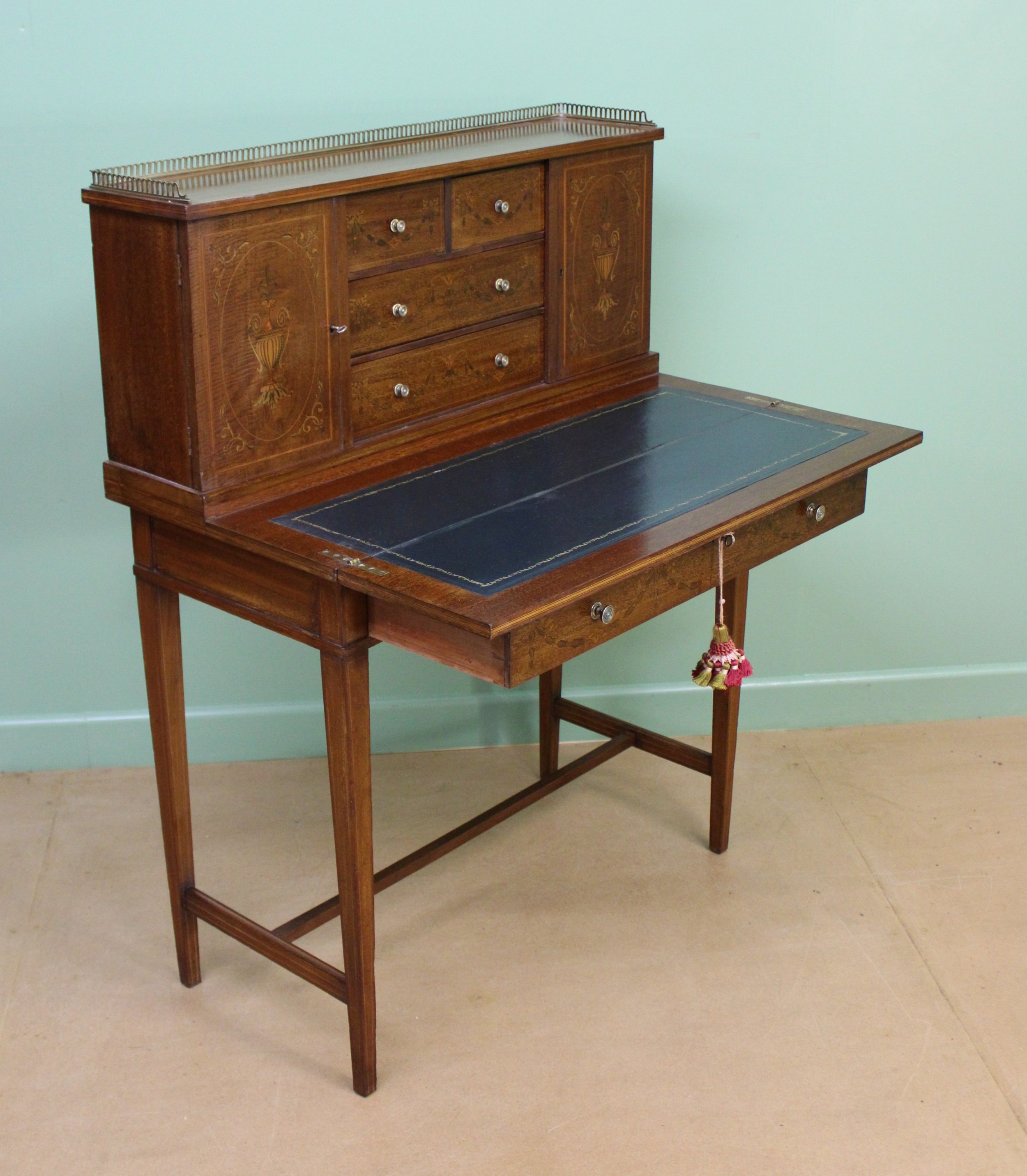
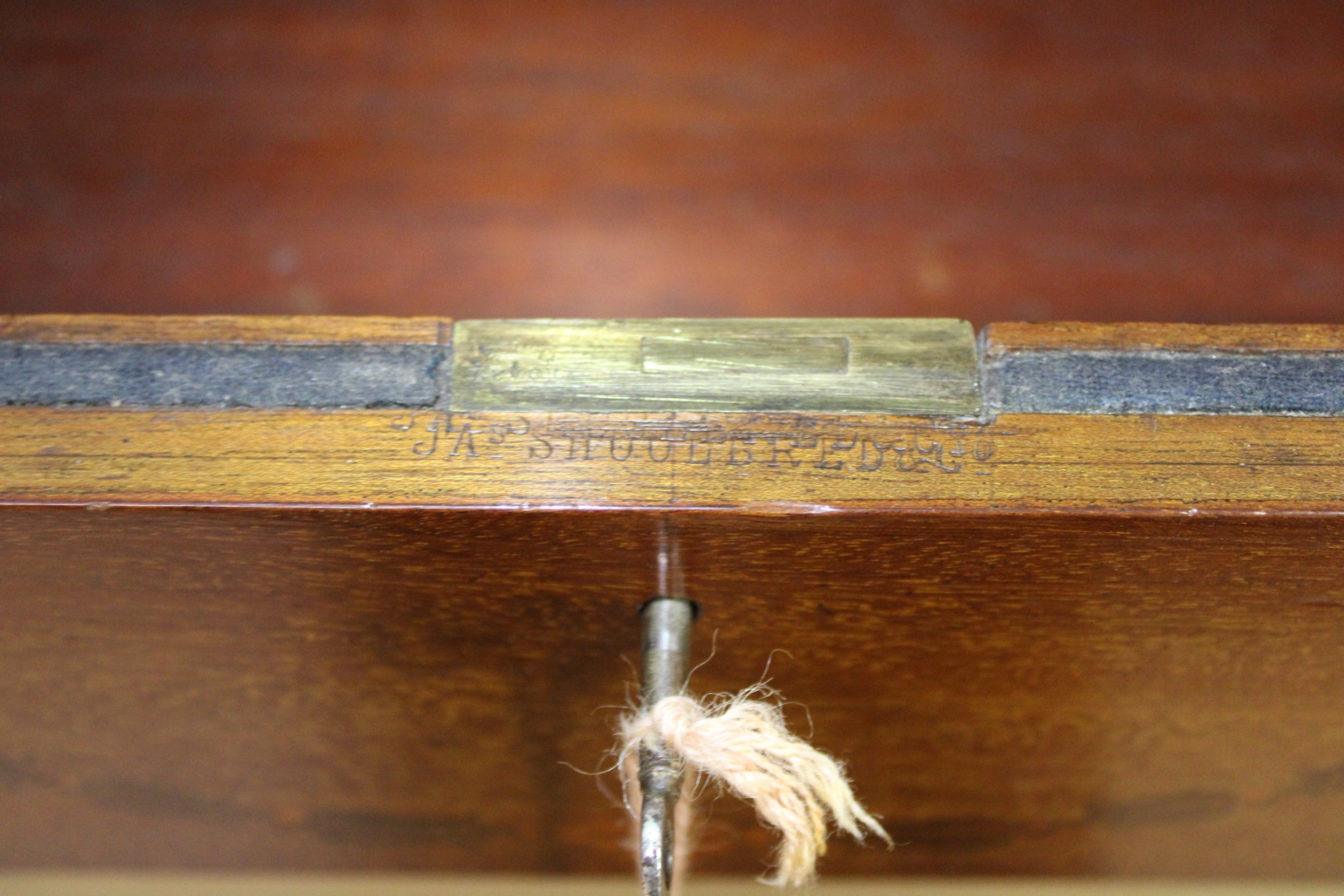
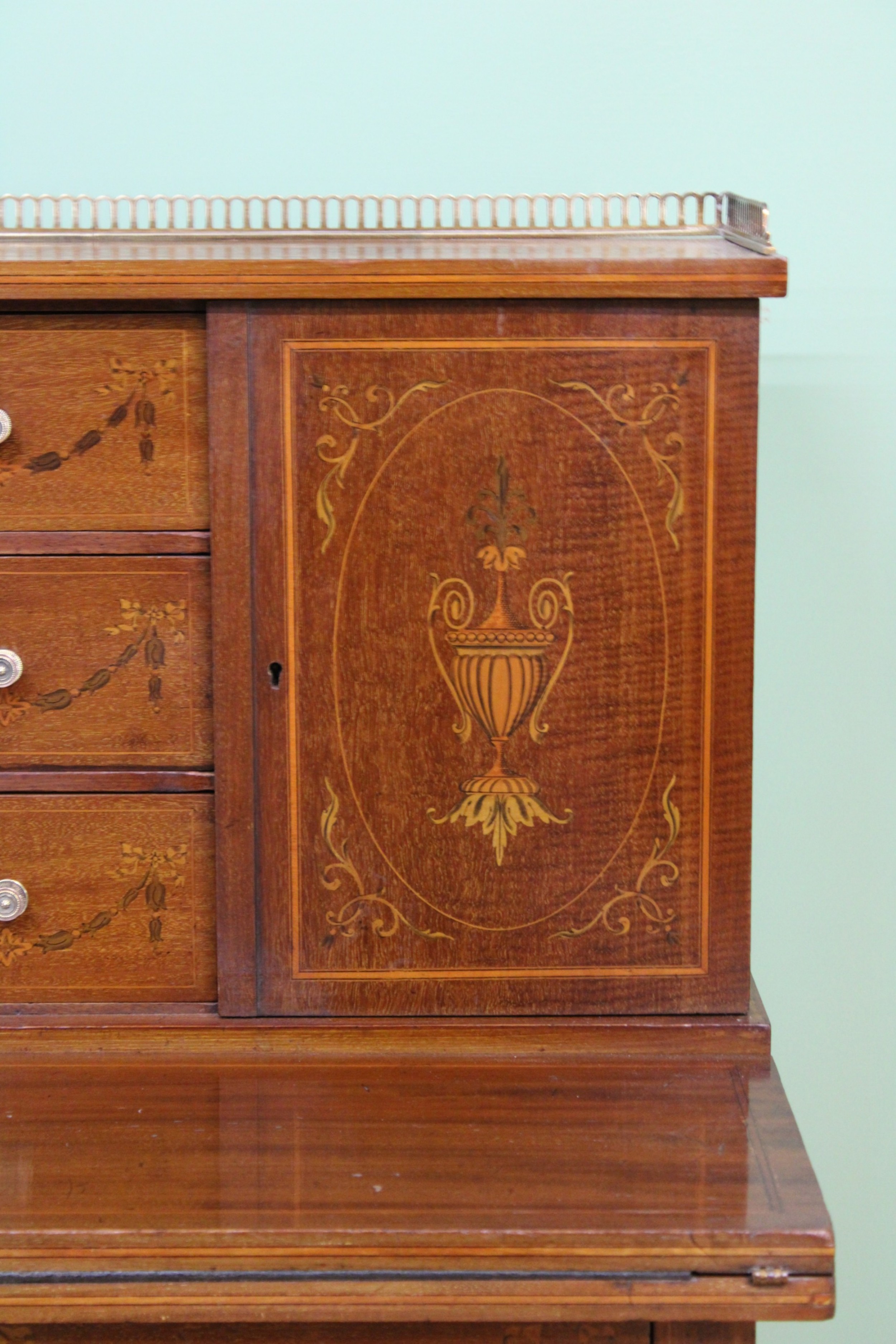
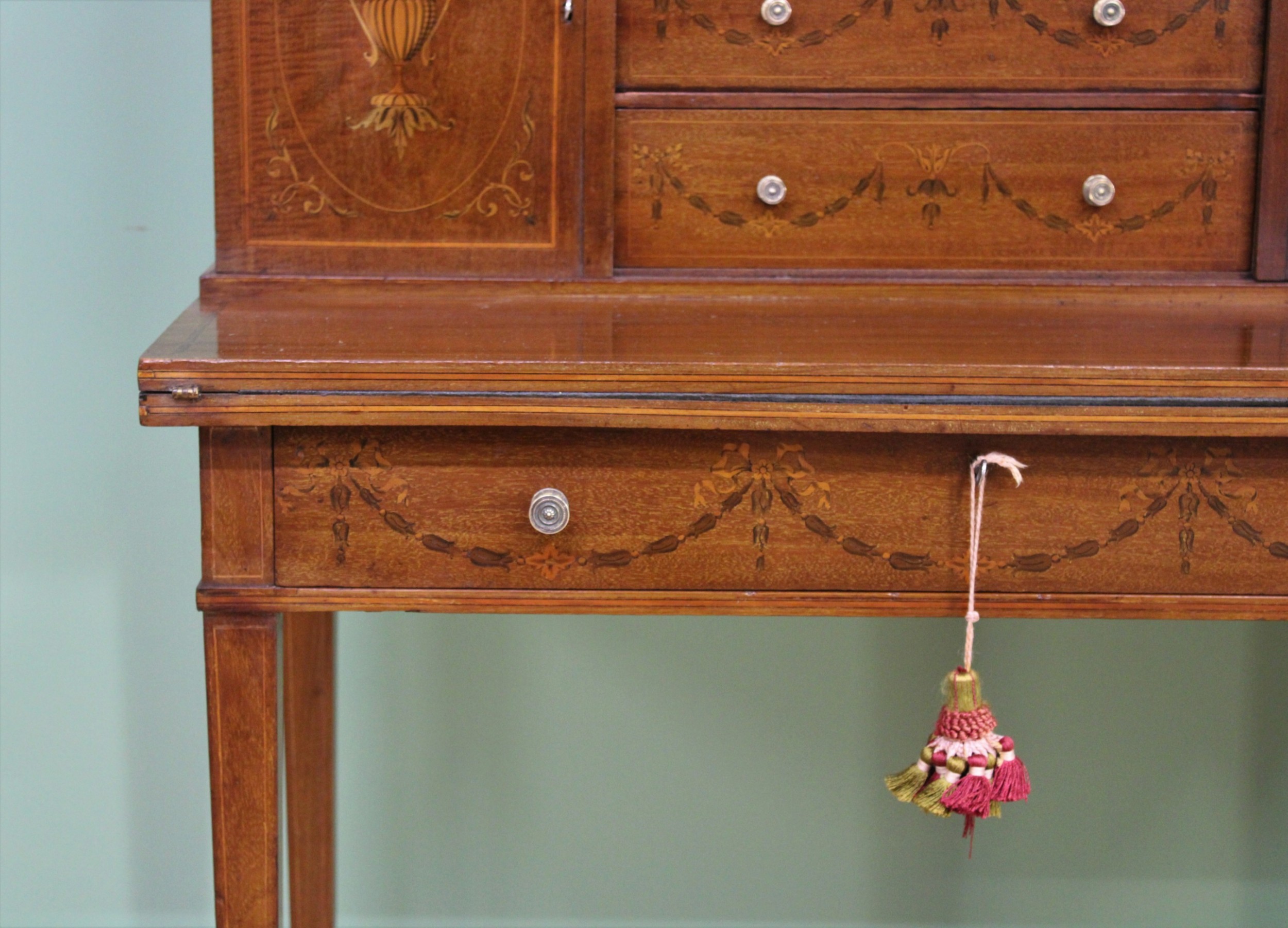
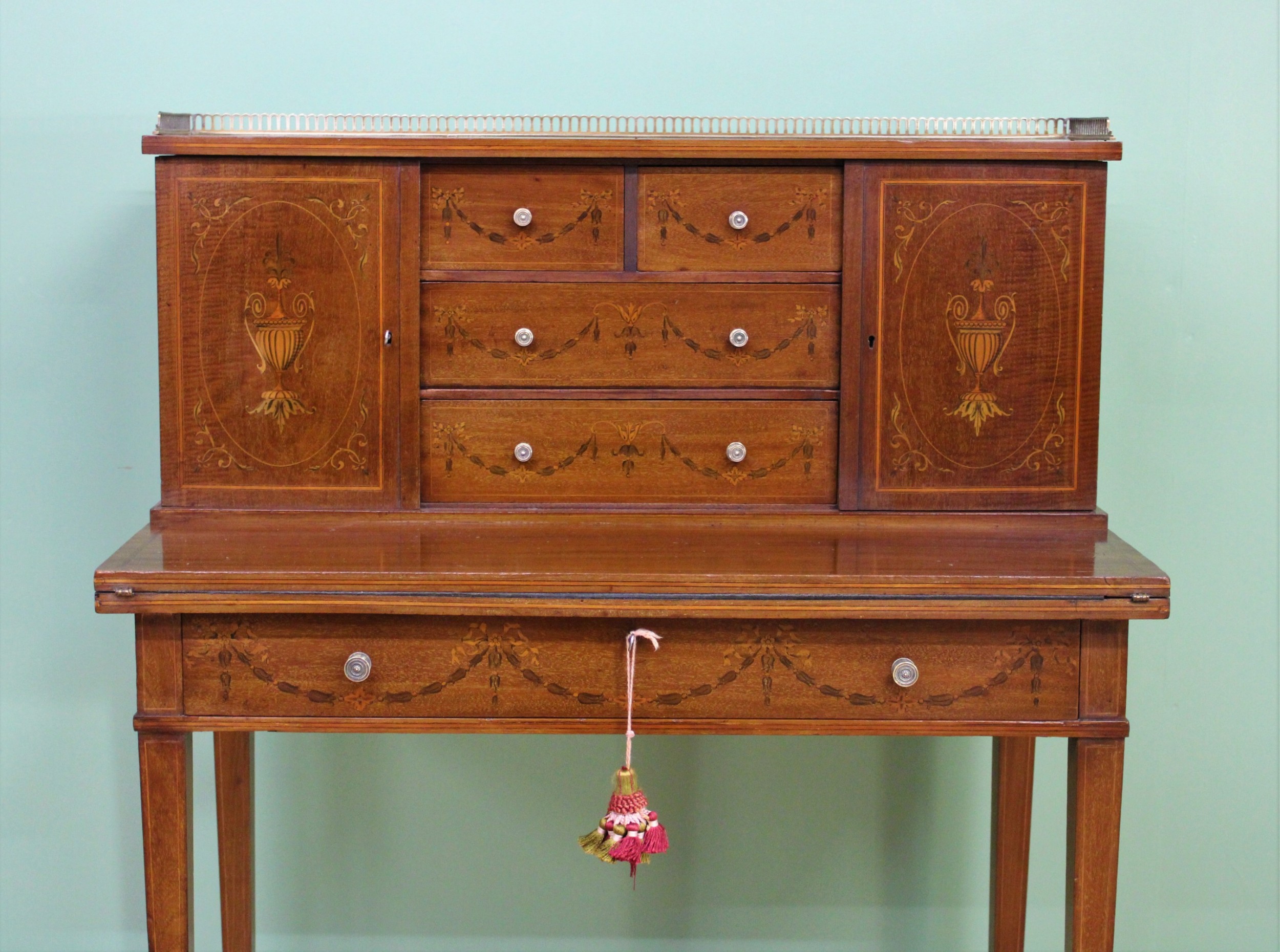
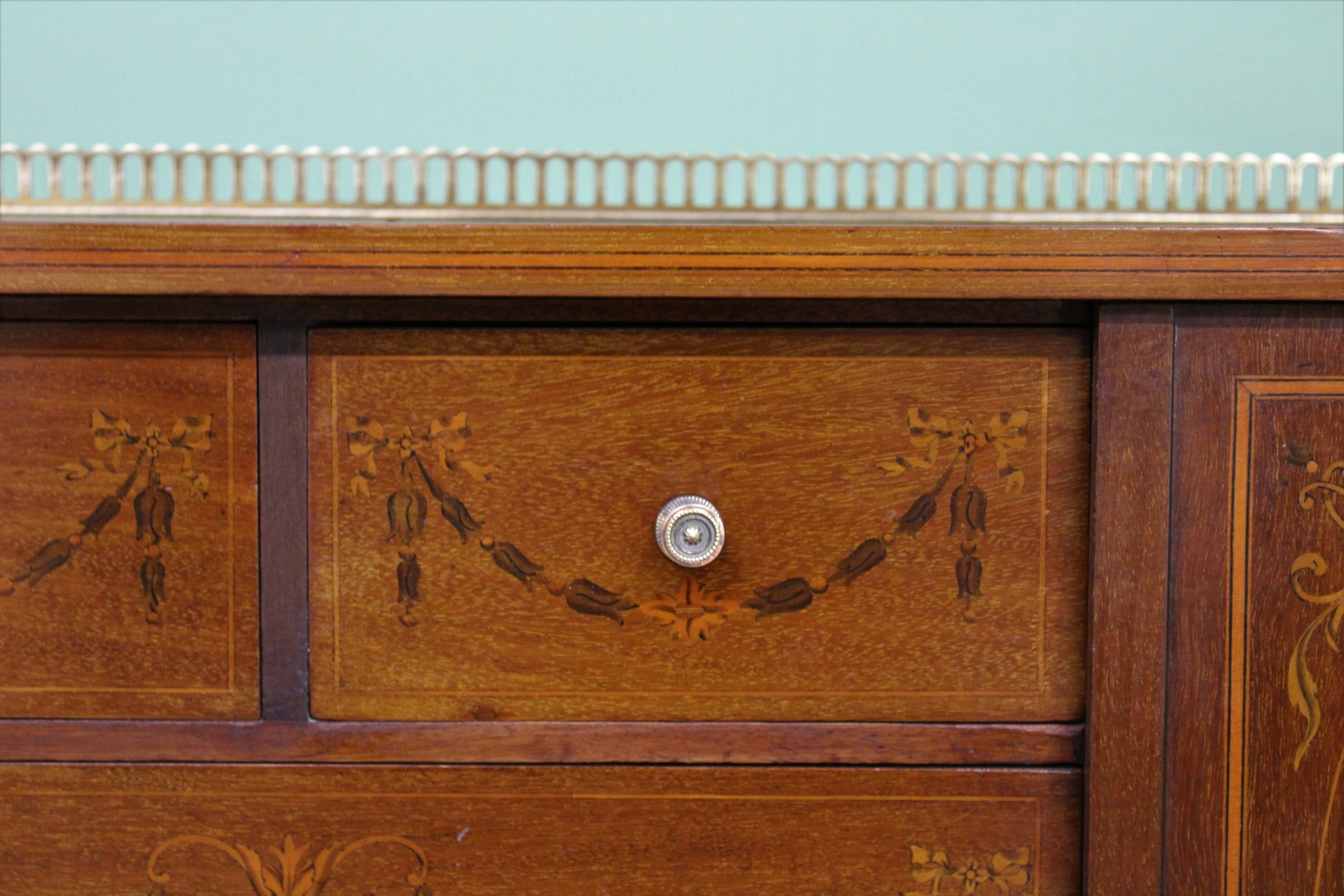
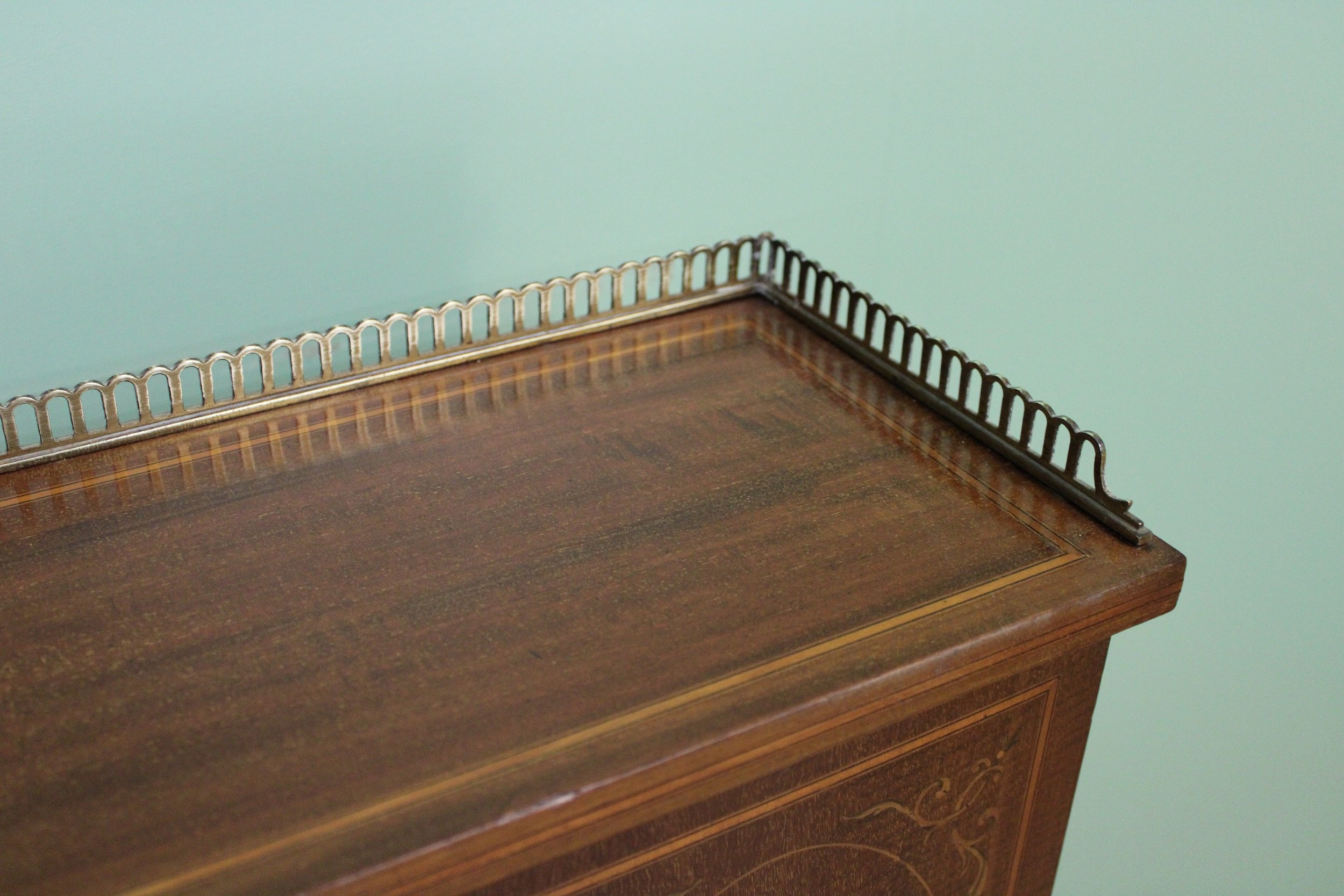
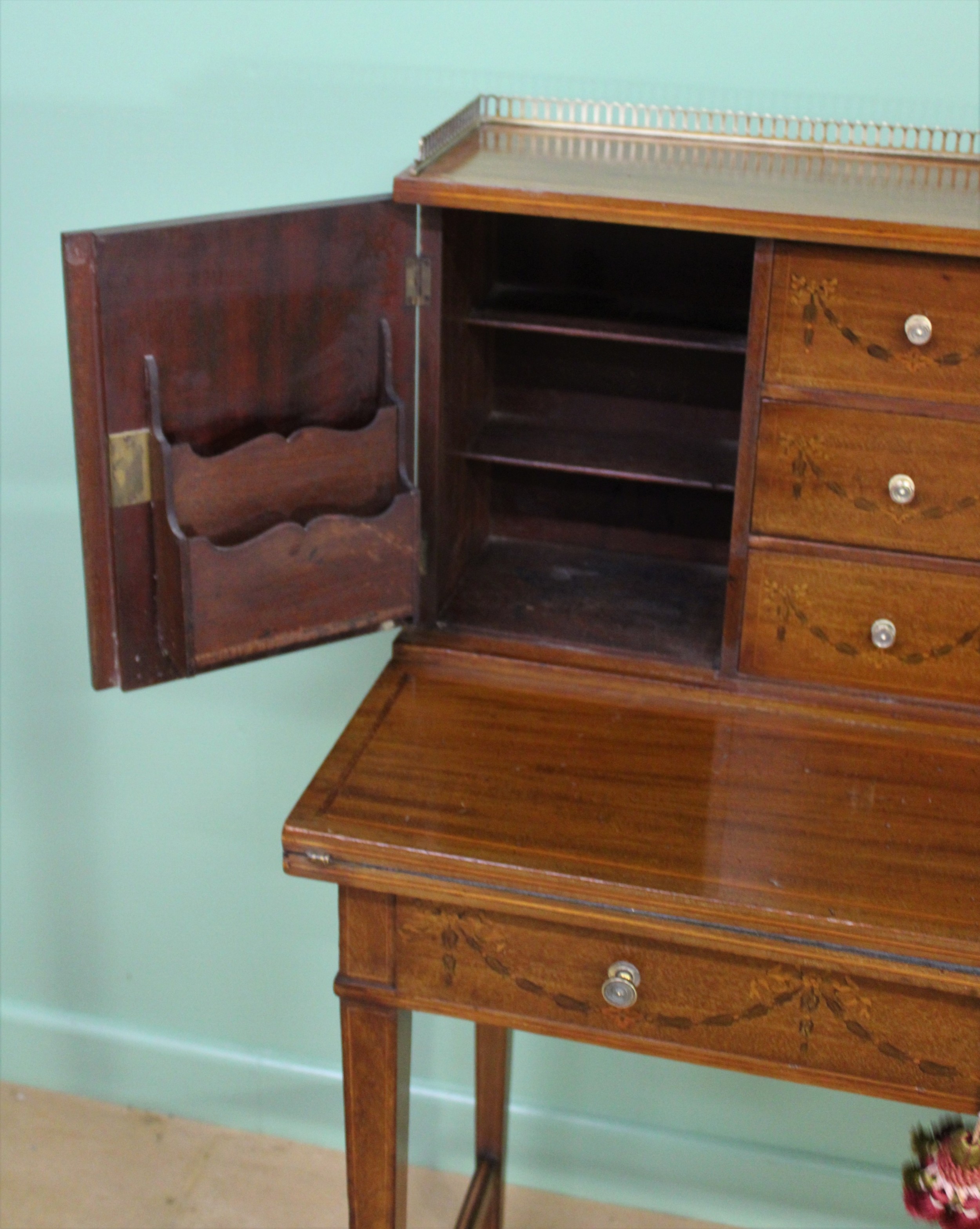
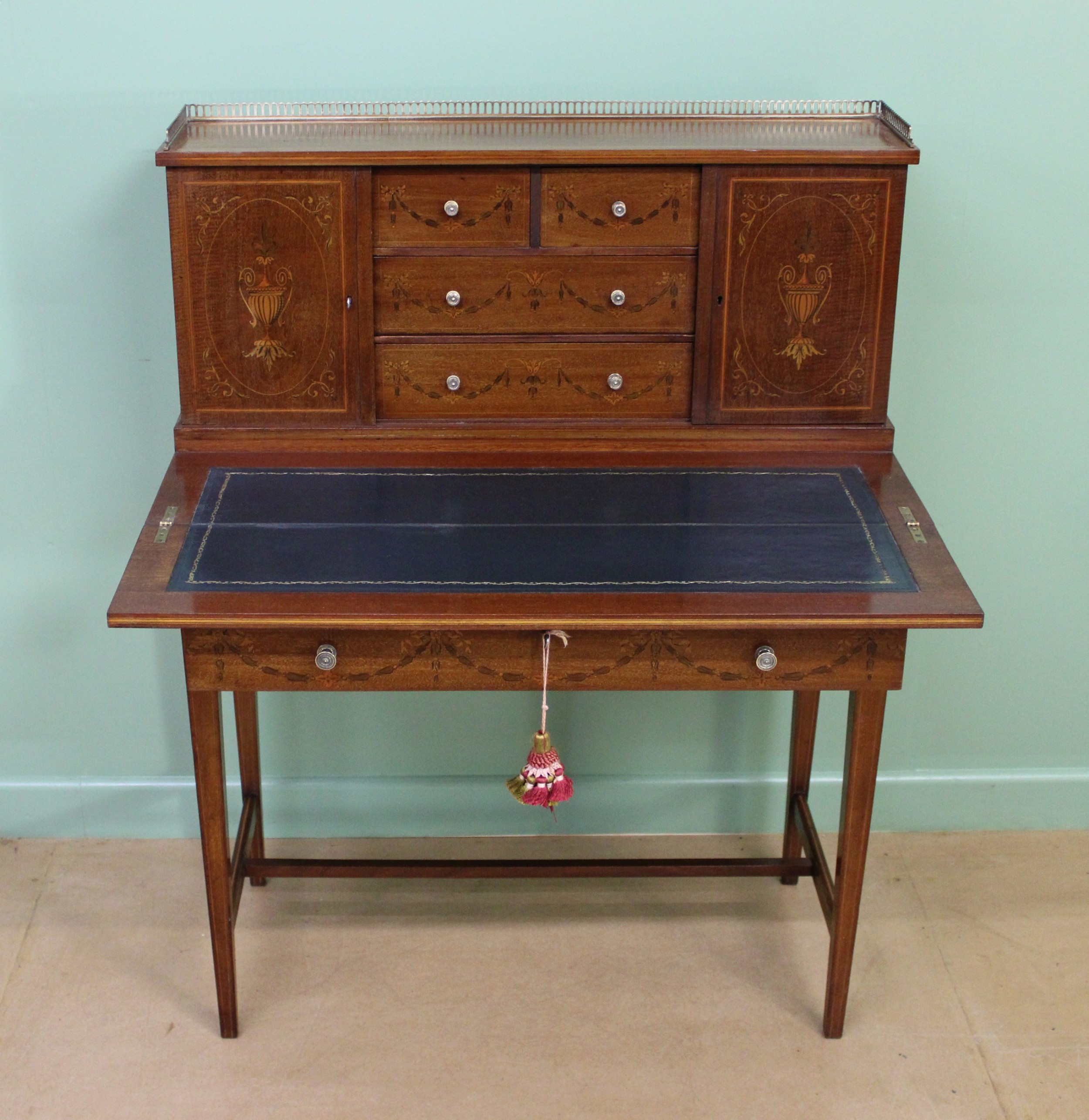
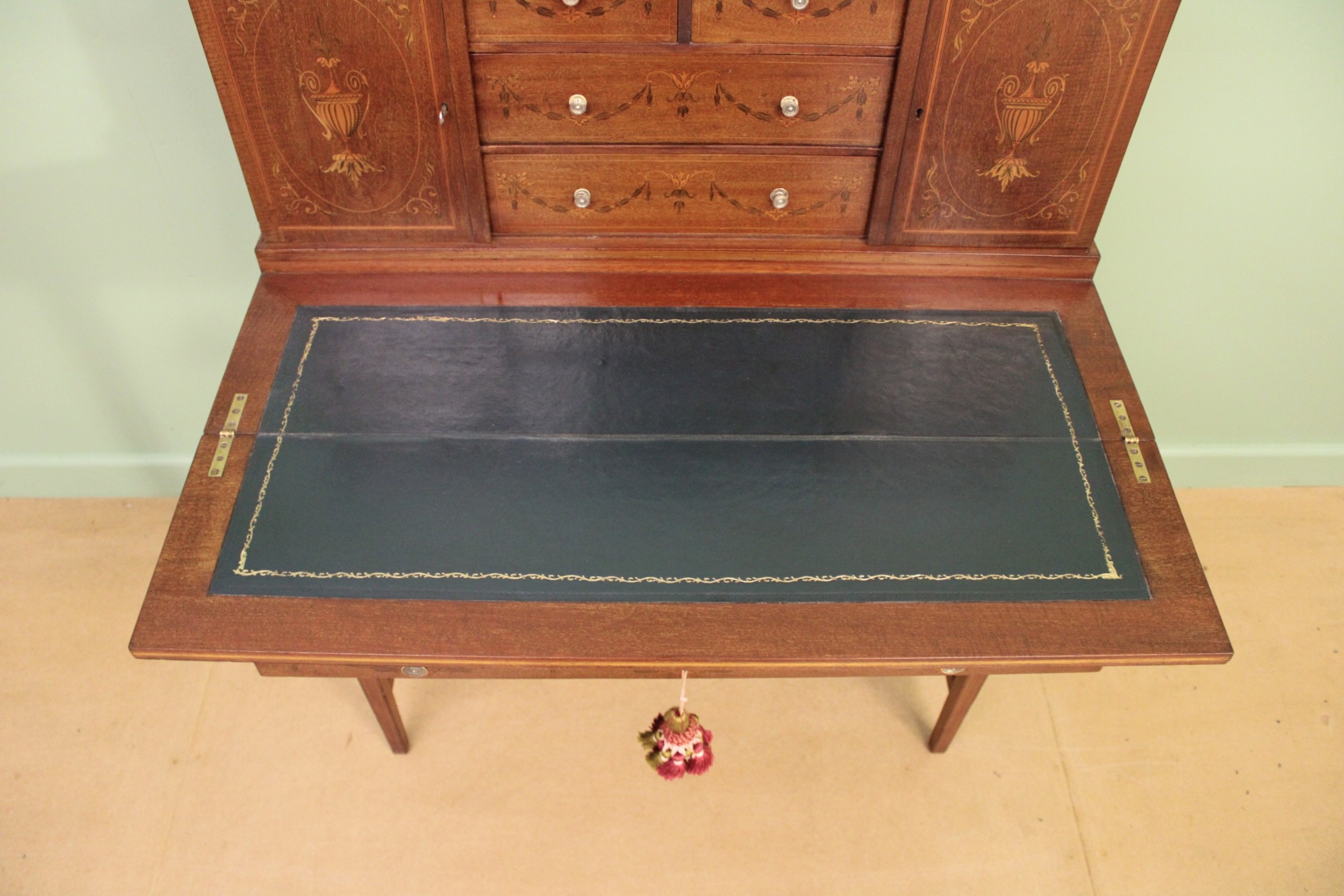
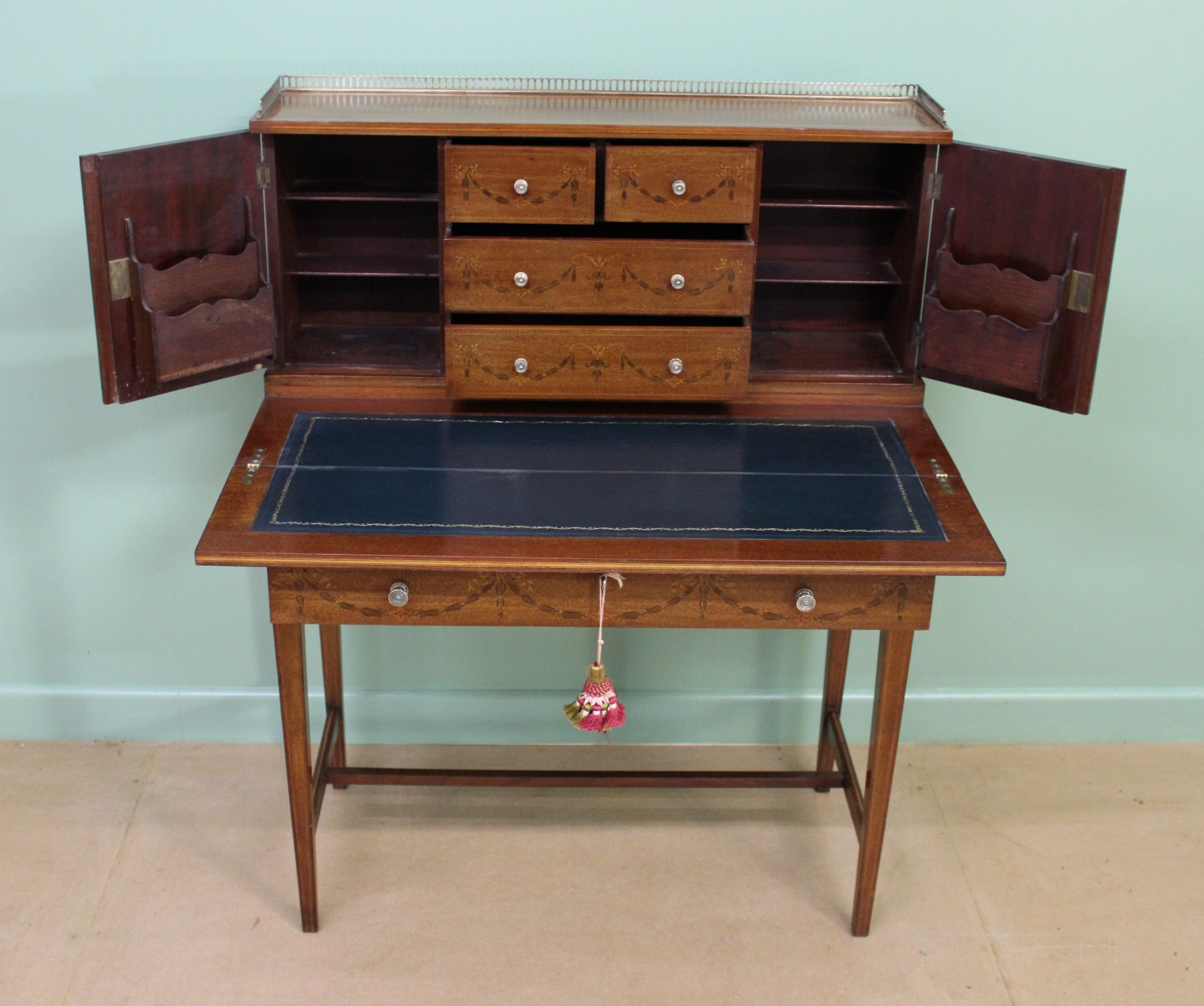
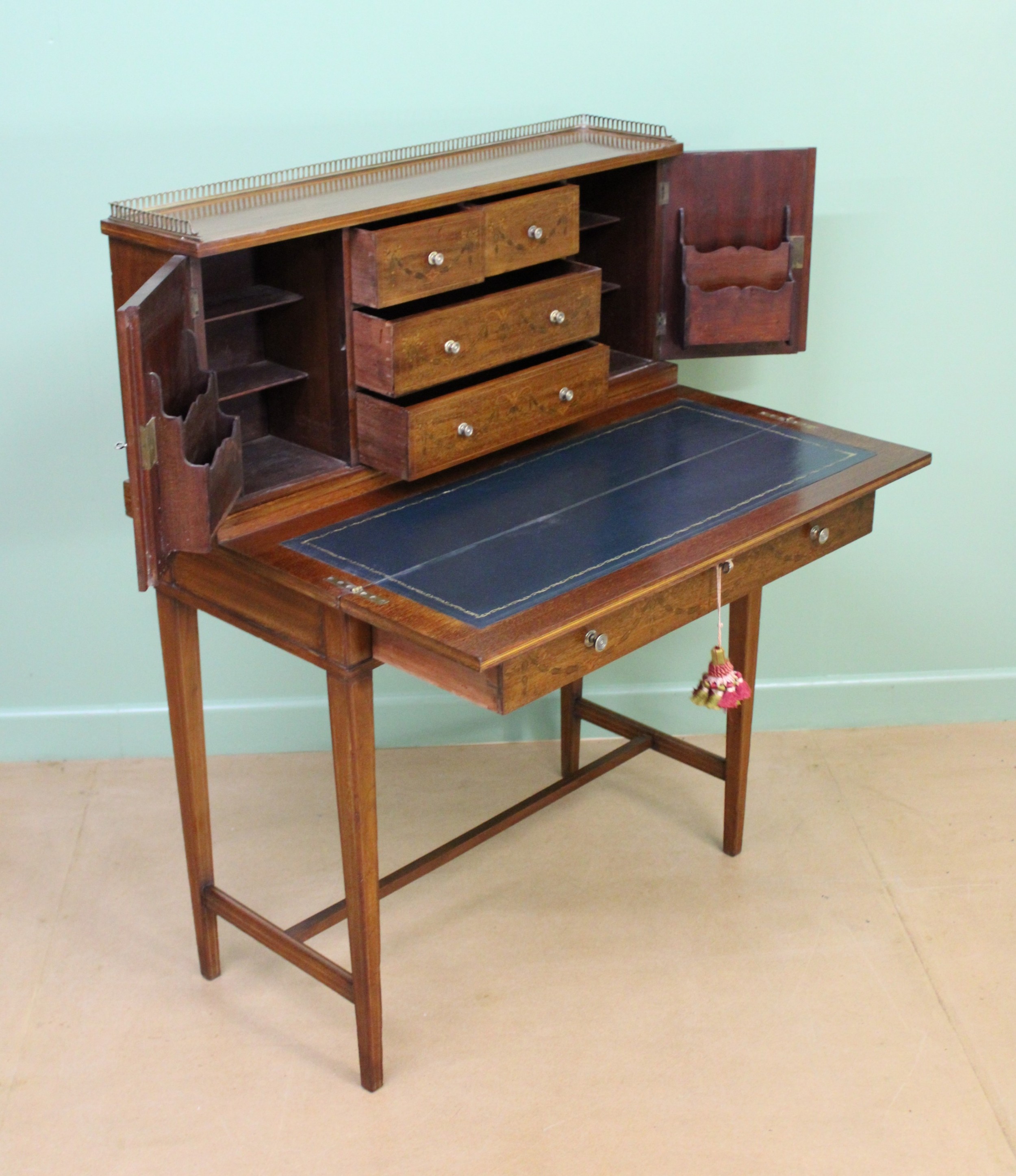
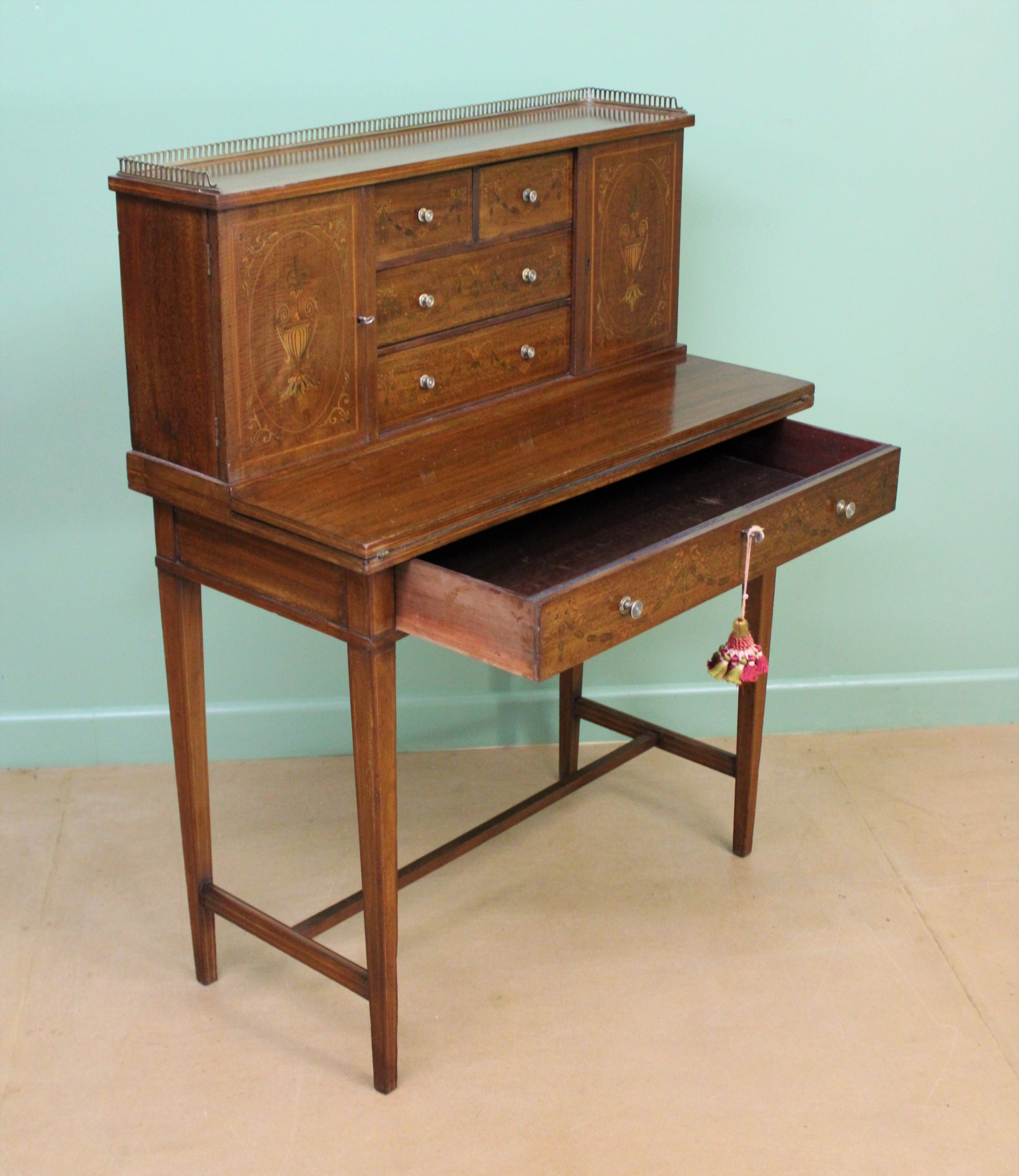
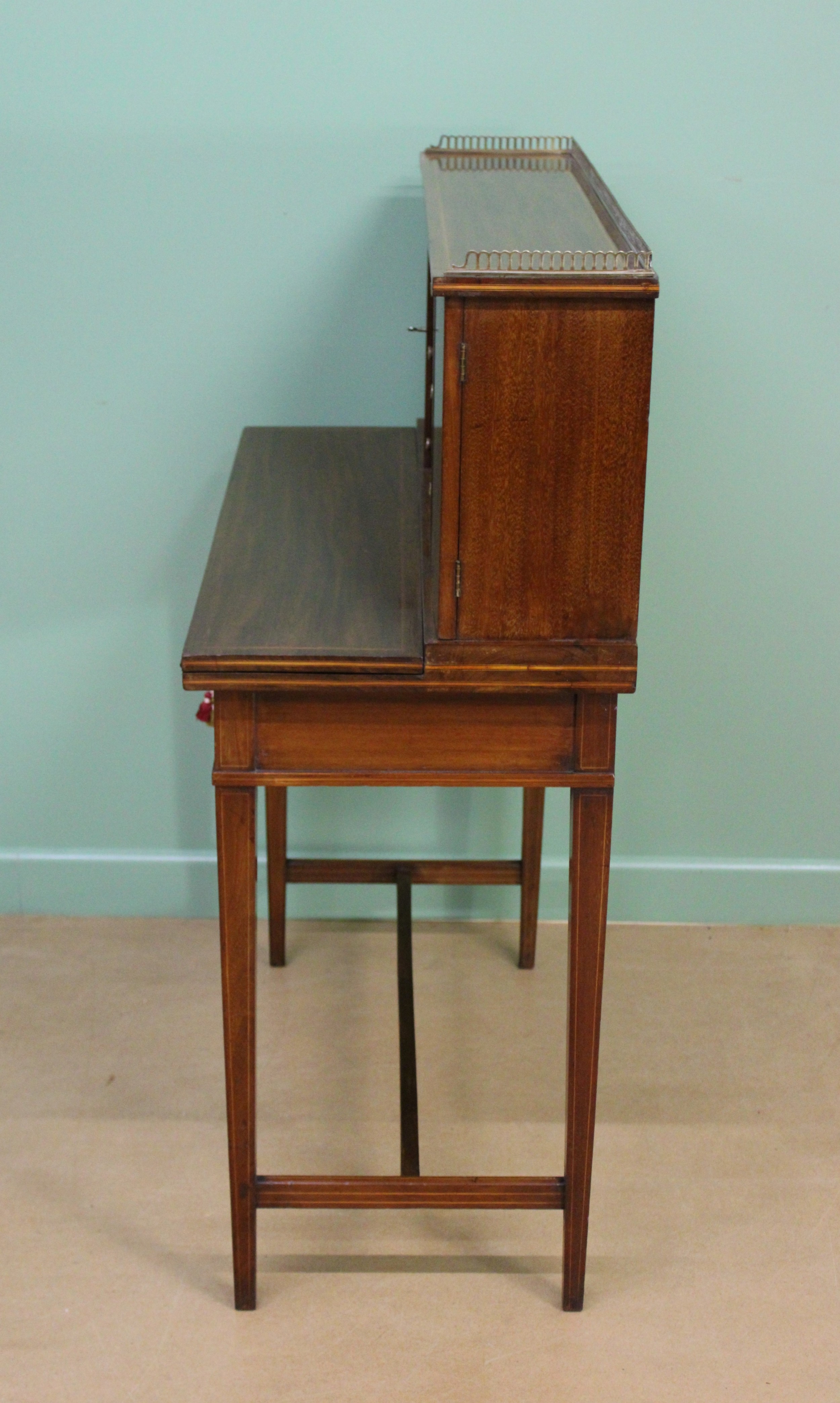
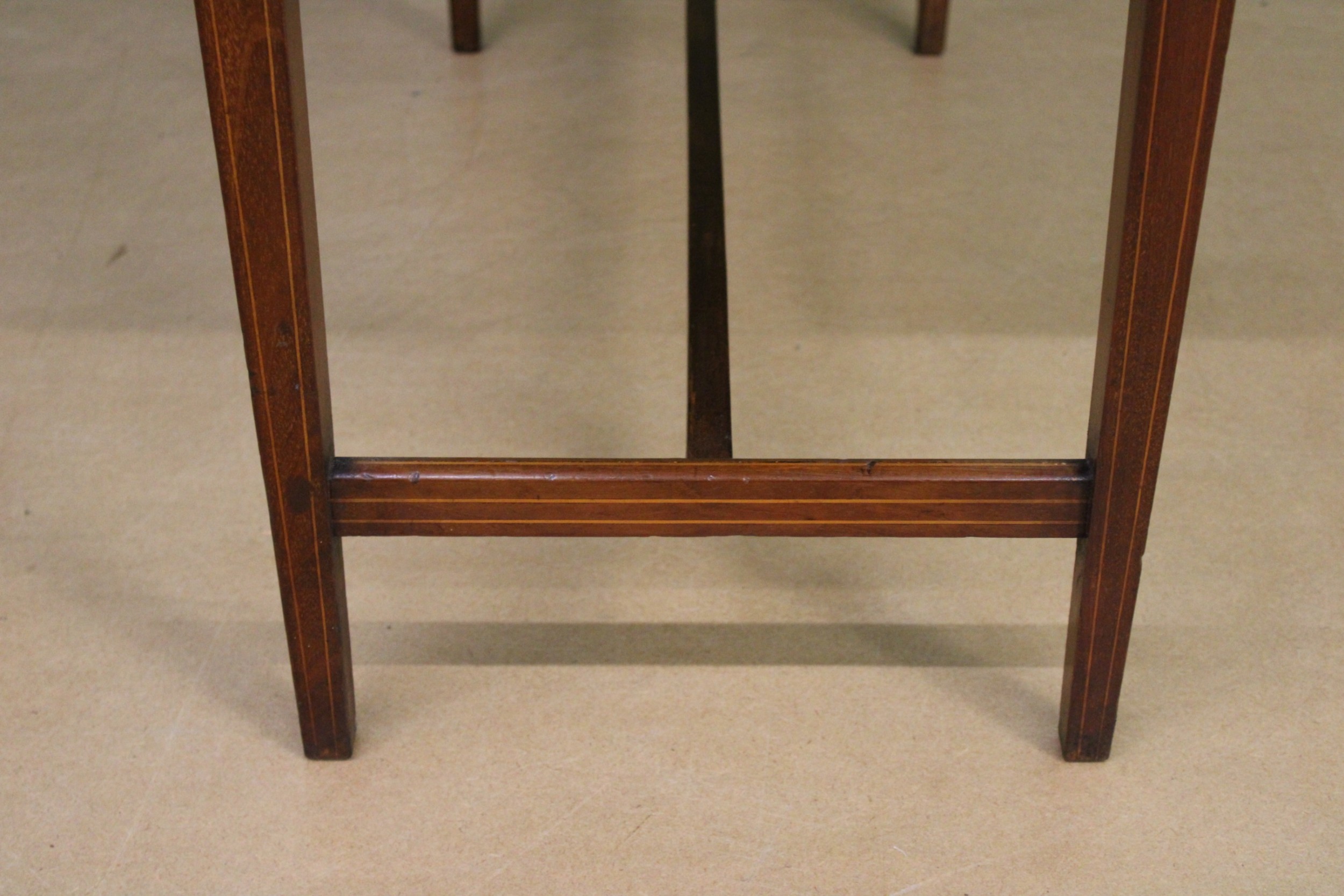
A fine quality late 19th century inlaid mahogany bonheur du jour. Of excellent construction by the prestigious cabinet makers Jas Shoolbred & Co. Decorated with inlaid detailing of swags, urns, garlands and harebells throughout. The super-structure is surmounted with a solid brass gallery. There are a pair of cupboard doors flanking a series of 2 short over 2 long drawers. The cupboards are lockable (keys supplied) and open to reveal fitted interiors. Beneath is a fold over writing surface , fitted with a sumptuous blue leather. Below is a single long drawer, lockable with key supplied. All standing on elegant tapering legs, united by under-stretchers. Offered for sale in excellent condition, with a good colour and patina, ready to go straight into the home.
Dimensions:
Width 84cms
Depth 49cms
Height 109cms
James Shoolbred & Co
The name of James Shoolbred & Co is highly respected among admirers of Aesthetic Movement furniture. Their antique desks, Victorian dining chairs and antique marquetry furniture were produced for wealthy households up to 1931. A particularly fine example of James Shoolbred antique marquetry furniture – an ornate piano by designer Henry Batley – is on display at the V & A museum, London.
Established in the 1820s, James Shoolbred’s Tottenham Court Road company began life as a drapers. It began supplying textiles to the furniture trade, and expanded into the stores either side, branching into interior design. By the 1870s, the company was designing and manufacturing its own furniture.
A major factor of James Shoolbred’s success was their detailed catalogues, which were published from around 1873. Configured to showcase the company’s designs beyond the confines of London, they made Shoolbred an overnight success.
In the 1880s the firm moved to larger premises. Imaginatively laid out, with detailed room schemes showing off the company’s latest furniture and textile designs, it became an unmitigated success.
Although James Shoolbred & Co specialised in furniture of the Aesthetic Movement they encompassed all the fashionable trends of the time, from the motifs and patterns of Japanese design in their antique marquetry furniture, to Art Nouveau and gothic influences in their antique desks and Victorian dining chairs.