38,797  PAGES BROWSED TODAY PAGES TODAY 98  ANTIQUES UPLOADED TODAY NEW ARRIVALS
ID #SA441092
FOR SALE
£6,500
Email
Save
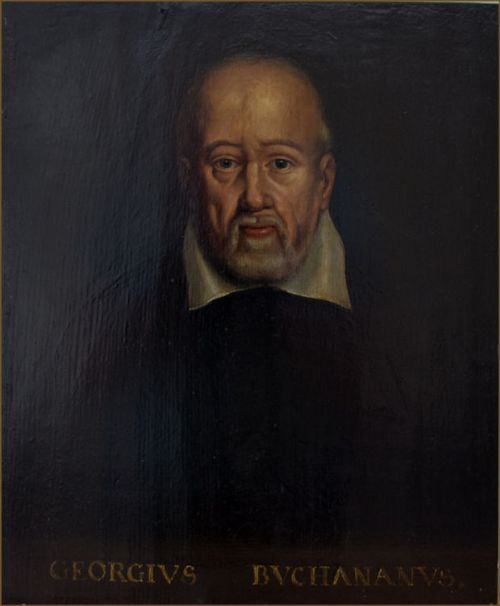
Attributed to Frans Pourbus the Elder, 1545 - 1581 Portrait of George Buchanan, 1506-1582, Poet, Historian, and Administrator
Artware Fineart
for sale €7,605     $8,255
£6,500

Artware Fineart

Sellingantiques Verified Since Sep 2008
View Dealers Stock Page
Id #SA441092
PDF SHARE
SAVE

Attributed to Frans Pourbus the Elder, 1545 - 1581 Portrait of George Buchanan, 1506-1582, Poet, Historian, and Administrator

16th century
For Sale by Artware Fineart
Description

Attributed to Frans Pourbus the Elder, 1545 - 1581

Portrait of George Buchanan, 1506-1582, poet, historian, and administrator

Signed/Inscribed:

"GEORGUS BVCHANVS"

oil on oak panel

35.54 x 27.94 cm. (13.3/4 x 11in.)

Buchanan, George (1506–1582), poet, historian, and administrator, was born about 1 February 1506 at a farm called The Moss in Killearn parish, Stirlingshire, the fifth of eight children of Thomas Buchanan (d. c.1512) and Agnes Heriot, traditionally said to be of the Heriots of Trabroun, Haddingtonshire. His father and grandfather, Robert Buchanan of Drumikill, died while he was a child and he was brought up by his mother, who was given a lease of lands near Cardross, Menteith, in 1513. He probably spoke Gaelic. One of his five brothers, Patrick, became known as a humanist. A nephew Thomas succeeded him as keeper of the privy seal, and Thomas's wife Janet was Buchanan's executor.
A few details of Buchanan's early life are given in his autobiographical Vita, first published in 1598. Its authenticity is generally accepted, though Peter Young, assistant tutor to James VI, has been suggested as a possible author. At the instigation of his uncle James Heriot he left local schooling at the age of fourteen to go to Paris. His uncle's death caused him to return to Scotland within two years. During 1523 he undertook military service with French troops led by the duke of Albany in a campaign of retaliation against English invasion, and was present at the siege of Wark in October. After a winter's illness he went to St Andrews to study under John Mair or Major. He took his BA degree at St Andrews on 3 October 1525 and though in a later epigram he described his teacher as ‘Major in name alone’ (Buchanan, Opera, 2.373), he followed him to Paris where he was admitted BA on 10 October 1527. He began to teach in the Collège de Ste Barbe, noted for its Greek studies, and became procurator of the German nation in 1529. For the next five years he was tutor to Gilbert Kennedy (later third earl of Cassillis) to whom he dedicated his first published work, a translation from English into Latin of Linacre's Rudimenta grammatices (1533), and whom he later commemorated in an elegy.
Buchanan had returned to Scotland with Kennedy by 1536 and was appointed tutor to Lord James Stewart, an illegitimate son of James V who died in 1557. He wrote a satirical poem describing a dream in which St Francis asked the author to join the Franciscan order. He replied that there was more honesty found outside the church. He developed the themes of the Somnium at more length in the Palinodiae, intended as a middle way between offending the Franciscans and being too mild for the king, and in the more pointed Franciscanus. These poems, not published until later, showed Buchanan's familiarity with classical models. They also involved him in religious controversy: he had eaten meat in Lent and taken an interest in Lutheran questions. Condemned as a heretic he was thrown into prison, but he escaped and fled to London, where he stayed about six months and was assisted by Sir Thomas Rainsforde. After a month in Paris he left for Bordeaux in September 1539.

While Buchanan was at the Collège de Guyenne in Bordeaux (he had been invited by the principal, André Gouvea, nephew of the principal of Ste Barbe) he continued his acquaintance with scholars including the elder Scaliger, as he did during a year or so at the Collège du Cardinal Lemoine in Paris. He visited Toulouse in 1544 and then returned to Bordeaux where Montaigne was among his pupils. At this time he did not appear to be in danger on account of his religious views.

During these years Buchanan worked on his plays: Baptistes, written and produced in 1542, Medea which was produced in 1543 but may have been drafted earlier, and Jephthes and Alcestis which were not produced at that time

Physical Dimensions
Height
35cm (13.78")
Width
28cm (11.02")
Depth
2cm (0.79")
Declaration

Artware Fineart has dated this 16th Century Oil Portrait to the 16th Century.

Reference Numbers
Sellingantiques Reference
SA441092
Dealers Internal Reference
3885
Description
Attributed to Frans Pourbus the Elder, 1545 - 1581

Portrait of George Buchanan, 1506-1582, poet, historian, and administrator

Signed/Inscribed:

"GEORGUS BVCHANVS"

oil on oak panel

35.54 x 27.94 cm. (13.3/4 x 11in.)

Buchanan, George (1506–1582), poet, historian, and administrator, was born about 1 February 1506 at a farm called The Moss in Killearn parish, Stirlingshire, the fifth of eight children of Thomas Buchanan (d. c.1512) and Agnes Heriot, traditionally said to be of the Heriots of Trabroun, Haddingtonshire.

His father and grandfather, Robert Buchanan of Drumikill, died while he was a child and he was brought up by his mother, who was given a lease of lands near Cardross, Menteith, in 1513.
Artware Fineart

He probably spoke Gaelic. One of his five brothers, Patrick, became known as a humanist. A nephew Thomas succeeded him as keeper of the privy seal, and Thomas's wife Janet was Buchanan's executor.

fig 1. A 16th-century oil portrait painting depicting an elderly bearded scholar in a dark garment with a white collar against a dark background, titled Georgius Buchananus at the bottom.
fig 1. Attributed to Frans Pourbus the Elder, 1545 - 1581 Portrait of George Buchanan, 1506-1582, Poet, Historian, and Administrator

A few details of Buchanan's early life are given in his autobiographical Vita, first published in 1598. Its authenticity is generally accepted, though Peter Young, assistant tutor to James VI, has been suggested as a possible author. At the instigation of his uncle James Heriot he left local schooling at the age of fourteen to go to Paris. His uncle's death caused him to return to Scotland within two years. During 1523 he undertook military service with French troops led by the duke of Albany in a campaign of retaliation against English invasion, and was present at the siege of Wark in October. After a winter's illness he went to St Andrews to study under John Mair or Major. He took his BA degree at St Andrews on 3 October 1525 and though in a later epigram he described his teacher as ‘Major in name alone’ (Buchanan, Opera, 2.373), he followed him to Paris where he was admitted BA on 10 October 1527. He began to teach in the Collège de Ste Barbe, noted for its Greek studies, and became procurator of the German nation in 1529. For the next five years he was tutor to Gilbert Kennedy (later third earl of Cassillis) to whom he dedicated his first published work, a translation from English into Latin of Linacre's Rudimenta grammatices (1533), and whom he later commemorated in an elegy.

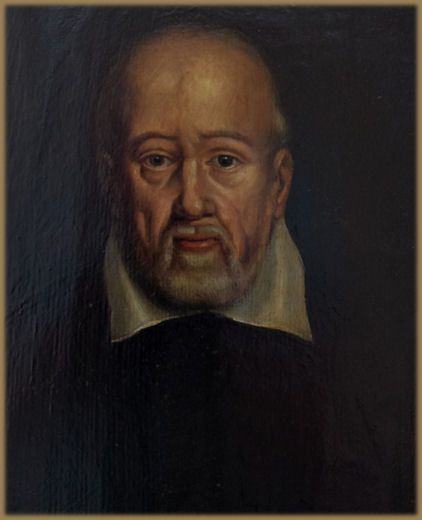
fig 2. A 16th-century oil portrait painting depicting an elderly bearded scholar in a dark garment with a white collar against a dark background, titled Georgius Buchananus at the bottom.
fig 2. Attributed to Frans Pourbus the Elder, 1545 - 1581 Portrait of George Buchanan, 1506-1582, Poet, Historian, and Administrator

Buchanan had returned to Scotland with Kennedy by 1536 and was appointed tutor to Lord James Stewart, an illegitimate son of James V who died in 1557. He wrote a satirical poem describing a dream in which St Francis asked the author to join the Franciscan order. He replied that there was more honesty found outside the church. He developed the themes of the Somnium at more length in the Palinodiae, intended as a middle way between offending the Franciscans and being too mild for the king, and in the more pointed Franciscanus. These poems, not published until later, showed Buchanan's familiarity with classical models. They also involved him in religious controversy: he had eaten meat in Lent and taken an interest in Lutheran questions. Condemned as a heretic he was thrown into prison, but he escaped and fled to London, where he stayed about six months and was assisted by Sir Thomas Rainsforde. After a month in Paris he left for Bordeaux in September 1539.

While Buchanan was at the Collège de Guyenne in Bordeaux (he had been invited by the principal, André Gouvea, nephew of the principal of Ste Barbe) he continued his acquaintance with scholars including the elder Scaliger, as he did during a year or so at the Collège du Cardinal Lemoine in Paris. He visited Toulouse in 1544 and then returned to Bordeaux where Montaigne was among his pupils. At this time he did not appear to be in danger on account of his religious views.

During these years Buchanan worked on his plays: Baptistes, written and produced in 1542, Medea which was produced in 1543 but may have been drafted earlier, and Jephthes and Alcestis which were not produced at that time

Height
35cm (13.78")
Width
28cm (11.02")
Depth
2cm (0.79")
Date of Manufacture

Artware Fineart has dated this 16th Century Oil Portrait to the 16th Century.

Reference Numbers
Sellingantiques Ref
SA441092
Dealers Internal Ref
3885
Artware Fineart
Sellingantiques verified Since Sep 2008
Dealer Profile

You can view the stock and full dealer information on the Artware Fineart Profile Page
PDF SHARE
SAVE
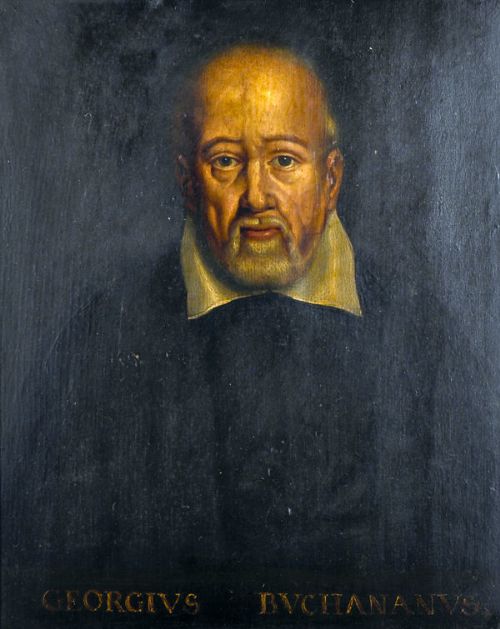
A 16th-century oil portrait painting depicting an elderly bearded scholar in a dark garment with a white collar against a dark background, titled Georgius Buchananus at the bottom.
1 / 3
Archive I A 16th-century oil portrait painting depicting an elderly bearded scholar in a dark garment with a white collar against a dark background, titled Georgius Buchananus at the bottom.

Attributed to Frans Pourbus the Elder, 1545 - 1581 Portrait of George Buchanan, 1506-1582, Poet, Historian, and Administrator

Archive II A 16th-century oil portrait painting depicting an elderly bearded scholar in a dark garment with a white collar against a dark background, titled Georgius Buchananus at the bottom. View II
Archive III A 16th-century oil portrait painting depicting an elderly bearded scholar in a dark garment with a white collar against a dark background, titled Georgius Buchananus at the bottom. View III
Enlarged Archival View
Telephone 07958 699 645
Location
18 La Gare
51 Surrey Row
London
SE1 0BZ
United Kingdom
Verified Since Sep 2008
Items For Sale 243
Items Sold 223
Artware Fineart
Verified Since Sep 2008
View Dealer Info
Location: 18 La Gare , 51 Surrey Row , London , SE1 0BZ , United Kingdom
Verified
Sep 2008
For Sale
243
Sold
223
A 16th-century oil portrait painting depicting an elderly bearded scholar in a dark garment with a white collar against a dark background, titled Georgius Buchananus at the bottom.
Attributed to Frans Pourbus the Elder, 1545 - 1581 Portrait of George Buchanan, 1506-1582, poet, historian, and administrator
Ref: SA441092
A 16th-century oil portrait painting depicting an elderly bearded scholar in a dark garment with a white collar against a dark background, titled Georgius Buchananus at the bottom.
Detail View 1
Detail View 2
Archival Detail
Every single antique dealer on our platform is individually approved by our internal team. We verify their professional trade history, ethical standards, and photographic quality to ensure a secure, high-standard buying environment. Upon joining, every dealer agrees to a strict 9-point code of conduct. While issues can occasionally arise, our dealers typically resolve them swiftly and directly with the buyer. In fact, since our founding in 2002, Sellingantiques has only had to step in to help resolve an issue on roughly five occasions—a true testament to the quality of our dealers and their dedication to your happiness.
Our dealers are highly experienced in packing and shipping fragile, high-value antiques. Because you are in direct contact with the dealer, you will be able to easily go through all available shipping and insurance options together to ensure your item arrives safely.
Antiques are the ultimate green purchase. By choosing historical pieces over newly manufactured goods, you completely eliminate the carbon footprint of modern mass production while preserving exceptional, timeless craftsmanship.

Northern Renaissance portraiture from the 16th century is characterised by realistic human depiction, meticulous attention to detail, subtle lighting, and dark backgrounds that highlight the sitters social or intellectual standing.

Artists during this era typically used natural mineral and organic pigments bound in linseed or walnut oil, applied onto solid wooden panels or stretched linen canvas.

Authenticity is evaluated through provenance documentation, dendrochronology on timber panels, pigment analysis using X-ray fluorescence, and infrared reflectography to examine underlying sketch lines.

A dark Renaissance portrait functions as a focal point when mounted on a neutral wall, displayed alongside contemporary furniture, or integrated into a gallery wall within a study or library setting.

Keep the painting away from direct sunlight, maintain relative humidity levels near 50 percent, avoid rapid temperature changes, and consult a professional conservator for surface cleaning and varnish care.
items
Add keywords to the filter
Price
£100
£250000
Era
Movements
Material
Origin
Stock Location
Freshness
Online Payments
Categories