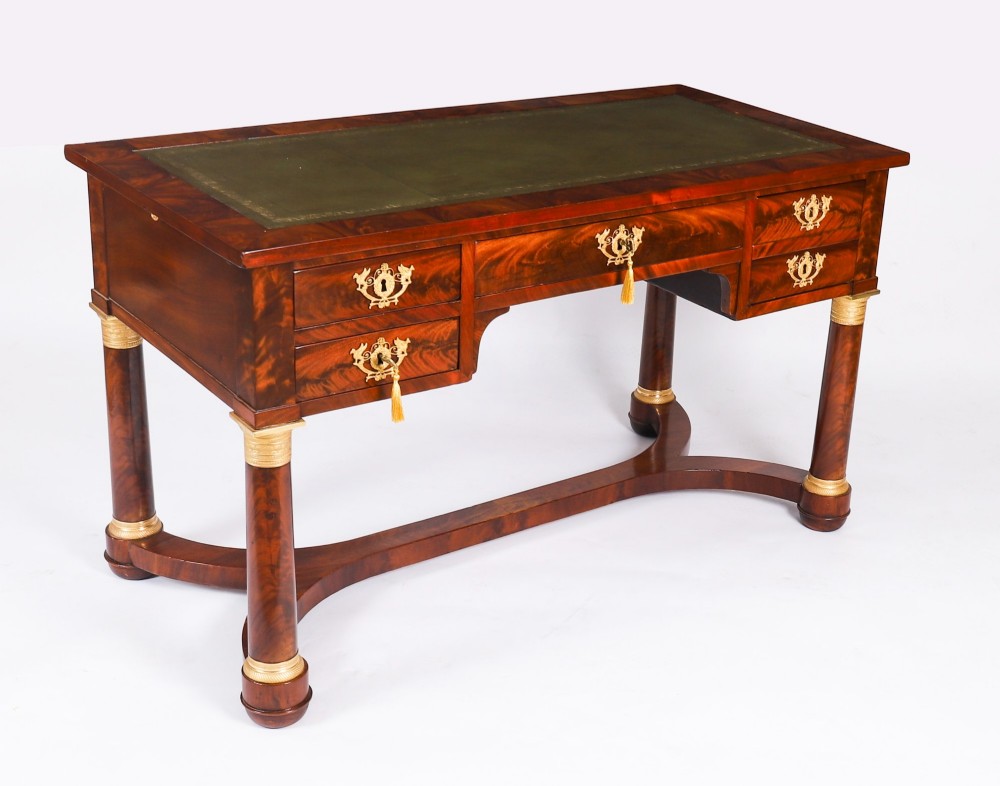
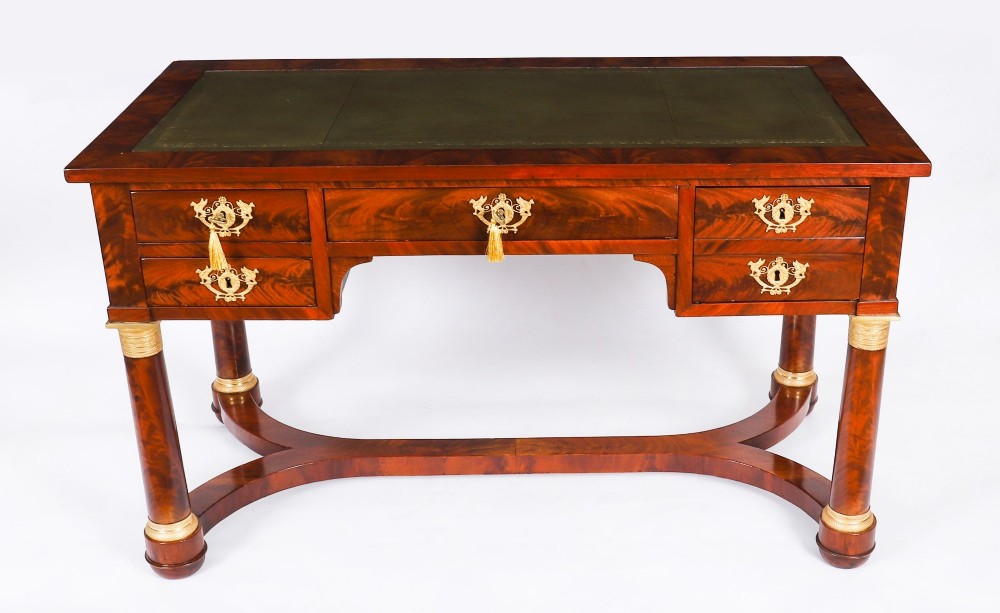
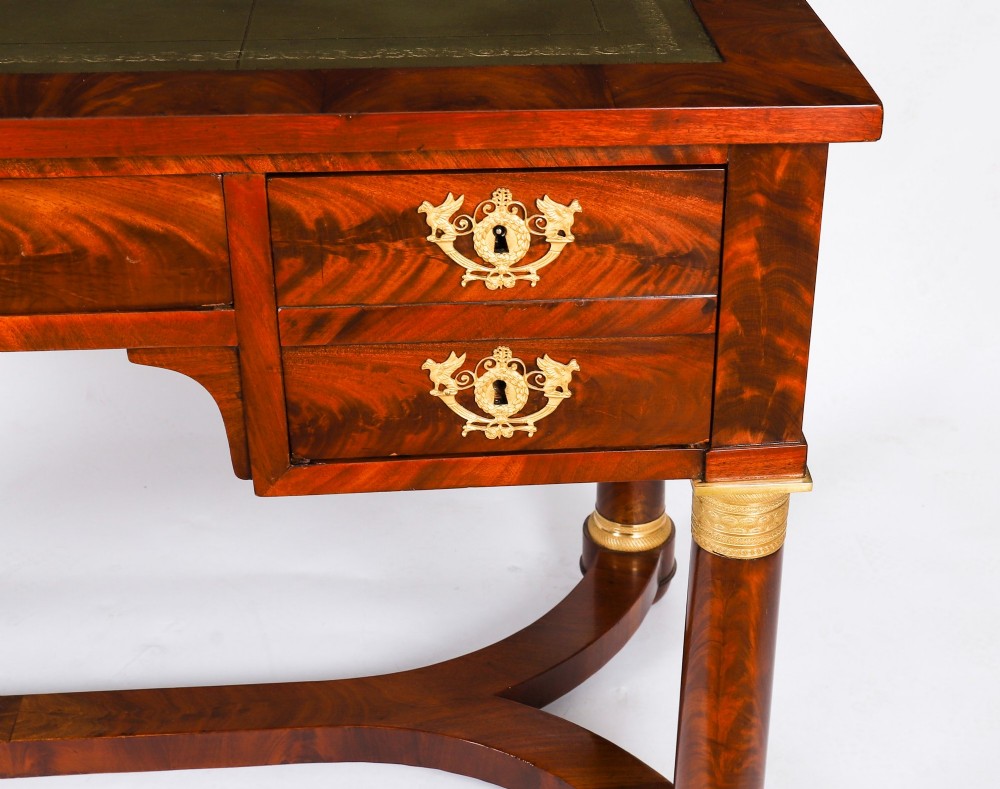
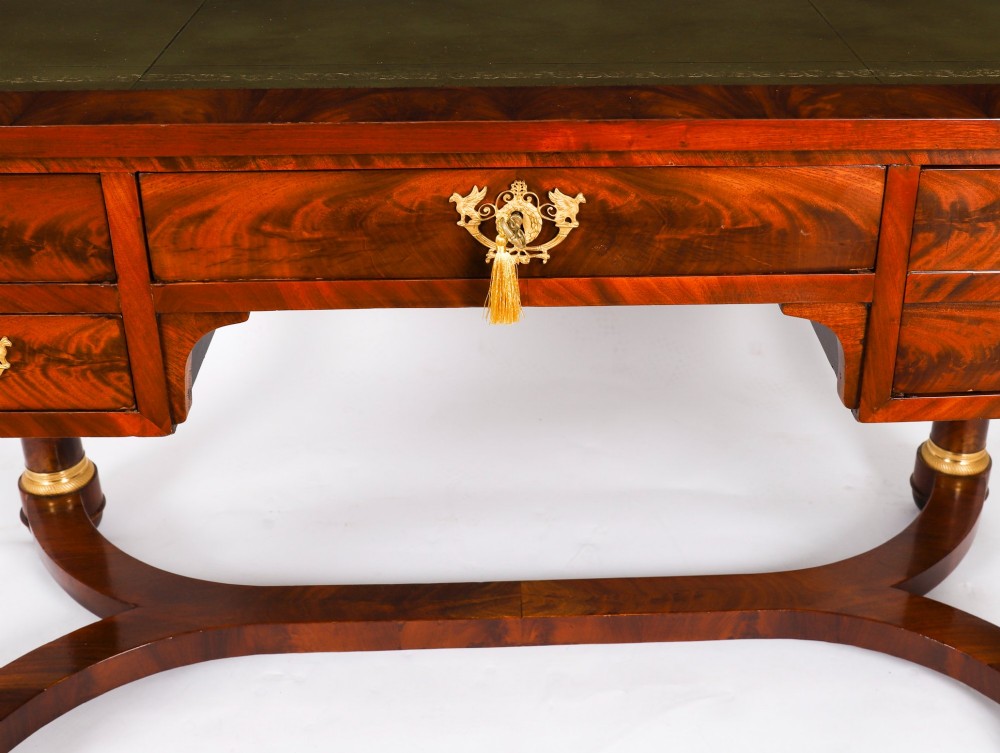
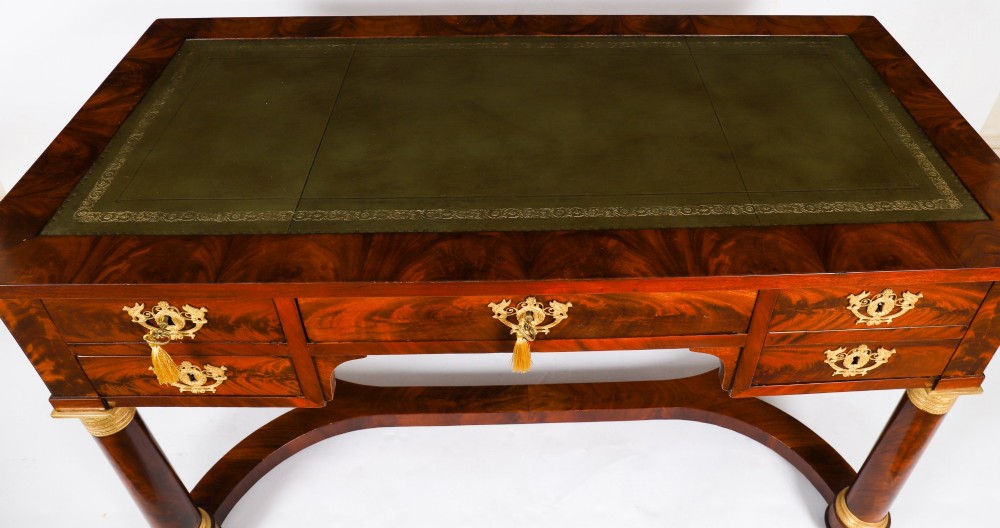
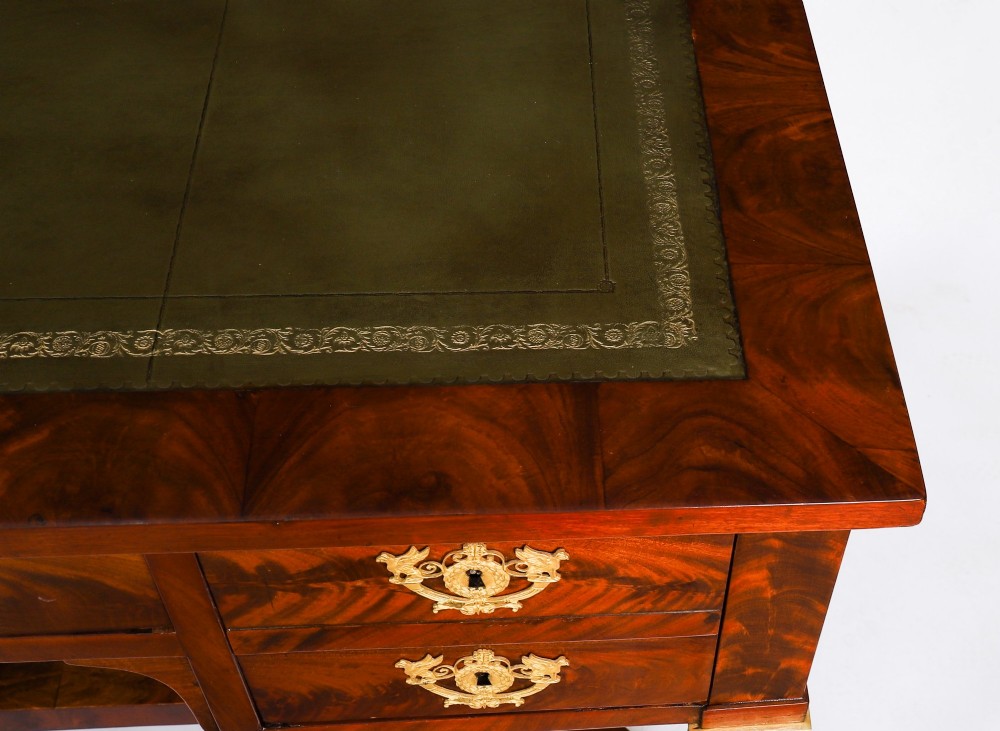
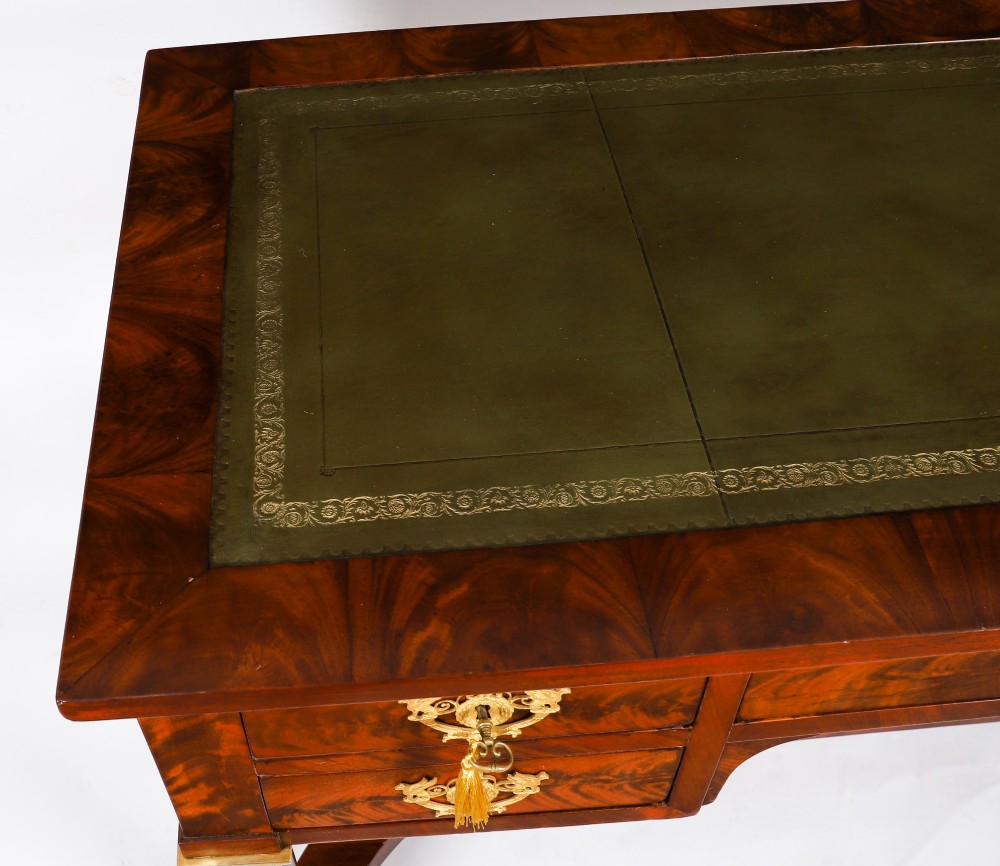
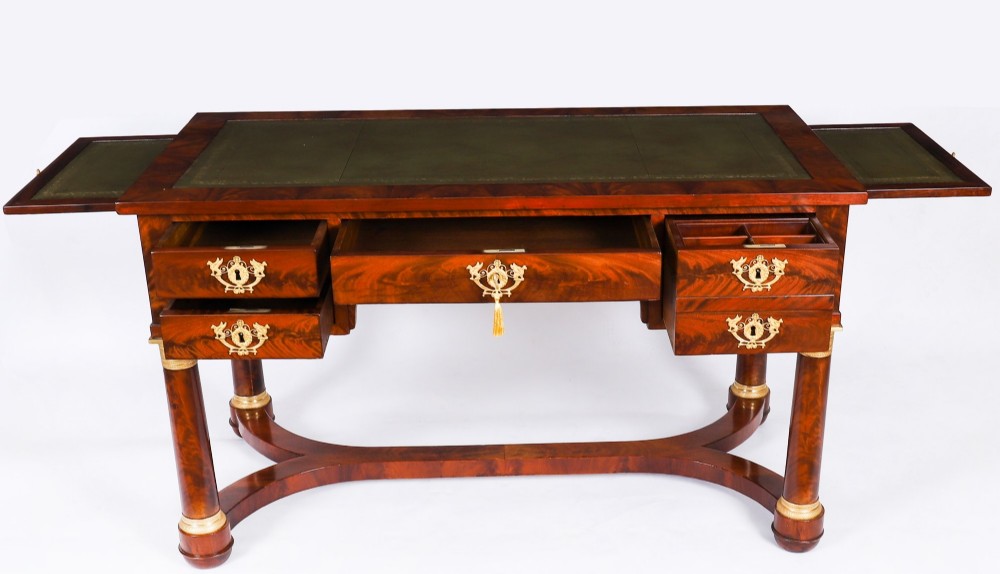
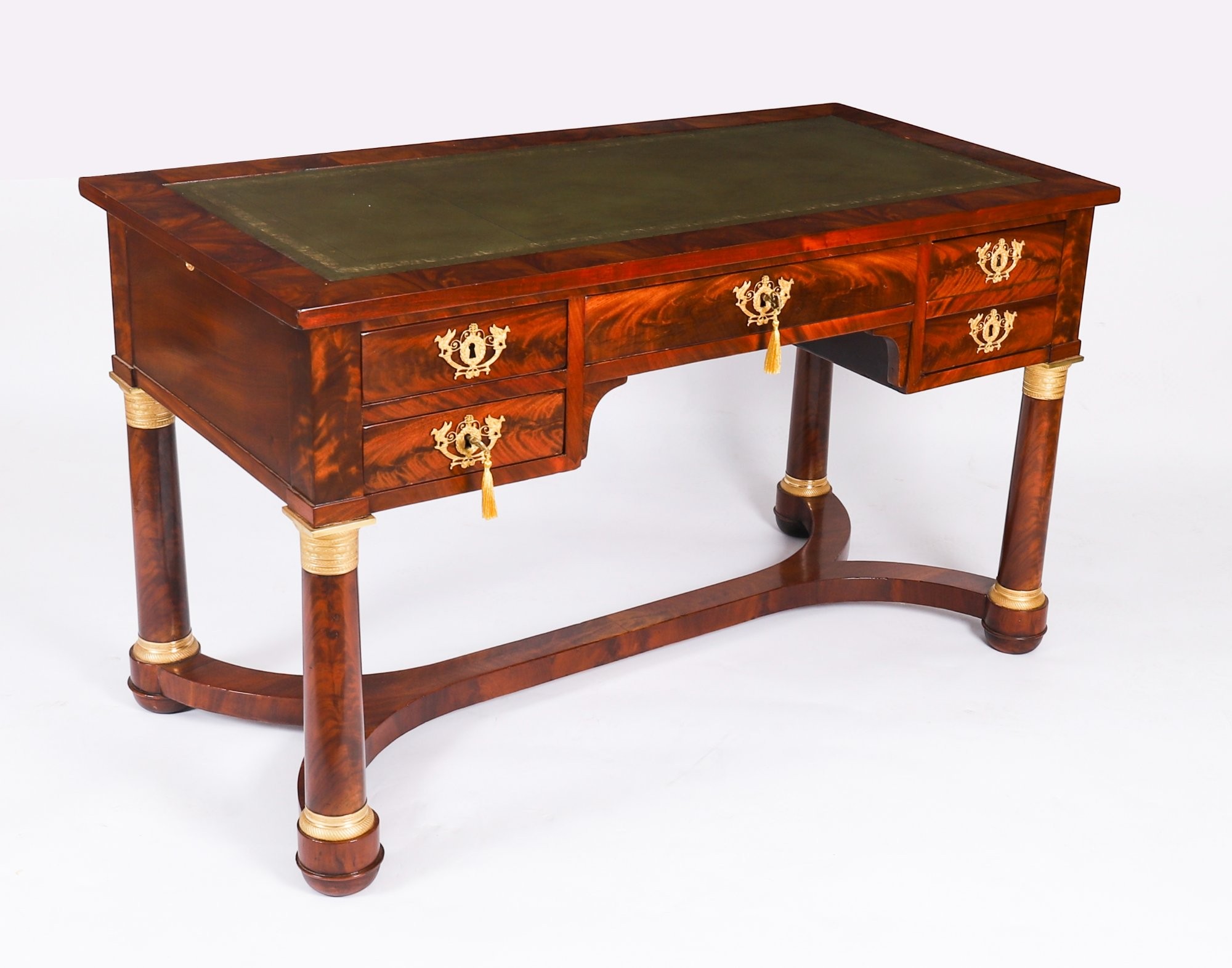
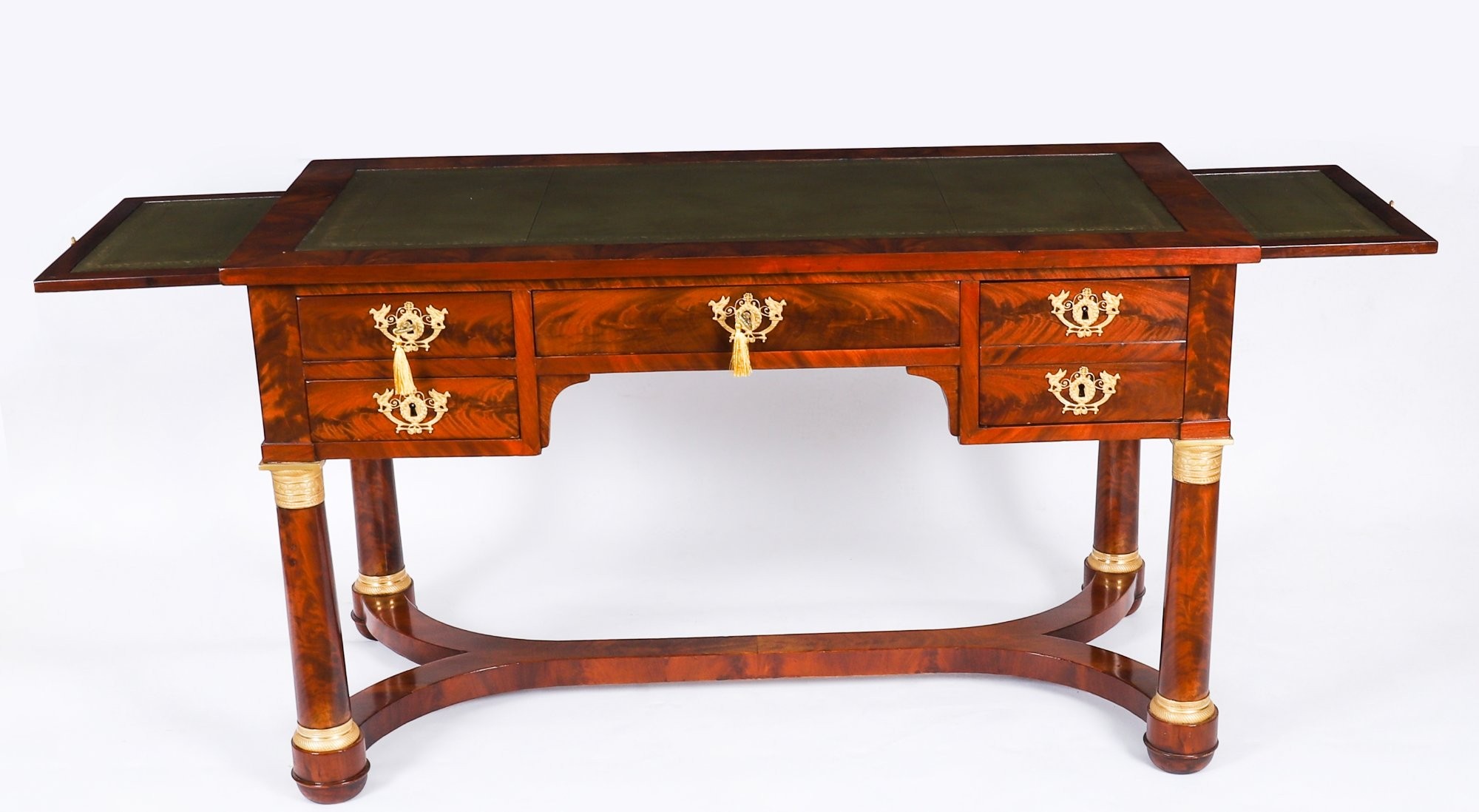
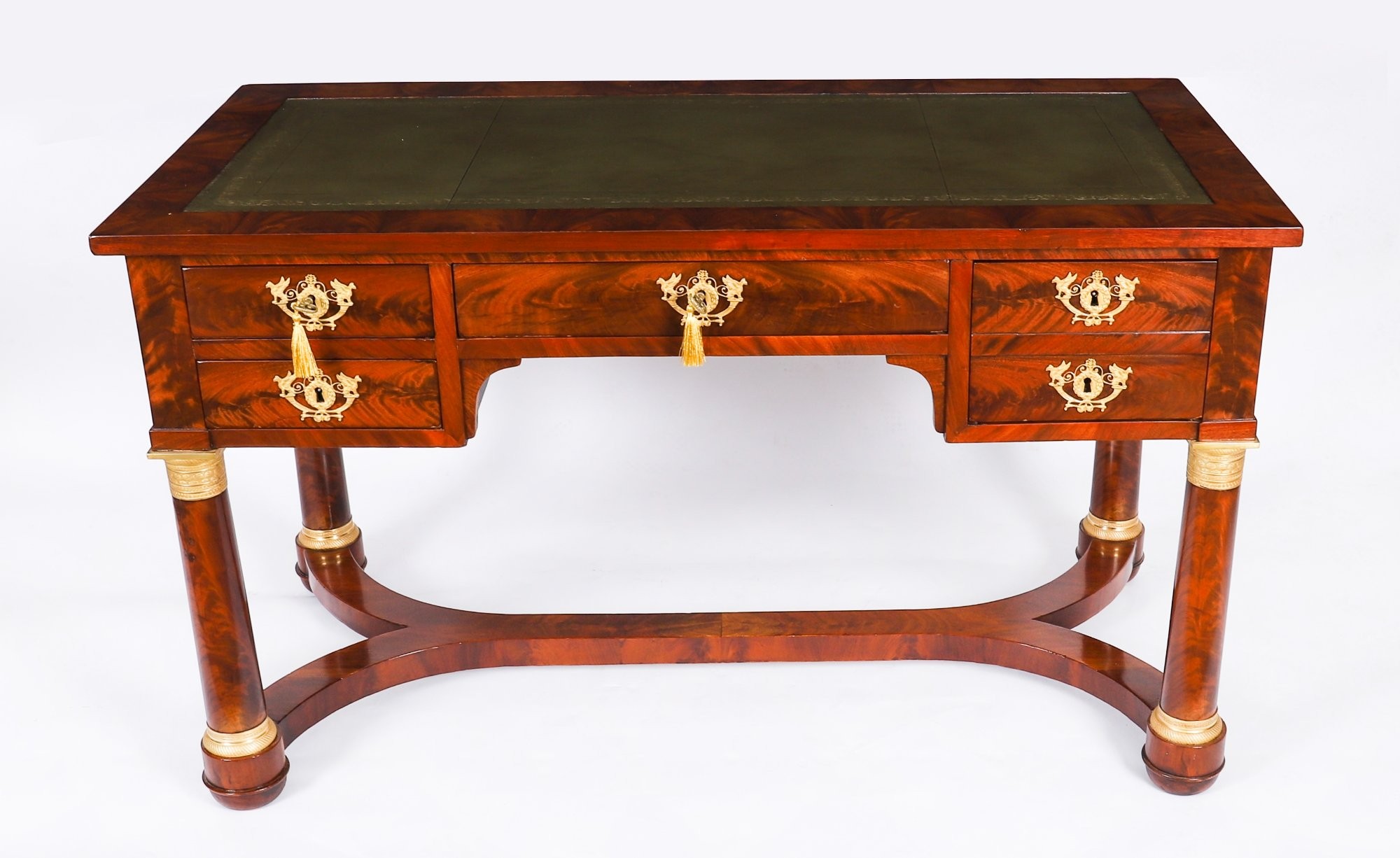
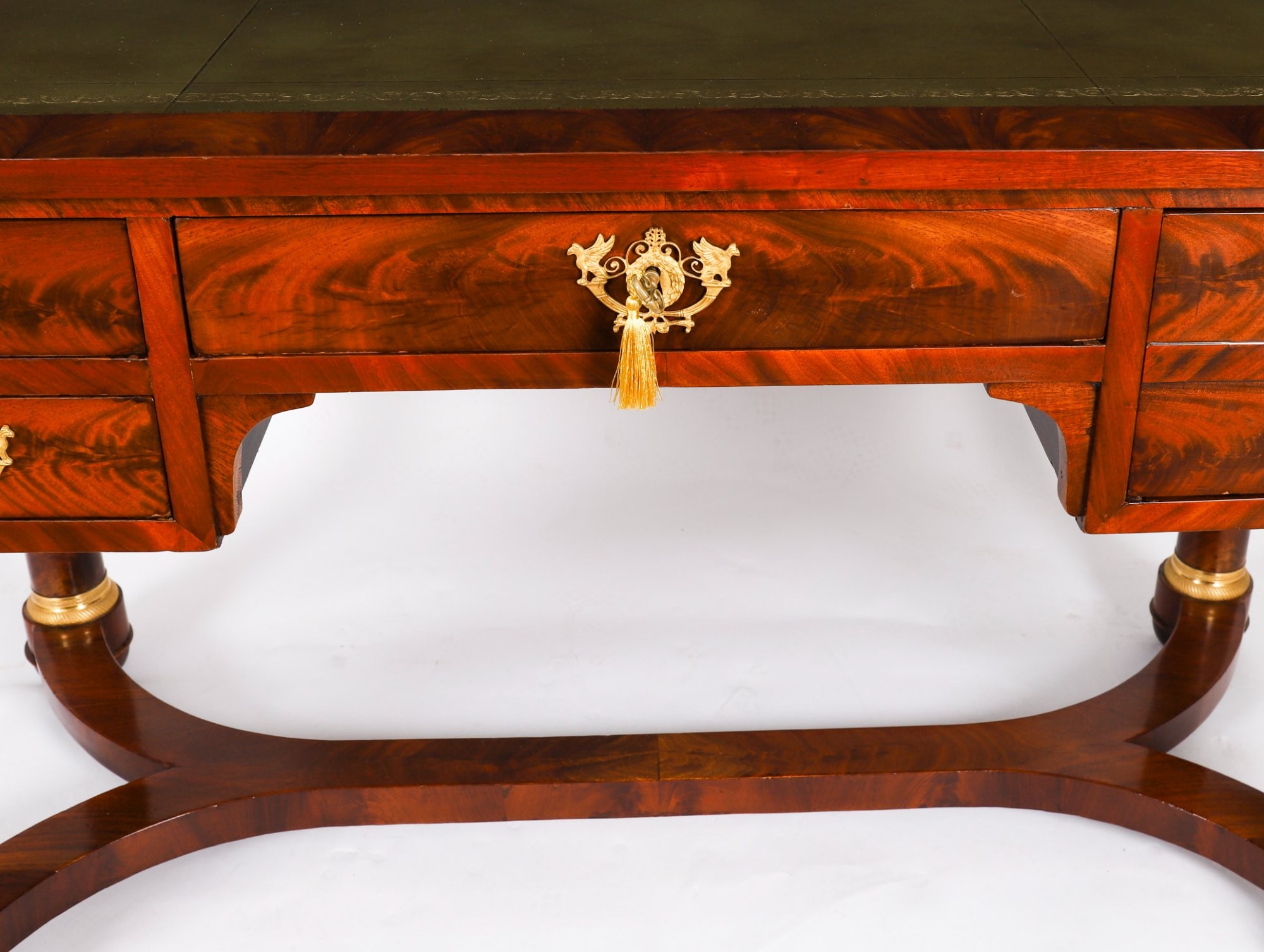
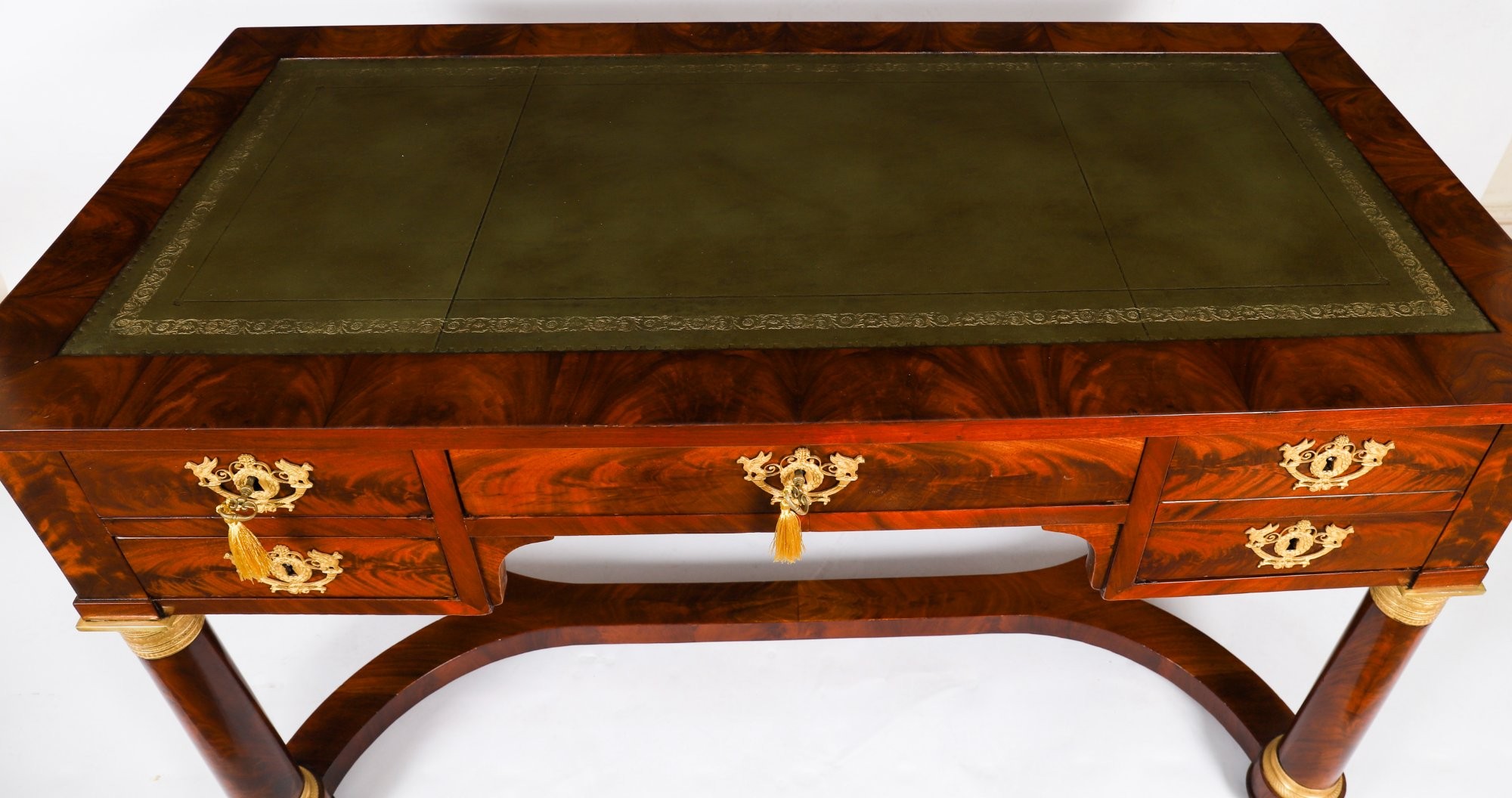
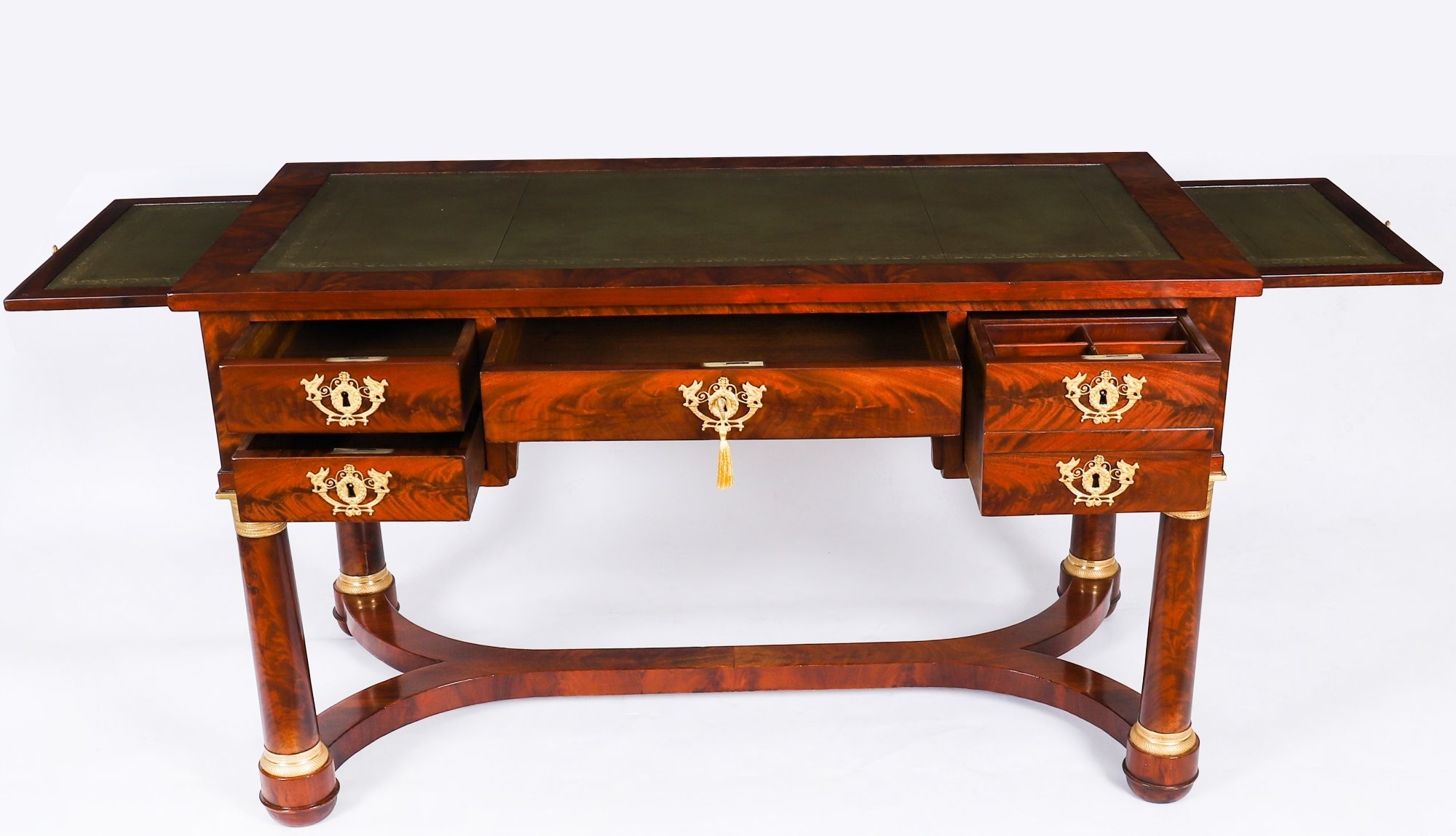
This is a fine antique French ormolu mounted flame mahogany Empire bureau plat, Circa 1820 in date.
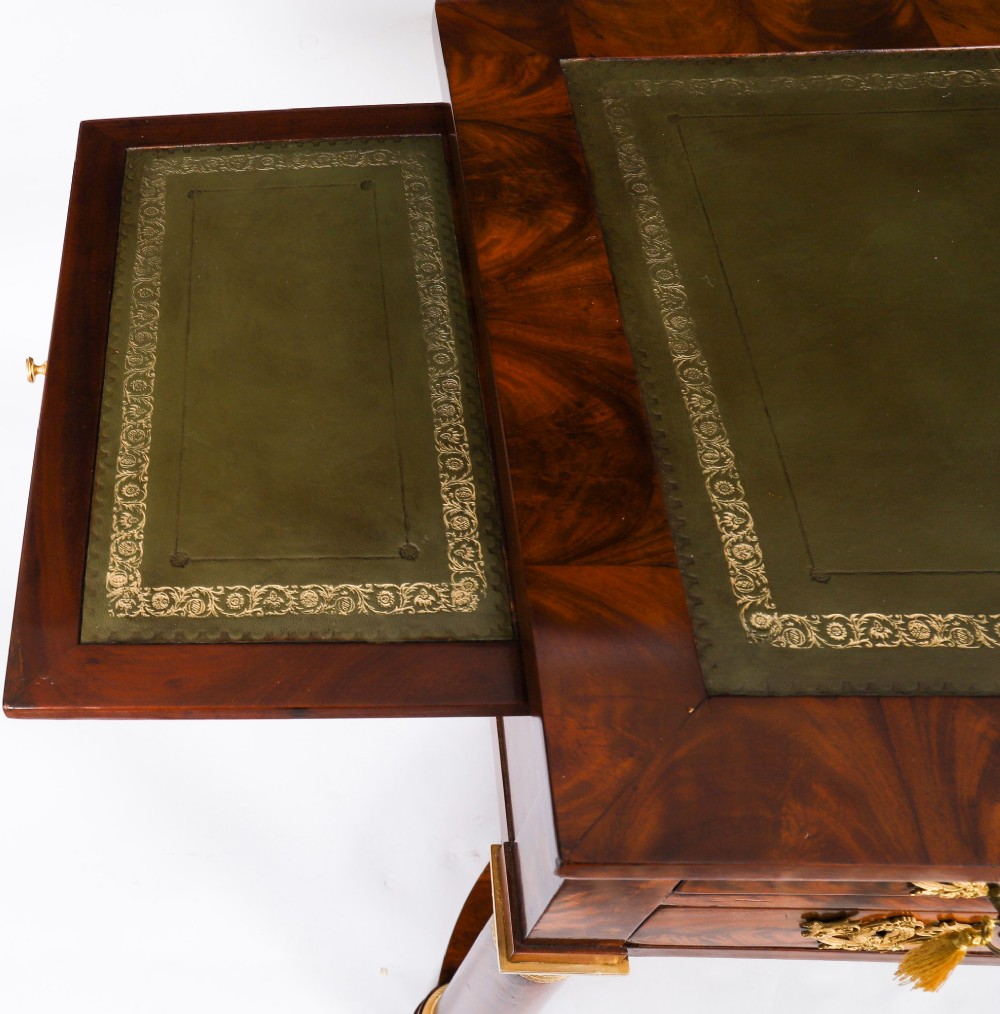
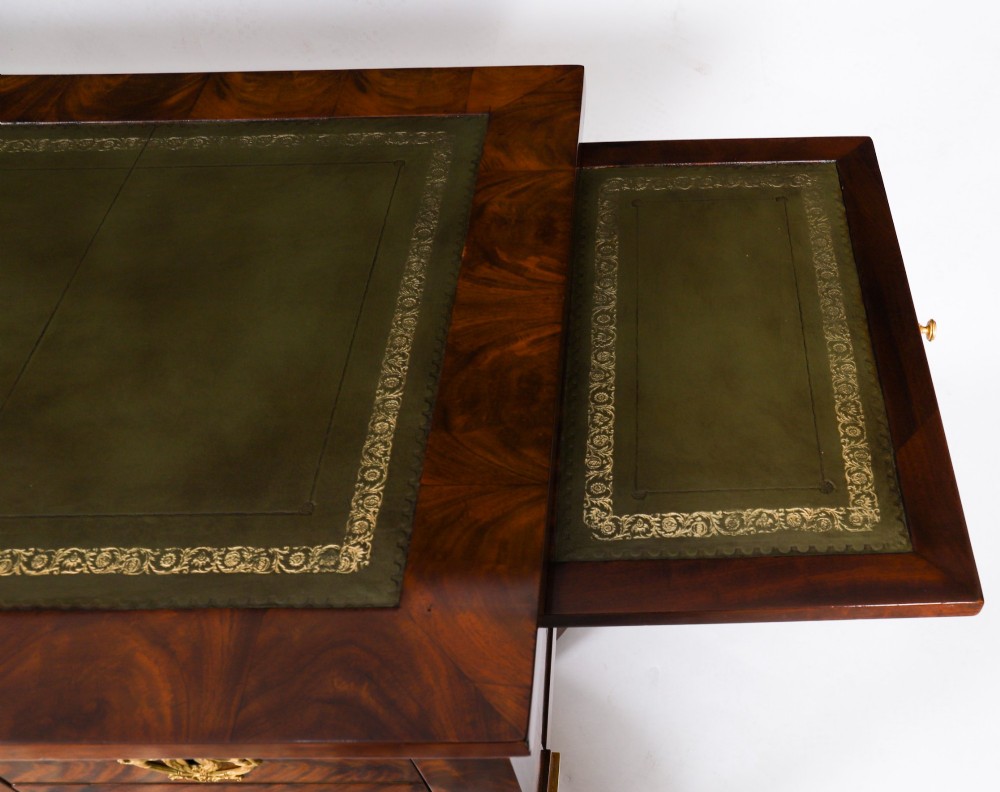
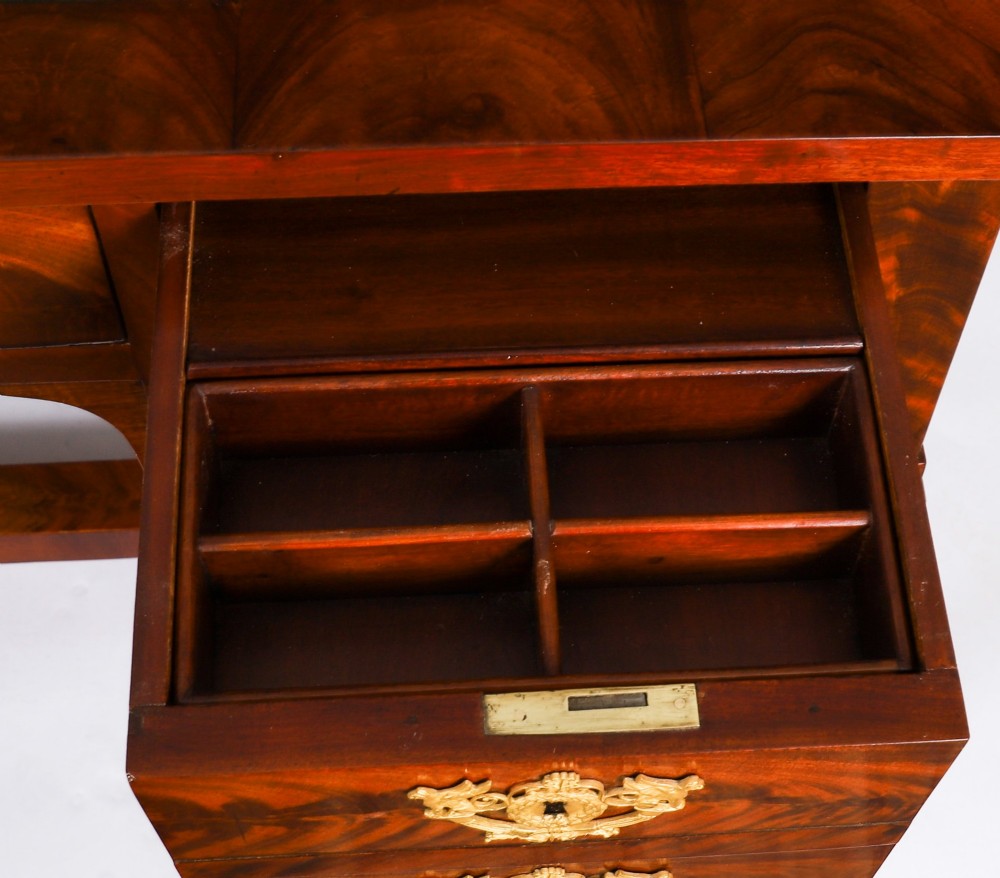
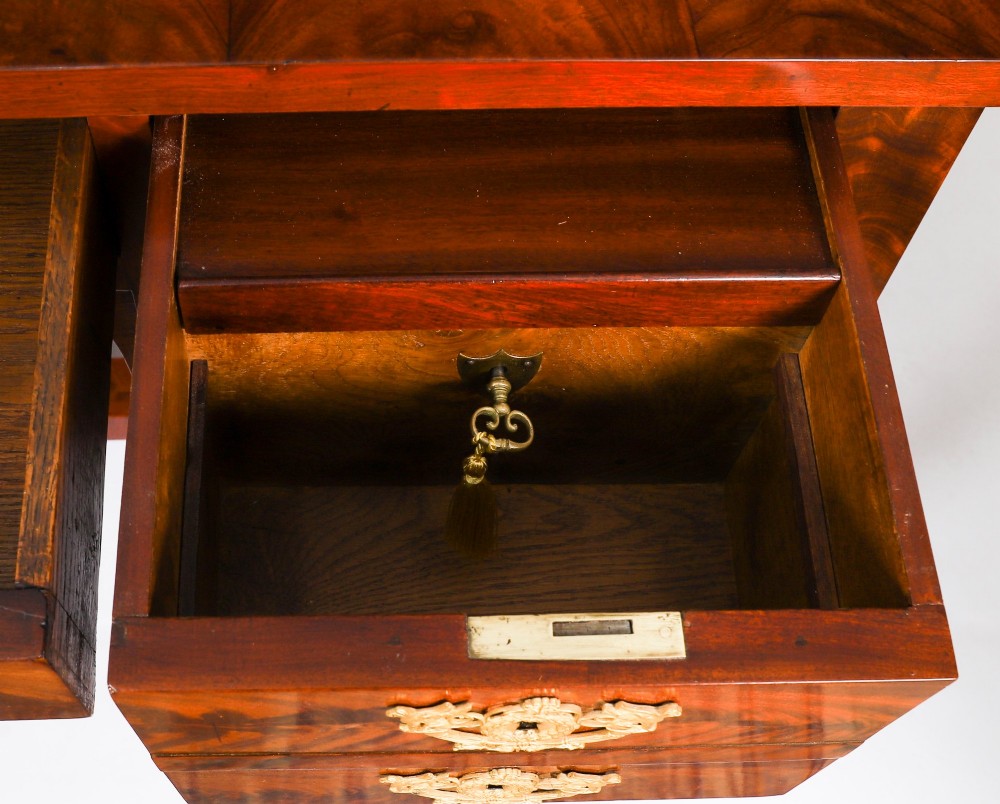
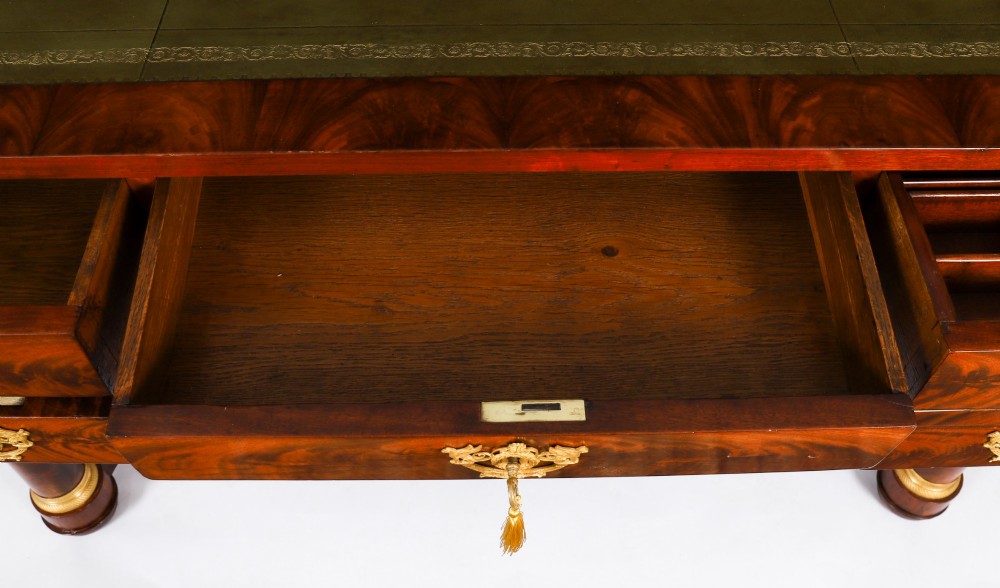
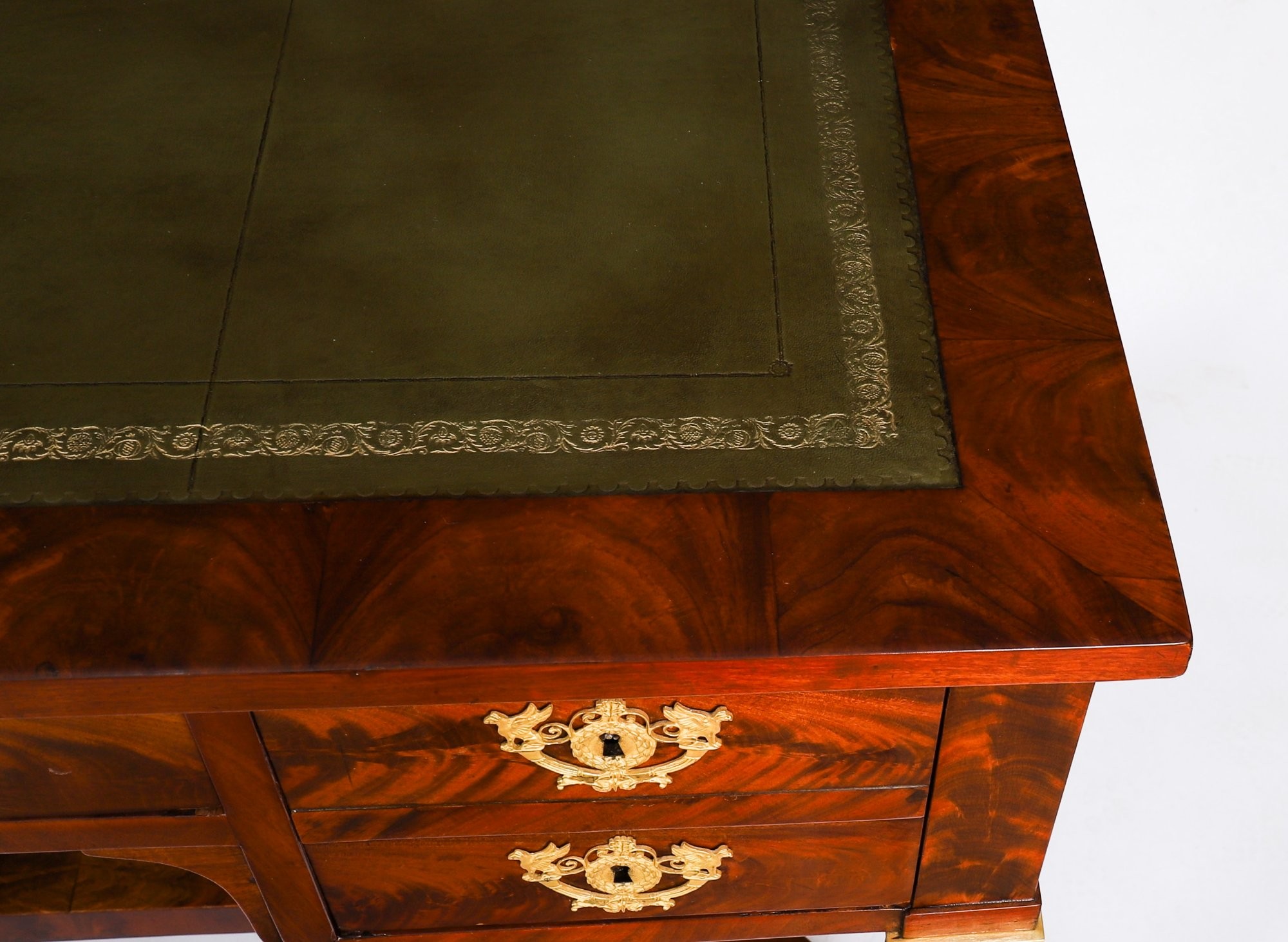
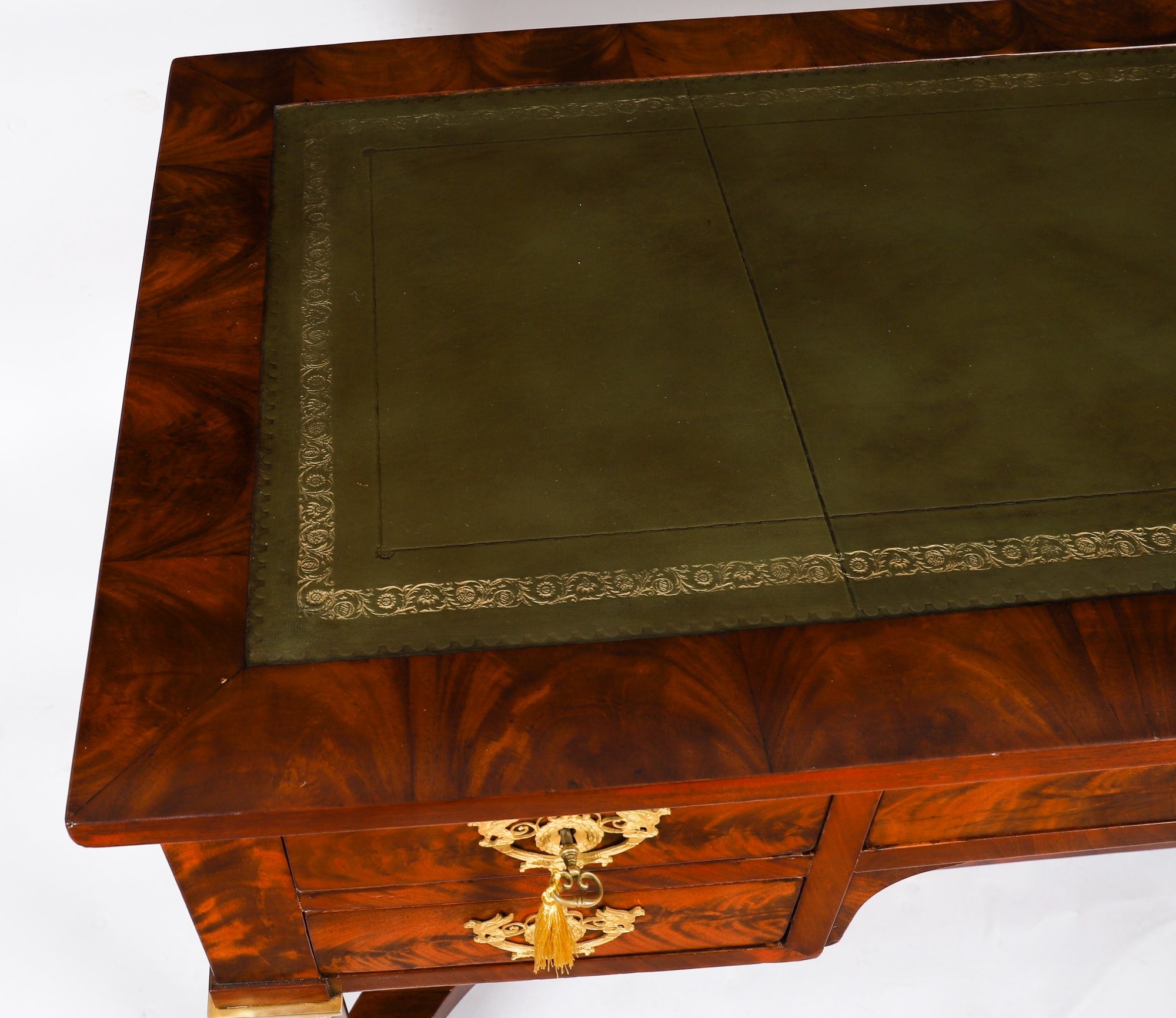
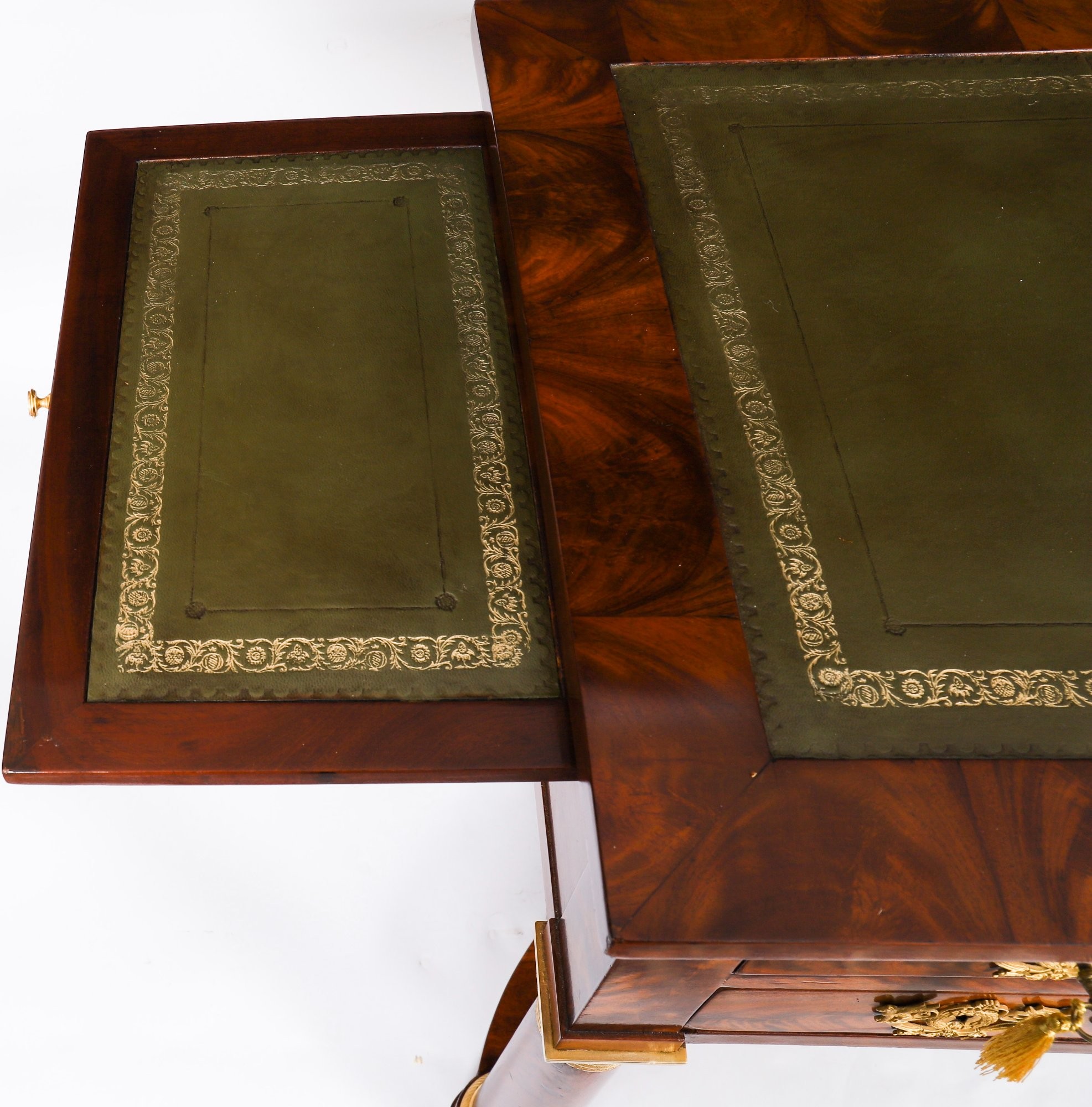
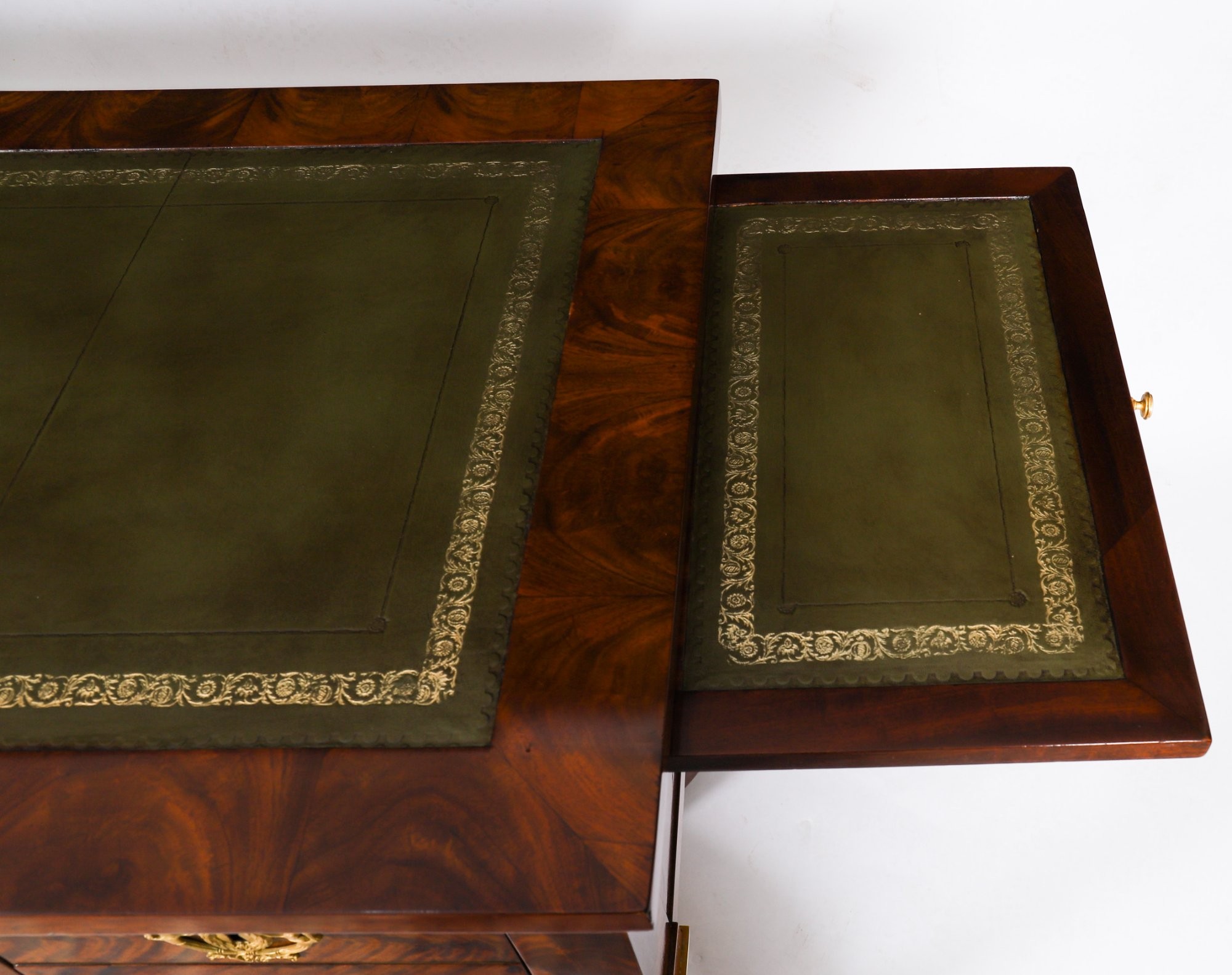
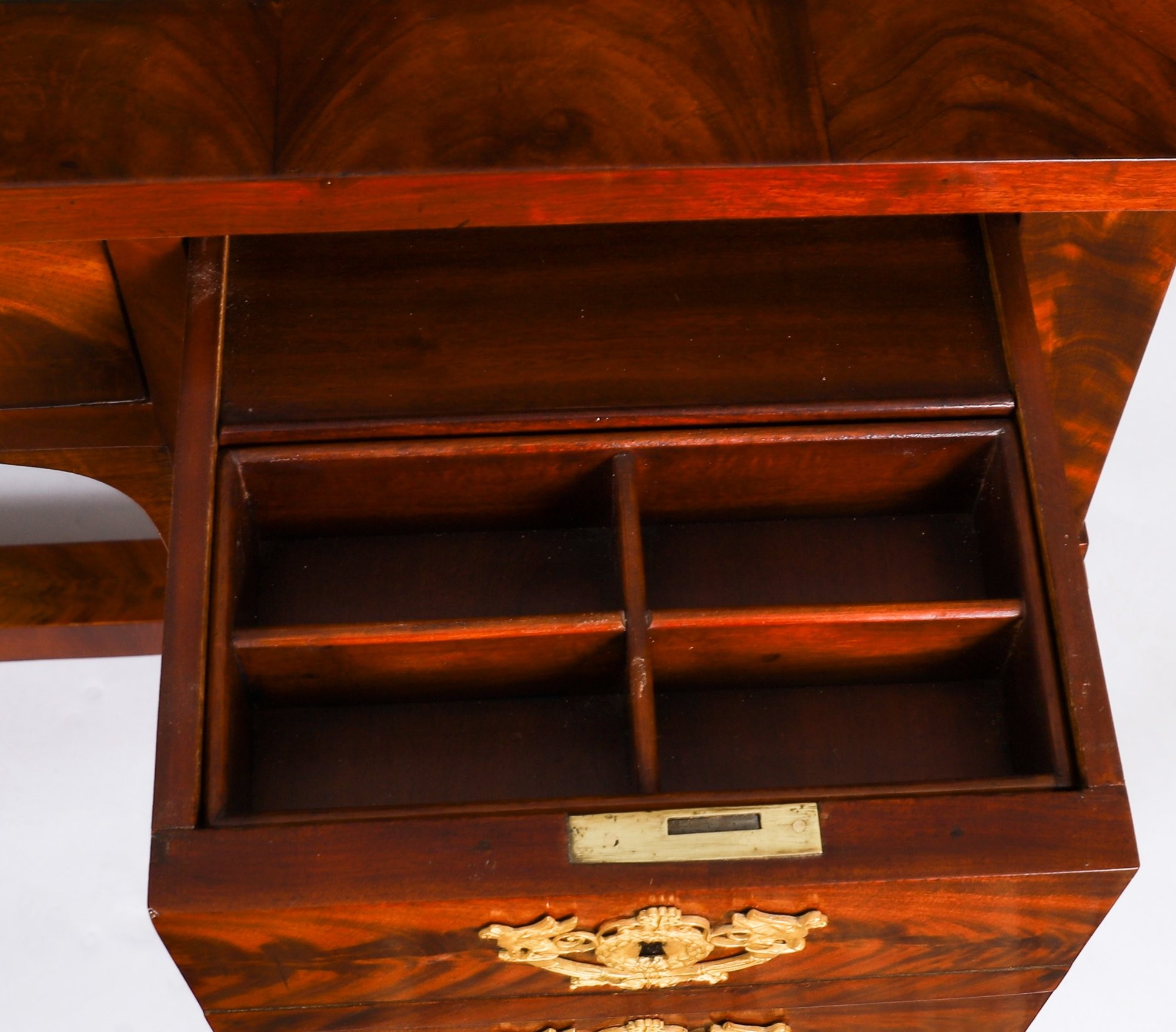
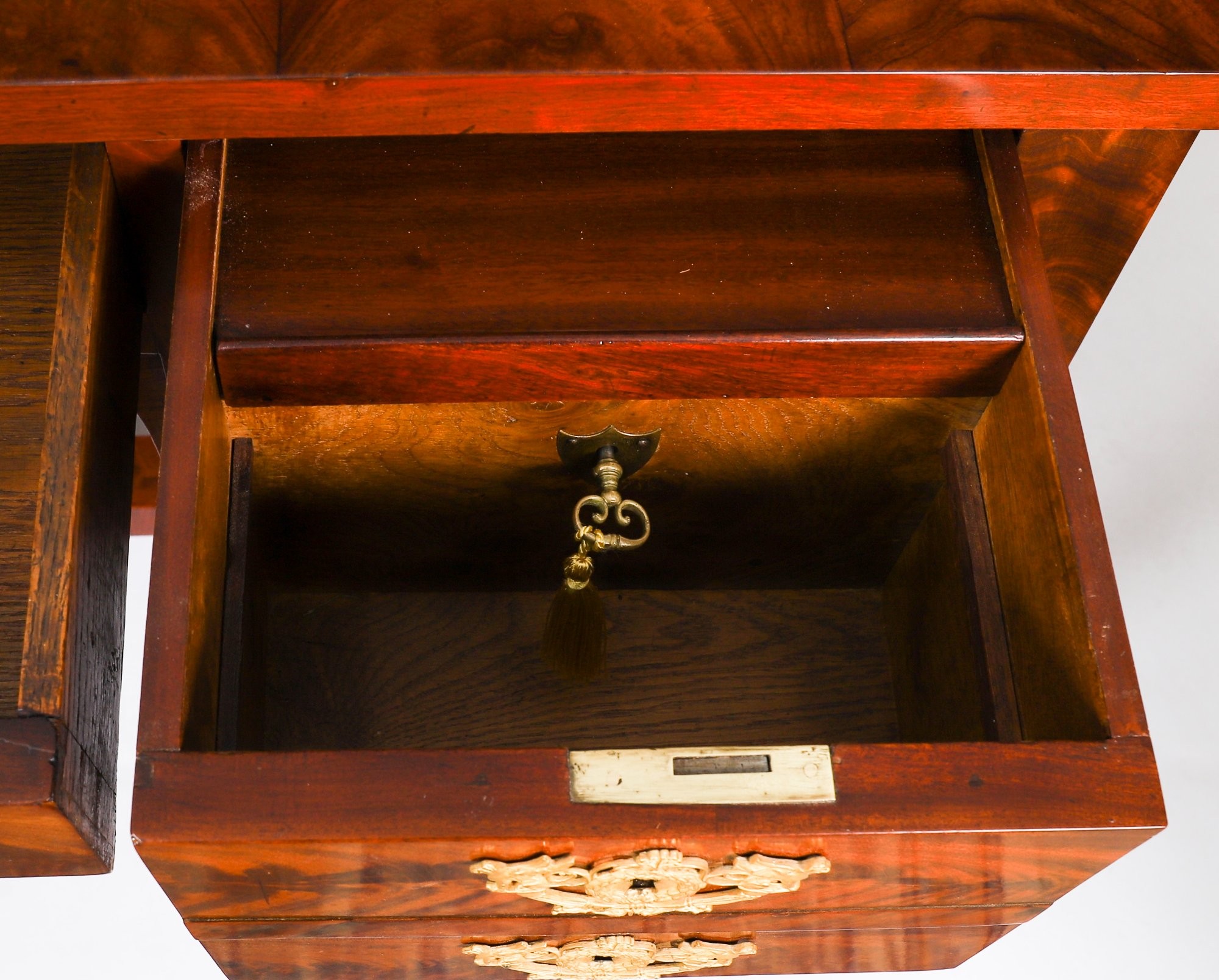
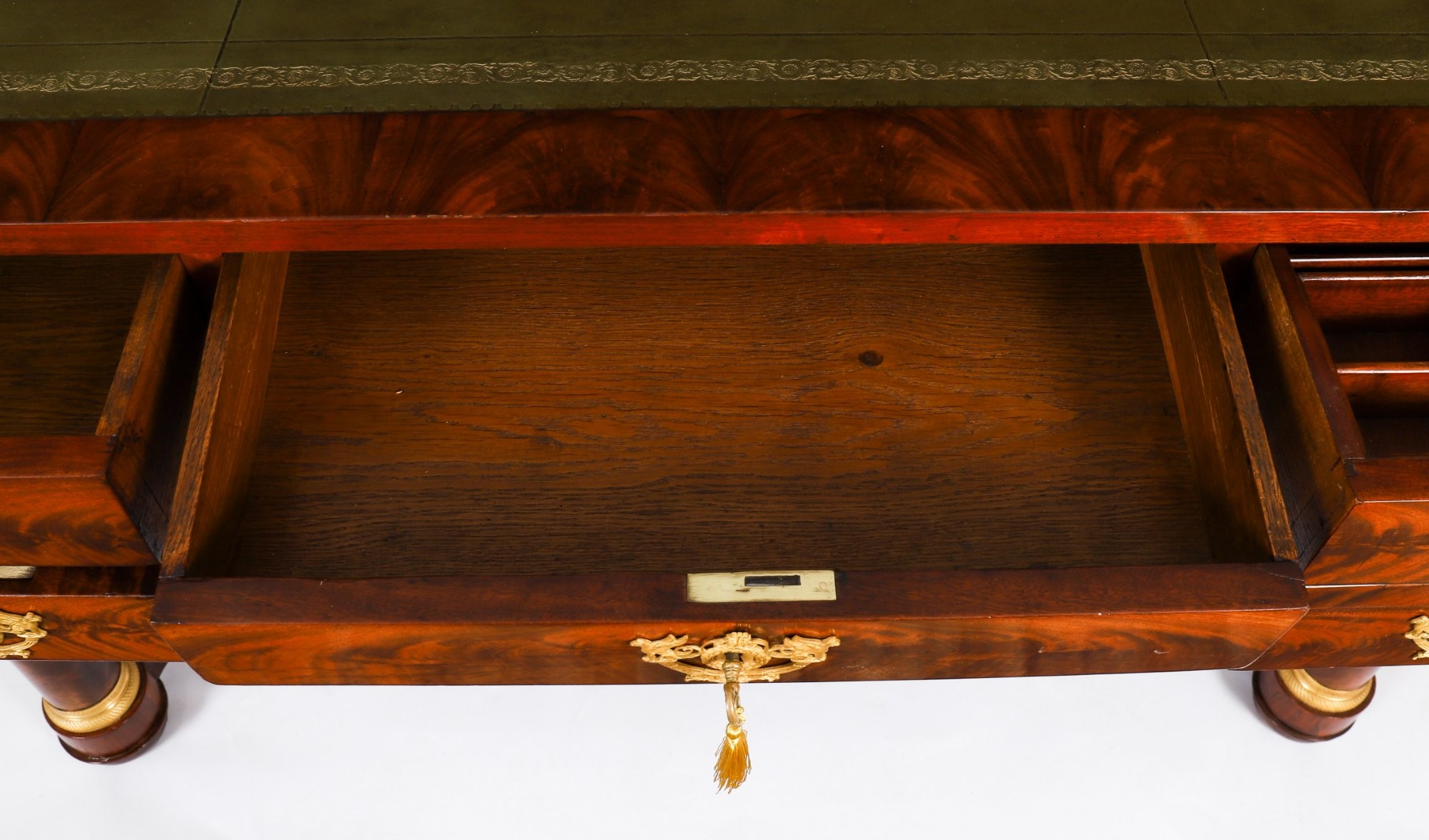
The rectangular top is fitted with a stunning inset gold-tooled green leather writing surface above a frieze fitted with five spacious drawers, top right is fitted with a lockable cubby hole.
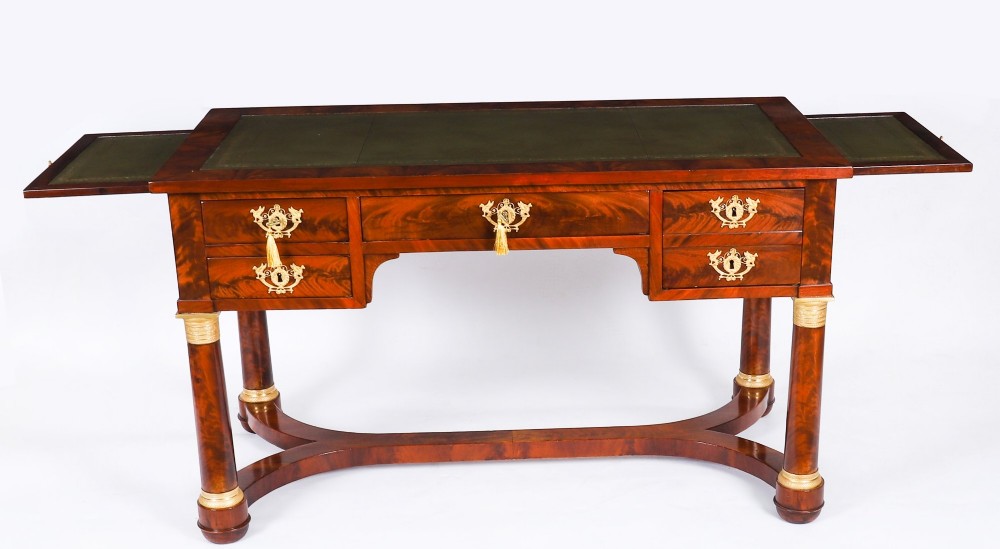
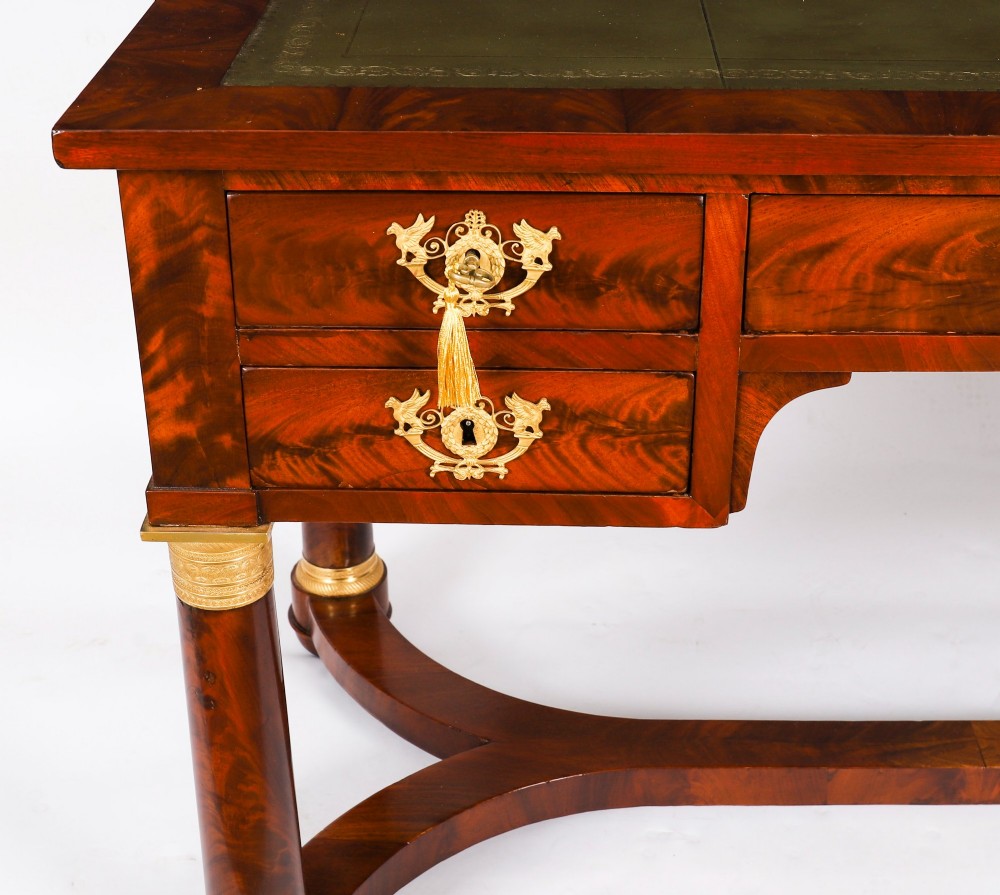
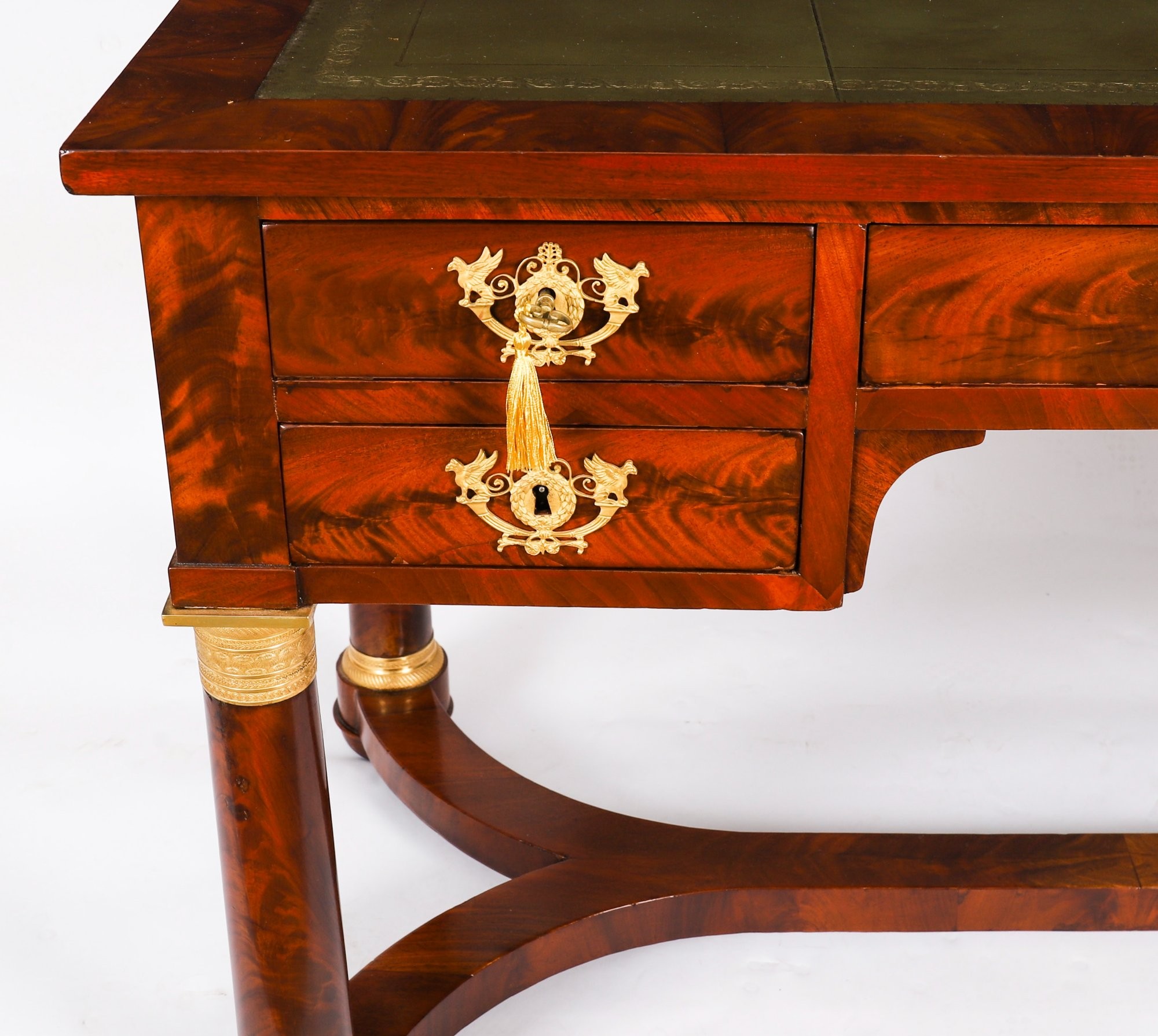
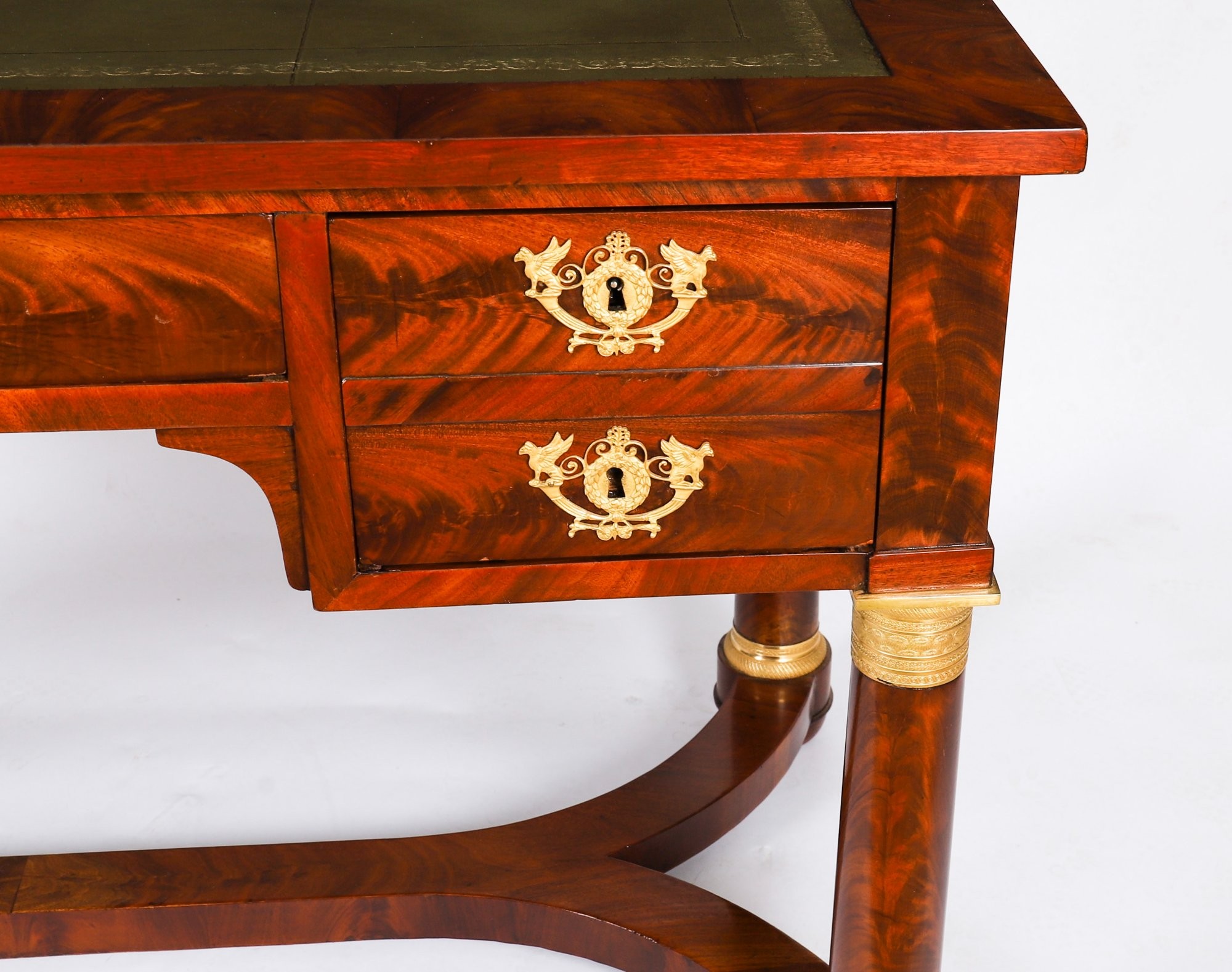
The sides are are fitted with pull out writing slides and the desk is raised on turned supports united by a stretcher. The desk features finely cast ormolu mounts in the classic Empire manner, including decorative escutcheons.
The desk is free standing and finished all round so it can stand freely in the centre of a room and is sure to get lots of attention wherever it is placed.
Complete with original working locks and keys.
THE BOTANICAL NAME FOR THE MAHOGANY THAT THIS ITEM IS MADE OF IS SWIETENIA MACROPHYLLA AND THIS TYPE OF MAHOGANY IS NOT SUBJECT TO CITES REGULATION AND DOES NOT CONTAIN ANY RESTRICTED MATERIALS.
Condition:
In excellent condition having been beautifully cleaned, polished, waxed and re-leathered in our workshops, please see photos for confirmation.
Dimensions in cm:
Height 76 cm x Width 129 cm x Depth 64 cm
Dimensions in inches:
Height 30 inches x Width 51 inches x Depth 25 inches
Ormolu - (from French 'or moulu', signifying ground or pounded gold) is an 18th-century English term for applying finely ground, high-carat gold in a mercury amalgam to an object of bronze.The mercury is driven off in a kiln leaving behind a gold-coloured veneer known as 'gilt bronze'.
The manufacture of true ormolu employs a process known as mercury-gilding or fire-gilding, in which a solution of nitrate of mercury is applied to a piece of copper, brass, or bronze, followed by the application of an amalgam of gold and mercury. The item was then exposed to extreme heat until the mercury burned off and the gold remained, adhered to the metal object.
After around 1830 because legislation had outlawed the use of mercury other techniques were used instead. Electroplating is the most common modern technique. Ormolu techniques are essentially the same as those used on silver, to produce silver-gilt.
Flame Mahogany
Thomas Sheraton - 18th century furniture designer, once characterized mahogany as "best suited to furniture where strength is demanded as well as a wood that works up easily, has a beautiful figure and polishes so well that it is an ornament to any room in which it may be placed." Matching his words to his work, Sheraton designed much mahogany furniture. The qualities that impressed Sheraton are particularly evident in a distinctive pattern of wood called "flame mahogany."
The flame figure in the wood is revealed by slicing through the face of the branch at the point where it joins another element of the tree.
Empire style,
is an early-19th-century design movement in architecture, furniture, other decorative arts, and the visual arts followed in Europe and America until around 1830.
The style originated in and takes its name from the rule of Napoleon I in the First French Empire, where it was intended to idealize Napoleon's leadership and the French state. The style corresponds to the Biedermeier style in the German-speaking lands, Federal style in the United States and to the Regency style in Britain. The previous style was called Louis XVI style, in France.
Our reference: A5411