


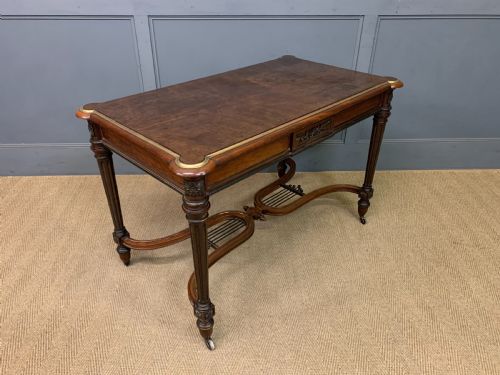


Mahogany Bureau Plat
A mahogany bureau plat brings freestanding elegance and purposeful writing space to a room, drawing the eye with classic proportions and fine mounts.
Mahogany Bureau Plat
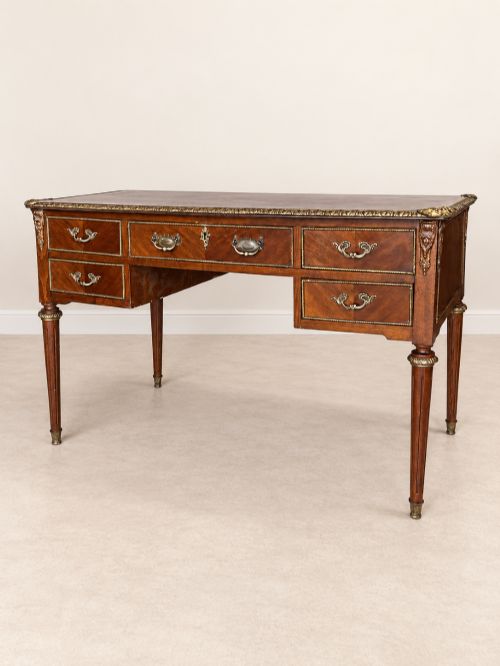
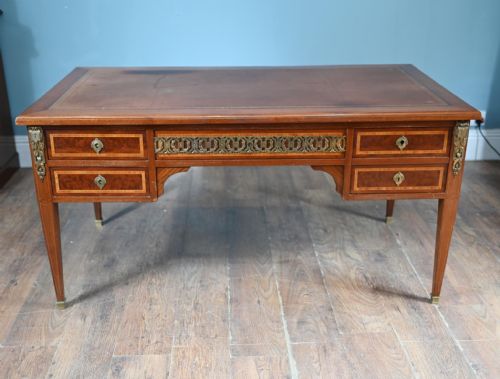
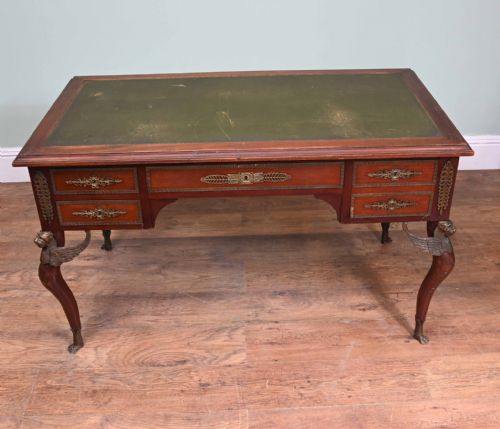
A mahogany bureau plat is a freestanding writing table designed to sit away from the wall rather than against it. These desks appear across several periods, most commonly from the nineteenth century, reflecting French tastes such as Louis XV, Louis XVI, Empire, and Directoire styles.
The pieces on this page span writing desks, library tables, and side tables constructed in rich timbers and often fitted with leather writing surfaces. Workshops produced these tables in varying sizes, from compact domestic writing desks to monumental library tables.
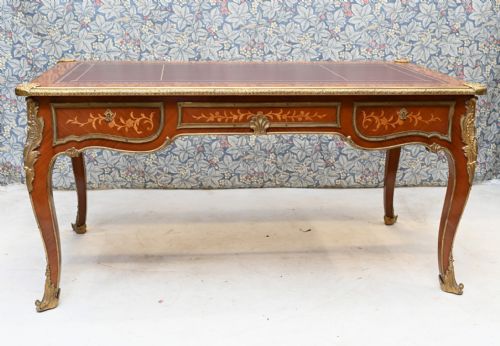
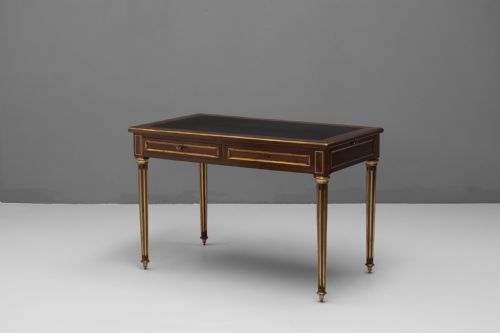
Makers and retailers adapted classical proportions for nineteenth-century drawing rooms and libraries, producing both restrained Directoire designs and ornate revival pieces with serpentine fronts. Buyers encounter everything from simple mahogany surfaces to highly decorative tables finished with elaborate metal mounts.
How They Were Made
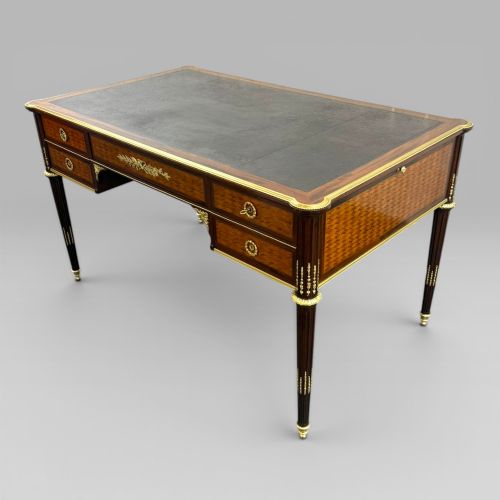
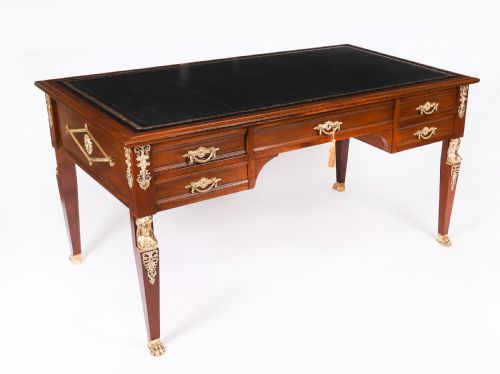
Cabinetmakers built these tables using solid mahogany and mahogany veneer over secondary timbers, occasionally incorporating satine, plum pudding mahogany, kingwood, or walnut for contrasting grain patterns and parquetry panels. Tables frequently feature inset leather writing surfaces framed by timber or cast metal borders.
Mounts and decorative hardware consist of cast and chased ormolu, gilt bronze, brass, or gilt metal applied to corners, apron rails, and legs. Joinery methods matched structural demands, supporting heavy freestanding timber frames while allowing for drawers within the frieze.
Mahogany Bureau Plat Retail Price Guide 2026
Typical asking prices for mahogany bureau plat among the pieces listed under this phrase on Sellingantiques today, from the lower quarter to the upper quarter. They describe what is for sale here now, not the wider market.
Some nineteenth-century makers packed so many functions into one table that the same timber frame doubled as a desk, a dressing station, and a sewing box.
What Varies in Quality
Quality rests upon the crispness of the bronze or ormolu mounts and the precision of the timber veneers and parquetry. Finer workshops employed skilled metalworkers whose chased mounts show sharp definition and secure, flush fitting against the mahogany carcase.
The choice of timber and the execution of secondary woods also distinguish the work. Better examples utilise figured mahogany, such as plum pudding grain, and exhibit careful hand-cut joinery in the drawer linings rather than mass-produced uniformity.
François Linke·Edwards & Roberts·Henry Dasson·Mercier Freres·Fournier·Gillows·Alphonse Tahan·Hobbs & Co
The Mahogany Bureau Plat Glossary
- Bureau plat
- A freestanding writing table or desk, typically finished on all sides so it can stand in the centre of a room rather than against a wall.
- Ormolu
- Gilded bronze used for decorative mounts and edgings on furniture. The technique involves applying a gold amalgam to bronze before heating.
- Parquetry
- Geometric patterns formed by fitting small pieces of veneer into a surface. This technique creates subtle contrasts in wood grain and colour.
- Frieze
- The horizontal band running beneath the top surface of the table. Drawers are frequently integrated into this section.
- Directoire style
- A transitional furniture style bridging Louis XVI and Empire periods. It relies on clean lines, classical restraint, and minimal ornamentation.
Mahogany Bureau Plat: Frequently Asked Questions
Where should I place a bureau plat?
Because these tables are finished on all sides, they sit comfortably in the middle of a room or study rather than pushed against a wall. This positioning displays the craftsmanship of the back and sides.
Ensure adequate clearance around the table for chairs and movement, allowing the piece to function as a central focal point.
How do I care for the leather top?
The leather writing surface benefits from occasional light dusting with a dry, soft cloth. Avoid harsh commercial cleaners and excessive moisture, which can damage the hide and any surrounding gold tooling.
Applying a specialist leather balsam periodically helps maintain suppleness and prevents the material from drying out over time.
Can I use it as a dressing table?
Historic records and period listings show that these versatile tables served multiple domestic purposes, including dressing and sewing. Many examples match the dimensions and drawer arrangements needed for personal grooming.
Adding a tabletop mirror transforms the writing surface into an elegant bedroom dressing station without altering the furniture.
How do I distinguish Louis XV from Louis XVI style?
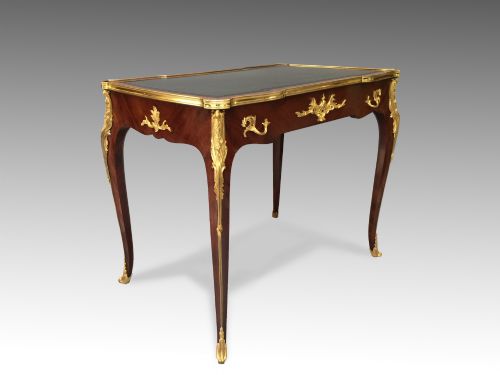
Louis XV style pieces, often associated with the mid-nineteenth-century revival, favour flowing serpentine curves, cabriole legs, and asymmetric ormolu mounts. The overall silhouette is organic and rounded.
Louis XVI style adopts straight tapered legs, geometric angles, and classical symmetry inspired by archaeological discoveries. The decoration leans towards urns, fluting, and rectangular proportions.