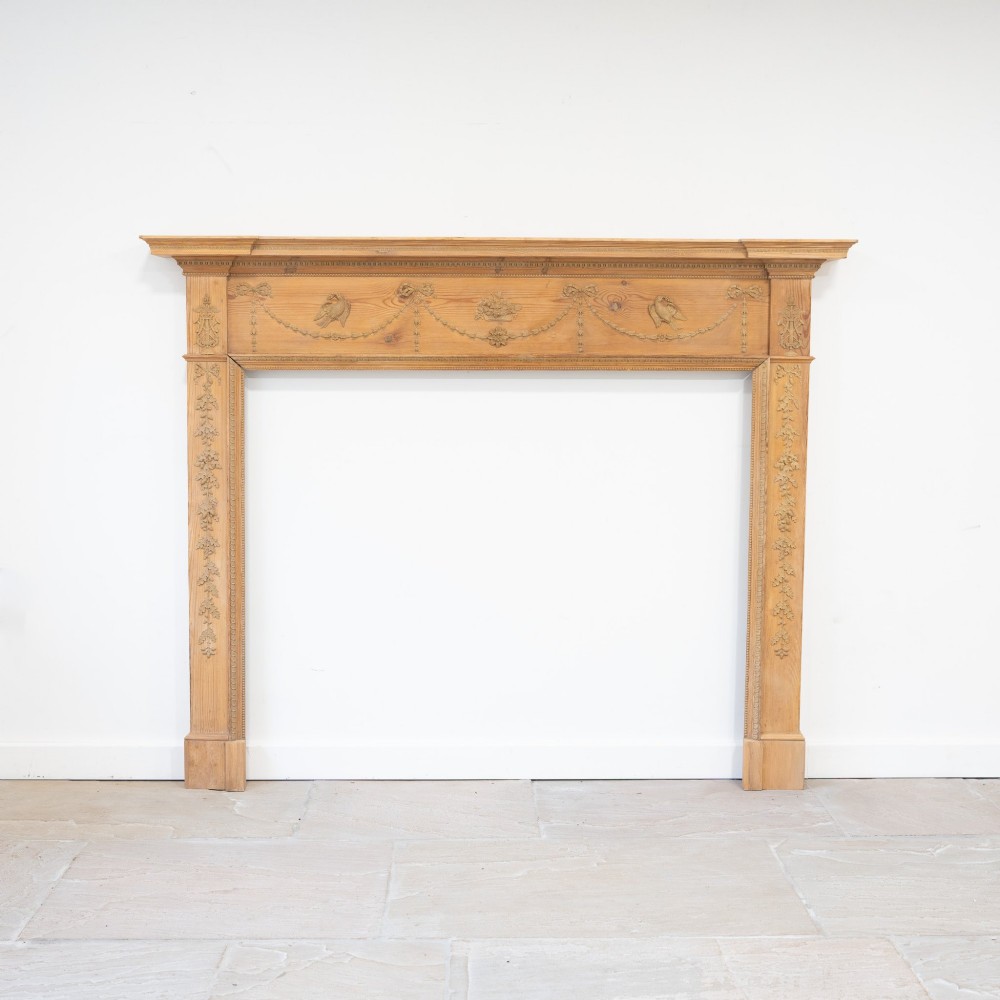
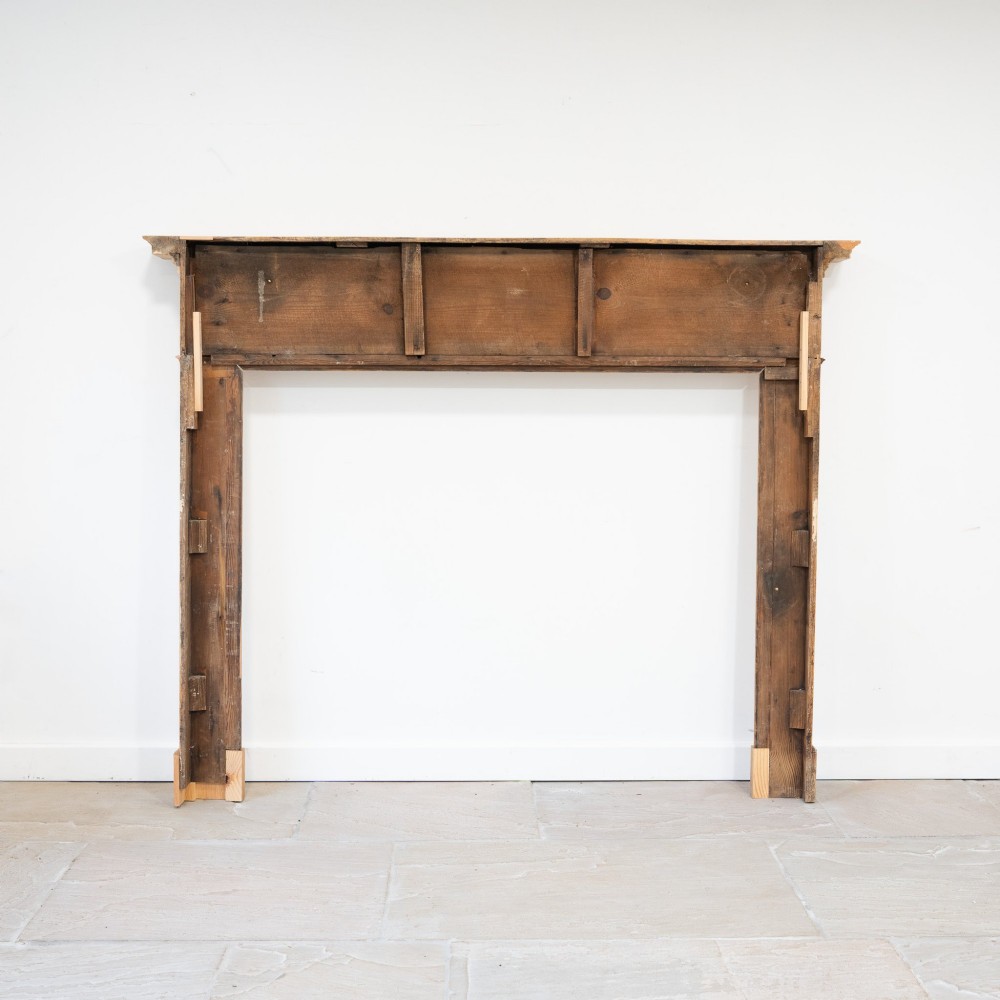
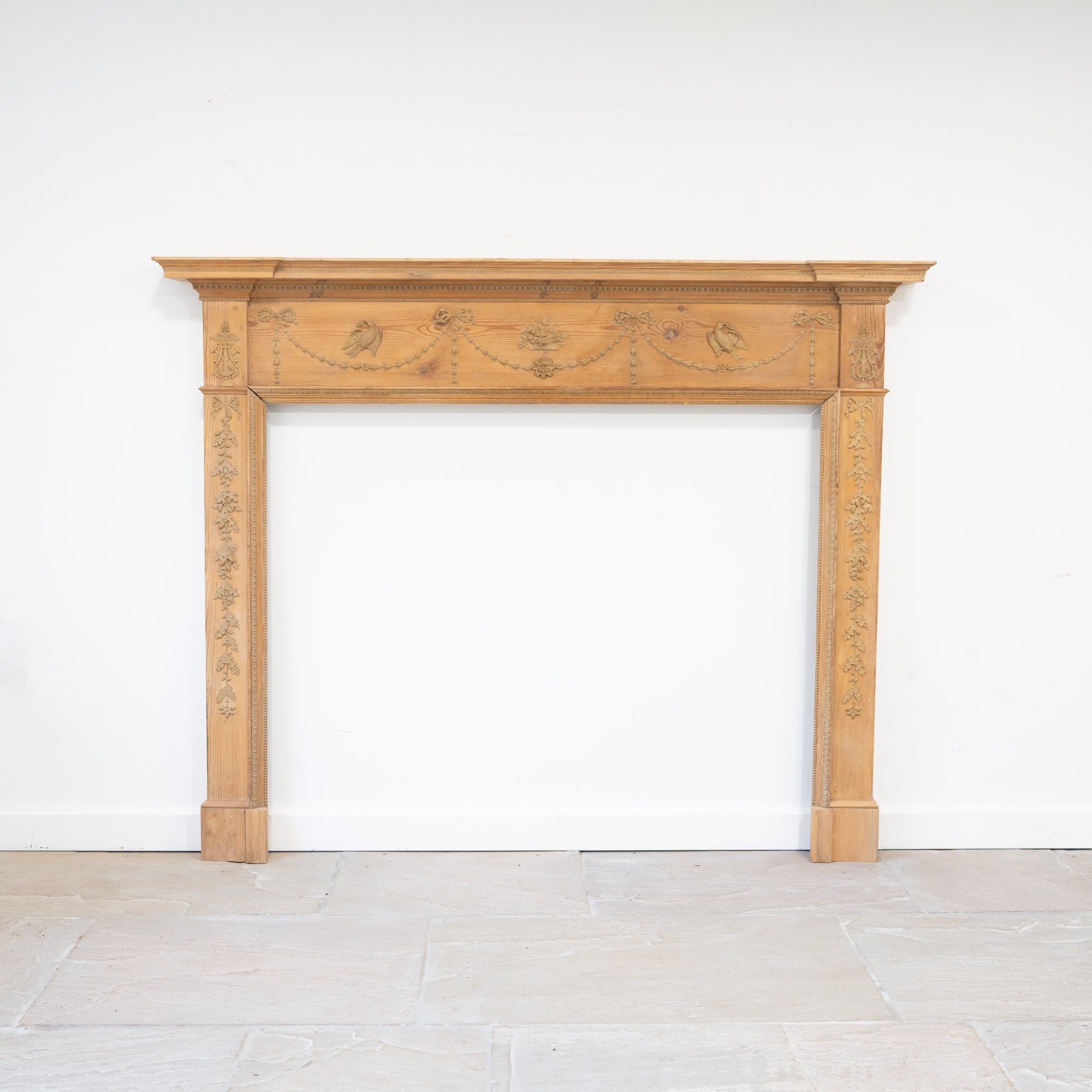
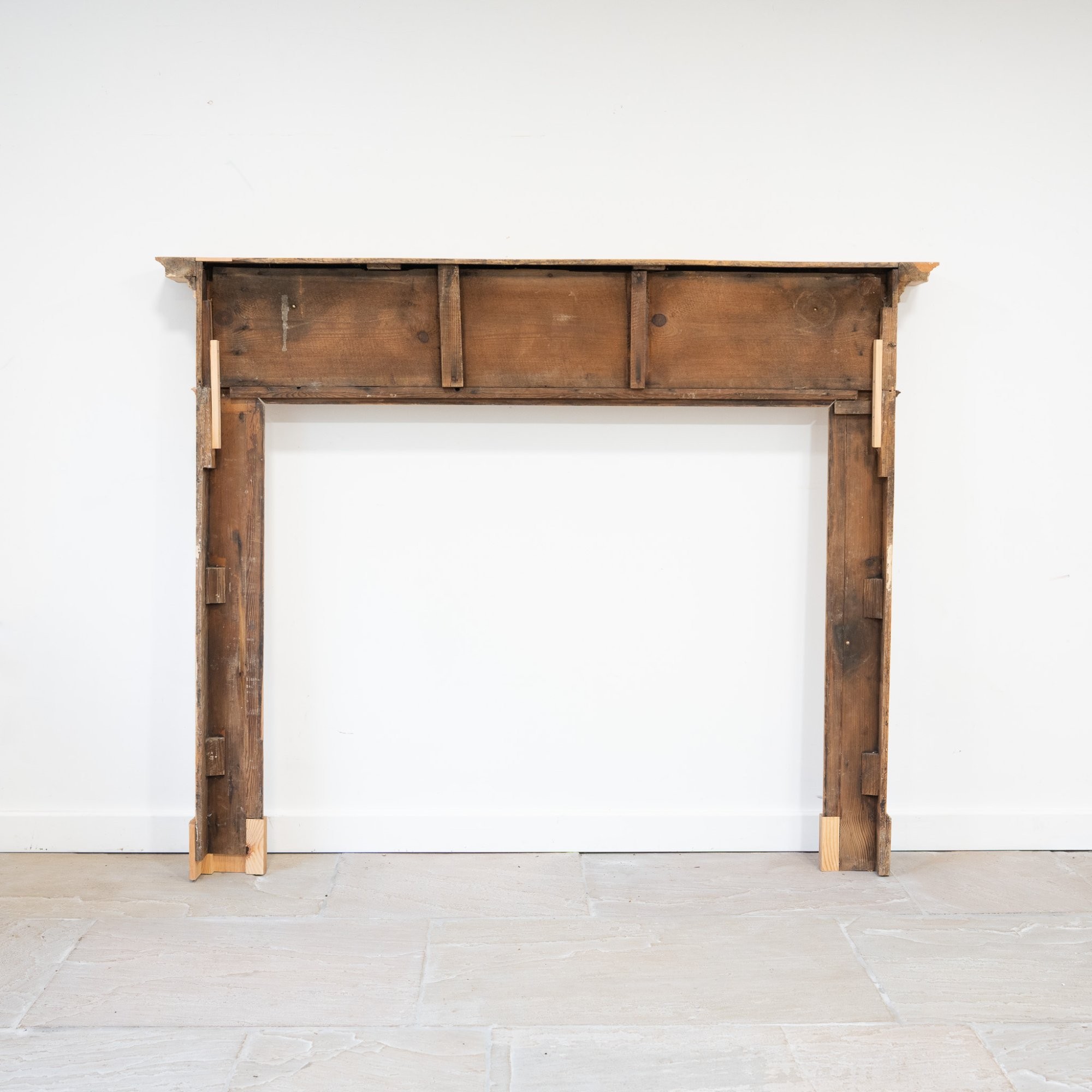
A late Georgian neoclassical pine and composition chimney piece, attributed to Richard Foster of Edinburgh, circa 1800, sympathetically restored following removal from an Edinburgh house.
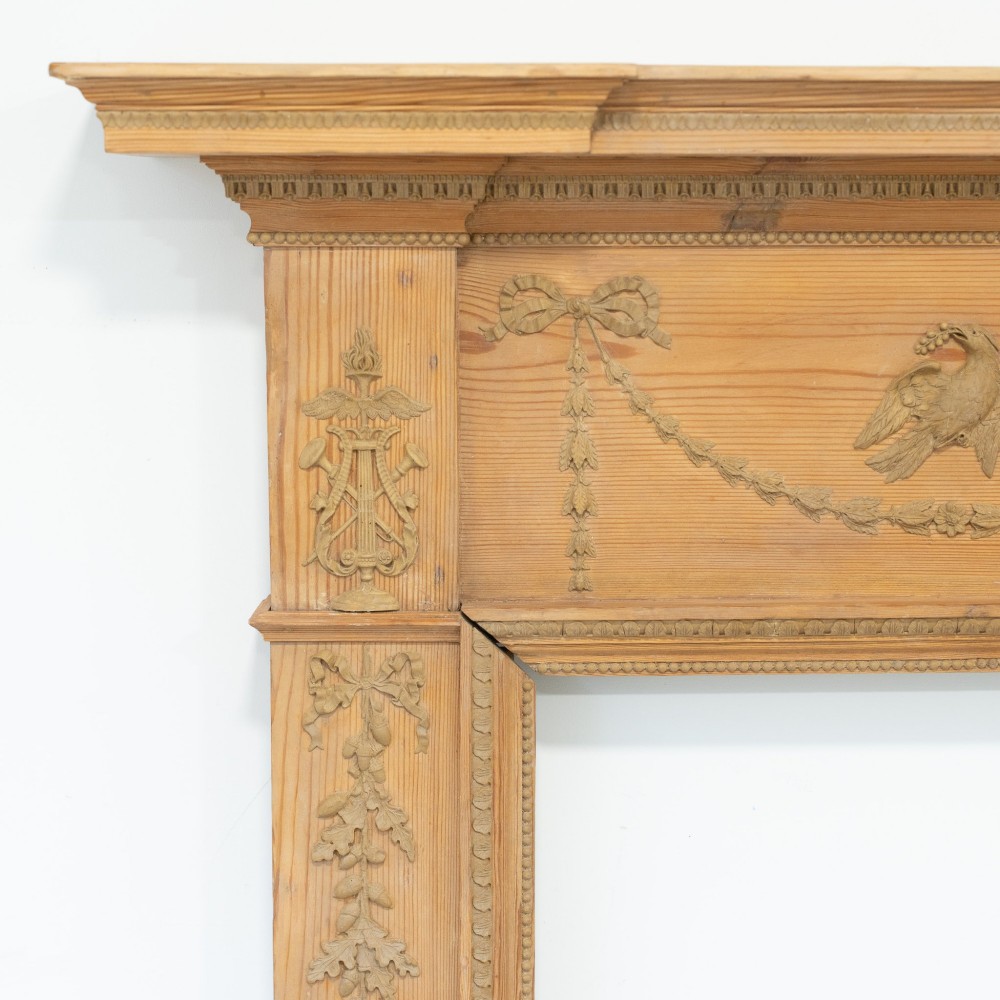
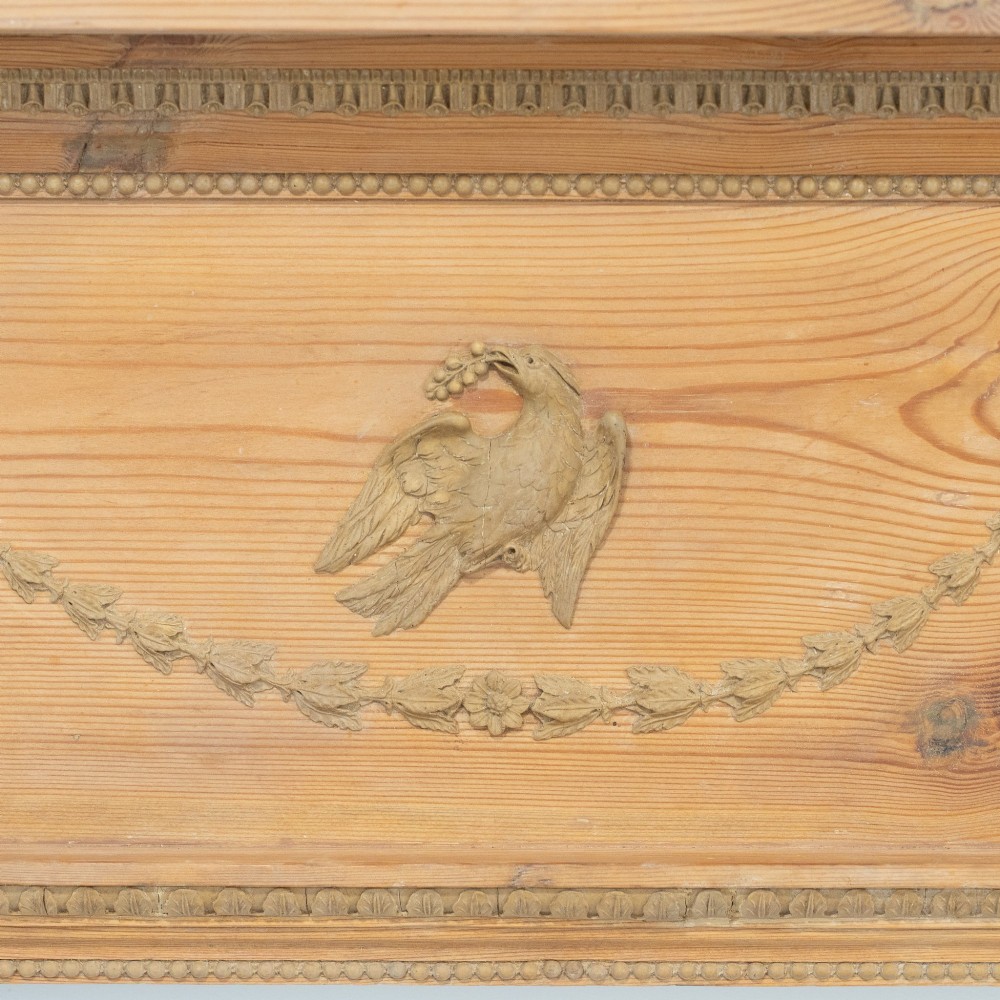
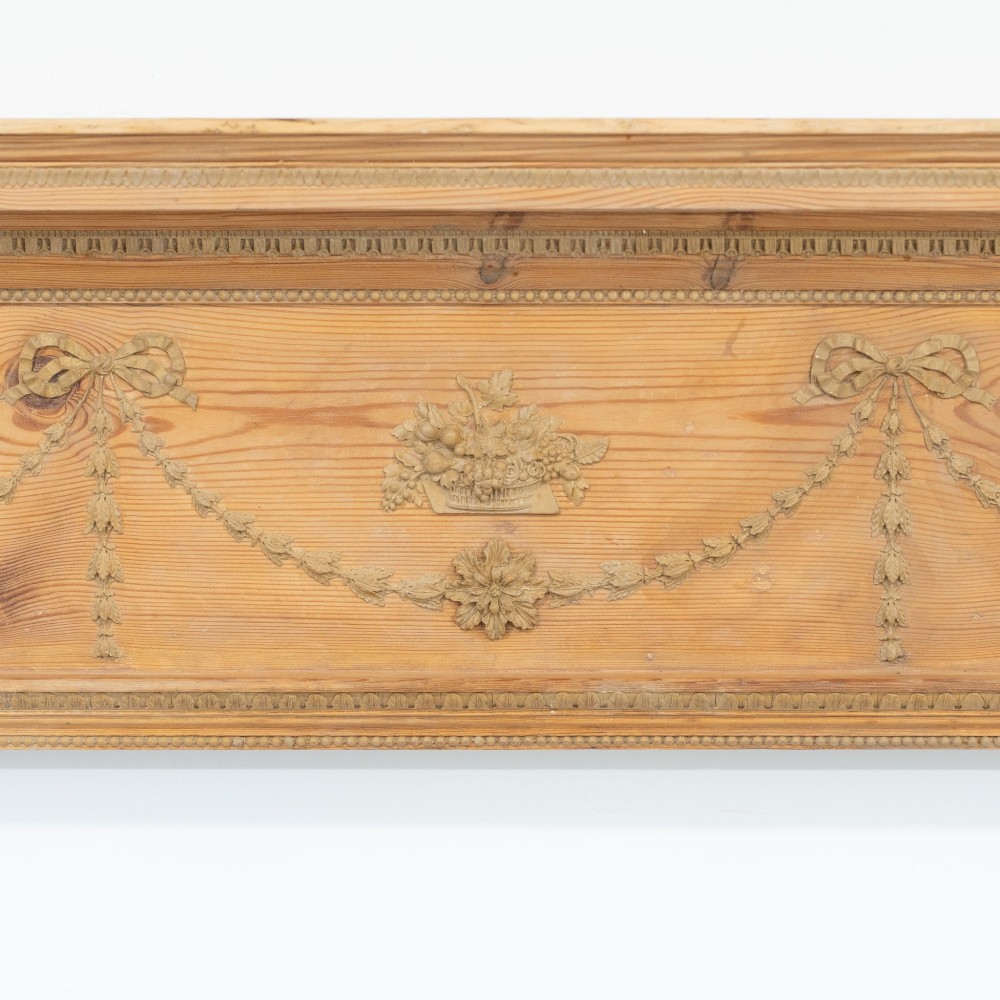
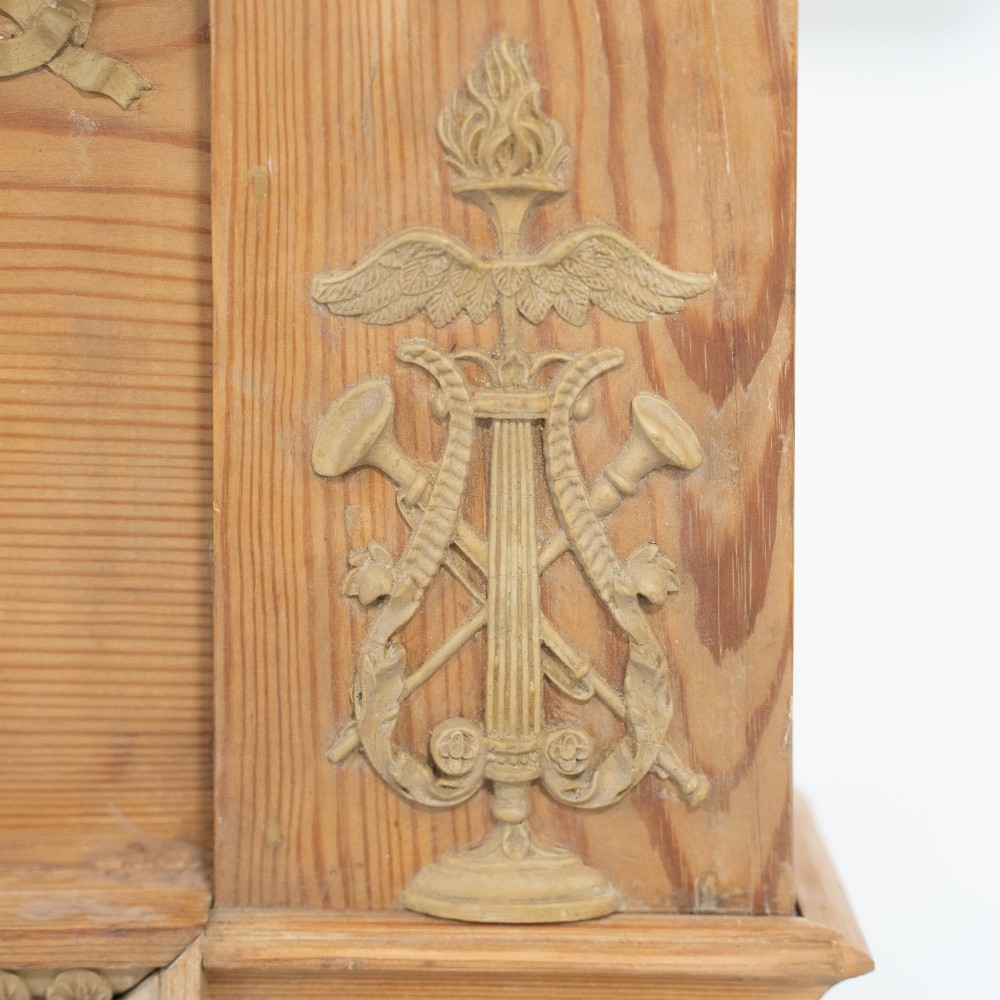
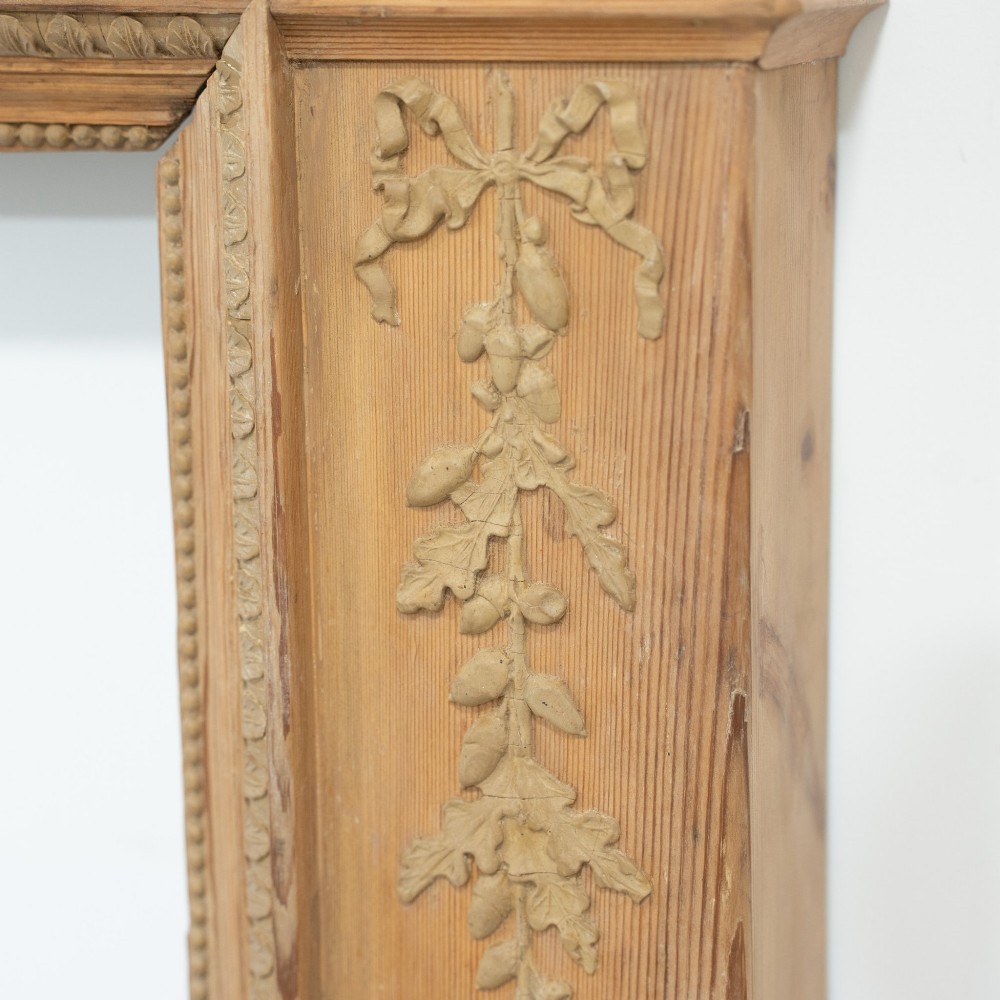
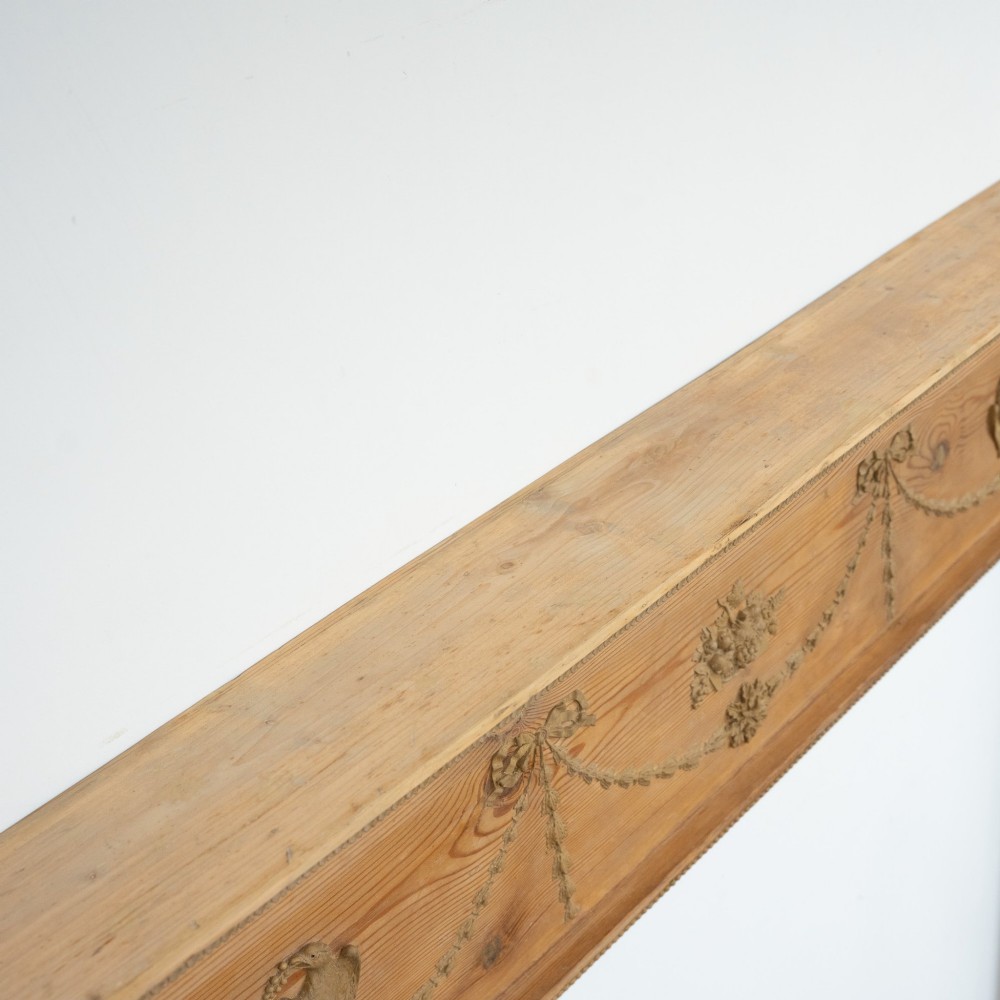
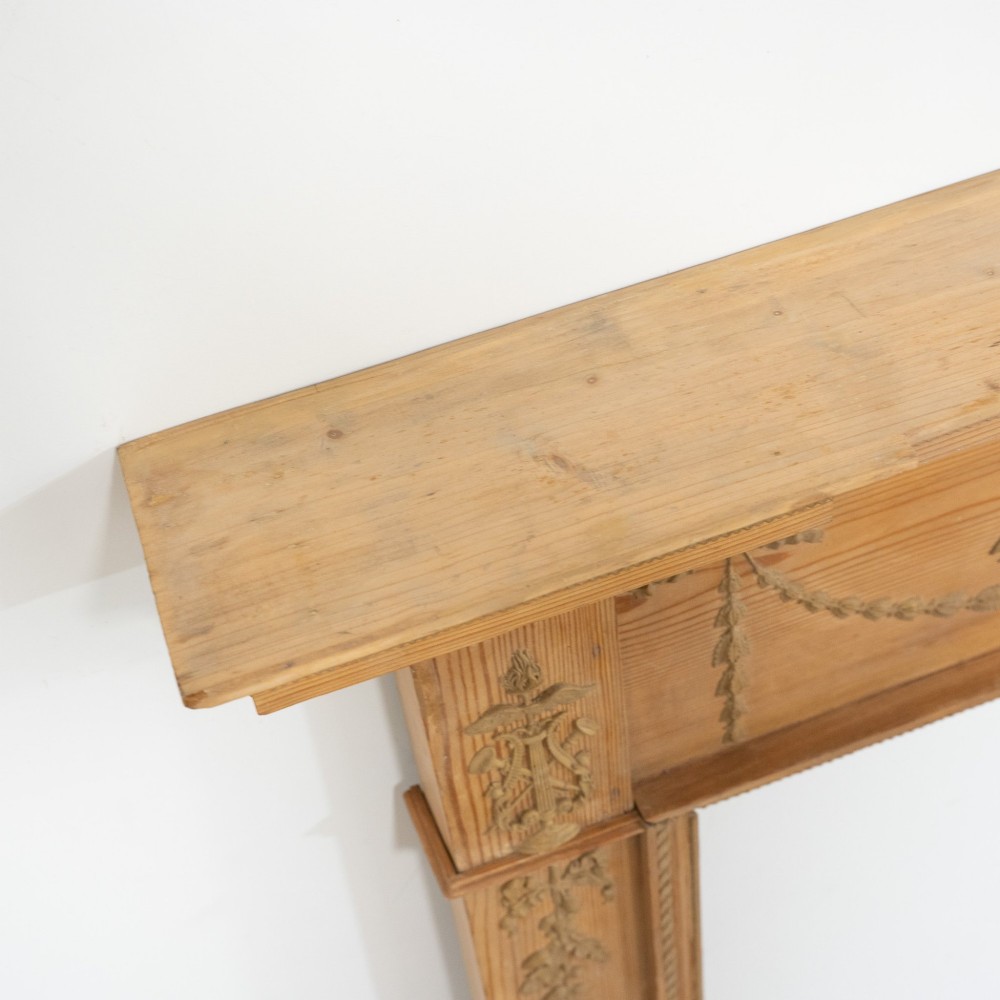
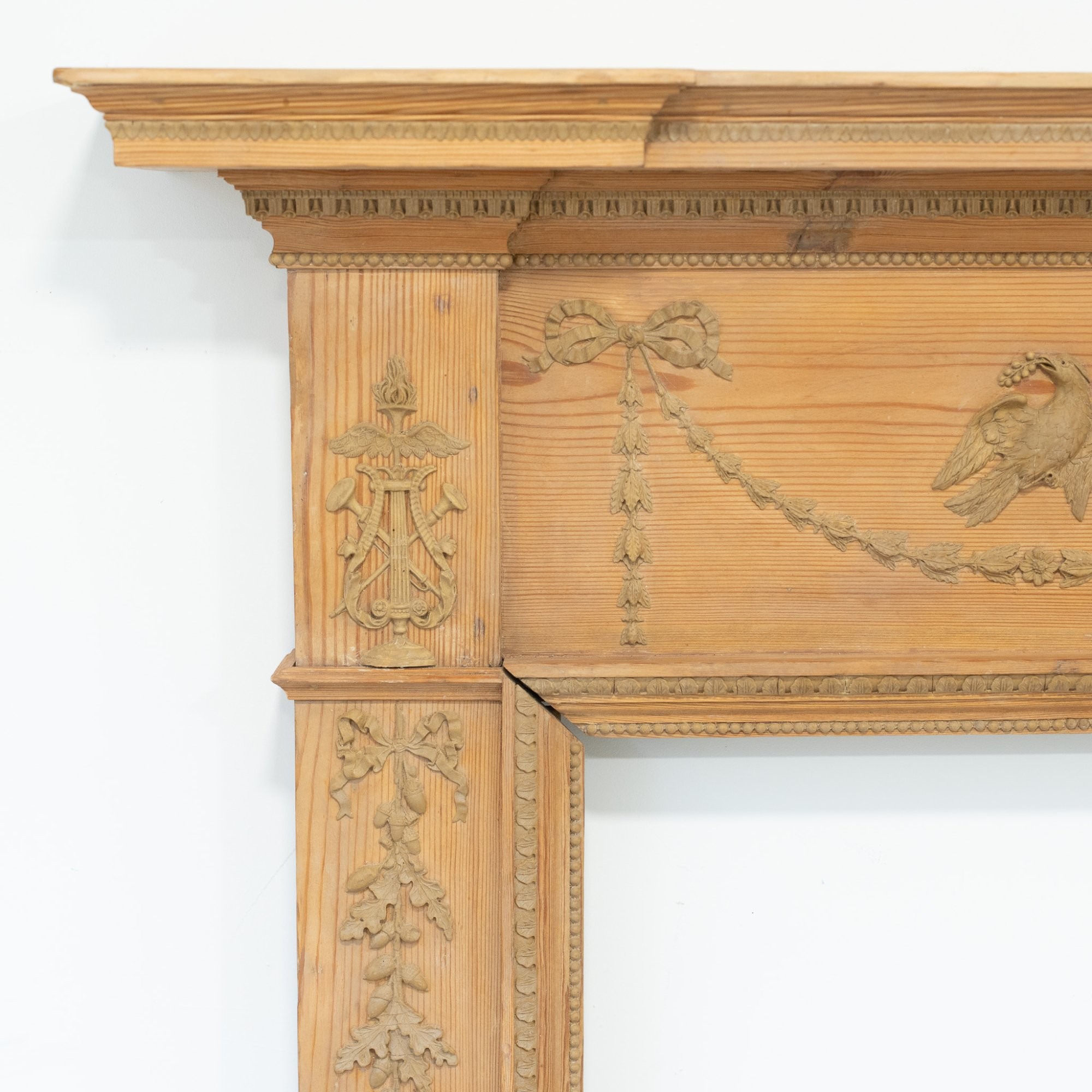
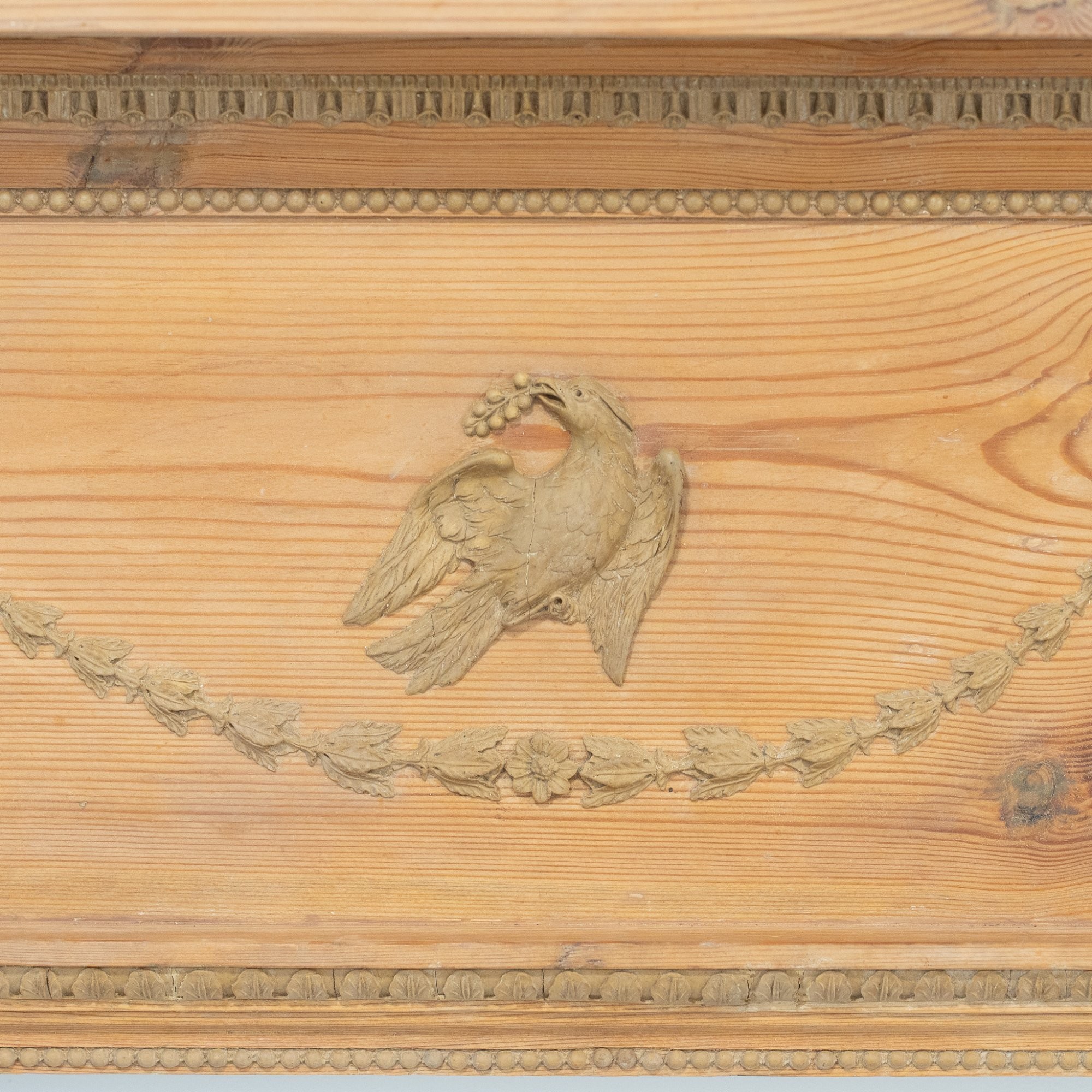
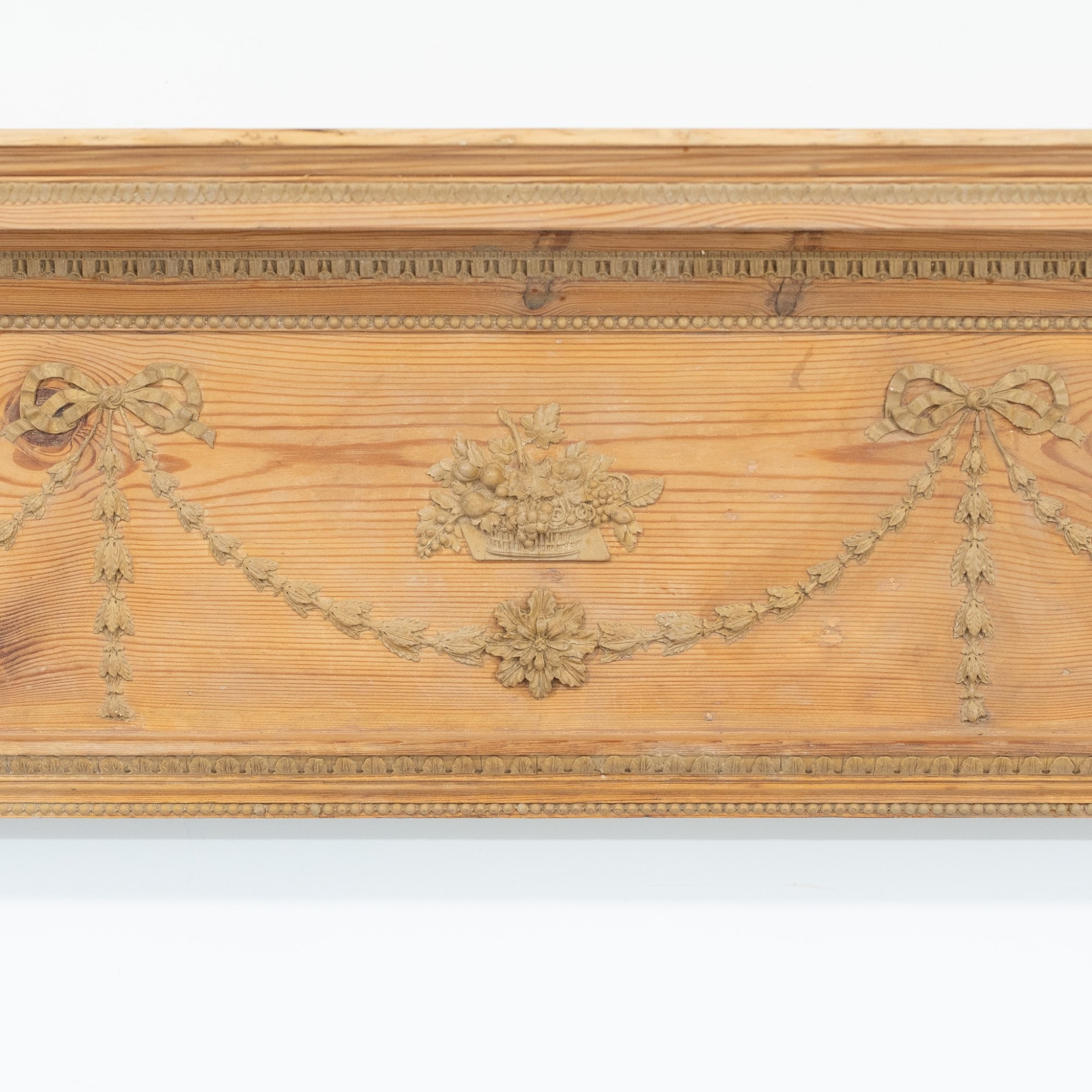
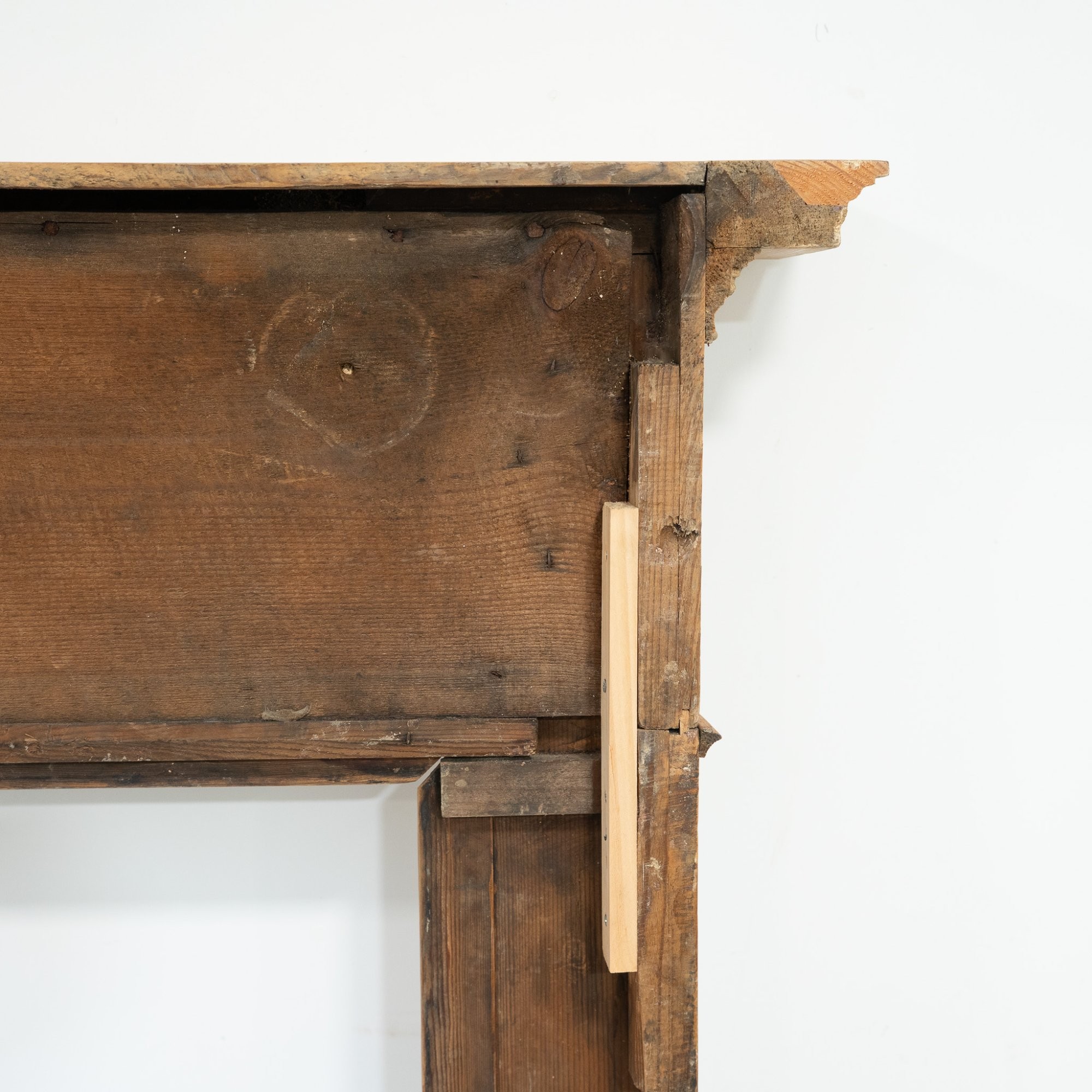
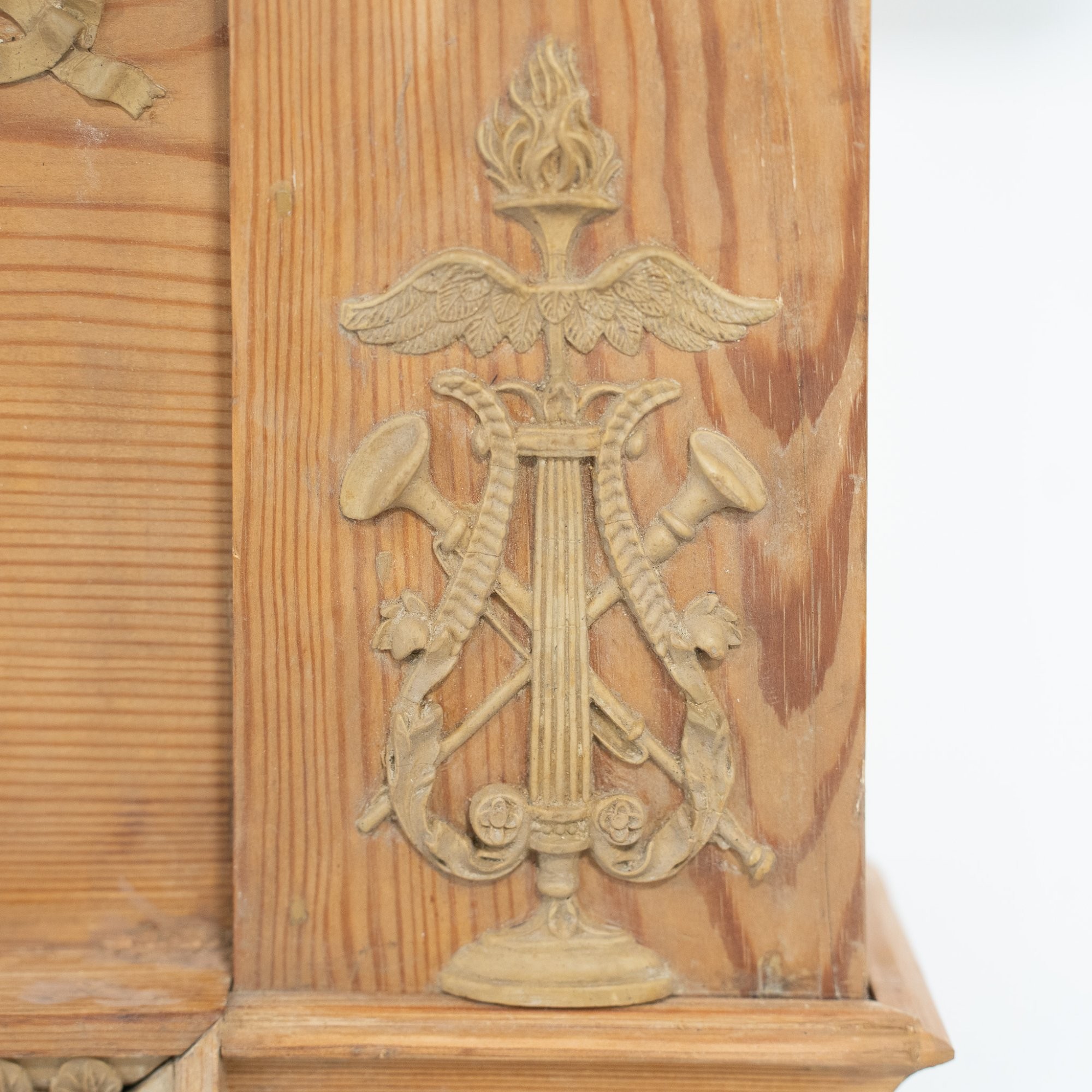
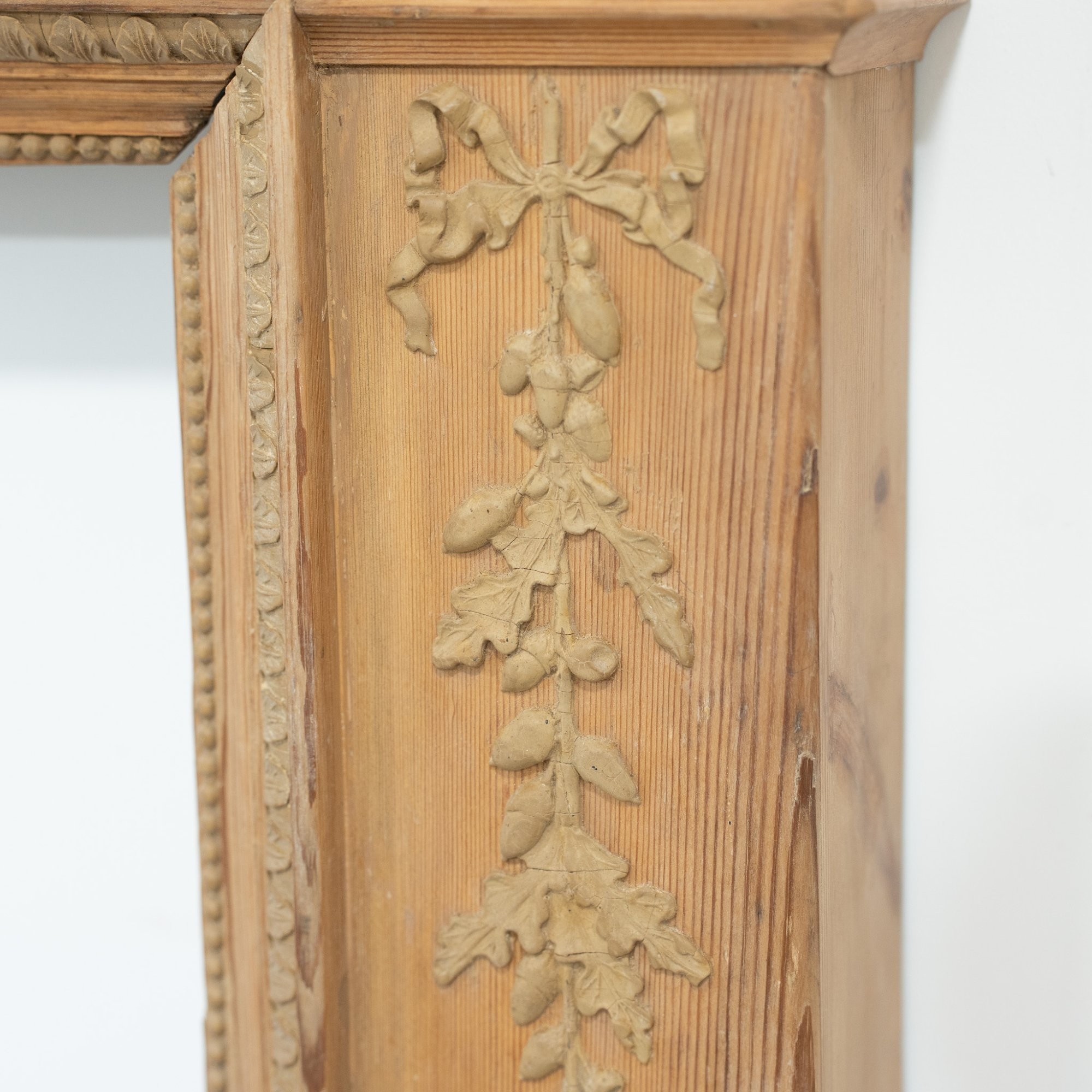
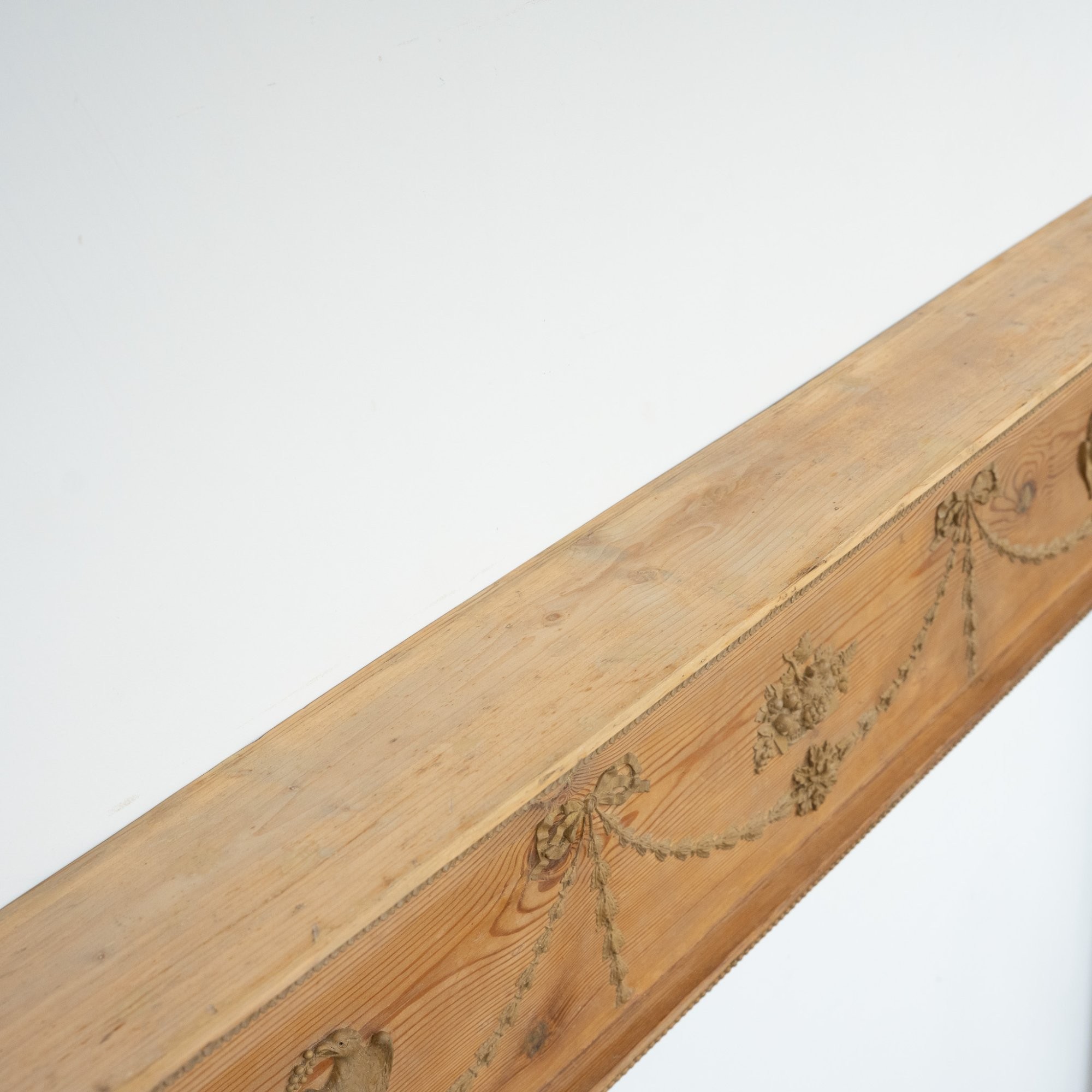
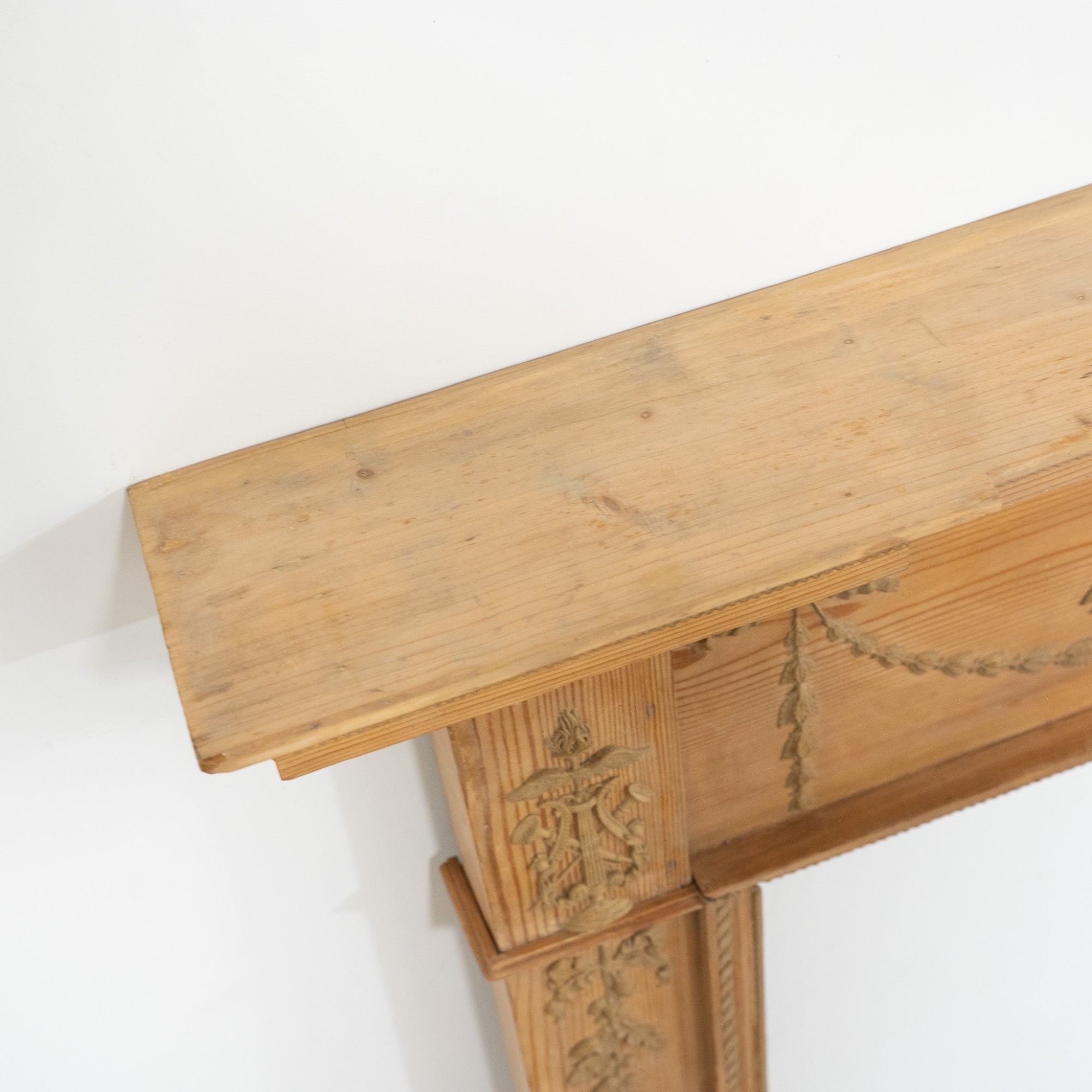
The fireplace surround frieze features high-relief composition ornament depicting winged birds holding berry sprigs in their beaks, suspended between ribbon-tied swags and a central basket of fruit above a rosette, after the neoclassical designs of Michael Angelo Pergolesi. The pilaster jambs are dressed with suspended oak leaf and acorn trails tied with ribbons beneath classical end blocks applied with winged flaming torches, lyres, and crossed horns, all framed by dentil, bead-and-reel, and foliate mouldings. Finished in stripped natural pine with sympathetic structural bracing and base repairs to the reverse.
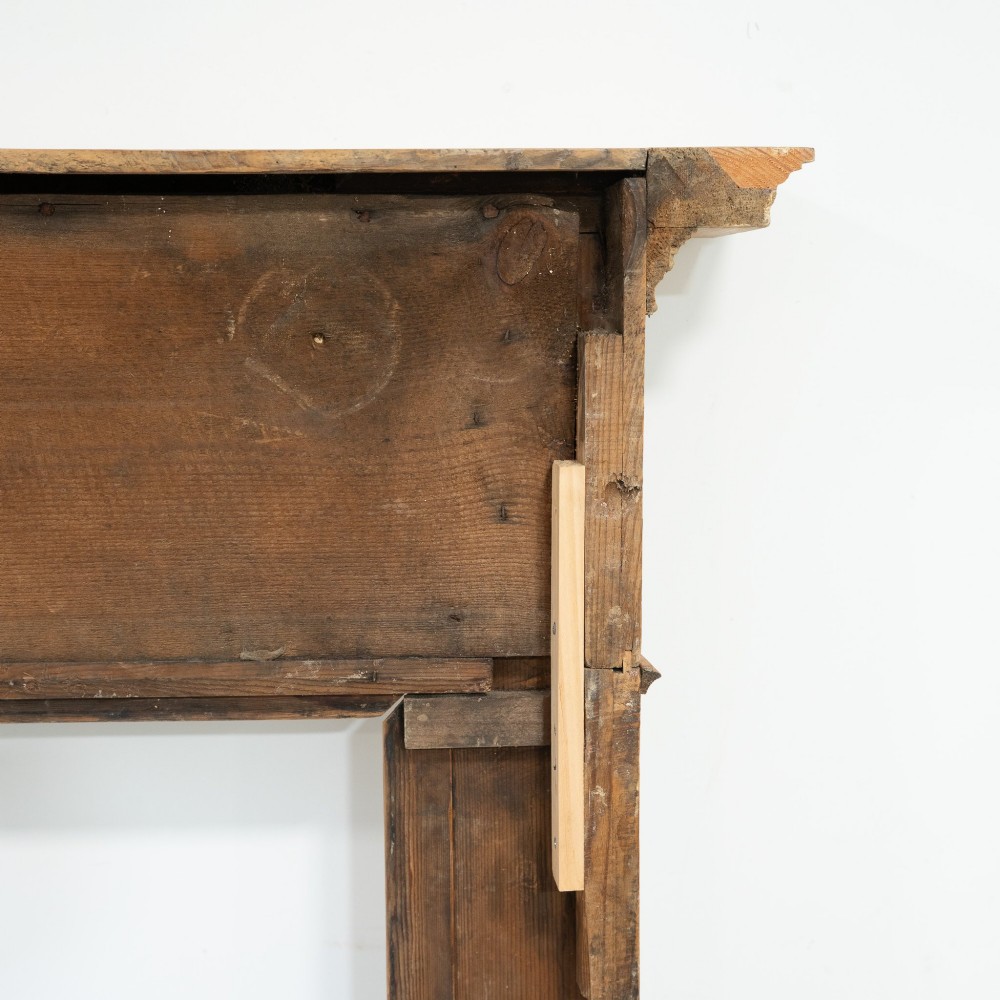
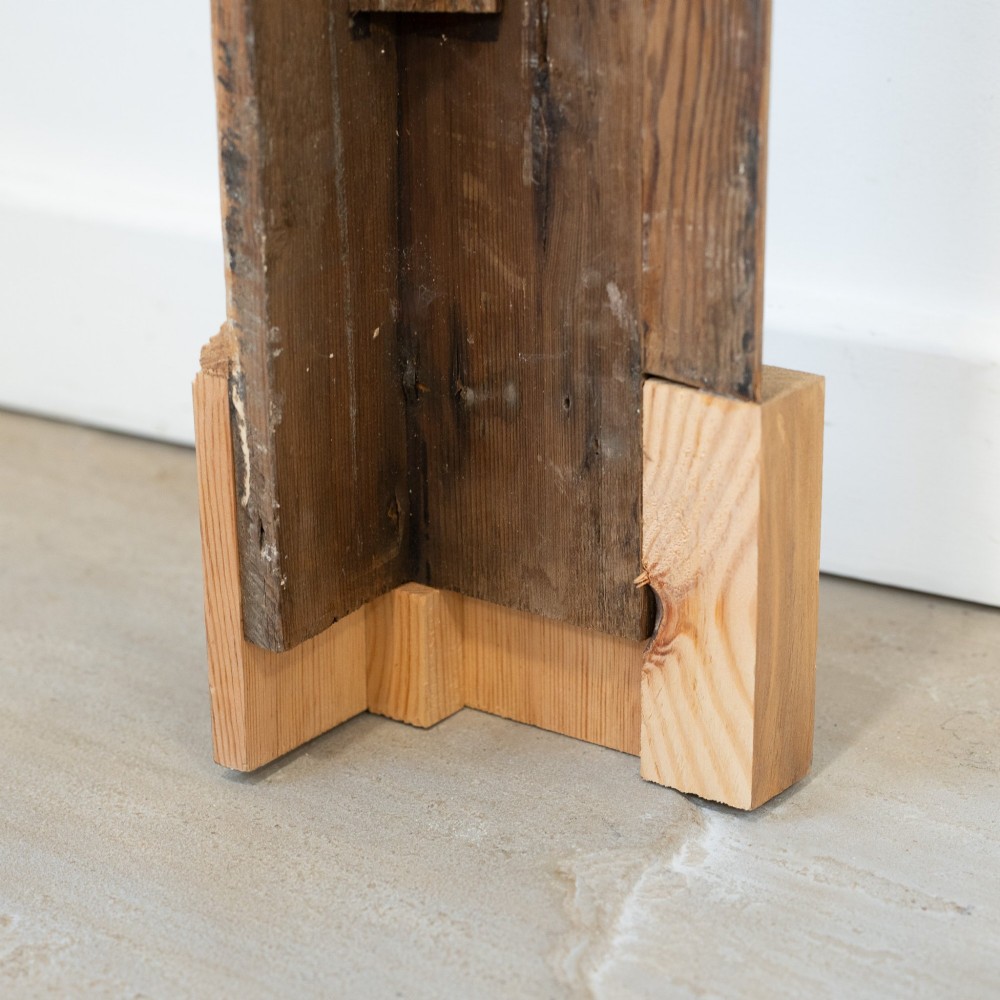
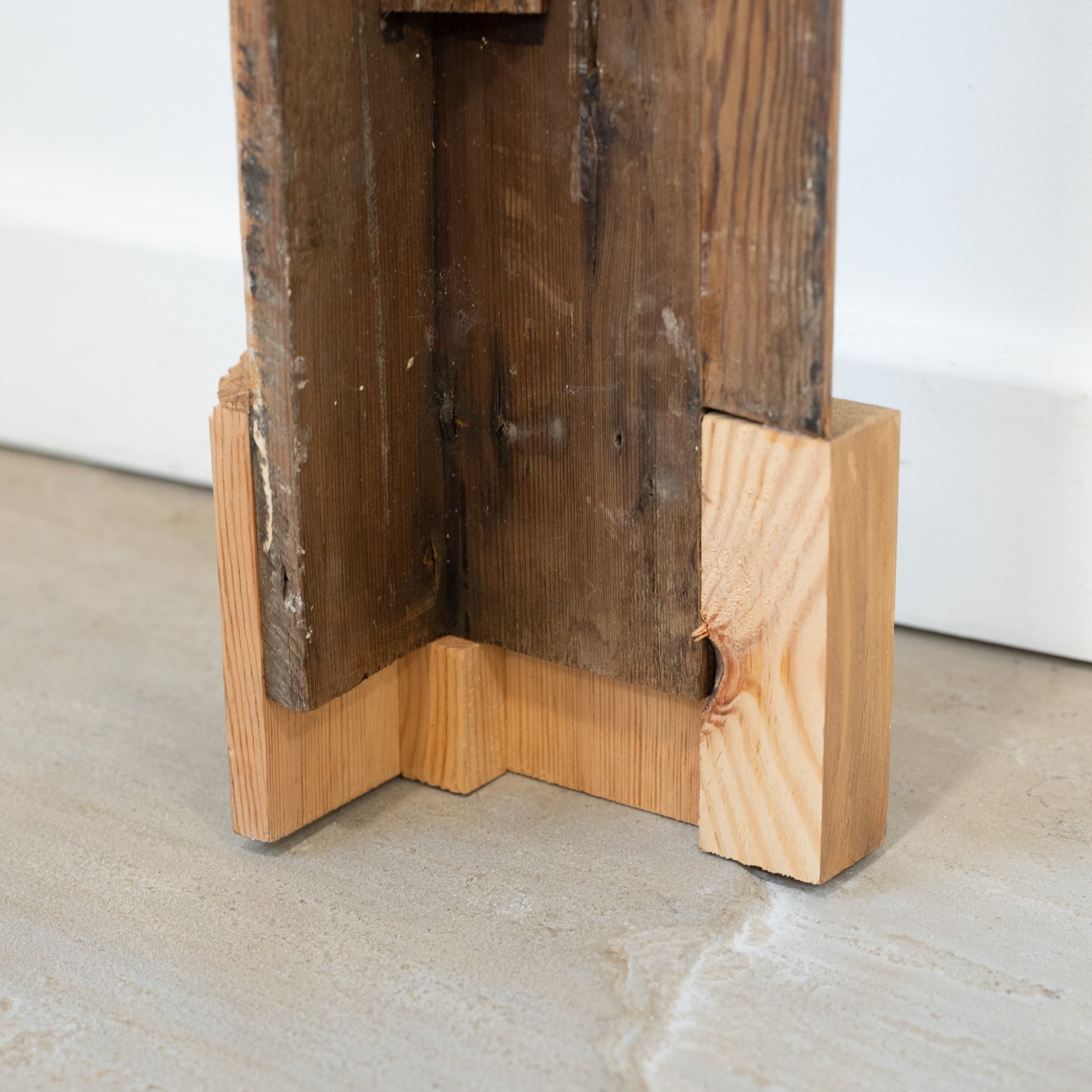
Condition: Restored following removal from an Edinburgh house, with stripped natural pine, crisp composition (compo) ornament. Sympathetic structural bracing and base repairs visible to the reverse.
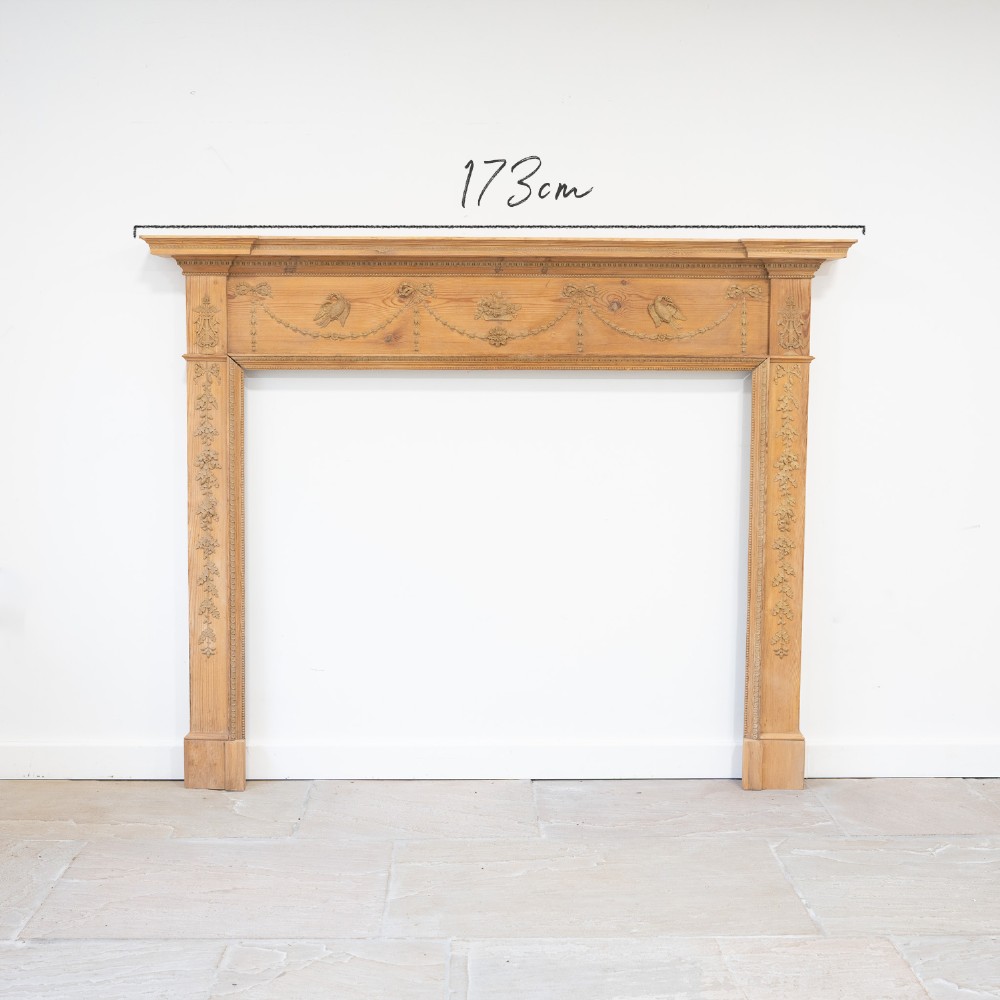
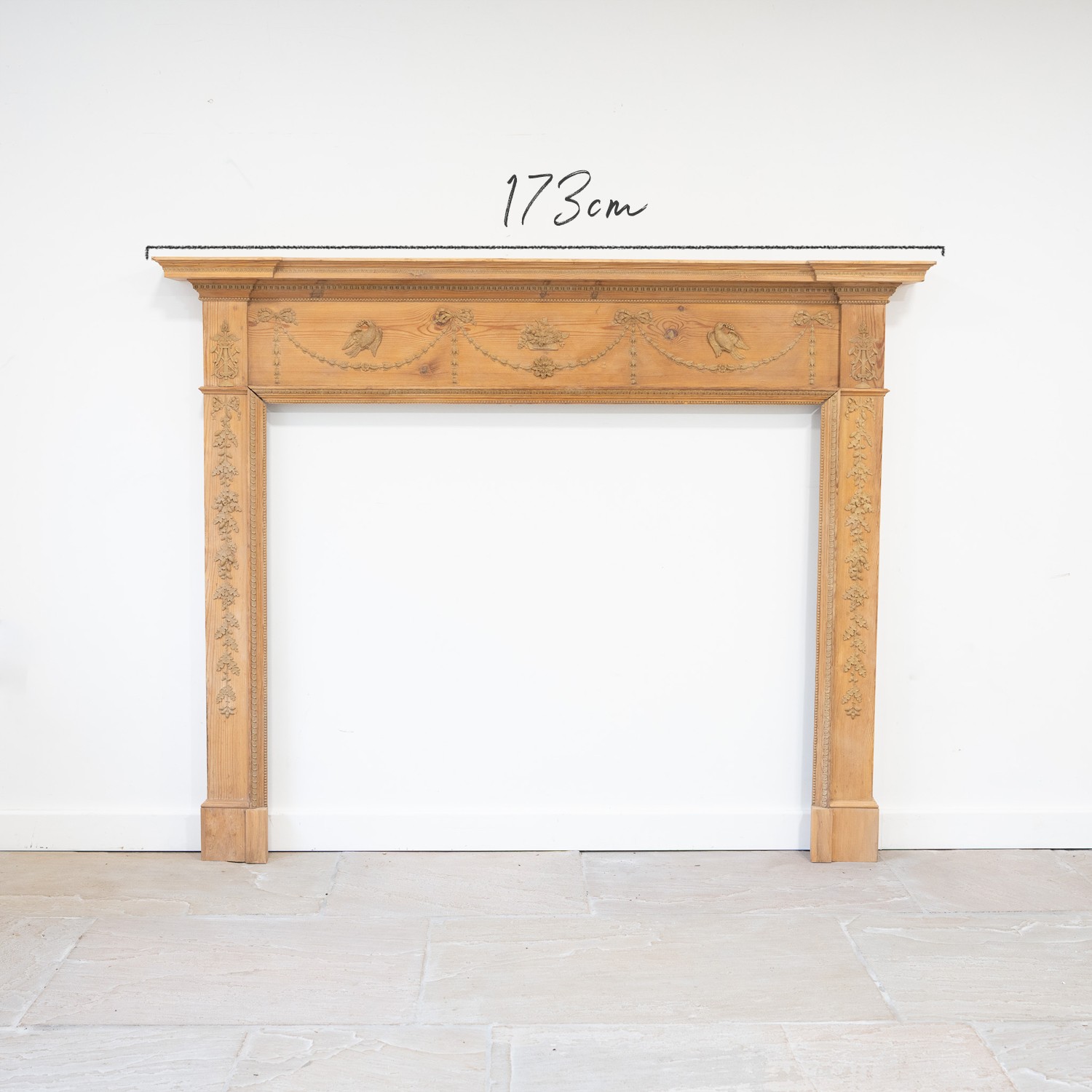
Height 139cm x Width 173cm x Depth 16cm. Opening: Height 106cm x Width 126cm.
Attributed to Richard Foster of Edinburgh (fl. c. 1800):
Active in Edinburgh at the turn of the nineteenth century during the height of the city’s New Town architectural expansion, Richard Foster was a specialist maker of neoclassical pine and composition chimney pieces. Working from premises at the Mint in Edinburgh’s Old Town, Foster produced high-relief architectural ornament using moulded composition ("compo")—a fine, durable paste of whiting, resin, and size pressed into boxwood moulds and applied to seasoned pine carcasses.
Drawing closely on the neoclassical pattern books of Robert Adam and Michael Angelo Pergolesi, Foster’s chimney pieces are distinguished by crisp, deeply modelled classical motifs—such as garlands, musical trophies, urns, and delicate bird-and-foliage vignettes—designed to rival carved marble and stucco at a fraction of the weight. Surviving documented examples from Edinburgh townhouses demonstrate the enduring quality of his mould-making and joinery, making signed or attributed Foster surrounds sought-after survivals of late Georgian Scottish interior architecture.