22,083  PAGES BROWSED TODAY PAGES TODAY • 75 ANTIQUES UPLOADED TODAYNEW ARRIVALS
GIFTS
75 ITEMS ADDED TODAY
Sort Order
Items Per Page
Antiques dealer?
Join as a Seller
Browse Categories
Sort order
Relevant Links
Items per page
ID #SA1246459
FOR SALE
£8,650
Email Phone
Save
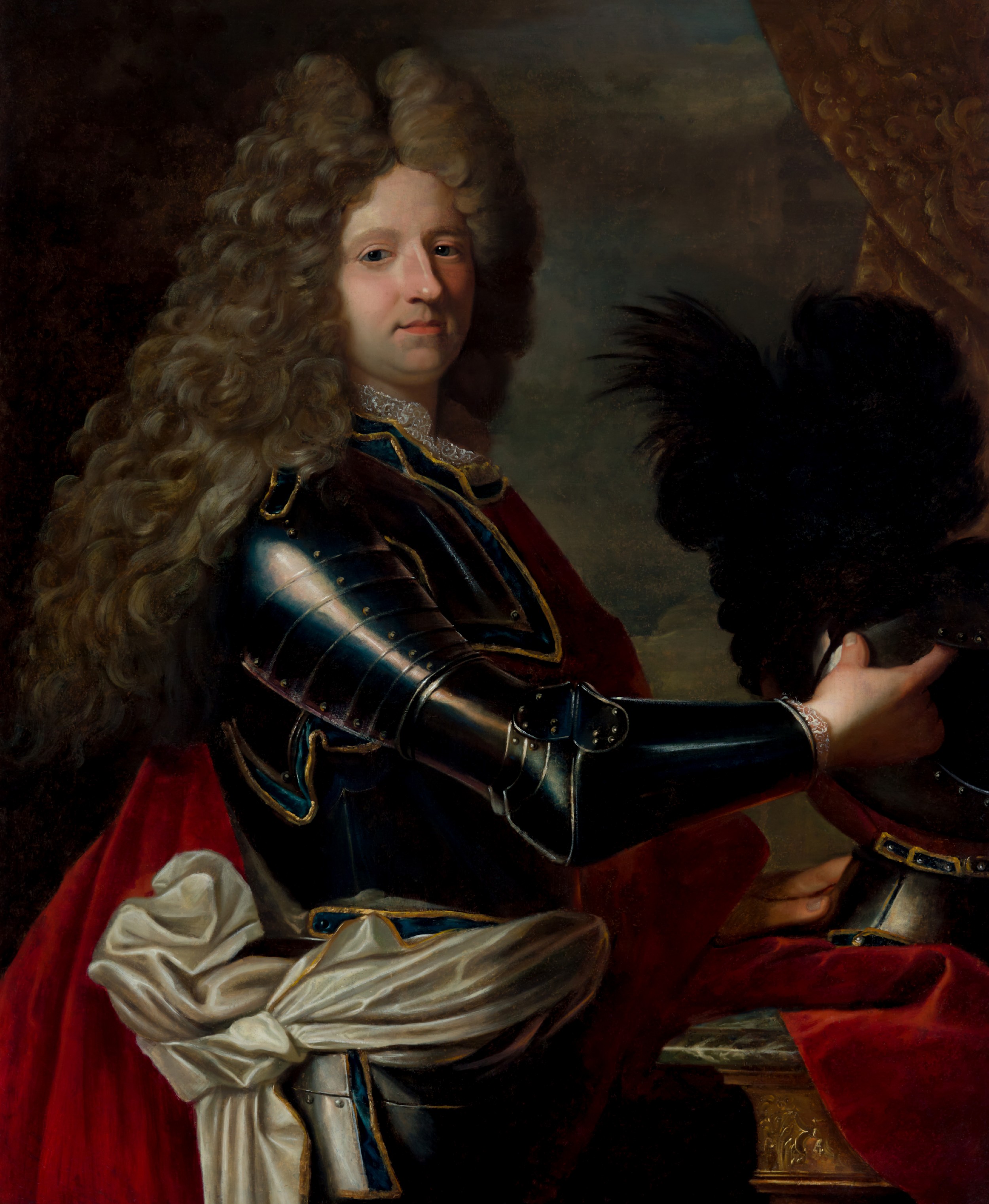
Portrait of Marc De Beauvau-craon, Prince of Craon, 18th Century; After Hyacinthe Rigaud (1659–1743), Oil on Canvas Painting
For sale by Titan Fine Art
for sale €10,121     $10,986
£8,650
Titan Fine Art

Titan Fine Art

Sellingantiques Verified Since Jul 2016
Browse dealers 20 items
  • About Us
    Specialist in 17th & 18thc portraits. Highly curated selection, museum-level research & pro conservation. Exceptional art, expertly vetted.
Id #SA1246459
PDF SHARE
SAVE

Portrait of Marc De Beauvau-craon, Prince of Craon, 18th Century; After Hyacinthe Rigaud (1659–1743), Oil on Canvas Painting

17th century
For Sale by Titan Fine Art
Description

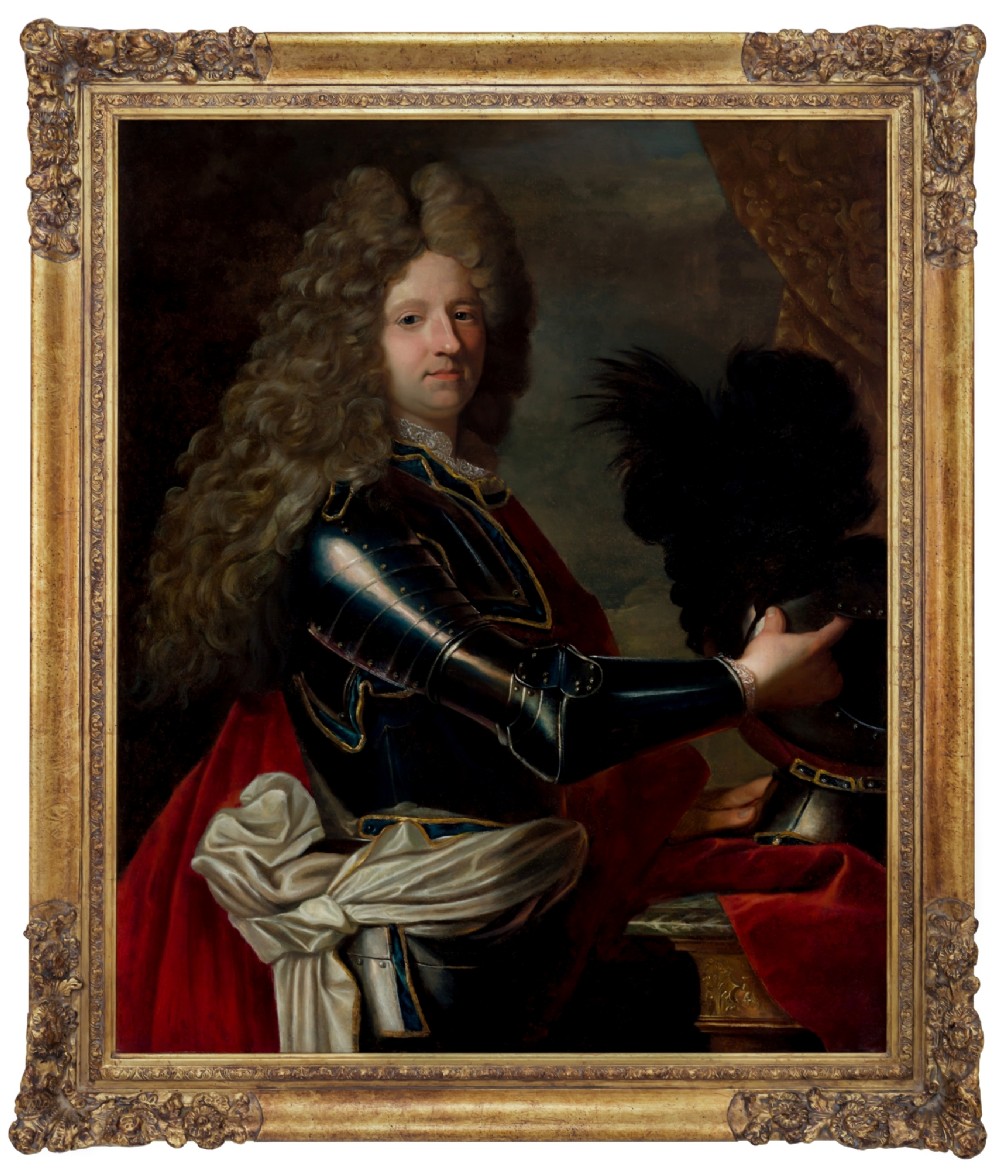
This impressive three-quarter-length portrait depicts Marc de Beauvau-Craon, Prince of Craon, one of the most important figures at the court of Lorraine and a man whose career carried him into the highest circles of eighteenth-century Europe.

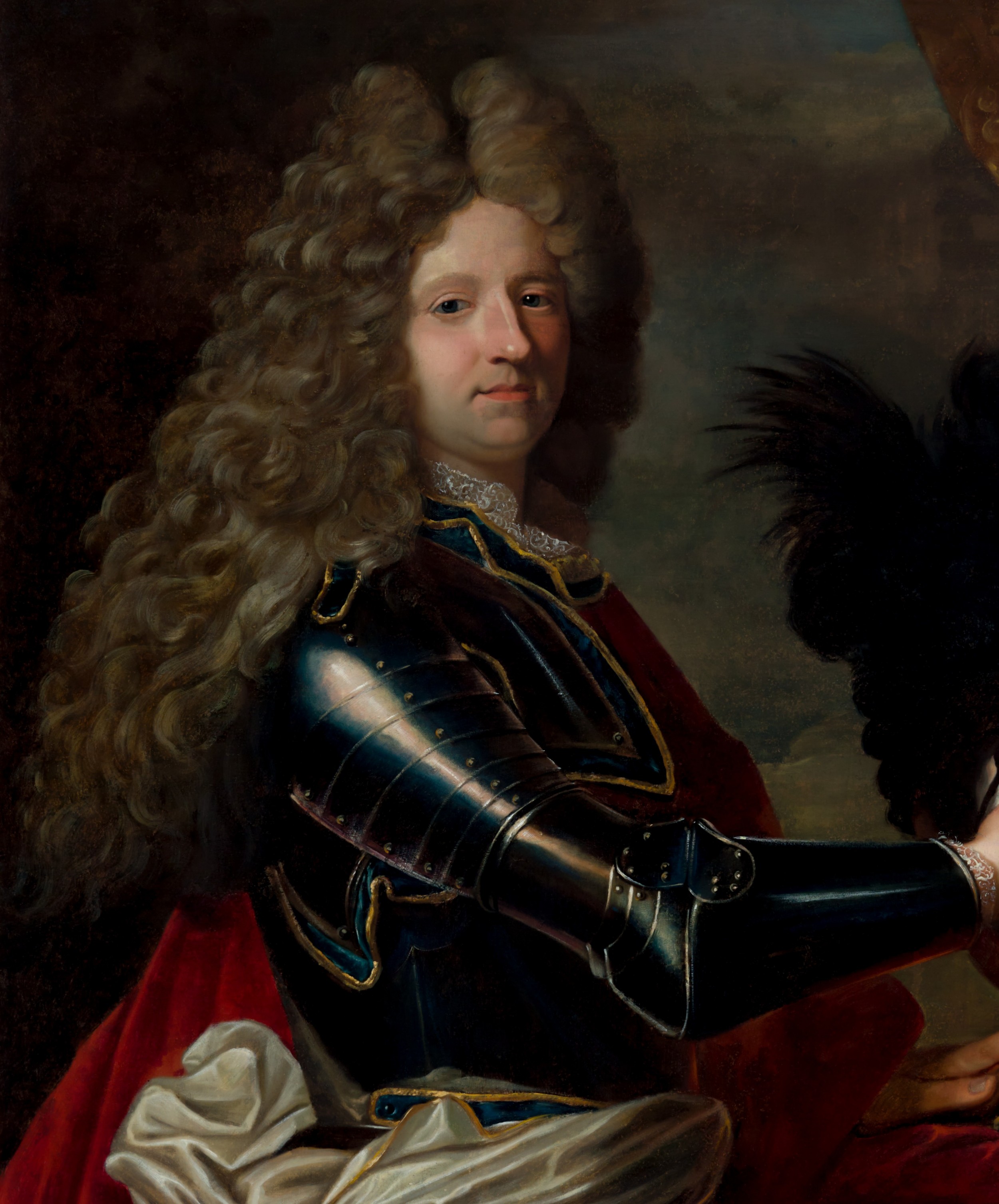
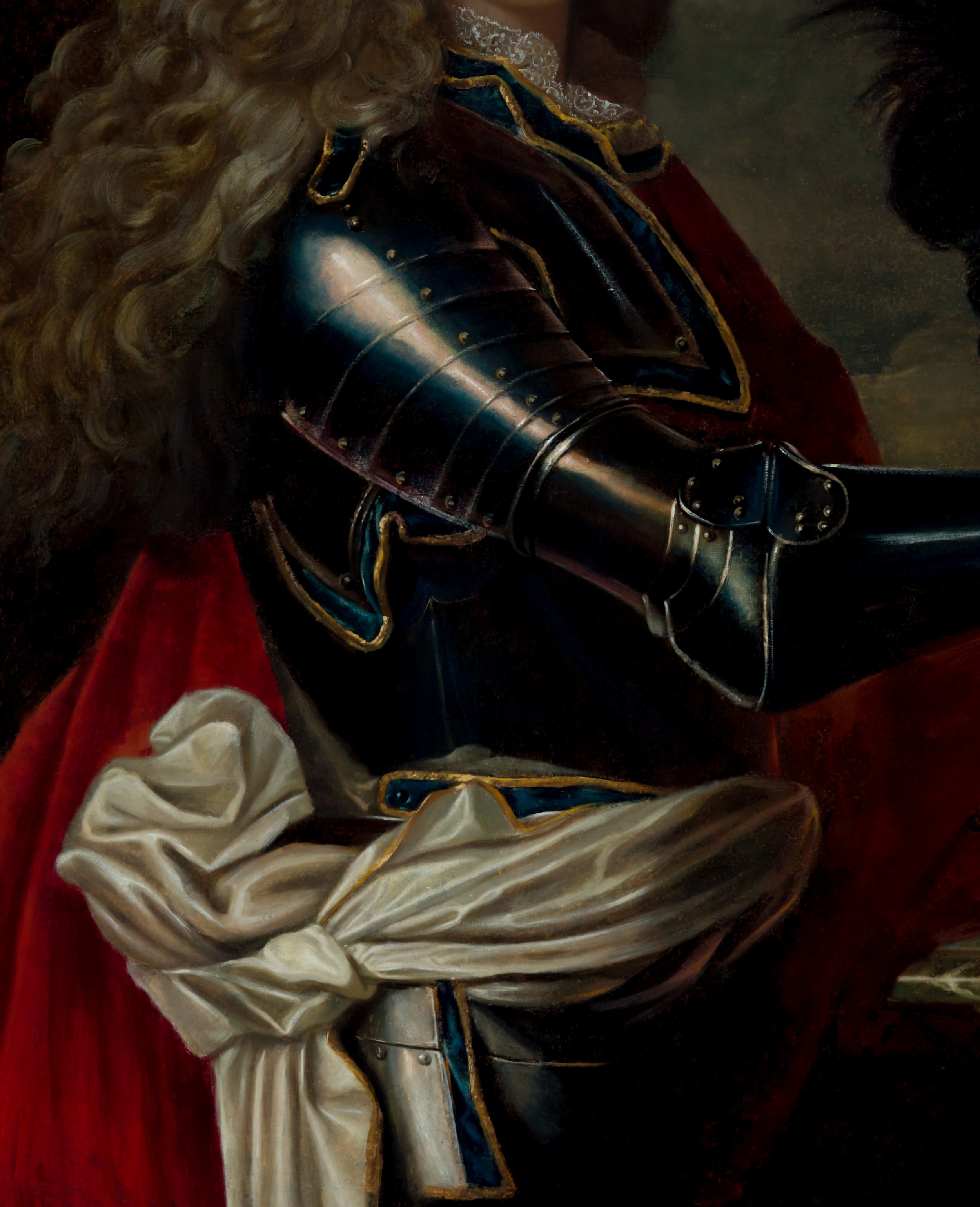
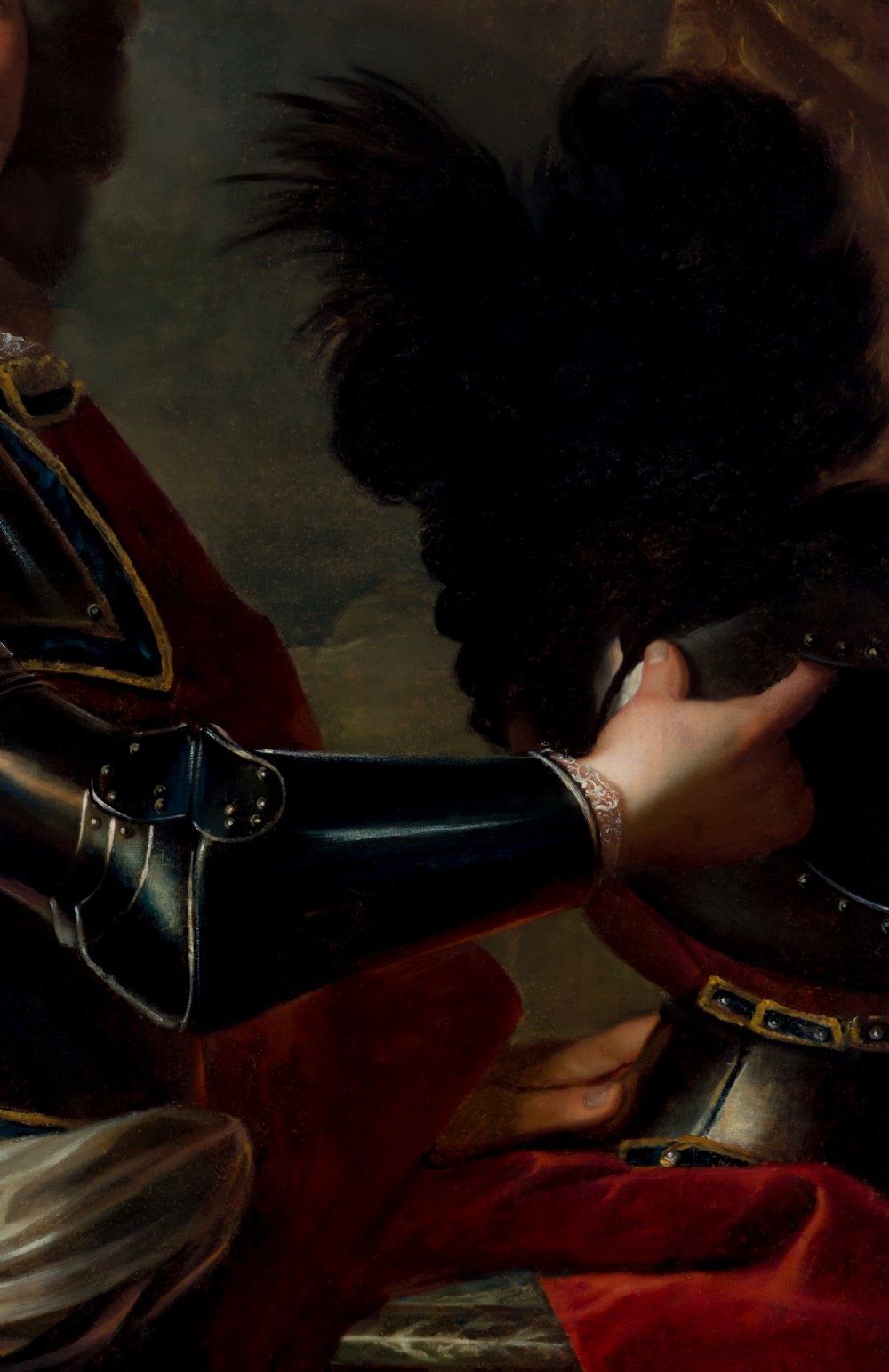
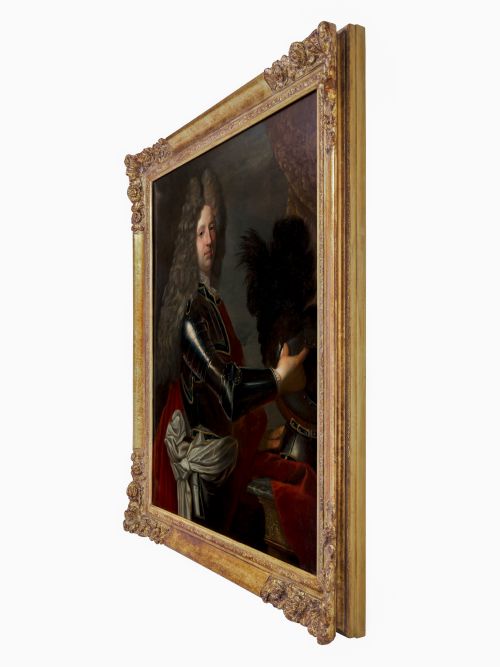
He is shown in the grand martial manner fashionable around 1700, wearing polished dark armour enriched with gilded details, a crimson mantle and a large white silk sash. His full-bottomed wig falls in long curls almost to his waist, while his outstretched arm leads to a helmet crowned by a dramatic plume of black feathers. Lace at the neck and wrist softens the military imagery with the refinement expected of a court portrait. The result is a powerful and highly decorative image of rank, command and aristocratic status.
Marc de Beauvau-Craon belonged to one of Lorraine’s leading noble families. His father, Louis de Beauvau, Marquis de Beauvau, served the Duke of Lorraine as counsellor and captain of his guards, while his mother, Anne-Henriette de Ligny du Charmel, came from another distinguished Lorrainese lineage. Marc grew up close to Léopold, Duke of Lorraine, and the two remained closely connected throughout their lives. He served as chamberlain and, from 1711, Grand Equerry, one of the principal offices of the ducal court.
In 1704 Marc married Anne-Marguerite de Ligniville, daughter of Melchior de Ligniville, Marshal of Lorraine. Their marriage connected two of the duchy’s most prominent families and produced twenty children. Among them were Charles-Juste de Beauvau-Craon, later Marshal of France and member of the Académie française, and Marie-Françoise-Catherine, Marquise de Boufflers, one of the most celebrated women at the later court of Stanislas Leszczynski.
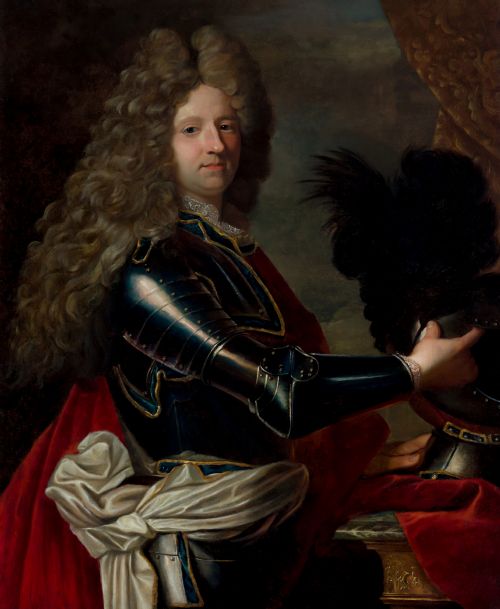
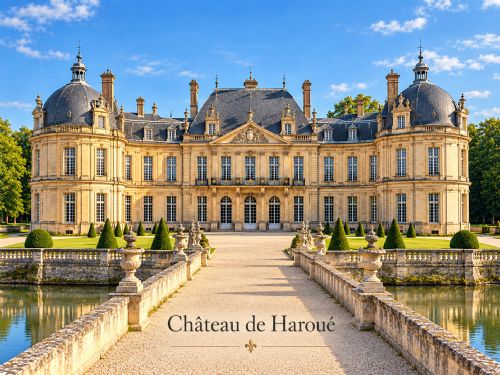
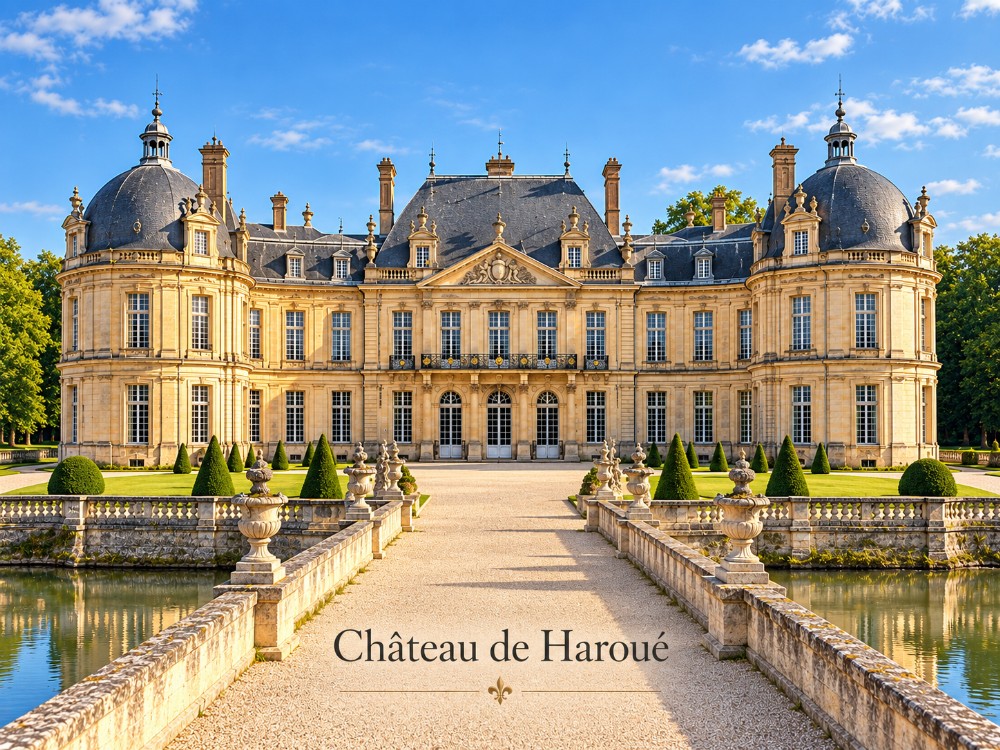
Marc’s life was centred for many years at the court of Lunéville, but from 1720 he commissioned Germain Boffrand to create the magnificent Château de Haroué as the Beauvau-Craon family seat. The château remains one of the great architectural monuments of eighteenth-century Lorraine, famously associated with the conceit of 365 windows, 52 chimneys, 12 towers and four bridges.
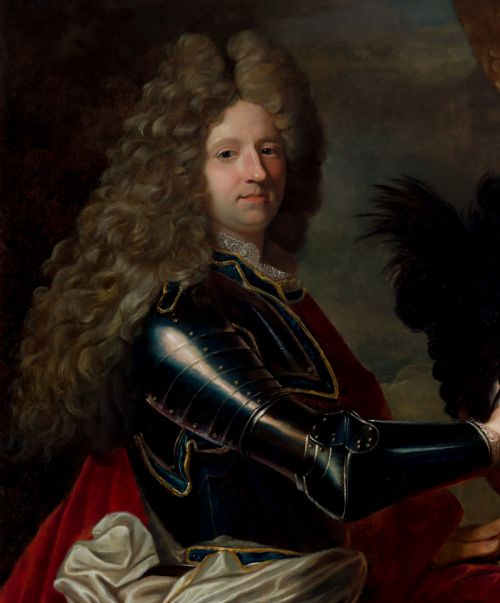
His rise continued rapidly. He became Marquis de Craon in 1712, Prince of the Holy Roman Empire in 1722 and later a Grandee of Spain. He was entrusted with the education of François-Étienne of Lorraine, the future husband of Maria Theresa of Austria and later Holy Roman Emperor Francis I. Marc subsequently followed him to Florence, where he presided over the Council of Regency and effectively governed Tuscany on his behalf.
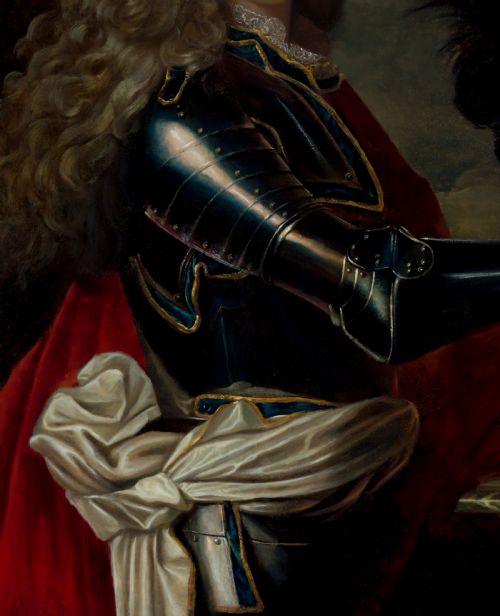
The composition derives from the celebrated portrait type associated with Hyacinthe Rigaud and his workshop, the prime version of which is now in the Musée Lorrain, Nancy, and is generally dated to about 1711. This timing is especially appropriate, coinciding with Marc’s appointment as Grand Equerry and the period of his rapid elevation at court. Rigaud was the defining French portraitist of the age of Louis XIV, and his studio established the sumptuous visual language of aristocratic and royal portraiture that dominated Europe for decades.
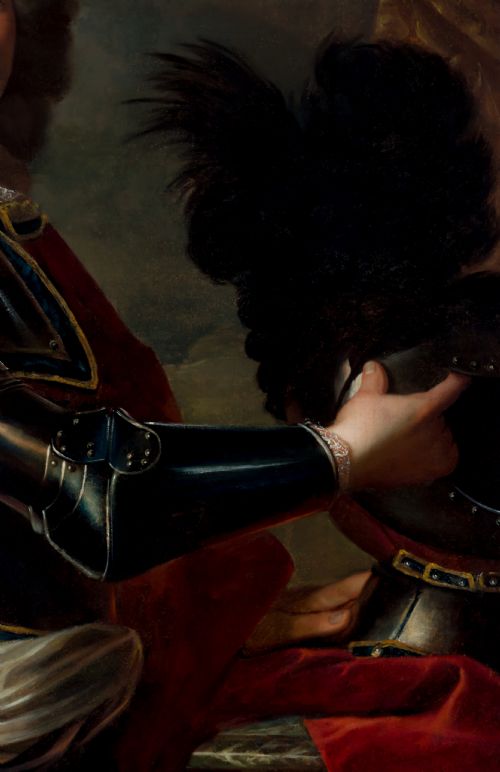
This portrait therefore combines commanding decorative presence with an unusually rich and identifiable history. Its scale, armour, crimson drapery, white sash, plumed helmet and cascading wig make it a striking statement piece, while the sitter’s connections with Lunéville, the Château de Haroué, the House of Lorraine and the future Imperial court give the painting exceptional historical resonance.

Measurements: Height 125 cm, Width 106 cm framed (49.2 x 41.7 in.).

Date of Manufacture

Titan Fine Art has dated this 18th Century Oil Portrait to the 17th Century.

Physical Dimensions
Height
125cm (49.21")
Width
106cm (41.73")
Depth
9cm (3.54")
Reference Numbers
Sellingantiques Reference
SA1246459
Dealers Notes

Much more info about this item at: www.titanfineart.com

In a market saturated with available paintings, Titan Fine Art offers a specially curated selection. Each piece is meticulously chosen based on technical merit, provenance, and decorative appeal, professionally conserved and researched, ensuring our clients view only the finest examples of British and European art.

With over 20 years of expertise and 1,000+ works placed with collectors and institutions, we are one of the most prolific specialists in 17th and 18th-century portraiture. We combine a scholarly approach with museum-level rigor to replace the uncertainty of the open market with absolute confidence.

Why Buy From Titan Fine Art?

• Expertly Curated Selection

We act as your expert eye, selecting only high-quality works that offer genuine historical and artistic value.

• Museum-Level Research

Each portrait is supported by extensive academic research, often exceeding 40 hours, to establish attribution, sitter identity, and historical context.

• Professional Conservation

All paintings are carefully cleaned and stabilised by professional conservators, and are presented ready to hang.

• Transparent Pricing

No buyer’s premium or hidden fees—unlike auction houses, where additional costs can add 25–35%.

• Export Pricing Advantage

Reduced pricing is available for works exported outside the UK.

• Specialist Global Shipping

We manage the entire process, including custom crating, export documentation, and fully tracked delivery worldwide.

• Buy with Confidence

A 7-day return policy and the option to pay in GBP, USD, or EUR for convenience and transparency.

• Original Period Frames

Many works retain their original carved and gilded frames, which are works of art in their own right and enhance both historical authenticity and decorative impact.

• Personal Advisory Service

We work directly with collectors and interior designers, offering guidance on selection, scale, and placement—including bespoke room mock-ups on request.

Subscribe to our monthly 'new item alert' to be the first to hear about new works

Description
This impressive three-quarter-length portrait depicts Marc de Beauvau-Craon, Prince of Craon, one of the most important figures at the court of Lorraine and a man whose career carried him into the highest circles of eighteenth-century Europe.
“
He is shown in the grand martial manner fashionable around 1700, wearing polished dark armour enriched with gilded details, a crimson mantle and a large white silk sash.
Titan Fine Art

His full-bottomed wig falls in long curls almost to his waist, while his outstretched arm leads to a helmet crowned by a dramatic plume of black feathers. Lace at the neck and wrist softens the military imagery with the refinement expected of a court portrait. The result is a powerful and highly decorative image of rank, command and aristocratic status.

fig 1. An 18th-century French Baroque oil painting on canvas depicting a nobleman in polished dark armour and a red cloak, housed within an ornate gilded frame.
fig 1. Portrait of Marc De Beauvau-craon, Prince of Craon, 18th Century; After Hyacinthe Rigaud (1659–1743), Oil on Canvas Painting

Marc de Beauvau-Craon belonged to one of Lorraine’s leading noble families. His father, Louis de Beauvau, Marquis de Beauvau, served the Duke of Lorraine as counsellor and captain of his guards, while his mother, Anne-Henriette de Ligny du Charmel, came from another distinguished Lorrainese lineage. Marc grew up close to Léopold, Duke of Lorraine, and the two remained closely connected throughout their lives. He served as chamberlain and, from 1711, Grand Equerry, one of the principal offices of the ducal court.

fig 2. An 18th-century French Baroque oil painting on canvas depicting a nobleman in polished dark armour and a red cloak, housed within an ornate gilded frame.
fig 2. Portrait of Marc De Beauvau-craon, Prince of Craon, 18th Century; After Hyacinthe Rigaud (1659–1743), Oil on Canvas Painting

In 1704 Marc married Anne-Marguerite de Ligniville, daughter of Melchior de Ligniville, Marshal of Lorraine. Their marriage connected two of the duchy’s most prominent families and produced twenty children. Among them were Charles-Juste de Beauvau-Craon, later Marshal of France and member of the Académie française, and Marie-Françoise-Catherine, Marquise de Boufflers, one of the most celebrated women at the later court of Stanislas Leszczynski.

fig 3. An 18th-century French Baroque oil painting on canvas depicting a nobleman in polished dark armour and a red cloak, housed within an ornate gilded frame.
fig 3. Portrait of Marc De Beauvau-craon, Prince of Craon, 18th Century; After Hyacinthe Rigaud (1659–1743), Oil on Canvas Painting

Marc’s life was centred for many years at the court of Lunéville, but from 1720 he commissioned Germain Boffrand to create the magnificent Château de Haroué as the Beauvau-Craon family seat. The château remains one of the great architectural monuments of eighteenth-century Lorraine, famously associated with the conceit of 365 windows, 52 chimneys, 12 towers and four bridges.

fig 4. An 18th-century French Baroque oil painting on canvas depicting a nobleman in polished dark armour and a red cloak, housed within an ornate gilded frame.
fig 4. Portrait of Marc De Beauvau-craon, Prince of Craon, 18th Century; After Hyacinthe Rigaud (1659–1743), Oil on Canvas Painting

His rise continued rapidly. He became Marquis de Craon in 1712, Prince of the Holy Roman Empire in 1722 and later a Grandee of Spain. He was entrusted with the education of François-Étienne of Lorraine, the future husband of Maria Theresa of Austria and later Holy Roman Emperor Francis I. Marc subsequently followed him to Florence, where he presided over the Council of Regency and effectively governed Tuscany on his behalf.

fig 5. An 18th-century French Baroque oil painting on canvas depicting a nobleman in polished dark armour and a red cloak, housed within an ornate gilded frame.
fig 5. Portrait of Marc De Beauvau-craon, Prince of Craon, 18th Century; After Hyacinthe Rigaud (1659–1743), Oil on Canvas Painting

The composition derives from the celebrated portrait type associated with Hyacinthe Rigaud and his workshop, the prime version of which is now in the Musée Lorrain, Nancy, and is generally dated to about 1711. This timing is especially appropriate, coinciding with Marc’s appointment as Grand Equerry and the period of his rapid elevation at court. Rigaud was the defining French portraitist of the age of Louis XIV, and his studio established the sumptuous visual language of aristocratic and royal portraiture that dominated Europe for decades.

fig 6. An 18th-century French Baroque oil painting on canvas depicting a nobleman in polished dark armour and a red cloak, housed within an ornate gilded frame.
fig 6. Portrait of Marc De Beauvau-craon, Prince of Craon, 18th Century; After Hyacinthe Rigaud (1659–1743), Oil on Canvas Painting

This portrait therefore combines commanding decorative presence with an unusually rich and identifiable history. Its scale, armour, crimson drapery, white sash, plumed helmet and cascading wig make it a striking statement piece, while the sitter’s connections with Lunéville, the Château de Haroué, the House of Lorraine and the future Imperial court give the painting exceptional historical resonance.

Measurements: Height 125 cm, Width 106 cm framed (49.2 x 41.7 in.).

Date of Manufacture

Titan Fine Art has dated this 18th Century Oil Portrait to the 17th Century.

Height
125cm (49.21")
Width
106cm (41.73")
Depth
9cm (3.54")
Reference Numbers
Sellingantiques Ref
SA1246459
Titan Fine Art
Titan Fine Art
Sellingantiques verified Since Jul 2016

Specialist in 17th & 18thc portraits. Highly curated selection, museum-level research & pro conservation. Exceptional art, expertly vetted.

Dealer Profile

You can view the stock and full dealer information on the Titan Fine Art Profile Page
PDF SHARE
SAVE
An 18th-century French Baroque oil painting on canvas depicting a nobleman in polished dark armour and a red cloak, housed within an ornate gilded frame.
1 / 7
Archive I An 18th-century French Baroque oil painting on canvas depicting a nobleman in polished dark armour and a red cloak, housed within an ornate gilded frame.

Portrait of Marc De Beauvau-craon, Prince of Craon, 18th Century; After Hyacinthe Rigaud (1659–1743), Oil on Canvas Painting
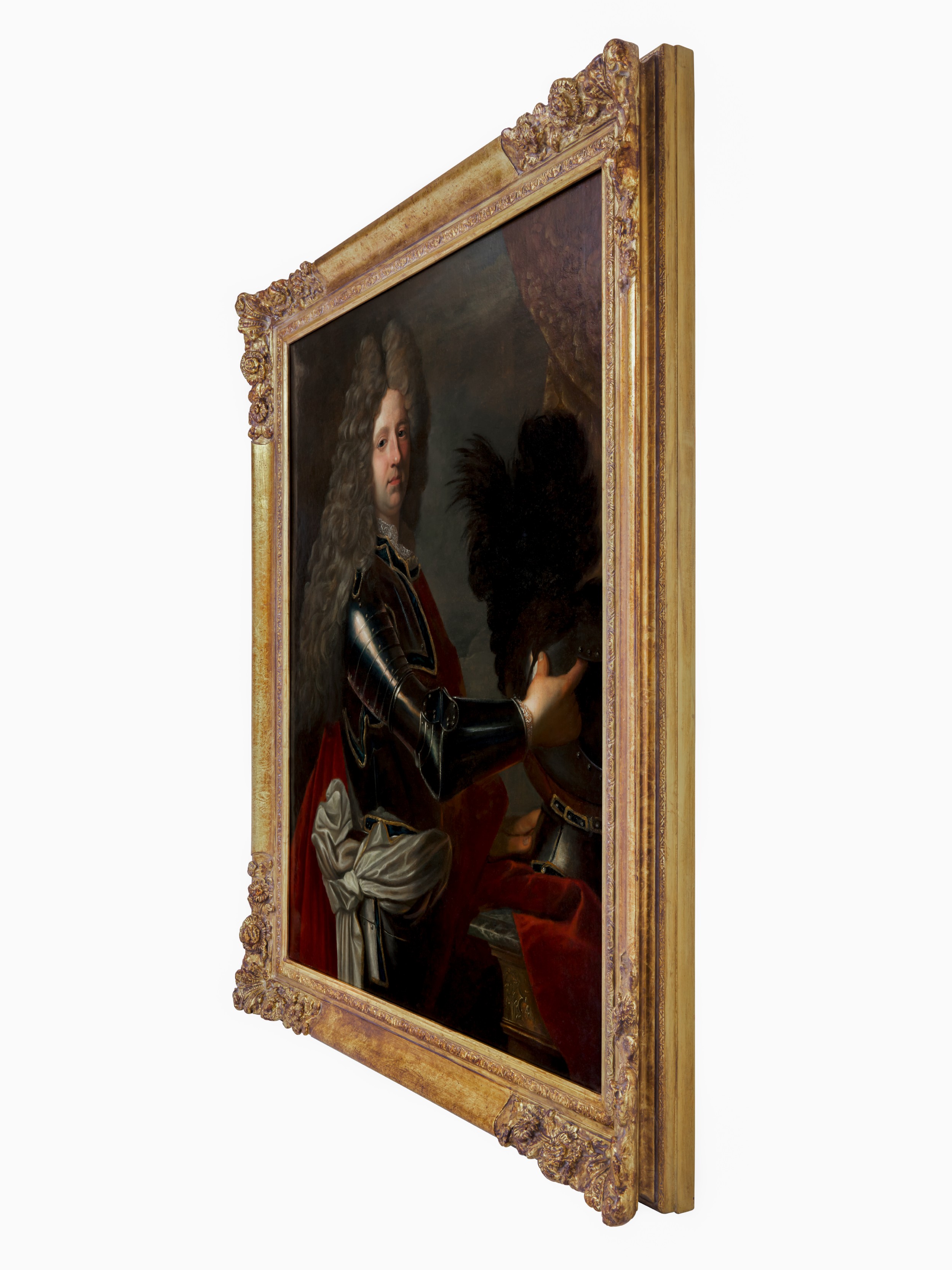
Archive II An 18th-century French Baroque oil painting on canvas depicting a nobleman in polished dark armour and a red cloak, housed within an ornate gilded frame. View II
Archive III An 18th-century French Baroque oil painting on canvas depicting a nobleman in polished dark armour and a red cloak, housed within an ornate gilded frame. View III
Archive IV An 18th-century French Baroque oil painting on canvas depicting a nobleman in polished dark armour and a red cloak, housed within an ornate gilded frame. View IV
Archive V An 18th-century French Baroque oil painting on canvas depicting a nobleman in polished dark armour and a red cloak, housed within an ornate gilded frame. View V
Archive VI An 18th-century French Baroque oil painting on canvas depicting a nobleman in polished dark armour and a red cloak, housed within an ornate gilded frame. View VI
Archive VII An 18th-century French Baroque oil painting on canvas depicting a nobleman in polished dark armour and a red cloak, housed within an ornate gilded frame. View VII
FURTHER BROWSING

Visitors also looked at these ⇣

Enlarged Archival View
Telephone 07875 412 111
Location
London
United Kingdom
Dealer Profile Page sellingantiques.co.uk/titan
Verified Since Jul 2016
Items For Sale 20
Items Sold 407
Titan Fine Art
Titan Fine Art
Verified Since Jul 2016
View Dealer Info
Location: London, United Kingdom
Verified
Jul 2016
For Sale
20
Sold
407
An 18th-century French Baroque oil painting on canvas depicting a nobleman in polished dark armour and a red cloak, housed within an ornate gilded frame.
Portrait of Marc de Beauvau-Craon, Prince of Craon, 18th Century; After Hyacinthe Rigaud (1659–1743), Oil on canvas painting
Ref: SA1246459
An 18th-century French Baroque oil painting on canvas depicting a nobleman in polished dark armour and a red cloak, housed within an ornate gilded frame.
Detail View 1
Detail View 2
Detail View 3
Detail View 4
Detail View 5
Detail View 6
Archival Detail
Every single antique dealer on our platform is individually approved by our internal team. We verify their professional trade history, ethical standards, and photographic quality to ensure a secure, high-standard buying environment. Upon joining, every dealer agrees to a strict 9-point code of conduct. While issues can occasionally arise, our dealers typically resolve them swiftly and directly with the buyer. In fact, since our founding in 2002, Sellingantiques has only had to step in to help resolve an issue on roughly five occasions—a true testament to the quality of our dealers and their dedication to your happiness.
Our dealers are highly experienced in packing and shipping fragile, high-value antiques. Because you are in direct contact with the dealer, you will be able to easily go through all available shipping and insurance options together to ensure your item arrives safely.
Antiques are the ultimate green purchase. By choosing historical pieces over newly manufactured goods, you completely eliminate the carbon footprint of modern mass production while preserving exceptional, timeless craftsmanship.
Written by Sellingantiques from the dealer’s photographs and listing
  • ObjectFine Art
  • Period17th century
  • StyleFrench Baroque
  • MaterialOil paint, Canvas, Gilded wood
  • ColourGold and Crimson
  • MotifsPlate armour, Voluminous periwig, Crimson drapery, Gilded acanthus frame
  • SizeH 125 cm (49 in) x W 106 cm (42 in) x D 9 cm (4 in)

French Baroque portraiture of the 18th century is defined by theatrical composition, dramatic chiaroscuro lighting, and rich textures. Aristocratic sitters were typically portrayed in grand poses surrounded by symbols of power, such as polished armour, crimson drapery, and elaborate wigs.

Painters during this period utilised hand-ground mineral pigments mixed with linseed oil, painted directly onto hand-stretched linen canvases. Frames were carved from wood, primed with gesso, and finished with gold leaf gilding.

Authentic paintings from this era display genuine age-related craquelure across the paint surface, hand-cut wooden stretcher bars, hand-forged nails, and natural oxidisation on the reverse of the canvas.

A large-scale historical portrait creates a striking focal point when hung above a mantelpiece or sideboard in contemporary settings. The contrast between classical oil portraiture and clean modern architecture adds depth, drama, and historical character.

Keep the painting away from direct sunlight, radiators, and high humidity to prevent canvas warping and paint flaking. Dust the frame gently with a soft dry brush, and consult a professional conservator for canvas cleaning or re-varnishing.
items
Add keywords to the filter
Price
£100
£250000
Era
Period
Style
Material
Origin
Stock Location
Recently Added
Online Payments
Categories