13,347  PAGES BROWSED TODAY PAGES TODAY 9  ANTIQUES UPLOADED TODAY NEW ARRIVALS
Sort Order
Items Per Page
ID #SA1231443
FOR SALE
£4,850
Email Buy
Save
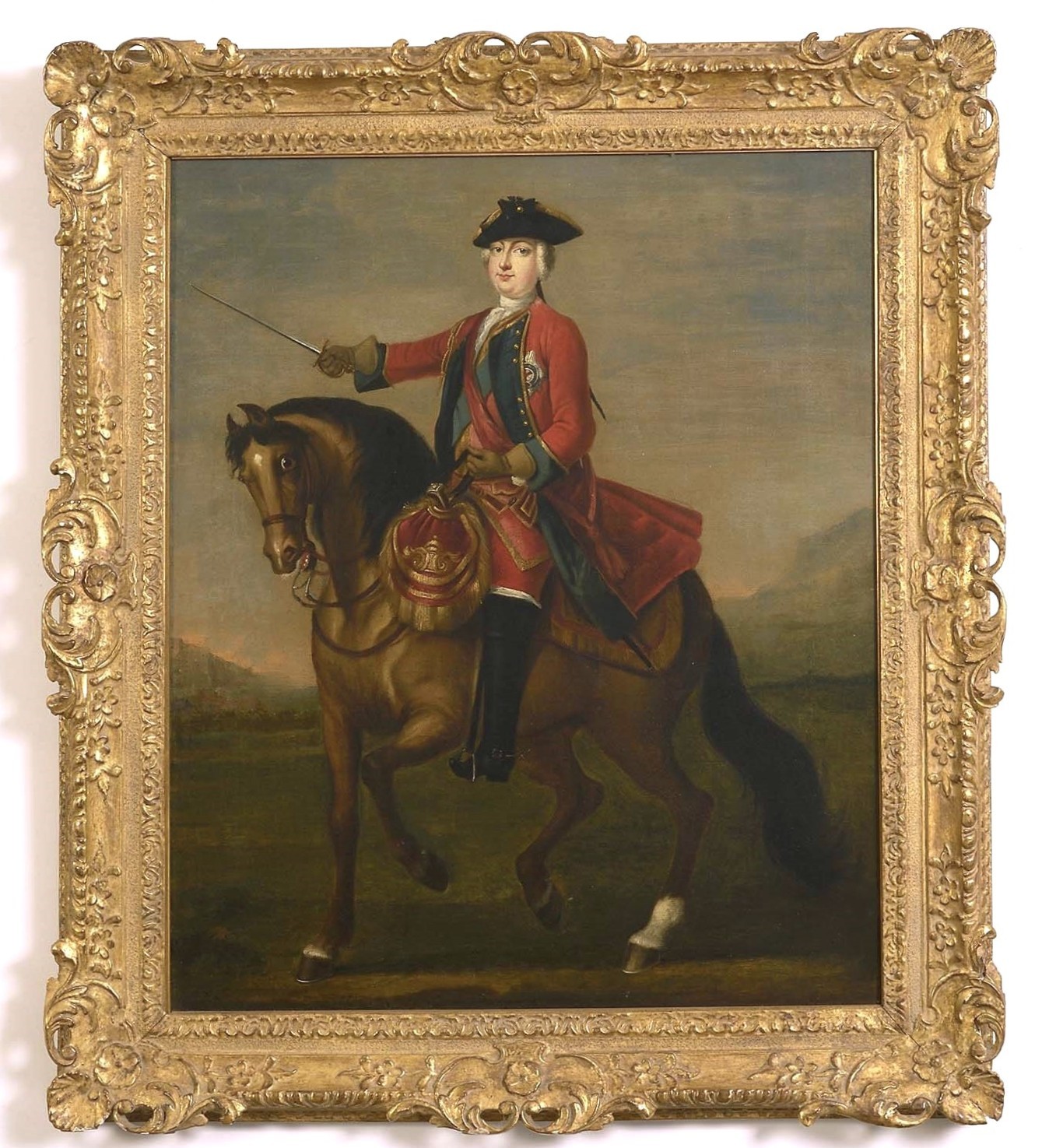
Portrait Oil of William Augustus, Duke of Cumberland (1721-65) at the Battle of Dettingen After John Wootton & Thomas Hudson, Circa 1744
Miles Barton Art and Interiors
for sale €5,675     $6,160
£4,850

Miles Barton Art and Interiors

Sellingantiques Verified Since Aug 2026
View Dealers Stock Page
  • About Us
    British and european pictures and works of art from the 17th to 20th century
Id #SA1231443
PDF SHARE
SAVE

Portrait Oil of William Augustus, Duke of Cumberland (1721-65) at the Battle of Dettingen After John Wootton & Thomas Hudson, Circa 1744

18th century
Description

Oil on canvas; held in a period carved and gilded frame

Canvas: 76.2 x 63 cm (30 x 25 in)

Framed: 94 x 81 cm (37 x 32 in)

Provenance: Private Collection, England

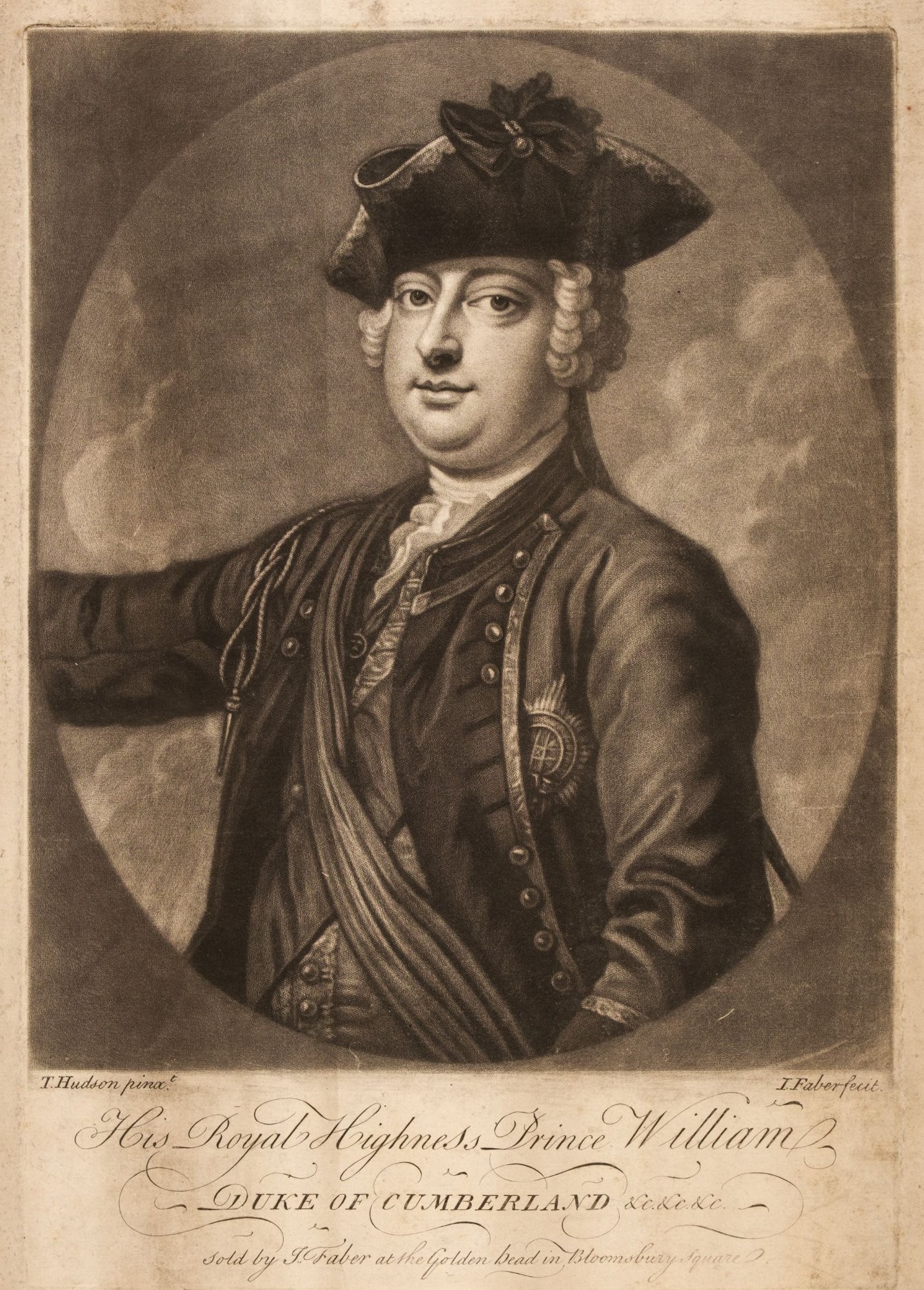
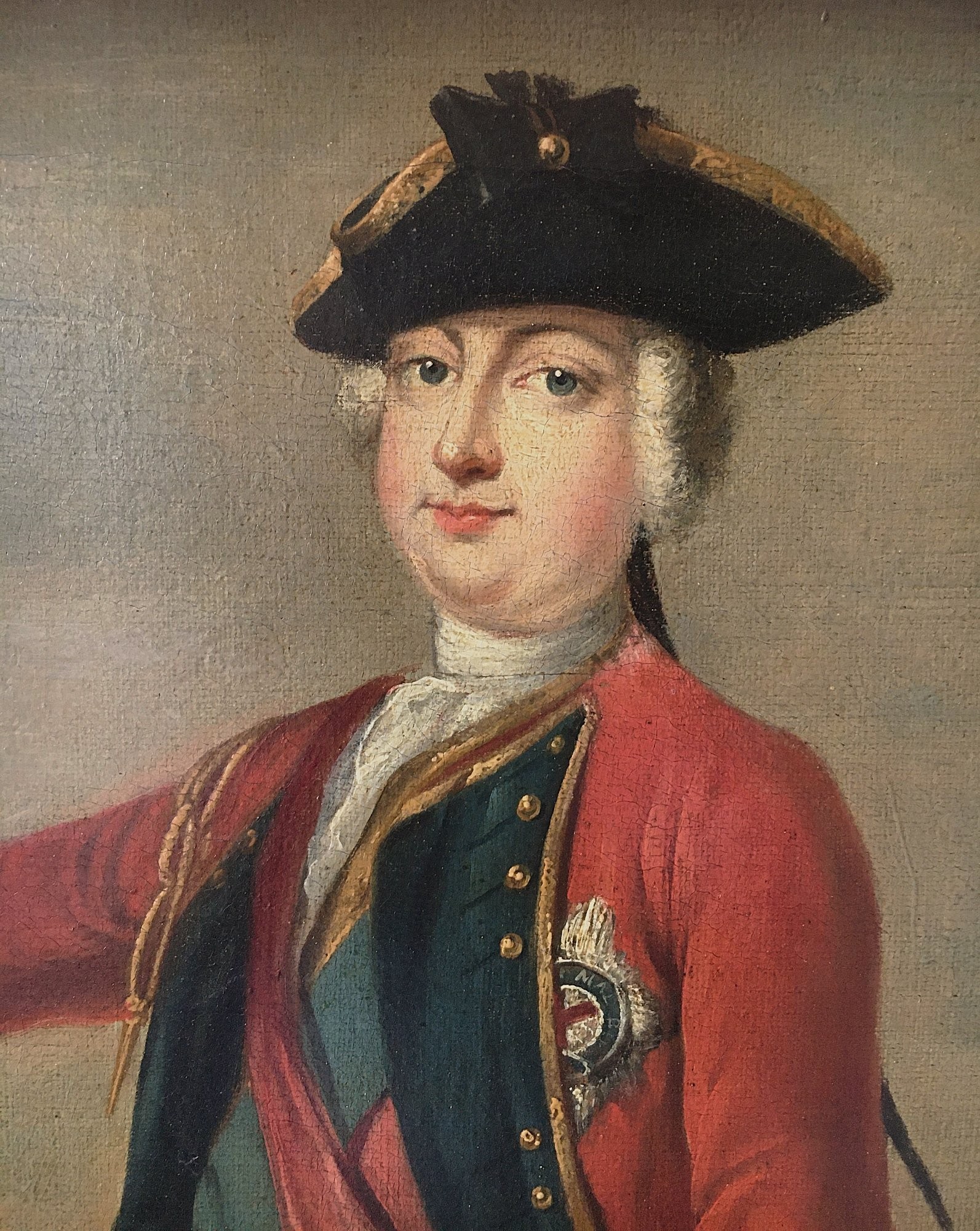
Painted around 1744, this striking equestrian portrait depicts Prince William Augustus, the Duke of Cumberland, third son of King George II. The original painting from which it derives was an artistic collaboration between Thomas Hudson, who captured the Duke's crisp facial features and formal attire, and John Wootton, who executed the distinct horse, and background landscape.
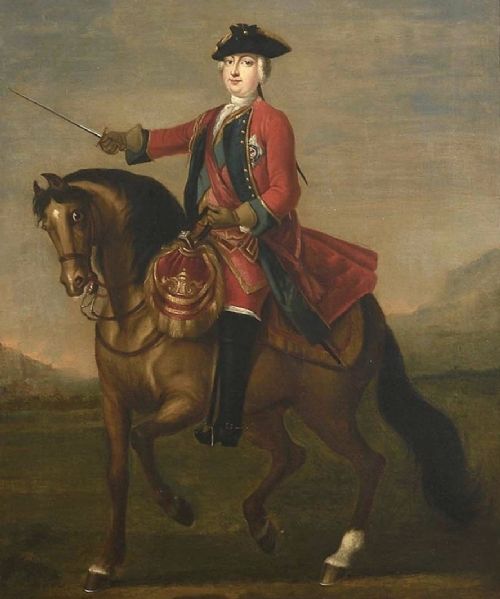
Set during the 1743 Battle of Dettingen—a conflict in the War of the Austrian Succession where the Duke was wounded—the composition shows him full-length in the vibrant red uniform of the First Guards. He wears the prestigious ribbon and star of the Order of the Garter while holding a sword pointed toward his advancing troops. Originally commissioned by his brother, Frederick, Prince of Wales, to hang at Leicester House, the original oil painting now resides in the Royal Collection Trust. Due to the Duke's immense contemporary popularity, the design was widely distributed across Britain through popular mezzotint prints, a source of inspiration to the artist of this smaller version.

Physical Dimensions
Height
94cm (37.01")
Width
81cm (31.89")
Depth
4cm (1.57")
Declaration

Miles Barton Art and Interiors has dated this Georgian Equestrian Oil Portrait to the 18th Century.

Reference Numbers
Sellingantiques Reference
SA1231443
Description
Oil on canvas; held in a period carved and gilded frame

Canvas: 76.2 x 63 cm (30 x 25 in)

Framed: 94 x 81 cm (37 x 32 in)

Provenance: Private Collection, England

Painted around 1744, this striking equestrian portrait depicts Prince William Augustus, the Duke of Cumberland, third son of King George II.
Miles Barton Art and Interiors

The original painting from which it derives was an artistic collaboration between Thomas Hudson, who captured the Duke's crisp facial features and formal attire, and John Wootton, who executed the distinct horse, and background landscape.

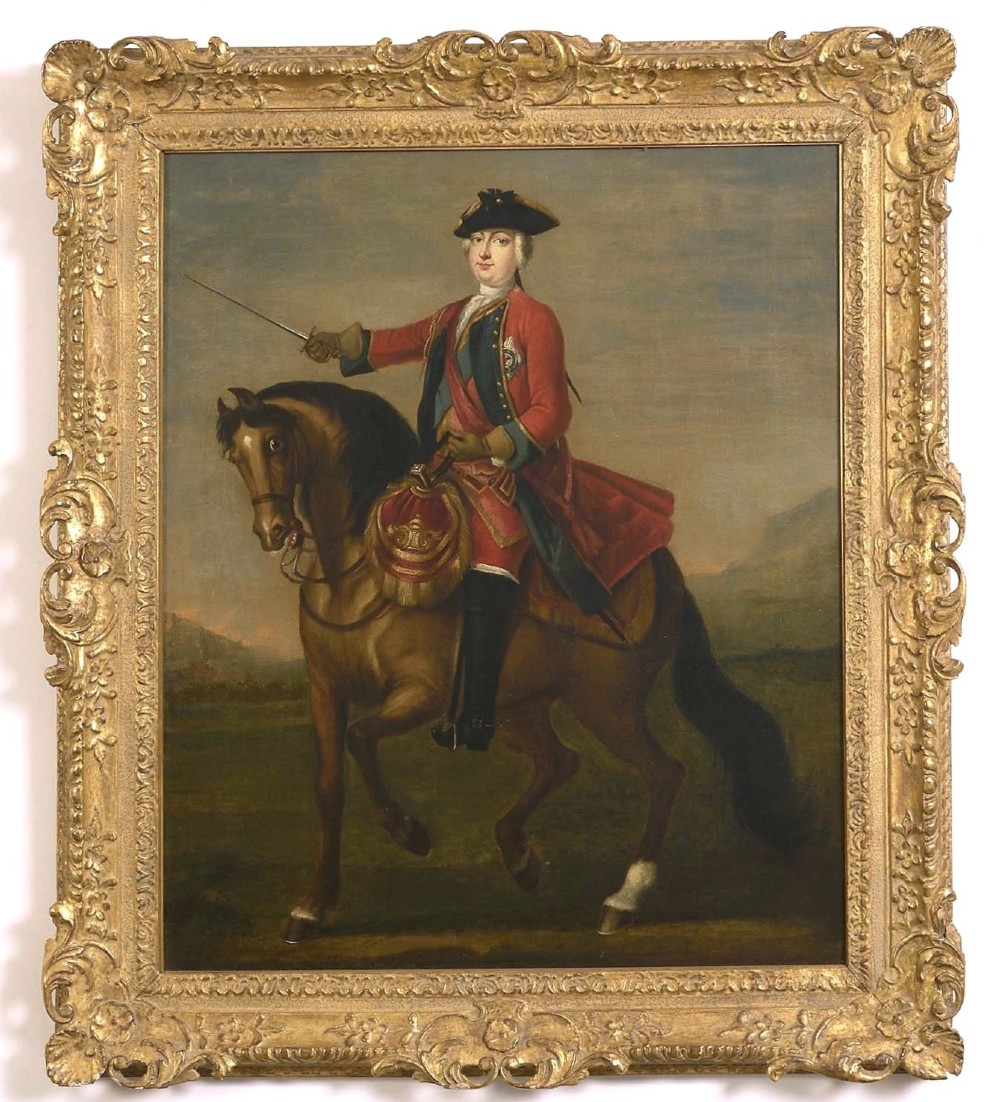
fig 1. An 18th-century equestrian oil portrait depicting a military officer in a red coat mounted on a brown horse, enclosed in a carved giltwood frame.
fig 1. Portrait Oil of William Augustus, Duke of Cumberland (1721-65) at the Battle of Dettingen After John Wootton & Thomas Hudson, Circa 1744

Set during the 1743 Battle of Dettingen—a conflict in the War of the Austrian Succession where the Duke was wounded—the composition shows him full-length in the vibrant red uniform of the First Guards. He wears the prestigious ribbon and star of the Order of the Garter while holding a sword pointed toward his advancing troops. Originally commissioned by his brother, Frederick, Prince of Wales, to hang at Leicester House, the original oil painting now resides in the Royal Collection Trust. Due to the Duke's immense contemporary popularity, the design was widely distributed across Britain through popular mezzotint prints, a source of inspiration to the artist of this smaller version.

Height
94cm (37.01")
Width
81cm (31.89")
Depth
4cm (1.57")
Date of Manufacture

Miles Barton Art and Interiors has dated this Georgian Equestrian Oil Portrait to the 18th Century.

Reference Numbers
Sellingantiques Ref
SA1231443
Miles Barton Art and Interiors
Sellingantiques verified Since Aug 2026

British and european pictures and works of art from the 17th to 20th century

Dealer Profile

You can view the stock and full dealer information on the Miles Barton Art and Interiors Profile Page
PDF SHARE
SAVE
An 18th-century equestrian oil portrait depicting a military officer in a red coat mounted on a brown horse, enclosed in a carved giltwood frame.
1 / 5
Archive I An 18th-century equestrian oil portrait depicting a military officer in a red coat mounted on a brown horse, enclosed in a carved giltwood frame.

Portrait Oil of William Augustus, Duke of Cumberland (1721-65) at the Battle of Dettingen After John Wootton & Thomas Hudson, Circa 1744
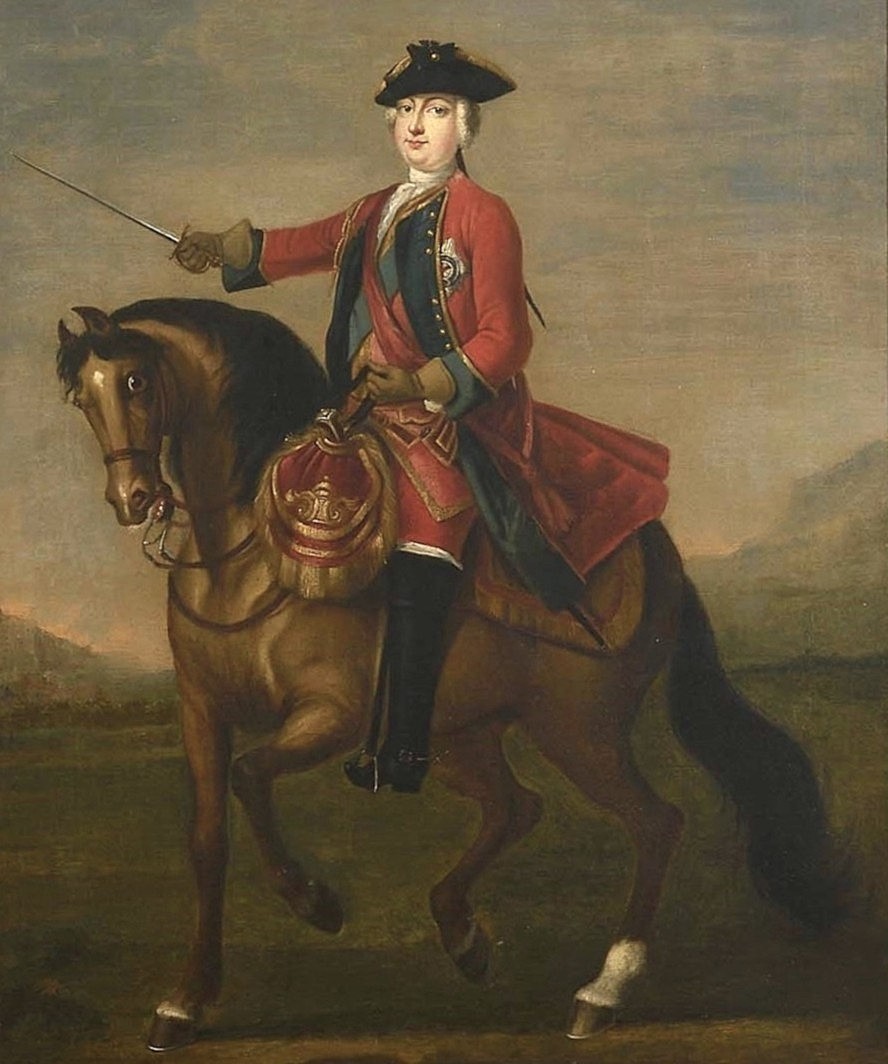
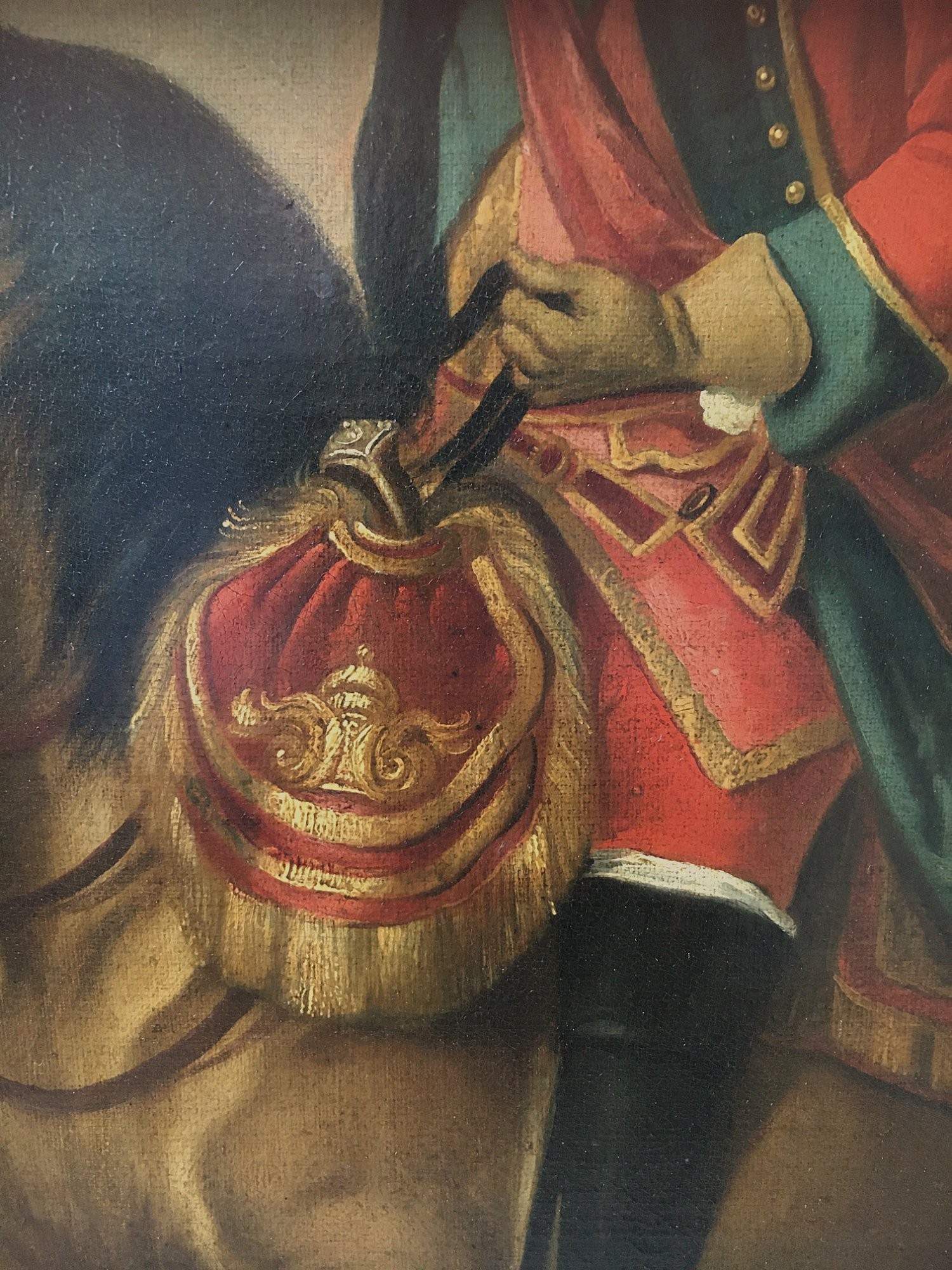
Archive II An 18th-century equestrian oil portrait depicting a military officer in a red coat mounted on a brown horse, enclosed in a carved giltwood frame. View II
Archive III An 18th-century equestrian oil portrait depicting a military officer in a red coat mounted on a brown horse, enclosed in a carved giltwood frame. View III
Archive IV An 18th-century equestrian oil portrait depicting a military officer in a red coat mounted on a brown horse, enclosed in a carved giltwood frame. View IV
Archive V An 18th-century equestrian oil portrait depicting a military officer in a red coat mounted on a brown horse, enclosed in a carved giltwood frame. View V
FURTHER BROWSING

Visitors also looked at these ⇣

Enlarged Archival View
Telephone 07941 233015
Location
London and Somerset
United Kingdom
Verified Since Aug 2026
Items For Sale 11
Miles Barton Art and Interiors
Verified Since Aug 2026
View Dealer Info
Location: London and Somerset, United Kingdom
Verified
Aug 2026
For Sale
11
An 18th-century equestrian oil portrait depicting a military officer in a red coat mounted on a brown horse, enclosed in a carved giltwood frame.
Portrait oil of William Augustus, Duke of Cumberland (1721-65) at the Battle of Dettingen after John Wootton & Thomas Hudson, circa 1744
Ref: SA1231443
An 18th-century equestrian oil portrait depicting a military officer in a red coat mounted on a brown horse, enclosed in a carved giltwood frame.
Detail View 1
Detail View 2
Detail View 3
Detail View 4
Archival Detail
Every single antique dealer on our platform is individually approved by our internal team. We verify their professional trade history, ethical standards, and photographic quality to ensure a secure, high-standard buying environment. Upon joining, every dealer agrees to a strict 9-point code of conduct. While issues can occasionally arise, our dealers typically resolve them swiftly and directly with the buyer. In fact, since our founding in 2002, Sellingantiques has only had to step in to help resolve an issue on roughly five occasions—a true testament to the quality of our dealers and their dedication to your happiness.
Our dealers are highly experienced in packing and shipping fragile, high-value antiques. Because you are in direct contact with the dealer, you will be able to easily go through all available shipping and insurance options together to ensure your item arrives safely.
Antiques are the ultimate green purchase. By choosing historical pieces over newly manufactured goods, you completely eliminate the carbon footprint of modern mass production while preserving exceptional, timeless craftsmanship.

Georgian equestrian portraiture typically features military or aristocratic figures mounted on horses, rendered with formal compositions against atmospheric landscape backdrops. The genre flourished in Britain throughout the 18th century to symbolise authority, military leadership, and social status.

Paintings of this era were created using oil paints mixed with natural pigments on hand-stretched linen or cotton canvases. Surrounding frames were typically crafted from timber, coated in gesso, and finished with hand-applied gold leaf gilding.

Authentic period works display natural age characteristics including uniform surface craquelure, historical hand-carved joints, and timber oxidisation on the reverse. Pigment composition and the construction of the stretcher frame also provide key indicators of 18th-century origin.

A large-scale period portrait serves as a strong focal point when hung above a mantelpiece, sideboard, or console table. Positioning classical figurative art alongside contemporary furniture creates a balanced, layered aesthetic within traditional or eclectic interior schemes.

Oil paintings require a stable environment away from direct sunlight, excessive moisture, and fluctuating heat sources. Dusting should be done lightly with a soft dry brush, while varnish removal or structural conservations must be executed by a professional restorer.
items
Add keywords to the filter
Price
£100
£250000
Era
Movements
Material
Origin
Stock Location
Freshness
Online Payments
Categories