

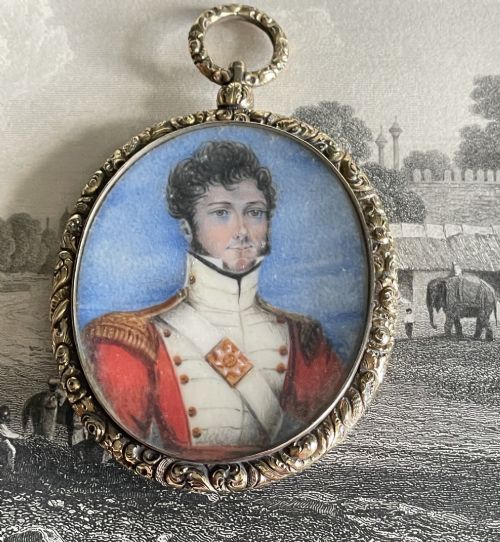


Georgian Military Portrait
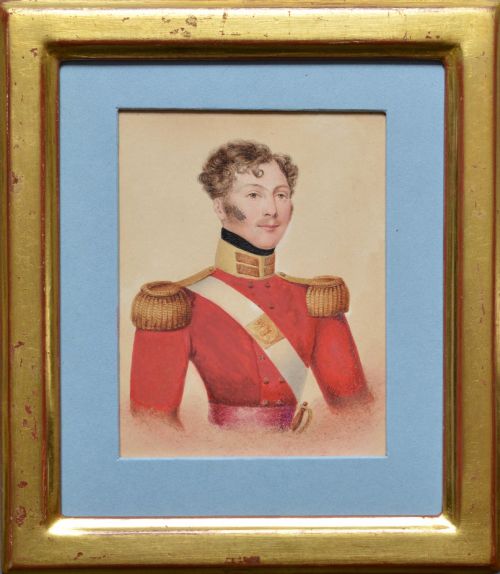
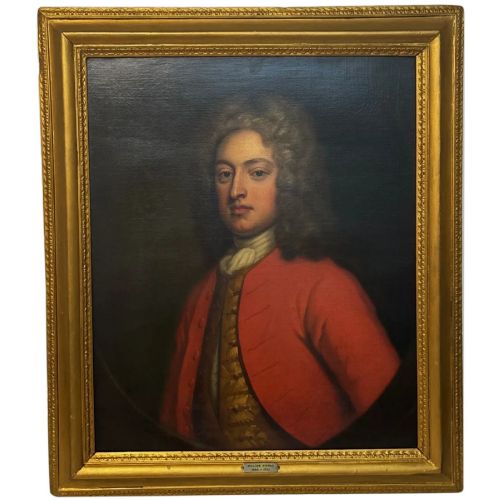
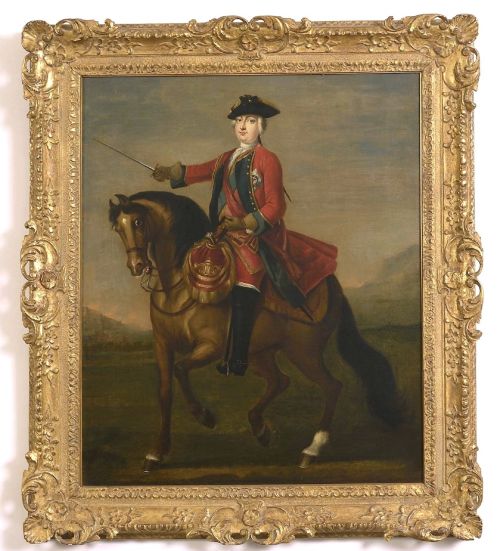
A georgian military portrait captures the commanding presence of officers and leaders through oils, watercolours, and delicate miniatures from the eighteenth and nineteenth centuries.
Georgian Military Portrait
A georgian military portrait depicts commanders, captains, and officers from British and European regiments, reflecting the martial engagements and hierarchies of the era. Buyers encounter large oil canvases alongside intimate portrait miniatures framed in gold, glass, and wood.
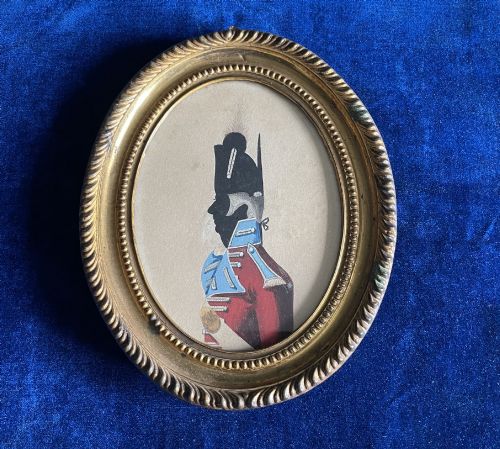
The works span the eighteenth and nineteenth centuries, featuring named figures such as generals and admirals alongside anonymous soldiers and naval officers. Styles range from formal academic painting to folk art watercolours and reverse glass prints.
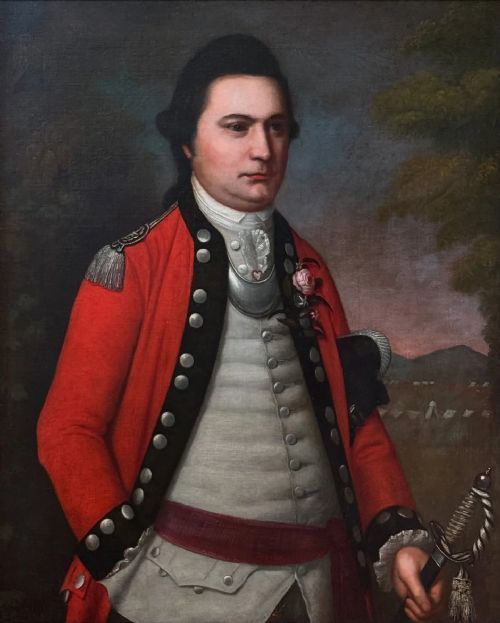
Naval and army commissions dominate the selection, capturing uniforms from specific regiments like the Scots Greys and the Staffordshire 80th Regiment of Foot. These pieces serve as historical documents of rank, service, and identity.
Materials and technique
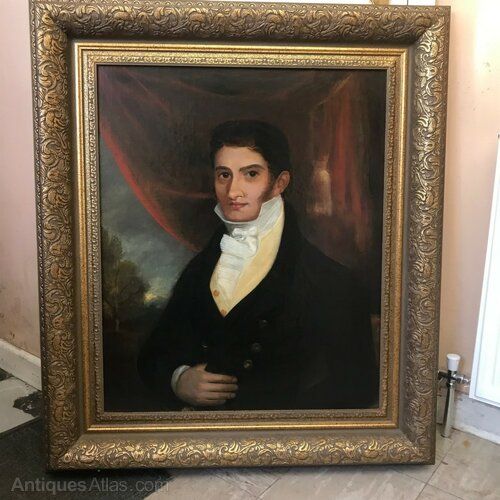
Artists relied primarily on oil on canvas for larger commissions, capturing the texture of scarlet coats, lace, and gilt buttons with layered pigments. Watercolours on paper offered a swifter medium for field sketches and portable likenesses.
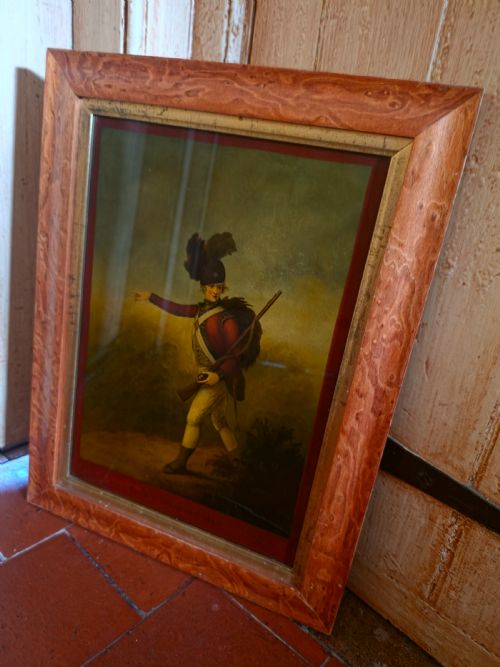
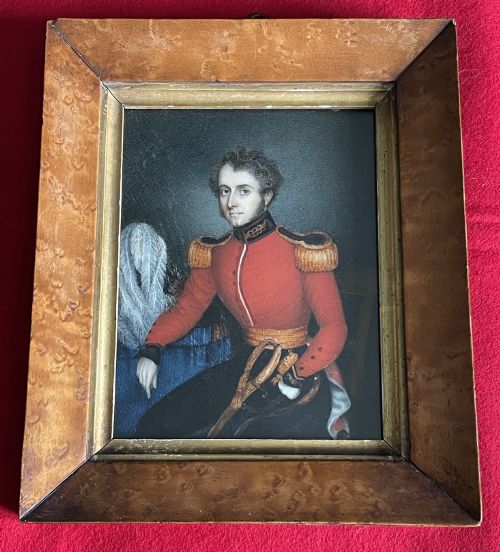
Miniatures demanded supreme precision, painted onto parchment, paper, or agate panels and often housed within gold frames adorned with pearls. Reverse glass painting created a distinct glossy finish where the image was applied directly to the glass substrate.
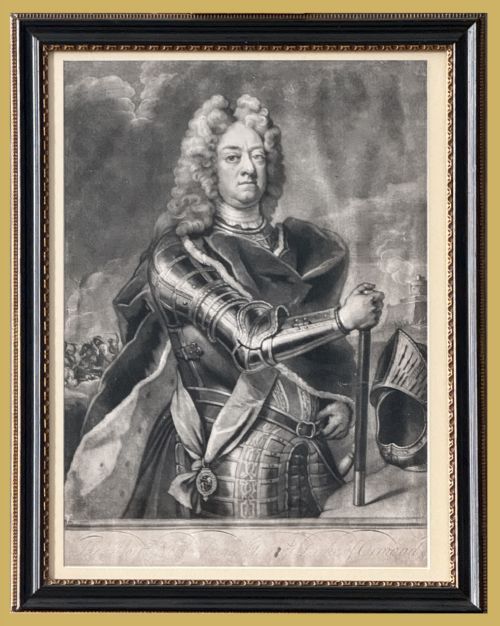
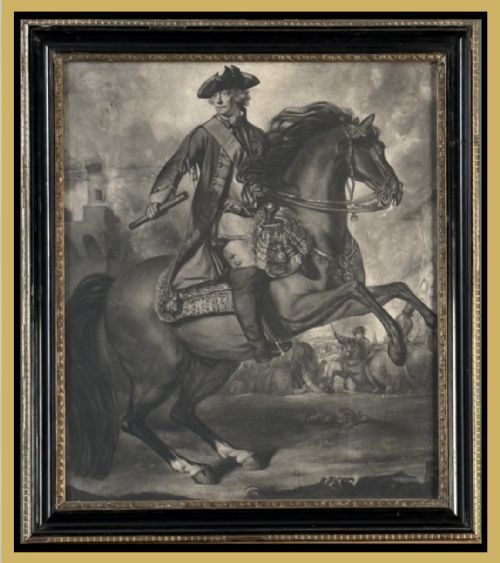
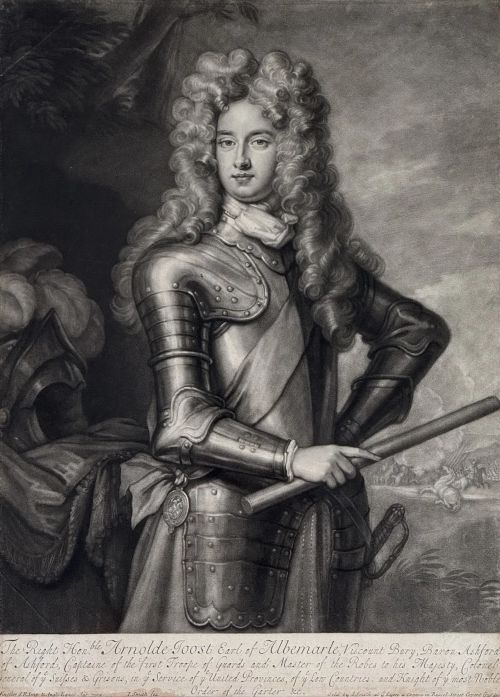
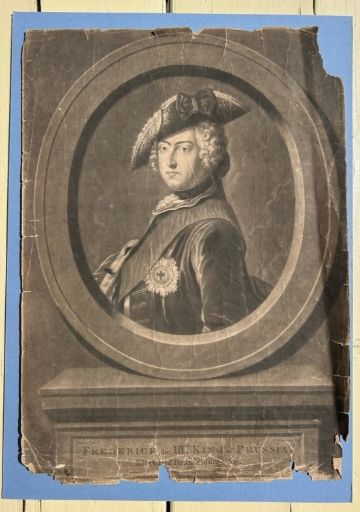
Frames played an integral role in presentation, utilising carved giltwood and stepped oak to complement the stature of the sitter. Mezzotint engravings provided a method for circulating printed copies of prominent military portraits to a wider audience.
Georgian Military Portrait Retail Price Guide 2026
Typical asking prices for georgian military portrait among the pieces listed under this phrase on Sellingantiques today, from the lower quarter to the upper quarter. They describe what is for sale here now, not the wider market.
Listings feature works spanning the eighteenth and nineteenth centuries, utilising oil on canvas, watercolour, glass, and gold-framed agate panels.
Evaluating craftsmanship
The fidelity of the likeness and the anatomical accuracy of the sitter set exceptional works apart from standard studio output. Master painters captured facial expression and uniform details with acute precision, whereas lesser examples rely on formulaic renderings.
The medium dictates the level of refinement, with hand-painted miniatures on agate or ivory requiring microscopic control compared to broader oil strokes. Preservation of the original canvas, paper, or glass surface heavily influences the integrity of the piece.
The distinction of the sitter and the documentation provided by inscriptions or signatures elevate historical value. Works by recorded artists or those tied to specific historical campaigns carry greater weight among collectors.
John Simon·Michael Dahl·Edward Fisher·Sir Joshua Reynolds·Stickland Lowry·Sir Godfrey Kneller·Richard Houston·John Simmons·Nicolas De Largilliere·Edward Pugh·Ramsay Richard Reinagle·Kershaw Schofield
The Georgian Military Portrait Glossary
- Mezzotint
- A printmaking process where the copper plate is roughened to achieve rich tonal gradations. This technique allowed eighteenth-century printmakers to translate dark military uniforms and shadowed backgrounds with remarkable depth.
- Portrait Miniature
- A small, highly detailed painting executed on a delicate surface like vellum, ivory, or agate. These intimate pieces were often worn as personal tokens or kept in specialised travel cases.
- Reverse Glass
- A technique where the artist paints directly onto the back of a glass panel, viewed from the front to create a luminous sheen. It requires the composition to be executed in reverse, starting with the foreground details.
- Giltwood
- Wood that has been carved and coated with a thin layer of gold leaf. It provided eighteenth-century frames with a brilliant, reflective border suited to grand reception rooms.
- Folk Art
- Work produced by self-taught or provincial artists working outside academic traditions. These pieces prioritize direct expression and local materials over strict academic proportions.
Georgian Military Portrait: Frequently Asked Questions
How do I identify a naval officer portrait?
Naval portraits are typically distinguished by dark blue jackets, gold lace, and white breeches, often accompanied by nautical backgrounds featuring ships or coastal fortifications.
Artists frequently included spyglasses, anchors, or maps within the composition to signal the sitter's maritime command and rank.
What is the difference between an oil and a miniature?
Oils are painted on canvas or wood panels and were intended to hang prominently on institutional or domestic walls. They offer sweeping views of uniforms and backgrounds.
Miniatures are pocket-sized works painted on delicate supports like paper or agate, designed for personal closeness and portable display.
How can I tell the regiment from the uniform?
Regimental identity is often revealed through distinct lapel colours, lace patterns, and collar insignia recorded by the artist. Contemporary inscriptions on the reverse or frame can also point to specific military units.
Researching the service history of the named sitter provides the most reliable confirmation of their regiment.
Are reverse glass paintings fragile?
Reverse glass pictures require careful handling because the paint layer sits directly on the back of the glass without a traditional priming ground. Any impact to the glass can cause the pigment to flake away from the surface.
Displaying them away from direct sunlight and sudden temperature changes helps preserve the fragile bond between paint and glass.
Why are some portraits unsigned?
Many eighteenth and nineteenth-century military commissions were completed by regional portraitists or anonymous studio assistants who did not sign their commercial output. Unsigned works were standard for provincial portraiture where the sitter's identity mattered more than the artist's signature.
Attributions for these pieces rely on stylistic comparison, uniform dating, and archival records.