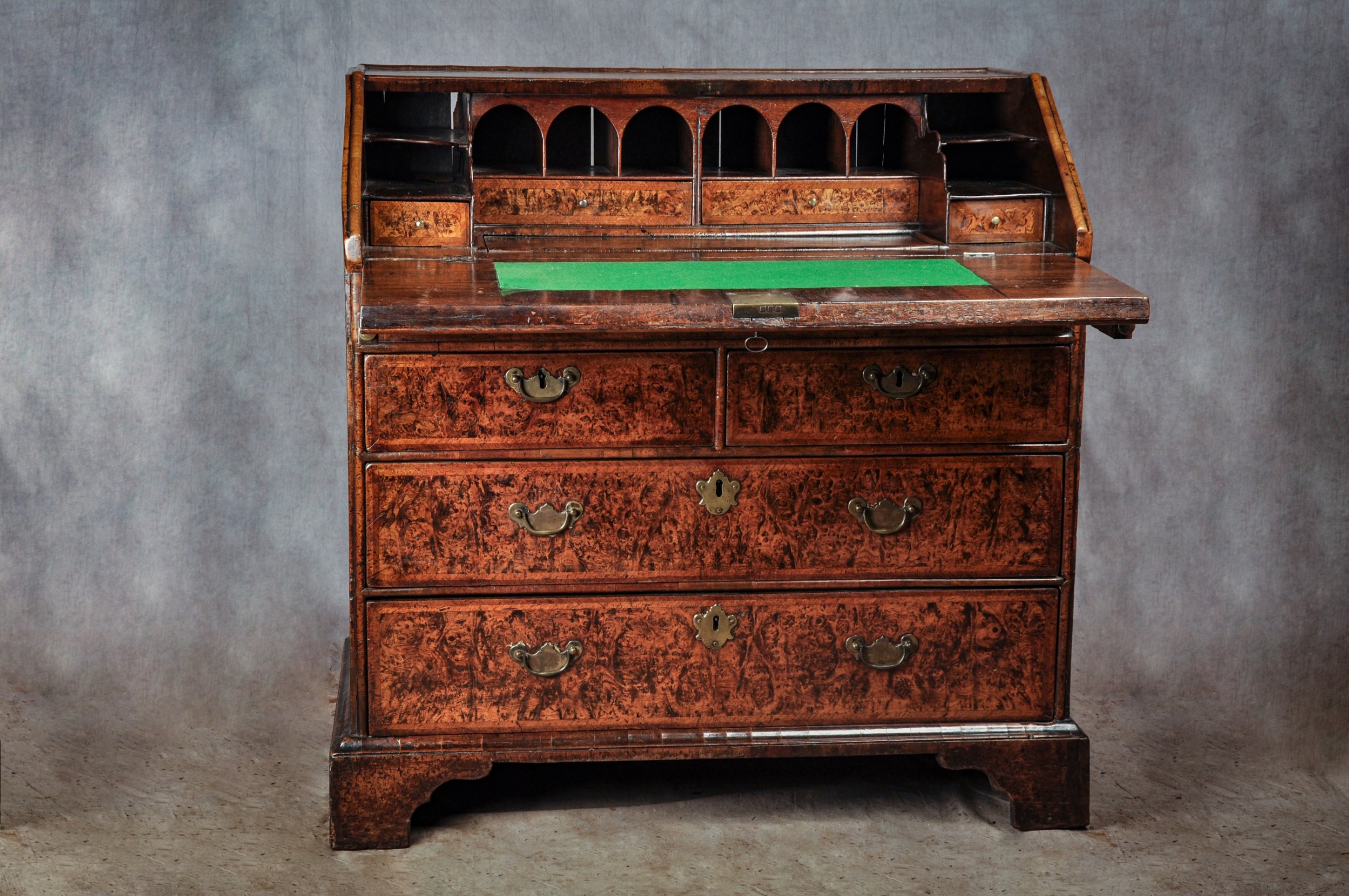
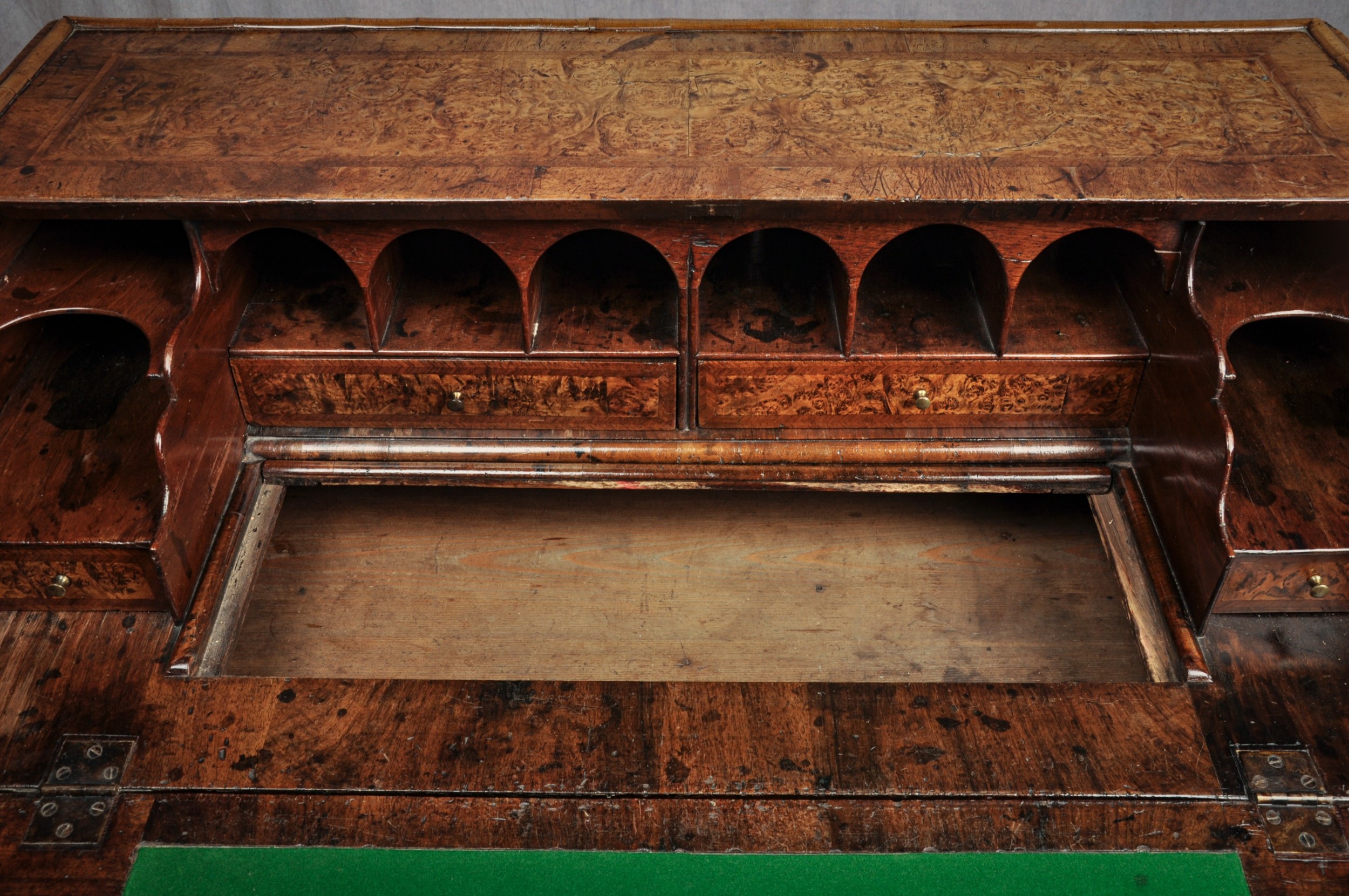
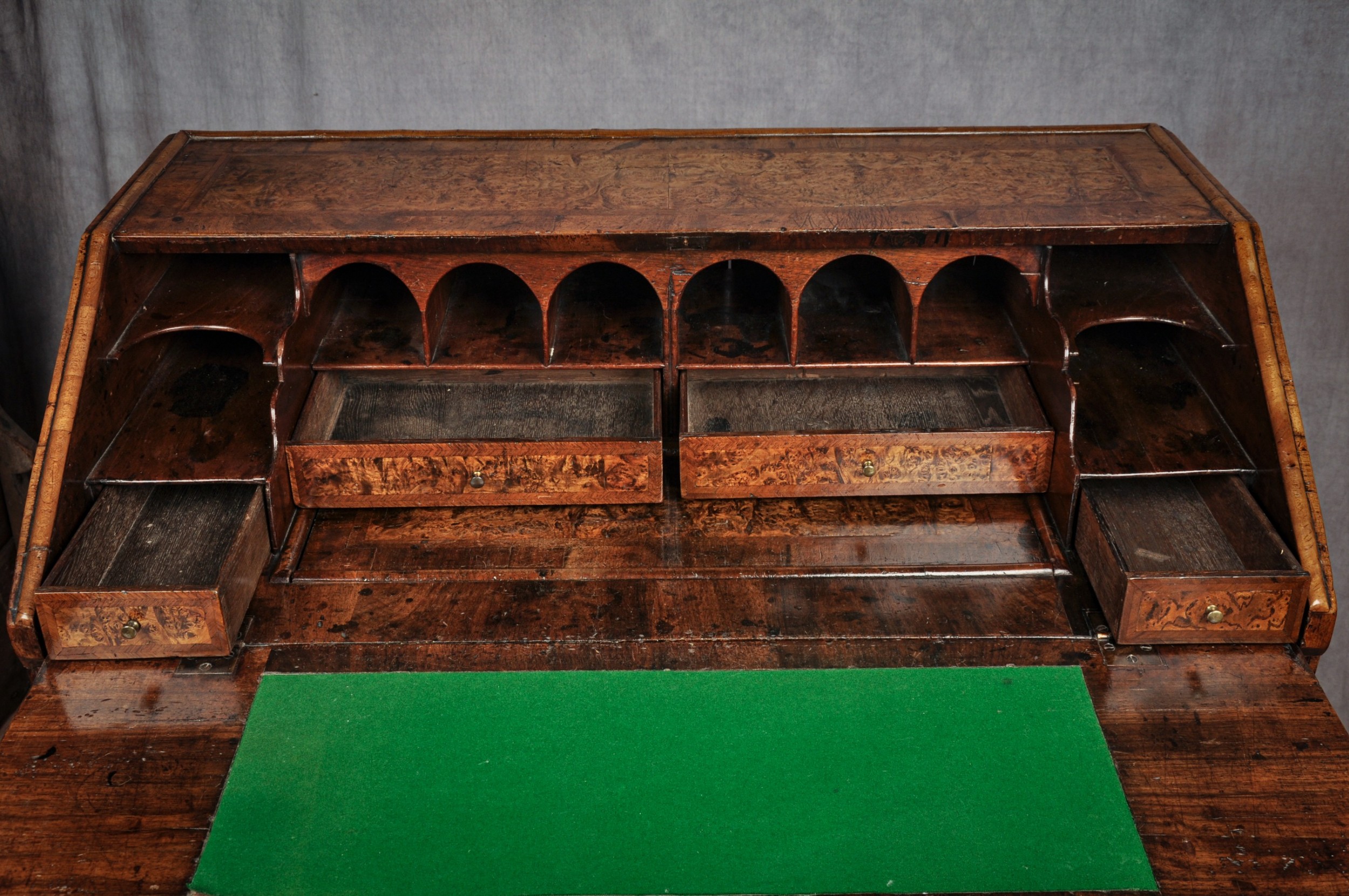
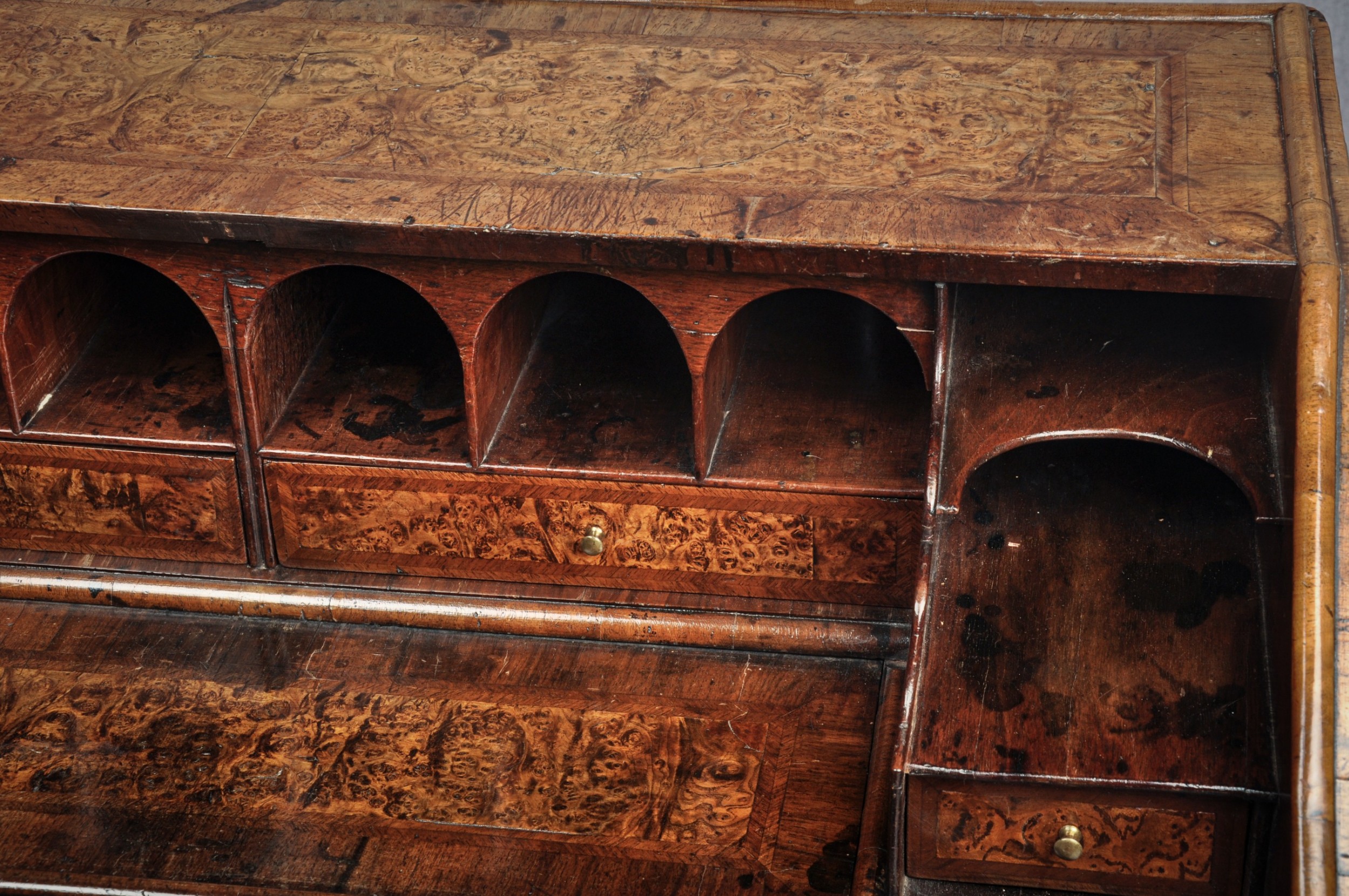
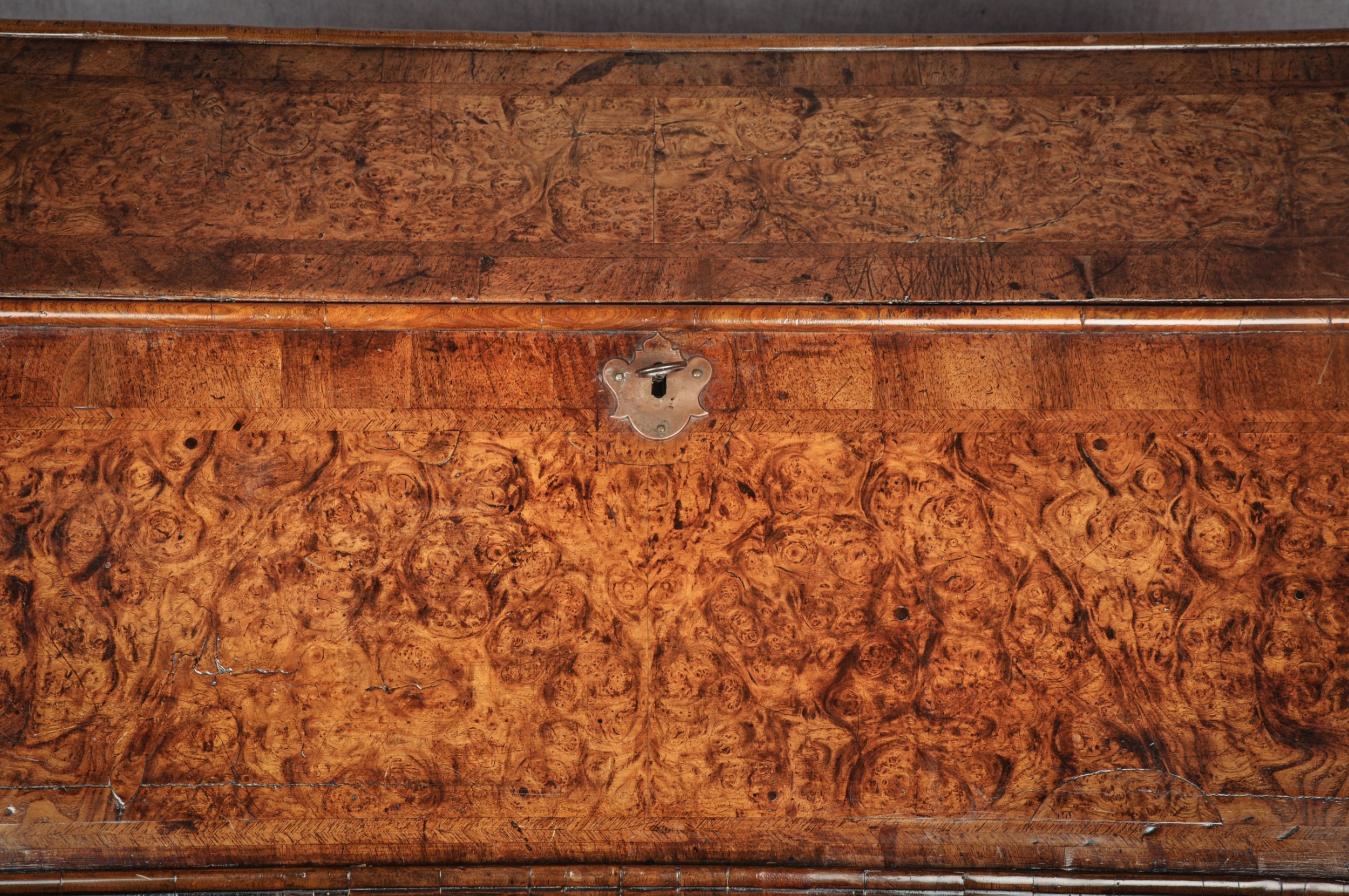
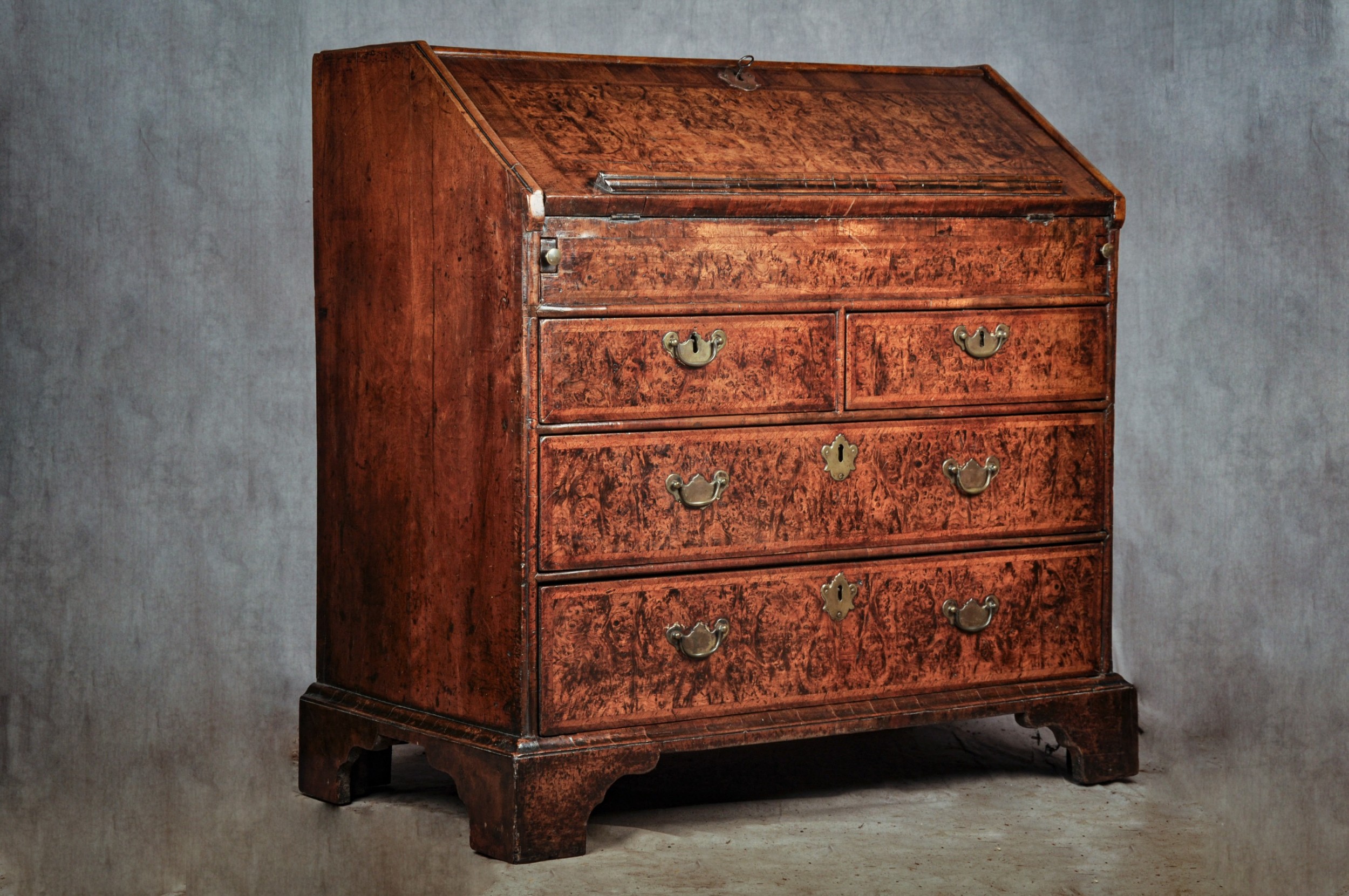
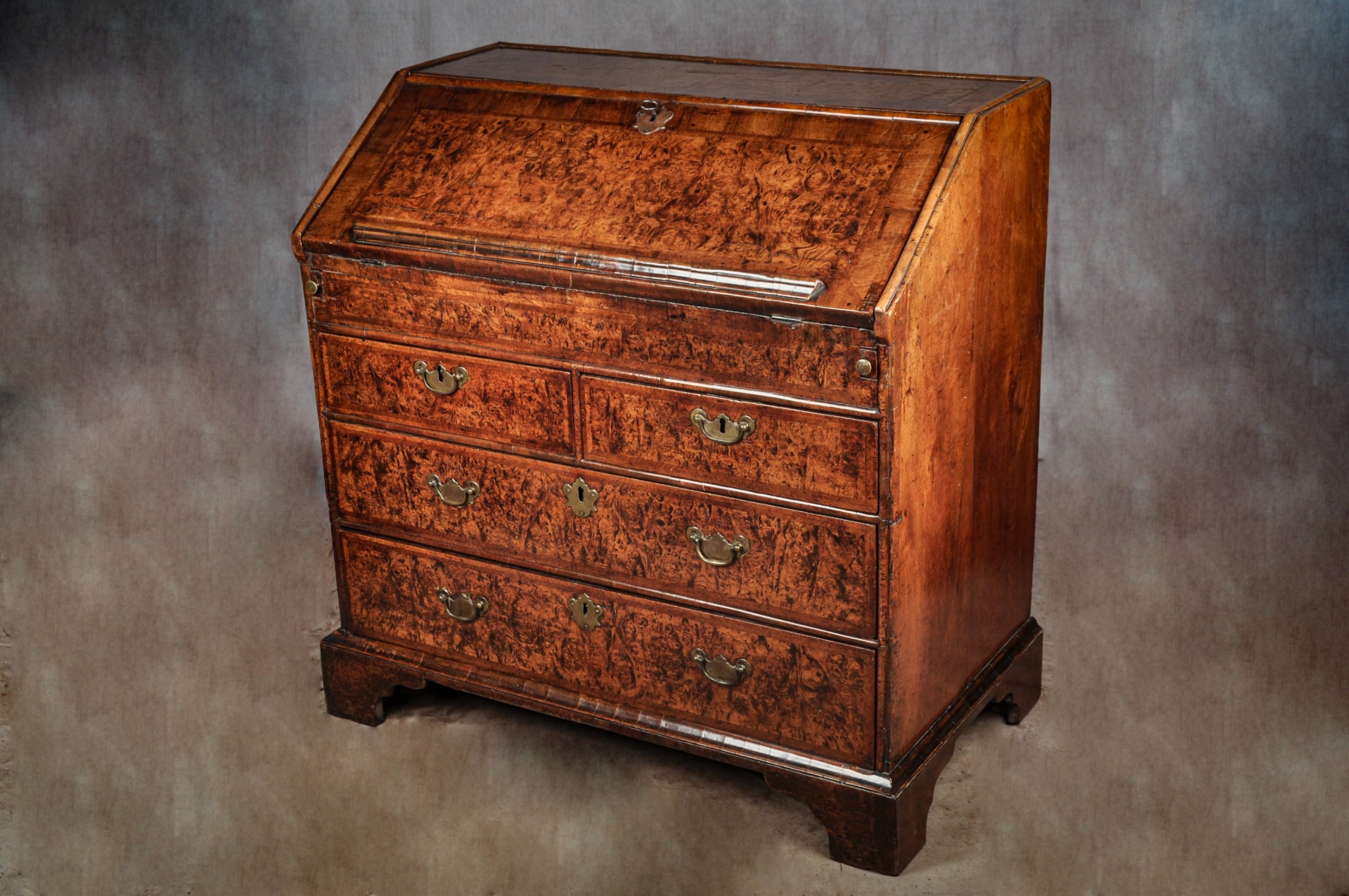
Holmes Antiques has dated this Antique Mulberry Bureau Desk to the 17th Century.
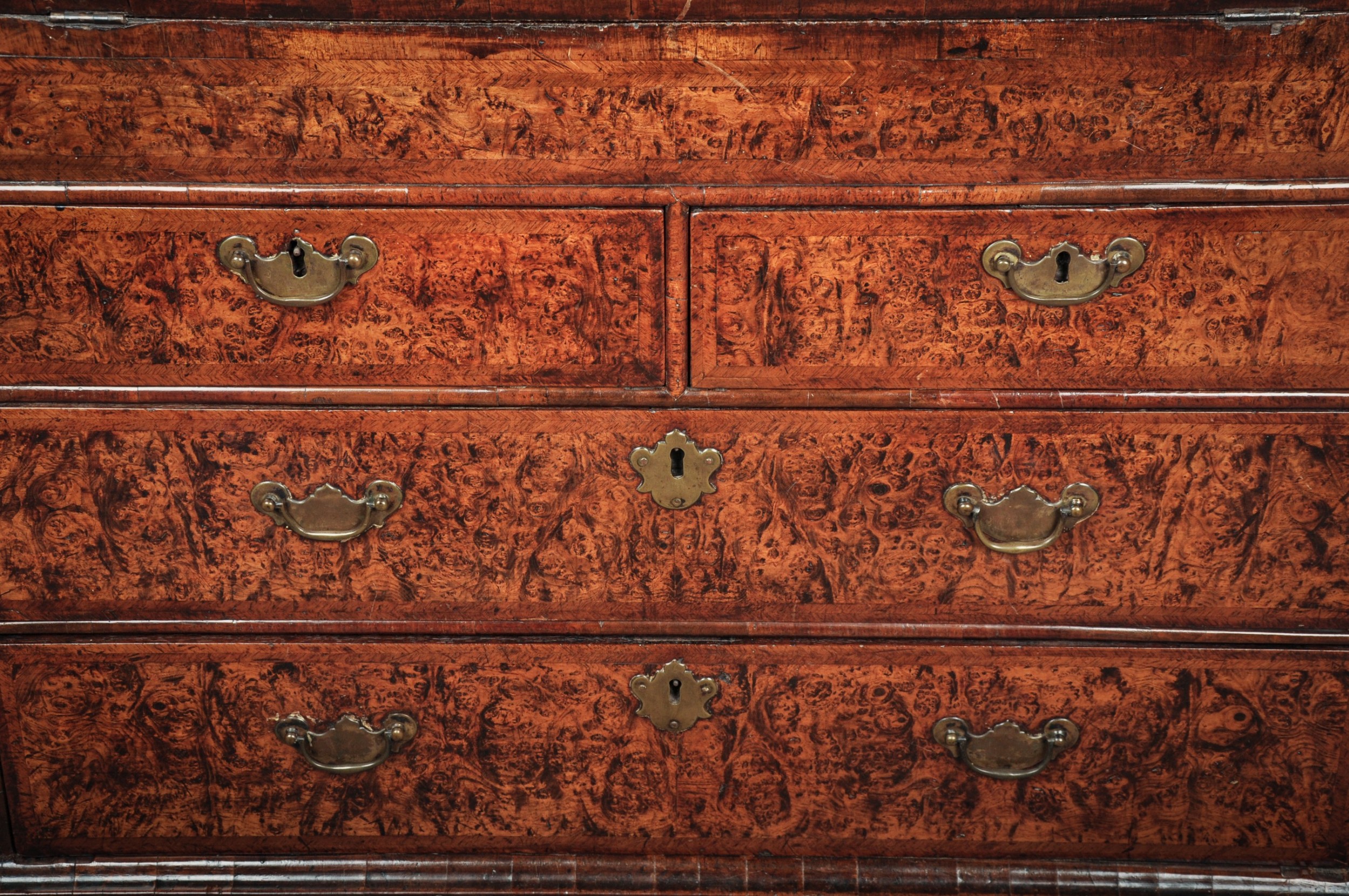
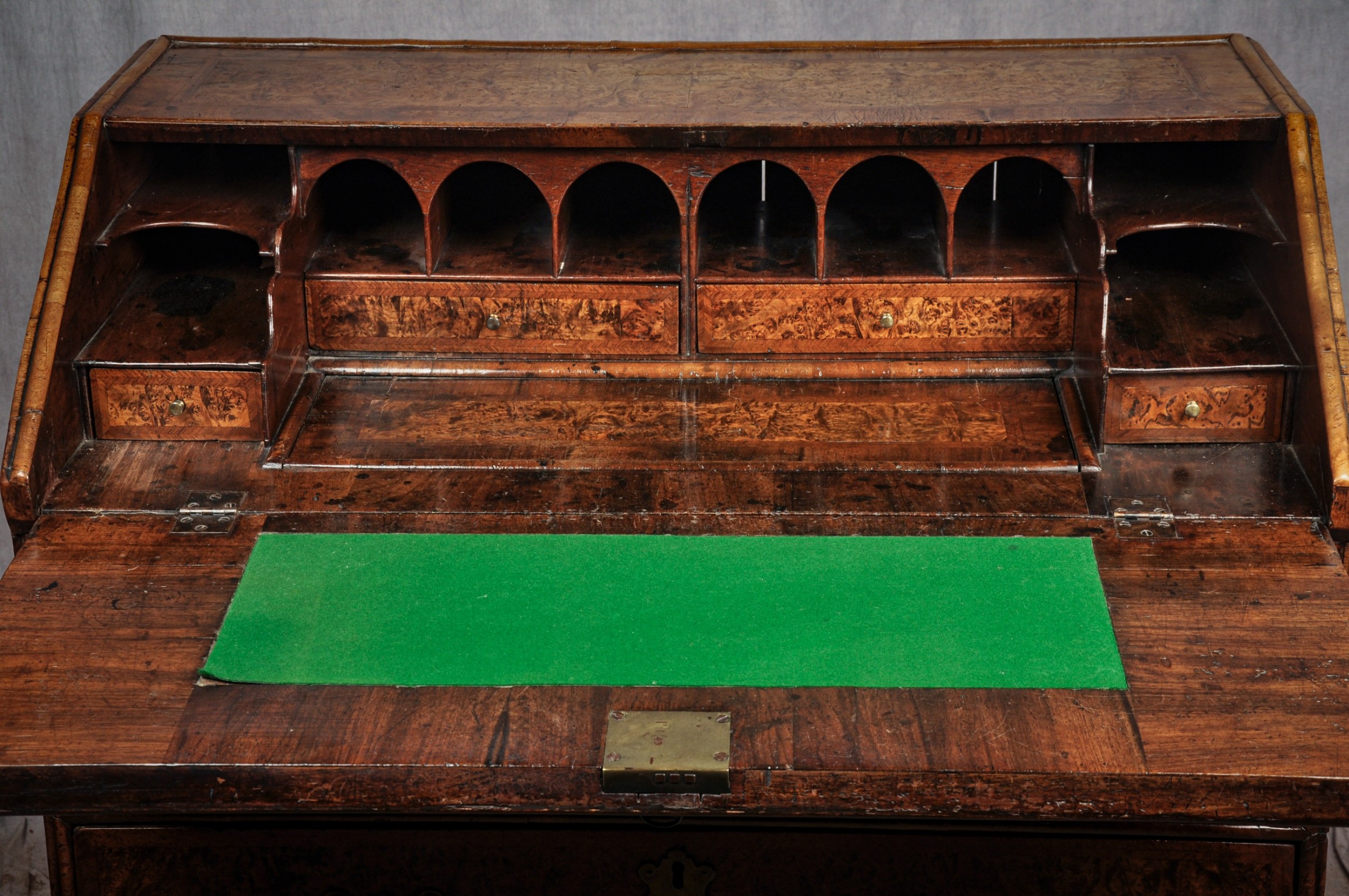
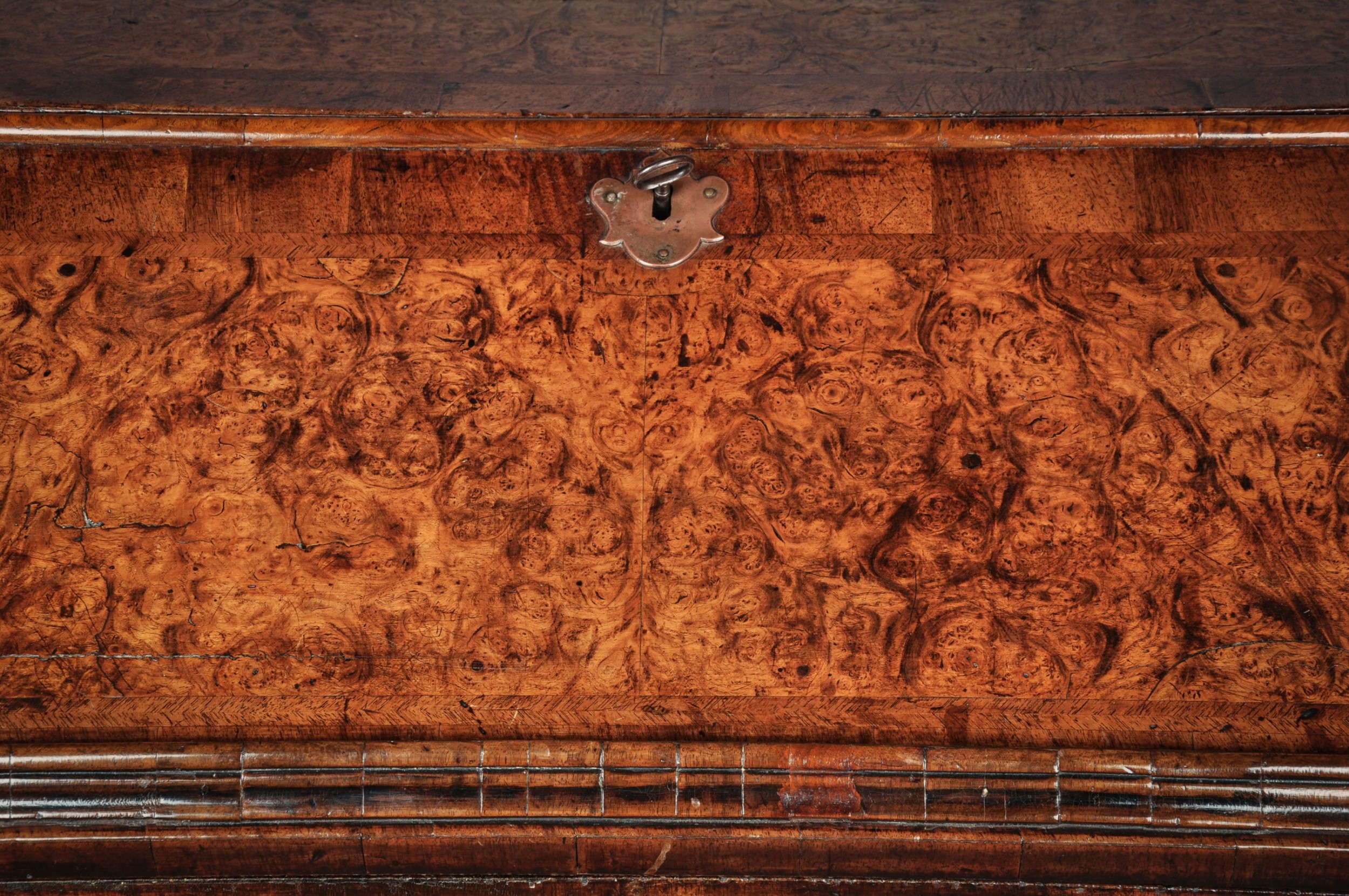
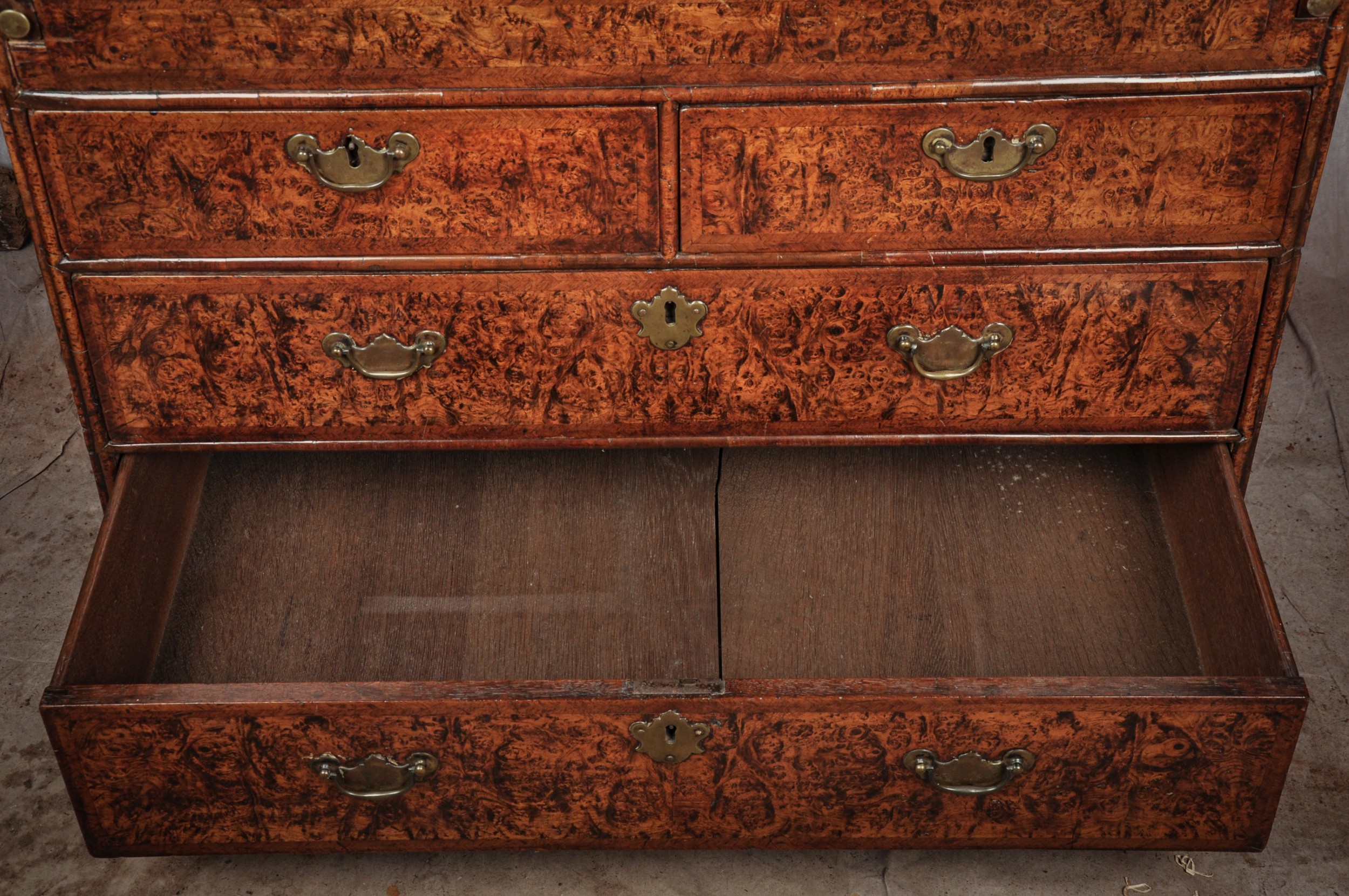
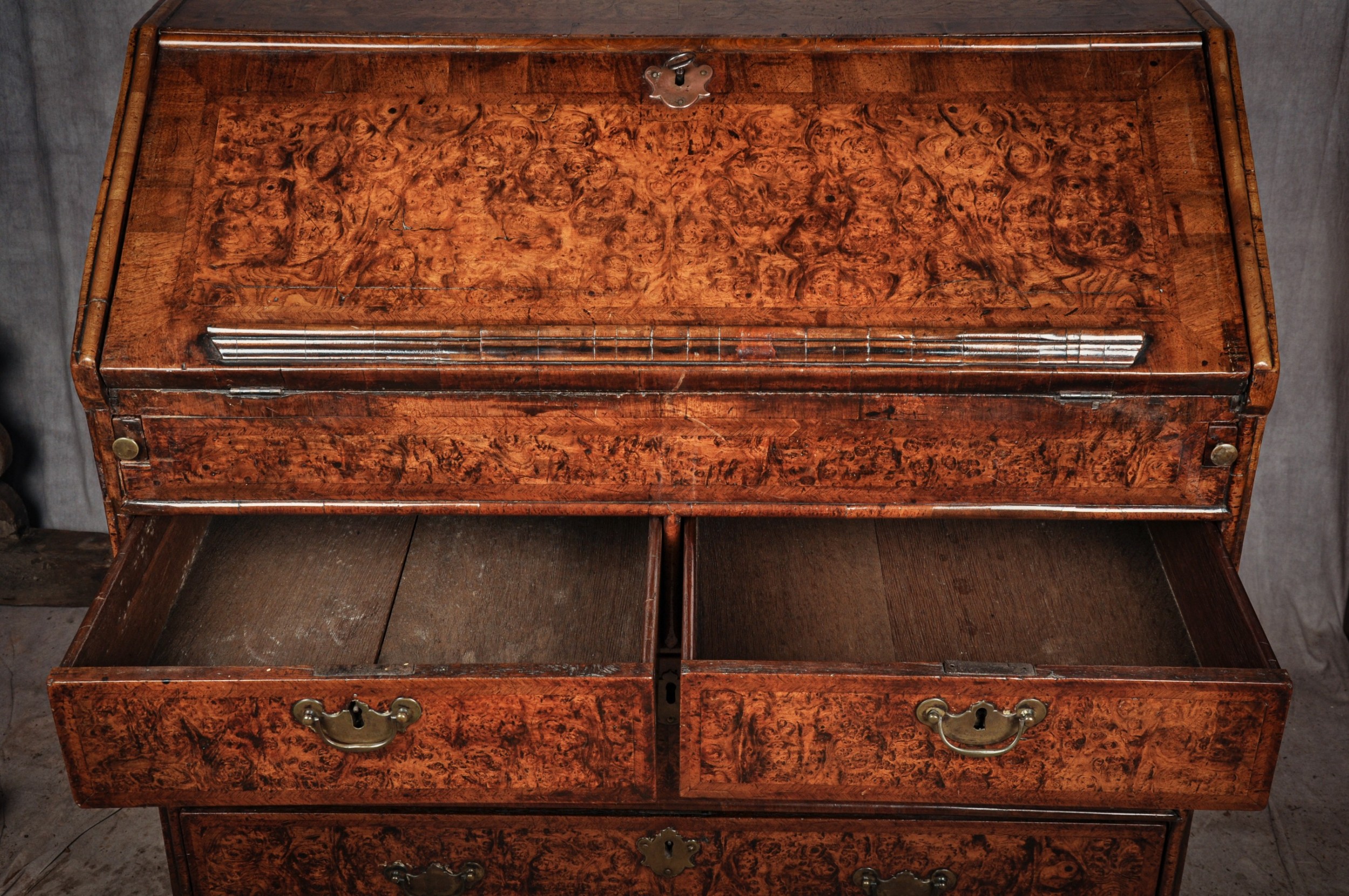
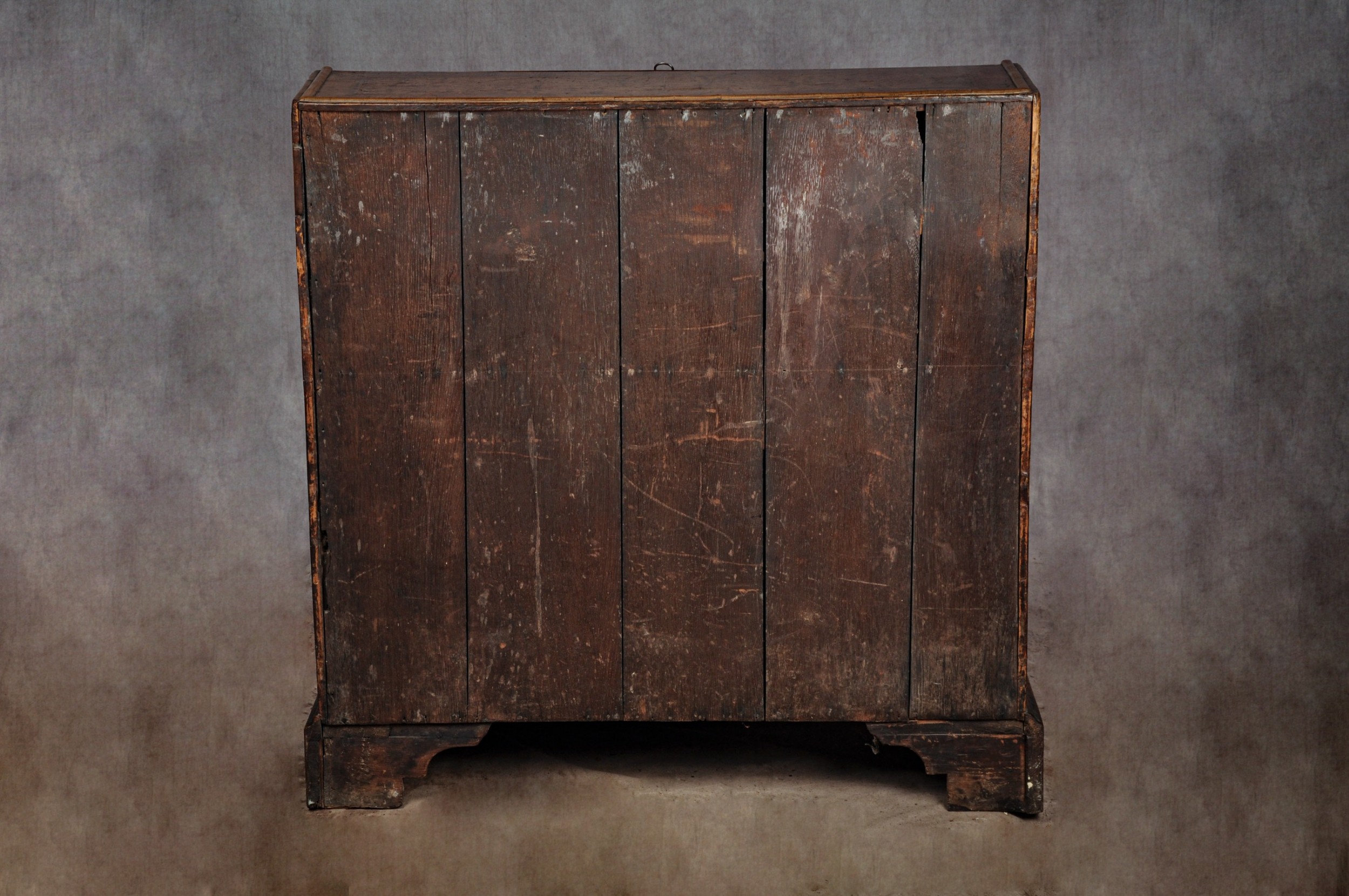
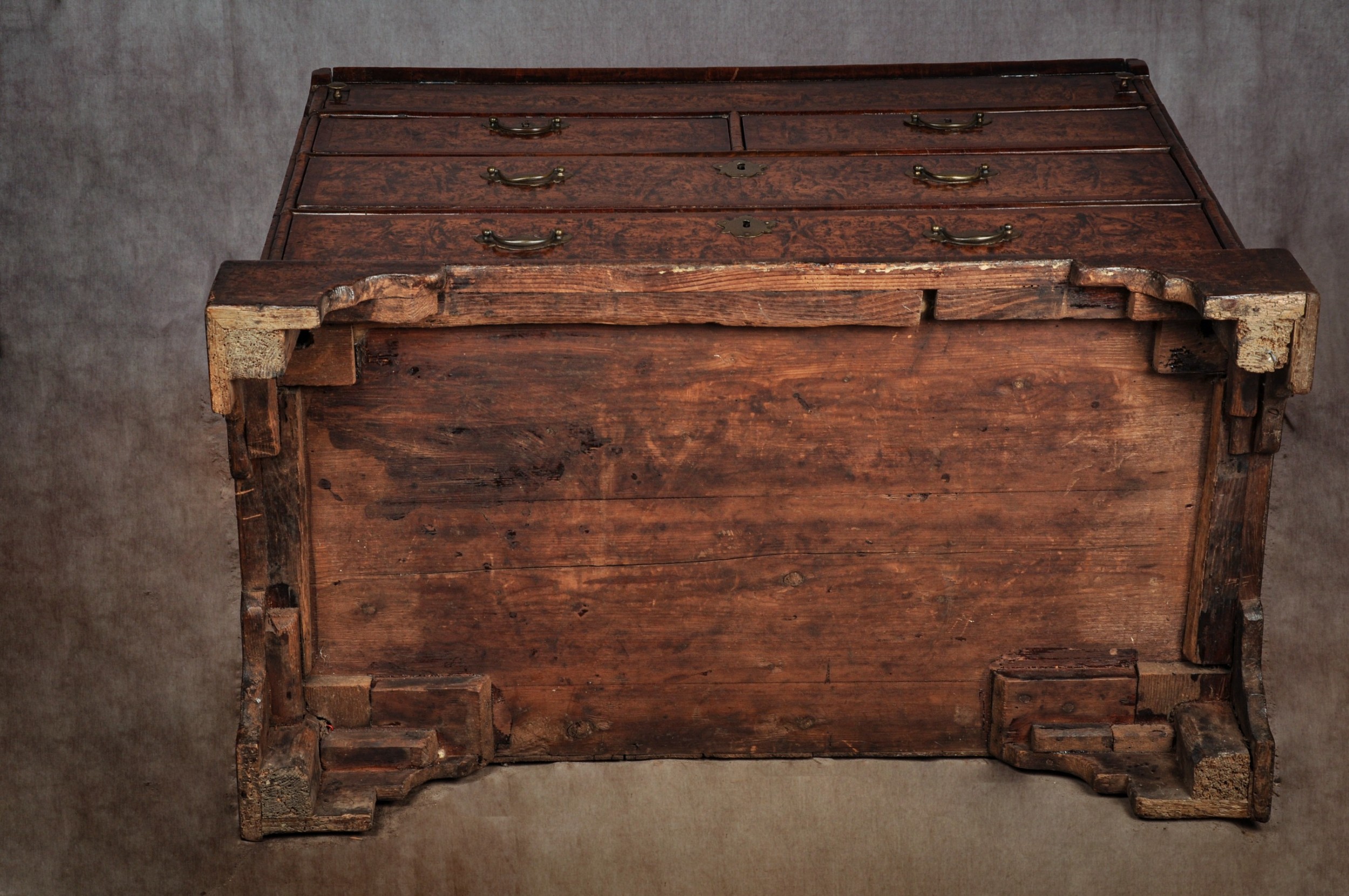
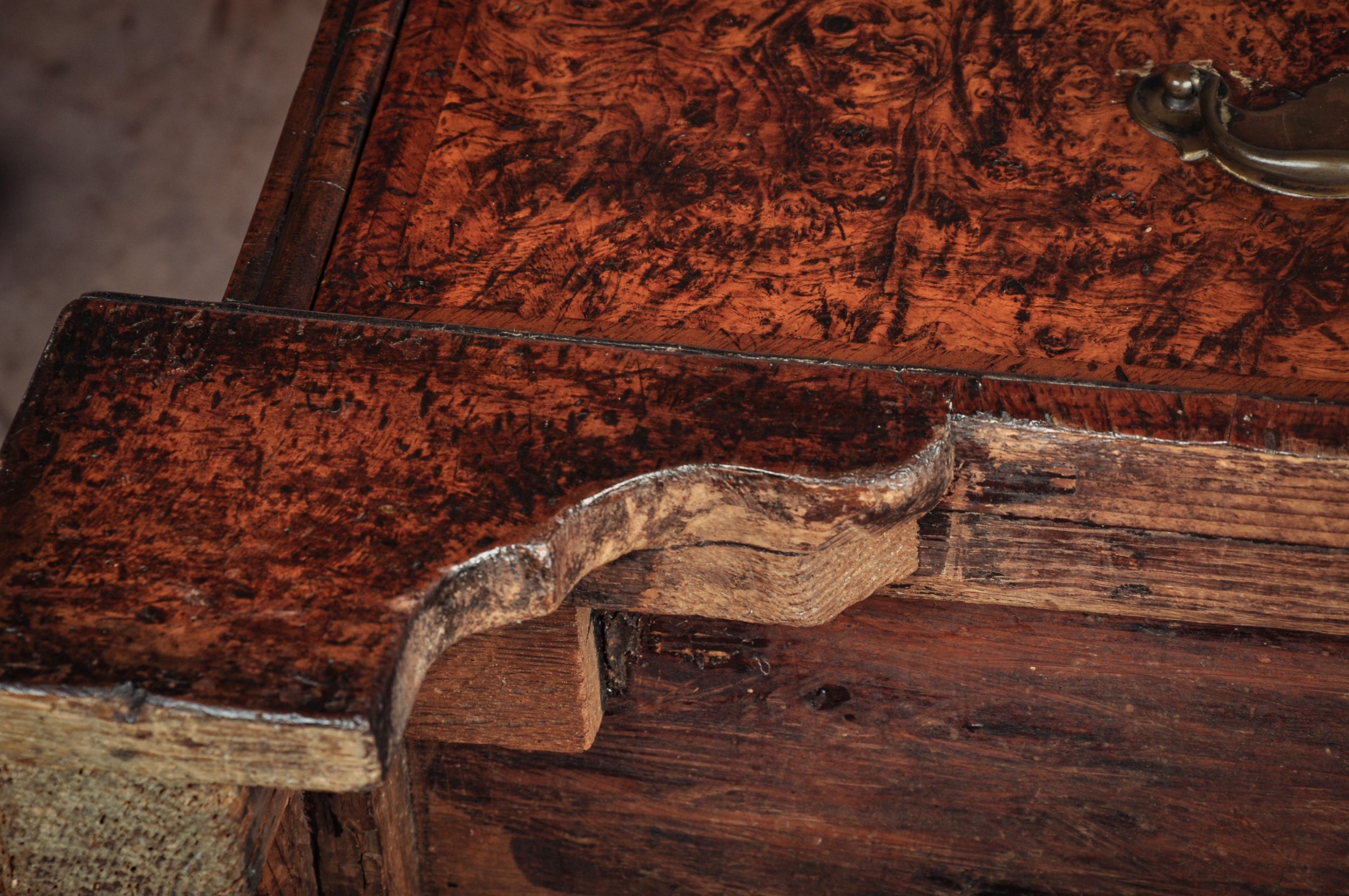
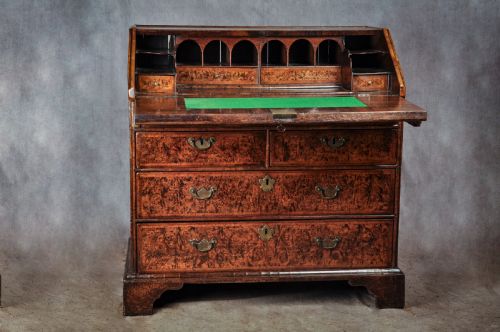
Veneered on Oak groundwork in matching Burr Ash veneers which have been treated in order to create a mottled effect known as Mulberry. This process was widely used in the late 17th and early 18th century by London cabinet makers Coxed & Woster. This piece is fitted with reading rest to the fall and sliding well to the interior, having feather banding to the borders and early single bead decoration to the drawer divisions. The Interior has five secret drawers, one behind each of the left and right drawers and three behind a hidden compartment to the front of the sliding well when opened. The ends and cross grain mouldings are made in Walnut, this is consistent with other documented pieces from this period thought to be made by Coxed and Woster.
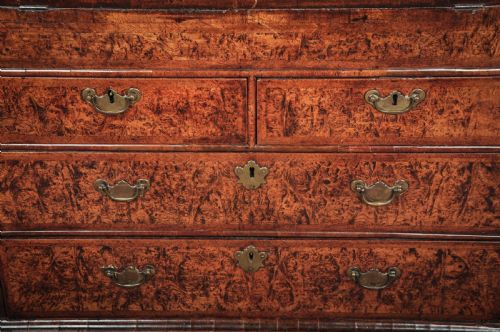
Much has been written about the firm Coxed & Woster who made Mulberry Furniture from around 1690 to 1720. There were obviously other makers of Mulberry although very little has survived in anything like good condition. In the past pieces have been described as Mulberry when in fact they are just burr veneers of one wood or another. This piece is a true Mulberry in every sense of the word.
There is an excellent article in Peg and ''Tails by Jack Plane who in my opinion understands Mulberry far better than a number of others who have written on the subject. https://pegsandtails.wordpress.com/2009/12/21/mulberry-shmul
Holmes Antiques has dated this Antique Mulberry Bureau Desk to the 17th Century.
Leading experts on early english oak, walnut and mahogany furniture. Established in 1932.
You can view the stock and full dealer information on the Holmes Antiques Profile Page
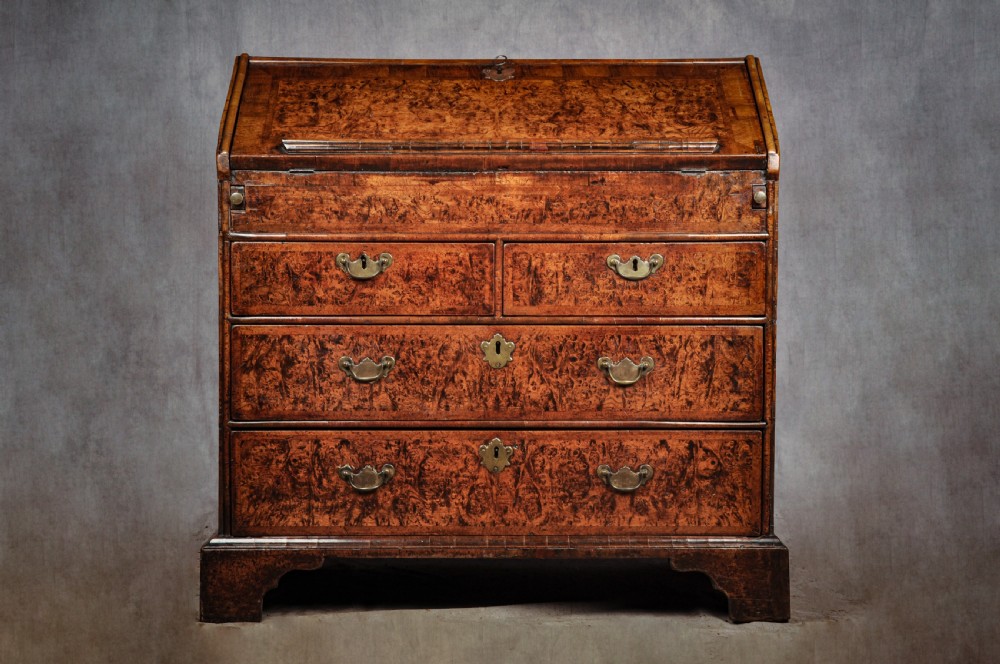
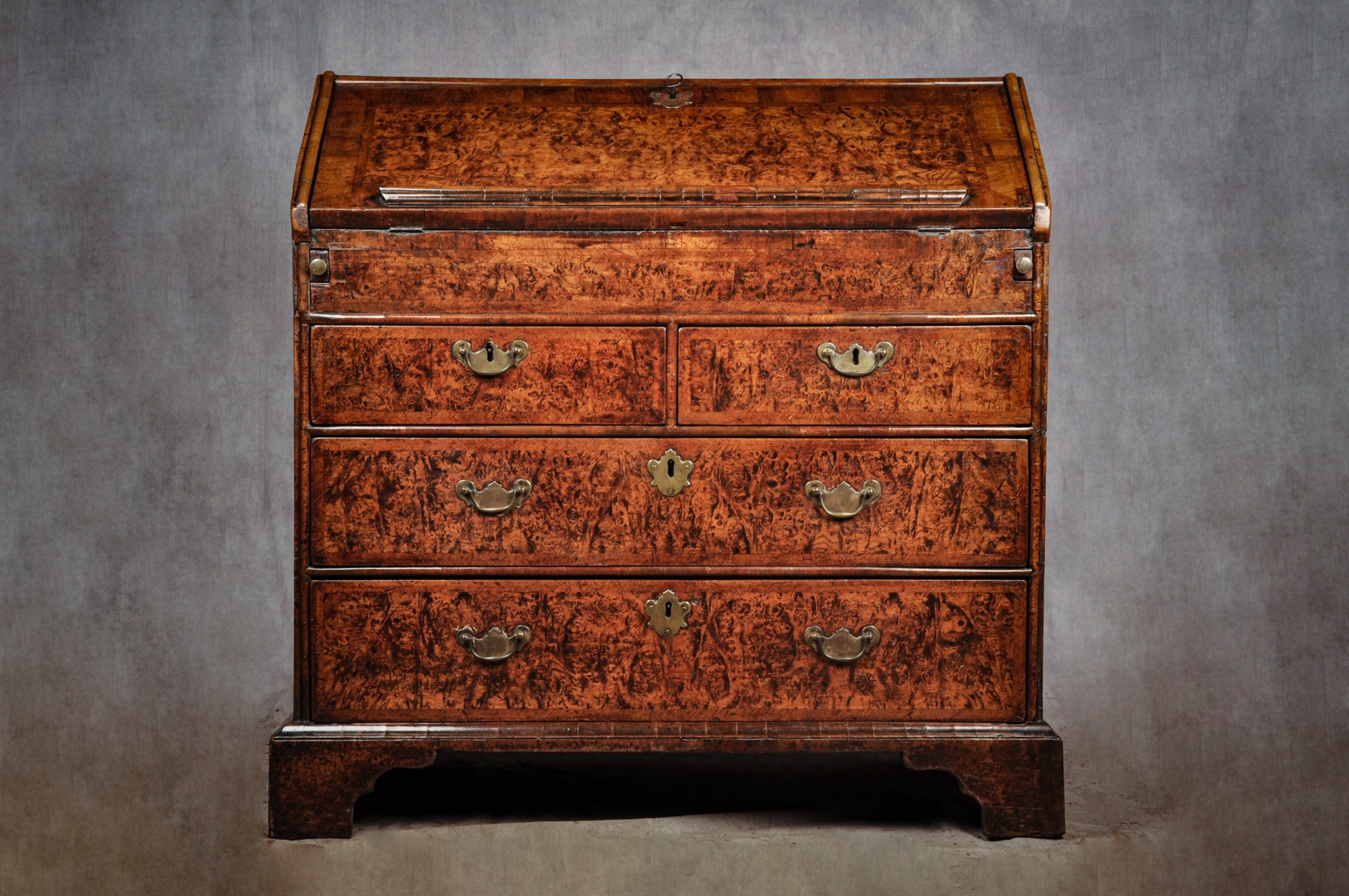
Fine 17th Century Mulberry Bureau in the Manner of Coxed & Woster