6,044  PAGES BROWSED TODAY PAGES TODAY • 0 ANTIQUES UPLOADED TODAYNEW ARRIVALS
GIFTS
LATEST STOCK
Sort Order
Items Per Page
Browse Categories
Sort order
Relevant Links
Items per page
ID #SA1120050
SOLD
Email Phone
Save
Rare Arthur Basil Reynolds Cotswold School Walnut Bureau
Sold by Mews Antiques
sold SA1120050
Sorry, but this item has been sold.
Mews Antiques

Mews Antiques

Sellingantiques Verified Since Jan 2025
Browse dealers 75 items
  • About Us
    We are are antique furniture dealers specialising in arts and crafts furniture but not solely.
Id #SA1120050
PDF SHARE
SAVE

Rare Arthur Basil Reynolds Cotswold School Walnut Bureau

1920 - 1940
Sold 10 June 2025 · Mews Antiques
This “Rare Arthur Basil Reynolds Cotswold School Walnut Bureau” found a buyer.

It was listed by Mews Antiques. Sold pieces stay on Sellingantiques as a record of what has passed through, and the next one is rarely far away.

Description

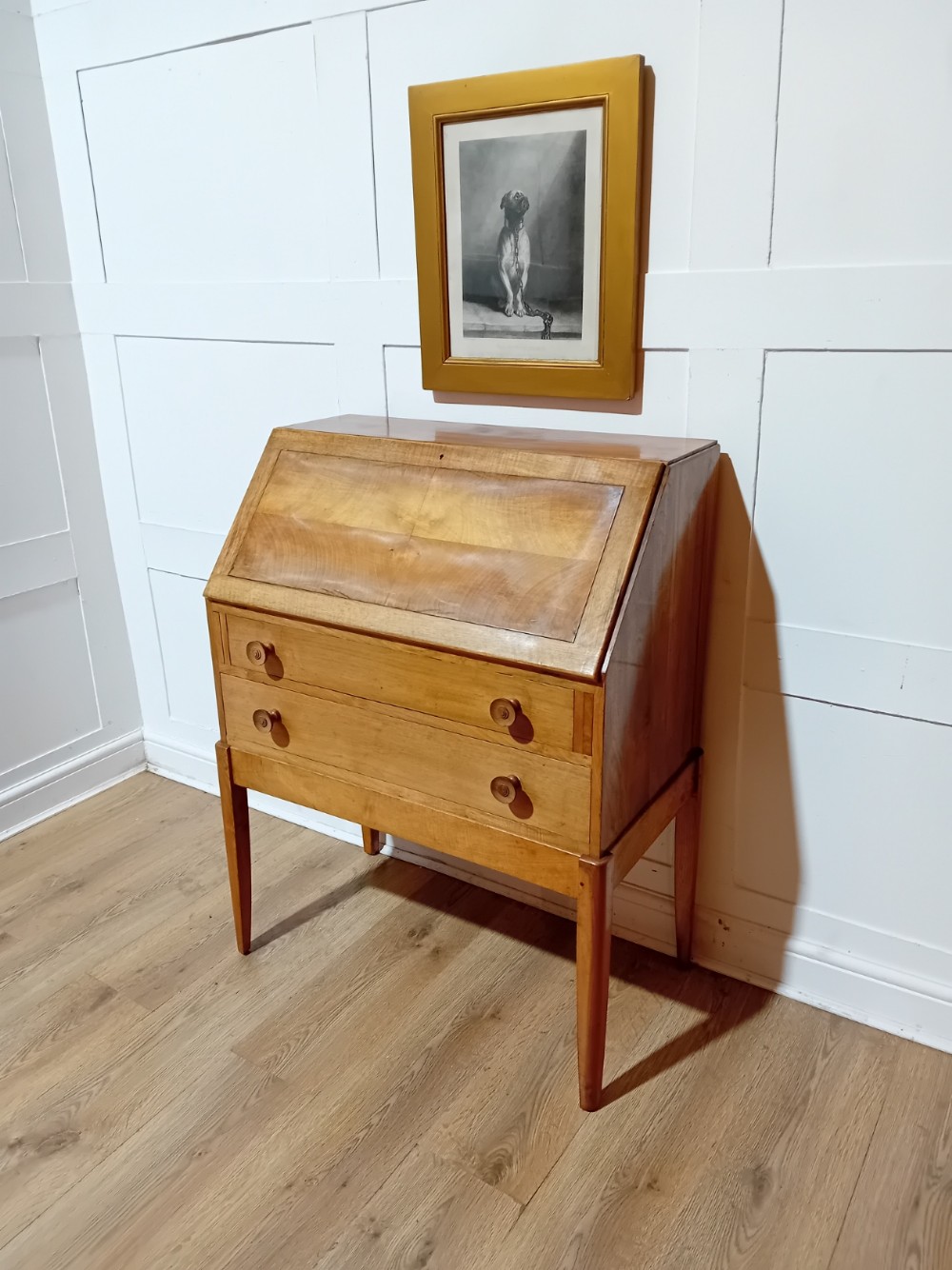
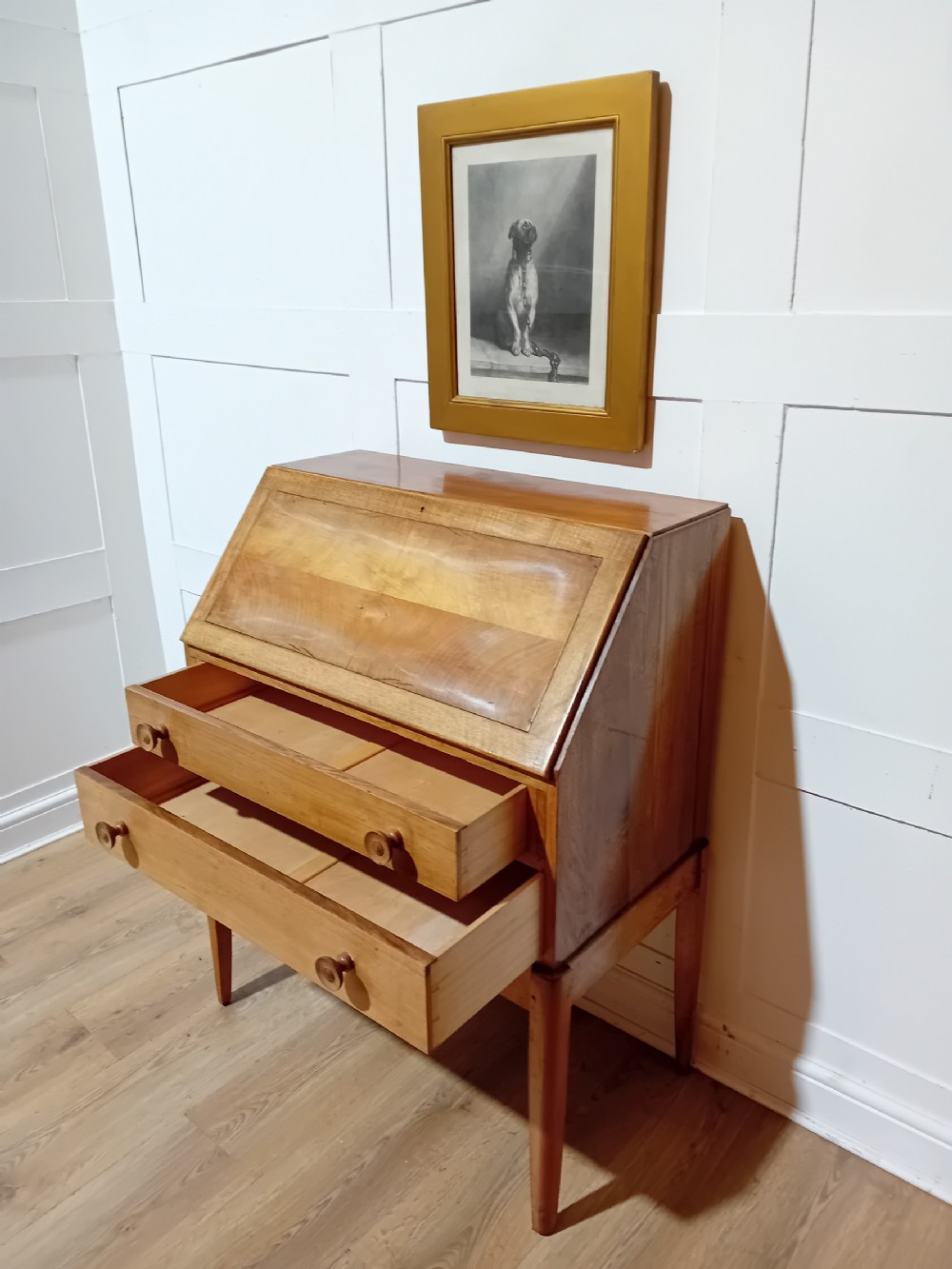
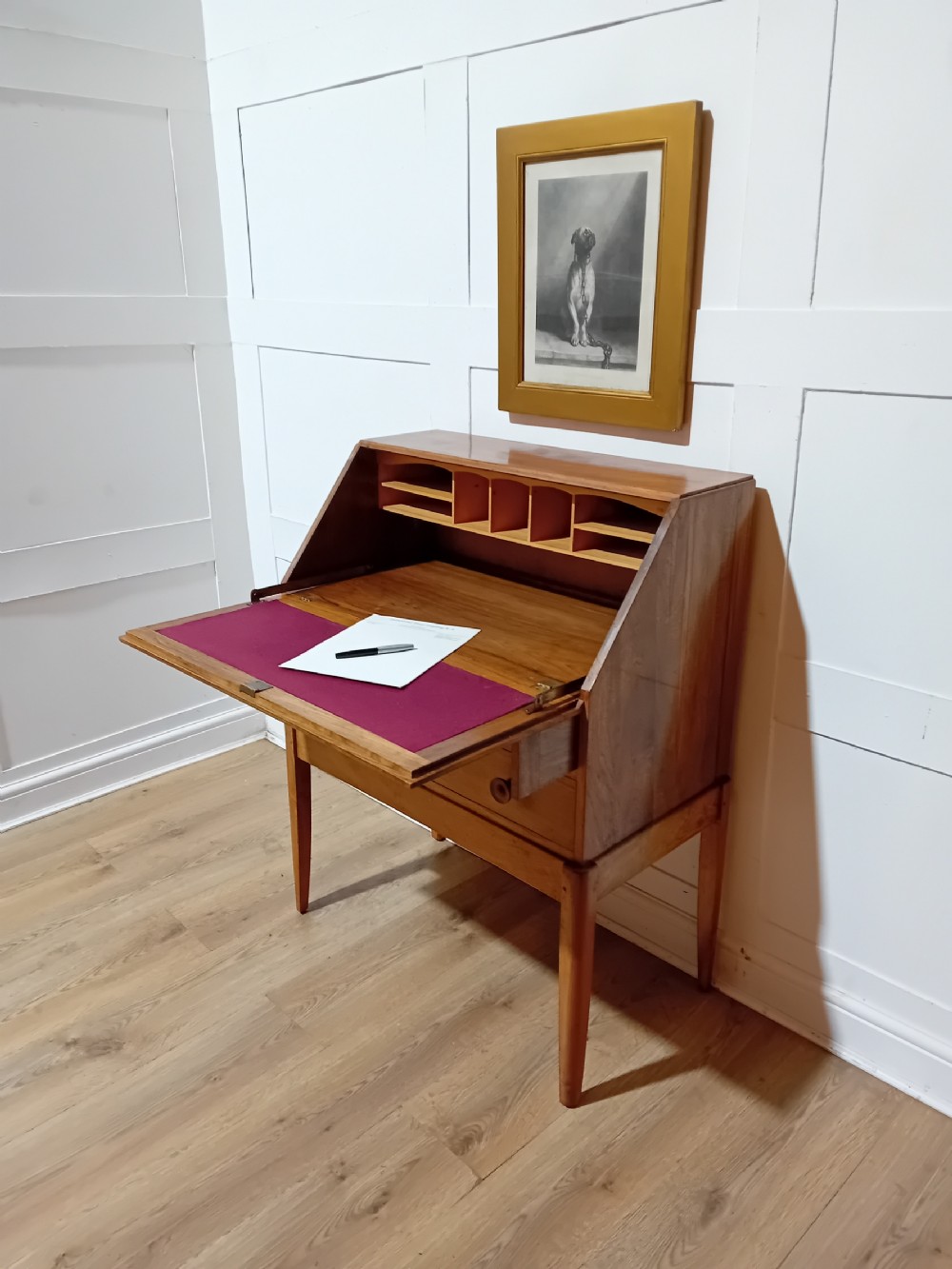
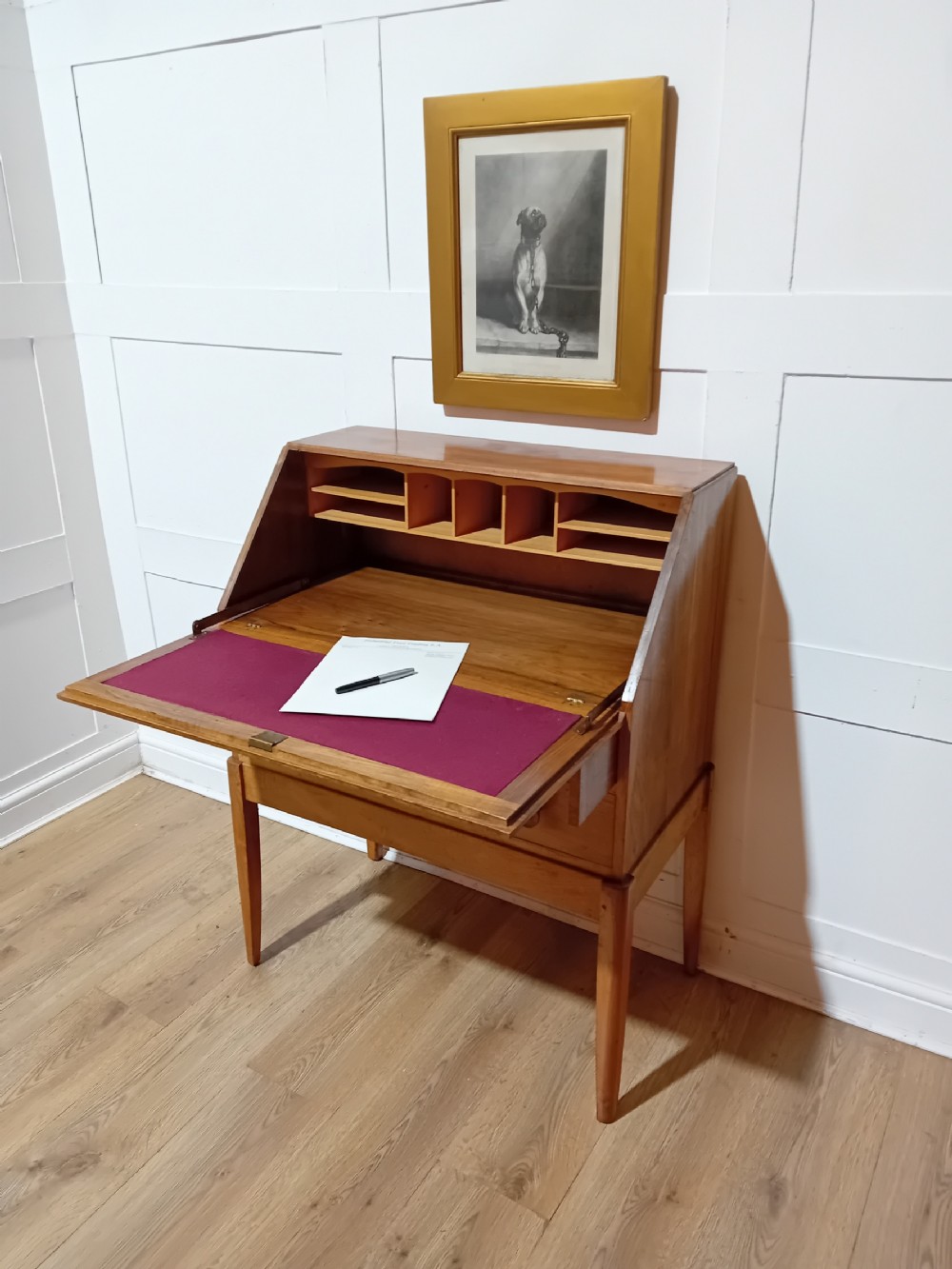
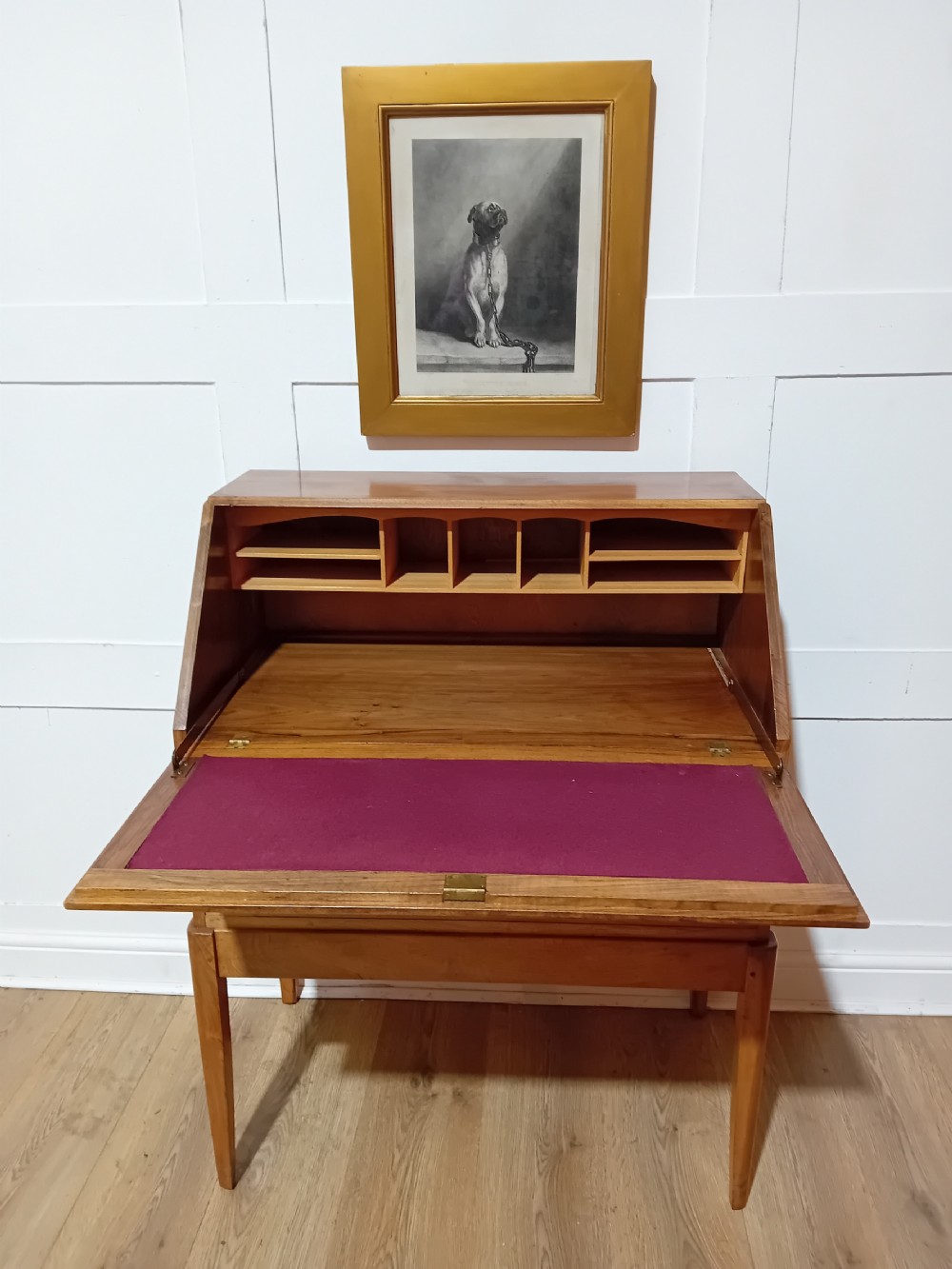
This is a Rare Solid Walnut, Cotswold School Bureau made by Arthur Basil Reynolds.

Reynolds of Ludlow was set up by Arthur Basil Reynolds in Ludlow between 1946 and 1980. The original name of this company being Reynolds Woodware Limited, this was changed to Reynolds of Ludlow in the early 1950s for marketing reasons, although the original name remained the official Limited name. Initially set up with four cabinetmakers, having equal shares, by the time his son Garth Reynolds took over in 1960, Arthur Reynolds had bought them out.

ARTHUR BASIL REYNOLDS

Arthur Reynolds was born in 1903 and raised as a Quaker. His cabinet making apprenticeship was served with Northover & Gilbert in Bridport Dorset. Following this he became a woodwork teacher for a year and then went on to work for Stanley Davis in Windmere who was a pupil of Ernest Gimson. With the depression in the 1920’s and 1930’s South Wales suffered greatly with the high unemployment in the coal fields, one particular area badly affected was Brynmawr. As relief, the Quakers or Society of Friends grouped together and started what was known as the Brynmawr Experiment to try to create employment and provide charity based welfare support. With this effort, a number of Quakers moved into the area to help with many companies being set up employing the local community. Arthur Reynolds went to work at the Paul Matt Furniture Company in South Wales in 1929, as assistant to Paul Matt the designer and manager who left in 1936. Whilst he did not receive any tuition as designer during this period, he was exposed to Paul Matt’s design ability for seven years as his assistant. He then ran this company as designer and manager until voluntary liquidation was declared due to the outbreak of World War II. He then joined the armed services during World War II being was assigned to the support unit for the eighth army battle group; he became a Major, received the M.B.E. for his services and was stationed in Italy for some of this time. Following the end of World War II Arthur Reynolds decided that he wanted to set up his own furniture making business. He travelled around the Midlands attempting to find a suitable location for his company in this area. There have been two given reasons by Garth Reynolds for the area choice, firstly his relation in Birmingham, Joseph Sykes who ran timber yards, secondly the central location for distribution to the country, which prompted Reynolds move from Dorset. Whenever any restrictions upon the control of timber were loosened, Joseph Sykes, Arthur Reynolds cousin would ring him straight away to inform him so he could obtain as much timber as legally possible. Initially he made furniture in Bromsgrove and Halesowen but finally found what he was looking for in Ludlow and set his business there. At the height of Reynolds of Ludlow’s production during the late 1950s and early 1960s, they employed 18 people in the company.

Arthur Reynolds exhibited in 1951 at the Festival of Britain Exhibition in the House and Garden Pavilion. His market aim was the middle to upper classes due to the cost of the furniture being produced. The firm also supplied some prestigious retailers like Heals, Dunns and won prestigious contracts e.g. GEC boardroom, Leicester University Hall and chairs for Southall Minster, all having the same market aim as their furniture. As the major driving force behind the firm, it was a major loss when Arthur Reynolds died suddenly after a short illness in 1960.

GARTH REYNOLDS

Garth Reynolds was born in 1933 and ran Reynolds of Ludlow from 1960 until it closed in 1980. He was apprenticed to his father in 1948 and learnt his cabinet making trade at Reynolds of Ludlow. Unlike his father, Garth Reynolds was not exposed to any design experience or formal training as a designer. Following his apprenticeshi

Date of Manufacture

Mews Antiques has dated this Cotswold School Walnut Bureau to the 1930s.

Physical Dimensions
Height
101cm (39.76")
Width
80cm (31.50")
Depth
47cm (18.50")
Reference Numbers
Sellingantiques Reference
SA1120050
Dealers Internal Reference
Stock No 1396
Dealers Notes

We are Antique Furniture Dealers and a family firm of 50 years. We are Based in Worcestershire with a 4000 sqft warehouse and south of Edinburgh we endeavour to deliver personally.

If you need to contact us please do not hesitate.

01905 923702

Mews Antiques

Description
This is a Rare Solid Walnut, Cotswold School Bureau made by Arthur Basil Reynolds.

Reynolds of Ludlow was set up by Arthur Basil Reynolds in Ludlow between 1946 and 1980. The original name of this company being Reynolds Woodware Limited, this was changed to Reynolds of Ludlow in the early 1950s for marketing reasons, although the original name remained the official Limited name.
“
Initially set up with four cabinetmakers, having equal shares, by the time his son Garth Reynolds took over in 1960, Arthur Reynolds had bought them out.
Mews Antiques
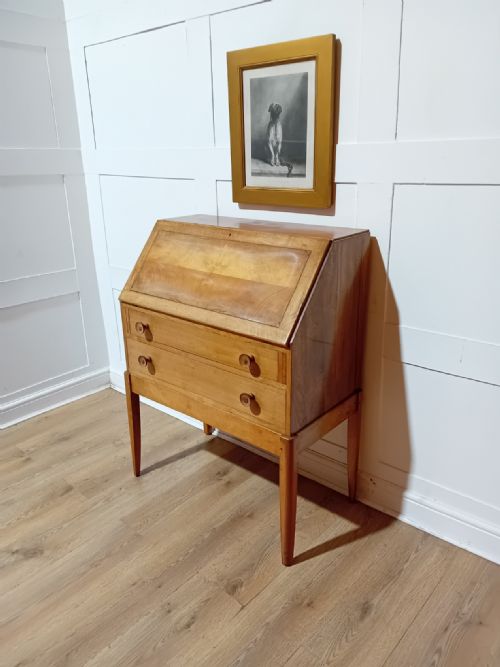
fig 1. A wooden slope-front bureau featuring a fitted fall-front writing flap above two drawers, supported by four tapered legs.
fig 1. Rare Arthur Basil Reynolds Cotswold School Walnut Bureau

ARTHUR BASIL REYNOLDS

Arthur Reynolds was born in 1903 and raised as a Quaker. His cabinet making apprenticeship was served with Northover & Gilbert in Bridport Dorset. Following this he became a woodwork teacher for a year and then went on to work for Stanley Davis in Windmere who was a pupil of Ernest Gimson. With the depression in the 1920’s and 1930’s South Wales suffered greatly with the high unemployment in the coal fields, one particular area badly affected was Brynmawr. As relief, the Quakers or Society of Friends grouped together and started what was known as the Brynmawr Experiment to try to create employment and provide charity based welfare support. With this effort, a number of Quakers moved into the area to help with many companies being set up employing the local community. Arthur Reynolds went to work at the Paul Matt Furniture Company in South Wales in 1929, as assistant to Paul Matt the designer and manager who left in 1936. Whilst he did not receive any tuition as designer during this period, he was exposed to Paul Matt’s design ability for seven years as his assistant. He then ran this company as designer and manager until voluntary liquidation was declared due to the outbreak of World War II. He then joined the armed services during World War II being was assigned to the support unit for the eighth army battle group; he became a Major, received the M.B.E. for his services and was stationed in Italy for some of this time. Following the end of World War II Arthur Reynolds decided that he wanted to set up his own furniture making business. He travelled around the Midlands attempting to find a suitable location for his company in this area. There have been two given reasons by Garth Reynolds for the area choice, firstly his relation in Birmingham, Joseph Sykes who ran timber yards, secondly the central location for distribution to the country, which prompted Reynolds move from Dorset. Whenever any restrictions upon the control of timber were loosened, Joseph Sykes, Arthur Reynolds cousin would ring him straight away to inform him so he could obtain as much timber as legally possible. Initially he made furniture in Bromsgrove and Halesowen but finally found what he was looking for in Ludlow and set his business there. At the height of Reynolds of Ludlow’s production during the late 1950s and early 1960s, they employed 18 people in the company.
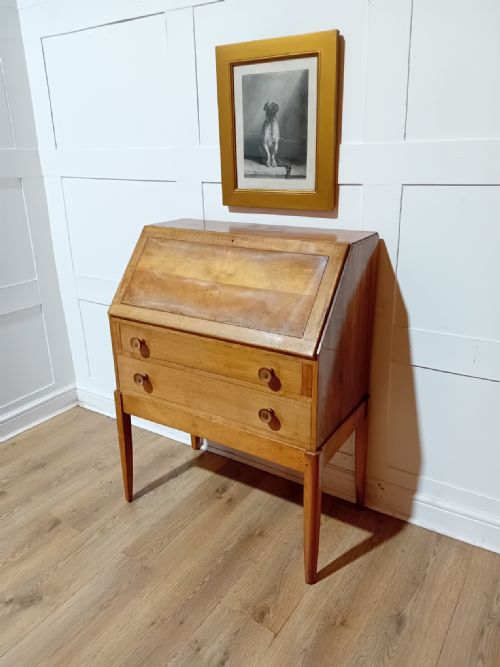
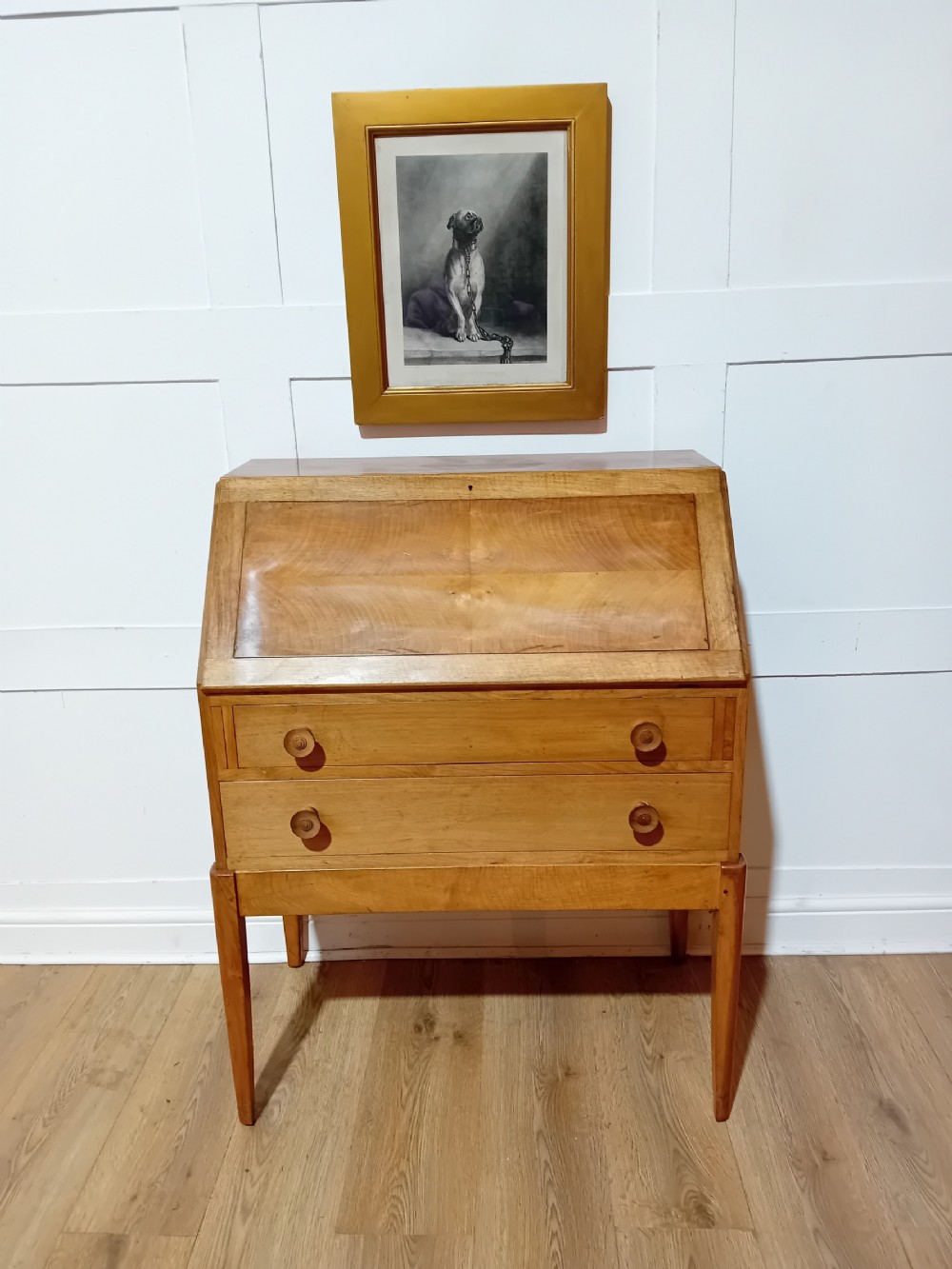
fig 2. A wooden slope-front bureau featuring a fitted fall-front writing flap above two drawers, supported by four tapered legs.
fig 2. Rare Arthur Basil Reynolds Cotswold School Walnut Bureau

Arthur Reynolds exhibited in 1951 at the Festival of Britain Exhibition in the House and Garden Pavilion. His market aim was the middle to upper classes due to the cost of the furniture being produced. The firm also supplied some prestigious retailers like Heals, Dunns and won prestigious contracts e.g. GEC boardroom, Leicester University Hall and chairs for Southall Minster, all having the same market aim as their furniture. As the major driving force behind the firm, it was a major loss when Arthur Reynolds died suddenly after a short illness in 1960.
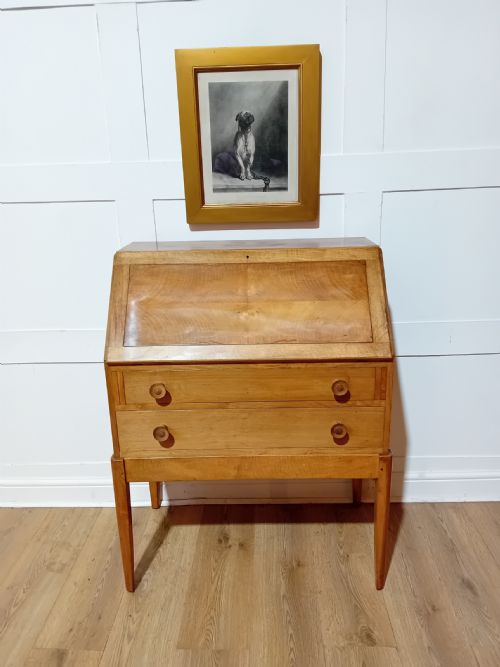
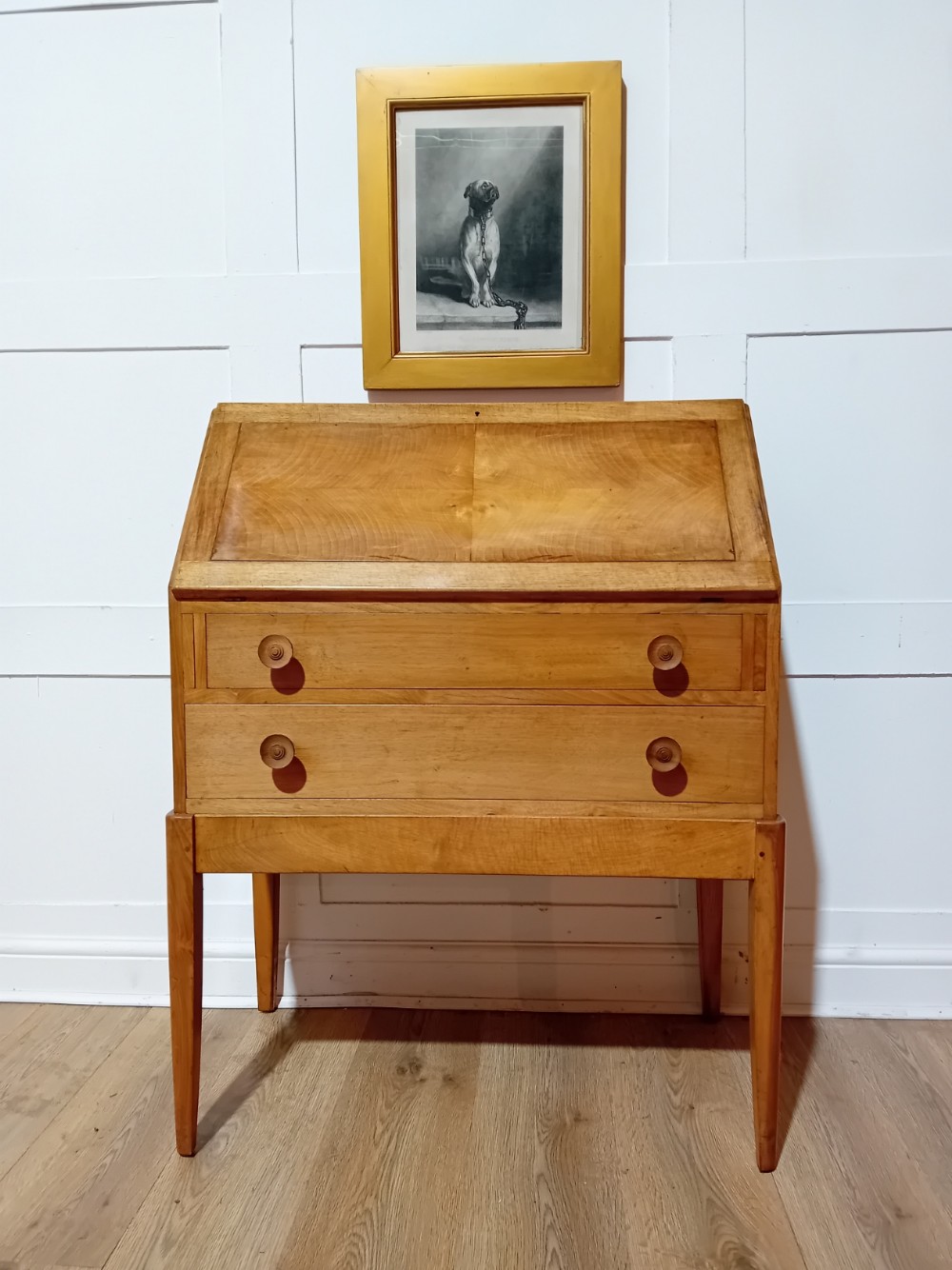
fig 3. A wooden slope-front bureau featuring a fitted fall-front writing flap above two drawers, supported by four tapered legs.
fig 3. Rare Arthur Basil Reynolds Cotswold School Walnut Bureau

GARTH REYNOLDS

Garth Reynolds was born in 1933 and ran Reynolds of Ludlow from 1960 until it closed in 1980. He was apprenticed to his father in 1948 and learnt his cabinet making trade at Reynolds of Ludlow. Unlike his father, Garth Reynolds was not exposed to any design experience or formal training as a designer. Following his apprenticeshi

Date of Manufacture

Mews Antiques has dated this Cotswold School Walnut Bureau to the 1930s.

Height
101cm (39.76")
Width
80cm (31.50")
Depth
47cm (18.50")
Reference Numbers
Sellingantiques Ref
SA1120050
Dealers Internal Ref
Stock No 1396
Mews Antiques
Mews Antiques
Sellingantiques verified Since Jan 2025

We are are antique furniture dealers specialising in arts and crafts furniture but not solely.

Dealer Profile

You can view the stock and full dealer information on the Mews Antiques Profile Page
PDF SHARE
SAVE
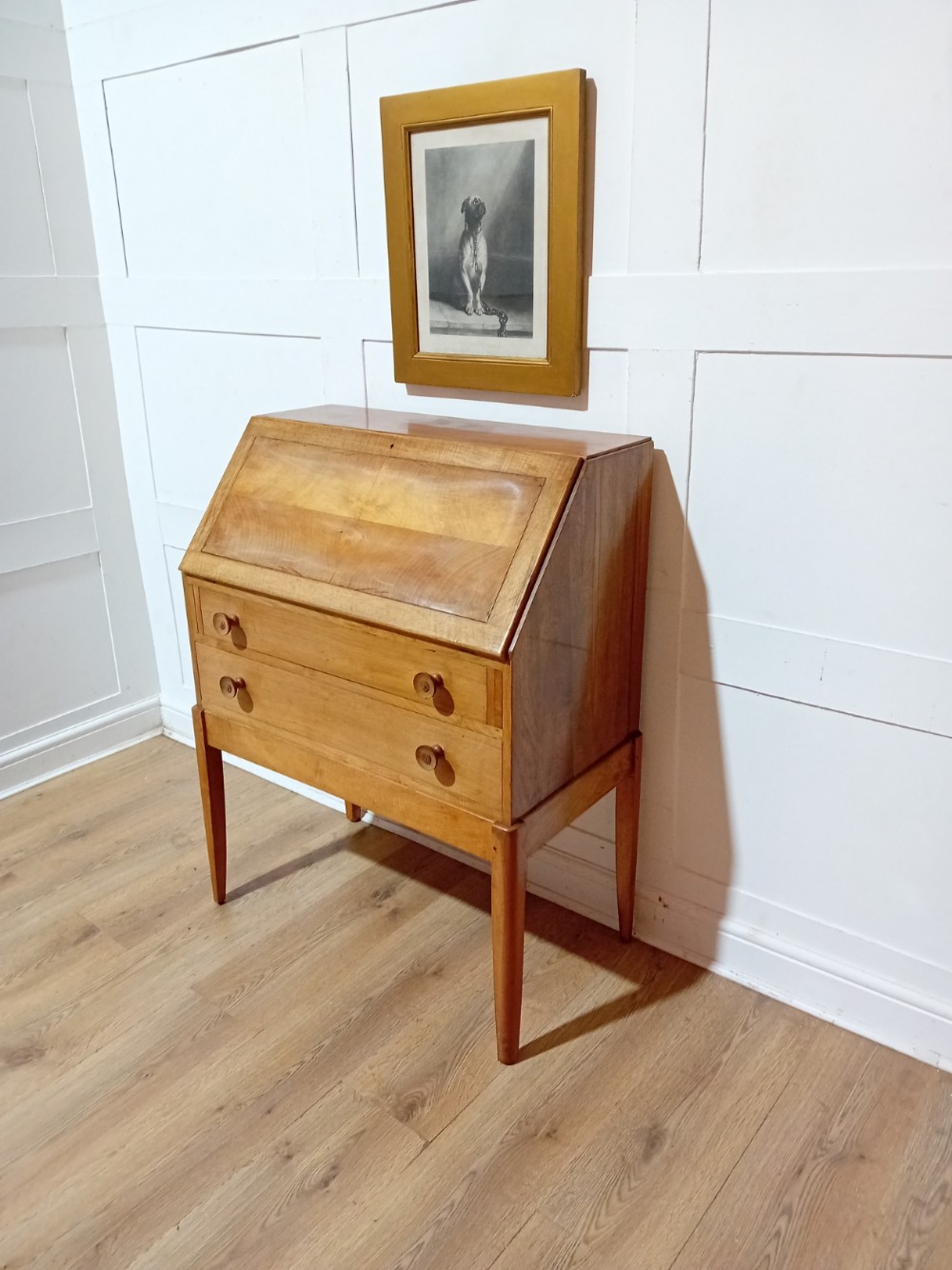
A wooden slope-front bureau featuring a fitted fall-front writing flap above two drawers, supported by four tapered legs. SOLD6+ MONTHS AGO
1 / 10
Archive I A wooden slope-front bureau featuring a fitted fall-front writing flap above two drawers, supported by four tapered legs. SOLD6+ MONTHS AGO

Rare Arthur Basil Reynolds Cotswold School Walnut Bureau
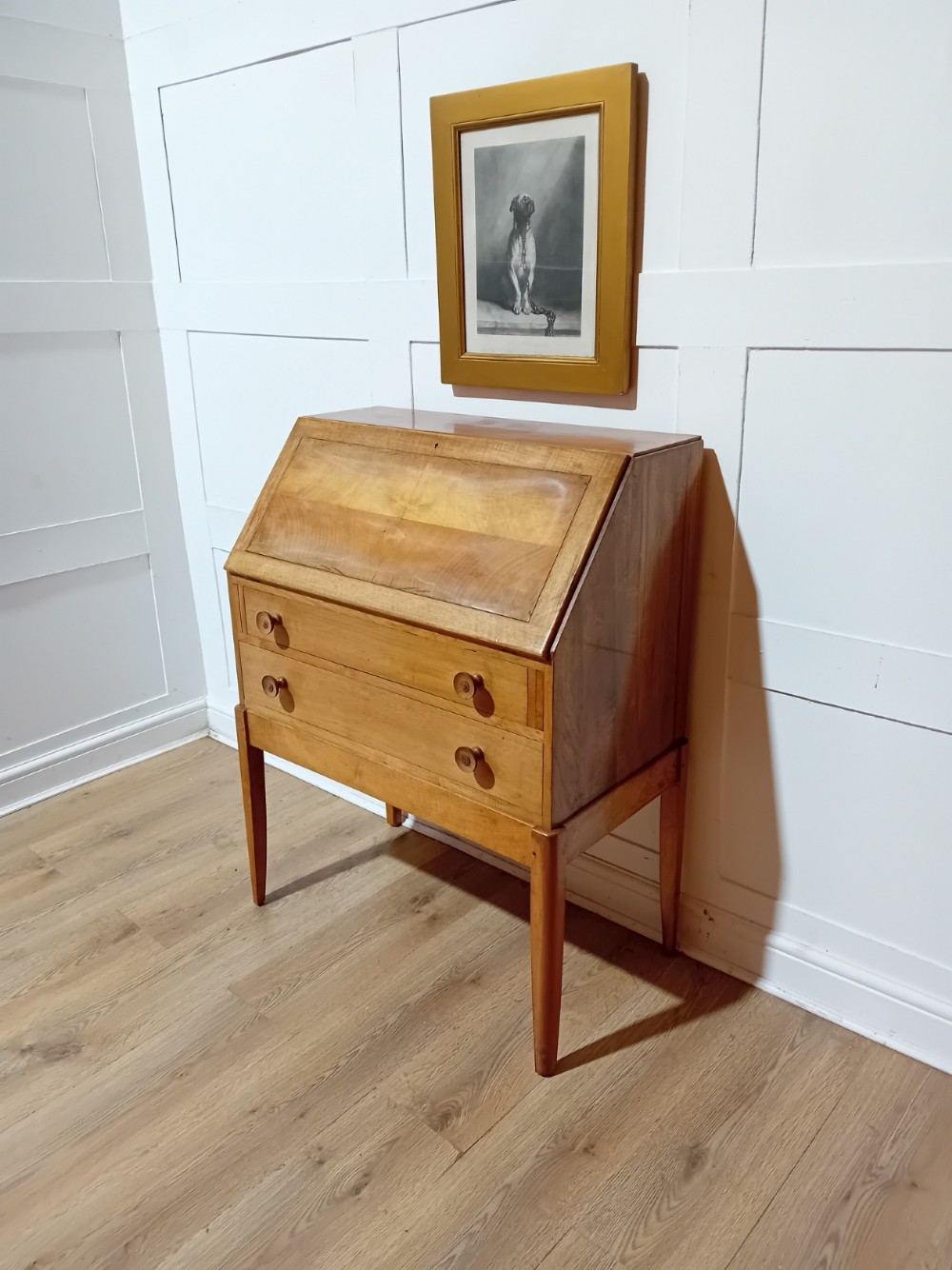
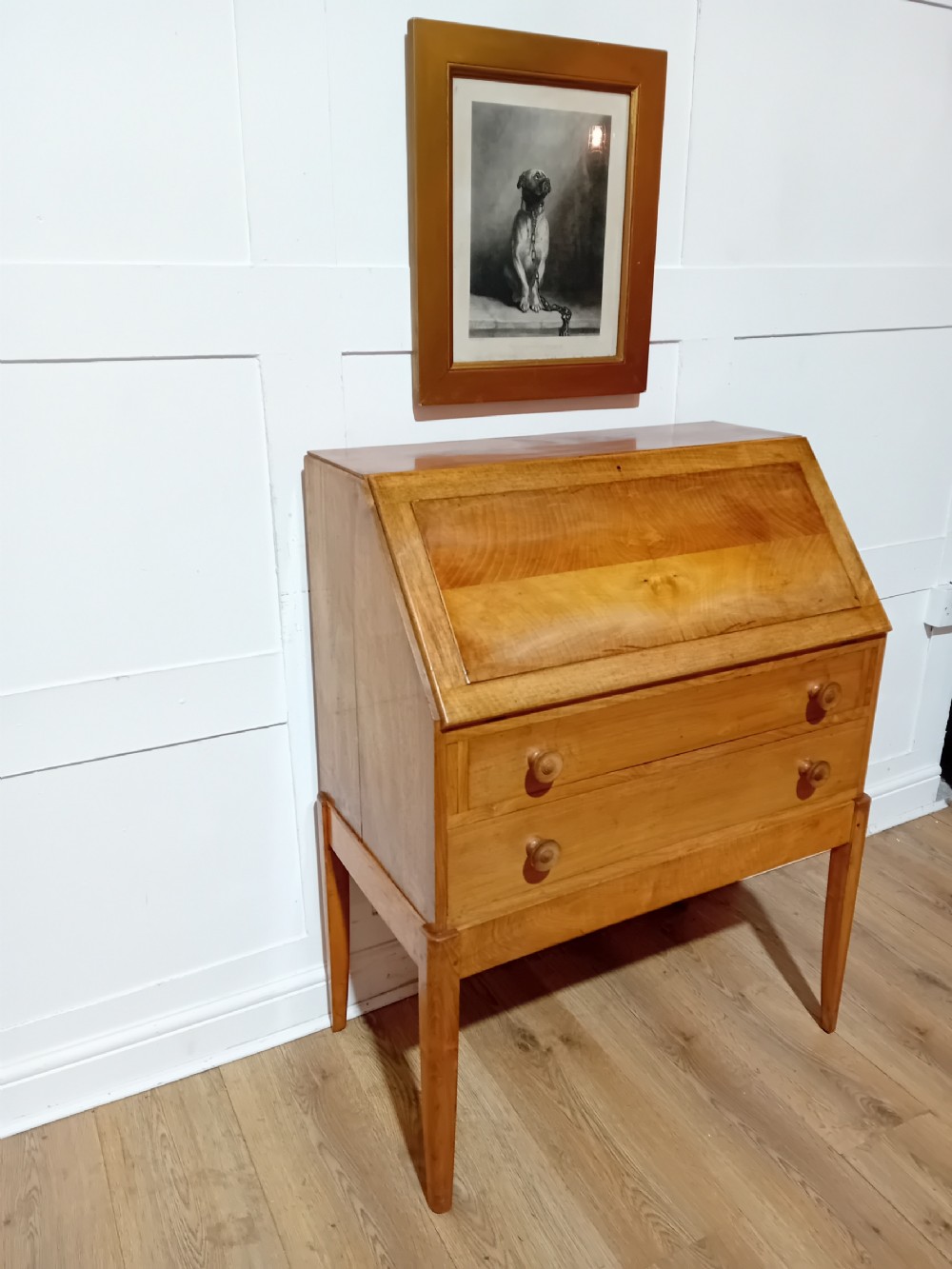
Archive II A wooden slope-front bureau featuring a fitted fall-front writing flap above two drawers, supported by four tapered legs. View II
Archive III A wooden slope-front bureau featuring a fitted fall-front writing flap above two drawers, supported by four tapered legs. View III
Archive IV A wooden slope-front bureau featuring a fitted fall-front writing flap above two drawers, supported by four tapered legs. View IV
Archive V A wooden slope-front bureau featuring a fitted fall-front writing flap above two drawers, supported by four tapered legs. View V
Archive VI A wooden slope-front bureau featuring a fitted fall-front writing flap above two drawers, supported by four tapered legs. View VI
Archive VII A wooden slope-front bureau featuring a fitted fall-front writing flap above two drawers, supported by four tapered legs. View VII
Archive VIII A wooden slope-front bureau featuring a fitted fall-front writing flap above two drawers, supported by four tapered legs. View VIII
Archive IX A wooden slope-front bureau featuring a fitted fall-front writing flap above two drawers, supported by four tapered legs. View IX
Archive X A wooden slope-front bureau featuring a fitted fall-front writing flap above two drawers, supported by four tapered legs. View X
Enlarged Archival View
Telephone 01905 923702
Location
Droitwich
Worcestershire
United Kingdom

By appointment only.
Verified Since Jan 2025
Items For Sale 75
Items Sold 44
Mews Antiques
Mews Antiques
Verified Since Jan 2025
View Dealer Info
Location: Droitwich, Worcestershire, United Kingdom, , By appointment only.
Verified
Jan 2025
For Sale
75
Sold
44
A wooden slope-front bureau featuring a fitted fall-front writing flap above two drawers, supported by four tapered legs.
RARE ARTHUR BASIL REYNOLDS COTSWOLD SCHOOL WALNUT BUREAU
Ref: SA1120050
A wooden slope-front bureau featuring a fitted fall-front writing flap above two drawers, supported by four tapered legs.
Detail View 1
Detail View 2
Detail View 3
Detail View 4
Detail View 5
Detail View 6
Detail View 7
Detail View 8
Detail View 9
Archival Detail
Every single antique dealer on our platform is individually approved by our internal team. We verify their professional trade history, ethical standards, and photographic quality to ensure a secure, high-standard buying environment. Upon joining, every dealer agrees to a strict 9-point code of conduct. While issues can occasionally arise, our dealers typically resolve them swiftly and directly with the buyer. In fact, since our founding in 2002, Sellingantiques has only had to step in to help resolve an issue on roughly five occasions—a true testament to the quality of our dealers and their dedication to your happiness.
Our dealers are highly experienced in packing and shipping fragile, high-value antiques. Because you are in direct contact with the dealer, you will be able to easily go through all available shipping and insurance options together to ensure your item arrives safely.
Antiques are the ultimate green purchase. By choosing historical pieces over newly manufactured goods, you completely eliminate the carbon footprint of modern mass production while preserving exceptional, timeless craftsmanship.
Written by Sellingantiques from the dealer’s photographs and listing
  • ObjectWriting Desks
  • Period1920 - 1940
  • StyleArts and Crafts
  • MaterialWalnut
  • ColourWarm Brown
  • MotifsSloping fall-front, Turned wooden knobs, Tapered legs
  • SizeH 101 cm (40 in) x W 80 cm (31 in) x D 47 cm (19 in)

The Cotswold School emerged in the late 19th and early 20th centuries, heavily influenced by the Arts and Crafts movement, prioritising traditional hand-tool techniques, honest construction methods, and the natural beauty of solid British timbers.

These pieces typically utilise native hardwoods such as walnut, oak, or chestnut, assembled using traditional joinery techniques like dovetailing and mortise and tenon joints, often finished with natural oils or beeswax rather than modern synthetic lacquers.

Authentic pieces often exhibit visible handcrafted marks, signature vernacular joinery, makers stamps or signatures, unpretentious functional designs, and a focus on the natural grain configuration of the timber.

A wooden bureau functions well as a focal point in a home office or living room, paired with a simple wooden chair and minimal accessories to highlight the craftsmanship and natural timber grain.

Maintain the timber by keeping it away from direct heat sources and sunlight, dusting regularly with a soft dry cloth, and occasionally applying a quality natural beeswax to nourish the wood and prevent it from drying out.
items
Add keywords to the filter
Price
£100
£250000
Era
Period
Style
Material
Origin
Stock Location
Recently Added
Online Payments
Categories