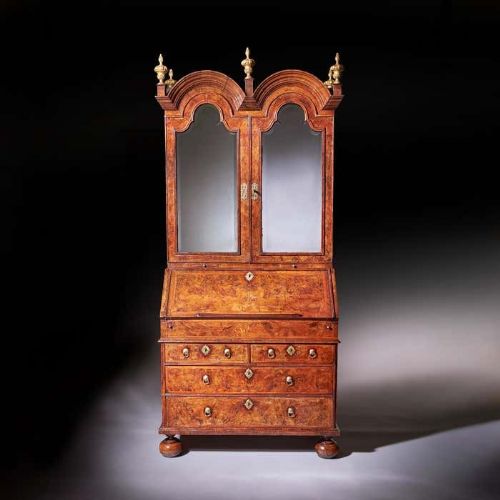
Alexander George Antiques Ltd. has dated this piece to the 18th Century.
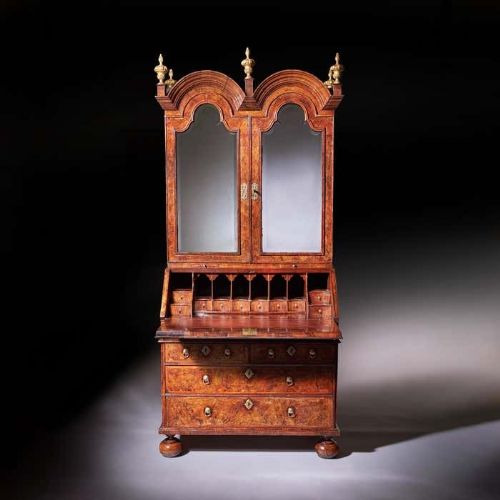
The pediment is adorned with ornate giltwood finials that are typical of the period.
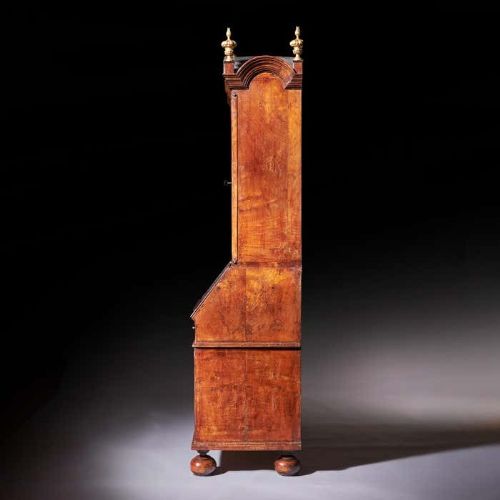
When opened, the upper section reveals a series of pigeonholes, shelves, and compartments, finely crafted to hold books, letters, and documents. The design is practical yet stylish, reflecting the growing literacy and interest in writing during the 18th century.
The waist moulded bureau portion contains a sloping fetaher and crossbanded fall front that opens to form a writing surface inset with leather. Inside, there are small oak-lined concave drawers fitted with the original knobs, compartments, and pigeonholes to organize stationery and small items.
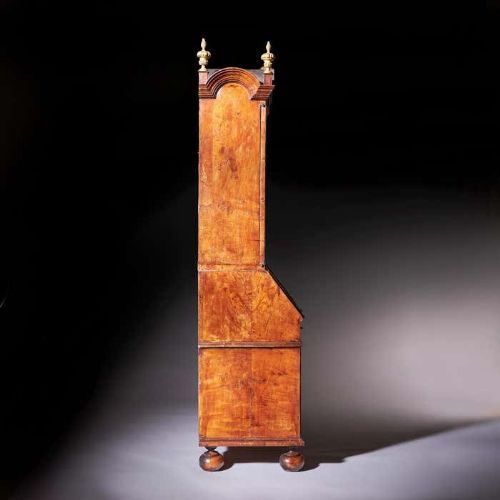
The piece rests on solid walnut bun feet, which are typical of the Queen Anne style, providing balance and visual symmetry.
Hardware: The bureau bookcase features brass handles and key escutcheons, enhancing its luxurious appearance.
Historical Context:
Queen Anne furniture (early 18th century, circa 1702–1714) is known for its elegance, understated decoration, and emphasis on form over elaborate ornamentation. The use of burr walnut and veneer techniques highlights the craftsmanship of the era.
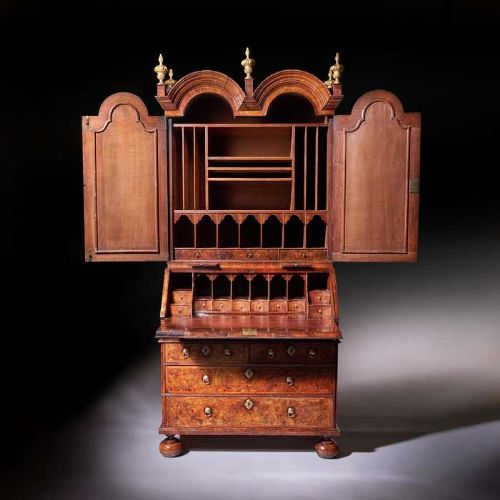
This piece is a stunning example of 18th-century craftsmanship, combining practicality and elegance. It would have served as a writing desk and storage solution for important papers, books, and personal effects in a refined home during the Queen Anne period.
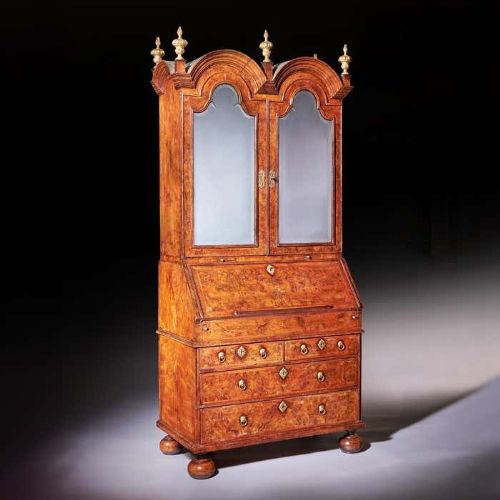
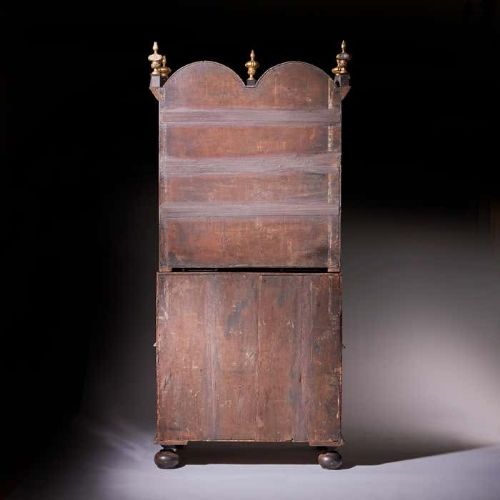
From research and our accumulated knowledge on the subject, we can conclude that the bookcase is from one of a group of great London cabinet makers working in St Pauls Churchyard in the late 17th and early 18th centuries.
Alexander George Antiques Ltd. has dated this piece to the 18th Century.
Offering carefully selected antique masterpieces from the 17th & 18th centuries
You can view the stock and full dealer information on the Alexander George Antiques Ltd. Profile Page
Alexander George Antiques Ltd. is a registered member of LAPADA
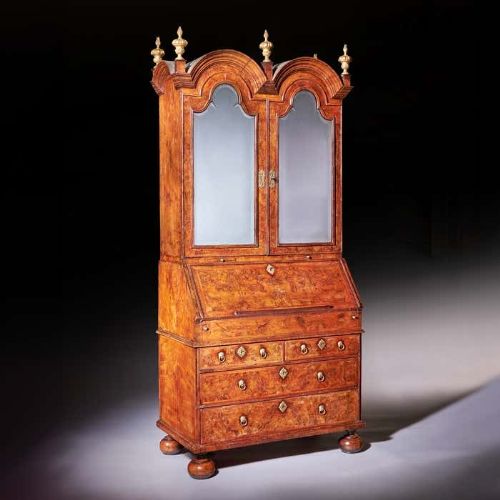
18th Century Queen Anne Burr Walnut Double Dome Bureau Bookcase